Types of Well Pumps: Submersible, Jet, and Constant-Pressure
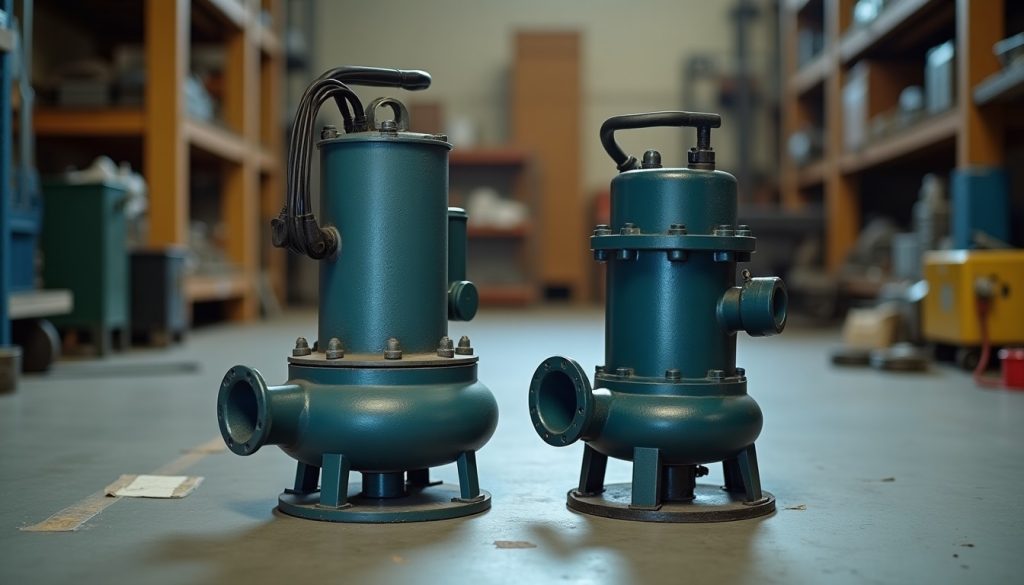
Well pump types come down to four: the submersible pump that pushes water up from deep in the casing, the jet pump that pulls water up by suction, the manual hand pump, and the constant-pressure variable-speed system. Well depth decides which one fits.
Key Takeaways
- A shallow-well jet pump can only lift water about 25 feet, the physical limit of suction at sea level; deeper wells need a deep-well jet pump (to roughly 110 feet) or a submersible.
- A submersible pump sits inside the well and pushes water up, so it works at any residential depth from 25 to 500-plus feet, per well-industry depth guides.
- Most well pumps last 8 to 15 years, with submersible units often reaching 10 to 15, according to plumbing and well-service estimates.
- A standard 40/60 pressure switch starts the pump at 40 psi and stops it at 60 psi, keeping household pressure in the normal water pressure for a house band of 40 to 60 psi.
- The pressure tank must be pre-charged to about 2 psi below the cut-in, so a 40/60 switch pairs with a 38 psi air charge in an empty tank.
- Replacement runs about $800 to $2,500 installed, more for a deep submersible pull, per 2026 cost guides.
- Around 15 percent of Americans, more than 43 million people, drink from a private well, per the US EPA, and those wells are not federally regulated.
What are the main types of well pumps?
Four designs cover nearly every private well. A submersible pump sits underwater deep in the casing and pushes water up. A jet pump mounts above ground and pulls water up by suction, splitting into a shallow-well single-drop version and a deep-well double-drop version. A hand pump moves water with no power. A constant-pressure system uses a variable-speed motor to hold steady pressure. This guide is for well-water homes; a house on city water has no well pump at all. Since the pump is only half the picture, well owners also need to know about shocking a well with bleach for bacteria control and how well water compares to city water on cost and safety. Before choosing a pump, it helps to understand well drilling cost and well pump replacement cost, since both shape the total price of keeping a well running.
The single biggest factor is how far down the water sits, not how deep the drilled hole goes. Everything below compares these types on depth range, lifespan, horsepower, and cost.
| Pump type | Well depth range | Where mounted | Typical life | Best for |
|---|---|---|---|---|
| Submersible | 25 to 500+ ft | Inside the well, below water | 10 to 15 yr | Deep wells, steady high flow |
| Shallow-well jet | Up to ~25 ft to water | Above ground, single drop pipe | 8 to 15 yr | High water table, one-pipe setups |
| Deep-well jet | ~25 to 110 ft | Above ground, two-pipe ejector downhole | 8 to 15 yr | Mid-depth wells, above-ground service |
| Hand pump | ~25 ft (suction) to 200+ ft (deep models) | Above the wellhead, manual | 20+ yr | Off-grid, backup during outages |
| Constant-pressure | Follows the primary pump (usually submersible) | Variable-speed controller at the tank | 10 to 15 yr | Even city-like pressure, multiple fixtures |
How does well depth decide which pump you need?
Match the pump to the distance from the pump down to the water, called the static water level, not the total drilled depth. If water sits within about 25 feet of the surface, a shallow-well jet pump can lift it. From roughly 25 to 110 feet, a deep-well jet pump works. Past that, and often well before it, a submersible is the answer because it has no suction limit.
A well can be drilled 300 feet deep yet hold water only 20 feet down, in which case a shallow pump may still work. When you cannot confirm the level, a driller’s report or a weighted string dropped down the casing settles it.
Shallow-well vs deep-well jet pump: what is the difference?
Both jet pumps sit above ground and use suction, but they draw from different depths through a different pipe setup. A shallow-well jet pump runs a single drop pipe into the well and keeps its jet assembly in the pump body, good to about 25 feet. A deep-well jet pump uses two pipes, a drive pipe and a suction pipe, to place the jet ejector down in the water, which extends its reach to roughly 110 feet.
Single-drop vs double-drop
The single-drop shallow jet is the simpler machine: one pipe, one connection, easy to prime and service. The double-drop deep jet sends pressurized water down the drive pipe to the downhole ejector, and that jet action lifts water back up the suction pipe. More parts, more depth, and it still lives above ground where you can reach it, which many owners prefer over pulling a submersible.
Where each one wins
A shallow jet suits a high water table, a spring, or a cistern. A deep jet suits a mid-depth well where the owner wants the motor accessible in the basement or well house. Past about 110 feet, jet efficiency falls off and a submersible does the job with less energy and steadier flow.
Why can a shallow well pump only lift water about 25 feet?
Because a pump cannot actually pull water upward. A jet pump lowers the pressure at its inlet, and the weight of the atmosphere pushes water up the pipe into that low-pressure zone. At sea level the atmosphere can raise water only about 33.9 feet even in a perfect vacuum, and real pumps lose efficiency to friction and leaks, so the practical suction ceiling lands near 25 feet.
This is set by physics, not by brand or horsepower, which is why no shallow pump reaches deep water no matter how powerful. It is also why elevation matters: at higher altitude the atmosphere pushes with less force, so the suction limit drops below 25 feet. Deep wells sidestep the whole problem by putting the pump or the jet down near the water instead of relying on suction.
What do the pressure tank and pressure switch do?
They keep the pump from running every time you open a tap. The pressure tank stores water under an air cushion, and the pressure switch turns the pump on and off at set points. A common 40/60 switch starts the pump at 40 psi (cut-in) and stops it at 60 psi (cut-out), so household pressure stays in the 40 to 60 psi range covered in normal water pressure for a house. A 30/50 switch is the other common option. Choosing between a 40/60 and 30/50 switch matters most for households relying on private wells rather than municipal systems, a divide explored in well water usage by region. Well owners weighing pressure switch settings should also keep track of annual water testing schedules to catch contamination issues early.
The tank has to be pre-charged with air to about 2 psi below the cut-in, so a 40/60 system needs a 38 psi air charge in an empty tank. Get that wrong and the pump short-cycles, snapping on and off, which wears the motor and switch fast. A waterlogged tank that has lost its air charge is a leading cause of premature pump failure and of low water pressure on a well.
Well systems rarely need a pressure-reducing valve, because the switch caps pressure at the cut-out; PRVs are a city-water fix for high street pressure. Many well owners do add a whole-house water filter, since private wells are not federally regulated and roughly 1 in 5 tested wells carry a contaminant of health concern, per the USGS.
What is a constant-pressure (variable-speed) well pump?
A constant-pressure system uses a variable-speed controller that ramps the pump motor up and down to hold one steady pressure, often around 50 to 70 psi, no matter how many fixtures run. Instead of the pressure sagging from 60 down toward 40 while the pump waits to kick on, flow stays even, much like city water. It usually drives a submersible pump paired with a small tank.
The payoff is no pressure drop when a shower and the dishwasher run together, which is the classic complaint on a standard on/off system. The cost is a higher price for the controller and the variable-speed pump, plus more electronics that can fail. For a busy household or a home with many bathrooms, owners often judge the steady pressure worth it.
How much horsepower and GPM do you need?
Size a well pump to your peak demand and your well depth, not to the biggest motor available. Most single-family homes run on a 1/2 to 1 HP pump delivering 8 to 12 gallons per minute, enough to cover a peak of two or three fixtures at once. Deeper wells need more horsepower to push water higher, and larger homes with multiple bathrooms lean toward the top of that range.
Flow, not just horsepower, is what fills the tub and runs the sprinklers. A rough rule sizes the pump to your home’s peak demand, counting about 1 GPM per fixture likely to run at the same time. Oversizing wastes energy and can pull a well down faster than it recovers, while undersizing shows up as weak pressure when demand climbs.
- Find the static water level from the well report to know how high the pump must lift.
- Add up peak fixtures that could run together, roughly 1 GPM each, to set target GPM.
- Match horsepower to depth and GPM, commonly 1/2 to 1 HP for a house at typical depths.
- Confirm the pressure tank and switch are sized and pre-charged so the pump does not short-cycle.
How long do well pumps last and what does replacement cost?
Most well pumps last 8 to 15 years, with submersible units often reaching 10 to 15 and jet pumps averaging 8 to 15, per plumbing and well-service estimates. Water quality drives the spread: sandy or acidic water grinds impellers and seals faster, and frequent short-cycling from a bad pressure tank shortens life on any type.
Replacement typically runs $800 to $2,500 installed. A shallow-well jet pump often lands near $800 to $1,800, while a submersible in a 200-foot well runs roughly $1,800 to $3,000, because a crew has to pull hundreds of feet of pipe, wire, and the pump itself, per 2026 cost guides. Depth, pump type, and whether the pressure tank or wiring also need replacing move the final number most.
How we sourced this
Depth and suction figures come from well-drilling and pump-supplier depth guides and the physics of atmospheric lift (about 33.9 feet maximum, roughly 25 feet in practice). Private-well population figures are from the US EPA (about 15 percent of Americans, over 43 million) with contamination context from the USGS. Lifespan and replacement-cost ranges are drawn from 2026 cost guides and well-service estimates and are stated as ranges because they vary by depth, water quality, and region. Pressure-switch and tank pre-charge values reflect standard 40/60 and 30/50 setups. We consulted roughly a dozen sources and cite the primary ones; we excluded single-brand pages without published specs. Prices are US, installed, as of September 2026.
Frequently asked questions
What are the main types of well pumps?
Four designs cover almost every private well. A submersible pump sits deep in the well casing and pushes water up, a jet pump mounts above ground and pulls water up by suction, a hand pump moves water with no electricity, and a constant-pressure (variable-speed) system holds a steady pressure instead of cycling on and off. Jet pumps split further into shallow-well single-drop and deep-well double-drop versions.
How do I know if I have a shallow or deep well?
Measure the distance from the pump down to the water level, not the total well depth. If water sits within about 25 feet of the surface, a shallow-well jet pump can lift it. Below 25 feet you need a deep-well jet pump (to roughly 110 feet) or a submersible pump, which handles 25 to 500-plus feet. Your well driller’s report or a weighted string can confirm the static water level.
Why is a shallow well pump limited to about 25 feet?
A jet pump does not really suck water up, it lowers the pressure at its inlet and lets the atmosphere push water up the pipe. At sea level the atmosphere can only push water about 33.9 feet straight up in a perfect vacuum, and real pumps lose efficiency, so the practical suction limit lands near 25 feet. That is physics, not a brand limit, which is why deep wells use a downhole jet or a submersible instead.
How long does a well pump last?
Most well pumps last 8 to 15 years, with submersible units often reaching 10 to 15 years and jet pumps averaging 8 to 15, per plumbing and well-service estimates. Water quality, cycling frequency, and sizing all matter. Sandy or acidic water wears impellers faster, and a pump that short-cycles because of a waterlogged pressure tank fails sooner than one sized and set up correctly.
What pressure should a well system run at?
Most private well systems run on a 40/60 psi pressure switch, meaning the pump starts at 40 psi and stops at 60 psi, which keeps household pressure in the normal 40 to 60 psi band. A 30/50 setting is also common. The pressure tank should be pre-charged to about 2 psi below the cut-in, so a 40/60 switch pairs with a 38 psi air charge in an empty tank.
What is a constant-pressure well pump?
A constant-pressure system uses a variable-speed controller that ramps the pump up and down to hold a steady pressure, often around 50 to 70 psi, no matter how many fixtures are open. Instead of cycling between 40 and 60 psi, it delivers even flow like city water. It costs more up front than a standard pressure-switch setup but removes the pressure drop when two showers run at once.
How much does it cost to replace a well pump?
Well pump replacement typically runs $800 to $2,500 installed, and can pass $3,000 for a deep submersible pull. A shallow-well jet pump replacement often lands around $800 to $1,800, while a submersible in a 200-foot well runs roughly $1,800 to $3,000 because it takes a crew to pull hundreds of feet of pipe and wire, per 2026 cost guides.


