Well Drilling Cost
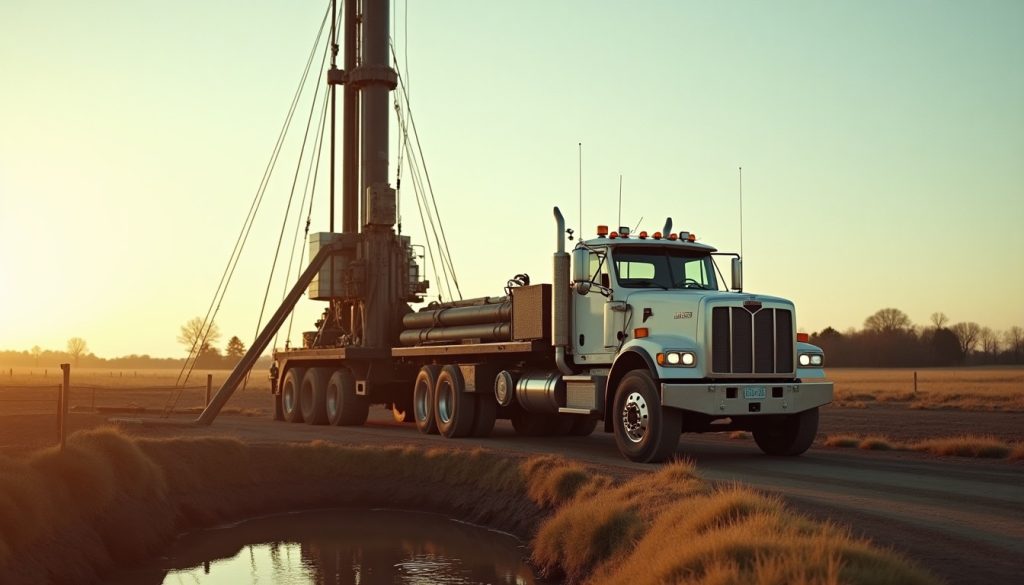
Well drilling cost runs $25 to $65 per foot in 2026, about $5,500 on average for the borehole, and $3,500 to $15,000 or more once casing, pump, tank and wiring are added.
Key Takeaways
- HomeAdvisor’s June 2026 guide puts residential drilling at $25 to $65 per foot, with $25 to $35 per foot covering most jobs and an average project of $5,500.
- This Old House’s March 2026 guide prices a complete installed well at $3,500 to $15,000, including casing, pump and storage tank.
- The median U.S. domestic well is 142 feet deep, per a 2021 USGS study (Degnan and others) built from national and state well records.
- Casing choice moves the budget. HomeAdvisor lists PVC at $6 to $10 per foot and galvanized or stainless steel at $36 to $140 per foot.
- The EPA estimates more than 23 million U.S. households, about 15 percent of the population, rely on private wells that no federal drinking water law regulates.
- Setbacks vary by state. Minnesota’s Well Code (Rules chapter 4725) requires 50 feet between a new domestic well and a septic tank or drainfield.
How much does well drilling cost in 2026?
Well drilling cost for a typical home runs $3,000 to $9,000 for the drilled hole, with an average of $5,500, according to HomeAdvisor’s June 2026 cost guide. A finished system with casing, pump, pressure tank and wiring usually lands between $3,500 and $15,000, per This Old House’s 2026 guide. Deep wells in hard rock can run past $20,000.
The gap between those numbers is the part most quotes hide. A driller’s per-foot price covers the hole. The pump, tank, trench, electrical run, permit and water test are often separate lines, sometimes from separate contractors.
Before you price a well, confirm you actually need one. If a public main runs past your lot, compare tap fees with drilling in our guide to well water vs city water. On rural parcels with no main, a private well is usually the only supply.
What is the well drilling cost per foot?
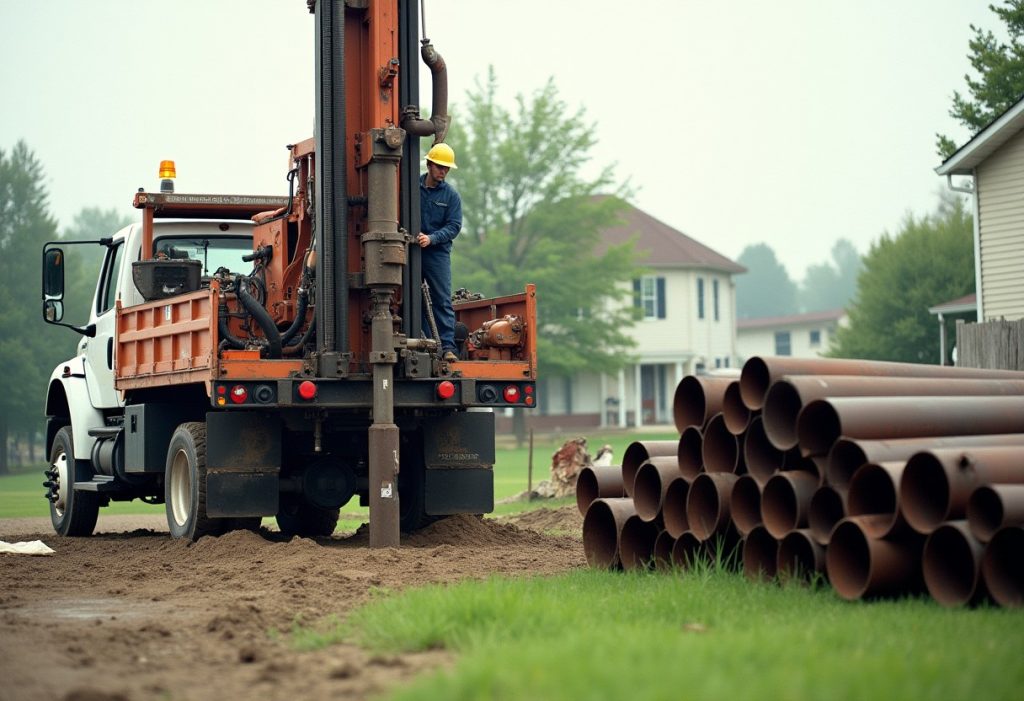
Well drilling cost per foot for a residential water well is $25 to $65 in 2026, per HomeAdvisor, and most jobs fall between $25 and $35. Irrigation wells run $25 to $110 per foot and artesian wells $35 to $90. Those rates cover the drilling. Casing, a larger diameter or hard rock push the effective per-foot price higher.
HomeAdvisor’s depth table shows how fast casing changes the math. Its totals work out to about $35.50 per foot with 4 inch PVC casing and $61.20 per foot with 6 inch steel casing, the same depth and very different bills.
Source: HomeAdvisor well drilling cost guide, updated June 2026. The same table prices 4 inch PVC wells at $1,775 (50 feet), $3,550 (100 feet), $7,100 (200 feet), $10,650 (300 feet) and $14,200 (400 feet). Neither column includes the pump, tank or trenching.
What does a complete well system cost beyond drilling?
A complete well system costs the drilling price plus casing, a pump, a pressure tank, trenched water and electrical lines, a permit, a lab water test and any treatment the test calls for. On a median-depth well those extras can equal or exceed the drilling bill, mainly because trenching runs $50 to $150 per foot, per HomeAdvisor’s 2026 figures.
| Cost component | Typical range | Source |
|---|---|---|
| Drilling (residential) | $25 to $65 per foot | HomeAdvisor, 2026 |
| PVC casing | $6 to $10 per foot | HomeAdvisor, 2026 |
| Galvanized or stainless steel casing | $36 to $140 per foot | HomeAdvisor, 2026 |
| Well pump system | $900 to $2,500 | HomeAdvisor, 2026 |
| Pressure tank and switch | $300 to $500 | HomeAdvisor, 2026 |
| Water and electric lines to the house | $50 to $150 per foot, plus $160 to $500 labor | HomeAdvisor, 2026 |
| Well permit | $200 to $500 (some areas as low as $5) | HomeAdvisor, 2026; This Old House, 2026 |
| Professional water testing | $50 to $600 | HomeAdvisor, 2026 |
| Water treatment system | $1,000 to $15,000, plus $200 to $400 labor | HomeAdvisor, 2026 |
| Annual inspection | $250 to $550 | HomeAdvisor, 2026 |
The pump is the biggest single equipment line. Deep drilled wells almost always use a submersible, while shallow wells can sometimes run a jet pump at the surface; our guide to well pump types explains which fits which depth.
Tank size matters more than its price suggests. An undersized tank makes the pump short-cycle and shortens its life, so size it with our well pressure tank guide before you sign off on the driller’s default.
A worked budget for a median-depth well
Here is our arithmetic using the USGS median depth of 142 feet, HomeAdvisor’s implied cased rates and a 50 foot run to the house. It excludes treatment.
- Drilled and cased hole: about $5,040 (4 inch PVC) to $8,690 (6 inch steel).
- Pump system: $900 to $2,500.
- Pressure tank and switch: $300 to $500.
- Water and electric lines, 50 feet: $2,500 to $7,500.
- Permit and lab water test: $250 to $1,100.
- Total: roughly $9,000 to $20,300 before any treatment equipment.
How deep do wells need to be?
Wells need to reach a water-bearing layer that yields enough water year round and sits below surface contamination. The national middle is shallower than many cost guides imply. A 2021 USGS study found the median depth of U.S. domestic supply wells is 142 feet, compared with 202 feet for public supply wells. Local geology can push that number far up or down.
The USGS report (Scientific Investigations Report 2021-5069) pooled millions of well records from federal and state databases. It found the shallowest domestic wells in regions with coarse glacial sediment, where water moves easily through sand and gravel.
Cost guides quote wider bands. HomeAdvisor says most residential wells need 100 to 300 feet, and This Old House states residential wells average 300 feet. Treat 300 feet as a planning ceiling for many areas, not the typical well. Bedrock regions with sparse fractures can still push well past it.
How do drillers estimate well depth before drilling?
Drillers estimate depth mostly from the logs of nearby wells. Many states require contractors to file a well log recording depth, casing length, static water level and the rock or soil layers they passed through. A driller reads the logs of wells near your lot, then adds local experience about where water-bearing layers sit.
Many of those logs are public. Minnesota’s Department of Health keeps the Minnesota Well Index, and the Texas Water Development Board posts submitted driller’s reports online. Search your state’s water resources or health department site for “well log” or “well records.”
- Static water level shows how far below grade the water sits at rest, which sets pump depth.
- Reported yield in gallons per minute hints at whether nearby wells struggled.
- Casing length tells you how much overburden sits above rock, which drives casing cost.
- Total depth across several neighbors gives the most honest estimate range.
If neighbors’ wells span 120 to 400 feet, ask the driller to price both ends. A quote that only shows the shallow case is a budget waiting to break.
What drives the cost to drill a well up or down?
The cost to drill a well is driven mainly by depth, then by geology, casing material and diameter, region, and site access. Depth multiplies every per-foot charge. Hard rock slows the rig, and loose sand demands more casing. Wider steel casing costs several times what PVC does, and a long trench to the house can rival the drilling bill.
- Depth. Every foot adds drilling and usually casing. HomeAdvisor’s table doubles the cost from 200 to 400 feet.
- Geology. Rocky soil and bedrock need heavier rigs and more hours. This Old House says dense bedrock or heavy clay can raise total cost by up to 150 percent of the base price.
- Unconsolidated ground. Sand and gravel drill fast but may need casing the full depth to stop collapse, which offsets the savings.
- Casing material and diameter. PVC runs $6 to $10 per foot and steel $36 to $140 per foot (HomeAdvisor, 2026). A 6 inch bore costs more than a 4 inch bore.
- Distance and access. Lines to the house run $50 to $150 per foot. Steep, wooded or soft ground may need clearing or a smaller rig.
Region shapes the per-foot price through geology, rig supply and state rules. Bob Vila’s 2023 guide gave these state ranges, which are older than our 2026 figures but show the spread.
| State | Drilling cost per foot | Source |
|---|---|---|
| Florida | $15 to $30 | Bob Vila, 2023 |
| Oklahoma | $20 to $40 | Bob Vila, 2023 |
| Wisconsin | $20 to $45 | Bob Vila, 2023 |
| California | $25 to $50 | Bob Vila, 2023 |
| Texas | $30 to $55 | Bob Vila, 2023 |
What happens if the driller hits a dry hole, and who pays?
If the driller hits a dry hole, the owner usually pays for every foot drilled, because most residential drilling is billed by depth rather than by result. The driller may go deeper, try hydrofracturing a rock well to open fractures, or move to a new spot. Each option adds cost, so settle the terms before the rig shows up.
Low yield is more common than a truly dry bore. A well can hit some water but not enough for a household, and that also counts as a failed hole if your contract does not define a minimum.
- Ask for a written maximum depth, so the driller stops and calls you before going past it.
- Ask whether the contract includes a dry-hole clause, a reduced rate for a second site or a minimum yield in gallons per minute.
- Ask who pays to seal an abandoned hole. Many states, Minnesota among them, require unused wells to be sealed by a licensed contractor.
- Get the well log for every hole drilled, wet or dry, for your records and for resale.
How long does well drilling take, and what permits and setbacks apply?
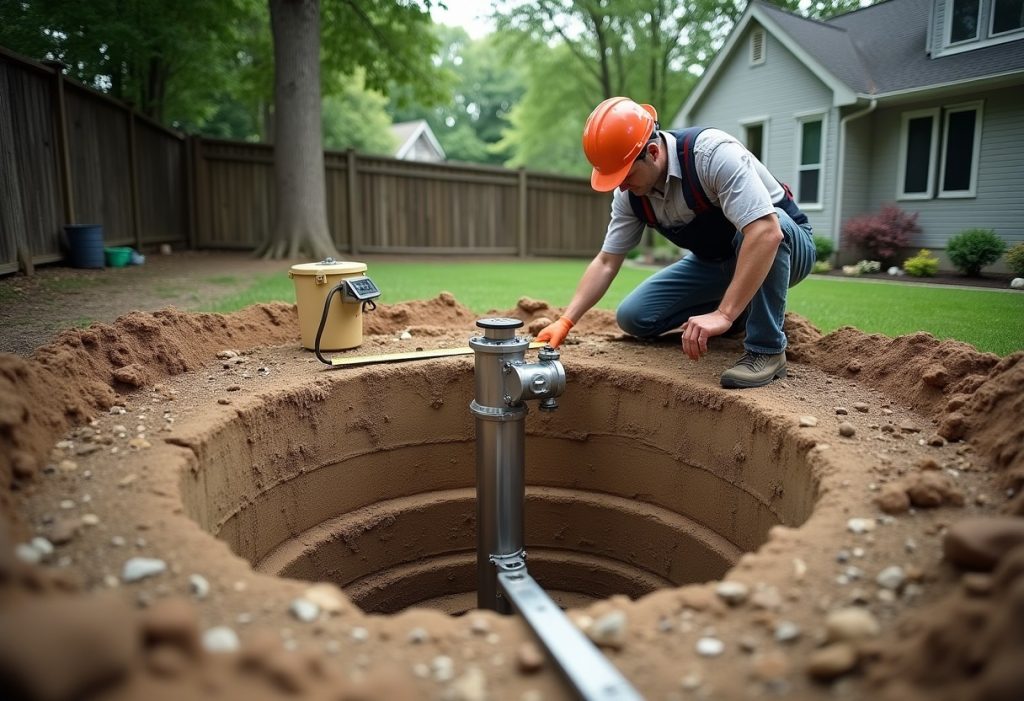
Well drilling usually takes one to three days, and the full install with pump, lines and testing about a week, per HomeAdvisor’s 2026 guide. Most jurisdictions also require a permit, typically $200 to $500, and the well must sit minimum distances from septic systems, sewers and buildings. Rules come from your state and county.
Minnesota is a clear example. Its Department of Health isolation distances require 50 feet from a septic tank or drainfield, 20 feet from a qualifying buried sewer and 3 feet from a building. Other states set different numbers, so check with your state well program or county health department before you pick a spot.
Testing comes last and is not optional in practice. The EPA notes that private wells are not regulated under the Safe Drinking Water Act, so the owner is responsible for safe water. Order a baseline test before first use, using our well water testing guide to pick a panel.
Is well drilling cost worth it for a new home?
Well drilling cost is often worth it when no public main is close, because a private well removes the monthly water bill and gives you control over supply. This Old House’s 2026 guide puts pump electricity at about $3 to $4 per month and maintenance at $100 to $250 per year, against municipal bills it pegs at $20 to $40 per month.
The tradeoff is risk you carry alone. You pay for repairs, testing and any treatment, and a well can lose yield in drought. This Old House says pumps and related hardware typically need replacement every 20 to 30 years, which belongs in any long-run comparison with a utility tap fee.
How we sourced this
We reviewed the top-ranking pages and People Also Ask questions for “well drilling cost,” “cost to drill a well” and “how deep do wells need to be” in October 2026. Cost ranges come from HomeAdvisor’s well drilling guide (updated June 2026) and This Old House’s well installation guide (updated March 2026); state per-foot ranges come from Bob Vila (2023) and are labeled as older data. Well depth comes from USGS Scientific Investigations Report 2021-5069. Household counts come from the U.S. EPA private wells page. Setbacks come from the Minnesota Department of Health under Minnesota Rules chapter 4725. The worked budget is our own arithmetic from those ranges. We excluded unattributed aggregator pages. Prices and rules vary by region, so get at least three written quotes from licensed drillers.
Frequently asked questions
How much does it cost to drill a 300 foot well?
HomeAdvisor’s 2026 depth table puts a 300 foot well at about $10,650 with 4 inch PVC casing and about $18,360 with 6 inch steel casing. Those figures cover the drilled and cased hole. Add a pump, pressure tank, trenching, wiring, a permit and a lab water test, and the finished system can land well above $20,000 in hard ground.
How deep do wells need to be?
Deep enough to reach a reliable water-bearing layer below surface contamination, which varies by site. A 2021 USGS study of national well records found the median domestic well is 142 feet deep, while many cost guides quote 100 to 300 feet as typical. Your driller will set the target depth from neighboring well logs and local geology.
How long does it take to drill a well?
The drilling itself usually takes one to three days, according to HomeAdvisor’s 2026 guide. Setting the pump, running electrical and water lines and testing the water typically brings the total to about a week. Permit review, rig backlogs, hard rock or extra depth can stretch that schedule, so ask the driller for a start date in writing.
Who pays if the driller hits a dry hole?
In most cases the property owner does, because drillers usually bill by the foot drilled whether or not they find water. Some contracts include a dry-hole clause, a depth cap or a reduced rate for a second attempt. Read the contract before the rig arrives and ask how the driller handles a hole that never produces enough water.
Is it cheaper to drill a well or connect to city water?
It depends on how far the nearest water main is and what the utility charges to connect. A well has a large upfront cost, often $3,500 to $15,000 per This Old House’s 2026 guide, but no monthly water bill. If a main runs along your road, a tap fee is often cheaper. On rural lots with no main nearby, a well is usually the only option.
How long does a water well last?
A properly built drilled well can serve for decades, but the equipment wears out sooner. This Old House’s 2026 guide says the pump and related equipment typically need replacement every 20 to 30 years. Annual water tests, a sanitary well cap and periodic pump checks help the system reach the long end of that range.
Can you drill a well yourself?
You can drive or dig a shallow well where the water table is high, but a household-supply drilled well is a job for a licensed contractor in most states. Many states require a licensed driller, a permit and a filed well log. Shallow DIY wells also draw from water that is more exposed to surface contamination.
How deep should a well be for drinking water?
A well needs to reach a water-bearing layer that yields enough water year round and sits below surface contamination, and that depth varies by site. A 2021 USGS study found the median U.S. domestic well is 142 feet deep, while cost guides often cite 100 to 300 feet as typical, with drillers setting the target from neighboring well logs and local geology.


