Water Heater Gas Smell: What to Do Right Now
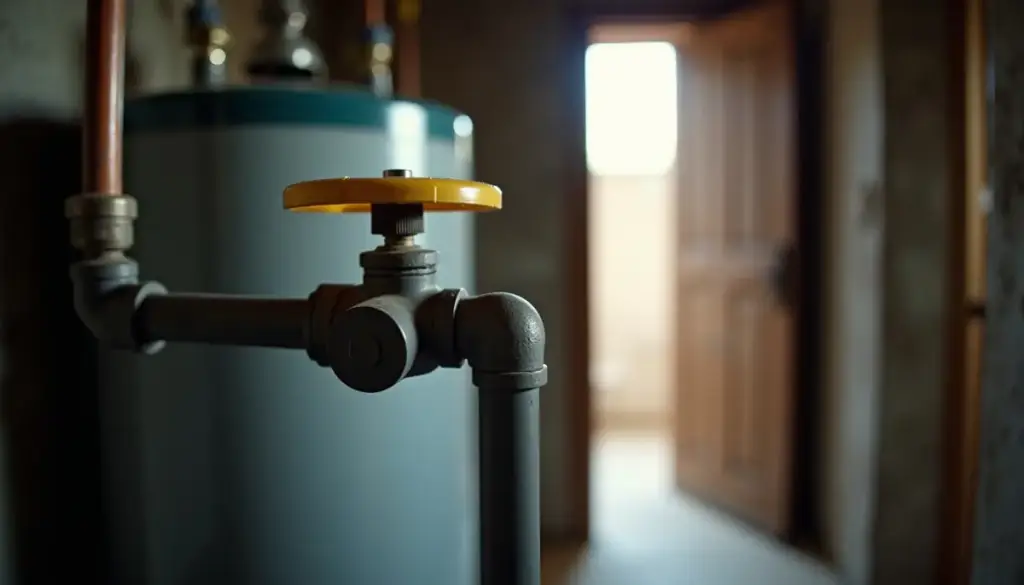
Water heater gas smell? Get everyone out, skip every switch and phone, and call the gas utility from outside; only after it clears the house do you hunt for the loose union, connector or venting fault.
Key Takeaways
- The lighting label on gas water heaters says to touch no electric switch, use no phone in the building, and call the gas supplier from a neighbor’s phone.
- 49 CFR 192.625 requires utility gas to be smellable at one-fifth of its lower explosive limit, roughly 1 percent methane in air.
- A UL 1484 gas alarm must sound by 25 percent of the lower explosive limit, covering sleep and odor fade.
- Honeywell rates a Q340A thermocouple at 26 to 32 mV, with 18 mV the floor; below that the safety valve shuts.
- IFGC Appendix D sets a 200 ppm air free CO limit in a water heater vent.
- Rotten-egg odor from hot taps is hydrogen sulfide, not fuel gas; University of Georgia Extension puts the nuisance level at 0.5 ppm.
What should you do right now if your water heater smells like gas?
If the water heater gas smell is strong or growing, leave the house with everyone in it, touch nothing electrical on the way out, and call your gas utility’s emergency line or 911 from outside and well away. Do not hunt for the leak, relight the pilot or shut valves inside. The utility sends a technician to test the air and piping.
That order comes straight off the heater. The “what to do if you smell gas” box on lighting labels from makers such as Rheem and A.O. Smith says, in substance: light no appliance, touch no electric switch, use no phone in the building, call the gas supplier from a neighbor’s phone, or the fire department if you cannot reach it.
- Get people and pets out. Leave the door open behind you if it is on your path.
- Do not flip lights, unplug cords, use the garage door opener or start a car in an attached garage.
- From the street or a neighbor’s yard, call the emergency number on your gas bill, or 911.
- Close the outdoor meter valve only if the utility tells you to. Only the utility turns service back on.
- Stay out until the utility or fire department says the building is safe.
A faint smell that only shows up with your nose at the gas valve is a different call: turn the heater knob to Off by hand and phone the utility, which treats odor reports as emergencies. In propane homes the label says to smell next to the floor, because propane is about 1.5 times heavier than air and pools low.
Is it normal to smell gas by a water heater?
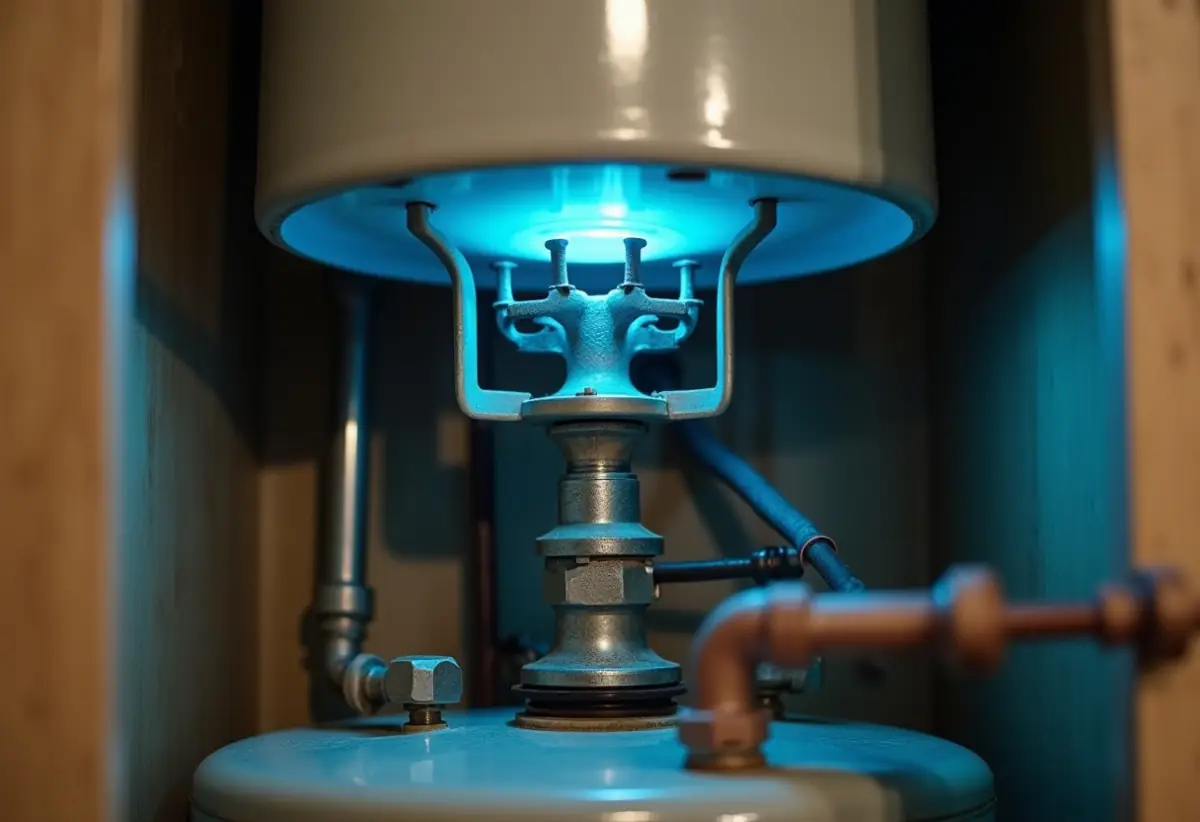
A short whiff can be normal in two moments: when a standing pilot blows out, and in the second before the main burner lights. In both, a little unburned gas escapes before it burns or the safety valve closes. A smell that lingers, gets stronger, or greets you every time you walk past is not normal and means a leak.
A thermocouple in the pilot flame makes a small voltage that holds the gas control’s safety magnet open. Honeywell’s form 60-2087-4 rates the Q340A at 26 to 32 mV open circuit, with 18 mV the lowest acceptable reading. When the flame dies, the tip must cool before the voltage drops and the valve shuts, so the pilot orifice bleeds a little gas until then.
A pilot that keeps going out needs a fix, not endless relights. Let any odor clear, then relight the pilot per the label: knob to Off, wait 10 minutes, and smell again first. If you smell gas after the wait, stop.
How do you tell a gas leak from exhaust or rotten-egg water?
Match the smell to where it shows up. Fuel gas smells like sulfur in the air beside the heater with no water running. Exhaust smells sharp and stings the eyes near the draft hood while the burner fires. Rotten eggs that come out of the hot tap with the water are hydrogen sulfide made inside the tank. Each needs a different response.
| Smell type | Where you notice it | Likely cause | What to do |
|---|---|---|---|
| Strong sulfur in the air | Whole room or basement | Gas leak at piping, connector or valve | Leave, call the utility from outside |
| Faint sulfur at one spot | Within a foot of the union, connector nut, drip leg or valve inlet | Slow leak at a threaded or flare joint | Knob to Off, call the utility, then a licensed gas fitter |
| Brief whiff that fades | Burner door after a pilot outage or at light-off | Unburned pilot or ignition gas | Let it clear, test the thermocouple, relight per label |
| Sharp exhaust, stinging eyes | Draft hood with the burner firing | Backdrafting or blocked vent, possible CO | Burner off, ventilate, check the CO alarm, book a vent inspection |
| Rotten egg in hot water only | Hot taps; cold side smells clean | Hydrogen sulfide from bacteria and a magnesium anode | Not a gas leak; swap to an aluminum or aluminum-zinc anode |
The Minnesota Department of Health explains that a magnesium anode supplies electrons that help tank bacteria turn sulfate into hydrogen sulfide. University of Georgia Extension says water above 0.5 ppm hydrogen sulfide smells unpleasant. That is a water quality problem, not a fuel leak.
Where does a water heater gas leak usually come from?
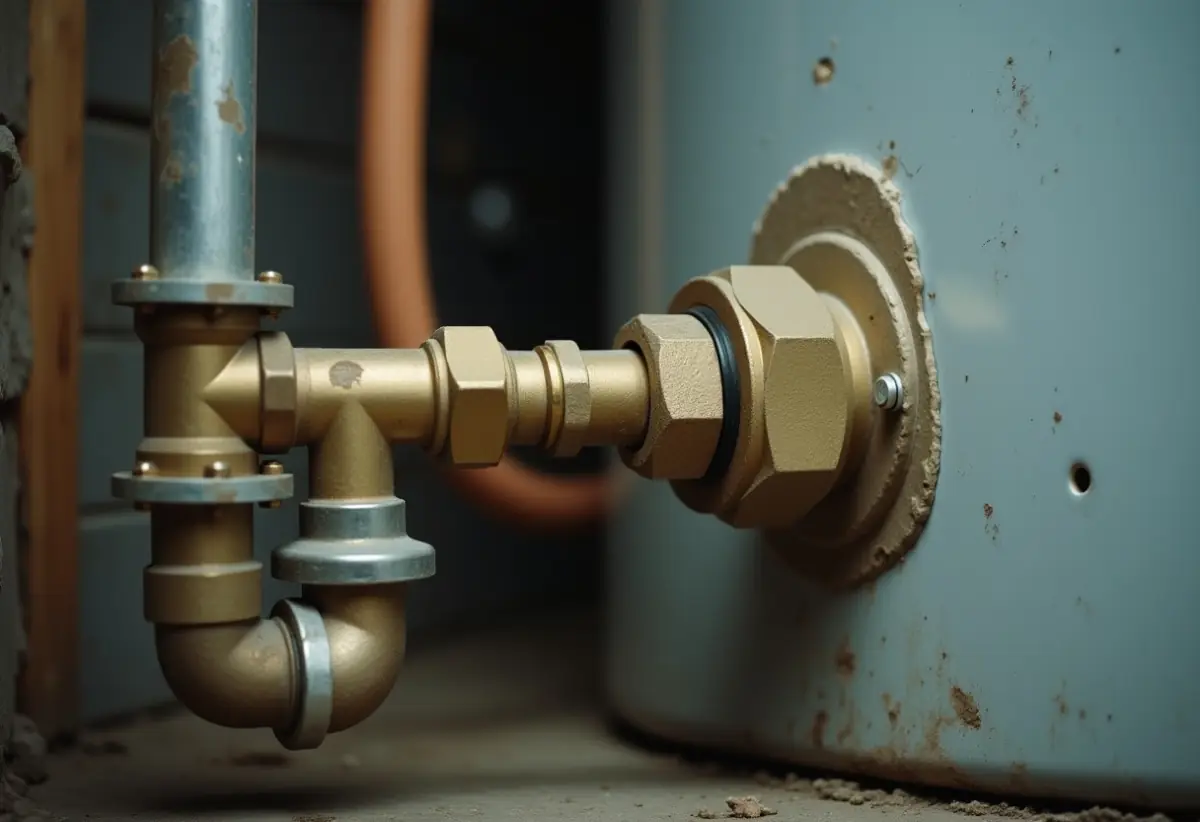
Most water heater gas leaks sit on the last few feet of pipe: the union, the flexible connector’s flare nuts, the sediment trap (drip leg) cap, the shutoff valve stem, or the threads at the gas control inlet. The tank does not carry gas, so leaks there are rare. Joints disturbed during a heater swap are the first suspects.
- Union: the three piece fitting that lets the heater come out; a cocked seat leaks at the center nut.
- Flexible connector: meant for the final 3 to 6 feet and never for runs through walls or floors; a kinked or reused one leaks at a flare nut.
- Drip leg: the capped nipple below the tee that catches scale and moisture; its cap gets bumped loose.
- Gas control inlet: a 1/2 inch NPT connection, per Bradford White; poor sealant or a cracked fitting leaks right at the valve.
The U.S. Consumer Product Safety Commission has warned that older uncoated brass flexible connectors can crack or pull apart where the tube is soldered to its end fitting, and advises having a qualified professional check and replace them rather than moving the appliance to look. Modern connectors are coated stainless steel with a certification tag.
Gas odor at the knob points to the control itself. Our guide to the water heater gas control valve covers the manifold check (4.0 inches water column for natural gas, 10.0 for LP, per the Bradford White FVIR service manual) and why Bradford White calls its White-Rodgers valves non repairable.
Why does my water heater smell like exhaust instead of gas?
An exhaust smell near the heater usually means backdrafting: flue gas spilling out of the draft hood into the room instead of rising up the vent. Causes include a blocked or disconnected vent, a chimney left oversized after a furnace upgrade, and exhaust fans pulling the room negative. Spilled exhaust can carry carbon monoxide, which has no smell at all.
Plumbers check it with a spillage test. The informative IFGC Appendix D describes it: close windows and doors, run the dryer and every exhaust fan, fire the heater, and after 5 minutes hold smoke at the draft hood relief opening. The smoke should be drawn in. The appendix sets 200 ppm air free CO as the vent limit.
The CPSC counts about 170 such deaths a year and recommends a UL 2034 CO alarm on every level and outside sleeping areas. Soot on the draft hood, a scorched top or a yellow, lazy flame all mean the burner is starved for clean air; get the vent inspected before the heater runs again.
Why can’t you rely on your nose alone to catch a gas leak?
Natural gas and propane are odorless, so suppliers add a sulfur odorant, mercaptan, to make leaks smellable well before ignition. Sleep, a cold, age related loss of smell, and odor fade in propane tanks can all defeat it. A listed detector covers the hours when nobody is awake to smell anything.
For pipeline gas, 49 CFR 192.625 requires odorization detectable by a person with a normal sense of smell at one-fifth of the lower explosive limit, verified by periodic instrument sampling. Propane follows NFPA 58, which references 1 pound of ethyl mercaptan per 10,000 gallons as an effective rate.
Bars use the 5 percent top of the 4.4 to 5 percent LEL range. The gap between the first two bars and the third is your escape margin. Mount a plug-in gas leak detector in the heater room within about 12 inches of the ceiling for natural gas, or of the floor for propane.
How do you soap-test water heater gas fittings after the utility clears the house?
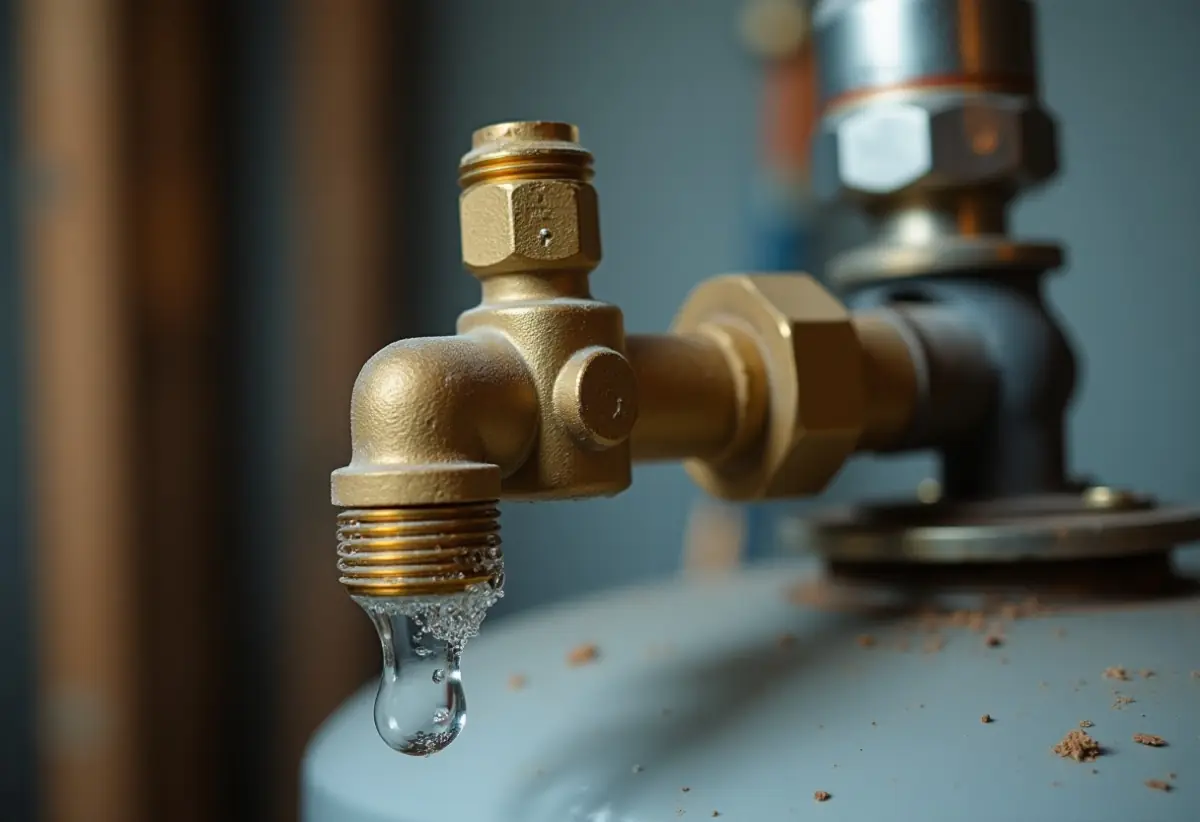
Once the utility has made the house safe and gas is back on, a soap solution finds the exact leaking joint. Brush or spray it on each fitting with the burner off; a leak blows growing bubbles or foam. Never use a flame, and never test while a strong odor is still in the room.
- Mix a few drops of dish soap into a cup of water, or buy gas leak detection solution.
- Turn the heater knob to Off or Pilot so the main burner stays off.
- Wet the shutoff valve’s stem nut and both pipe threads.
- Move to the tee, the drip leg cap, and the union’s center nut and threads.
- Wet both connector flare nuts, then the threads at the gas control inlet.
- Watch each joint. Steadily growing bubbles mean a leak; one or two that pop and stop are air in the mix.
- Wipe every fitting dry, since soap left on brass can corrode it.
Found bubbles? Close the shutoff and call a licensed plumber or gas fitter. Cranking a flare nut tighter can split the flare. Under IFGC 406.4.1, new or altered piping is tested at no less than 1.5 times working pressure and never below 3 psig, so a repaired line gets a gauge test, not just soap.
Who fixes a water heater gas smell, and when is it the utility’s job?
The gas utility handles the emergency: it answers odor calls, tests the air, checks the meter and service line, and can shut off or tag a leaking appliance. House side piping and appliances are the owner’s, so the repair goes to a licensed plumber or gas fitter, depending on your state.
The repair follows the same rules as any gas line plumbing job. Many jurisdictions require a permit to alter gas piping, and IFGC 409.5 calls for an accessible appliance shutoff valve in the same room and within 6 feet. Missing or too far? Ask for one while the line is open.
A thermocouple runs $5 to $10 as a part, per Family Handyman, and HomeGuide puts a gas control valve replacement at $150 to $550 installed. HomeGuide suggests weighing a new heater instead when the repair tops $500 or the tank is more than 10 years old.
How we sourced this
We ran two searches on this SERP in October 2026; its People Also Ask questions shaped the FAQ. Figures come from the eCFR text of 49 CFR 192.625, NFPA 715 committee documents on UL 1484, supplier safety data sheets, the CPSC Carbon Monoxide Information Center, IFGC Appendix D (Seattle Fuel Gas Code) and ICC IFGC 2021 Sections 406.4.1 and 409.5, Honeywell form 60-2087-4, the Bradford White FVIR manual, University of Georgia Extension, the Minnesota Department of Health, Family Handyman and HomeGuide. The connector guidance reflects CPSC’s long running uncoated brass connector alert; its web page did not load in our October 2026 check, so we cite no figures from it. We excluded incident counts we could not trace to a primary report.
Frequently asked questions
Is it normal to smell gas by a water heater?
A brief whiff when a standing pilot goes out or the burner lights can happen, because a little unburned gas escapes before it burns or the safety valve closes. A smell that lingers, grows stronger, or returns every time you walk past is not normal. Treat it as a leak, leave the house, and call the gas utility from outside.
How do I know if my water heater is leaking gas?
The signs are a sulfur odor at the heater that does not fade, a hiss near the gas valve or supply pipe, and a plug-in gas alarm sounding. Once the utility has made the home safe, soap solution brushed on each joint shows a leak as growing bubbles, most often at the union, connector nuts, drip leg cap or valve inlet.
What if I smell gas but no leak is detected?
Check three other sources. Rotten-egg odor only from hot taps is hydrogen sulfide made in the tank, not fuel gas. A sharp exhaust smell at the draft hood points to backdrafting and possible carbon monoxide. A nearby furnace, range or dryer can also be the source. If the smell returns, ask a gas fitter to pressure test the piping.
Is a water heater gas smell dangerous?
It can be. Natural gas becomes ignitable at roughly 4.4 to 5 percent in air, and federal rules require utility gas to be smellable at one-fifth of that level so you get warning first. A spark from a switch, phone or motor can ignite gas above the limit, which is why the first step is always to leave and call from outside.
Can a gas water heater leak carbon monoxide?
Yes. A gas heater makes carbon monoxide when it burns poorly, and a blocked or backdrafting vent spills that exhaust into the room. CO has no odor, so a CO alarm listed to UL 2034 is the only reliable warning, and CPSC recommends one on every level and outside sleeping areas. Soot at the draft hood calls for a vent check.
Should I turn off the gas to my water heater if I smell gas?
Not if the smell is strong. The lighting label on gas water heaters says not to touch electric switches or use a phone in the building, and to call the gas supplier from a neighbor’s phone. Leave first and let the utility decide whether to shut the meter. For a faint, steady smell, turning the heater knob to Off by hand is fine.