Sewer Cleanout Cap: Sizes, Types and How to Remove a Stuck One (IPC 708 Rules Included)
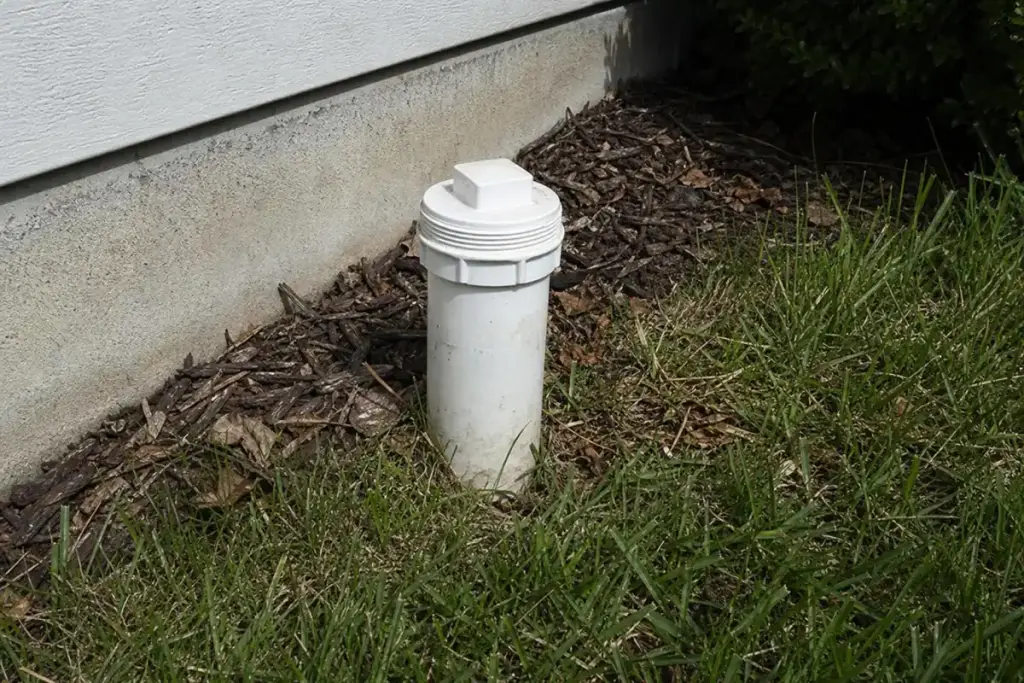
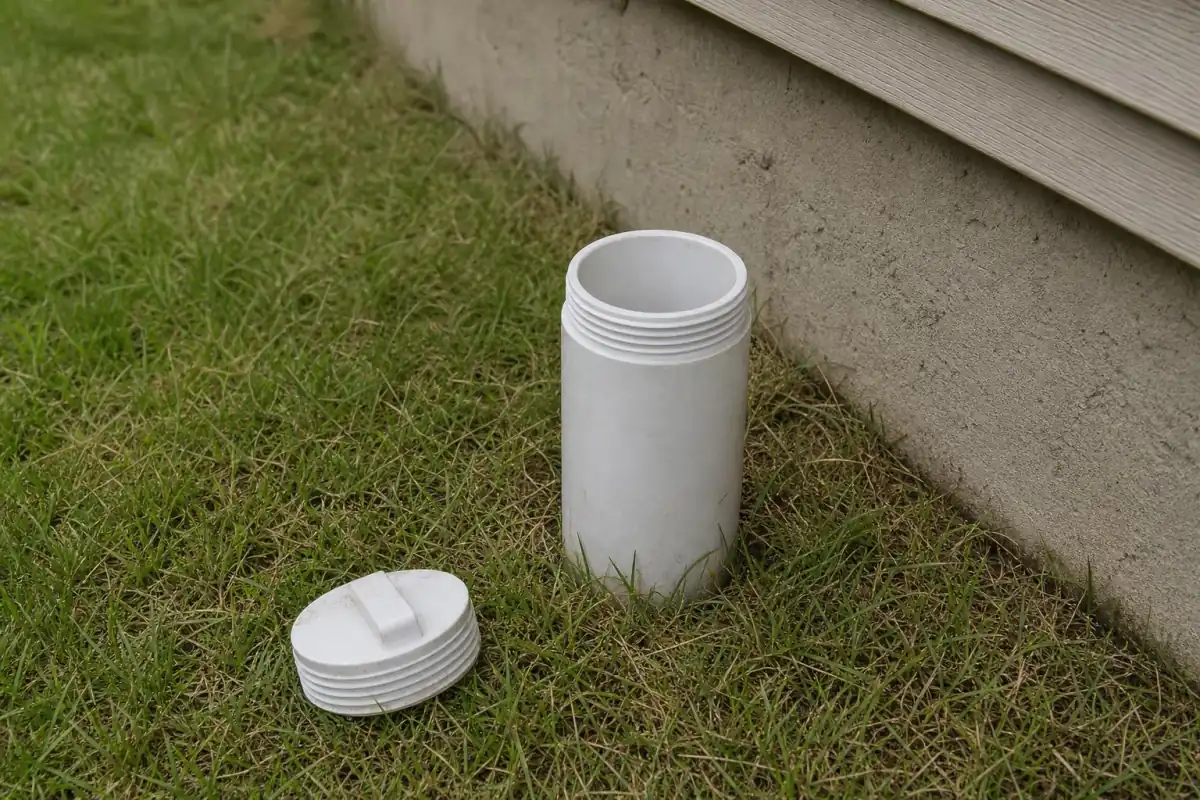
A sewer cleanout cap is the threaded plug that seals the access opening on your main drain, almost always 3 or 4 inches on a house. IPC 708.1.7 requires a raised square, countersunk square or countersunk slot head, with brass allowed only on metal pipe.
Caps fail three ways: a mower snaps a PVC head off, a brass plug rusts solid in a cast-iron hub, or the cap goes missing. If you are still locating your cleanouts, start with how a sewer line cleanout is laid out, then come back with a tape measure.
Which cleanout cap do you have? Six types with sizes and part numbers
Six cap types cover nearly every residential cleanout, and the head shape identifies yours before you touch a wrench. Sizes and part numbers come from each maker’s catalog or spec sheet; prices come from the named dealer listing on 14 November 2026.
| Cap type | 3, 4 and 6 in parts | Material | Posted price | Status under IPC 708 |
|---|---|---|---|---|
| Threaded plug, raised square head | Sioux Chief 876-RS30, 876-RS40, 876-RS60 | Brass | None on maker page | Listed head type; brass only on metal pipe |
| Countersunk plug (flush top) | Sioux Chief 876-CS30, CS40, CS60; Oatey 42743 (3 in), 42745 (4 in) | Brass | KSCdirect sells 42745 in multiples of 12, price at login | Required in a floor or walkway with no trim cover (708.1.11) |
| PVC or ABS threaded plug | 3 and 4 in, matched to the riser | PVC or ABS | Not priced here | Must meet Table 702.4 plastic fitting standards |
| Test plug (test cap) | IPS Test-Tite 83657 (3 in), 83658 (4 in), 83659 or 83660 cast iron (6 in) | Plated steel, rubber | None on spec sheet | Temporary; tests up to 40 vertical feet |
| Expansion (gripper) plug | Oatey Gripper 270237 (3 in), 270245 (4 in); Cherne 270548 Hub-Fit (4 in hubs) | ABS, rubber, galvanized bolt | $9.92 and $12.13, Cooney Brothers; $16.99, minimum 9, WebstaurantStore | Not a listed head type; stopgap only |
| Pop-up relief cap | Jones Stephens S62304 Sewer Popper (3 and 4 in); Pasco 62304 (4 in), 62306 (6 in) | White PVC | None on maker page | Section 708 is silent; ask your inspector |
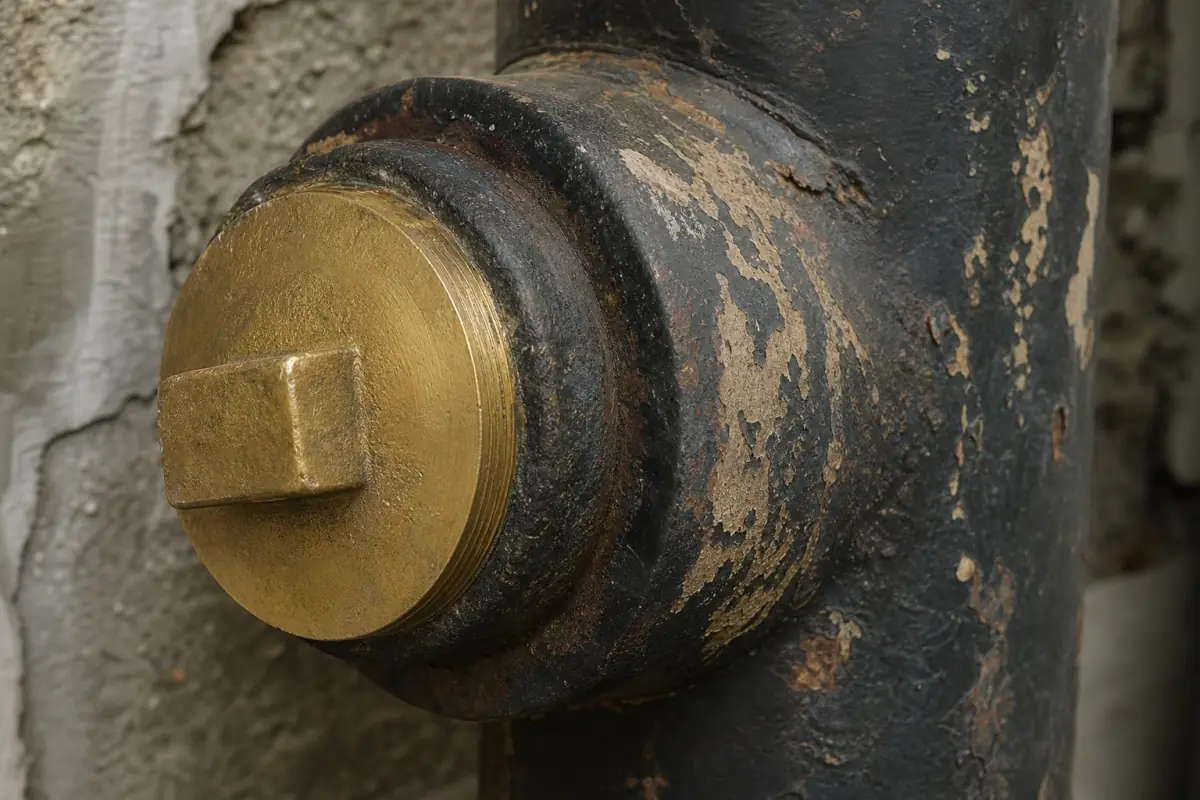
Two readings matter more than the prices. The plug in a cast-iron cleanout is brass, not cast iron: 708.1.7 says copper-alloy plugs conform to ASTM A74 and serve metallic piping only, so a seized “cast iron cap” in an old basement is almost always a brass plug in a cast-iron ferrule. And a $12.13 gripper is the cheapest way to close a 4 inch opening whose threads are already destroyed.
How do you measure a cleanout cap size before buying one?
Measure across the male threads of the old plug, or the inside of the riser for a gripper, and match the reading below. Plug threads are standard pipe threads, so the thread diameter equals the outside diameter of the nominal pipe size, not the number on the label.
| Across the threads | Nominal plug | Expansion or test plug fit, per listing |
|---|---|---|
| About 3.50 in | 3 in | Oatey 270237, 3 to 3.1 in pipe ID |
| About 4.00 in | 3-1/2 in (Sioux Chief 876-RS35, 876-CS35) | None listed |
| About 4.50 in | 4 in | Oatey 270245, 4.06 in; Cherne 270548, 4-7/16 to 4-1/2 in hubs |
| About 6.63 in | 6 in | IPS 83659 or 83660, testing only |
The 3-1/2 inch row catches owners of older cast-iron cleanouts. IPC 708.1.5 lets cast-iron cleanout sizes follow the cast-iron fitting standards in Table 702.4, and lets stack cleanouts run one size smaller than the stack.
What does IPC Section 708 require of a cleanout plug?
IPC Section 708 fixes the plug material, head shape, size, clearance and access, and the 2024 IRC repeats the same plug rule in Section P3005.2.6. The rows below come from the 2021 IPC Section 708 text on UpCodes (Texas adoption) and the IRC P3005.2.6 plug section; local amendments can change both.
| Section | Requirement | What it means for your cap |
|---|---|---|
| 708.1.7 | Copper-alloy, plastic or other approved material; copper-alloy plugs meet ASTM A74 and go on metallic piping only | Brass in cast iron or steel, PVC in PVC, ABS in ABS |
| 708.1.7 | Raised square head, countersunk square head or countersunk slot head | A rubber expansion plug is none of the three |
| 708.1.5 | Same size as the pipe served, never required larger than 4 in | A 6 in sewer can carry a 4 in cleanout and plug |
| 708.1.10 | 18 in clear in front of the opening for 6 in and smaller pipe; 36 in for 8 in and larger | Keep shelving away from a basement cleanout |
| 708.1.11 | Below-grade cleanouts extended so the plug top is at or above grade; plugs never covered with mortar, plaster or other permanent material | A cap buried under sod, or concreted over to stop odors, is a violation |
That grade rule is why buried caps cause so many service calls. If probing the yard finds nothing, trace where the sewer line runs from the foundation and search within 10 feet of where the building drain meets the building sewer, the limit 708.1.3 sets for that junction cleanout.
How to remove a stuck sewer cleanout cap without cracking the fitting
Check for a backup first, then match the method to the plug: plastic comes out with steady force on the square, brass in cast iron needs penetrating oil, and the chisel is the last step before cutting. Stop at the first step that frees the cap.
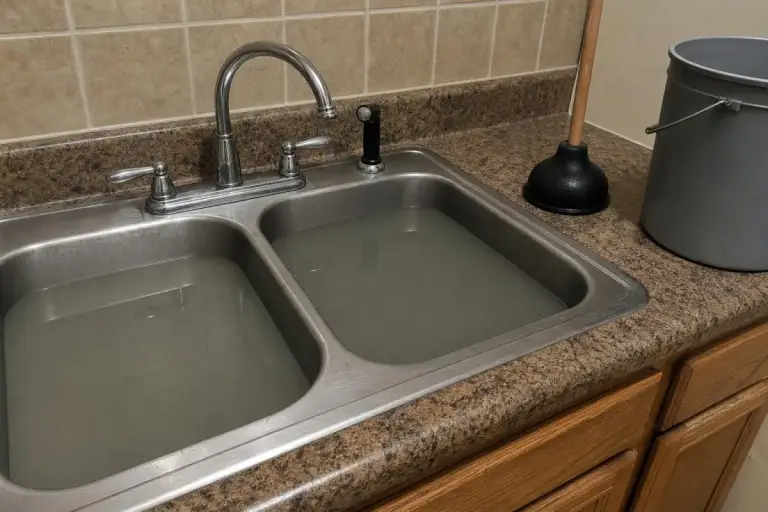
- Check the lowest drain. Standing water in a basement floor drain means the riser under the cap is full. Loosen the cap a quarter turn at a time from beside the pipe, bucket ready, so the column drains slowly.
- Identify the plug. White or black plastic in a plastic riser, or brass in a gray cast-iron hub. Sioux Chief’s 876 series is brass in both head styles.
- Plastic plug. Put a pipe wrench on the square head and turn counterclockwise as seen from above. Brace the riser with a second wrench, because the twist otherwise lands on the solvent-welded joint below.
- Brass plug in cast iron. Soak the thread line with penetrating oil, let it sit overnight, then turn the raised square with a long-handled pipe wrench.
- Chisel method. If the square rounds off, set a cold chisel against the outer edge of the brass plug, angled counterclockwise, and strike it with a hammer to rotate the plug. Brass is softer than the cast-iron ferrule, so the chisel bites the plug, not the fitting.
- Stop and call. If the hub cracks or the PVC adapter turns with the plug, the fitting must be cut out. Ask a plumber for a cleanout fitting replacement.
With the cap off, the opening is ready for snaking the main sewer line through the open cleanout. Before reinstalling, wire-brush the female threads and wrap PTFE tape clockwise on the new plug.
How hard does a backed-up line push on the cap?
Every foot of sewage standing above the cap adds 0.433 psi, because water weighs 62.4 pounds per cubic foot and a square foot holds 144 square inches. Multiply by the bore area under the cap to get the lifting force.
| Sewage above the cap | Pressure | 3 in Sch 40 bore (7.39 sq in) | 4 in Sch 40 bore (12.73 sq in) |
|---|---|---|---|
| 2 ft | 0.87 psi | 6.4 lb | 11.0 lb |
| 6 ft | 2.60 psi | 19.2 lb | 33.1 lb |
| 10 ft | 4.33 psi | 32.0 lb | 55.2 lb |
Inputs are the Schedule 40 bores of 3.068 and 4.026 inches. A seated plug carries these loads easily, but on its last thread a 4 inch cap with 6 feet of backup pushes back with 33 pounds, enough to jump out of your hand. Hence the quarter-turn rule.
Converted to head, the Oatey 270245’s 17 psi equals 39.2 feet, the Cherne 270548’s 13 psi equals 30.0 feet, and the IPS Test-Tite spec sheet rates its plugs for 40 vertical feet. All three exceed a house backup, so a gripper that slips in a riser points to worn walls or the wrong size, not too much pressure.
Replacing a broken or missing cleanout cap
Replace a missing cap the same day with one of the same size, material and thread. The City of Fort Oglethorpe, Georgia, cleanout cap sheet gives 4 reasons: rainwater that raises treatment costs, debris that causes backups, system wear, and rodents and small animals entering the system and the home.
Sewer gas is a fifth. An open cleanout sits on the sewer side of every fixture trap, so no water seal stops sewer air there; IPC 708.1.8 demands gas-tight covers on indoor manholes for the same reason. HUD’s NSPIRE Leak, Sewage System standard (V3.0, June 2023) rates a missing outdoor cleanout cap a Moderate deficiency with a 30 day correction window and a Housing Choice Voucher fail.
For a PVC cap snapped off at the threads, back the stub out with locking pliers, then thread in a new plastic plug. If the adapter threads are stripped, cut below the adapter and solvent-weld a new one, with an Oatey 270245 in the 4 inch riser meanwhile. Pasco’s Pop Top spec sheet says its 62304 and 62306 caps thread into a 4 or 6 inch cleanout or female-by-socket adapter.
A pop-up relief cap such as the Jones Stephens S62304 Sewer Popper lifts during a backup and sends overflow outdoors, which only works if its rim sits lower than the lowest drain inside. It does not stop a surcharged public main from pushing sewage toward the house; that is the job of a sewer backwater valve on the building drain.
Who replaces the cleanout cap: homeowner or utility?
The property owner replaces the cap in all three local systems checked here, because the cleanout sits on the private lateral. Calvert County, Maryland maintains the line from the main trunk to the property-line cleanout, makes owners keep a buried cleanout accessible, and asks residents to call 410-535-1600, ext. 2329 first on a backup; if the county side is clear or no property-line cleanout exists, the owner pays.
Minneapolis Public Works states that cleanouts belong to the property owner, that the city cannot install one, and that the typical local cleanout is a 4 inch capped pipe with a steel or plastic cover.
How we sourced this
Code: 2021 IPC Section 708 (Texas adoption, UpCodes) and 2024 IRC P3005.2.6. Parts: Sioux Chief 876 catalog pages, IPS Test-Tite and Pasco spec sheets, the Jones Stephens S62304 page, and KSCdirect, Cooney Brothers and WebstaurantStore listings checked 14 November 2026. Utility rules: Calvert County, Minneapolis, Fort Oglethorpe and HUD NSPIRE. The pressure table is our arithmetic. Prices for brass plugs, PVC plugs and the S62304 were left out because no listing we could open posted one.
Sewer cleanout cap questions
What size is a standard sewer cleanout cap?
Most house cleanouts take a 3 or 4 inch plug, because IPC 708.1.5 sizes the cleanout to the pipe it serves and never requires more than 4 inches. Measure across the plug threads. About 3.5 inches means a 3 inch plug, about 4.5 inches means a 4 inch plug.
Can I put a brass plug in a PVC cleanout?
Not under the IPC. Section 708.1.7 limits copper-alloy (brass) cleanout plugs to metallic piping and requires plastic plugs that meet the plastic fitting standards in Table 702.4. Use a PVC plug in PVC and an ABS plug in ABS.
Is a rubber gripper plug acceptable as a permanent cleanout cap?
Treat it as temporary. The Oatey Gripper 270245 is a mechanical pipe plug rated 17 psi working, and IPC 708.1.7 lists only raised square, countersunk square and countersunk slot heads for cleanout plugs. Ask your inspector before leaving one in for good.
Can a missing cleanout cap make the house smell like sewer?
Yes. An open cleanout connects the yard or basement straight to the sewer side of every fixture trap, so sewer air has no water seal to stop it. HUD’s NSPIRE standard rates a missing outdoor cleanout cap a Moderate deficiency with a 30 day repair window.