PEX A vs PEX B: Differences, Fittings and Cost
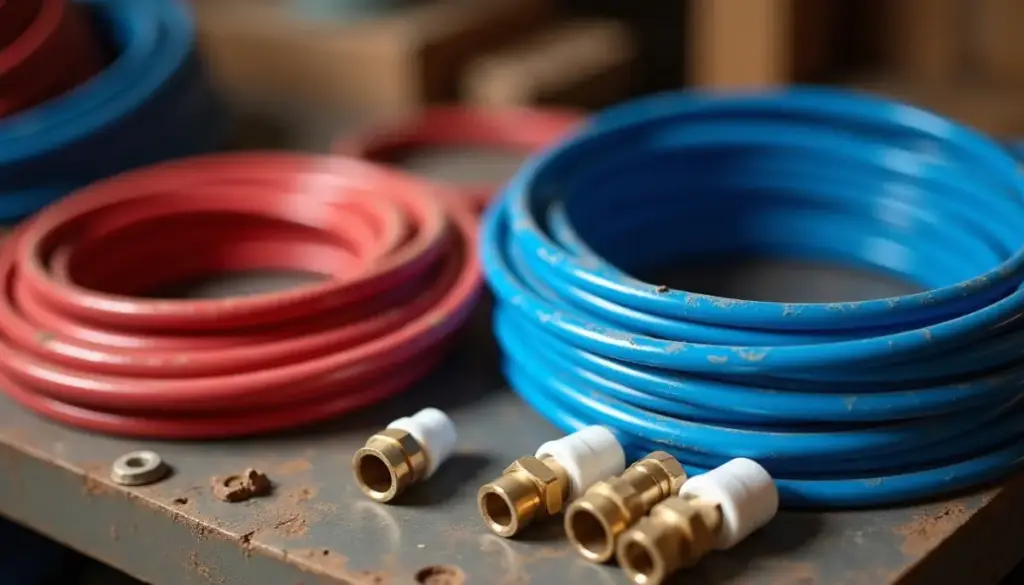
PEX A vs PEX B is a manufacturing difference, not a rating gap: both carry the same ASTM F876 ratings, but PEX-A bends easier, takes expansion fittings and costs roughly 1.5 to 2 times more.
Key Takeaways
- The Plastics Pipe Institute (PPI) Technical Note TN-17 ties PEX-A to the peroxide method, PEX-B to the silane method and PEX-C to electron beam, and says the letters are not a performance rating.
- All three must meet ASTM F876, which PPI says yields standard ratings of 160 psi at 73°F and 100 psi at 180°F for SDR9 tubing.
- The German DIN 16892 standard sets minimum crosslinking of 75% for PEX-a, 65% for PEX-b and 60% for PEX-c; ASTM F876 requires 65% to 89% for any type.
- Crimp (ASTM F1807) and clamp fittings work on PEX-A and PEX-B. Cold expansion fittings (ASTM F1960) need PEX-A or PEX-B that its maker lists for expansion, per Boshart.
- Chlorine resistance is printed per product, not per letter. A first digit of 5 means rated for 100% of the time at 140°F, per PPI, and both PEX-A and PEX-B products carry it.
- In October 2026 listings, a 1/2 inch by 100 foot PEX-B coil ran $33.30 to $34.99, while PEX-A coils ran $51.33 to $64.99 at Parts Town, SupplyHouse and Home Depot.
What is the difference between PEX A and PEX B?
The difference between PEX A and PEX B is how the polyethylene gets crosslinked. PEX-A uses organic peroxides that link the chains during extrusion. PEX-B grafts a silane molecule onto the polymer and finishes curing in moisture. Per the Plastics Pipe Institute, both must pass the same ASTM F876 tests, so the letter tells you the recipe, not the grade.
That last point surprises a lot of buyers. PPI’s Technical Note TN-17 states that “these letter designations are not related to any type of performance rating system.” A is not first place and C is not last place. Each method can turn out pipe that passes the same tests.
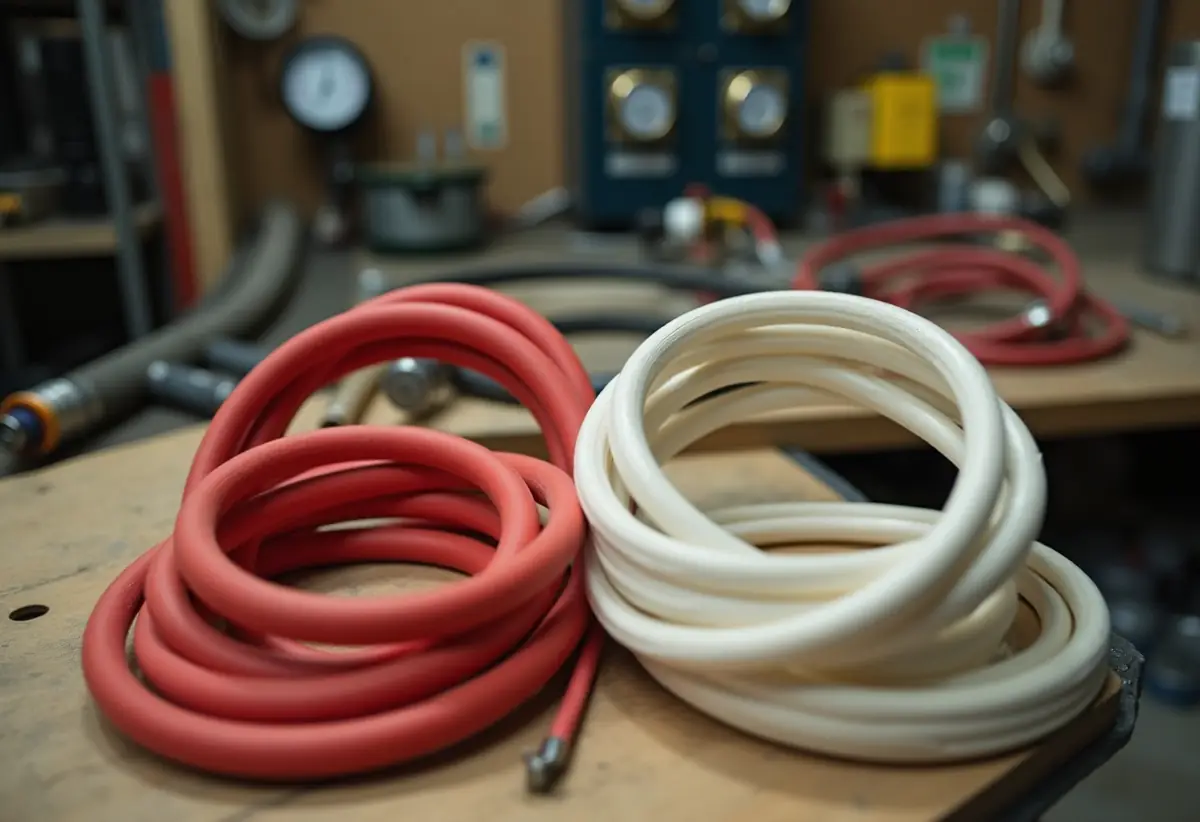
The recipe still changes how the pipe handles on the job. The peroxide route, often called the Engel method and dated to the 1960s by Wikipedia’s history of PEX, produces the most flexible tube with the strongest shape memory. Silane PEX-B comes out stiffer, which some installers like for straight runs and others fight in tight joist bays. If you are new to the material, start with what PEX is and how it works, then come back here for the type split.
How much more crosslinked is PEX-A than PEX-B?
PEX-A typically reaches a higher degree of crosslinking than PEX-B, but the US standard does not grade them separately. ASTM F876 requires 65% to 89% crosslinking for any PEX tubing. The German DIN 16892 standard sets type minimums of 75% for peroxide PEX-a, 65% for silane PEX-b and 60% for electron beam PEX-c.
More crosslinking is not always better. Over-crosslinking can make polyethylene brittle and prone to stress cracking, per Wikipedia’s summary of the standard, and ASTM caps the range at 89%. Too little leaves the pipe closer to plain HDPE, which PPI notes is typically limited to about 140°F in pressure service, while PEX handles at least 180°F.
Forum figures such as “85% for PEX-A and 65 to 70% for PEX-B” circulate on Green Building Advisor, but they are anecdotal. The defensible claim is narrower. Any listed PEX sits inside the ASTM window, and peroxide tube must clear a higher floor under DIN 16892.
Is PEX-A more flexible, and can you fix a kink with heat?
Yes. PEX-A is the most flexible of the three types, and its thermal memory lets a kink often be reversed with a heat gun, according to Roto-Rooter’s PEX-A vs PEX-B guide. PEX-B is stiffer, and a kink in it generally has to be cut out and spliced with a coupling, which adds two joints to the run.
Flexibility means fewer elbows through framing, and fewer fittings mean fewer leak points. Roto-Rooter also credits PEX-A’s slight ability to stretch with better freeze tolerance than stiffer PEX-B.
Heat repair has limits. Use a heat gun, never a torch, and follow the tubing maker’s instructions, since not every product is approved for it. Our rundown of PEX pipe problems covers which failures are real and which are myths.
Can you use PEX B fittings on PEX A?
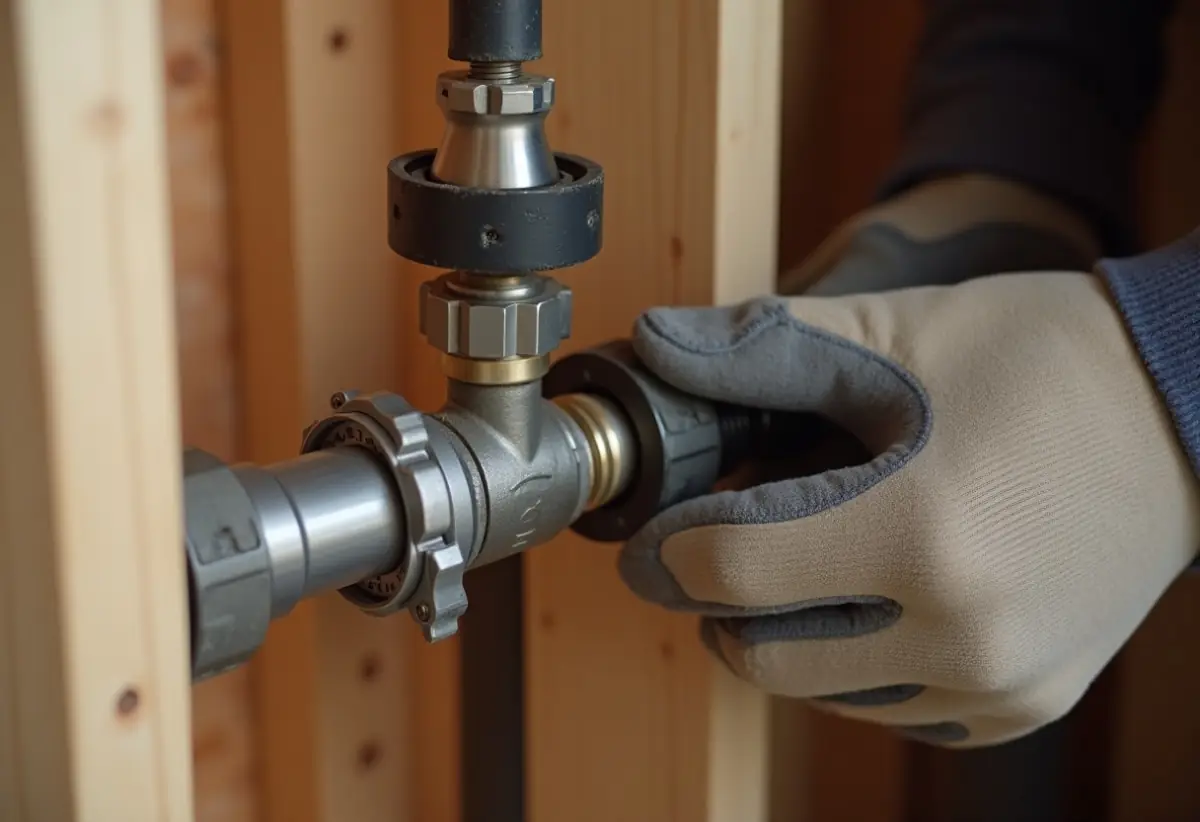
Usually yes. Crimp fittings (ASTM F1807 metal or F2159 plastic insert) and stainless clamp rings (ASTM F2098) are written for SDR9 PEX tubing of any type, so a PEX-B crimp fitting will seat on PEX-A. The reverse is the problem. ASTM F1960 expansion fittings need tubing that stretches and shrinks back, which is the PEX-A job.
PPI’s TN-17 lists the fitting standards that apply to PEX tubing, and none of the insert-fitting standards are limited to one letter. Fitting maker Boshart says its stainless crimp fittings fit PEX-A, PEX-B and PEX-C. It also notes that some makers now list their PEX-B for cold expansion fittings, and that checking the pairing with the manufacturer is the installer’s job.
- Expansion with PEX ring (ASTM F1960): PEX-A, or PEX-B only where the tubing maker lists it. Uponor ProPEX is the best-known system.
- Expansion with metal sleeve (ASTM F2080): designed for PEX pipe, used by systems such as Rehau EverLOC.
- Copper crimp ring (ASTM F1807 or F2159): PEX-A, PEX-B and PEX-C.
- Stainless cinch clamp (ASTM F2098): PEX-A, PEX-B and PEX-C.
- Push-fit (ASSE 1061): all types, per the fitting maker’s listing.
For a side-by-side on tool cost and failure modes, see our breakdown of PEX crimp vs clamp vs expansion. One practical warning: many tubing warranties only cover a maker’s own fittings, so mixing brands can be legal and still leave a job uncovered. Before matching fittings and brands, check whether a home-run manifold layout changes how warranty coverage applies across a job.
Do PEX A and PEX B have different pressure and chlorine ratings?
No, not by type. PPI says SDR9 PEX tubing carries standard ratings of 160 psi at 73°F and 100 psi at 180°F, and ASTM F877 systems are intended for 100 psi service up to 180°F. Chlorine and UV resistance are tested and printed product by product, so a PEX-B coil can outrank a PEX-A coil, or the other way around.
The four-digit code on the print string tells you what you bought. Per PPI TN-17, the first digit is chlorine resistance under ASTM F2023 testing. A 5 means rated for 100% of the time at 140°F, a 3 means 50% at 140°F and 50% at 73°F, a 1 means 25% at 140°F and 75% at 73°F, and a 0 means not tested or did not pass.
The second digit is UV exposure: 1 for one month, 2 for three months and 3 for six months. The last two digits are the hydrostatic design stress divided by 100, so “06” means 630 psi at 73°F. Uponor’s print-string guide shows a chlorine digit of 5 on its PEX-A, and a Ferguson listing for Viega PEX-B tubing shows code 5306. Both hit the top chlorine rating.
That knocks down a common claim that PEX-B always resists chlorine better. Read the code on the pipe rather than the letter on the box. For a recirculating hot water loop, look for a 5 in the first digit regardless of type.
PEX A vs PEX B vs PEX C: how do all three compare?
PEX A vs PEX B vs PEX C comes down to how and when the plastic is crosslinked, which drives flexibility, fitting options and price. All three must meet ASTM F876, so pressure ratings match. PEX-A is crosslinked inside the extruder, PEX-B cures after extrusion in moisture, and PEX-C is hit with an electron beam after it is formed.
| Factor | PEX-A | PEX-B | PEX-C |
|---|---|---|---|
| Crosslinking method (PPI) | Peroxide (Engel), during extrusion | Silane grafting, moisture cure after extrusion | Electron beam after extrusion |
| Minimum crosslinking (DIN 16892) | 75% | 65% | 60% |
| ASTM F876 crosslinking window | 65% to 89% | 65% to 89% | 65% to 89% |
| Standard pressure rating (PPI) | 160 psi at 73°F, 100 psi at 180°F | 160 psi at 73°F, 100 psi at 180°F | 160 psi at 73°F, 100 psi at 180°F |
| Flexibility | Most flexible | Stiffer | Stiffer, less uniform crosslinking than Engel per Wikipedia’s summary |
| Kink repair | Often heat gun, if the maker approves | Cut out and couple | Cut out and couple |
| Expansion fittings (ASTM F1960) | Yes | Only where the tubing maker lists it | Not typical |
| Crimp and clamp (F1807, F2159, F2098) | Yes | Yes | Yes |
| Chlorine rating | Per product print code; 5 available | Per product print code; 5 available | Per product print code |
| 1/2 in x 100 ft coil, Oct 2026 | $51.33 to $64.99 | $33.30 to $34.99 | Not sampled |
| Brands in our sample | Uponor AquaPEX, Apollo expansion PEX | SharkBite, Apollo, Viega PureFlow | None sampled |
PEX-C was rare in the US retail listings we pulled. If a supply house offers it, check the same print code you would on A or B.
How much does PEX A cost compared with PEX B?
PEX-A costs roughly 1.5 to 2 times what PEX-B does at retail. In the October 2026 listings we checked, a 1/2 inch by 100 foot coil of PEX-B ran $33.30 to $34.99, while PEX-A coils of the same size ran $51.33 to $64.99. Fittings and tools widen the gap, because expansion tools cost more than a hand crimper.
The bigger cost swing is often the tool kit. A crew already carrying an expansion tool pays nothing extra to use PEX-A, while a homeowner doing one bathroom may spend more on the tool than on the pipe. Prices vary by region, color, oxygen barrier and coil length, so check your local counter.
Which do plumbers pick, PEX A or PEX B?
Many pros running new construction and repipes pick PEX-A with expansion fittings, because Uponor says its F1960 joints are full flow and there is no ring to under-crimp. Budget jobs, repairs and most DIY work lean toward PEX-B with crimp or clamp rings, since the tubing and tools cost less. Both pass code where PEX is allowed, so the choice is mostly workflow and price.
- Pick PEX-A for cold climates, crawl spaces, tight framing and manifold home-run systems where flexibility saves fittings.
- Pick PEX-B for straight runs, small repairs and jobs where the crew already owns crimp or clamp tools.
- Check the print code for a chlorine digit of 5 on recirculating hot water, and the UV digit if the pipe will sit on site for weeks.
- Match fittings to tubing by standard, and keep one maker’s tubing and fittings together where the warranty requires it.
- Confirm local code, since some jurisdictions limit PEX in certain uses or require specific listings.
Layout matters as much as the letter. Our guide on how to plumb with PEX walks through home-run vs trunk-and-branch layouts, tool choices and support spacing for either type.
How we sourced this
Manufacturing methods, pressure ratings, the material designation code and the list of fitting standards come from the Plastics Pipe Institute’s TN-17 (2021 edition), read in full. ASTM F876 and DIN 16892 crosslinking figures come from the Wikipedia summary of those standards, which we could not check against the paywalled standards themselves. Print-code examples come from Uponor’s print-string guide and a Ferguson listing for Viega PEX. Fitting compatibility comes from Boshart and PPI. Kink repair and freeze claims come from Roto-Rooter. Prices are listed retail prices for 1/2 inch by 100 foot coils captured on October 18, 2026 from Google Shopping results and a Home Depot listing, before tax, shipping or contractor discounts. We consulted 12 sources and cite 8. We excluded anonymous forum figures and repeated SEO pages that described the manufacturing methods incorrectly.
Frequently asked questions
Is PEX A better than PEX B?
Not in rated performance. The Plastics Pipe Institute says the A, B and C letters are not a performance ranking, and every type must pass the same ASTM F876 tests, including 160 psi at 73°F. PEX-A is more flexible, can be expanded and can often have a kink fixed with heat. PEX-B is stiffer and cheaper. Both are accepted for potable water where local code allows PEX.
Can you use PEX B fittings on PEX A?
Yes, if you mean crimp or clamp fittings. Insert fittings made to ASTM F1807 or F2159 with copper crimp rings or stainless clamps are written for SDR9 PEX tubing, and that covers PEX-A, PEX-B and PEX-C. Boshart, for example, lists its stainless crimp fittings for all three. Use the ring size and gauge the fitting maker specifies, and check the tubing maker’s warranty terms.
Can you use expansion fittings on PEX B?
Usually not. ASTM F1960 cold expansion fittings were built around PEX-A, which stretches and shrinks back onto the fitting. Some PEX-B tubing is now listed by its maker for F1960 expansion fittings, and Boshart notes that some PEX-B pipe is suitable for them. Only do it when the tubing print and the manufacturer’s literature say the pairing is approved.
What is PEX C used for?
PEX-C is crosslinked after extrusion with an electron beam, per the Plastics Pipe Institute. It must meet the same ASTM F876 requirements as PEX-A and PEX-B, so it can serve hot and cold potable water where listed. It was rare in the US retail listings we checked, and it typically joins with crimp or clamp fittings rather than expansion fittings.
Why is PEX A more expensive than PEX B?
Part of the gap is the process. PEX-A is crosslinked inside the extruder by the peroxide method, while PEX-B grafts silane and finishes curing in moisture. At retail in October 2026, a 1/2 inch by 100 foot coil of PEX-B listed at $33.30 to $34.99 and PEX-A at $51.33 to $64.99 in the listings we checked, roughly 1.5 to 2 times more.
Can you mix PEX A and PEX B in one system?
Yes, in most cases, because both are SDR9 tubing with the same outside diameter under ASTM F876. A brass or poly crimp coupling joins them. The catch is warranty, since many makers only cover their own tubing with their own fittings. Keep each joint type matched to the tubing it touches, and never put an expansion fitting on PEX-B unless it is listed for it.
Which PEX is best for freezing temperatures?
PEX-A has the edge. Its higher flexibility and ability to stretch give it more freeze margin than stiffer PEX-B, according to Roto-Rooter’s comparison, and expansion joints have no metal ring to split. No PEX is freeze-proof. Insulate and drain lines in unheated spaces, and keep all PEX out of sunlight beyond its rated UV exposure.
Do plumbers prefer PEX A or PEX B?
The article says many pros on new construction and repipes pick PEX-A with expansion fittings, since Uponor notes those joints are full flow with no ring to under-crimp. Budget jobs, repairs and most DIY work lean toward PEX-B with crimp or clamp rings, because tubing and tools cost less. Both pass code, so choice is mostly workflow and price.
Can I use crimp rings on PEX a?
Yes. The article states that crimp fittings under ASTM F1807 and clamp fittings work on both PEX-A and PEX-B. Boshart says its stainless crimp fittings fit PEX-A, PEX-B and PEX-C, since these insert fitting standards are written for SDR9 PEX tubing of any type rather than one letter.
Do PEX A and PEX B take the same fittings?
Mostly yes. Crimp fittings under ASTM F1807 or F2159 and stainless clamp rings under ASTM F2098 work on PEX-A and PEX-B alike. The difference is expansion fittings under ASTM F1960, which need PEX-A or PEX-B tubing that its maker specifically lists for expansion use, per Boshart.
Is SharkBite pex A or B?
According to the article comparison table, SharkBite is listed as a brand in the PEX-B sample, alongside Apollo and Viega PureFlow. The PEX-A brand sample instead lists Uponor AquaPEX and Apollo expansion PEX, so SharkBite falls under the PEX-B category in this sourcing.