How to Drain a Water Heater (Full Drain, Step by Step)
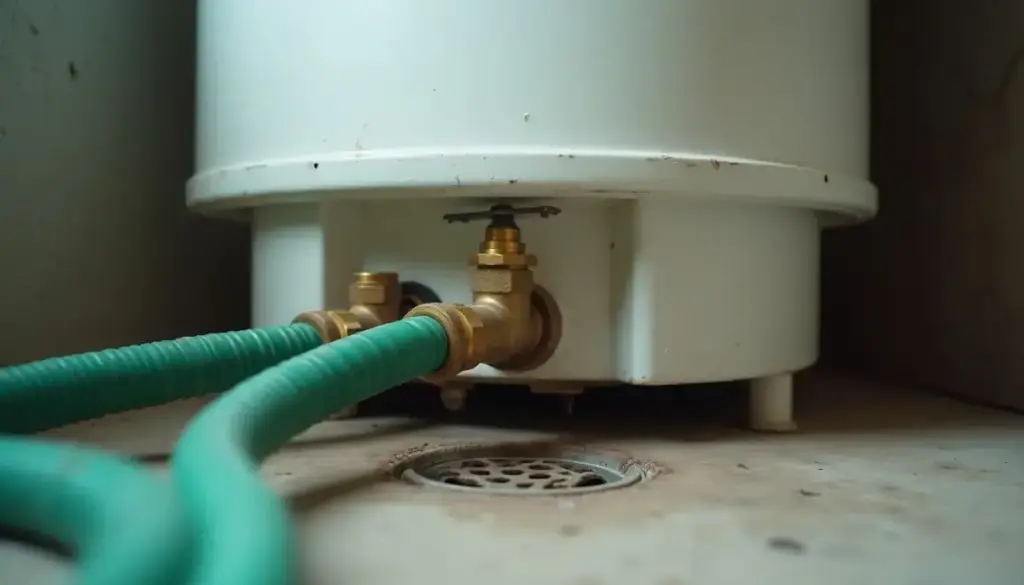
How to drain a water heater in short: cut the power or gas, let the tank cool, close the cold inlet, open a hot tap, run a hose downhill from the drain valve, and open it.
Key Takeaways
- CPSC counts about 3,800 tap water scald injuries and 34 deaths in US homes each year, so let the tank cool for a few hours (Hunker suggests a few hours or overnight) before you open the drain.
- CPSC says 140°F water causes third-degree burns in about 6 seconds and 120°F water in about 5 minutes.
- Draining a 50-gallon tank takes 15 minutes (Hunker) to about an hour (R.S. Andrews), or roughly 3.3 to 0.8 gallons per minute by our math.
- A.O. Smith says to fill the tank completely and run a hot faucet full stream for three minutes before restoring power, or the element can dry fire.
- At 8.34 pounds per gallon, a full 50-gallon tank holds about 417 pounds of water, which is why you drain before moving or replacing it.
When do you need to drain a water heater instead of flushing it?
You fully drain a water heater when the tank has to be empty: replacing or moving it, fixing a leaking tank, swapping a lower element, or protecting an unheated house from freezing. Routine sediment control is a different job. A flush runs cold water through the tank until the hose clears, and it never needs the tank bone dry. If that routine flush turns up white plastic flakes in the aerators, check out dip tube failure and replacement before you assume sediment is the culprit. Dip tubes aside, worn-out tanks eventually fail outright, which is why drain pan requirements matter long before that day arrives.
If your goal is the yearly cleanout, follow our guide on how to flush a water heater instead. Many repairs need only a partial drain.
| Reason | Full drain or flush? | Notes |
|---|---|---|
| Replacing the water heater | Full drain | Empty the tank completely; a full 50-gallon tank holds about 417 pounds of water. |
| Moving or hauling the tank | Full drain | Leave the drain open on the way to the truck; leftover water sloshes out of the fittings. |
| Vacant house in winter, heat off | Full drain | Leave the drain valve and a hot tap open; water below the valve may remain. |
| Leak from the tank body | Full drain | A rusted tank cannot be patched; drain it to stop the leak, then replace. |
| Lower electric element | Full drain | The A.O. Smith element procedure drains the tank before the element comes out. |
| Upper element, anode rod or dip tube | Partial drain | Drop the level a few gallons below the part; it relieves pressure and stops spills. |
| Annual sediment maintenance | Flush | Run cold water through the open drain until it runs clear. |
The anode, upper element and dip tube all thread into the top half of the tank, so draining a few gallons is usually enough. Our water heater anode rod guide covers that partial drain and how to judge whether the rod is spent.
What safety steps come before you drain a water heater?
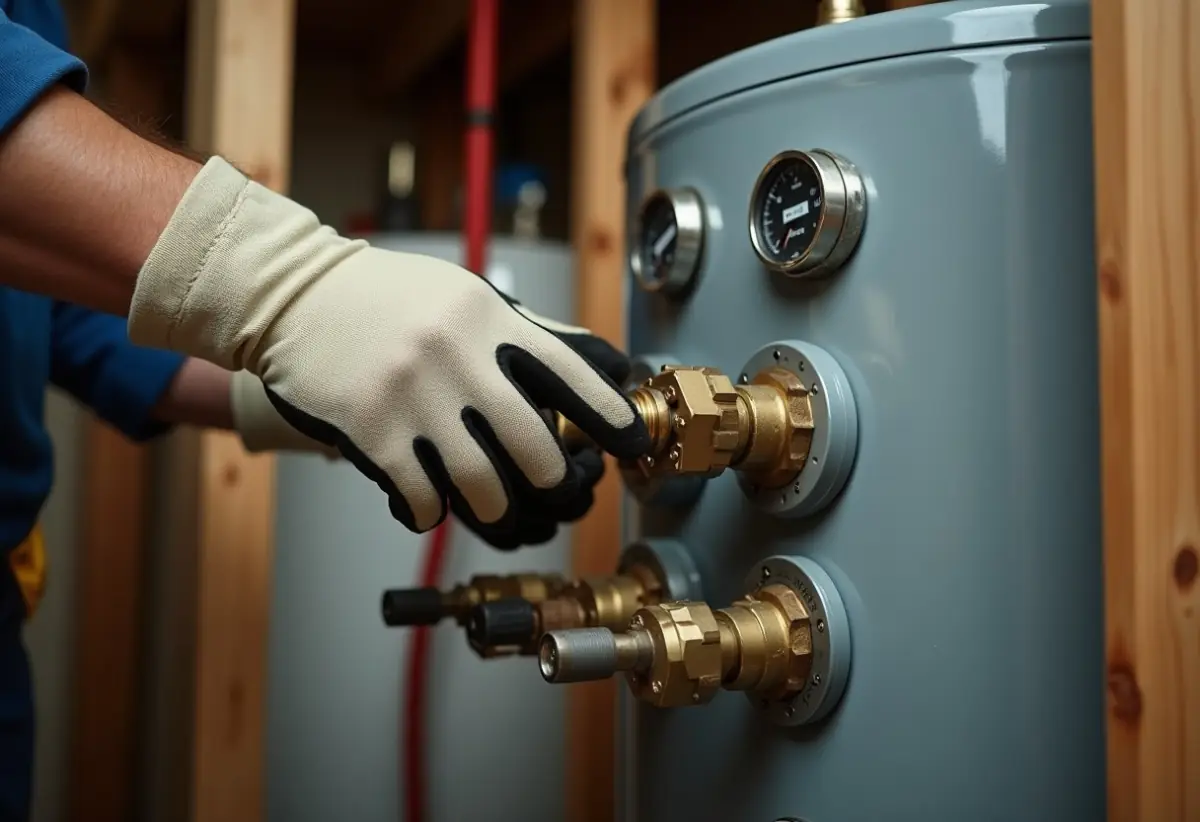
Before you drain a water heater, shut off the heat source and let the water cool. Flip the breaker for an electric unit, or turn a gas control to OFF or PILOT so the burner cannot fire on an empty tank. Then wait. A tank at full temperature can scald in seconds, and CPSC data shows how fast that happens.
The CPSC tap water scald alert puts the 150°F burn time at just 2 seconds. Most victims are older adults and children under 5.
- Electric: turn off the breaker and confirm with a non-contact voltage tester.
- Gas: turn the control knob to OFF for a replacement or vacant house, or PILOT for a short repair. Close the gas shutoff on the supply line if the tank is coming out.
- Cool down: wait a few hours, or run hot water at a tub until it runs cool. A.O. Smith says to be sure the water runs cool before draining to reduce scald risk.
How do you drain a water heater step by step?
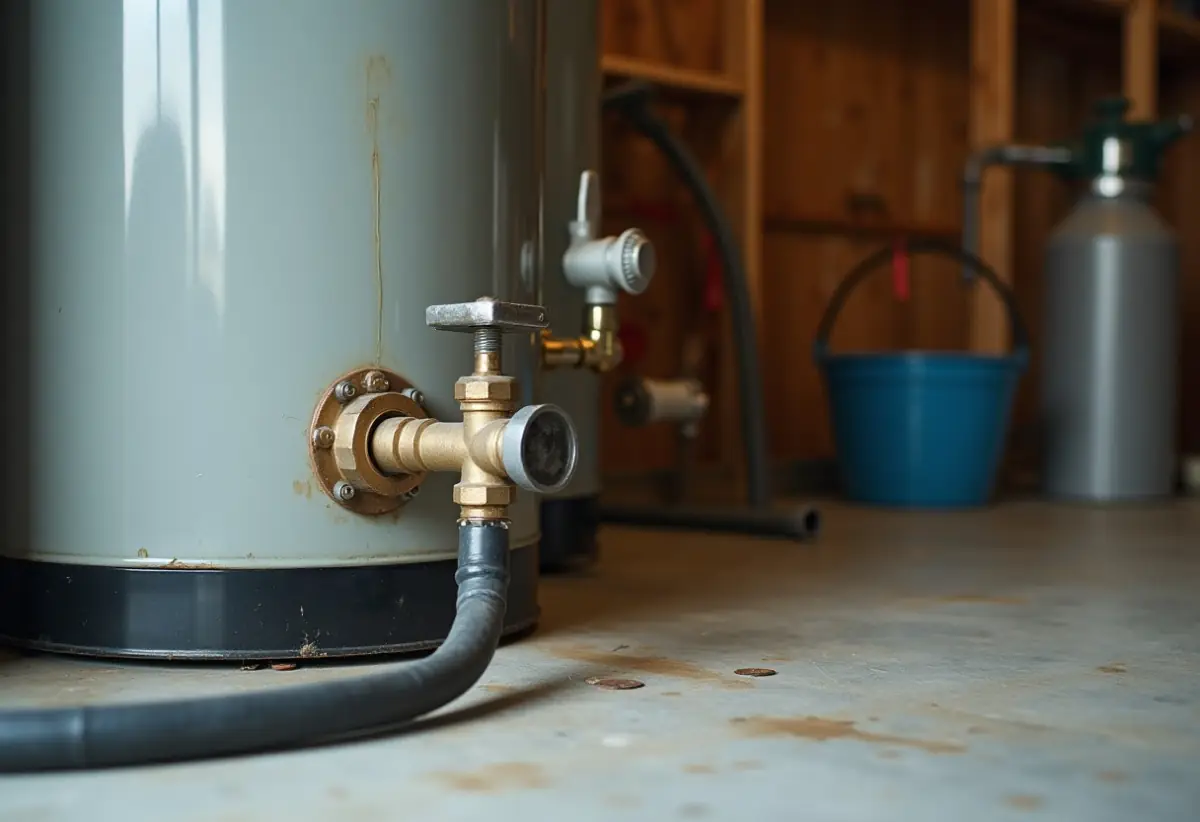
To drain a water heater, close the cold supply, open a hot tap to let air in, attach a hose to the drain valve, route it to a point lower than the valve, and open the valve. Let it run until the tank is empty and the water runs clear. The steps below follow the order in the A.O. Smith service instructions.
- Cut the heat. Breaker off for electric, gas control to OFF or PILOT for gas.
- Close the cold water inlet. It is the valve on the pipe feeding the top of the tank. If it is seized or will not stop the flow, use our guide on how to shut off the water to your house and close the main instead.
- Open a hot water faucet. Pick one on a floor above the heater if you can. This breaks the vacuum so the tank can empty.
- Attach a garden hose to the drain valve. Snug it so it does not drip.
- Route the hose downhill. The far end must sit lower than the drain valve: a floor drain, a sump pit, or the yard outside. A hose that climbs a wall will not flow.
- Open the drain valve. Use a flat screwdriver on slotted plastic valves.
- Stir up the bottom. When the flow slows, open the cold inlet for a few seconds at a time. Short bursts churn sediment toward the outlet.
- Finish clear. Once the tank is empty and the last of the water runs clear, close the drain valve and remove the hose.
If water is already pooling at the base, find the source first. Our water heater leaking guide sorts a failing tank from a loose fitting or a dripping relief valve, which changes whether a full drain is the right fix.
How long does it take to drain a water heater?
Draining a typical 40- to 50-gallon water heater takes about 15 minutes to an hour once the drain is open. Hunker puts it at no more than 15 minutes, while R.S. Andrews says about an hour. Cooling time beforehand adds hours, and sediment can push past both figures.
Neither source states a flow rate, so we worked one out. Fifty gallons in 15 minutes is about 3.3 gallons per minute. Fifty gallons in 60 minutes is about 0.8 gallons per minute. Applying both rates to common tank sizes gives the ranges below.
Expect the slow end on an older tank with a plastic factory valve, and the fast end on a clean tank with a short hose and a good drop.
Why won’t my water heater drain?
A water heater that won’t drain almost always has one of three problems: sediment plugging the drain valve, a vacuum because no hot tap is open, or a hose that is kinked or runs uphill. Check them in that order; only a dead valve needs parts.
| Symptom | Likely cause | Fix |
|---|---|---|
| Gurgles, then slows to a trickle | Vacuum lock with every tap closed | Open a hot faucet above the heater. As a last resort lift the relief valve lever, and replace that valve if it drips afterward. |
| Nothing at the hose end | Kinked hose, or hose end higher than the valve | Straighten the run and drop the end below the valve. Pull the hose off to see if water reaches the valve at all. |
| Strong start, then a trickle with grit | Sediment packing the valve opening | Open the cold inlet in short bursts to push sediment through. Probe the open valve with a stiff wire. |
| Barely flows from the first minute | Clogged or narrow plastic factory valve | Replace with a full-port brass ball valve sized to the tank fitting. |
| Drips at the stem after you close it | Worn washer or debris in the seat | Open and close it once to clear grit, then cap it with a garden hose cap until you replace it. |
Many tanks ship with a small plastic drain valve that clogs easily on hard water. A full-port brass ball valve has an opening close to the size of the tank fitting, so sediment flakes pass instead of jamming. On a full tank that refuses to drain, some plumbers close every tap to hold a vacuum and swap the valve fast over a pan, a job best left to a pro.
How do you drain a water heater for replacement or a vacant home?
For a replacement or a winter shutdown, drain the water heater all the way and leave it open. Shut off gas at the supply valve or power at the breaker, close the cold inlet, open a hot tap and the drain, and let it empty. For replacement, disconnect the lines only after the tank is empty.
Weight is the reason. Water weighs about 8.34 pounds per gallon, so a full 40-gallon tank holds about 334 pounds of water and a 50-gallon tank about 417 pounds, on top of the steel.
For a house that will sit empty with the heat off, leave the drain valve and a hot tap open so trapped water has room to expand. The drain valve sits a little above the bottom of the tank, so a small pool of water and sediment usually remains. Many owners in cold climates also have a plumber blow out the supply lines.
How do you refill a water heater without burning out the element?
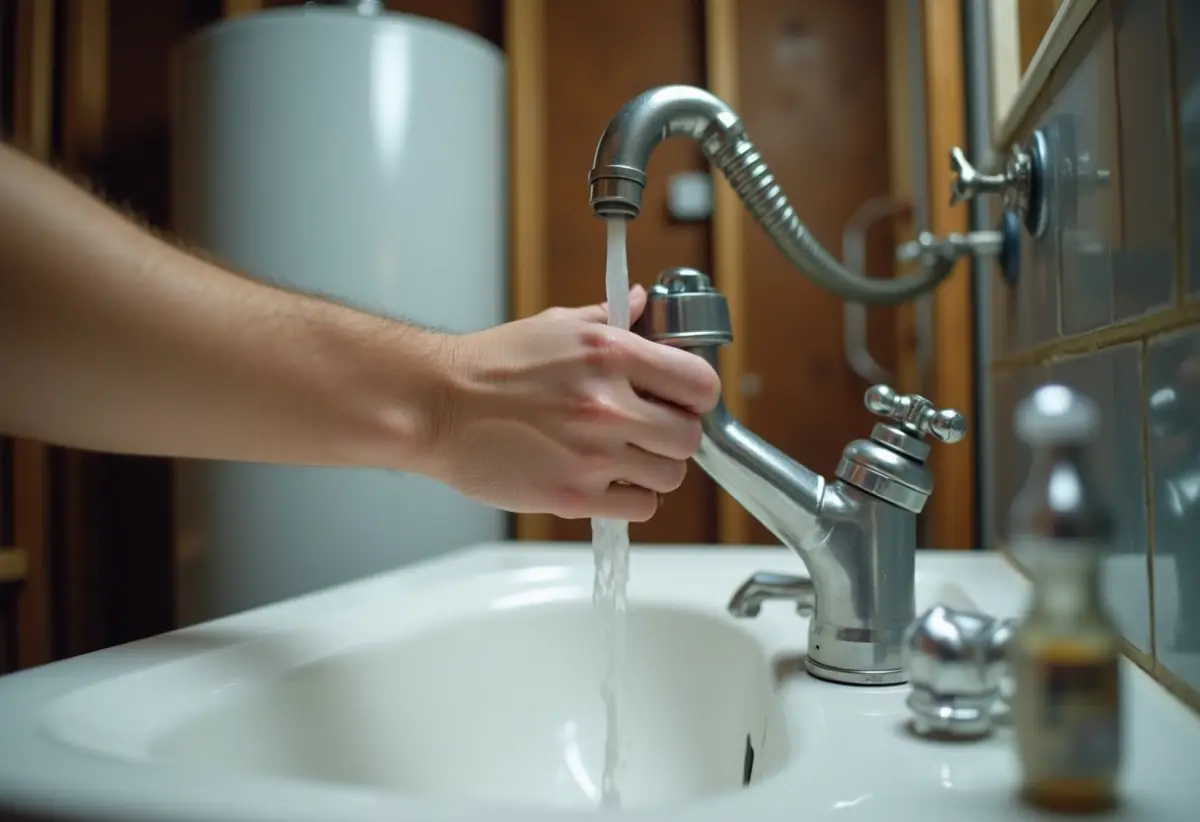
Refill the tank completely and purge all air before you restore power or relight the gas. Close the drain valve, open a hot faucet, then open the cold supply. Leave the faucet running until it flows a full, steady stream with no sputtering. Only then flip the breaker or relight the pilot.
- Close the drain valve and remove the hose.
- Open a hot water faucet, ideally the one nearest the heater.
- Open the cold water inlet fully. The tank fills in about 15 minutes, per R.S. Andrews.
- Let the hot faucet run full stream. A.O. Smith says three minutes; Rheem says to close the faucet only after a constant flow without air.
- Check the drain valve and any fittings you touched for drips.
- Restore power at the breaker, or relight the gas control per the label on the tank.
Skipping the purge is the most expensive mistake in this job. A.O. Smith warns that if power is applied before the tank is full, the upper element will burn out, a failure called dry firing. Rheem’s manual says an improperly filled tank can cause element damage and failure. A gas unit has no element to burn out, but the burner should still wait until the purge is done.
Where should the drained hot water go?
Send drained water to a floor drain, a laundry sink, a sump pit or a spot outdoors that sits lower than the drain valve. Let it cool first. Hot water and sediment can damage a lawn, soften a cheap vinyl hose and scald anyone who grabs the hose end, which is why the cooling step matters.
- Floor drain: the easiest choice; watch for sediment at the grate.
- Outdoors: run the hose to gravel or a bed well away from the foundation, not the driveway.
- Street storm drains: avoid them. In many areas, local stormwater rules bar sending anything but rainwater into them.
- Buckets: fine for a partial drain. For a full 50-gallon drain they mean 25 or more trips with a 2-gallon pail.
How we sourced this
We reviewed the top-ranking guides for this query in October 2026 and cited only figures tied to a named source. Scald data comes from the CPSC tap water scald safety alert. Draining, cooling, refill and dry-fire guidance comes from A.O. Smith’s element replacement instructions and Rheem owner’s manual language. Drain times come from Hunker and R.S. Andrews; neither states a flow rate, so the per-minute rates and the chart are our arithmetic from their figures (50 gallons in 15 and 60 minutes). Water weight uses 8.34 pounds per gallon.
Frequently asked questions
How long does it take to drain a 50-gallon water heater?
Plan on 15 to 60 minutes of actual draining for a 50-gallon tank. Hunker puts it at no more than 15 minutes and R.S. Andrews at about an hour, which works out to roughly 3.3 down to 0.8 gallons per minute. Add a few hours of cooling before you start and about 15 minutes to refill.
Do I need to turn off the water heater before draining it?
Yes. Switch an electric heater off at the breaker and turn a gas control to OFF or PILOT before you open the drain. An empty tank with power on can burn out an electric element in seconds, and A.O. Smith warns not to restore power until all air is out and the tank is full.
Why is my water heater not draining?
The usual causes are sediment clogging the plastic drain valve, a vacuum because no hot tap is open, or a hose that is kinked or runs uphill. Open a hot faucet, check the hose, then back-flush the valve with short bursts of cold supply. If it still trickles, replace it with a full-port brass valve.
Do you need to open a hot water faucet to drain a water heater?
Yes. With the cold inlet closed, the tank forms a vacuum and the drain slows to a trickle or stops. Opening a hot faucet, ideally one on a floor above the heater, lets air in so water can leave. A.O. Smith notes that opening a hot faucet helps the tank drain faster.
Should I drain my water heater if the house will be empty all winter?
If the heat will be off and pipes could freeze, yes. Turn off power or gas, close the cold supply, drain the tank fully and leave the drain valve and a hot tap open. Some water stays below the valve, so many owners also hire a plumber to blow out the supply lines.
How long after draining a water heater can I turn it back on?
Turn it back on only after the tank is completely full. Close the drain, open a hot faucet, open the cold supply and let the faucet run full stream with no sputtering. A.O. Smith says to run it for three minutes. Then restore the breaker or relight the gas.
Does draining a water heater remove all the sediment?
No. The drain valve sits a little above the tank bottom, so some water and sediment usually stay behind. A full drain is for replacement, repairs or freeze protection. Routine sediment control is an annual flush, where you run cold water through the tank until the hose runs clear.