Frost-Free Faucet: How It Works and Why It Still Bursts
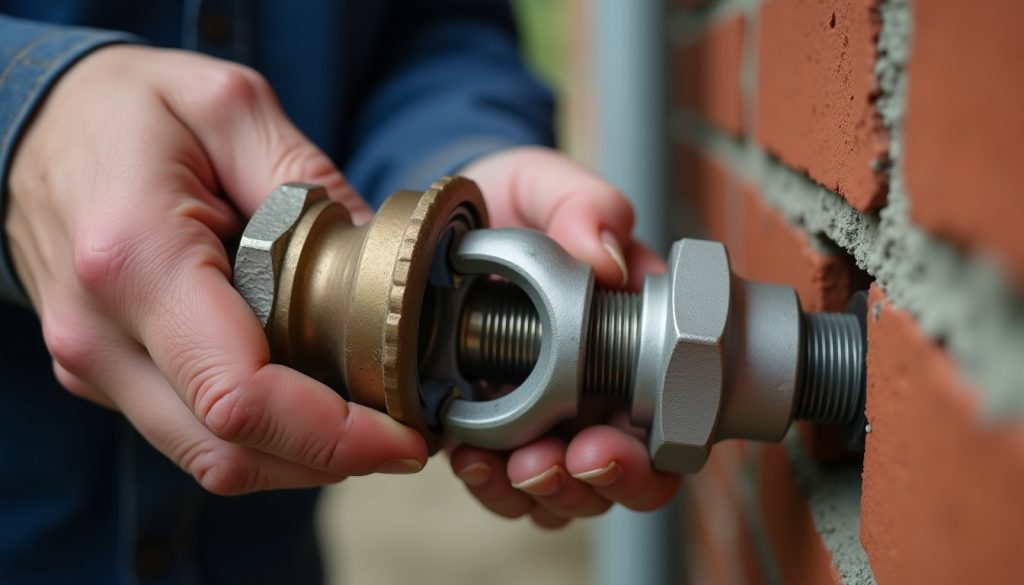
A frost-free faucet moves the water shutoff seat back inside the heated wall, so when you close it the long stem drains the outside barrel empty and there is no standing water left to freeze and burst.
Key Takeaways
- Uninsulated pipes in unconditioned space begin to freeze around 20 F, per building-science research cited by the U.S. Department of Energy (DOE Building America Solution Center).
- A frost-free faucet works only when it slopes downhill toward the outside, a common target near a quarter inch per foot, so the barrel drains by gravity (Woodford Manufacturing).
- Common stem lengths run about 4 to 12 inches or more; match the length to your wall so the seat lands in the heated space (Woodford Model 19 catalog).
- A garden hose left connected traps water in the barrel and is the top reason a frost-free faucet still bursts (Woodford Manufacturing).
- The International Plumbing Code requires backflow protection on hose-connected outlets, usually a vacuum breaker (2018 IPC 608.16.4.2).
- The faucet part commonly costs about $15 to $50 at home centers, with labor varying by how accessible the interior connection is.
What is a frost-free faucet and how does it work?
A frost-free faucet, also sold as a freeze-proof sillcock or wall hydrant, is an outdoor spigot built so the water shutoff happens inside the warm wall, not out at the spout. A long stem carries the valve seat 4 to 12 inches or more back into the heated envelope of the house. Close the handle and the exposed barrel drains itself.
The trick is where the water stops. When you turn the handle, a washer at the far inside end of the stem seals against the seat, deep in your basement or crawlspace where it stays above freezing. The water in the outside barrel then runs out through the spout by gravity, leaving the exposed metal empty. No water outside means nothing to freeze and split.
Woodford Manufacturing describes this same principle in its product literature: the valve is set back inside the building, and the drained barrel is what makes the faucet freeze resistant. That drain-down only happens if the faucet is installed with a downward pitch and the spout is left open to air, meaning no hose attached.
How is a frost-free faucet different from a standard hose bib?
The difference is where the water stops and whether the outside pipe drains. A standard hose bib shuts off right at the spout, so water sits in the exposed body and freezes in a cold snap. A frost-free faucet shuts off inside the heated wall and drains the outside barrel every time you close it. That draining is the freeze protection, not the metal or a heater.
| Feature | Frost-free faucet (sillcock / wall hydrant) | Standard hose bib |
|---|---|---|
| Where the valve seat is | 4 to 12+ in back inside the heated wall | Right at the outdoor spout body |
| Freeze protection | Barrel drains empty when closed; no standing water outside | None; water stays in the exposed body and can freeze |
| Install requirement | Must pitch downhill toward outside so the stem drains | No slope needed; shuts off at the spout |
| Hose-left-on risk | Hose traps water and defeats the drain; can still burst inside the wall | Freezes with or without a hose; often burst visibly outside |
| Best for | Any climate with a hard freeze; year-round exterior spigots | Frost-free climates, or lines you shut off and drain from inside |
If your current spigot is the old-style hose bib and you get freezes, swapping to a frost-free unit is the durable fix. The job overlaps with replacing a faucet in principle: shut the water, remove the old valve, and fit the new one with the correct connection and, here, the correct stem length.
Why must a frost-free faucet slope downward?
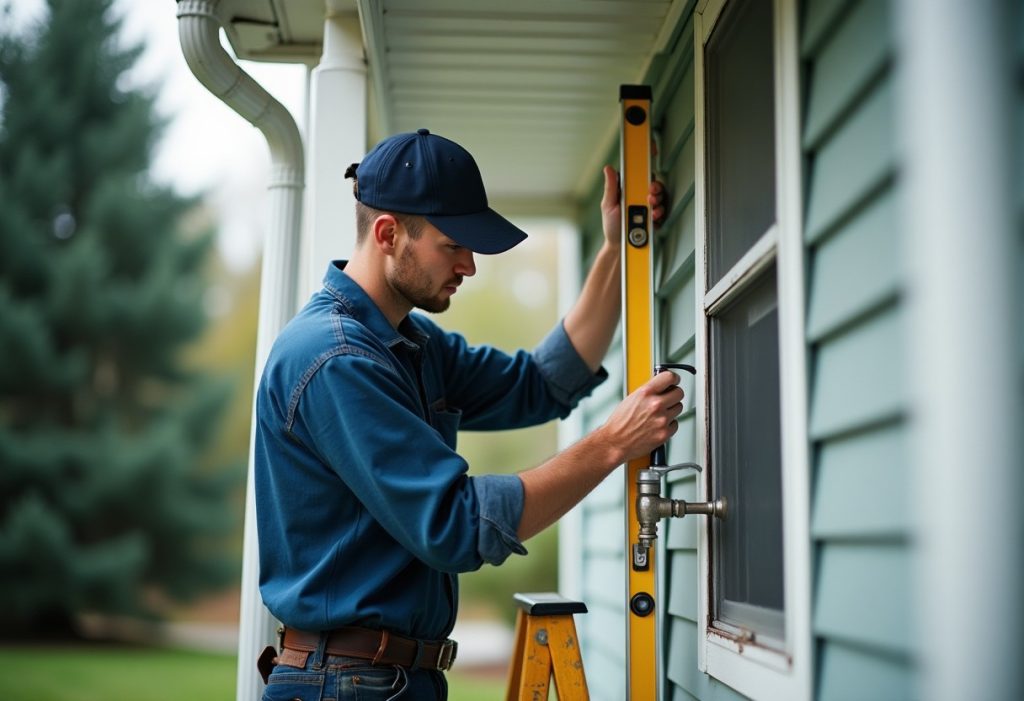
Because the whole freeze protection depends on gravity draining the barrel. The stem has to tilt slightly downhill toward the outside so that when you close the valve, the water left in the exposed tube rolls out the spout instead of pooling inside. A common install target is about a quarter inch of drop per foot of stem.
Install it dead level or, worse, tilted back into the house, and water sits in the barrel after every use. In a freeze that trapped water expands and can split the stem inside the wall. Manufacturers are explicit that the faucet must be pitched down and the spout left open to air for the self-draining action to work.
This is why a frost-free faucet that worked for years can suddenly fail after a remodel or a sloppy replacement: someone reset it level. When you install or replace one, check the pitch with a level before you sweat or thread the connection, and confirm water actually runs out of the spout for a second or two after you shut it off.
Why can a connected hose still burst a frost-free faucet?
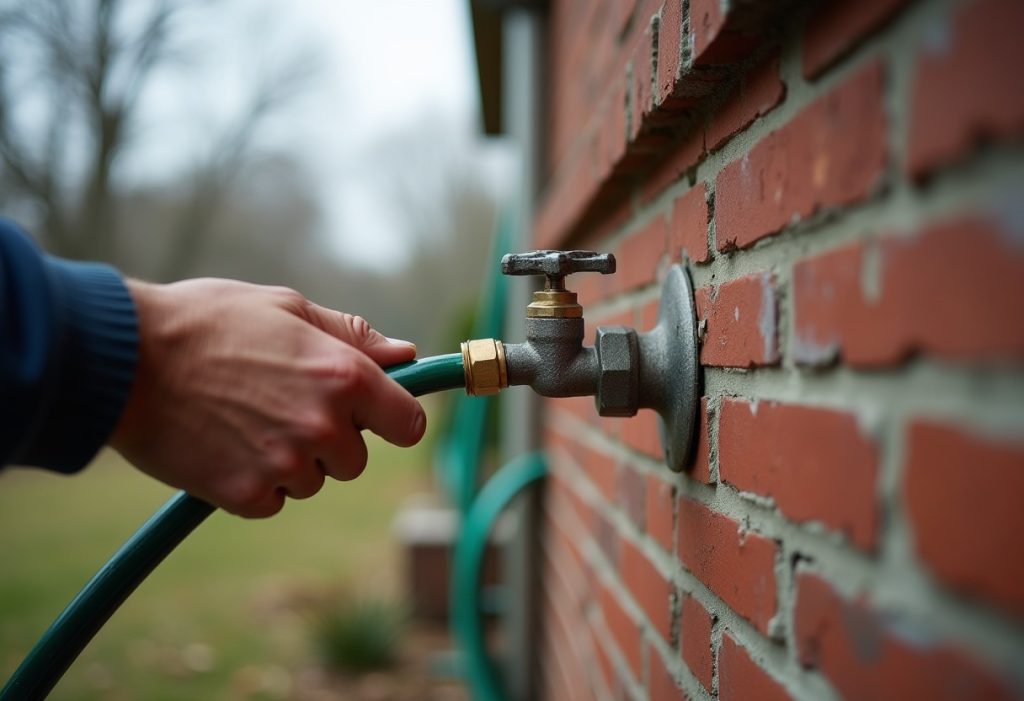
A garden hose left on plugs the spout and stops the barrel from draining. The frost-free design only works when the outside end is open to air so the trapped water can escape. With a hose attached, water stays in the stem, freezes, and splits the tube, often inside the wall where you will not see the leak until you open the faucet in spring.
This is the most common way a freeze-proof spigot fails, and it catches people because the faucet is labeled frost-free. The label describes the valve, not the hose. A capped hose, a quick-connect left on, or a splitter with a closed valve all trap water the same way.
Some premium units add a safety layer. Woodford’s anti-rupture models, for example, use an internal resetting pressure-relief device that vents the built-up pressure so the barrel does not split even if a hose is left on. Those help, but the free and universal fix is simple: pull every hose off and drain it before the first hard freeze. Building that into how you prevent frozen pipes each fall protects the faucet for nothing.
What stem length do you need for your wall thickness?
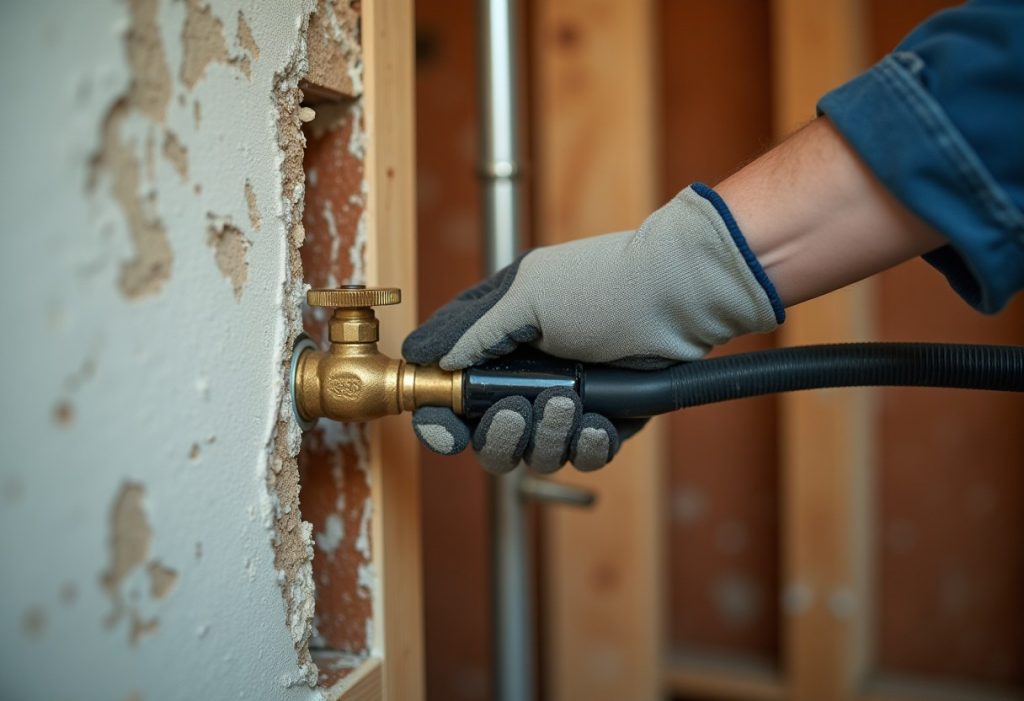
Match the stem length to your wall so the shutoff seat ends up inside heated space. Too short and the valve sits in the cold wall or even outside the insulation, defeating the whole design. Too long wastes barrel inside the cavity. Measure from the exterior wall surface to where the pipe enters conditioned space, then buy a stem that reaches past the insulation into warm air.
Common lengths run about 4 to 12 inches and up, in steps like 6, 8, 10, and 12 inches. The chart below shows a rough starting point by wall type. Confirm against your actual measured wall, because siding, sheathing, insulation, and masonry veneer all add up.
When in doubt, size up a step. A stem an inch or two longer still shuts off in warm space, while one that is too short leaves the seat in the cold and turns your frost-free faucet back into a freeze risk. If yours already leaks or drips from the head rather than freezing, that is usually a worn packing or seat, covered in how to repair a leaking outdoor faucet.
Does code require a vacuum breaker on an outdoor faucet?
In most areas, yes. The International Plumbing Code requires that sillcocks, hose bibbs, wall hydrants, and other hose-connected outlets have backflow protection, typically a vacuum breaker, so dirty water cannot siphon back into the drinking supply. A garden hose sitting in a bucket, a pool, or a puddle of fertilizer is exactly the hazard the rule targets.
Many frost-free faucets build this in. Anti-siphon models carry an integral vacuum breaker in the head, and some Woodford units rate that backflow protection to 125 psi of backpressure, which removes the need for an add-on breaker. The ASSE 1019 standard for wall hydrants requires them to be freeze resistant, self-draining, and to include a permanent backflow device.
If your faucet lacks built-in protection, a threaded hose-connection vacuum breaker screws onto the spout and satisfies the requirement in many jurisdictions. Code language and adoption vary by state and city, so confirm what your local plumbing code requires before you rely on any single device.
How do you protect an outdoor faucet from freezing?
Even a frost-free faucet needs a short fall routine, and any exposed line behind it needs freeze protection. The faucet drains itself only when it is closed, sloped correctly, and hose-free, so the winter checklist is short and worth doing before the first hard freeze. Unprotected pipes can start to freeze once outdoor air hits about 20 F, per building-science research cited by the Department of Energy.
- Disconnect every hose. Pull hoses, splitters, and quick-connects off so the barrel can drain. This one step prevents most burst frost-free faucets.
- Open and drain, then close. Open the faucet fully to let the barrel empty, confirm water runs out and stops, then close it.
- Shut the interior valve if you have one. Some homes add a dedicated shutoff on the supply line inside; close it and open the outdoor spout to drain the run.
- Insulate the run behind it. Cover exposed supply pipe in unheated space with pipe insulation so the line feeding the faucet does not freeze.
- Add an outdoor faucet cover in hard climates. An insulated foam dome over the spout adds a small buffer, though it does not replace disconnecting the hose.
A frost-free faucet plus a drained hose plus insulated supply lines is the reliable combination. Skip any one of the three and a deep cold snap can still find a weak spot.
What does it cost to replace a frost-free faucet?
The faucet itself commonly runs about $15 to $50 at home centers, depending on stem length, brand, and features. Anti-siphon and anti-rupture models sit at the higher end. Labor is the variable: a stem that pulls out of an accessible interior wall is a quick swap, while soldered copper or a tight, finished interior costs more plumber time.
The replacement itself mirrors a general faucet swap: shut off the water, remove the old unit, and install the new one, here with the right stem length and a downward pitch. If the head only drips or the handle weeps, you often do not need a full replacement, just new packing or a washer, covered in outdoor faucet repair. A full swap makes sense when the barrel has already frozen and split.
DIY is realistic for a threaded connection you can reach, while soldered joints or a stem buried in a finished wall are better for a pro. Either way, size the new stem to the wall and set the slope, or the new faucet inherits the same freeze problem.
How we sourced this
Design and operating details come from manufacturer literature for frost-free sillcocks and wall hydrants, chiefly Woodford Manufacturing product pages and the Model 19 catalog, including the set-back valve seat, self-draining barrel, required downward pitch, integral anti-siphon protection rated to 125 psi backpressure on some models, and the anti-rupture pressure-relief feature. Stem length ranges reflect Woodford and Prier product lines (roughly 4 to 12 inches and up); the by-wall-type chart is a general starting guide, not a substitute for measuring your wall. The vacuum breaker requirement reflects the 2018 International Plumbing Code section 608.16.4.2 and the ASSE 1019 wall hydrant standard; adoption and specifics vary by local jurisdiction. The roughly 20 F freeze threshold reflects building-science research on uninsulated pipes cited by the U.S. Department of Energy Building America Solution Center. Part costs reflect current U.S. retail ranges and exclude labor, which varies by access. We consulted manufacturer, code, and DOE sources and excluded unverified vendor performance claims.
Frequently asked questions
What is a frost-free faucet?
A frost-free faucet, also called a freeze-proof sillcock or wall hydrant, is an outdoor spigot with a long stem that moves the water shutoff seat back inside the heated wall. When you close it, the exposed barrel drains empty through gravity, so there is no standing water outside to freeze and split the pipe.
How is a frost-free faucet different from a standard hose bib?
In a standard hose bib the shutoff washer sits right at the outdoor spout, so water stays in the exposed body and can freeze. A frost-free faucet places that seat 4 to 12 inches or more inside the warm wall, and the long stem drains the outside barrel each time you shut it off. That draining action is the freeze protection.
Why did my frost-free faucet still burst?
Almost always a garden hose was left connected. The hose blocks the barrel from draining, so water stays trapped in the stem, freezes, and splits the tube inside the wall, where you may not see it until spring. Frost-free protection only works when the faucet is closed and the hose is disconnected so the barrel can drain.
Which way should a frost-free faucet slope?
The faucet must pitch slightly downhill toward the outside, a common target is about a quarter inch per foot, so gravity pulls the water out of the barrel when you shut it off. If it is installed dead level or tilted back into the house, water pools in the stem, cannot drain, and freezes. Correct slope is a core part of a proper install.
What stem length do I need for a frost-free faucet?
Match the stem length to your wall thickness so the shutoff seat lands inside the heated space, not buried in cold wall or masonry. Common barrel lengths run from about 4 to 12 inches or more. A thin frame wall may need 6 inches, a standard insulated wall 8 to 10 inches, and a brick or thick masonry wall 12 inches or longer.
Does a frost-free faucet need a vacuum breaker?
In most areas, yes. The International Plumbing Code requires that hose-connected outlets like sillcocks and wall hydrants have backflow protection, usually an integral or add-on vacuum breaker, so contaminated water cannot siphon back into the drinking supply. Many frost-free models build this anti-siphon device into the head. Local code varies, so confirm requirements in your area.
How much does it cost to replace a frost-free faucet?
The faucet itself commonly runs about $15 to $50 at home centers depending on stem length and brand, with anti-rupture and higher-end models costing more. Labor depends on access. A straightforward swap where the stem pulls out of an accessible interior wall is quick, while soldered or hard-to-reach connections cost more in plumber time.
Can I leave a hose on a frost-free faucet in winter?
No. Leaving a hose connected is the single most common reason a frost-free faucet bursts. The hose traps water in the barrel and stops it draining, so the trapped water freezes and splits the stem inside the wall. Disconnect and drain every hose before the first hard freeze, even on faucets labeled freeze-proof or anti-rupture.