Does Every House Have a Sewer Cleanout? Where to Look and What to Do If There Is None
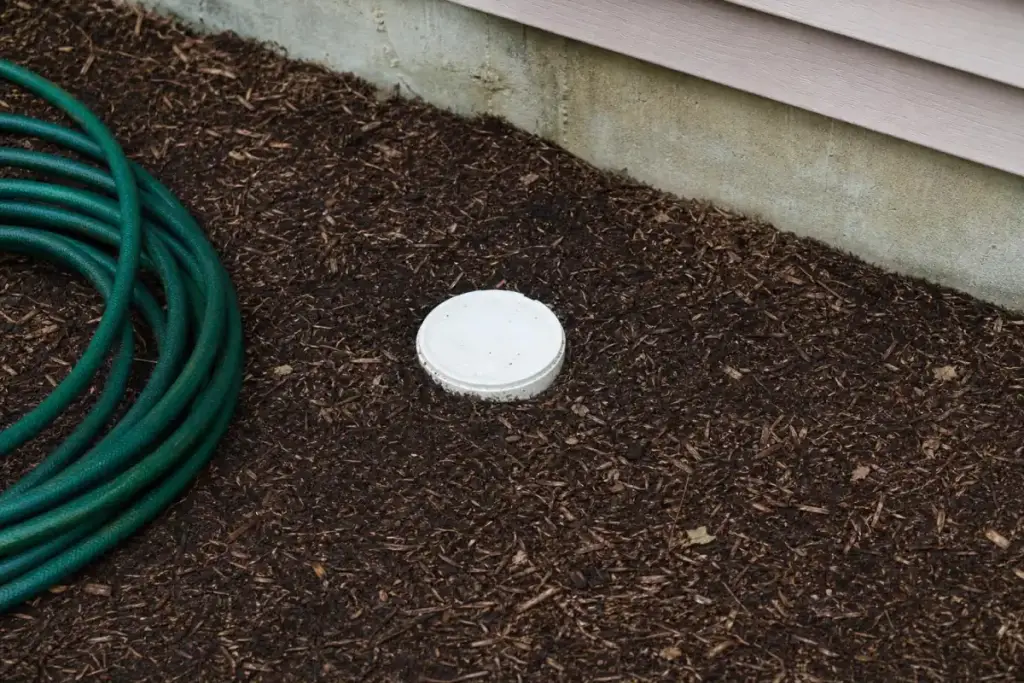
No, not every house has a sewer cleanout. Homes built under the 2021 IPC or IRC must have one within 10 feet of where the building drain becomes the building sewer, but many older houses have only a basement fitting, a house trap, a buried cap or nothing at all.
The rule that matters is short. IPC Section 708.1.3 says the junction of the building drain and the building sewer “shall be served by a cleanout that is located at the junction or within 10 feet” of developed length upstream of it, and the IRC repeats it word for word as P3005.2.3. Both add one sentence that settles the toilet question: removal of the water closet “shall not be required” to reach that cleanout. A house that predates its town’s adoption of those rules was built to whatever the local code said then, and many of those codes asked for less.
Where is the cleanout on a slab, crawlspace or basement house?
Start where the main drain leaves the foundation on the side facing the street or the septic tank, because the required junction cleanout sits within 10 feet of that point. The table matches foundation type to the spots worth checking first and what the fitting looks like there.
| House type | First places to check | What it looks like | Code rule behind it |
|---|---|---|---|
| Slab on grade | Outside, within 10 ft of the foundation on the street side; behind an access panel in a wall shared with a bathroom or laundry | A 3 or 4 in PVC, ABS or cast-iron riser with a square-head plug at or just above the soil | 708.1.11: below-grade cleanouts extend so the plug top is at or above grade |
| Crawlspace | Under the house where the main drain drops through the foundation wall, then outside on the same wall | A wye with a capped branch on the horizontal drain, or a test tee on the vertical stack | 708.1.11: a crawlspace with under 24 in of clearance along the path to the fitting counts as concealed, so the cleanout must be outside or reachable |
| Basement | The floor where the 3 or 4 in main exits the wall; the base of each soil stack | A capped Y on the floor-level drain, a countersunk brass plug in a floor fitting, or a U-shaped house trap with two plugs | Minnesota code, per Minneapolis Public Works, provides at least two: base of the stack and the drain-to-sewer connection |
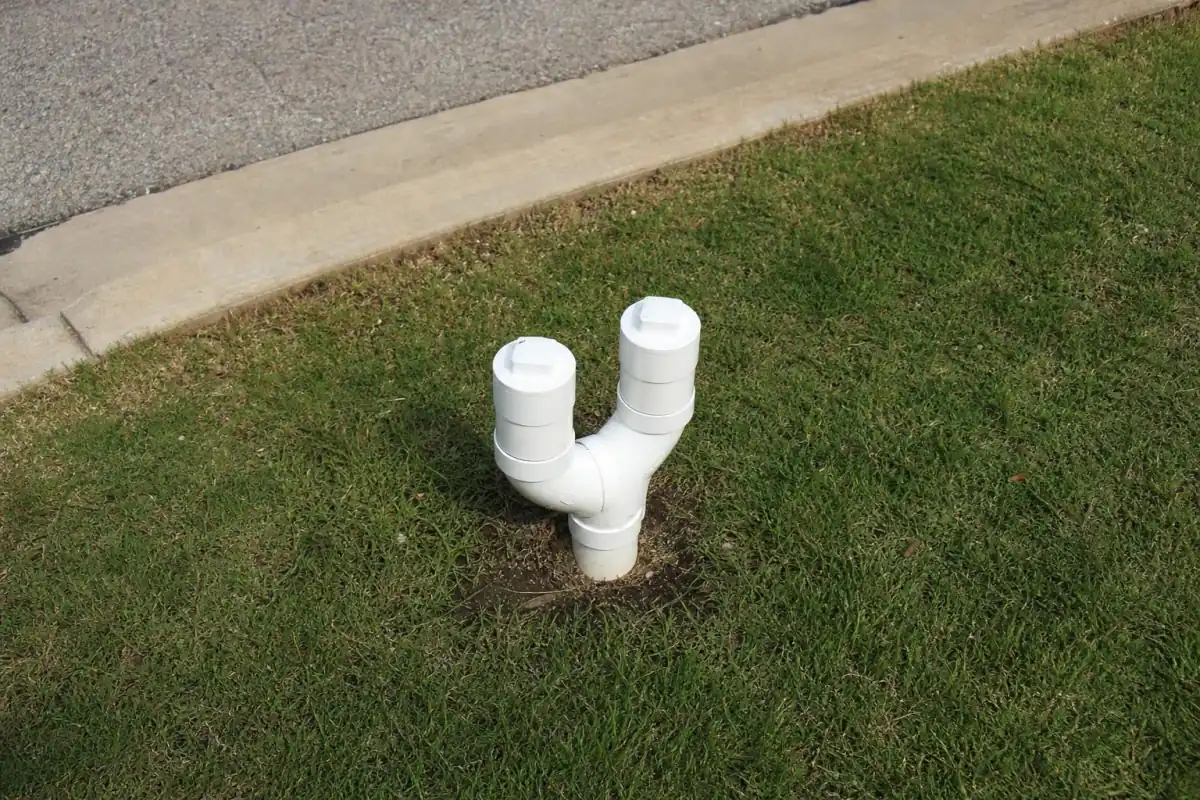
| Any house, near the street | Between the sidewalk and the house along the lateral’s path | A two-way cleanout: two capped openings, one aimed at the house and one at the street, often in a small box | 708.1.9 exception: an approved two-way cleanout can meet 708.1.3 |
Two readings from the table save a wasted afternoon. In cold-climate cities, look in the basement first: Minneapolis says the cleanout is “typically found in a property’s basement so it can be accessible in the winter months”. In a crawlspace house, a fitting you can only reach by belly-crawling under 24 inches of clearance does not meet 708.1.11, so a plumber may add an exterior riser even when one exists inside.
Where do buried and hidden cleanouts usually turn up?
Buried caps are the most common reason a homeowner decides there is no cleanout. Minneapolis puts it plainly: if you cannot find it, “either you do not have one, or it may be buried under dirt, concrete or carpet.” Code forbids both cover-ups: 708.1.11 requires the plug top at or above grade, and 708.1.11.1 says plugs “shall not be covered with mortar, plaster or any other permanent material.”
- Under decks and landscaping. A deck or patio built over the lateral often hides the riser within 10 feet of the wall. Check the deck’s skirting on the street side and probe mulch beds along the foundation with a steel rod.
- Metal detectors. They pick up a brass plug or a cast-iron ferrule, the fittings in older lines. A white PVC plug on a PVC riser holds no metal, so a detector stays silent over it.
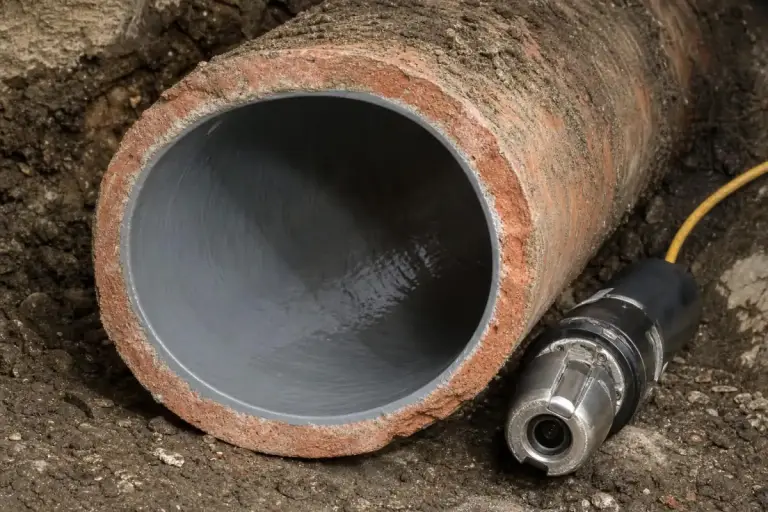
- Camera locators. A plumber pushes a sewer camera with a transmitter in its head into the line from a pulled toilet or a roof vent, then walks a receiver over the yard to mark where the head stops, with depth. Fixr lists camera work at $300 to $600 when cleaning needs a video inspection.
- Two-way cleanouts at the property line. Look along the line from the house exit to the street for a box or twin caps. Some lots have one even when the house end has none.
Who owns a cleanout at the property line or curb?
The property owner, in the city rules we read. Minneapolis states that “sewer cleanouts belong to the property owner, and it is their responsibility to install a building sewer cleanout,” and that “The City of Minneapolis can not install a sewer cleanout.” San Diego’s lateral handout goes further: the entire lateral, out to its connection with the main under the street, “is your private property.” A fitting in the sidewalk strip is therefore no proof that the city owns it; ask the sewer utility, by address, before paying anyone to dig there.
How many cleanouts does a 60 ft or 140 ft sewer line need?
A 60 foot straight lateral needs only the junction cleanout, while a 140 foot one needs at least one more. Two rules drive the count. 708.1.2 caps the interval at 100 feet on building sewers under 8 inches, measured from a cleanout opening along the pipe to the next access fitting or the end of the sewer. 708.1.4 adds a cleanout at each horizontal turn greater than 45 degrees, but the first one covers every other such turn within the next 40 feet.
| Lateral length and layout (from the junction cleanout to the main) | Spacing check (100 ft) | Turn check (over 45 degrees, 40 ft rule) | Cleanouts on the sewer, junction included |
|---|---|---|---|
| 60 ft, straight | 60 ft is under 100 ft: none added | No turns | 1 |
| 60 ft, one 90 degree turn at 25 ft | 25 ft then 35 ft: none added | 1 at the turn | 2 |
| 60 ft, 90 degree turns at 20 ft and 50 ft | None added | 1 at 20 ft; the 50 ft turn is 30 ft later, inside 40 ft, so it is covered | 2 |
| 140 ft, straight | 1 added at or before 100 ft; 40 ft or less remains | No turns | 2 |
| 140 ft, two 45 degree bends | 1 added at or before 100 ft | None: 45 degrees is not greater than 45 | 2 |
| 140 ft, one 90 degree turn at 30 ft | From 30 ft, 110 ft remain: 1 more at or before 130 ft | 1 at the turn | 3 |
Inputs: a 4 inch building sewer, the junction cleanout at 0 ft, distances as developed length along the pipe, and the 2021 IPC text, which IRC P3005.2.2 and P3005.2.4 match. The last row shows why long rural laterals with a dogleg around a driveway end up with three caps in the yard. If your plat shows a 140 foot run and you have found one cap, the rule says another should exist, and that is where to probe.
Can you use a toilet or a roof vent instead of a cleanout?
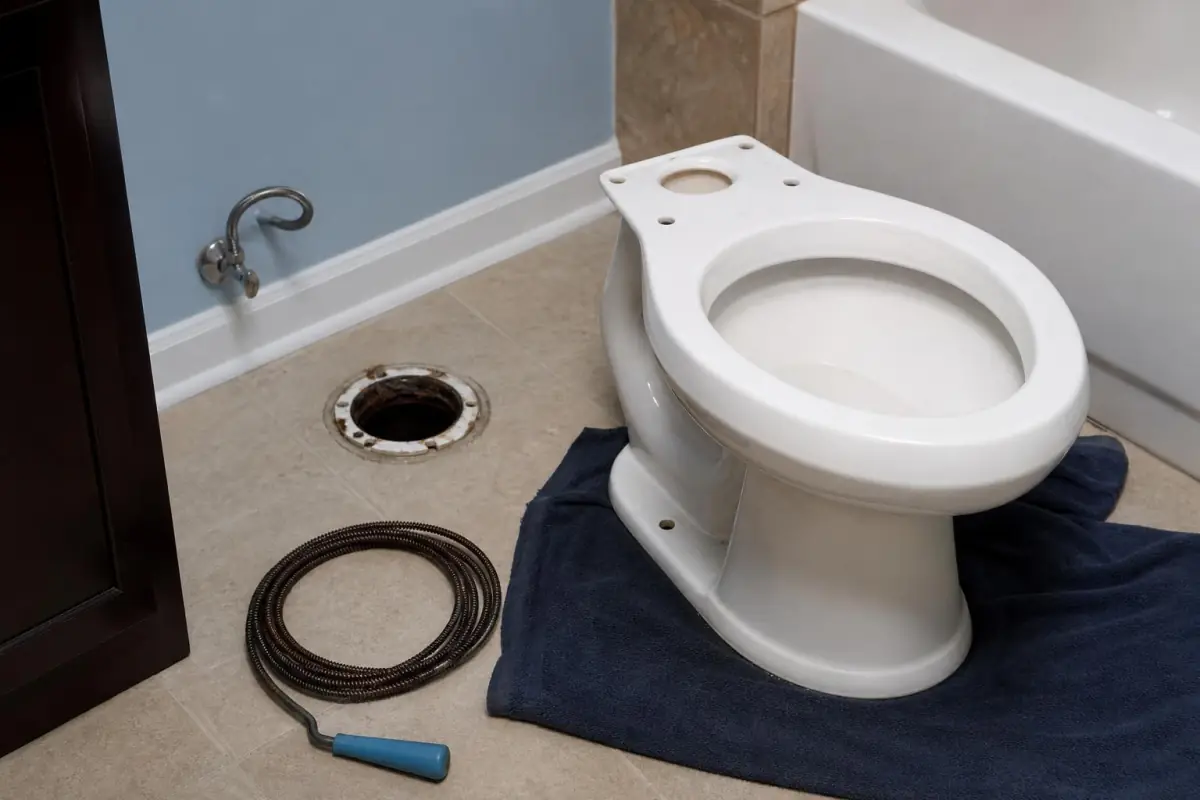
Yes for clearing a clog, no for meeting code. IPC 708.1.6 accepts a fixture trap “removable without altering concealed piping” as a cleanout equivalent for that fixture’s own drain, but 708.1.3 excludes toilet removal for the junction cleanout. In practice a plumber pulls the lowest toilet, runs a cable down the closet bend, then resets the bowl on a new wax ring. Fixr’s guide adds that “the only access may be via a roof vent in some properties.” To snake the main line through a pulled toilet or a cleanout, pull the bowl first rather than forcing a cable through its porcelain trap.
| Job | Published price | Source and date |
|---|---|---|
| Rod the main through an accessible cleanout | $150 to $375 | Fixr, updated January 31, 2025 |
| Clean the line with a video inspection | $300 to $600 | Fixr, January 31, 2025 |
| Rod through a pulled toilet | $150 to $375 plus a toilet-removal charge Fixr lists but does not price; labor at $75 to $150 per hour | Fixr, January 31, 2025 |
| Replace a cleanout | $1,000 to $3,500 | Fixr, January 31, 2025 |
Read the last row carefully. Fixr’s sewer cleaning guide says “replacing the cleanout typically costs between $1,000 and $3,500”; it gives no separate figure for adding one to a line that never had it, which needs the same dig to the pipe, a cut-in wye and a riser to grade. At one $150 rodding call per year, the $1,000 low end equals about 6.7 years of basic rodding, so a single backup does not justify the dig on price alone, but a second toilet pull in a year starts to.
What to ask for when you have no cleanout at all
Ask the plumber for a cleanout at the building drain and building sewer junction, within 10 feet of the foundation, extended to grade, sized to the pipe. Get these four items on the quote:
- Location and type. A single cleanout aimed downstream (708.1.9 requires cleaning only in the flow direction) or a two-way fitting approved under 708.1.3. The three cleanout styles, one-way, two-way and test tee differ in which way a cable can travel.
- Size and plug. 3 or 4 inches to match the line; under 708.1.7, brass plugs go on metal pipe only and PVC or ABS plugs on plastic. A matching replacement cleanout plug replaces one that cracks or strips.
- Clearance. 18 inches clear in front of the opening for pipe 6 inches and smaller (708.1.10), so no shrub or deck post right against it.
- Permit and camera. A permit where your jurisdiction requires one, and a camera run before backfill so you know the line’s condition.
Once it is in, a cleanout riser that is full of water tells you a clog sits downstream, toward the street, before a single drain inside overflows.
Sewer cleanout questions owners ask
Can a toilet count as my sewer cleanout?
Not for the main line. IPC 708.1.6 accepts a removable fixture trap as a cleanout equivalent for that fixture’s own drain, but 708.1.3 says removal of the water closet shall not be required to reach the junction cleanout, so an inspector will still want a capped fitting within 10 feet of where the drain leaves the house.
Why can’t I find a cleanout outside my house?
In cold-climate cities the main cleanout is usually indoors. Minneapolis Public Works says it sits in the basement so it stays reachable in winter. Outside, check within 10 feet of the foundation on the street side, under mulch, sod, decks and concrete, because buried caps are common even though code bans covering them.
Is the cleanout at the property line owned by the city?
Usually not. Minneapolis says sewer cleanouts belong to the property owner and the city cannot install one, and San Diego treats the whole lateral, out to the main under the street, as private property. Call your sewer utility before digging at the curb, since rules differ by city.
Does a house built on a slab have a cleanout inside?
Sometimes, in a wall behind an access panel near a bathroom or laundry, but a 2021 IPC or IRC home must also have one serving the junction where the building drain becomes the building sewer, extended up to grade. On a slab that riser is normally outside, within 10 feet of the foundation.
How big is a house sewer cleanout cap?
Usually 3 or 4 inches, because IPC 708.1.5 sizes a cleanout to the pipe it serves and never requires more than 4 inches. A plug whose threads measure about 3.5 inches across is a 3 inch plug, and about 4.5 inches across means 4 inch.
How we sourced this
Code text comes from the 2021 IPC Chapter 7 (Sections 708.1.1 to 708.1.11.1) and 2021 IRC Chapter 30 (P3005.2.1 to P3005.2.10) as published on UpCodes in the Texas adoption. Ownership statements come from Minneapolis Public Works’ sewer cleanout page and the City of San Diego lateral handout. Prices come from Fixr’s sewer line cleaning guide updated January 31, 2025. The cleanout counts and the 6.7 year comparison are our arithmetic on those inputs. HomeGuide and Angi cleanout installation pages refused automated access, so their figures are left out, as are Uniform Plumbing Code rules, which use different section numbers in states such as California.