Cracked Toilet Bowl: Repair or Replace?
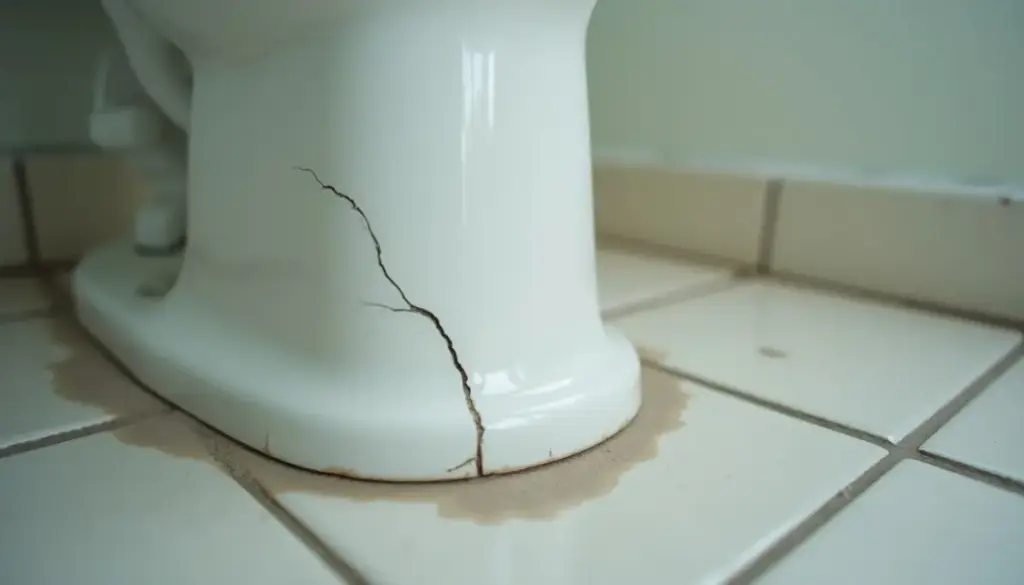
A cracked toilet bowl needs replacing when the crack runs through the china below the waterline or seeps water; fine glaze crazing is cosmetic, and an epoxy patch only buys time.
Key Takeaways
- Dry crazing in the glaze is cosmetic; a crack below the waterline, at the foot, or at a bolt hole means a new bowl or tank.
- EPA WaterSense’s dye test runs 10 minutes; color in the bowl means a flapper leak, not a crack.
- J-B Weld’s cracked-toilet guide needs the water off and 24 hours to full cure.
- TOTO’s CST-series manual warns that over-tightening the floor nuts can damage the china bowl.
- Kohler warrants toilet vitreous china for life for the original residential buyer, excluding improper installation, accidents, and labor.
- HomeTips (March 2026) puts a full toilet replacement at $400 to $850.
Is a cracked toilet bowl dangerous, or just cosmetic?
A cracked toilet bowl is cosmetic only when the crack stays in the glaze. Fine spiderweb crazing that a fingernail cannot catch and that stays dry is a surface flaw. A crack that runs through the china below the waterline, or through the foot that carries your weight, can seep, grow, and eventually split the fixture under load.
Vitreous china is fired clay under a glass-like glaze. The glaze can craze with age while the body keeps its strength. A structural crack is a break in the body itself, and every flush and every sit works it wider.
Broken china fails into sharp edges. The clearest federal record involves tanks: the CPSC’s 2018 Flushmate II 501-B recall says the pressure vessel could “lift the tank lid and shatter the tank, posing impact and laceration hazards.” Flushmate logged 1,446 U.S. burst reports and 23 injury reports, one requiring foot surgery. We found no CPSC recall for ordinary gravity-flush bowls cracking, so the lesson is general: retire a structurally cracked fixture rather than wait.
Where is the crack, and does its location decide repair or replace?
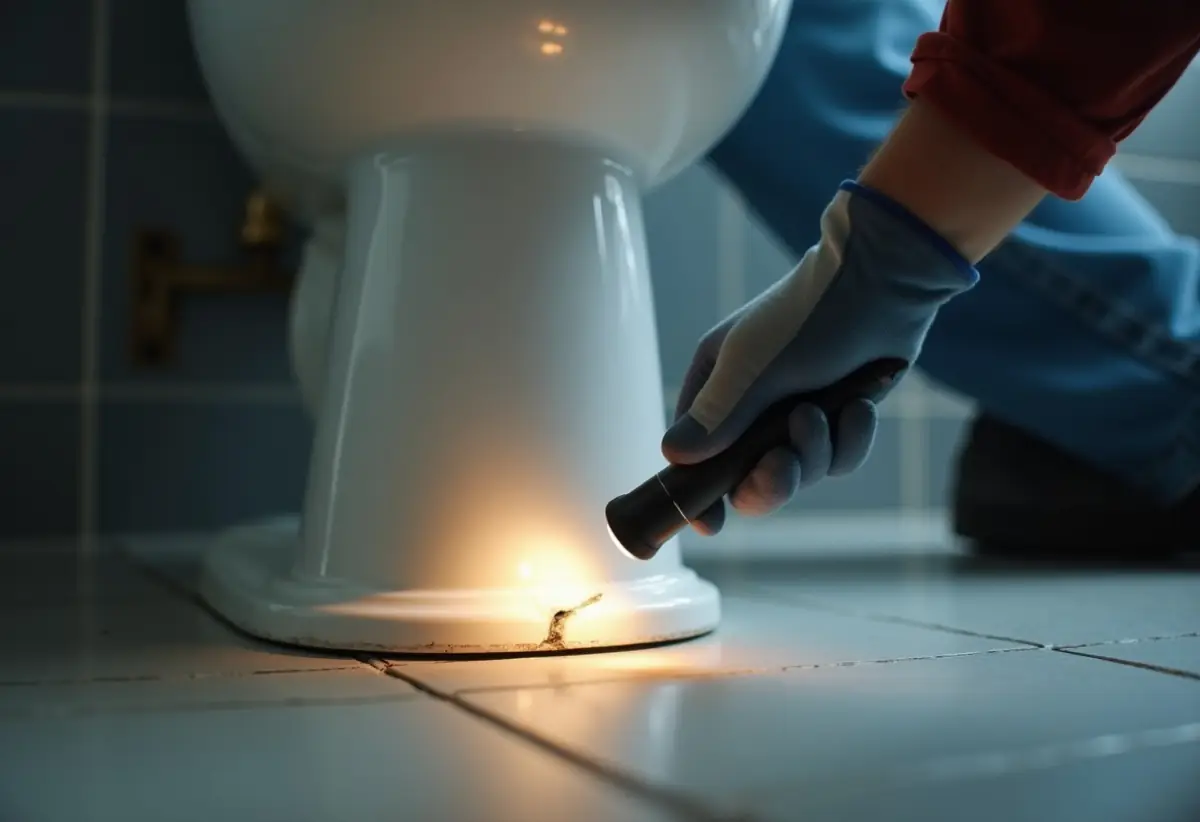
Yes, location decides almost everything. Cracks above the waterline in the bowl rim, the tank, or the lid hold no water, so they rarely leak and can be watched or patched. Cracks below the waterline, in the foot, around bolt holes, or inside the trapway sit under constant water and load, so they leak or spread and mean a new bowl or tank.
| Crack location | Leaks? | Repair or replace |
|---|---|---|
| Spiderweb crazing in the glaze | No | Leave it; photograph and recheck |
| Bowl rim, above the waterline | Rarely | Monitor; epoxy is fine short term |
| Inside the bowl, below the waterline | Yes, or soon | Replace the bowl or toilet |
| Foot of the bowl or a floor-bolt hole | Often, at the floor | Replace; risk of sudden failure |
| Trapway, hidden inside the base | Yes, seeps at the floor | Replace; cannot be reached to patch |
| Tank above the waterline, or the lid | No | Patch, or buy a matching lid or tank |
| Tank below the waterline or at a bolt hole | Yes, drips steadily | Replace the tank (two-piece) or toilet (one-piece) |
Base cracks often hide on the back of the foot. Hold a flashlight low and slide a hand mirror behind the bowl to catch a line the front view misses.
How do you test a hairline crack in a toilet bowl for a leak?
Test a hairline crack in a toilet bowl by drying the outside completely, tinting the water with food coloring, and pressing white tissue along the line. If the tissue picks up color within about 10 minutes, the crack goes through the china. That matches the 10-minute window EPA WaterSense uses for its tank dye test, and it needs only a towel, dye, tissue, and a pencil.
- Rule out sweat. A tank that condenses in humid weather drips at the floor and mimics a crack, so test with the room dry.
- Dry the bowl, base, and floor with a towel until a fresh paper towel comes away dry.
- Add a few drops of food coloring to the bowl for a bowl crack, or to the tank for a tank crack.
- Press folded white tissue along the crack and around the caulk line at the floor, then wait 10 minutes.
- Colored tissue at the crack means a through-crack. Color only at the floor seam, with no crack above it, means the seal.
- For a suspected trapway crack, pencil-mark the bowl water level, close the shutoff, and check the next morning.
- For the tank, run EPA WaterSense’s dye test: color in the bowl after 10 minutes without a flush means a leaking flapper.
If the dye appears at the floor seam but the china is sound, our guide to a toilet leaking at the base covers the wax ring, flange, and closet bolt fixes. Do not ignore slow seeps: EPA WaterSense puts average household leak losses above 9,300 gallons a year.
Can you fix a cracked toilet with epoxy, and how long does a patch last?
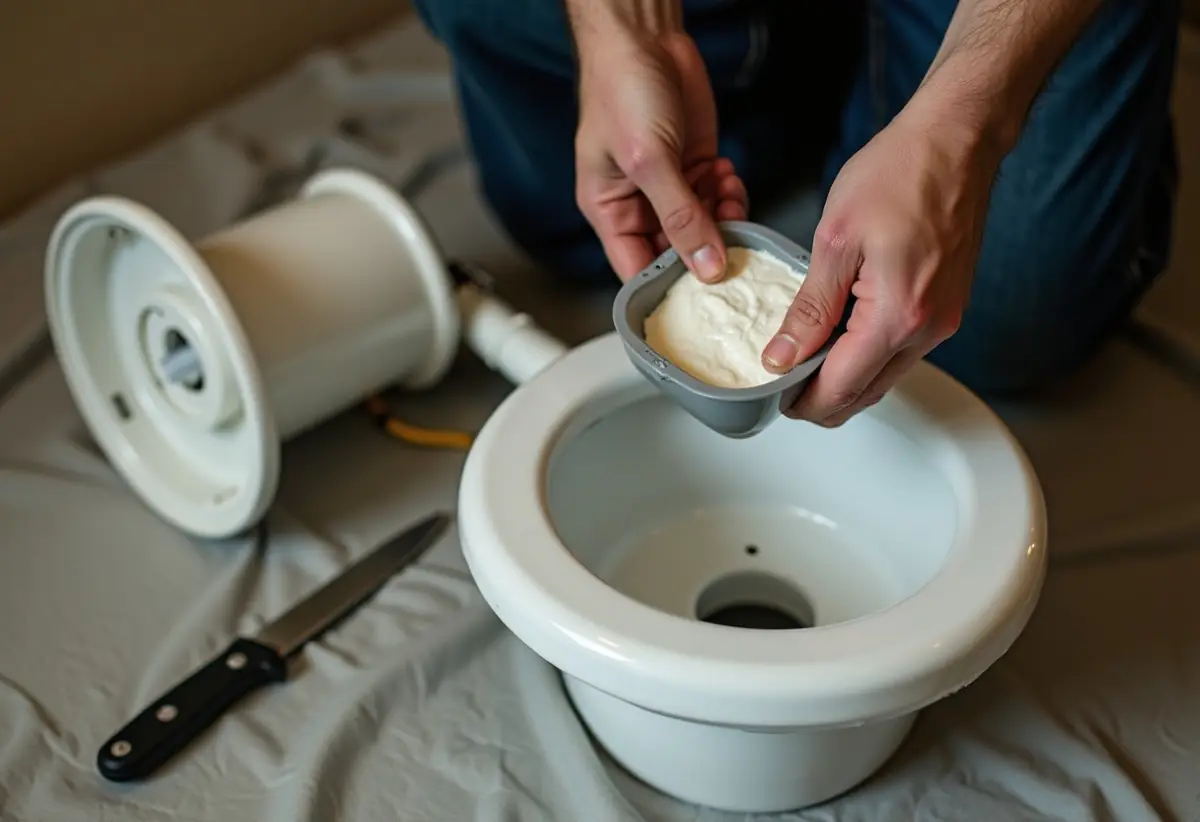
You can seal a hairline crack with waterproof epoxy putty, but treat it as a stopgap until a new bowl or tank arrives. The patch bonds to the outside while water still reaches the crack from inside, the china keeps flexing under load, and both Kohler and TOTO warranties exclude fixtures that have been altered, repaired, or modified.
J-B Weld’s “Seal a Cracked Toilet” guide uses its WaterWeld syringe (SKU 50177), which the product page rates at 2,350 PSI. The guide’s steps:
- Turn off the water, then clean and dry the area.
- Sand around the crack to roughen the glaze and wipe away the dust.
- Press mixed epoxy into the full length of the crack, overlapping the edges.
- Cure at least 5 hours; full strength comes at 24 hours. Keep the water off until then.
The product page says WaterWeld “cures in one hour,” but follow the toilet guide’s 24 hours. Neither page calls the repair permanent or gives a pressure rating for a patched toilet. A cracked lid, a rim chip, or a tank crack above the waterline is a fair epoxy job; a crack in the foot, at a bolt hole, or below the waterline is not.
What makes a toilet bowl or tank crack?
Most cracks trace back to four stresses: bolts tightened past snug, a sudden temperature swing such as a kettle of boiling water, an impact from something dropped, or a bowl rocking on an uneven floor. Vitreous china is hard but brittle. It does not bend before it breaks, so it fails at stress points like bolt holes and the foot.
- Overtightened bolts. TOTO’s CST-series installation manual says to tighten the floor nuts evenly until the bowl is snug and warns: “Do not over-tighten the nuts as damage to the china bowl may result.” Tank bolts go finger tight plus a 1/2 turn.
- Thermal shock. Water at 212°F poured into room-temperature china heats the inside faster than the outside. We found no published temperature limit from a toilet maker, so skip the kettle.
- Impact. A dropped tank lid or a tool set on the rim during a remodel can start a crack that shows up weeks later.
- An uneven floor. A rocking bowl puts a bending load on the foot every time someone sits. Shim and recaulk it.
- Freezing. In an unheated cabin, water left in the trap and tank expands as it freezes and can split either one.
Is a cracked toilet tank different from a cracked bowl?
Yes. A cracked toilet tank is often the smaller problem, because on a two-piece toilet the tank is a separate part, and only cracks below the waterline or at the bolt holes leak. A cracked bowl carries your weight and holds the trap seal at the same time, so a structural bowl crack almost always means a new bowl or a whole toilet.
Rule out ordinary leak points before blaming the china. Our guide to a toilet tank leaking covers the flapper, flush valve gasket, and tank bolt washers, which drip where a crack would. A one-piece toilet is cast as a single piece, so a structural crack anywhere means replacing it.
Pressure-assist tanks need one more check. If yours holds a black plastic vessel labeled Flushmate, read the date code on its top label. CPSC says recalled Flushmate II 501-B units carry a 15-character code and were made from September 3, 1996 through December 7, 2013.
How much does it cost to replace a cracked toilet bowl?
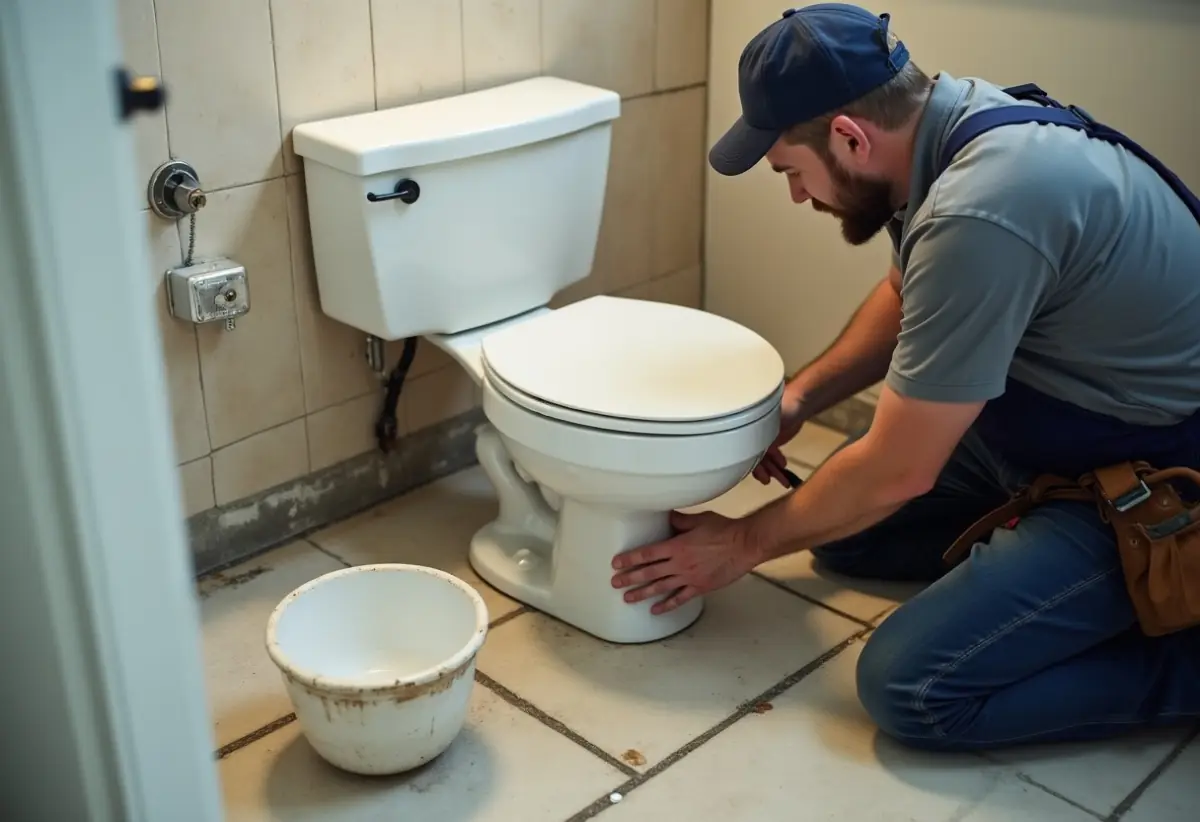
Replacing a cracked toilet bowl usually means replacing the toilet, and HomeTips’ March 2026 cost guide puts a standard swap at $400 to $850. Labor for a basic install runs $225 to $450, a builder-grade two-piece toilet costs $120 to $300, and a new shutoff valve adds $50 to $150. Leak damage underneath is what pushes the bill higher.
Bars show the top of each range; the low ends are $225 labor, $120 toilet, $50 valve or disposal, $10 supply line, and $5 wax ring. HomeTips prices a swap with minor flange repair at $550 to $1,000 and one with subfloor repair at $700 to $1,500 or more. Our breakdown of the cost to install a toilet covers labor rates and add-ons.
Replacing a cracked toilet yourself
A like-for-like swap suits DIY if the flange and floor are sound. Wear cut-resistant gloves and eye protection, since cracked china can split as you lift it. These steps follow TOTO’s CST-series manual.
- Close the shutoff, flush with the handle held down, and sponge out the tank and bowl.
- Unscrew the 7/8 inch ballcock supply nut by hand; TOTO marks it hand tighten only.
- Remove the floor nuts, rock the bowl to break the wax seal, and lift straight up. Our guide on how to remove a toilet covers stuck bolts.
- Plug the drain with a rag, scrape off old wax, and check the flange for cracks.
- Set new closet bolts in the flange slots, threads up, and press a new wax ring onto the bowl’s horn.
- Lower the bowl onto the bolts, press both sides of the rim, and do not move it after the ring sets.
- Tighten the floor nuts evenly, only until the bowl is snug.
- Hand-tighten the flush valve nut plus 1/2 turn, fit the tank-to-bowl gasket, and run the tank bolts finger tight plus 1/2 turn.
- Tighten the tank nuts equally until the tank makes three points of contact with the bowl, then reconnect the supply hand tight.
- Open the valve, flush several times, and check the base and bolts with dry tissue.
Does the warranty cover a cracked toilet bowl?
Only when the crack comes from a defect in the china, and only for the original buyer. Kohler’s toilet warranty gives residential vitreous china a lifetime limited term on toilets made after January 1, 2020, but excludes improper installation, accidents, misuse, and labor. The warranty printed in TOTO’s CST-series manual runs one year. Cracks from an overtightened bolt or a dropped lid usually fall outside both.
| Term | Kohler (1420362-12-C, updated 09/09/2025) | TOTO (CST-series manual) |
|---|---|---|
| Residential vitreous china | Lifetime limited, while the original buyer owns the home | One year from purchase |
| Commercial vitreous china | Ten years (five for Wellworth, Highline, Kingston, Kelston, wall hung) | Not split out |
| Excluded causes | Improper installation, alteration, accident, misuse, abuse | Accident, misuse, improper installation, repair or modification |
| Labor and removal | Not covered; liability capped at the purchase price | Removal and reinstallation not covered |
Kohler’s warranty gives toilets made before January 1, 2020 a one-year term unless separately warranted, and Kohler may inspect on site or ask you to mail the product back at your expense. Keep the receipt, photograph the crack, and do not patch it before filing.
How we sourced this
We reviewed top-ranking pages for “cracked toilet bowl” and “can you fix a hairline crack in a toilet bowl” in October 2026, then cited only primary or named sources: Kohler’s toilet warranty (updated September 9, 2025), TOTO’s CST-series installation manual, the CPSC recall database, J-B Weld’s guide and WaterWeld product page, EPA WaterSense, and HomeTips’ cost guide (updated March 13, 2026). We excluded forum anecdotes, contractor blog estimates, and any limit no maker prints.
Frequently asked questions
Can a cracked toilet bowl be repaired?
Only as a stopgap. A waterproof epoxy such as J-B Weld WaterWeld can seal a hairline crack after the toilet is drained, dried, and left off for 24 hours to cure. A crack through the china below the waterline or in the base keeps flexing, so plan to replace the bowl.
Is a hairline crack in a toilet bowl a problem?
Not if it is crazing in the glaze. Fine spiderweb lines that stay dry and that a fingernail cannot catch are cosmetic. A single line you can feel, or one that wicks dyed water onto white tissue within about 10 minutes, runs through the china and usually gets worse.
Can a cracked toilet break while you are sitting on it?
It can. The foot of the bowl carries your full weight on the china around the bolt holes, and a crack there grows each time the bowl flexes. Broken china leaves sharp edges, so stop using a toilet with a crack in the base or below the waterline until it is replaced.
Can you replace just a cracked toilet tank?
On a two-piece toilet, often yes. The tank bolts to the bowl, so a matching tank fixes a tank crack without pulling the bowl. Match the exact model number from the receipt or manual, because bolt spacing and flush valve size vary. A one-piece toilet with a structural crack needs full replacement.
How much does it cost to replace a cracked toilet?
HomeTips puts a standard replacement at $400 to $850 in its March 2026 guide. A builder-grade two-piece toilet runs $120 to $300 of that, and basic installation labor runs $225 to $450. Flange or subfloor damage from a long-running leak can push the total to $550 to $1,500 or more.
Does the manufacturer warranty cover a cracked toilet?
Only if the crack comes from a defect. Kohler gives the original residential buyer lifetime coverage on the vitreous china of toilets made after January 1, 2020, but excludes improper installation, accidents, and labor. TOTO’s CST-series manual prints a one-year term. Cracks from overtightened bolts or a dropped lid usually are not covered.
Does a cracked toilet need to be replaced?
A cracked toilet needs replacing when the crack runs through the china below the waterline, at the foot, at a bolt hole, or inside the trapway, since those spots leak or spread under load. Fine glaze crazing that stays dry and that a fingernail cannot catch is cosmetic and can be watched or patched. An epoxy patch only buys time; plan to replace the bowl or tank.