Chloramine in Tap Water: What It Is and How to Remove It
Chloramine in water is chlorine bonded to ammonia that more than one in five Americans drink; it is safe at EPA’s 4 mg/L limit, but boiling will not remove it and catalytic carbon will.
Key Takeaways
- EPA says more than one in five Americans use drinking water treated with chloramines, which form when ammonia is added to chlorine.
- EPA’s maximum residual disinfectant level for chloramines is 4.0 mg/L measured as chlorine (Cl2), the same cap it sets for free chlorine.
- CDC says chloramine levels up to 4 mg/L (4 ppm) are considered safe to drink, and that utilities first used chloramine in 1929.
- CDC requires dialysis centers to remove all chemical disinfectants, chloramine included, and advises against putting fish or amphibians in chloraminated water.
- EPA Region 9 states chloramines do not rapidly dissipate on standing and do not dissipate by boiling, unlike free chlorine.
- NSF’s chloramine protocol under NSF/ANSI 42 tests filters with about 3 mg/L of chloramine, and a chlorine claim does not prove a chloramine claim, per NSF’s Rob Herman.
What is chloramine in water?
Chloramine in water is a disinfectant made by combining chlorine with a small amount of ammonia. The form utilities use is monochloramine, according to CDC’s disinfection guidance. Water plants usually kill germs first with chlorine or another primary disinfectant, then add ammonia so a stable chloramine residual protects the water on its trip through miles of pipe.
EPA describes chloramines as “secondary disinfection.” Their job is not the heavy lifting at the plant. Their job is to keep bacteria from regrowing in water mains, storage tanks and the service line to your house.
The chemistry is old. CDC says utilities first used chloramine in 1929, and EPA Region 9 notes monochloramine has served as a disinfectant since the 1930s.

Why do water utilities use chloramine instead of chlorine?
Utilities use chloramine because it lasts longer in the pipes and forms fewer regulated disinfection byproducts than chlorine. EPA says chloramines provide longer-lasting disinfection as water moves to consumers, and that some systems switched specifically to meet disinfection byproduct requirements. CDC adds that chloramine makes fewer byproducts, the compounds EPA limits to 0.080 mg/L for total trihalomethanes and 0.060 mg/L for haloacetic acids.
Free chlorine reacts fast with natural organic matter in surface water, and those reactions create trihalomethanes and haloacetic acids. Chloramine reacts more slowly. EPA Region 9 puts the tradeoff plainly: chloramines are weaker disinfectants than chlorine but more stable, which is why they work best as the residual rather than the primary germ killer.
The San Francisco Public Utilities Commission is a well-documented example. A Stanford University utilities fact sheet records that SFPUC switched from chlorine to chloramine on February 2, 2004, to comply with more stringent regulatory requirements.
| Trait | Free chlorine | Chloramine (monochloramine) |
|---|---|---|
| Made from | Chlorine alone | Chlorine plus a small amount of ammonia |
| EPA MRDL | 4.0 mg/L as Cl2 | 4.0 mg/L as Cl2 |
| Disinfecting strength | Stronger, faster | Weaker, more stable (EPA Region 9) |
| Disinfection byproducts | Higher with organic-rich water | Fewer (CDC) |
| Leaves if water sits out | Yes, over a few days (CDC) | No (CDC) |
| Leaves with boiling | Yes | No, per EPA Region 9 |
| Carbon removal | Fast, most carbon filters | Slow catalytic reaction, needs the right carbon and contact time |
| Rubber parts | Less aggressive | Can degrade some rubber hoses, gaskets and flappers |
Is chloramine in water safe to drink?
Yes, chloramine in water is safe to drink at regulated levels. EPA states that water containing chloramines that meets its standards is safe for drinking, cooking, bathing and other household uses. CDC says chlorine or chloramine levels up to 4 mg/L, or 4 ppm, are considered safe and unlikely to make people sick. EPA’s cap is a 4.0 mg/L maximum residual disinfectant level.
The National Primary Drinking Water Regulations list the possible effects above that cap as eye and nose irritation, stomach discomfort and anemia. Typical levels sit well below 4. The Nipomo Community Services District in California, for example, told customers to expect about 1.5 ppm when it converted in 2015.
If you want the broader picture beyond disinfectants, including lead, PFAS and violations, see our guide on whether your tap water is safe to drink.
Sources: EPA National Primary Drinking Water Regulations (MRDLs); NSF test level from Rob Herman, NSF International, in WC&P (October 2000); Nipomo Community Services District chloramine fact sheet (May 2015).
Who needs to remove chloramine from water?
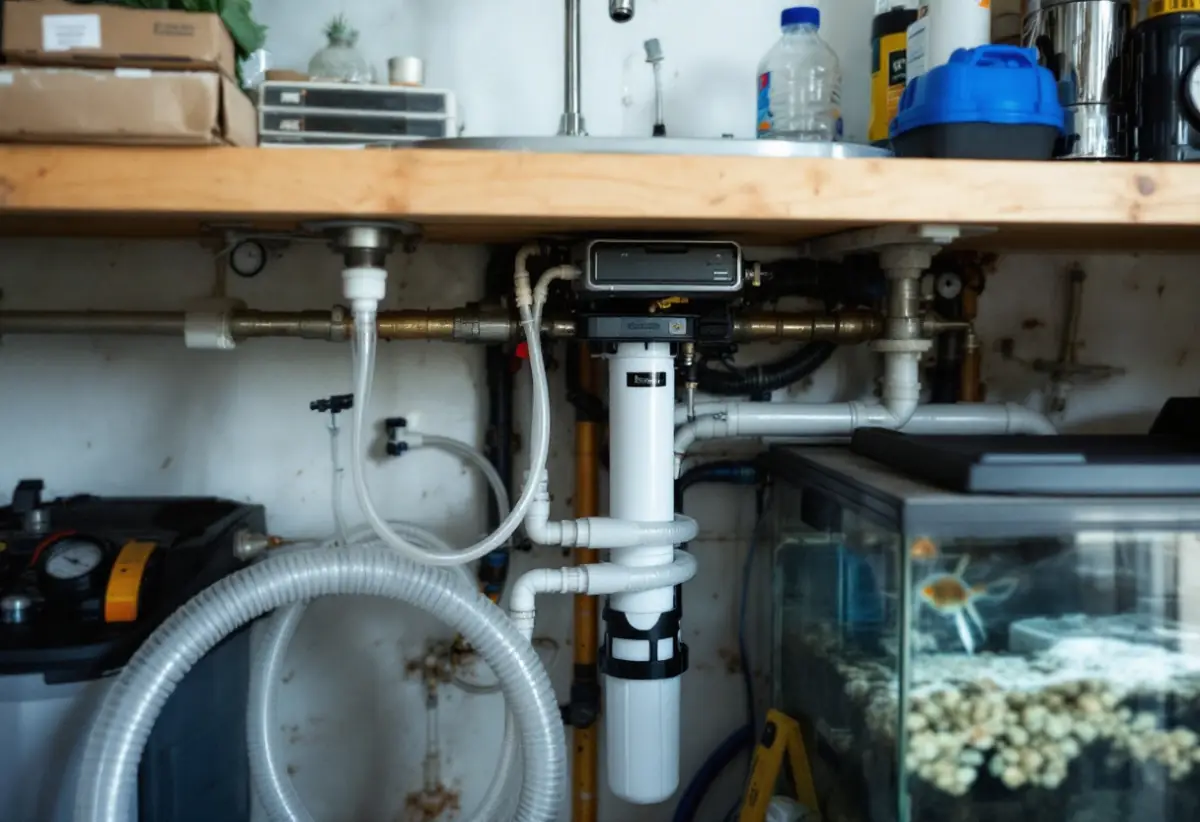
Two groups must remove chloramine: dialysis patients and anyone keeping fish, amphibians or reptiles in tap water. CDC says dialysis centers must treat water to remove all chemical disinfectants, including chloramine, before it is used for dialysis. CDC also advises against keeping fish, turtles or frogs in water that contains chlorine or chloramine, because even low levels can make them sick.
Dialysis is the case where drinking water rules do not apply. Drinking chloraminated water is fine for kidney patients; the problem is chloramine entering the bloodstream directly through the dialysis membrane. Home dialysis users should check the machine’s instructions or ask the equipment supplier whether its water treatment removes chloramine, as CDC and utility fact sheets advise.
For fish, EPA Region 9 says chloramines are toxic to fish and amphibians at drinking water levels. Pick one that neutralizes both the chlorine and the ammonia released when the chloramine breaks apart, a step the Nipomo district fact sheet specifically recommends for freshwater and saltwater tanks.
How do you know if your tap water has chloramine?
Check your utility’s annual Consumer Confidence Report, the water quality report community water systems must send customers each year. It lists the disinfectant and the residual level, often as “chloramine” or “total chlorine.” If the report is unclear, call the utility and ask which secondary disinfectant it uses. A simple test kit can confirm the answer at your faucet.
- Search your utility’s name plus “Consumer Confidence Report” or “water quality report” and open the most recent year.
- Look in the disinfectant rows for chloramine, monochloramine or total chlorine, and note the average and range.
- If you want a faucet check, use a pool or aquarium kit that reads both free and total chlorine.
- High total chlorine with little or no free chlorine usually means chloramine, because chloramine reads as combined chlorine.
- Ask the utility whether it ever switches to free chlorine for a few weeks. Some chloraminated systems do a periodic “chlorine burn” for pipe maintenance, so your filter and fish tank plans should cover both.
How do you remove chloramine from water?
To remove chloramine from water, use catalytic activated carbon sized for enough contact time, a reverse osmosis system with a chloramine-rated carbon pre-filter, vitamin C for bath water, or a dechloraminating product for fish tanks. Standard carbon built for chlorine often falls short, because chloramine breaks down on carbon through a slow catalytic reaction rather than quick adsorption, per NSF.
| Method | Removes chloramine? | Notes |
|---|---|---|
| Catalytic activated carbon (whole-house or point of use) | Yes, when sized right | Slow catalytic reaction; flow must stay at or below the certified rate; cold water reduces performance (NSF, WC&P 2000) |
| Standard granular activated carbon | Partly | Nipomo CSD says GAC “if properly maintained” can remove chloramines; capacity is lower than for chlorine |
| Reverse osmosis membrane alone | No | Chloramines pass through easily (Nipomo CSD); the carbon pre-filter does the work |
| RO system with carbon pre-filter | Yes, at one tap | Confirm the carbon stage carries a chloramine claim |
| Vitamin C (ascorbic acid or sodium ascorbate) | Yes, short term | SFPUC found 1,000 mg neutralizes chloramine in a medium bathtub; shower filters use the same chemistry |
| Aquarium dechloraminator | Yes | Choose one that handles both chlorine and ammonia |
| Boiling | No, not practically | EPA Region 9 says chloramines do not dissipate by boiling |
| Letting water stand | No | CDC says chloramine cannot be removed this way; may persist for weeks |
| Water softener (resin only) | No | Only softeners with a GAC stage may help (Nipomo CSD) |
Catalytic carbon for the whole house
Catalytic carbon is the standard fix for every tap at once. Rob Herman, then technical manager of NSF International’s drinking water treatment unit program, wrote in Water Conditioning & Purification that the reaction “isn’t a rapid process and is highly dependent on the type of carbon used.” That is why a tank sized for chlorine can let chloramine through.
Herman listed the variables that decide performance: flow rate, rest time between uses, influent level, pH, temperature and organic matter. The reaction also releases a small amount of ammonia. When shopping for a whole-house water filter, ask for the chloramine rating at your peak household flow, not just the chlorine rating.
Reverse osmosis at the kitchen sink
Reverse osmosis handles drinking and cooking water, but not because of the membrane. The Nipomo Community Services District states that salts are caught by RO while chloramines pass through easily. The carbon ahead of the membrane removes the chloramine, so an under-sink reverse osmosis system is only as good as that pre-filter and its change schedule.
Vitamin C for baths and showers
Vitamin C neutralizes chloramine quickly, which suits bath water and shower filters. Wikipedia cites a June 2013 SFPUC Q&A finding that 1,000 mg of crushed vitamin C tablets removes chloramine from a medium bathtub without a large pH drop. The catch is shelf life: dissolved vitamin C degrades within a day or two, so it fits short-term uses, not storage.
Check the certification, not the box claim
NSF tests chloramine reduction under NSF/ANSI 42 as a separate protocol, using water at about 3 mg/L, Herman reported. The standard will not let a maker claim chloramine reduction from chlorine data. A filter labeled “reduces chlorine taste and odor” has not proven anything about chloramine.
Does boiling or letting water sit remove chloramine?
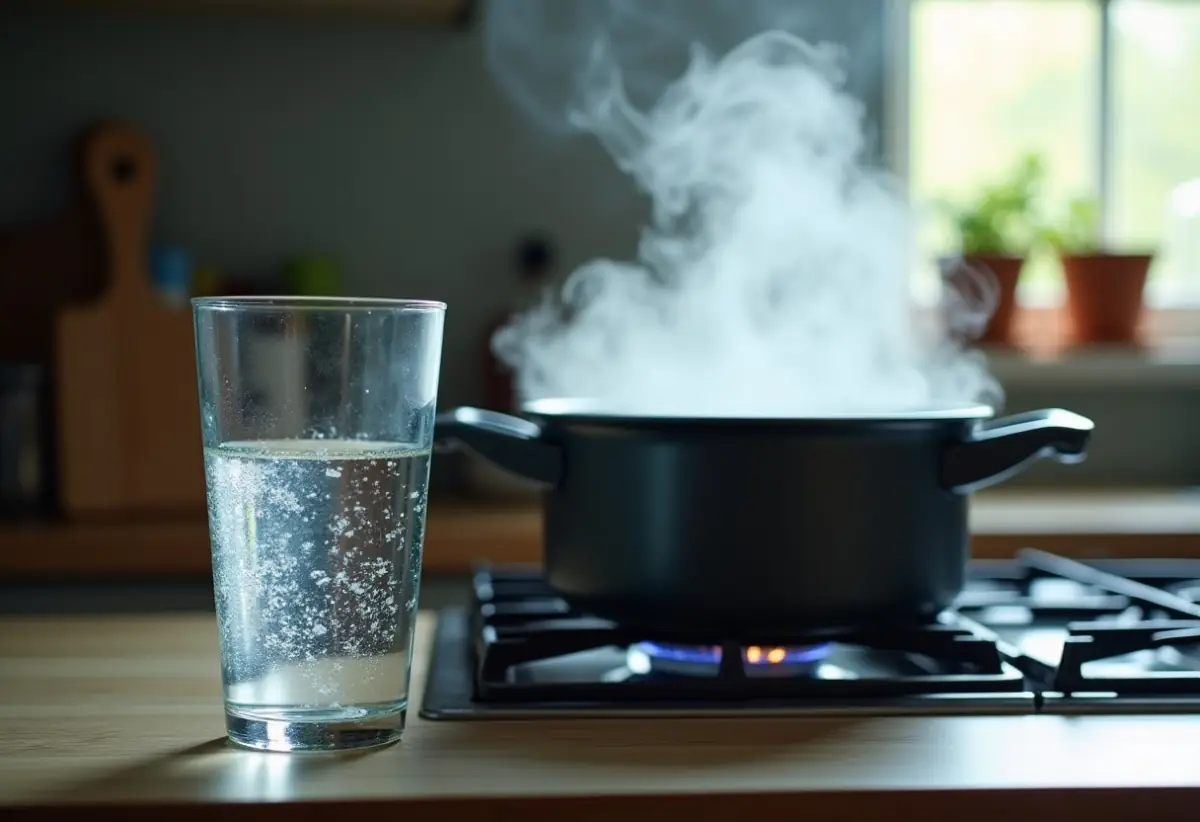
No. Boiling and letting water stand both work on free chlorine but fail on chloramine. EPA Region 9 states that, unlike chlorine, chloramines do not rapidly dissipate on standing and do not dissipate by boiling. CDC agrees that chloramine cannot be removed by letting water sit out, the trick that works for chlorine over a few days.
This is where many homebrewers and aquarium owners get caught. A pitcher left on the counter overnight still carries nearly all its chloramine. The Nipomo district warns that chloramines can stay in water for several weeks, which is why fish keepers need a chemical treatment every time.
What does chloramine do to rubber plumbing parts?
Chloramine can slowly break down some rubber and elastomer parts, especially older toilet flappers and the rubber linings of braided flex connectors. EPA Region 9 says chloramines react with certain rubber hoses and gaskets and that the degradation can show up as black or greasy particles. Replacement parts labeled chloramine resistant are widely sold.
A Stanford University utilities fact sheet quotes the CA-NV section of AWWA’s water quality complaints handbook. It describes soft, black flakes on the first draw from a tap that then clear, flakes that may look greasy and smear on surfaces. If the bad part is the water heater’s flex connector, the particles appear just as the water turns hot.
The fix is to replace the degraded part with chloramine-resistant materials, which the fact sheet lists as silicone-based rubber, synthetic polymers, or copper or nylon flex lines. If you are seeing black specks in your water, a worn flapper or connector is one of the first things to check in a chloraminated system.
Research backs the concern. The Water Research Foundation’s Project 2932, completed in 2007 with EPA as a research partner, studied how chlorine and chloramines affect gasket life and which gasket materials resist degradation. Look for “chloramine resistant” on flappers, fill valve seals, supply lines and water heater connectors when you replace them.
How we sourced this
We consulted 11 sources and cite 9: EPA’s chloramines page and National Primary Drinking Water Regulations table, an archived EPA Region 9 chloramine page, CDC’s chlorine and chloramine disinfection guidance, NSF’s Rob Herman in WC&P (October 2000), a Stanford University utilities fact sheet quoting the CA-NV AWWA complaints handbook, a Nipomo Community Services District fact sheet (May 2015), the Water Research Foundation project listing for Project 2932, and the SFPUC vitamin C finding as cited on Wikipedia. We excluded filter-vendor claims about cartridge life and removal percentages. Figures were checked in October 2026.
Frequently asked questions
Is chloramine in tap water safe to drink?
Yes, at regulated levels. EPA says water that contains chloramines and meets its standards is safe for drinking, cooking and bathing, and CDC calls levels up to 4 mg/L (4 ppm) safe in drinking water. The exceptions are kidney dialysis, where it must be removed before water touches the blood, and fish tanks, where even low levels harm the animals.
Does boiling water remove chloramine?
Not in any practical way. EPA Region 9 states that chloramines do not dissipate by boiling the way free chlorine does, and boiling a pot for a long time wastes energy without a reliable result. If you need chloramine out of water, use catalytic activated carbon, a dechloraminating product, or vitamin C rather than the stove.
What is the difference between chlorine and chloramine?
Chlorine is used alone, while chloramine is chlorine combined with a small amount of ammonia, almost always as monochloramine. Chloramine is a weaker disinfectant but more stable, so it lasts longer in the pipes and forms fewer disinfection byproducts. EPA caps both at the same 4.0 mg/L maximum residual disinfectant level, measured as chlorine.
Does a carbon filter remove chloramine?
Some do. Chloramine breaks down on carbon through a slow catalytic reaction, so the filter needs the right carbon type and enough contact time. Look for a product certified to NSF/ANSI 42 specifically for chloramine reduction, because NSF does not allow a chloramine claim based on chlorine test data, and keep flow at or below the certified rate.
Does reverse osmosis remove chloramine?
The membrane by itself does not. The Nipomo Community Services District notes that salts are caught by reverse osmosis but chloramines pass through easily. Most household RO units place activated carbon before the membrane, and that carbon stage is what reduces chloramine, so confirm the pre-filter carries a chloramine reduction claim and change it on schedule.
How do I know if my water has chloramine?
Read your utility’s annual Consumer Confidence Report, which lists the disinfectant residual, or call the utility and ask whether it uses chlorine or chloramine. A pool or aquarium test kit gives a quick clue too. High total chlorine with little or no free chlorine usually points to chloramine, since chloramine reads as combined chlorine.