Black Iron Pipe: Sizes, Uses for Gas, and How It Compares
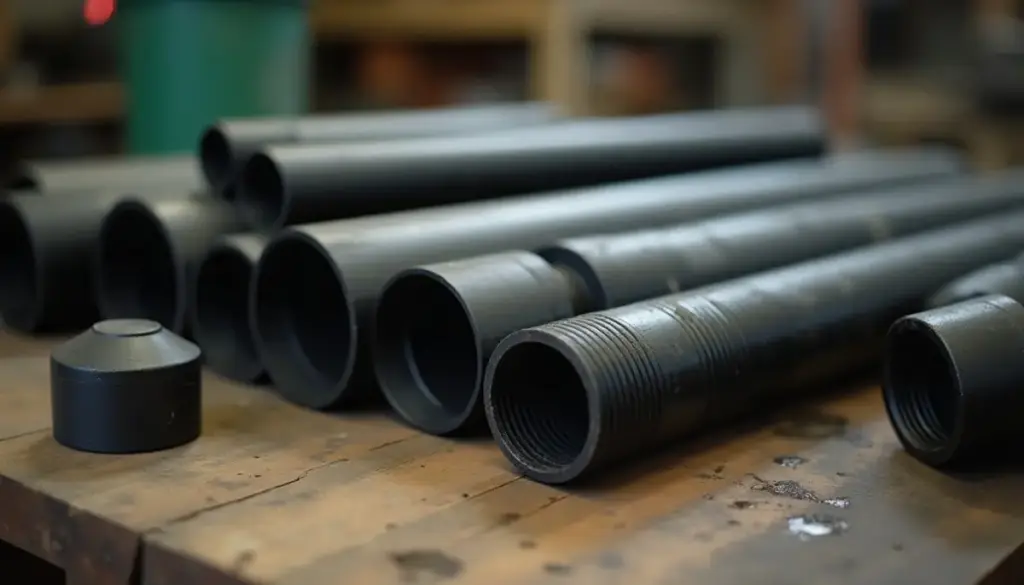
Black iron pipe is uncoated Schedule 40 carbon steel pipe made to ASTM A53, the standard rigid pipe for natural gas and propane, joined with malleable iron fittings on tapered NPT threads.
Key Takeaways
- A 1/2 in black pipe measures 0.840 in outside, 0.622 in inside, with a 0.109 in wall and 0.85 lb per foot, per Wheatland Tube’s Schedule 40 ASTM A53 table.
- The 2021 International Fuel Gas Code, Section 403.3.2, accepts steel gas pipe no lighter than Schedule 10 made to ASME B36.10M and ASTM A53, A106 or A312.
- New gas piping must hold at least 1-1/2 times working pressure and never less than 3 psig, for at least 10 minutes in a single-family home (IFGC 406.4.1 and 406.4.2).
- NPT threads run 14 per inch on 1/2 and 3/4 in pipe and 11-1/2 per inch from 1 in through 2 in, per Engineering ToolBox’s ASME B1.20.1 table.
- IFGC Table 403.8.2 calls for about 10 cut threads over a 3/4 in length when field threading 1/2 or 3/4 in gas pipe.
- Under IFGC 404.11.1, zinc coating is not adequate protection for underground gas piping.
What is black iron pipe made of?
Black iron pipe is welded carbon steel, not iron. Mills make it to ASTM A53 and the ASME B36.10M dimension standard and leave off the zinc, so the surface stays dark. Wheatland Tube, one of the largest US producers, rolls black and hot-dip galvanized pipe from the same A53 specification, which means the two differ by coating, not by steel grade or size.
The dark skin is mill scale, a thin iron oxide layer left from manufacturing, according to the CAMEO materials database at the Museum of Fine Arts, Boston. The word “iron” is a holdover from the wrought iron pipe that steel replaced.
Wheatland’s Standard Pipe brochure rates Grade B at 35,000 psi minimum yield and 60,000 psi minimum tensile strength, and lists mill test pressures for its Grade B continuous weld pipe of 700 psi on 1/2 to 1 in and 2,300 psi at 2 in.
Black pipe pairs with black malleable iron fittings, one of the fitting materials IFGC 403.9.5 allows on steel pipe, and that same section bars threaded fittings larger than 4 in.
What sizes does black iron pipe come in?
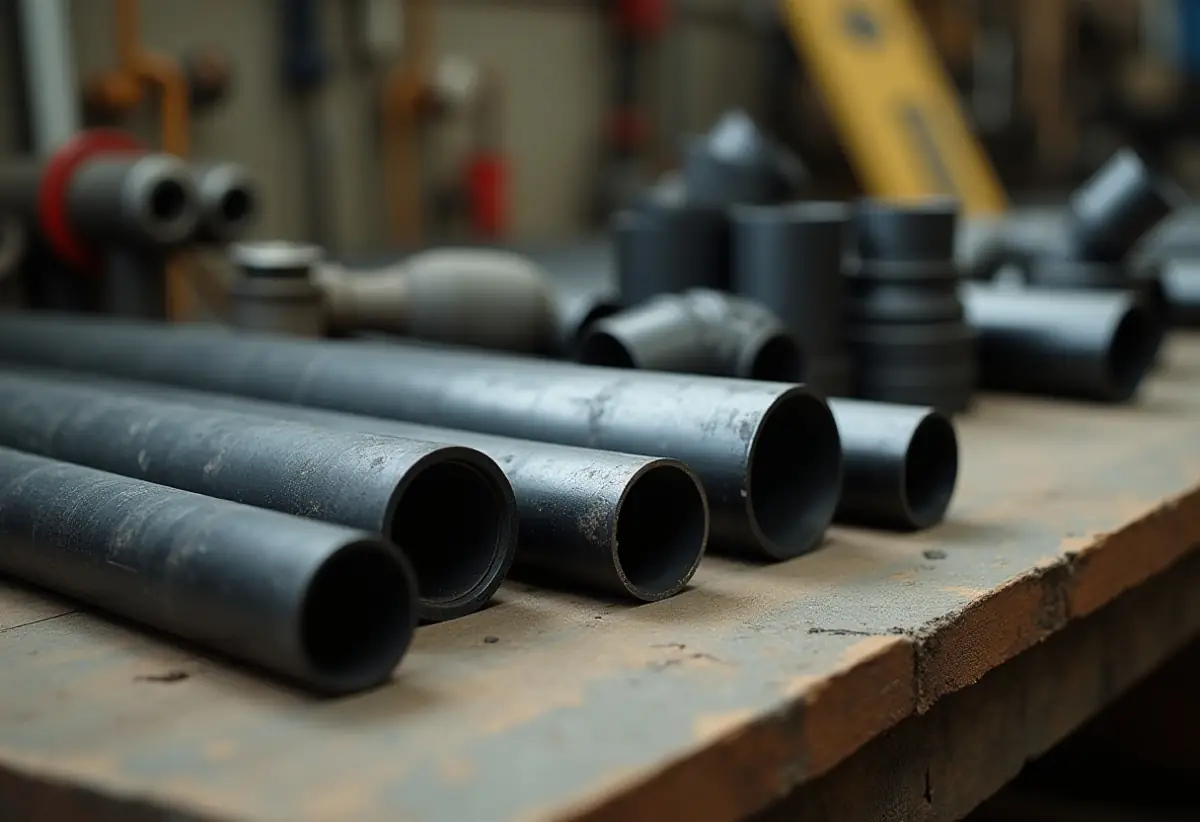
Black iron pipe is sold by nominal size, and the number on the tag matches no real measurement. A 1/2 in pipe is 0.840 in across the outside and 0.622 in inside, per Wheatland’s Schedule 40 table. Mills stock 1/2 to 18 in sizes, but house gas piping rarely runs past 2 in, so the rows below cover the sizes plumbers actually thread.
| Nominal size | Actual OD (in) | ID (in) | Wall (in) | Weight (lb/ft) | NPT threads per inch | IFGC thread length, threads to cut |
|---|---|---|---|---|---|---|
| 1/2 in | 0.840 | 0.622 | 0.109 | 0.85 | 14 | 3/4 in, 10 |
| 3/4 in | 1.050 | 0.824 | 0.113 | 1.13 | 14 | 3/4 in, 10 |
| 1 in | 1.315 | 1.049 | 0.133 | 1.68 | 11-1/2 | 7/8 in, 10 |
| 1-1/4 in | 1.660 | 1.380 | 0.140 | 2.27 | 11-1/2 | 1 in, 11 |
| 1-1/2 in | 1.900 | 1.610 | 0.145 | 2.72 | 11-1/2 | 1 in, 11 |
| 2 in | 2.375 | 2.067 | 0.154 | 3.66 | 11-1/2 | 1 in, 11 |
Dimensions and weights are Wheatland’s; threads per inch come from the Engineering ToolBox NPT table, and thread lengths come from IFGC Table 403.8.2.
Under the A53 tolerances Wheatland prints, outside diameter may vary 1/64 in either way on 1/2 to 1-1/2 in pipe and the wall may run up to 12.5% thin.
Schedule 80 keeps the same outside diameter, so it takes the same dies and fittings. A 1/2 in Schedule 80 pipe still measures 0.840 in outside but has a 0.147 in wall, a 0.549 in bore and weighs 1.09 lb per foot.
For hanger planning, 20 ft of 2 in pipe weighs about 73 lb empty, based on Wheatland’s figures.
Can you use black iron pipe for gas lines?
Yes. Black iron pipe is the default rigid gas pipe under the 2021 International Fuel Gas Code. Section 403.3.2 accepts steel pipe no lighter than Schedule 10 that meets ASME B36.10M and ASTM A53, A106 or A312. Section 403.9.1 lets Schedule 40 joints be threaded, flanged, brazed, welded or made with press-connect fittings listed to ANSI LC-4/CSA 6.32.
Pipe size depends on the gas load and the run length. IFGC Table 402.4(1), for Schedule 40 pipe on natural gas under 2 psi with a 0.3 in water column drop, shows how fast capacity falls with distance. Our gas pipe sizing chart walks through adding up appliance loads branch by branch.
| Nominal size | Capacity at 10 ft (cfh) | Capacity at 50 ft (cfh) | Capacity at 100 ft (cfh) |
|---|---|---|---|
| 1/2 in | 131 | 55 | 38 |
| 3/4 in | 273 | 114 | 79 |
| 1 in | 514 | 215 | 148 |
| 1-1/4 in | 1,060 | 442 | 304 |
Other gas code points apply to black pipe in particular, per the 2021 code text as published by Seattle:
- Sediment trap (408.4): a tee with a capped nipple in its bottom opening, downstream of the appliance shutoff. Ranges, dryers, gas fireplaces and outdoor grills are exempt.
- Burial depth (404.12): at least 12 in below grade, or 8 in for an individual line to an outdoor grill or light where approved.
- Underground corrosion (404.11.2): buried steel needs a factory-applied electrically insulating coating, a corrosion-resistant material, or a monitored cathodic protection system.
CSST, the flexible alternative, carries its own bonding rule in IFGC Section 310 that black iron does not, one reason our breakdown of what a gas line for a stove costs prices the two materials differently.
How do you seal and pressure test a black iron gas line?
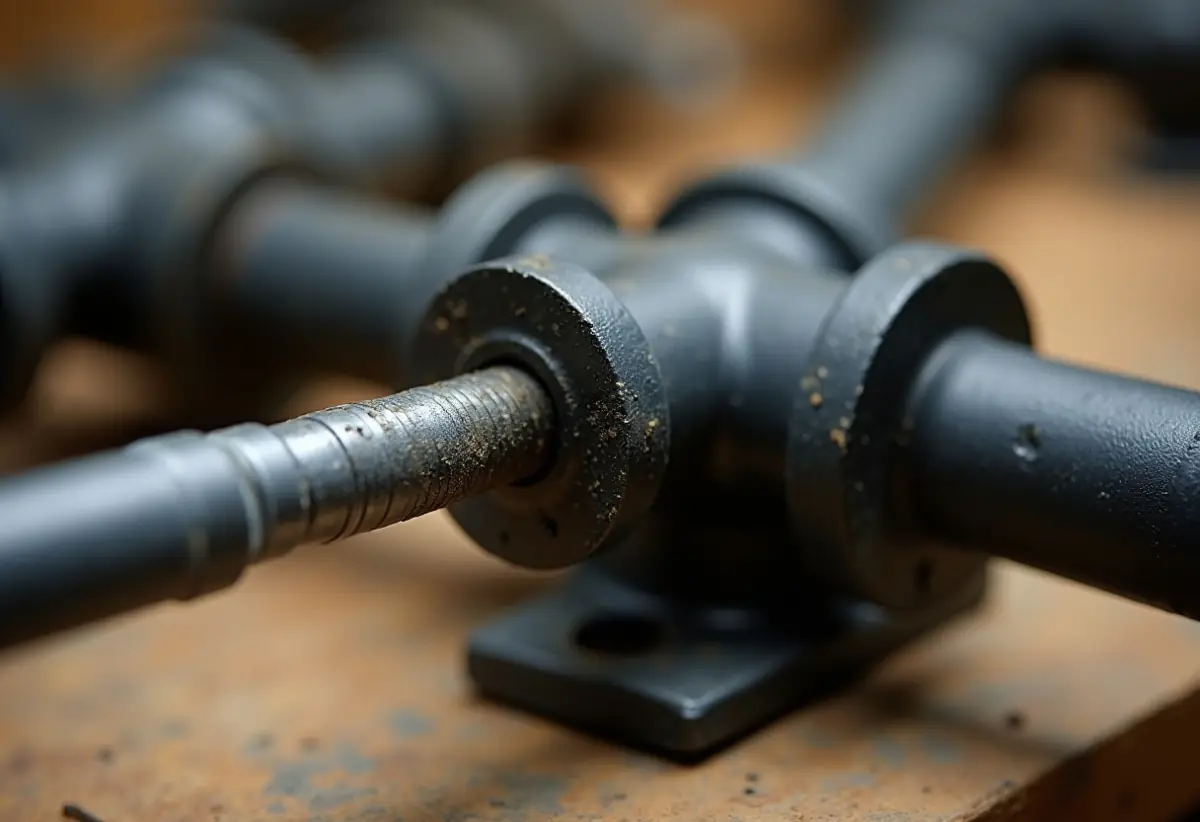
Seal every male thread with a compound rated for the gas, then pressure test the whole system before any appliance is lit. IFGC 403.8.3 requires a thread sealant that is nonhardening, resists the chemical constituents of the gas, and suits the pipe and fitting metals. IFGC 406.4.1 sets the test at 1-1/2 times the maximum working pressure, never under 3 psig.
- Check every thread. IFGC 403.8.1 bars stripped, chipped, corroded or damaged threads, and any section where the weld seam opened during cutting or threading.
- Seal the male threads only, with yellow PTFE tape labeled for gas or a pipe dope listed for gas. Oatey recommends 3 to 5 clockwise wraps of tape on 1/2 to 1 in threads.
- Clear the inside of the pipe of chips and debris (406.1.6) and leave every joint exposed for the test (406.3).
- Pressurize with air, nitrogen, carbon dioxide or an inert gas. Oxygen is never allowed (406.2).
- Read the test on a manometer or a gauge whose top of scale is no more than 5 times the test pressure (406.4). A 3 psig test therefore needs a gauge that tops out at 15 psi or less.
- Hold the test at least 1/2 hour per 500 cubic feet of pipe volume. A single-family dwelling or a system under 10 cubic feet needs at least 10 minutes, and no test has to run past 24 hours (406.4.2).
- Treat any pressure drop as a leak unless another cause is obvious (406.5). Find it with an approved gas detector or a noncorrosive leak detection fluid, repair it, and retest (406.5.1, 406.5.2).
- Before turning gas on, cap or plug every unused outlet (406.6.2), then leak check right after the gas comes on (406.6.3).
Black pipe vs galvanized: which should you use?
Use black pipe for gas and keep galvanized for outdoor water and other non-gas jobs your local code allows. Both come off the same ASTM A53 lines at mills like Wheatland, with identical outside diameters and threads. The difference is a hot-dip zinc coat, and IFGC 404.11.1 says that zinc is not adequate protection for underground gas piping.
Above ground, the code’s A53 steel listing does not exclude galvanized, but many installers and some gas utilities avoid it indoors over the trade concern that zinc flakes can lodge in regulators and burner orifices. Ask your utility first.
| Feature | Black steel pipe | Galvanized steel pipe | CSST |
|---|---|---|---|
| Standard | ASTM A53, black finish (Wheatland) | ASTM A53, hot-dip galvanized (Wheatland) | Listed to ANSI LC 1/CSA 6.26 (IFGC 403.4.5) |
| Indoor gas | Standard choice; threaded malleable iron fittings | Code steel list (A53) does not exclude it; some installers and utilities discourage it | Allowed when installed per its listing (IFGC 404.2) |
| Buried gas | Needs factory insulating coating or cathodic protection (404.11.2) | Zinc alone not adequate (404.11.1) | Per maker listing and local code |
| Bonding | Normal bonding of metal gas piping | Normal bonding of metal gas piping | Separate rule in IFGC Section 310 |
| Water service | Wheatland approves 1/2 to 6 in for drinking water, but bare steel rusts | Old supply lines; zinc wears and the pipe rusts inside | Not used for water |
For water lines, galvanized has its own track record of rust and pressure loss, which our galvanized vs copper comparison covers in detail.
What does black iron pipe cost?
Raw black iron pipe runs about $5 to $9 per foot before labor, according to HomeAdvisor. Installed, Fixr puts black iron gas line at $15 to $30 per foot, against $11 to $20 for CSST. The labor gap comes from cutting, threading and making up each joint by hand, while CSST pulls through framing in one length.
Why isn’t black iron pipe used for drinking water?
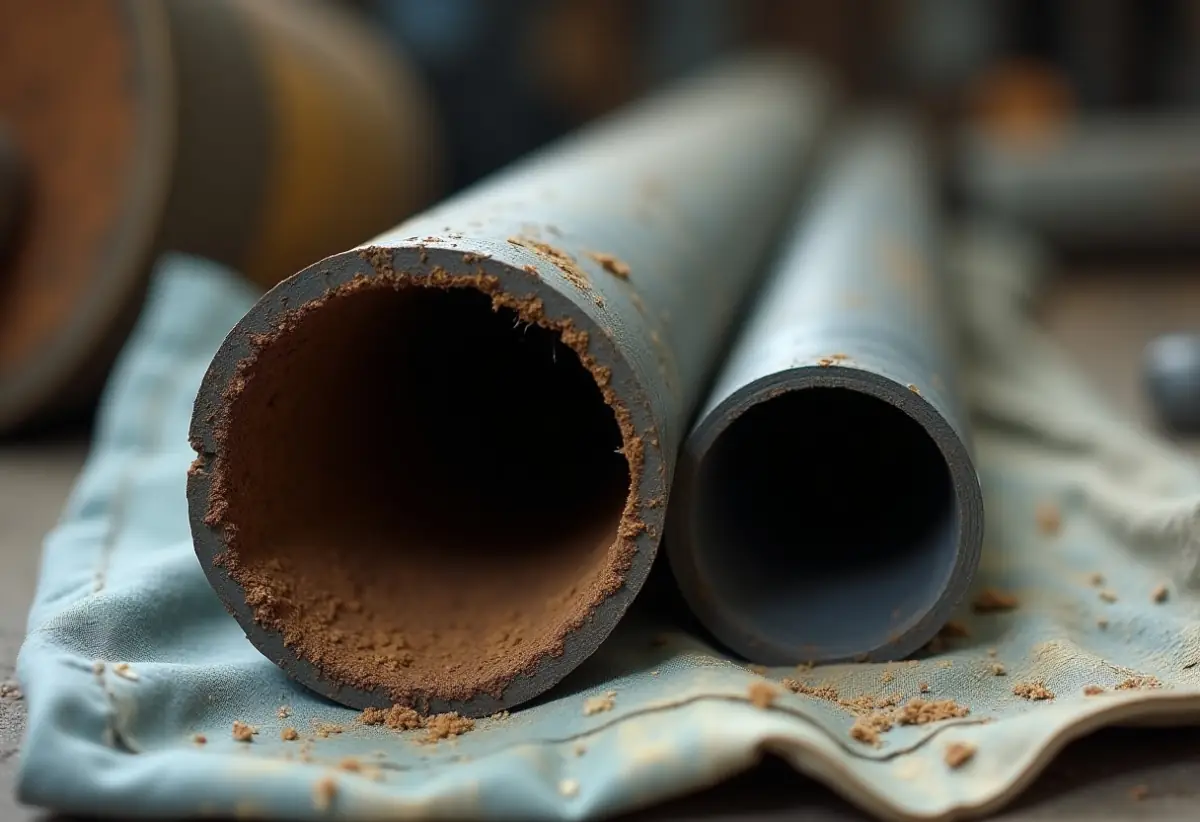
Mostly because bare steel rusts once water sits in it, not because the pipe is banned. Wheatland states that all of its black and galvanized pipe from 1/2 to 6 in is approved for drinking water use. Without a zinc layer, though, the inside wall oxidizes, and the rust narrows the bore and tints the water.
Black pipe still carries water where it suits the job. Wheatland’s black and galvanized Schedule 40 pipe in 1/2 to 8 in sizes is FM Approved, the listing fire sprinkler designers check for.
Copper and PEX took over house supply lines, and where old steel meets new copper the joint needs a dielectric or brass transition fitting.
How do you cut and thread black iron pipe?
Cut the pipe square with a wheel cutter, ream out the burr, and thread it with a die matched to the pipe size, stopping at the thread length IFGC Table 403.8.2 gives. Dies for 1/2 and 3/4 in pipe cut 14 threads per inch, and dies for 1 through 2 in cut 11-1/2. Every NPT thread tapers 1 in 16 on diameter, per Engineering ToolBox, which is why the joint tightens as it turns in.
- Clamp the pipe in a pipe vise and cut it with a wheel style pipe cutter.
- Ream the inside burr flush. A burr left in a 1/2 in pipe eats into a bore that is only 0.622 in to begin with.
- Oil the pipe end and the die with thread cutting oil.
- Start the die square and ratchet it on until the threaded length matches Table 403.8.2: 3/4 in on 1/2 and 3/4 in pipe, 7/8 in on 1 in pipe, and 1 in on 1-1/4 through 2 in pipe.
- Back the die off, wipe off chips and oil, and inspect the threads. Reject any that are torn or where the weld seam split (403.8.1).
- Seal the male threads and make up the joint into the fitting.
For short runs, buy pre-threaded black nipples, from close nipples (threaded end to end) up, or have a supply house cut and thread a length to your measurement.
Pipe ends are male NPT and black fittings are female NPT, so the naming on the shelf follows our FIP vs MIP thread guide. Measure the outside of an unknown thread with calipers and count threads per inch before buying a fitting.
How we sourced this
We cited 7 sources: Wheatland Tube’s Standard Pipe brochure, the 2021 IFGC Chapter 4 as published by Seattle (local amendments flagged [S], including 404.11), the Engineering ToolBox NPT table, CAMEO, Fixr, HomeAdvisor and Oatey. Two corrections surfaced. Steel gas pipe sits in IFGC 403.3.2 (403.4 covers tubing), and Wheatland approves its black pipe for drinking water. We found no per-size retail prices we could verify, so the size table omits price. Research ran in October 2026.
Frequently asked questions
Is black iron pipe good for gas lines?
Yes. It is the standard rigid gas pipe. IFGC Section 403.3.2 accepts steel pipe no lighter than Schedule 10 made to ASME B36.10M and ASTM A53, which Schedule 40 black pipe meets. Every new line must hold at least 1-1/2 times working pressure, never below 3 psig, for 10 minutes or more in a single-family home.
What is the difference between black pipe and galvanized pipe?
Only the zinc. Wheatland Tube makes both finishes to the same ASTM A53 specification, so diameter, wall and threads match size for size. For gas, IFGC 404.11.1 gives zinc no credit as underground protection, and many installers avoid galvanized indoors because loose zinc flakes can reach regulators and burner orifices.
What is the actual outside diameter of 1/2 inch black pipe?
A 1/2 inch Schedule 40 black pipe measures 0.840 inch outside, 0.622 inch inside, with a 0.109 inch wall, per Wheatland Tube’s ASTM A53 table. A 3/4 inch pipe measures 1.050 inch outside and a 1 inch pipe 1.315 inch, so calipers on the outside identify the size fast.
Can black iron pipe be used for water lines?
It can, but it is a poor choice for drinking water. Wheatland states its black pipe in 1/2 to 6 inch sizes is approved for drinking water use, yet bare steel has no zinc layer and rusts inside once water sits in it. Copper and PEX handle house supply lines instead.
How many threads per inch is 1/2 inch black pipe?
Half inch black pipe takes 14 threads per inch, the same as 3/4 inch. Sizes from 1 inch through 2 inch run 11-1/2 threads per inch, per the Engineering ToolBox table built on ASME B1.20.1. IFGC Table 403.8.2 calls for about 10 threads over a 3/4 inch length on 1/2 inch gas pipe.
What thread sealant should I use on black gas pipe?
Use a sealant made for gas. IFGC 403.8.3 requires thread sealing material that is nonhardening, resists the chemical constituents of the gas, and suits the pipe metals. That usually means yellow PTFE tape labeled for gas or a gas-listed pipe dope on the male threads only, with Oatey recommending 3 to 5 clockwise wraps on 1/2 to 1 inch threads.