FIP vs MIP: Female and Male Iron Pipe Threads Explained
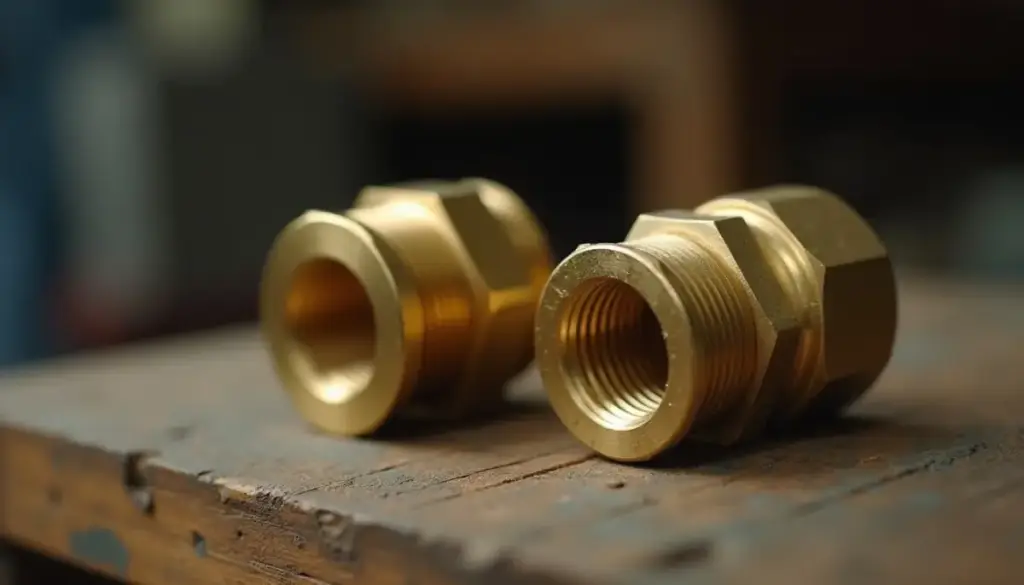
FIP vs MIP comes down to where the threads sit: FIP (female iron pipe) has threads inside, MIP (male iron pipe) has threads outside, and both use the same tapered NPT thread.
Key Takeaways
- FIP and MIP are the two genders of one thread, the tapered National Pipe Thread defined by ASME B1.20.1, so 1/2 inch FIP always mates with 1/2 inch MIP.
- FIP, FPT, FNPT, and NPT(F) all mean the same internal thread, and MIP, MPT, MNPT, and NPT(M) all mean the same external thread, per the naming list published by Petersen Products.
- Nominal size is not a measurement. A 1/2 inch MIP thread is 0.840 inch across, and a 3/4 inch thread is 1.050 inch, per the Engineering ToolBox NPT table.
- Every NPT thread tapers 1 inch in 16 (3/4 inch per foot) with a 60 degree thread angle, according to Engineering ToolBox, which is why the joint tightens as it goes in.
- Oatey tells installers to wrap PTFE tape clockwise on the male thread only, 3 to 5 times on 1/2 to 1 inch threads.
- Garden hose thread (ASME B1.20.7, 11.5 threads per inch on 3/4 inch) and British BSP (55 degree angle under ISO 7) look close to NPT but do not seal against it.
What is the difference between FIP and MIP?
FIP is a female iron pipe thread, cut on the inside of a fitting, valve port, or adapter. MIP is a male iron pipe thread, cut on the outside of a pipe end or nipple. The thread form is identical on both, the tapered National Pipe Thread, so a male part screws into a female part of the same nominal size and the taper pulls them into a seal.
Think of it as a plug and a socket. A shower arm has MIP on both ends. The drop-ear elbow behind the wall and the back of the shower head are FIP. A tank water heater port is FIP, and the nipple that threads into it is MIP on the tank end.
The F and M tell you gender only. A 3/4 inch FIP brass ball valve and a 3/4 inch MIP galvanized nipple fit each other because both carry the same 3/4 inch NPT thread.
What does FIP mean in plumbing, and how does it relate to NPT, FPT, and FNPT?
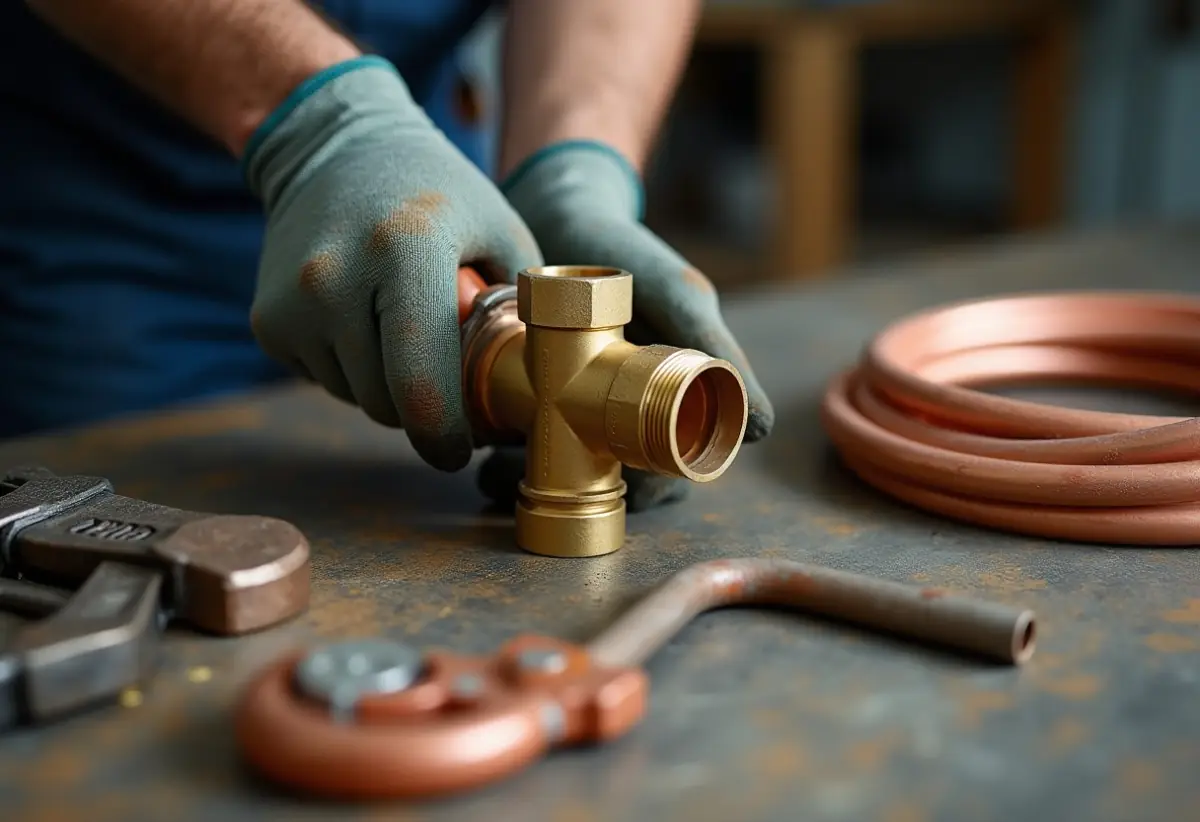
FIP means female iron pipe. It is an older trade name for a female NPT thread, the tapered US standard covered in our guide to the National Pipe Thread standard. FPT, FNPT, FIPT, and NPT(F) are the same internal thread under different labels. The matching male labels are MIP, MPT, MNPT, MIPT, and NPT(M).
Which label you see depends on who wrote the catalog. Plumbing supply houses and big box stores lean on FIP and MIP. Valve, pump, and instrument makers lean on FNPT and MNPT. Petersen Products publishes all of these terms side by side as names for the same female and male pipe threads. Before sorting out which thread label a supplier uses, it helps to review common plumbing terminology covering fittings, fixtures, and code language.
| Term | Meaning | Thread location | Example fitting |
|---|---|---|---|
| FIP | Female iron pipe (tapered NPT) | Inside the part | 1/2 inch FIP brass ball valve inlet |
| MIP | Male iron pipe (tapered NPT) | Outside the part | 1/2 inch MIP shower arm end |
| FPT / FNPT / NPT(F) | Female pipe thread, female National Pipe Thread | Inside the part | Pressure gauge port, pump discharge |
| MPT / MNPT / NPT(M) | Male pipe thread, male National Pipe Thread | Outside the part | Hex nipple, close nipple, plug |
| FIPT / MIPT | Female or male iron pipe thread | Inside / outside | Toilet supply stop inlet (FIPT) |
| NPT | National Pipe Thread, tapered, ASME B1.20.1 | Either | Any US threaded pipe joint |
| NPS | National Pipe Straight, parallel thread | Either | Gasketed or O-ring connection |
| IPS | Iron pipe size, a sizing system, not a thread | None | Schedule 40 PVC pipe outside diameter |
IPS is the odd label in that list. It names a pipe diameter series, not a thread, and Schedule 40 PVC is made to it.
Why do brass, PVC, and PEX adapters still say “iron pipe”?
The name stuck because the thread came from threaded wrought iron and later steel pipe, and the sizes never changed when other materials took over. Brass valves, PVC adapters, and PEX transition fittings use the same NPT thread so they can join the iron and steel pipe still in millions of houses. The word “iron” now describes the thread, not the metal.
That is why a shelf tag can read “1/2 in. PEX barb x 1/2 in. FIP” or “3/4 in. PVC slip x MIP.” The first half names the tubing connection. The second half names a standard NPT thread that will mate with any brass, steel, or stainless NPT part of the same size.
Copper and PEX are the odd ones out. Copper tube follows copper tube size (CTS), where the outside diameter runs 1/8 inch larger than nominal, so 1/2 inch copper is 0.625 inch across under ASTM B88. A 1/2 inch NPT thread is 0.840 inch. The two never meet without an adapter, which is the whole job of a sweat by FIP or crimp by MIP fitting.
The same logic applies to a push-fit fitting such as a SharkBite adapter. One end grips CTS copper, PEX, or CPVC, and the other end carries a MIP or FIP NPT thread. You seal that threaded end like any other pipe thread.
How do you identify and measure FIP and MIP thread size?
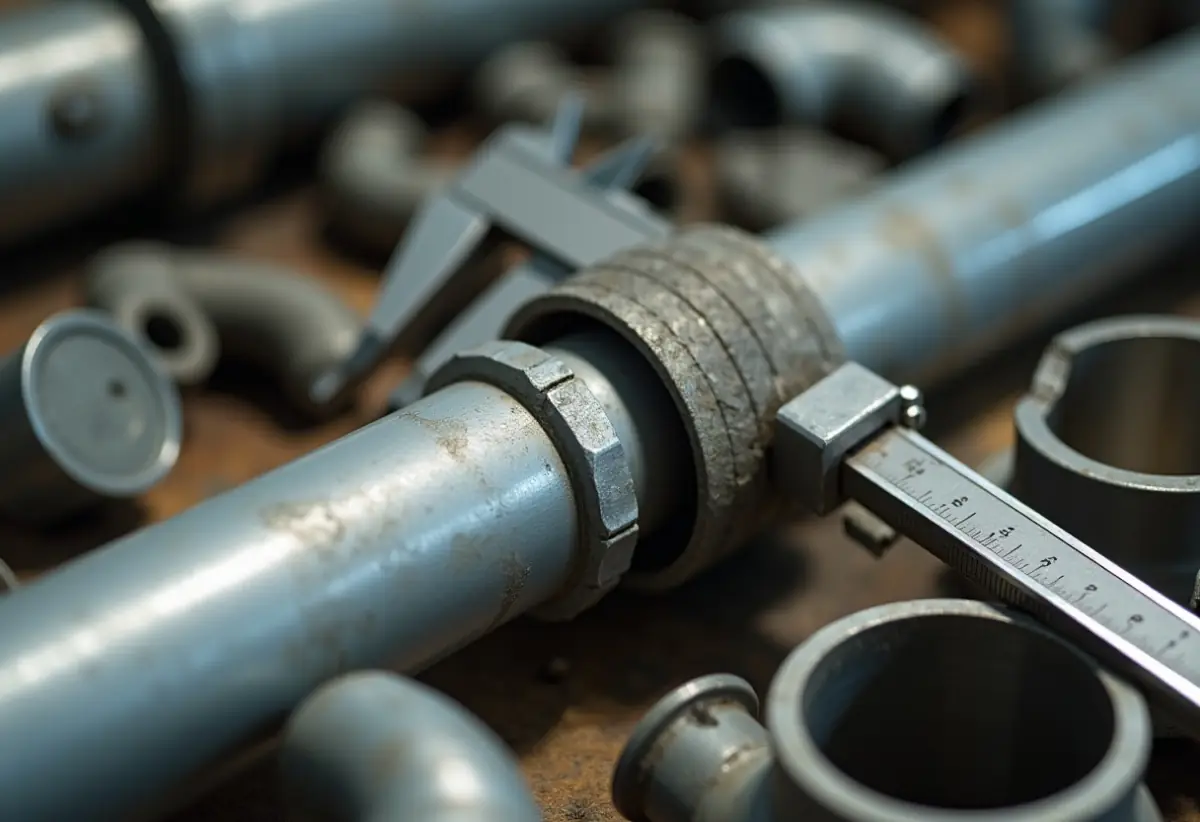
Measure the outside diameter of a male thread with calipers, count threads per inch, and match both numbers to an NPT chart. A 1/2 inch MIP thread reads about 0.840 inch with 14 threads per inch, per the Engineering ToolBox NPT table. For a female thread, measure the inside opening or test-fit a known male part.
The nominal size never matches a tape measure. Across 1/4 to 1 inch, the actual male thread is about 0.29 to 0.34 inch larger than the name, based on the Engineering ToolBox figures. People who measure a 1/2 inch nipple, get almost 7/8 inch, and buy 3/4 inch parts make one of the most common return trips to the store.
Threads per inch alone will not identify a size. The Engineering ToolBox table lists 18 threads per inch on both 1/4 and 3/8 inch, 14 on both 1/2 and 3/4 inch, and 11-1/2 on every size from 1 inch to 2 inch. You need the diameter and the count together.
How do you seal FIP and MIP threads with tape or pipe dope?
Seal the male thread, not the female one. Wrap PTFE thread seal tape clockwise on the MIP end, or brush pipe dope on it, then thread it into the FIP port. Oatey’s guidance calls for 3 to 5 wraps on 1/2 to 1 inch threads when the tape width matches the pipe size, and 4 to 5 wraps on 1-1/4 inch and up.
- Clean the male threads and check for cracks, flattened crests, or cross-threading.
- Hold the fitting with the open end facing you. Start the tape a thread back from the end so no shreds get into the line.
- Wrap clockwise, the direction the fitting turns as it goes on. Oatey says to keep the tape at the bottom of the thread as you wrap.
- For pipe dope, brush a thin, even coat around the male threads. Some installers put dope over tape on larger or gas joints.
- Thread the FIP part on by hand until it stops, then tighten with a wrench. A common field rule is one to two turns past hand tight on small sizes.
- Stop when it is snug. The taper keeps wedging, and too much torque can split a female fitting, especially cast brass or plastic.
Threaded plastic needs extra care. A plastic FIP fitting is the weak half of the joint, so many installers prefer a plastic male into a metal female, not the reverse. Use only a sealant the fitting maker lists for that plastic, because some pipe dopes contain solvents that can harm PVC or CPVC.
Gas lines are a separate case. Many jurisdictions require a sealant listed for gas, often yellow PTFE tape or a gas-rated compound, and some require a licensed installer. Check local code before you touch a gas thread.
Can you connect FIP or MIP to compression, flare, hose, or BSP threads?
No, not directly. Compression, flare, garden hose, and BSP threads may look close to NPT, and some even start by hand, but they use different thread angles, pitches, or seal points. Joining them to FIP or MIP strips threads or leaves a slow leak. Use an adapter built with NPT on one end and the other system on the other end.
| Connection | Thread form | Where it seals | Mates with FIP or MIP? |
|---|---|---|---|
| NPT (FIP / MIP) | 60 degree, tapered 1 in 16 | On the threads, with tape or dope | Yes, same size, opposite gender |
| NPS | 60 degree, straight | Gasket or O-ring | No, needs a matched straight part |
| Compression | Straight nut thread | Brass or plastic ferrule on the tube | No, use a compression by MIP adapter |
| Flare (SAE 45 degree) | Straight nut thread | Flared tube face against a cone | No, use a flare by MIP or FIP adapter |
| Garden hose (GHT) | Straight, 11.5 TPI on 3/4 inch | Rubber washer | No, use an FIP by hose adapter |
| BSPT / BSPP | 55 degree, tapered or parallel | Threads (BSPT) or washer (BSPP) | No, use an NPT by BSP adapter |
Compression and flare joints seal at the ferrule or the flare, not the nut threads. Tape on those threads does nothing for the seal and can stop the nut from seating fully.
Garden hose thread is the classic trap. Under ASME B1.20.7, 3/4 inch hose thread runs 11.5 threads per inch on a straight form, while 3/4 inch NPT runs 14 on a taper. The diameters are close enough that the parts start, then bind after a turn or two.
BSP is the trap on imported fixtures, pumps, and filters. It uses a 55 degree thread angle, and at 1/2 and 3/4 inch it shares the 14 threads per inch count with NPT, so it feels right in the hand. Look for “G” or “R” markings or a metric spec sheet before you mix them.
What are the most common FIP vs MIP mistakes?
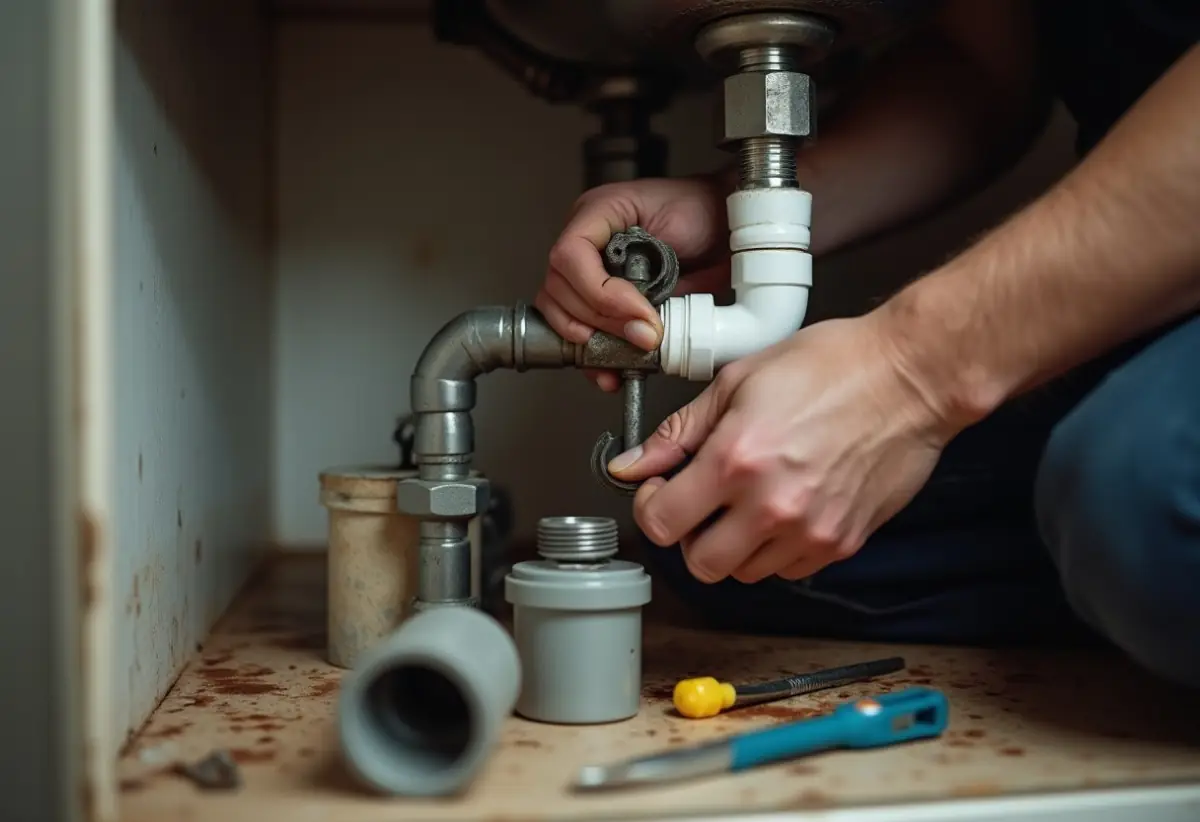
The most common mistakes are buying by measured size instead of nominal size, mixing up the gender, taping the female thread, wrapping tape the wrong way, and forcing NPT onto hose or BSP threads. Each one either sends you back to the store or leaves a joint that weeps a week later inside a wall or cabinet.
- Buying the measured size. A 1/2 inch nipple measures 0.840 inch, so people buy 3/4 inch parts. Buy by nominal size.
- Getting the gender backward. Look at the part you are connecting to. Outside threads there means you need FIP. Inside threads means you need MIP.
- Taping the wrong side or direction. Tape goes on the male thread, clockwise as you face the open end.
- Overtightening. The taper multiplies force. Cranking a brass or PVC FIP fitting past snug can crack it, sometimes days later.
- Backing off to align. Loosening a tapered joint to point a valve handle the right way breaks the seal. Go forward to align, or redo the joint.
- Mixing standards. NPT into hose thread, BSP, compression, or flare will not seal without the right adapter.
Should you buy an FIP or MIP fitting?
Buy the opposite of what you already have. If the pipe, valve, or fixture you are connecting to has outside threads (MIP), you need an FIP fitting. If it has an open threaded port (FIP), you need MIP. Then match the nominal size, not the measured diameter, and confirm the far end of the fitting fits your tubing or pipe.
Most adapters list both ends in the name, with the larger or line end first. A “1/2 in. sweat x 1/2 in. FIP” adapter solders to copper on one end and accepts a male thread on the other. A “3/4 in. PEX x 3/4 in. MIP” adapter crimps to PEX and screws into a female port.
When a run needs a gender swap, a hex nipple turns FIP into MIP and a coupling turns MIP into FIP. A bushing or reducing coupling changes size at the same time. Our rundown of common plumbing fittings covers nipples, couplings, bushings, and unions.
How we sourced this
We reviewed the top-ranking pages and People Also Ask questions for “fip vs mip” and “what does fip mean in plumbing” in October 2026, then went to primary or near-primary sources. Thread dimensions, threads per inch, taper, and thread angle come from the Engineering ToolBox NPT table, which reproduces ASME B1.20.1 data. Naming equivalents come from Petersen Products’ pipe threading standards page. Tape wrap counts and direction come from Oatey’s published application FAQ. Garden hose thread data comes from ASME B1.20.7 as summarized by Engineers Edge. Copper tube sizing follows ASTM B88. We consulted 9 sources and link 4. We excluded unsourced chart sites. Code and gas-sealant rules vary by jurisdiction, so we describe them only in general terms.
Frequently asked questions
What does FIP mean in plumbing?
FIP means female iron pipe, a fitting or valve port with threads cut on the inside. It accepts a male iron pipe (MIP) thread. In US plumbing both follow the tapered National Pipe Thread standard, ASME B1.20.1, so a 1/2 inch FIP part mates with any 1/2 inch MIP part, whether it is brass, steel, PVC, or a PEX adapter.
Is FIP the same as NPT?
FIP is one half of NPT. NPT names the thread form, a 60 degree tapered thread defined by ASME B1.20.1. FIP says the thread is female, cut on the inside of the part. So a part listed as FIP, FPT, FNPT, or NPT(F) has the same tapered NPT thread, just on the inside.
What is the difference between FIP and FPT?
There is no practical difference. FIP (female iron pipe) and FPT (female pipe thread) both describe an internal tapered NPT thread, and suppliers such as Petersen Products list them side by side. Plumbing catalogs and big box stores lean on FIP, while valve, pump, and industrial catalogs lean on FPT or FNPT. Buy by size and gender, not by the label.
Is MIP male or female?
MIP is male. It stands for male iron pipe and means the threads are on the outside of the part, like the end of a pipe nipple or a shower arm. A male thread screws into a female (FIP) port. The same thread may be labeled MPT, MNPT, MIPT, or NPT(M) depending on the catalog.
Do you put Teflon tape on FIP or MIP threads?
Put PTFE (Teflon) tape on the male MIP threads only, never inside the female FIP port. Oatey says to wrap clockwise, the same way the fitting turns, keeping the tape down in the threads. Its guidance calls for 3 to 5 wraps on 1/2 to 1 inch threads when the tape width matches the pipe size.
What size is 1/2 inch MIP?
A 1/2 inch MIP thread measures about 0.840 inch across the outside of the threads, with 14 threads per inch, per the Engineering ToolBox NPT table built on ASME B1.20.1. The 1/2 inch is a nominal trade size, not a measurement. That is why a tape measure on the threads reads just under 7/8 inch.
Can you connect MIP to a garden hose?
Not directly. A garden hose uses GHT, a straight 3/4 inch thread with 11.5 threads per inch under ASME B1.20.7, while 3/4 inch MIP is tapered with 14 threads per inch. The parts may start by hand, then bind and leak. Use an adapter made for the job, such as a 3/4 inch FIP by male hose thread fitting.
Can FIP and MIP be used together?
Yes. FIP and MIP are the two genders of the same tapered National Pipe Thread, so a male part always screws into a female part of the same nominal size. A 1/2 inch FIP brass ball valve and a 1/2 inch MIP galvanized nipple fit each other because both carry the same NPT thread, with the taper pulling them into a seal like a plug and socket.
What is FIP versus MIP?
FIP is female iron pipe, threaded inside a fitting, valve port, or adapter. MIP is male iron pipe, threaded outside a pipe end or nipple. Both use the same tapered National Pipe Thread under ASME B1.20.1, so the F and M only tell you gender. A shower arm has MIP ends, while a drop-ear elbow and shower head are FIP.