Galvanized vs Copper Pipe: Lifespan, Corrosion, and When to Replace
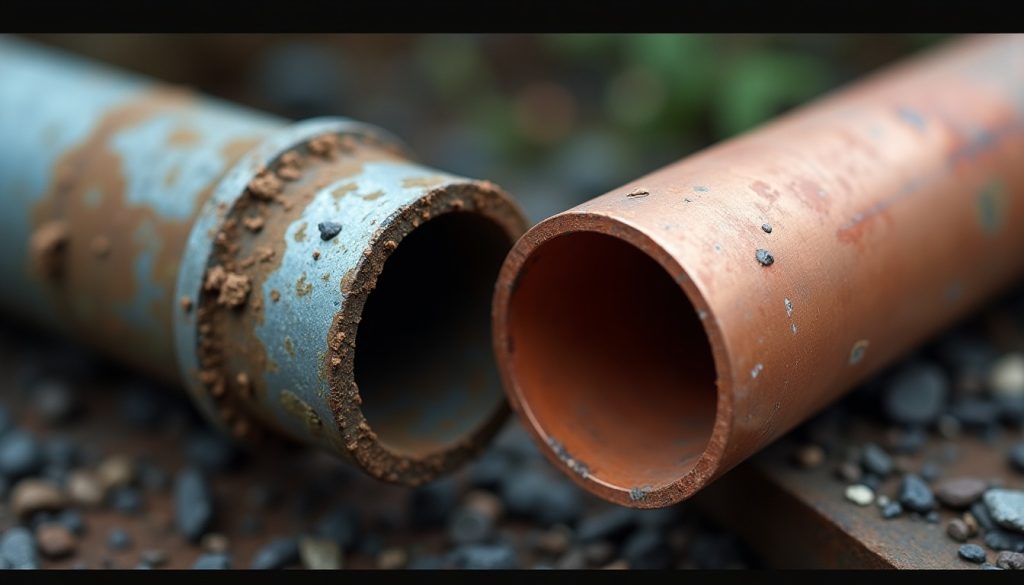
Galvanized steel pipe lasts 40 to 50 years and rusts from the inside, so most homes built before 1960 should plan to replace it with copper or PEX.
Key Takeaways
- Galvanized steel supply pipe was installed in most US homes built between about 1880 and 1960, so any still in service today is roughly 60 years old or older.
- Galvanized pipe typically lasts 40 to 50 years and often corrodes sooner, while copper commonly serves 50 to 70 years, per ECS Corrosion and copper industry data.
- As the zinc coating wears off, galvanized steel rusts from the inside, narrowing the bore and causing low pressure, weak flow, and brown or yellow water.
- The EPA’s 2024 Lead and Copper Rule Improvements require replacing “galvanized requiring replacement” lines that sit, or once sat, downstream of a lead source.
- Galvanized pipe downstream of lead can adsorb and later release lead into the water, which is a key reason older systems get replaced, per the EPA.
- Copper and PEX certified to NSF/ANSI 61 and 372 are lead-free and the two standard replacements for galvanized supply lines.
- You can spot galvanized by its dull gray color, a magnet that sticks, and a scratch that stays gray rather than turning copper or shiny silver.
Galvanized vs copper pipe: which should you replace, and with what?
Replace galvanized steel supply pipe. It rusts from the inside as its protective zinc wears away, typically lasting 40 to 50 years and often less, so almost any galvanized line still in a home is at or past its service life. Copper is the long-standing replacement, commonly lasting 50 to 70 years, though PEX is now the more common choice on cost. Before settling on copper or PEX, check what causes brown tap water if your galvanized lines have been masking a corrosion problem all along. Working out what that repiping actually costs helps you weigh whole-house repipe costs before choosing between copper and PEX.
This comparison is mostly settled by age, not preference: galvanized is a legacy material being phased out, while copper is a current, code-approved supply pipe. The real decision is what you repipe with. The table below lines the two metals up on the seven factors that matter, and for the full field of options see every common plumbing pipe material.
| Factor | Galvanized steel | Copper |
|---|---|---|
| What it is | Steel pipe dipped in a zinc coating | Solid copper tube (types M, L, K) |
| Typical era installed | About 1880 to 1960 | 1960s to today |
| Typical lifespan | 40 to 50 years, often less | 50 to 70 years |
| Internal corrosion | Rusts from inside as zinc wears off | Can pit (pinhole) in acidic water |
| Water flow over time | Bore narrows; pressure and flow drop | Stays largely full-bore |
| Water quality | May shed rust; can hold lead if downstream of a lead source | Lead-free when NSF 372 certified |
| Status today | Legacy; plan to replace | Current, code-compliant supply |
What is galvanized steel pipe, and why do older homes have it?
Galvanized steel pipe is steel pipe dipped in a zinc coating that shields the steel from rust. It was the standard water supply material in US homes built from roughly 1880 to 1960, when builders moved away from lead for fresh-water lines. That timing is why galvanized turns up almost exclusively in pre-1960 houses.
The zinc buys time, not immunity. It slowly sacrifices itself to protect the steel, and once it wears through, the exposed steel corrodes. Because the youngest galvanized supply lines are now around 60 years old, most have already crossed their design life, which is why so many older homes face a repipe.
What is copper pipe, and why did it replace galvanized?
Copper pipe is solid copper tube that became the dominant residential supply material after 1960, displacing galvanized steel. It does not rust, holds its full inside diameter for decades, and carries a long potable-water track record. It comes in wall thicknesses labeled type M, L, and K, with type L common for home water lines.
Copper replaced galvanized because it lasts longer and keeps pressure steady over time. It is not flawless: in acidic or high-chloramine water it can develop pinhole leaks from internal pitting. For how the three copper grades differ, see copper pipe types M, L, and K.
Galvanized vs copper: how do they compare on lifespan?
Copper outlasts galvanized in most homes. Galvanized steel typically serves 40 to 50 years and frequently corrodes sooner in hard or acidic water, while copper commonly lasts 50 to 70 years. The gap widens in practice because galvanized fails gradually from the inside long before it leaks, choking flow for years first.
The chart below shows typical service life for the two metals against PEX, the modern plastic supply line many repipes now use.
Why does galvanized pipe corrode and reduce water flow?
Galvanized pipe corrodes because its zinc coating is a sacrificial layer with a limited life. Once the zinc wears off, the bare steel underneath rusts from the inside out. That rust and mineral scale build up along the pipe wall, and the buildup narrows the bore that water flows through. That narrowing bore often starts right at joints where copper meets steel, which is why plumbers rely on a dielectric union to slow the corrosion.
The result is a slow strangling of the supply. Fixtures lose pressure, flow gets weak, and water can turn brown or yellow as rust flakes break loose. Hot lines often fail first because heat speeds the reaction. Low pressure that steadily worsens over years is a classic sign of aging galvanized pipe.
Is galvanized pipe a lead and water-quality risk?
It can be, which is a major reason for replacement. Beyond shedding rust that discolors water, galvanized pipe that once sat downstream of a lead service line or lead solder can adsorb lead and release it later, according to the EPA. That risk is why federal rules now target these lines directly.
The EPA’s 2024 Lead and Copper Rule Improvements define “galvanized requiring replacement” (GRR) lines as galvanized that is or was downstream of lead, and generally require water systems to replace them, mostly within a 10-year window. If your home has galvanized supply lines, testing the water and planning replacement is the cautious path. Certified copper and PEX carry no lead under NSF/ANSI 61 and 372.
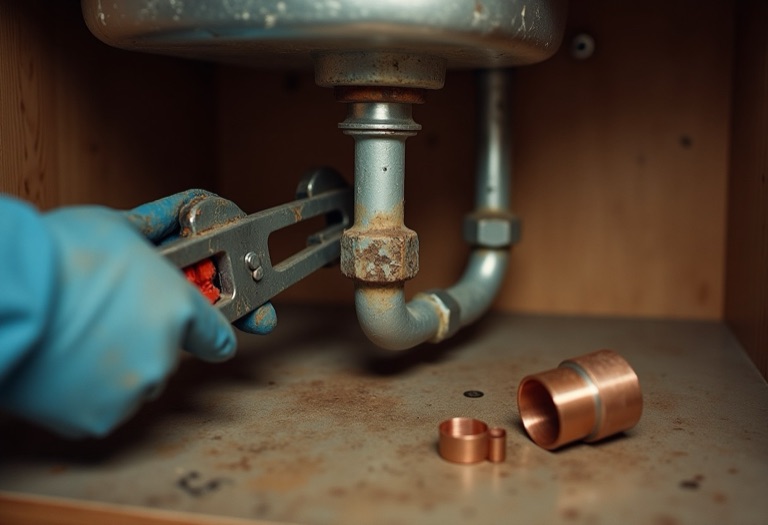
When should galvanized pipe be replaced?
Replace galvanized supply pipe once it shows failure signs or reaches roughly 50 years, whichever comes first. Because the material was installed before 1960, most existing galvanized is already overdue. Do not wait for a leak, since the more common failure is a slow loss of flow and water quality years earlier.
Watch for these signals that replacement is due:
- Water pressure that has dropped and keeps getting worse, especially on hot lines.
- Brown, yellow, or rusty water, particularly after the tap sits unused.
- Visible rust, corrosion, or staining at threaded fittings and joints.
- Recurring pinhole leaks or damp spots along the runs.
- A pre-1960 home that has never been repiped.
A whole-house repipe is usually more cost-effective than patching failing sections one at a time. See what a full repipe costs by home size to budget the job.
Copper vs modern PEX: which should you repipe with?
Both copper and PEX are code-approved upgrades over galvanized, and either is a full improvement. PEX, a flexible cross-linked plastic tubing, usually costs less installed, resists freeze bursts, and runs through walls with few joints. Copper offers a longer proven lifespan, tolerates high heat, and still carries a premium image with some buyers and inspectors.
For most whole-house repipes, homeowners pick PEX on price and speed, and reserve copper for spots where local code, an HOA, or high-heat runs near a water heater call for metal. Many jobs mix the two. Learn what PEX tubing is before you decide, and note that either choice permanently ends the galvanized rust problem.
How do you identify galvanized pipe in your home?
You can identify galvanized pipe with a magnet, a scratch, and a look at the color. Galvanized steel is dull silver-gray and magnetic, so a refrigerator magnet sticks to it firmly. It also uses threaded joints rather than the soldered joints you see on copper.
To confirm, scrape the surface with a coin or screwdriver and compare:
- Galvanized steel stays a dull gray after scratching, and a magnet sticks.
- Copper turns shiny copper-brown when scratched, and a magnet does not stick.
- Lead turns shiny silver, scratches very easily with a soft feel, and a magnet does not stick.
Rust staining around fittings and a home built before 1960 both add to the case that the supply lines are galvanized.
How we sourced this
We compared galvanized steel and copper water supply pipe on installation era, lifespan, internal corrosion and flow loss, water-quality and lead risk, and replacement. Figures come from primary and industry sources: the US EPA (Lead and Copper Rule Improvements and galvanized-requiring-replacement definition), NSF (NSF/ANSI 61 and 372 lead-free certification), ECS Corrosion (galvanized life expectancy), and copper industry data on service life. Lifespan and water chemistry vary by region and hardness, so we cite ranges rather than single figures. Health and lead statements are conditional because actual risk depends on your specific pipes and water. We excluded commercial and industrial piping.
Frequently asked questions
Which is better, galvanized or copper pipe?
Copper is better for a modern water supply. Galvanized steel pipe rusts from the inside as its zinc coating wears off, typically lasting 40 to 50 years and often less, while copper commonly serves 50 to 70 years. Any galvanized pipe still in a home is usually at or past its service life, so copper (or PEX) is the standard replacement.
How long do galvanized pipes last?
Galvanized steel pipes last about 40 to 50 years on average, and many corrode noticeably sooner in hard or acidic water. Because galvanized supply piping was mostly installed in homes built before 1960, almost any left today is at least 60 years old and beyond its intended life. Reduced flow, low pressure, and brown water are common signs it is failing.
Is galvanized pipe dangerous to drink from?
It may pose a water-quality risk. As galvanized steel rusts, it can shed flakes that discolor water, and pipe that once sat downstream of a lead service line or lead solder can adsorb and later release lead, per the EPA. If your home has galvanized supply lines, testing the water and planning replacement is the safe path.
Can you connect copper directly to galvanized pipe?
Not directly. Joining copper to galvanized steel creates galvanic corrosion at the connection, which accelerates rust and leaks. Use a dielectric union or a brass fitting between the two metals to separate them. In practice, most homes replacing galvanized simply repipe the whole supply run in copper or PEX rather than patching in sections.
How do I know if my pipes are galvanized?
Galvanized pipe looks dull silver-gray and is magnetic, so a refrigerator magnet sticks to it. Scratch the surface with a coin or screwdriver: galvanized steel stays dull gray, copper turns shiny copper-brown, and lead turns shiny silver and scratches easily. Threaded joints and rust staining at fittings also point to galvanized steel.
Should I replace galvanized pipe with copper or PEX?
Both are code-approved. PEX usually costs less installed and resists freeze bursts, while copper offers a longer proven lifespan and a premium image with some buyers. For a whole-house repipe, many homeowners choose PEX on price and speed, and copper where local code, an HOA, or high-heat runs call for metal. Either is a full upgrade over galvanized.
Does galvanized pipe reduce water pressure?
Yes, that is one of its most common failures. As the zinc coating wears and the steel rusts, mineral and rust buildup narrows the inside of the pipe. That shrinking bore chokes flow, so fixtures run weak and hot water is often worse because heat speeds corrosion. Low pressure that worsens over years is a classic sign of aging galvanized supply lines.


