Galvanized Pipe Replacement Cost: PEX vs Copper, Lead Risk and When to Repipe
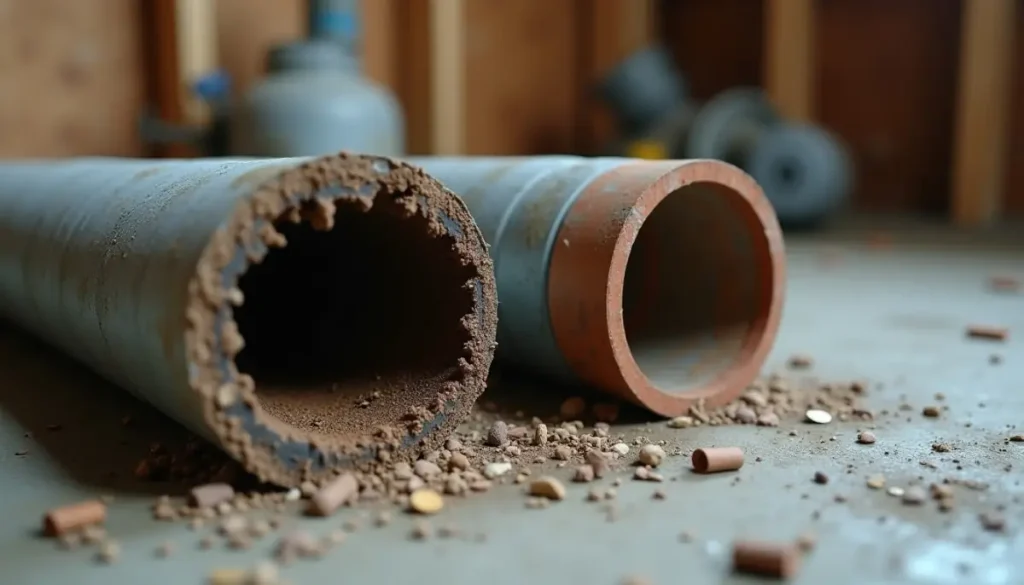
Galvanized pipe replacement cost runs $1,500 to $15,000 for a whole-house repipe, and most homeowners pay about $7,500 (Angi, 2026), with PEX landing at the low end because copper costs several times more per foot.
Key Takeaways
- A whole-house repipe costs $1,500 to $15,000, with a national average near $7,500, and labor makes up about 70% of the bill (Angi, 2026).
- HomeAdvisor (2026) prices repiping at roughly $4.50 per square foot, or about $6,750 for a 1,500 square foot home and $13,500 for 3,000 square feet.
- PEX costs $0.40 to $2 per linear foot and copper $2 to $8 per linear foot in material (Angi, 2026).
- Galvanized pipe stays viable for up to 50 years before corrosion takes over, according to HomeAdvisor (2026).
- Replacing the underground water service line runs $50 to $250 per linear foot, or about $2,000 on average (HomeAdvisor, 2026).
- Under EPA’s 2024 Lead and Copper Rule Improvements, water systems must replace lead and “galvanized requiring replacement” service lines under their control within 10 years.
How much does galvanized pipe replacement cost in 2026?
Galvanized pipe replacement cost for a whole house falls between $1,500 and $15,000, and the typical homeowner pays about $7,500, according to Angi’s 2026 repipe data. Home size, the number of bathrooms and the material you pick decide where you land. A small ranch with PEX sits near the bottom. A two-story house with three baths in copper sits near the top.
Angi says labor makes up about 70% of the total. That is the single most useful fact for budgeting, because it means the hours spent opening walls and threading pipe matter more than the pipe itself.
Use the table to check whether a bid is missing a line item, such as permits or drywall.
| Scope | Typical cost | Notes |
|---|---|---|
| Whole-house repipe, national range | $1,500 to $15,000 (average about $7,500) | Angi, 2026. Labor is about 70% of the total. |
| Whole-house repipe by size | About $4.50 per sq ft | HomeAdvisor, 2026. Roughly $4,500 for 1,000 sq ft, $11,250 for 2,500 sq ft. |
| 3-bedroom, 1,500 sq ft house | $2,280 to $5,120 | Bob Vila, 2023. Smaller homes run lower, larger homes higher. |
| Partial repipe or single section | $370 to $2,130 (average about $1,250) | HomeAdvisor, 2026. Leaves the rest of the galvanized aging in place. |
| Water service line (street to house) | $50 to $250 per linear foot, about $2,000 average | HomeAdvisor, 2026. Trench vs trenchless method and yard restoration move the price. |
| Plumbing permit | $50 to $500 | HomeAdvisor, 2026. Varies by city and job size. |
| Old pipe removal and disposal | $1,000 to $5,000 | HomeAdvisor, 2026. Often folded into the main bid. |
| Drywall repair after access cuts | $50 to $75 per sq ft | Bob Vila, 2023. Sometimes billed by a separate contractor. |
For a deeper breakdown of whole-home pricing that is not specific to galvanized, see our full guide to the cost to repipe a house.
What does it cost to replace galvanized pipes with PEX vs copper?
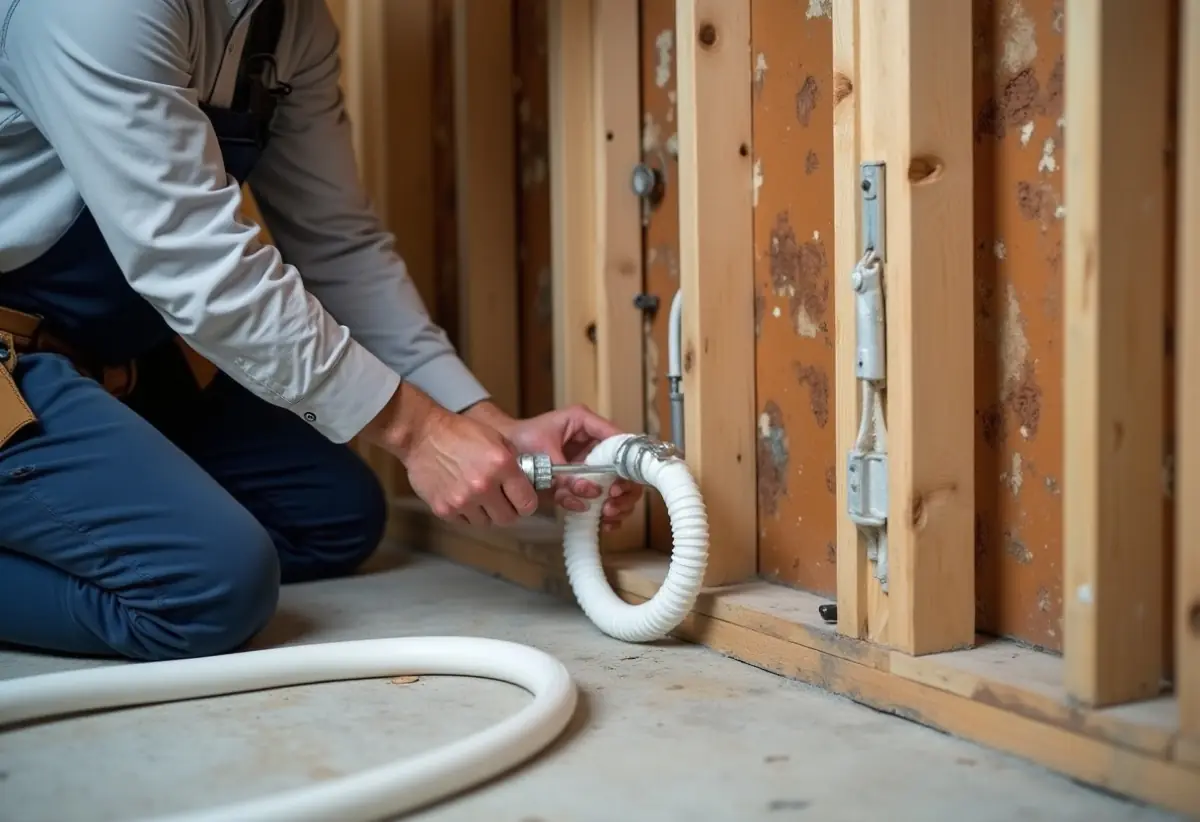
Replacing galvanized pipes with PEX costs less than copper on both material and labor. Angi (2026) prices PEX at $0.40 to $2 per linear foot and copper at $2 to $8. HomeAdvisor (2026) gives wider supply-line ranges of $0.40 to $4 for PEX, $0.50 to $3 for CPVC and $2 to $12 for copper. PEX also snakes through framing with fewer wall openings, which cuts patching.
Here is the math most bids hide. If labor is about 70% of the job, material is roughly the other 30%. Switching from copper to PEX shrinks that 30% slice, and it trims labor because PEX needs fewer fittings and no soldering. That is why a PEX repipe often lands in the lower half of the $1,500 to $15,000 range.
| Material | Per linear foot (Angi, 2026) | Per linear foot (HomeAdvisor, 2026) | Where it fits |
|---|---|---|---|
| PEX | $0.40 to $2 | $0.40 to $4 | Budget repipes, fishing through finished walls, freeze-prone areas |
| CPVC | Not listed | $0.50 to $3 | Low material cost, but rigid and needs more fittings |
| Copper | $2 to $8 | $2 to $12 | Long track record, exposed runs, homeowners who prefer metal |
Our breakdown of how galvanized and copper pipe compare covers corrosion behavior and lifespan side by side.
What drives galvanized pipe replacement cost up or down?
Galvanized pipe replacement cost rises with square footage, bathroom count, number of stories and how hard the pipes are to reach. Bob Vila (2023) notes a two-story home needs more pipe to reach upper fixtures, and extra bathrooms or a second kitchen add more runs. Access is the hidden swing factor, since every wall a plumber opens is a wall someone has to patch.
- Home size. HomeAdvisor’s 2026 per-square-foot figure of about $4.50 scales from $3,600 for 800 sq ft to $13,500 for 3,000 sq ft.
- Fixture count. HomeAdvisor (2026) lists piping costs per fixture, from $220 for a toilet to $600 to $1,600 for a shower or tub.
- Stories and layout. Vertical runs to a second floor add pipe and labor, per Bob Vila (2023).
- Access. Basements and crawlspaces make runs cheap. Slabs and plaster walls do not.
- Drywall and finish repair. Bob Vila (2023) puts drywall repair at $50 to $75 per square foot, and many plumbers leave patching to a separate trade.
- Permits and inspection. Permits run $50 to $500 (HomeAdvisor, 2026). A pre-job plumbing inspection costs $250 to $1,200, per Bob Vila (2023).
- Labor rates. Plumbers charge $45 to $200 per hour (HomeAdvisor, 2026), though most repipes are bid per project.
Treat the chart as a midpoint, not a quote, since it applies one flat per-foot rate to every house.
Why do galvanized pipes fail, and what is the galvanized pipe lifespan?
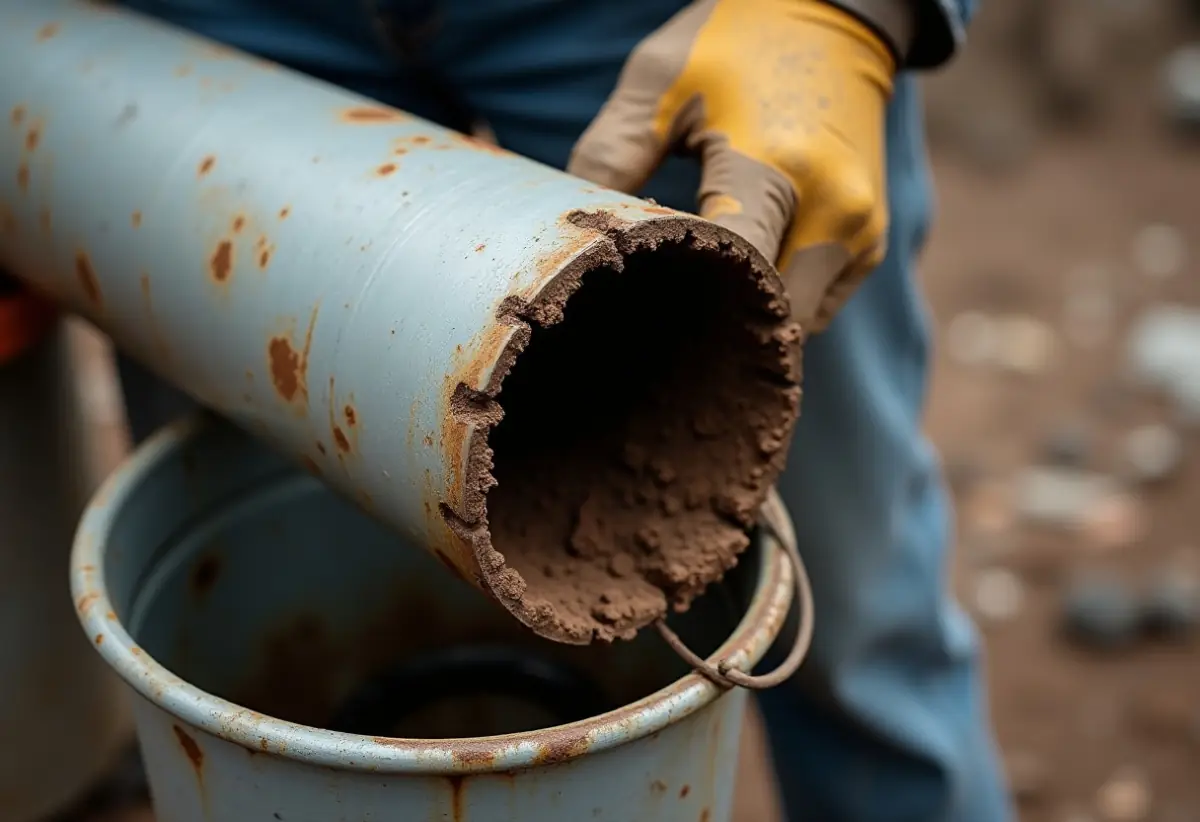
Galvanized pipe is iron or steel dipped in zinc to resist rust, as EPA’s LCRI service line fact sheet defines it. The zinc wears away from the inside over decades. HomeAdvisor (2026) says the coating keeps the pipe viable for up to 50 years. After that, the bare steel rusts and the pipe starts to choke itself.
The failure is slow and mostly invisible. Rust and mineral scale build on the inner wall, so a 3/4 inch line can carry far less water than its outside diameter suggests. Pressure fades first at distant and upper-floor fixtures. Then come rust-colored water, pinhole leaks at threaded joints, and eventually a failed fitting inside a wall.
Do I need to replace galvanized pipes? Signs it is time
You need to replace galvanized pipes when they show corrosion symptoms, not just because of their age. HomeAdvisor (2026) lists discolored or changed-tasting water, ongoing drops in water pressure, leaks and plumbing older than 50 years as the main signals. Two or more together, in a house with original galvanized, usually point to a repipe.
- Check pressure at the far fixtures. Run the top-floor shower and a kitchen faucet at once. Weak flow at both, with good pressure at the hose bib near the meter, points to clogged interior pipe rather than a supply problem.
- Run the cold tap first thing in the morning. Brown or orange water that clears after a minute suggests rust inside the lines. If only the hot side is discolored, suspect the water heater first.
- Look at exposed pipe. In the basement or crawlspace, gray threaded pipe with rust weeping at the joints is galvanized near the end of its life.
- Get a plumber’s inspection. Bob Vila (2023) puts a plumbing inspection at $250 to $1,200, money that can rule out a full repipe if the problem is local.
Weak pressure has other causes too, from a failing pressure regulator to a partly closed main valve. Rule those out with our guide to other causes of low water pressure before you sign a repipe contract.
Are galvanized pipes a lead risk?
Galvanized pipe can carry a lead risk even though it contains no lead itself. In its 2024 Lead and Copper Rule Improvements, EPA explains that lead released by an upstream lead service line can attach to iron scale inside galvanized pipe and keep shedding into water after the lead line is gone.
That is why the rule created a category called galvanized requiring replacement, or GRR. EPA defines a GRR service line as a galvanized line that is, or ever was, downstream of a lead service line, or that sits downstream of a line of unknown material. If the utility cannot show the galvanized line was never downstream of lead, it counts as GRR.
- Deadline. Water systems must fully replace all lead and GRR service lines under their control within 10 years, unless a state sets a shorter deadline or the system qualifies for a deferred one (EPA, 2024).
- Start date. The first program year runs from November 1, 2027, and service line replacement plans are due to states by that date.
- Full means full. A line counts as replaced only when both the customer side and the system side are non-lead.
- Partial jobs. When only part of a line is replaced, the rule requires a dielectric coupling between old and new pipe unless the new pipe is plastic.
The rule covers the service line, the pipe from the main to your house, not the galvanized inside your walls. Ask your water utility how your line is listed in its inventory. If it is lead, GRR or unknown, the utility may replace the customer side at reduced or no cost, depending on local funding. Our page on water line repair options covers what a private service line job involves.
How long does galvanized pipe replacement take, and does it affect a home sale?
A galvanized repipe takes anywhere from a few days to a few weeks. HomeAdvisor (2026) says a small home with a handful of fixtures can be done in a couple of days, while a large multi-story house with several bathrooms can take weeks. Bob Vila (2023) cites about 15 hours of labor, at $675 to $3,000, for a typical job.
Most crews work one zone at a time so the house has water each night. Drywall patching and the final permit inspection often add more calendar time than the pipe work.
On a sale, galvanized works against the seller. HomeAdvisor (2026) notes that new pipes add little resale value on their own, but old or defective pipes can deter buyers and force a lower asking price. Insurance is less clear. We could not find a published insurer policy that bans galvanized outright, so ask your carrier directly whether pipe age or material affects your premium or eligibility before you buy or renew.
Should you do a partial or full galvanized replacement?
A partial galvanized replacement makes sense for a single failed section or as a stopgap before a sale, while a full repipe makes sense once corrosion shows up in more than one place. HomeAdvisor (2026) prices partial jobs at $370 to $2,130. The rest of the galvanized keeps corroding, so the next leak is a question of when.
Mixed-metal joints are the trap. Connecting new copper straight to old steel speeds galvanic corrosion at the joint, which is the same reason EPA requires a dielectric coupling in partial service line replacements. PEX avoids that problem at the transition, which is one more reason it dominates galvanized repipes.
How we sourced this
We reviewed more than a dozen pages and cited six sources: Angi’s 2026 repipe cost data, HomeAdvisor’s 2026 repiping and water main cost pages, Bob Vila’s 2023 repipe cost guide, and EPA’s 2024 Lead and Copper Rule Improvements (Federal Register final rule and the service line inventory fact sheet). We checked SERP results for the primary keyword and question variants in October 2026. HomeAdvisor’s repiping page leads with a $1,246 average that conflicts with its own $4.50 per square foot table, so we used the table and excluded the headline figure. We excluded unsourced aggregator sites and any claim we could not trace to a named source. All prices are national US figures and vary by region.
Frequently asked questions
Is it worth replacing galvanized pipes?
Usually yes, once the pipes show rust-colored water, falling pressure or leaks. HomeAdvisor (2026) says galvanized pipe is viable for up to 50 years, and most surviving runs are older than that. A planned repipe at a national average of about $7,500 (Angi, 2026) costs less than chasing repeated leaks and the water damage that follows them.
How long do galvanized pipes last?
HomeAdvisor (2026) puts the useful life of galvanized pipe at up to 50 years, because the zinc coating only slows corrosion of the steel underneath. Hard or aggressive water shortens that. Once the zinc wears through, rust and scale build inside the pipe, the bore narrows and pressure drops long before the pipe actually leaks.
Can you replace galvanized pipe with PEX?
Yes, and it is the most common budget choice. Angi (2026) prices PEX at $0.40 to $2 per linear foot versus $2 to $8 for copper. Because PEX bends around framing, plumbers can fish it through walls with fewer openings, which trims labor and drywall patching. Local code decides where PEX is allowed, so confirm with your plumber and permit office.
Do galvanized pipes contain lead?
Galvanized pipe is iron or steel coated in zinc, not lead. The risk comes from what it collects. EPA explains that lead released by an upstream lead service line can stick to iron scale inside galvanized pipe and keep shedding after the lead line is gone. That is why the 2024 rule labels these lines galvanized requiring replacement.
Can you replace just part of your galvanized plumbing?
You can. HomeAdvisor (2026) prices a single pipe or partial repipe at $370 to $2,130, with an average near $1,250. The catch is that the remaining galvanized keeps aging, and joining new copper directly to old steel invites galvanic corrosion at the joint. Plumbers use a dielectric union or plastic pipe at the transition to prevent that.
How long does it take to replace galvanized pipes?
A small home with a handful of fixtures can be repiped in a couple of days, while a large multi-story house with several bathrooms can take weeks, according to HomeAdvisor (2026). Most crews keep water running overnight by working one zone at a time. Drywall patching and the final permit inspection often add several days after the plumbing is done.
Should I buy a house with galvanized pipes?
You can, but price the repipe into your offer. HomeAdvisor (2026) notes old pipes can deter buyers and force sellers to cut the asking price. Ask your inspector to check pressure at an upper fixture and look for rust-colored water, then get a written repipe bid during the inspection window and negotiate a credit or price cut.


