Is It OK for PEX to Freeze? What Freezing Does to the Pipe, the Fittings and Your Warranty
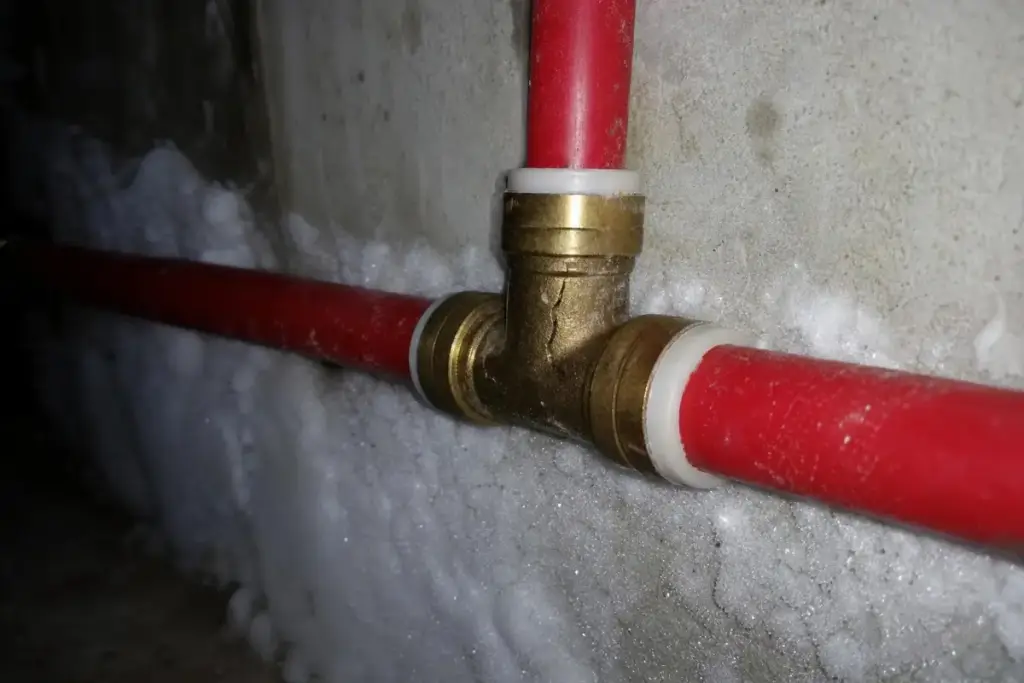
Is it OK for PEX to freeze? No, though it usually survives. PEX tubing stretches about 3.5% around ice and shrinks back, but the brass or plastic fittings, valves and manifolds tied to it can crack, and SharkBite, Zurn, Viega and Apollo warranties exclude freeze damage.
The Plastics Pipe Institute puts it bluntly in its freeze report, TR-52 (November 2020): “PEX tubing systems should not be intentionally subjected to freezing.” The same report says that if water inside does freeze, “in many instances, the tubing will not burst.” Both statements are true at once, and the gap between them is where the fittings, the warranty and the thaw method come in.
Why PEX tubing usually stretches instead of splitting
PEX survives most freezes because it is elastic at low temperature and strong enough to hold the strain. TR-52 reports that PEX stays bendable below minus 40 F, that its glass transition sits below minus 148 F, and that its modulus of elasticity is typically under 150,000 psi, which makes copper about 180 times more rigid. ASTM F876 sets a minimum short-term burst pressure of 475 psi for SDR 9 PEX tubing.
The freeze test data PPI cites are specific. A 2006 University of Colorado thesis by Morgan Heater found “PEX pipe was conclusively shown to be freeze tolerant up to 400+ cycles,” measured an average 3.5% outside-diameter strain on frozen water-filled PEX, and found a 3% to 4% elastic range in stress-strain tests. A 2016 Uponor study froze 1/2 and 3/4 inch PEX, some notched to 10% and 20% of wall depth, while pressurized to 80 psig; after five cycles the specimens burst at 784 to 791 psig in ASTM D1599 testing.
How far does 10 feet of frozen PEX have to stretch?
Water grows 9.1% in volume when it turns to ice, the figure Heater’s thesis used and PPI repeats. The table applies that to 10 feet of standard SDR 9 tubing, using the nominal bore and capacity from the Viega PureFlow Commercial Design Manual (0.92 gallons per 100 feet for 1/2 inch, 1.82 gallons for 3/4 inch).
| Input or result (10 ft run) | 1/2 in PEX | 3/4 in PEX |
|---|---|---|
| Outside diameter, nominal bore | 0.625 in, 0.475 in | 0.875 in, 0.671 in |
| Water held (capacity x 231 cubic in per gallon) | 0.092 gal, 21.3 cubic in | 0.182 gal, 42.0 cubic in |
| Extra volume when all of it freezes (x 0.091) | 1.93 cubic in, about 1.1 fl oz | 3.83 cubic in, about 2.1 fl oz |
| Bore growth if all of it goes into the wall (square root of 1.091, minus 1) | 4.45%, 0.021 in | 4.45%, 0.030 in |
| Bore growth with Heater’s split of 3.5% hoop plus 1.75% axial | 3.5%, 0.017 in, plus 2.1 in of length | 3.5%, 0.024 in, plus 2.1 in of length |
| Elastic range PPI cites from Heater’s stress-strain tests | 3% to 4% | |
Two decisions follow from the arithmetic. First, a run that can also creep lengthwise, about 2.1 inches per 10 feet, stays inside the 3% to 4% elastic range, while a run clamped tight at both ends or cast into a slab is pushed to 4.45%, past it, which matches PPI’s warning that PEX frozen in concrete or packed soil “may suffer damage, such as splitting.” Second, marketing lines such as Uponor’s “expand up to three times its diameter” and Apollo’s “several times its original size” describe what the material tolerates in cold-expansion fitting work, not what a freeze asks of it: a 3/4 inch tube at three times its diameter would be 2.6 inches across, against the 0.024 to 0.030 inch growth a freeze actually needs.
Where a frozen PEX run actually breaks
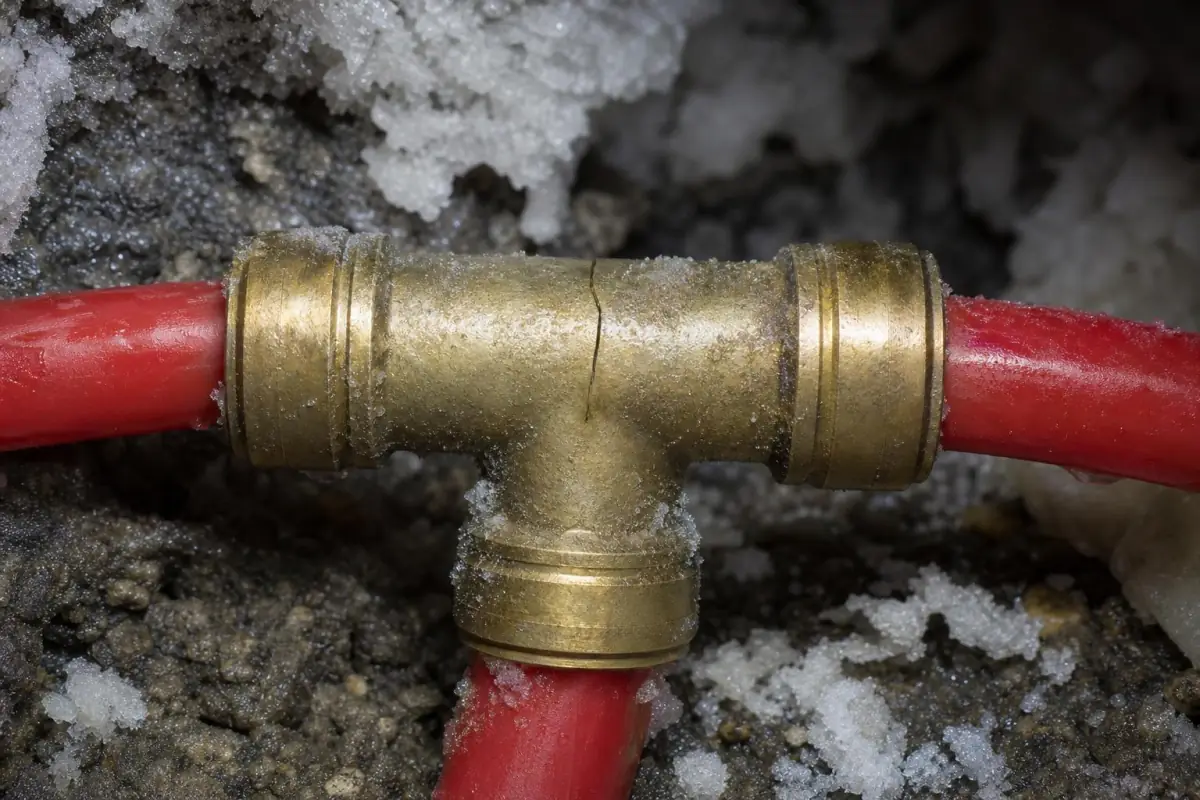
A frozen PEX line fails where trapped water cannot expand the tube: at fittings, valves, manifolds and fixtures. The University of Illinois study PPI cites, Gordon’s Research Report 96-1, found that bursts happen when an ice blockage forms and “further ice growth applies dangerously high pressures to a confined water volume.” NREL and University of Colorado researchers added that pressure does not build until two blockages, or one blockage and a closed fixture, seal off a pocket.
The manufacturers say the same thing in their own documents. The Apollo PEX installation manual states that “fittings and connections can be damaged if the plumbing system freezes.” Boshart’s push-fit guidance says ice expands 9% in a closed system and drives pressure “beyond the fittings pressure rating.” In Heater’s cycling rig, one polymer tee and one polymer elbow failed, the elbow after 23 cycles, which the author linked to an installation error.
Repeated freezes are the second risk. In the NREL tests, every pipe wrapped with deliberately tapered insulation, which forces ice to squeeze water toward the middle like a piston, eventually broke, and it took 20 to 50 cycles. TR-52 also notes that the EVOH oxygen barrier on heating-grade PEX “may delaminate or crack” when frozen. A line that has frozen several winters running needs the cause fixed, not another thaw.
What Uponor, SharkBite, Viega, Zurn and Apollo warranties say about freezing
Four of the five tubing makers checked here exclude freeze damage in writing, and Uponor excludes it through its temperature and abnormal-conditions clauses. The wording below is quoted from each company’s current limited warranty or installation document.
| Maker or body | Freeze statement | Warranty position on freeze damage |
|---|---|---|
| Uponor (AquaPEX, ProPEX) | Marketing page: PEX-a “can expand up to three times its diameter without cracking or bursting” | Plumbing warranty excludes failures from temperatures beyond product limits and “abnormal operating conditions”; the radiant warranty says freezing within the pipes “shall not be covered” |
| SharkBite (RWC) | No freeze performance claim in the warranty | Limited warranty: “failure as a result of any freezing fluids within the pipes does not constitute a defect” |
| Viega (PureFlow) | Design manual: flexibility makes it “resistant to damage from freezing”; do not install where it will freeze | Water system warranty does not apply to damage caused by “inadequate freeze protection” |
| Zurn PEX | No freeze performance claim in the warranty | Professional installation warranty excludes “freezing during or after the installation or inadequate freeze protection” |
| Apollo (Conbraco, now Mosack) | Manual: tubing expands “several times its original size”; fittings “can be damaged” | Products information sheet uses the same freezing-fluids exclusion as SharkBite |
| PPI (TR-52) | Tubing “typically” expands and returns to size; do not freeze it on purpose | Not a warranty issuer; says fittings are outside the report’s scope |
For a homeowner the meaning is practical: a cracked tee or a split manifold port after a cold snap is a repair you or your insurer pay for, not a warranty claim, even when the tubing itself carries 25 years of coverage. Keep the receipt for the heat cable and insulation, since Viega and Zurn tie coverage to adequate freeze protection.
How to thaw frozen PEX without damaging it
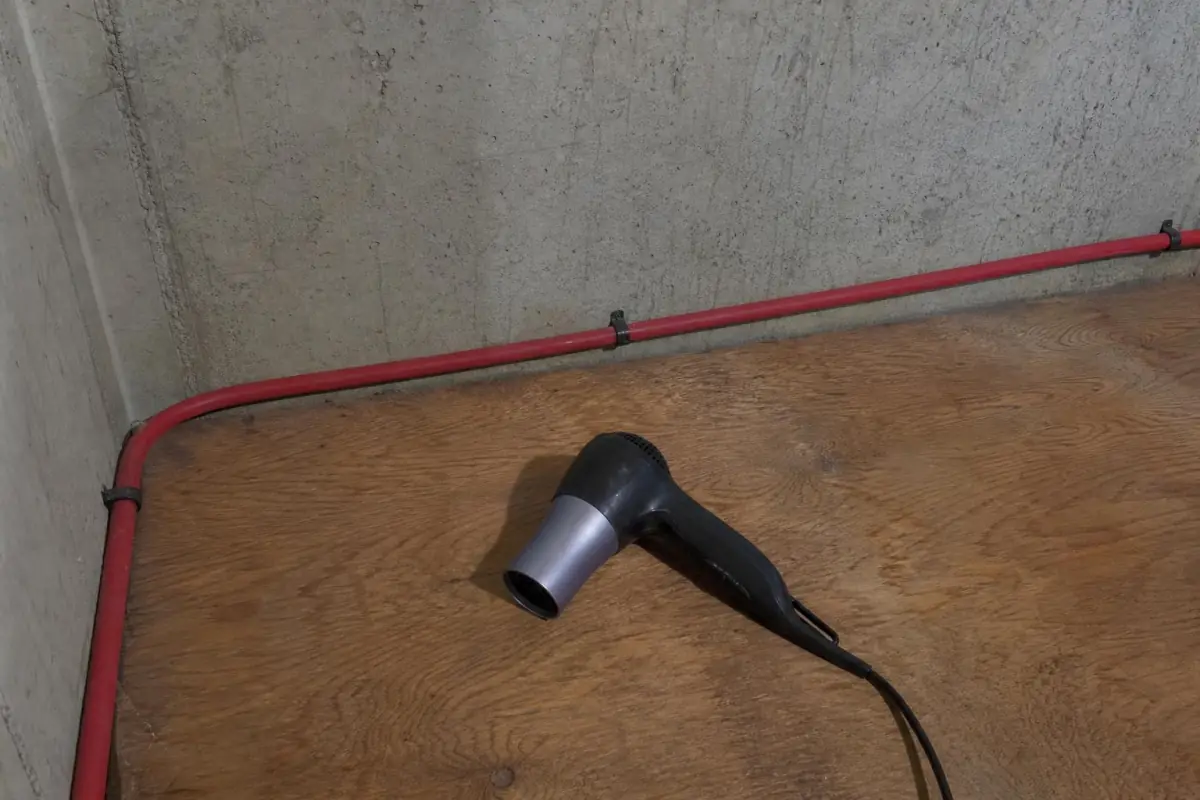
Thaw PEX with gentle heat that keeps the tubing at or below 180 F, the ceiling both PPI TR-52 and the Viega manual set, which is also the temperature at which ASTM F876 tubing is rated 100 psi. Our step-by-step guide to thawing frozen pipes covers finding the frozen spot; these are the PEX-specific rules.
- Open the faucet the line feeds so melting ice has somewhere to go, and know where the main shutoff is.
- Use a hair dryer, hot wet towels, a hot air gun or hot water. Apollo limits a heat gun to 300 F air and five minutes on one spot; stop if the tubing changes color.
- For heat cable, Viega accepts only self-limiting tape “not controlled by an external thermostat,” and PPI says it must be self-regulating and recommended for plastic pipe.
- Never use a torch, and never run electric current through the line: PPI names electric resistance thawing machines such as HotShot, and Apollo bans sending current through PEX.
- After flow returns, run the line at full pressure and inspect every fitting, crimp ring, manifold port and stop valve in the frozen section.
PPI says properly thawed PEX “can immediately be put back into service,” but tubing heated with a flame or a resistance thawer “may not show any visible damage” and should be replaced as soon as possible. If a fitting is weeping or a split appears once the ice clears, shut the main and follow our notes on what to do in the first minutes after a pipe bursts.
Does PEX-A handle a freeze better than PEX-B?
No primary source checked for this article measures a freeze-break difference between PEX-A and PEX-B. TR-52 treats all PEX types together, and Heater’s thesis tested several PEX pipe types under one 400+ cycle conclusion. The “three times its diameter” figure is Uponor’s claim about its own PEX-a, tied to how cold-expansion joints are made; it is not a side-by-side freeze test. The practical difference is the joint: F1960 expansion fittings on PEX-A, versus F1807 crimp rings, which are more common on PEX-B. Our explainer on how PEX-A, PEX-B and PEX-C are made covers which fittings each type takes.
Freeze-prone PEX runs and what code requires there
Crawlspaces, exterior walls, attics, garages and hose-bib feeds are where PEX freezes, and the model codes already require protection there. IPC Section 305.4, as quoted in TR-52, bars water pipe in attics, crawl spaces or outside walls “unless adequate provision is made to protect such pipes from freezing by insulation or heat or both,” and puts exterior supply piping at least 6 inches below the frost line. UPC Section 312.6 says the same for attics, crawl spaces and exterior walls.
PPI’s fix list is short: route PEX inside the heated envelope, insulate any run in an exterior wall or over an unheated crawlspace, and bury service lines below the frost line. A line that froze once usually sits in a cold pocket, so move it inward or add self-regulating cable rather than relying on the tube’s 3.5% of stretch. The full set of failure causes, from UV to bad crimps, is in our list of PEX pipe problems that actually cause leaks.
Frozen PEX questions
Will PEX freeze and burst on the first freeze?
Usually not. PPI TR-52 says water-filled PEX typically expands without splitting and returns to its original diameter on thawing. The first-freeze failures in the research it cites happened at fittings, in very short trapped sections under 5 inches, and in tubing frozen inside slabs or packed soil.
Do I need to replace PEX after it froze?
Not if it was thawed gently and holds pressure. PPI says PEX can go straight back into service after a proper thaw. Replace any section heated with a torch or an electric resistance thawing machine, because PPI warns that damage from those methods may not be visible.
Can I use a heat gun on frozen PEX?
Yes, with limits. PPI TR-52 allows a hot air gun if the pipe stays at or below 180 F, and Apollo caps the gun at 300 F with no more than five minutes on one spot. Stop before the tubing changes color, and keep the nozzle moving along the frozen length.
Does homeowners insurance cover frozen PEX when the maker will not?
The maker warranty and your insurance policy are separate contracts. SharkBite, Apollo and Zurn exclude freeze failures, so any claim for water damage goes to your homeowners policy, which may require that you kept the house heated. Read the freeze clause in your own policy before a cold snap.
Is PEX safe to leave in an unheated cabin over winter?
Only drained. Viega says PureFlow PEX should not be intentionally installed where it will freeze, and PPI TR-52 states PEX systems should not be intentionally subjected to freezing. Shut the main, open every faucet and the lowest drain, and blow out low spots so no water sits trapped against a fitting.
How we sourced this
We read PPI TR-52 (2020) and the research it summarizes, the Uponor plumbing and radiant limited warranties and freeze-resilience page, the SharkBite (RWC) limited warranty, the Viega PureFlow water system warranty and commercial design manual, the Zurn PEX professional installation warranty, the Apollo products information sheet and PEX installation manual, and Boshart’s push-fit freeze note. The expansion table is our arithmetic from the 9.1% ice expansion figure and Viega’s published tube dimensions. We found no primary test comparing PEX-A and PEX-B freeze breakage, so none is claimed.