Can Pipes Freeze Overnight? The Temperatures and Hours It Takes, From 20°F Field Data
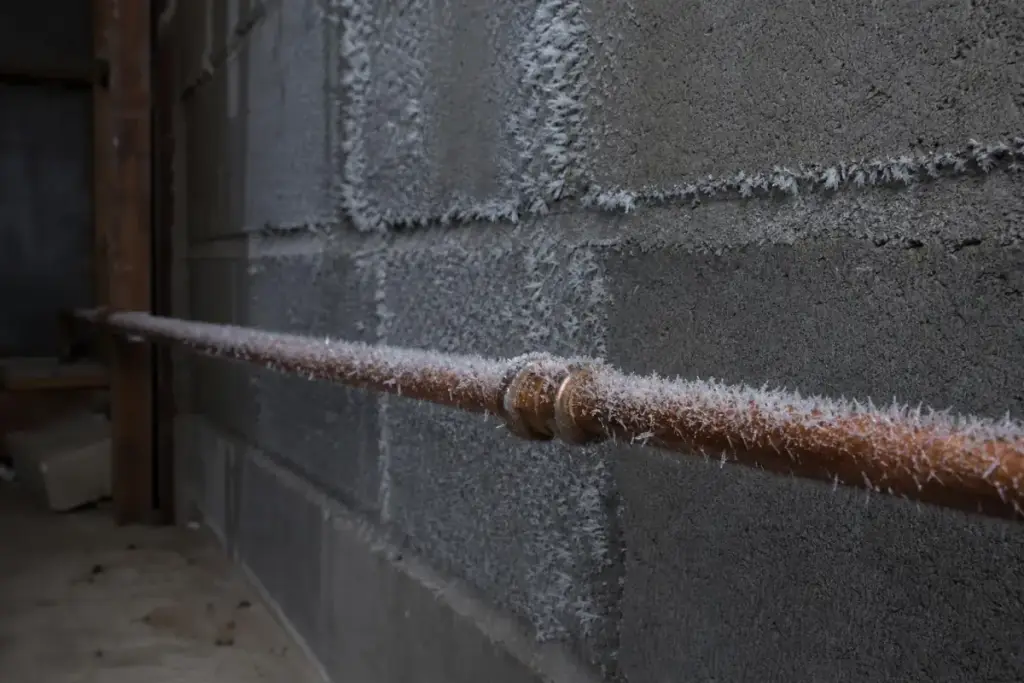
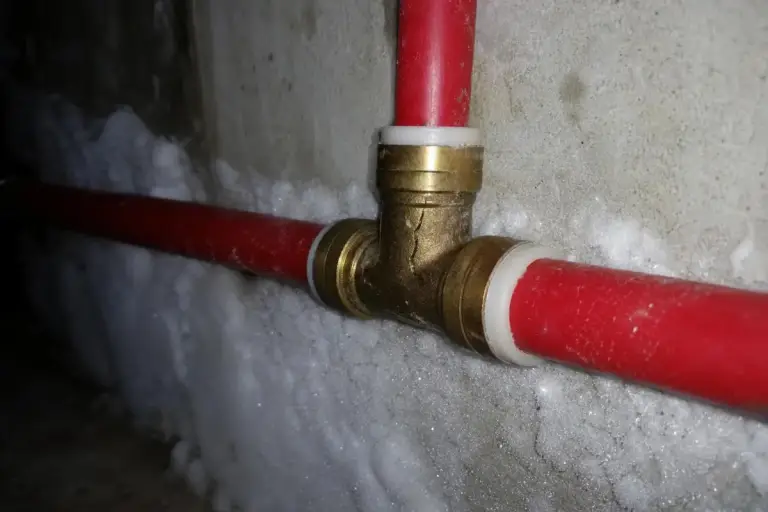
Yes, your pipes can freeze overnight. In University of Illinois field tests, an uninsulated attic pipe started freezing whenever the outdoor air fell to about 20°F, and a bare pipe can form a solid ice plug in roughly 2 to 9 hours of that cold. Insulated pipes in heated walls rarely freeze in one night.
What outdoor temperature freezes pipes inside a house?
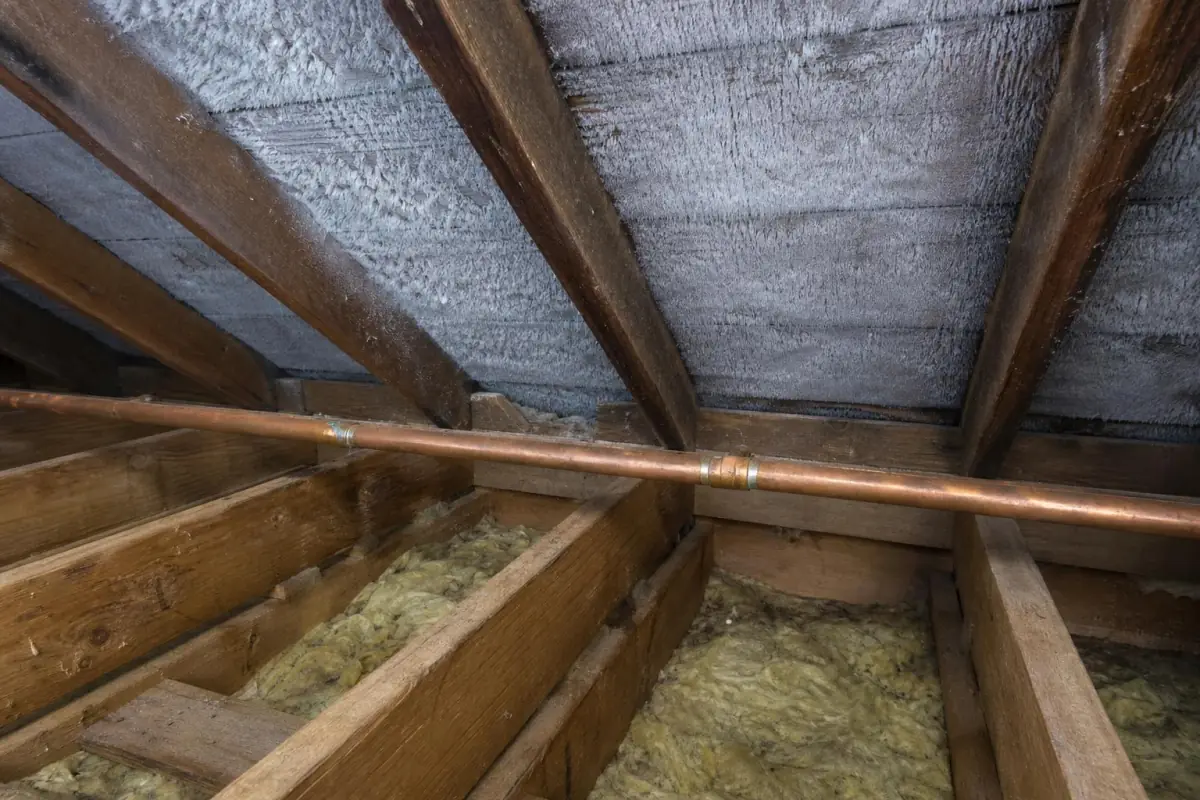
The working number is 20°F outdoors, and it comes from measurements, not folklore. The University of Illinois Building Research Council ran two winters of freezer and field tests for the insurance industry’s loss-reduction institute and published them as Research Report 96-1, An Investigation into Freezing and Bursting Water Pipes in Residential Construction (Jeffrey R. Gordon, 1996). Its field pipe was a worst case: bare 3/4 inch copper on top of R-30 fiberglass in a vented attic.
Across 11 freeze starts recorded in Table 5 of that report, the outdoor temperature at the moment ice began forming ranged from 15.4°F to 20.1°F. The attic air around the pipe was only 1.4°F to 4.7°F warmer than outside, an average gap of 3.2°F.
Why not 32°F? Pipe water supercools: in the field tests ice usually formed only once the water reached 21°F to 26°F, and only 5 of 49 freeze events started above 26.6°F. The report still expects isolated freezes on 20°F to 32°F nights where a hole in the wall lets moving air reach a pipe.
How many hours does a pipe take to freeze solid at 25, 15 and 5°F?
Hours to a full ice plug fall fast as the air gets colder: the BRC freezer tests on a 1/2 inch pipe wrapped in 3/8 inch foam measured 11.5 hours to blockage at 20°F, 6.5 hours at 10°F and about 4.75 hours at 0°F. Insulation stretched those times. In the freezer, 1/8 inch of foam added 3 hours and 5/8 inch added 8 hours. In the attic field tests, 1 inch of fiberglass pipe insulation delayed the plug by 9.5 hours, 1.5 inches by 23 hours, and a pipe with 2 inches never fully blocked before the weather warmed.
No published study gives hours for bare copper and PEX side by side, so we calculated them. The table below is an estimate from a simple heat balance, with every input listed under it, not a measurement.
| Pipe (still water, no insulation) | Air at pipe 25°F | Air at pipe 15°F | Air at pipe 5°F | 5°F with an 8 mph draft |
|---|---|---|---|---|
| 1/2 in copper, Type L | 9.1 h | 3.8 h | 2.5 h | 1.1 h |
| 1/2 in PEX, SDR 9 | 7.4 h | 3.1 h | 2.0 h | 0.9 h |
| 3/4 in copper, Type L | 13.4 h | 5.7 h | 3.6 h | 1.6 h |
| 3/4 in PEX, SDR 9 | 10.5 h | 4.4 h | 2.8 h | 1.3 h |
Estimate inputs. Energy to remove per foot of pipe equals cooling the water from 50°F to 32°F plus 144 Btu per pound of latent heat to freeze it; copper’s own heat (0.092 Btu/lb°F) is added for the metal pipes. Water per foot uses bore diameters of 0.545 and 0.785 inch for Type L copper and 0.485 and 0.681 inch for SDR 9 PEX, which share the same 0.625 and 0.875 inch outside diameters. Heat leaves through the outer surface at an assumed still-air film coefficient of 1.5 Btu/hr·ft²·°F; the PEX wall adds a resistance using 0.24 Btu/hr·ft·°F, which slows loss by only 6 to 8 percent. The draft column divides the 5°F time by 2.22, the ratio between the BRC Table 1 heat-loss figures for a bare 3/4 inch copper pipe at 8 mph (129.27 Btu/hr) and 1 mph (58.27 Btu/hr).
Two checks on the model. It predicts a 20°F-versus-0°F time ratio of 2.67 for a latent-heat-dominated freeze, close to the 2.42 ratio in the BRC freezer data (11.5 h over 4.75 h). It also ignores supercooling, which held water liquid for up to 80 hours in the BRC attic, so real pipes in still air often outlast the table.
What the numbers mean for one night: a 12 to 14 hour winter night at 15°F is two to three times longer than any bare pipe in the table needs. PEX freezes about 20 percent sooner than copper of the same nominal size because it holds less water per foot, not because it sheds heat faster. A 3/4 inch line lasts about 45 percent longer than a 1/2 inch one.
How long after the ice plug does a frozen pipe burst?
A pipe usually splits a few hours after the plug forms, not at the moment of freezing. The BRC report found that ice growing against itself does not push the pipe open. Bursts happen when an annular ice blockage traps water between itself and a closed faucet, and further ice growth squeezes that trapped water until pressure climbs toward roughly 4,000 psi in 3/4 inch Type M copper.
In the Phase 2 field runs, bursts in 3/4 inch Type M copper came 3 hours 55 minutes to 5 hours 50 minutes after blockage, and the report’s rule of thumb is deformation at about 3 hours and rupture at about 4 hours. Add that to the 2.5 to 5.7 hour plug times above and a bare attic or crawlspace pipe can go from flowing to split inside one 9 to 10 hour cold spell at 15°F.
The flooding comes later: the plug seals the split, so water sprays only once the ice thaws. And because the whole section between plug and faucet sees the same 4,000 psi class pressure, the split can sit in a heated room at the weakest joint or fixture.
Which pipe locations freeze first on a cold night?
Pipes freeze in the order their surrounding air tracks the outdoor air: garages, attics, crawlspaces and exterior wall cavities first, interior walls last. The American Red Cross frozen pipe page names the same places, plus pipes under kitchen cabinets and outdoor hose bibs, pool supply lines and sprinkler lines.
| Pipe location | Why it freezes on one night | Prevention step before a sub-20°F night |
|---|---|---|
| Attic, on top of insulation | BRC measured attic air only 3.2°F warmer than outdoors on average; vents add wind | Bury the line under the attic insulation or sleeve it in 1 inch or thicker pipe insulation, which delayed the plug 9.5 hours in testing |
| Crawlspace | Vents and sill gaps move outdoor air across bare pipe; BRC Table 1 shows bare-pipe heat loss rising 3.4 times from 1 mph to 20 mph wind | Close foundation vents and seal rim gaps; insulate the runs; drip the fixture fed by that run |
| Garage | Unheated space that the Red Cross lists among the most frequent freeze spots | Keep the garage door closed overnight, as the Red Cross advises |
| Exterior wall | Pipe sits on the cold side of the wall insulation; air leaks at outlets and sill plates hit it directly | Open the sink cabinet doors on that wall and drip both hot and cold taps |
| Interior wall | Surrounded by heated rooms; freezes mainly when the heat fails or the thermostat drops for days | Hold the thermostat at the same setting day and night |
Wind drives most one-night freezes. BRC Table 1 put heat loss on bare 3/4 inch Type M copper in 20°F air at 58.27, 129.27 and 198.80 Btu/hr at 1, 8 and 20 mph; with 1 inch of insulation it was 14.34, 15.13 and 15.37 Btu/hr.
What to do on the evening before a hard freeze
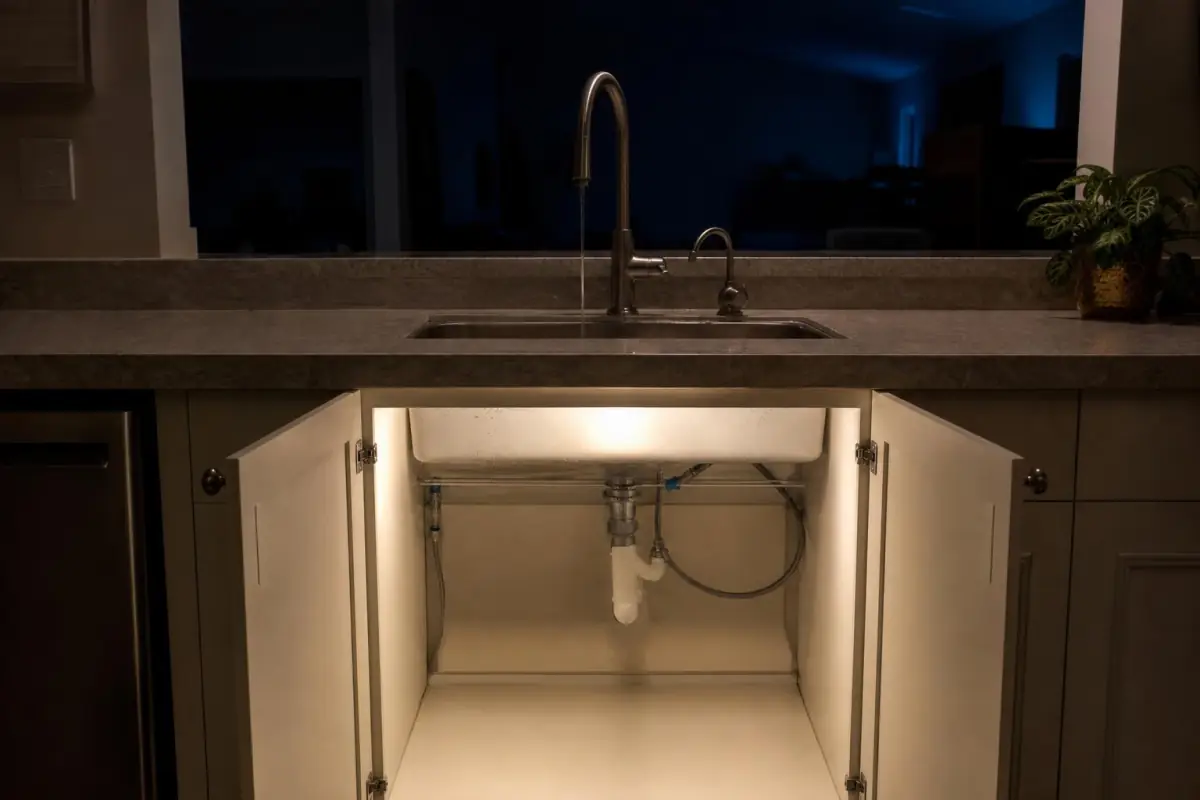
Four steps cover most single-night risk, and all of them come from named guidance. First, drip a faucet. The Red Cross says running water, even at a trickle, helps prevent freezing; Indiana’s utility consumer counselor tells residents that if the temperature falls to zero or below, they should let a small, pencil-size stream run, ideally from a faucet on an exterior wall, plus a second upstairs faucet in a larger two-story house.
Drip both the hot and the cold side. BRC Research Report 96-1 notes that each line can freeze separately, and that the open tap’s main job is pressure relief at the downstream end. Leave the tap open even if the drip slows or stops overnight: in one BRC field run, a slightly open hose faucet held a frozen line at 450 psi for 14 hours, well below burst pressure, and the pipe survived.
Second, open sink cabinet doors on exterior walls so room air reaches the pipes. Third, keep the thermostat at the same temperature day and night; the Red Cross recommends suspending the nighttime setback during a cold snap, and setting no lower than 55°F if you will be away. Fourth, close the garage door. The full checklist, including heat cable ratings and hose bib shutoffs, is in our guide on how to prevent frozen pipes.
How often you need this routine depends on your city. Our frozen pipe risk ranking by metro counts the average days per year at or below 20°F in 50 metros from NOAA normals, and the city-by-city winterizing calendar gives the median first 32°F and 28°F dates so you can drain hose bibs and sprinkler lines before the first one.
How do you know a pipe froze during the night?
The first sign is a single fixture that gives only a trickle, or nothing, while the others run normally; the Red Cross says to suspect a frozen pipe whenever a faucet produces only a trickle. Check every other faucet next, because the Red Cross also notes that one frozen pipe often means others. Likely spots are exterior walls and the point where the service line enters through the foundation.
Keep the affected faucet open and shut the main valve before thawing if you see a bulge or frost line on copper, since the BRC data shows the split may already exist under the ice. Safe heat sources, open-flame bans and step order are in our walk-through on how to thaw frozen pipes.
The Insurance Information Institute, using Verisk data for 2020 to 2024, puts water damage and freezing claims at 1.42 per 100 insured homes per year with an average severity of $17,240, and the category made up 22.2 percent of homeowners losses in 2024.
Overnight freeze questions
Can pipes freeze when it is 32 degrees outside?
Rarely. Water supercools in a pipe, and the BRC attic tests showed freezing began only when outdoor air dropped to about 20°F. Isolated freezes at 20 to 32°F happen where a wall crack or vent blows outdoor air directly onto a bare pipe.
Does wind make pipes freeze faster?
Yes, on bare pipe. BRC calculations show a bare 3/4 inch copper line losing 3.4 times more heat at 20 mph than at 1 mph. With 1 inch of insulation the increase is under 8 percent, so sleeving drafty runs removes most of the wind effect.
Does PEX freeze slower than copper?
Not by our estimate. Same-size PEX holds less water per foot, so a bare 1/2 inch PEX line reaches a solid plug about 20 percent sooner than 1/2 inch Type L copper in the same air. Its thicker wall slows heat loss by only 6 to 8 percent.
Should I drip the hot or cold faucet overnight?
Both. The hot and cold sides are separate lines and each can freeze on its own. Open both until a thin stream runs, and leave the handles where they are even if the flow slows, because the open tap relieves pressure behind an ice plug.
Can a pipe burst the same night it freezes?
Yes. In BRC field tests on 3/4 inch Type M copper, bursts came about 4 hours after the ice plug formed. The split often stays sealed by ice, so water only pours out when the pipe thaws later that day.
How we sourced this
Primary source: University of Illinois Building Research Council Research Report 96-1 (1996), read in full from the university’s IDEALS repository, including Tables 1, 2 and 5 and the freezer and field insulation results. Prevention steps come from the American Red Cross frozen pipes page and the Indiana Office of Utility Consumer Counselor. Claim figures come from the Insurance Information Institute homeowners facts page (Verisk, 2020 to 2024). The hours table is our own heat-balance estimate with inputs shown, cross-checked against the BRC freezer ratio; it is not a measurement. The task lead credited the 20°F threshold to IBHS guidance; the original source is the BRC report, sponsored by IBHS’s predecessor, the Insurance Institute for Property Loss Reduction. No flow rate in gallons per hour for dripping was found in Red Cross or utility guidance, so none is given.