PEX Crimp vs Clamp vs Expansion: Which Connection to Use
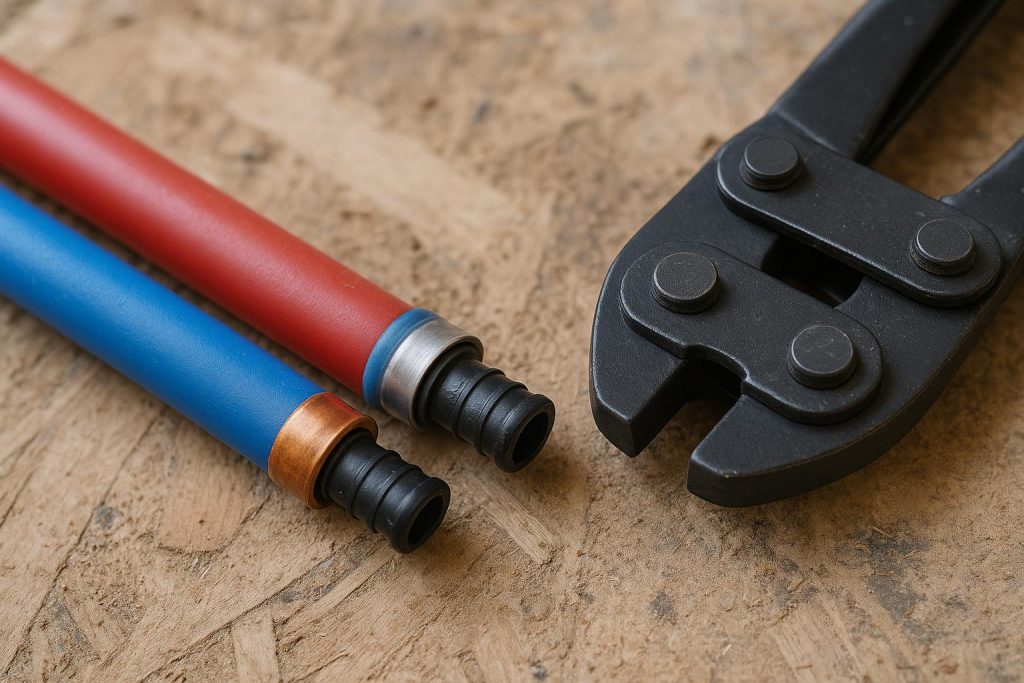
PEX crimp vs clamp is a choice between a copper ring squeezed all the way around the tube (ASTM F1807) and a stainless steel cinch ring pinched shut at one ear (ASTM F2098); both grip the same barbed fitting, and technique matters more than which one you pick.
Key Takeaways
- Copper crimp fittings and rings are covered by ASTM F1807, rated for 100 psi hot and cold water up to 180 F (ASTM F1807).
- Stainless cinch clamps are the alternate under ASTM F2098 and share the same barbed insert fitting as crimp (ASTM F2098).
- Cold expansion uses a PEX reinforcing ring under ASTM F1960, sized 3/8 to 3 inch (ASTM F1960).
- Expansion (F1960) fittings are full flow, matching the tube inside diameter, while barbed insert fittings restrict flow at each joint, per Uponor.
- A basic crimp or cinch tool commonly runs about $30 to $100; a cold expansion tool commonly runs $150 to $500 or more.
- A go/no-go gauge verifies a copper crimp is the right size and fully closed, the standard quality check on an F1807 joint.
What are the main PEX connection methods?
There are four common ways to join PEX: copper crimp (ASTM F1807), stainless steel cinch clamp (ASTM F2098), cold expansion (ASTM F1960), and push-fit connectors. The first three push the tube onto a fitting and lock it with a ring or by shrinking the tube; push-fit uses an internal grip. If you want the material basics first, see what PEX is. Before choosing a connection method, it helps to know which PEX pipe issues are genuine concerns versus common misconceptions about the material itself.
Crimp and clamp share the exact same barbed insert fitting. The only difference between them is the ring: crimp uses a copper band squeezed 360 degrees, clamp uses a stainless ear pinched at one point. That shared fitting is why the two get compared so often and why many shops carry both.
Expansion is a separate system. The tube and a PEX ring are stretched with a tool, the fitting goes in, and the tube shrinks back to grip it. Push-fit is the odd one out: no tool, no ring, just push the connector on. Each has a place, and this method comparison stays on connections rather than repeating the full PEX install walkthrough.
How does copper crimp (ASTM F1807) work?
Copper crimp slides a copper ring over the PEX, pushes the tube onto a barbed insert fitting, and squeezes the ring 360 degrees with a crimp tool so it clamps the tube down onto the barbs. The finished joint is covered by ASTM F1807, which rates these metal insert fittings for 100 psi hot and cold water up to 180 F, in sizes from 3/8 to 2 inch.
The tool is a jaw that closes on the ring. Basic manual crimpers are single-size or come with swappable dies for 1/2 and 3/4 inch, the two sizes most homes use. After crimping, you check the joint with a go/no-go gauge: the go slot should slip over the crimped ring and the no-go slot should not. That check is the difference between a joint you trust and a guess.
Crimp gives an even, all-around clamp, which many pros like for a clean seal. The trade-off is access. The crimp tool needs room to open its jaws fully around the ring, so tight corners and close-spaced tubes can be awkward. In those spots the cinch clamp often wins.
How is stainless cinch clamp (ASTM F2098) different from crimp?
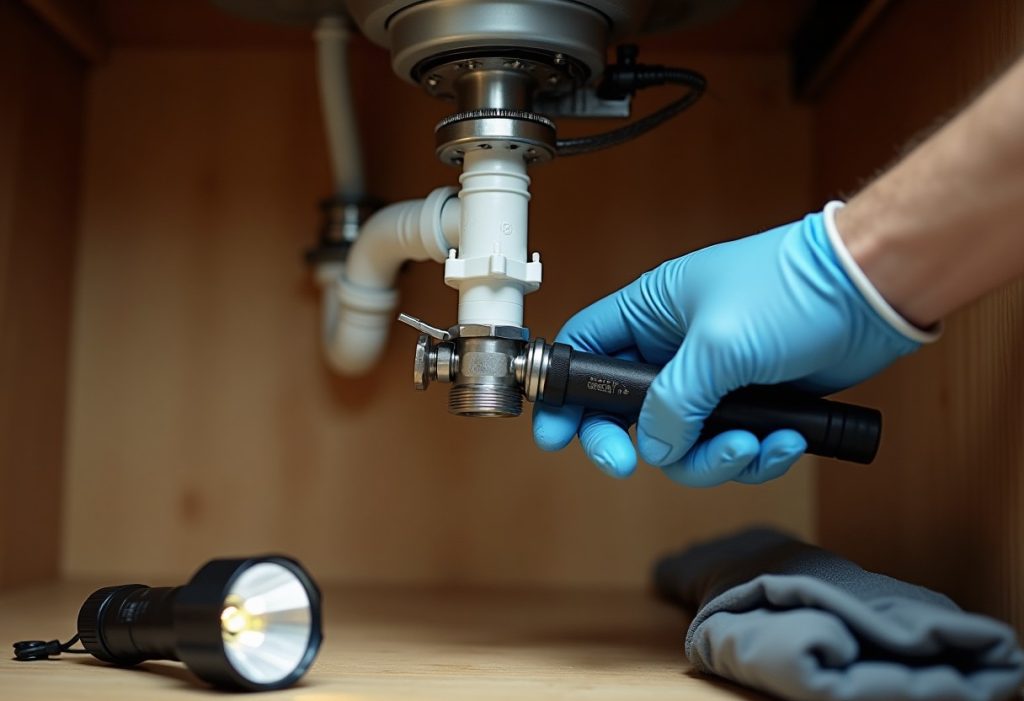
Cinch clamp, sometimes called clamp or pinch clamp, uses a stainless steel ring with a raised ear instead of a copper band. A cinch tool grips that ear and pinches it, drawing the ring tight around the tube and fitting. ASTM F2098 covers these stainless clamps as the alternate to the copper crimp rings of F1807, on the same barbed insert fittings.
The practical differences are cost, access, and the tool. One cinch tool handles every size from 3/8 to 1 inch because it works the ear, not the whole ring, so you do not swap dies. That single tool is usually cheaper than a full crimp set, and its head fits into tighter spots. The clamp does leave a raised ear rather than a smooth ring.
| Feature | Copper crimp (F1807) | Stainless cinch clamp (F2098) |
|---|---|---|
| Ring | Copper band, squeezed 360 degrees | Stainless ring with an ear, pinched at one point |
| Tool | Jaw crimper, often size-specific dies | One cinch tool covers 3/8 to 1 inch |
| Access in tight spots | Needs room for the jaws to open fully | Smaller head, easier in corners |
| Verify with | Go/no-go gauge over the ring | Visual check of the closed ear, gauge for some brands |
| Fitting | Shared barbed insert fitting | Same shared barbed insert fitting |
Because the fitting is identical, you can run copper crimp on one joint and a stainless cinch clamp on the next without changing fittings. Many plumbers keep a cinch tool for tight work and a crimp tool for open runs.
Is expansion (ASTM F1960) more reliable than crimp or clamp?
Expansion is not automatically more reliable, but it removes a common failure point: there is no ring to under-crimp. With cold expansion under ASTM F1960, you slide a PEX reinforcing ring on, expand the tube and ring together with a tool, insert the fitting, then let the tube shrink back and grip it tight. F1960 covers sizes from 3/8 to 3 inch.
The self-tightening action is the appeal. As the stretched PEX contracts around the fitting, the joint gets stronger, and the connection is hard to get wrong once you master the expansion count. This method only works with PEX-A tubing, the grade with the best shape memory, so it locks you into that pipe type.
Reliability across all four methods depends far more on the installer than the standard. Every method here meets the same pressure and temperature ratings when done right. The recurring cause of leaks is a bad connection: an under-crimped ring, a missed cinch, a short expansion, or a fitting pushed in before the tube fully expanded. Verify each joint and any of these holds. Checking a joint by hand becomes less relevant once you’re working with push-fit connections, which rely on internal rings rather than tool-made crimps.
Which PEX method has the best flow?
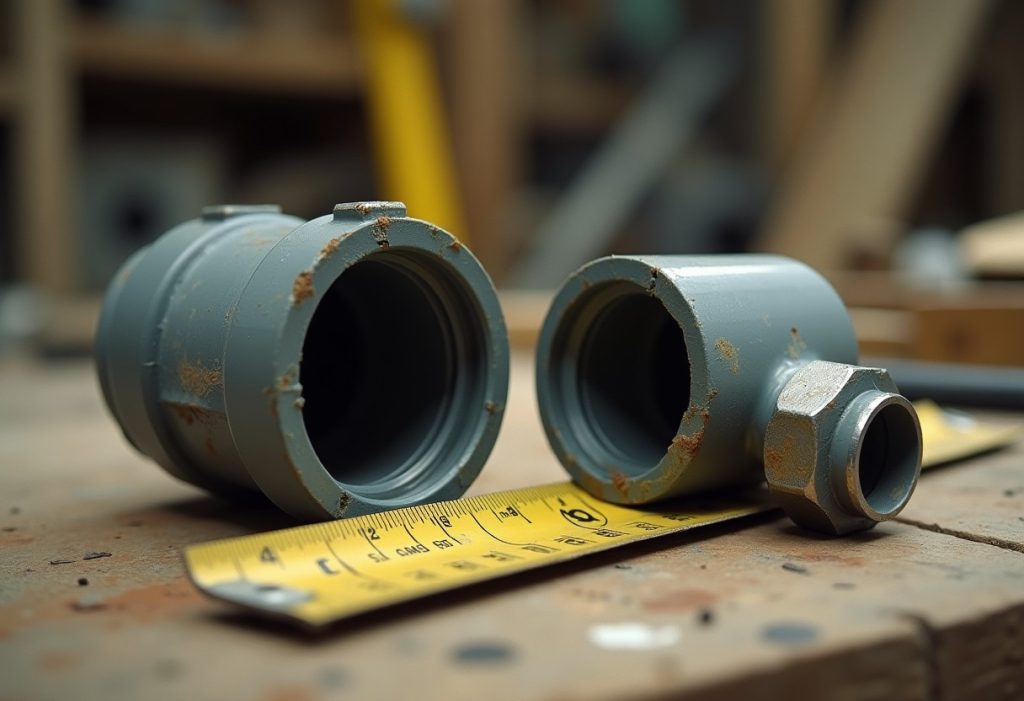
Expansion (F1960) has the best flow because the fitting is full flow, meaning its inside diameter matches the tubing, per Uponor. Crimp and clamp both use barbed insert fittings whose barb is narrower than the pipe, so they pinch the inside diameter and cut flow a little at every joint. Push-fit connectors also restrict flow through their internal insert.
On a short home run to a single fixture the loss is small and most homeowners never notice it. The math changes on long runs with many fittings, or when you are already at the edge of the pipe size. Uponor notes that with insert fittings a contractor sometimes has to upsize the tubing to make up for the flow lost at the fittings.
Flow at the fitting is one factor among several. The pipe size, the run length, and the total number of fittings matter more than any single joint. If flow across the whole system is your concern, that is really a pipe-and-layout question, closer to PEX vs copper and sizing than to the ring you crimp.
What does each PEX connection tool cost?
Tool cost is the biggest practical split between these methods. A basic manual copper crimp tool commonly runs about $30 to $100, and a stainless cinch tool sits in a similar band, often $40 to $80 for one that covers every size. Cold expansion tools cost the most, commonly $150 to $500 or more, because of the expander head and, on battery models, the motor.
Push-fit is the cheapest entry point because it needs no dedicated joining tool. You only need a PEX cutter and a deburring or depth gauge, a few dollars of kit, then push the connector on by hand. That low barrier is why push-fit shows up so often in emergency repairs and rentals.
The tool cost changes the DIY math more than anything else. For one repair, push-fit or a cheap cinch tool makes sense. For a whole repipe you plan to do yourself, a crimp or cinch kit pays for itself. Expansion tools are a real investment that mostly makes sense for pros doing volume, though manual expanders sit at the lower end of that range.

PEX crimp vs clamp: which should you pick?
For most DIYers the answer is stainless cinch clamp or push-fit; for pros it is often expansion or crimp. Cinch wins on a low tool cost, one tool for all sizes, and easy access in tight spots. Crimp wins on a clean 360-degree seal and a simple go/no-go check. Both use the same fitting, so the choice is really about the tool and the working room.
Pros doing large jobs lean toward expansion for speed and full flow, accepting the higher tool cost and the PEX-A requirement. On service and repair work, many keep push-fit connectors on the truck for fast fixes and transitions between pipe types. There is no single right answer, only the method that fits the job, the budget, and the space.
- One-off repair or a rental: push-fit, no tool to buy beyond a cutter.
- First DIY repipe on a budget: stainless cinch clamp, one cheap tool for all sizes.
- You want a smooth all-around seal and a clear gauge check: copper crimp.
- Volume work where speed and flow matter: cold expansion with PEX-A.
Whatever you pick, the fittings themselves follow the same logic as other plumbing fittings: match the fitting to the pipe and the standard, and verify every joint before you close the wall.
Where does push-fit fit in?
Push-fit is the no-tool option: a connector with an internal grip ring and O-ring that you push onto the pipe by hand. Brands like SharkBite work on PEX, copper, and CPVC, which makes them handy for repairs and transitions. They are evaluated under ASSE 1061 rather than the crimp or expansion PEX standards, and many are listed for use behind walls and underground when installed to the maker instructions.
The upside is speed and zero tool cost. The downside is price per connection, which is the highest of the four, and a small flow restriction through the insert. For a fast fix, a spot you may need to take apart, or a joint between two different pipe materials, push-fit is hard to beat. For a full-house PEX system, crimp, clamp, or expansion usually cost less across dozens of joints.
How we sourced this
Standard definitions and ratings come from ASTM specifications: F1807 for copper crimp ring metal insert fittings, F2098 for stainless steel cinch clamps as the alternate, and F1960 for cold expansion fittings with a PEX reinforcing ring, along with the Plastics Pipe Institute PEX joining design guide. The full flow characteristic of expansion fittings versus the flow restriction of barbed insert fittings reflects Uponor ProPEX product literature. Push-fit is described per the ASSE 1061 performance standard and public manufacturer listings. Tool cost ranges reflect current U.S. retail pricing for manual and battery tools and are approximate, not a quote for a specific model. We consulted ASTM, PPI, and manufacturer sources and excluded vendor performance claims we could not tie to a published standard. Pressure and temperature ratings (100 psi, up to 180 F) are the standard system ratings and vary with tubing, fitting listing, and local code.
Frequently asked questions
What is the difference between PEX crimp and clamp?
Crimp uses a copper ring squeezed 360 degrees around the tube with a jaw tool, under ASTM F1807. Clamp, also called cinch, uses a stainless steel ring with a raised ear that a cinch tool pinches shut, under ASTM F2098. Both grip the tube onto the same style barbed insert fitting. Clamp tools cost less and reach tight spots better, while crimp gives a cleaner all-around seal.
Which PEX connection method is the most reliable?
All four common methods pass the same pressure and temperature ratings when installed correctly, so operator technique matters more than the method. Expansion (ASTM F1960) is widely trusted because the tube shrinks back to grip the fitting and there is no ring to under-crimp. Crimp and clamp are reliable when verified with a go/no-go gauge. The most common failure across all of them is a bad connection, not the fitting design.
Do PEX fittings restrict water flow?
Insert fittings used with crimp and clamp have a barb that is narrower than the tube, so they cut the inside diameter and reduce flow at each joint. Expansion (F1960) fittings are full flow, meaning the fitting inside diameter matches the tubing, per Uponor. Push-fit connectors also restrict flow through an internal insert. On a short home run the loss is minor, but it adds up across many fittings on a long run.
How much does a PEX crimp or expansion tool cost?
A basic manual copper crimp tool commonly runs about $30 to $100, and a stainless cinch tool sits in a similar range, often $40 to $80. Cold expansion tools cost more because of the expander head mechanism, commonly $150 to $500 or more for battery models. Push-fit needs no dedicated tool beyond a cutter and deburring gauge, which is why it is the cheapest entry point.
Is a go/no-go gauge required for PEX crimp connections?
A go/no-go gauge is the standard way to verify a copper crimp is the right size and fully closed. You slide the gauge over the finished ring: the go side should pass and the no-go side should not. Manufacturers and inspectors treat this check as part of a proper F1807 install. Skipping it is how under-crimped or over-crimped joints slip through and leak later.
Can I mix PEX crimp and clamp fittings on the same system?
The barbed insert fitting is shared between crimp and clamp under ASTM F1807 and F2098, so the same fitting body accepts either a copper crimp ring or a stainless cinch clamp. You can use both methods on one system as long as each connection follows its own standard and is verified. Expansion (F1960) fittings are a different design and are not interchangeable with crimp or clamp rings.
Which PEX connection method is best for DIY?
Many DIYers pick stainless cinch clamp or push-fit because the tool cost is low and the learning curve is short. Cinch tools are inexpensive and forgiving in tight spaces, and push-fit needs no crimping at all. Copper crimp is also DIY friendly with a gauge. Expansion is favored by pros for speed on large jobs but the tool is the priciest, so it is a harder first purchase.
What standard covers push-fit PEX fittings?
Push-fit connectors like SharkBite are not covered by the crimp or expansion PEX standards. They are evaluated under ASSE 1061 for push-fit fittings, and many are listed for use behind walls and underground when installed per the maker instructions. They work on PEX, copper, and CPVC, which makes them handy for repairs and transitions, though they cost the most per connection.