Types of Toilets: Flush Systems and Form Factors Compared
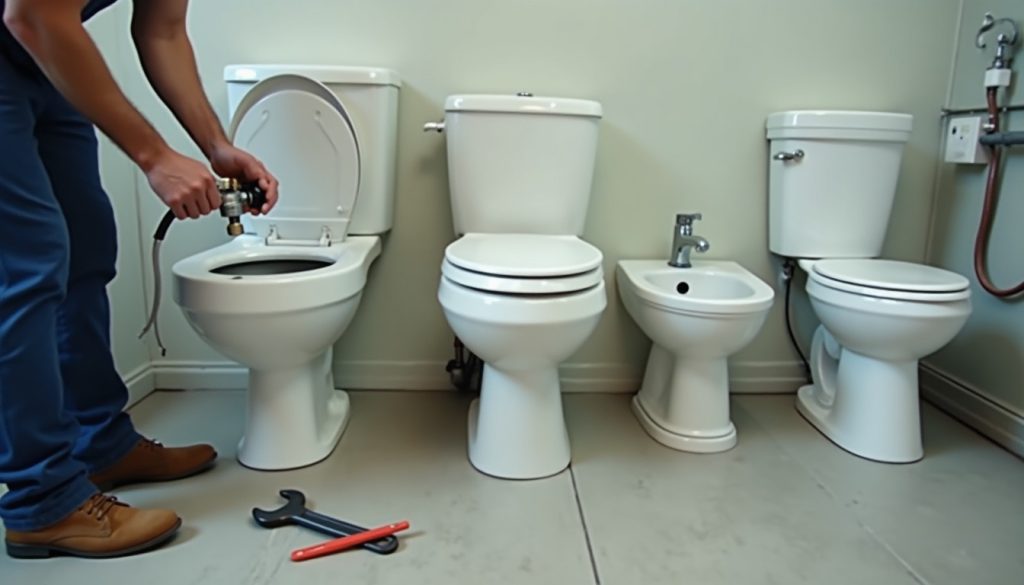
Most homes use a gravity-flush toilet, but pressure-assisted models flush harder and dual-flush designs save water; form factor and a matching rough-in matter as much as the flush system itself.
Key Takeaways
- Every new toilet sold in the US uses 1.6 gallons per flush (gpf) or less under the federal standard in effect since 1994, per the EPA.
- WaterSense-labeled toilets use 1.28 gpf or less, about 20 percent less water than the 1.6 gpf standard, and must pass a 350-gram waste-removal test (EPA WaterSense).
- Older toilets installed before 1994 used 3.5 gpf and up, with some pre-1980s models using 5 to 7 gpf, according to the EPA.
- Gravity-flush is the quiet standard; pressure-assisted flushes harder and clogs less but is the loudest; dual-flush adds a reduced flush for liquids.
- Comfort or chair height means a 17 to 19 inch seat, matching the ADA requirement for accessible water closets versus about 15 inches on a standard bowl.
- Match the toilet to your rough-in: 12 inches is standard, but 10-inch and 14-inch rough-ins exist and are not interchangeable.
What are the main types of toilets?
Toilets split two ways. First by flush mechanism: gravity-flush, pressure-assisted, and dual-flush. Second by form factor, meaning the physical build: one-piece, two-piece, wall-hung, and corner models. A single toilet is a combination of both, for example a two-piece gravity-flush toilet or a one-piece dual-flush model. Choosing well means picking a flush system and a form factor that fit your bathroom and your rough-in. Measuring your rough-in is only half the job, since water use per flush often shapes which flush system makes sense.
If you want the mechanics behind the flush before comparing models, our guide to how a toilet works walks through the fill and flush cycle valve by valve.
How does each flush mechanism work?
The flush mechanism is what pulls waste out of the bowl. Gravity-flush uses falling water, pressure-assisted uses compressed air, and dual-flush gives you two flush volumes to choose from. All three meet the same 1.6 gpf federal cap, but they clear the bowl very differently and feel different in daily use.
Gravity-flush
A gravity-flush toilet is the standard type in most American homes. Lifting the handle drops water from the tank into the bowl, and the weight of that water creates a siphon in the trapway that pulls waste down the drain. It has few moving parts, runs quietly, and is the cheapest to buy and repair. The main weakness is that low-water gravity models can need a second flush on heavy loads.
Pressure-assisted
A pressure-assisted toilet hides a sealed plastic tank inside the porcelain tank. Incoming water compresses the air trapped in that inner vessel, and flushing releases the water in a forceful, pressurized blast that scours the bowl. It clogs far less and clears waste in one flush, which is why it shows up in busy households and commercial restrooms. The tradeoffs are a loud flush and a higher price.
Dual-flush
A dual-flush toilet is usually a gravity design with two buttons on top of the tank: a reduced flush (often around 0.8 to 1.1 gpf) for liquid waste and a full flush for solids. Choosing the lighter flush most of the time cuts water use over a year. Dual-flush units use a flush valve rather than a flapper, so repairs differ from a standard gravity toilet.
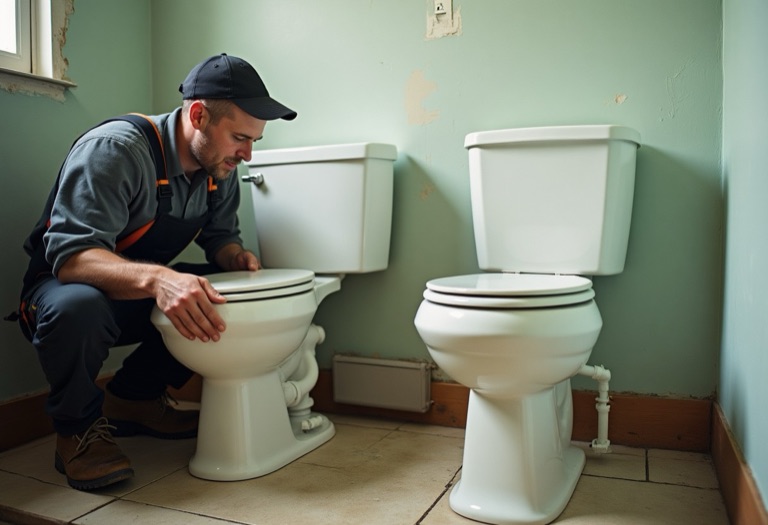
Toilet types compared: which flush system wins?
No single flush system wins for everyone. Gravity-flush is the quiet, affordable default; pressure-assisted trades noise and cost for the strongest flush; dual-flush prioritizes water savings. The table below compares the common flush types on how they work, water use, noise, typical fixture cost, and where each fits best. Cost ranges are general US market figures for the fixture only, not installation.
| Flush type | How it works | Water use | Noise | Fixture cost | Best for |
|---|---|---|---|---|---|
| Gravity, standard | Tank water weight creates a siphon | 1.6 gpf | Quiet | $100 to $400 | Most homes, budget replacements |
| Gravity, high-efficiency | Optimized siphon and trapway at lower volume | 1.28 gpf (WaterSense) | Quiet | $150 to $500 | Water savings without noise |
| Dual-flush | Two buttons: reduced flush or full flush | ~0.8 to 1.28 gpf | Quiet | $200 to $600 | Cutting water use in busy baths |
| Pressure-assisted | Compressed air blasts water into the bowl | 1.0 to 1.28 gpf | Loud | $300 to $700+ | Frequent clogs, heavy use, commercial |
| Power (pump) assisted | Small electric pump boosts the flush | ~1.0 to 1.28 gpf | Moderate hum | $500 to $1,000+ | Strong flush without the blast noise |
Once you pick a model, our step-by-step guide to how to install a toilet covers the wax ring, closet bolts, and leveling.
How much water do toilets use?
Every new toilet sold in the United States uses no more than 1.6 gallons per flush under the federal standard in effect since 1994, per the EPA. WaterSense-labeled high-efficiency toilets go further, using 1.28 gpf or less, roughly 20 percent below the federal cap. Because a toilet is the single largest water user inside most homes, that gap adds up fast over the fixture’s life.
The takeaway: replacing a pre-1994 toilet with a WaterSense model can cut its water use by more than 75 percent. If your current toilet keeps running between flushes, it is also wasting water silently, and our guide to fix a running toilet covers the flapper and fill-valve fixes.
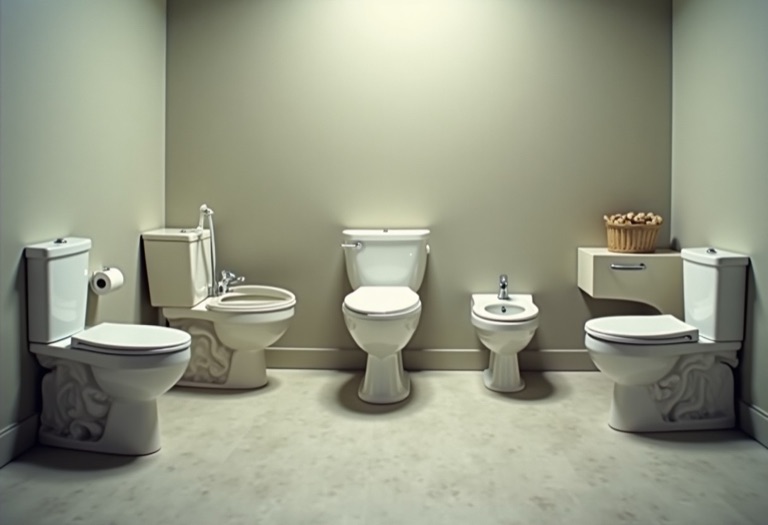
What toilet form factors are there?
Form factor is the physical build of the toilet, separate from how it flushes. The four you will see are one-piece, two-piece, wall-hung, and corner. Form factor drives price, how easy the unit is to clean, and how much floor space it needs. The table below compares them. Before weighing floor space against cleanup, plumbers often field questions about pairing a toilet with bidet fixtures and seats.
| Form factor | Build | Cleaning | Space and install | Relative cost |
|---|---|---|---|---|
| Two-piece | Separate tank bolted to bowl | Seam between tank and bowl traps grime | Most common; easy to carry and install | Lowest |
| One-piece | Tank and bowl molded as one unit | Easiest, no seam to scrub | Heavier to lift; slightly shorter profile | Mid to high |
| Wall-hung | Bowl mounts to wall, tank hidden in wall | Very easy; bowl floats above the floor | Needs in-wall carrier and framing; frees floor space | Highest |
| Corner | Triangular tank fits into a corner | Similar to two-piece | Saves space in tight or small bathrooms | Mid |
Two-piece toilets dominate because they are cheap and easy to handle. One-piece models cost more but wipe down in seconds. Wall-hung units look sleek and clean easily, but they need an in-wall carrier and are the most involved to install.
Which toilet is quieter, and how does maintenance differ?
Gravity-flush and dual-flush toilets are the quietest; pressure-assisted toilets are clearly the loudest because they release water under compressed air. Power-assisted models sit in between with a brief pump hum. If the bathroom shares a wall with a bedroom or a home office, a gravity model is the safe choice for noise.
Maintenance tracks the mechanism. A standard gravity toilet is the simplest to service: a flapper, a fill valve, and a flush handle, all cheap and widely stocked. Dual-flush units use a flush valve instead of a flapper, so replacement parts differ. Pressure-assisted toilets have a sealed pressure vessel that is more specialized to service and can be costlier to repair, though it clogs far less in the first place.
What is comfort height, and what does the ADA require?
Comfort height, also called chair height, means the seat sits 17 to 19 inches off the floor instead of the roughly 15 inches on a standard bowl. That taller range matches the ADA requirement for accessible water closets, which specifies a seat 17 to 19 inches from the floor to the top of the seat. Taller seats are easier to sit down on and stand up from for many adults.
Standard height still suits shorter users and children’s bathrooms, since a lower seat lets feet rest flat on the floor. Neither height changes the flush system or the rough-in, so you can pair comfort height with gravity, pressure-assisted, or dual-flush.
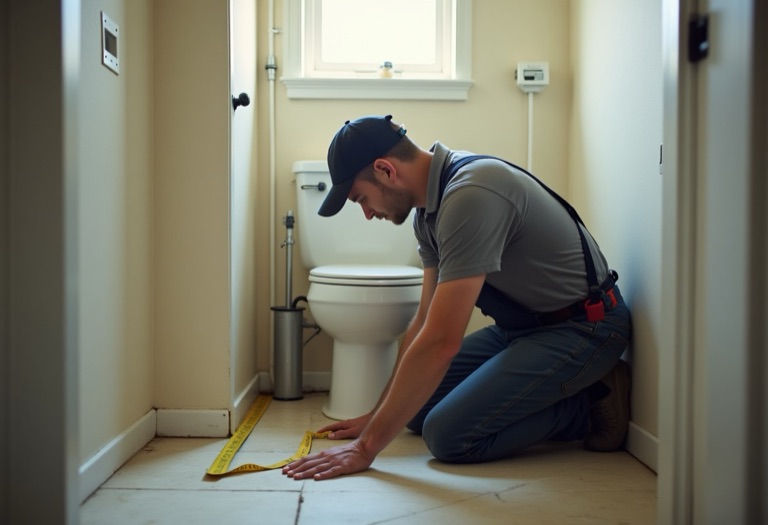
What is toilet rough-in and why does it matter?
The rough-in is the distance from the finished wall behind the toilet to the center of the floor drain and closet bolts. Twelve inches is the standard in most homes, but 10-inch and 14-inch rough-ins exist, especially in older or custom builds. This measurement decides whether a toilet will physically fit, so it is the first thing to check before buying.
- Measure from the finished wall (not the baseboard) to the center of the two closet bolts at the base.
- Round to the nearest standard size: 10, 12, or 14 inches.
- Buy a toilet rated for that rough-in, since a 12-inch unit will not seat correctly on a 10-inch rough-in.
Get the rough-in wrong and the tank will either hit the wall or leave a large gap. The full seating process, including the wax ring and closet bolts, is in our how to install a toilet guide, and typical labor and fixture pricing is in our cost to install a toilet breakdown.
Which type of toilet should you choose?
Match the toilet to the room and the household. For most bathrooms, a WaterSense gravity-flush toilet balances a quiet, reliable flush with low water use and easy repairs. Choose pressure-assisted if you fight frequent clogs or run a high-traffic or commercial restroom and can accept the noise. Choose dual-flush to trim water use, and consider a one-piece or wall-hung form factor when easy cleaning or floor space matters.
Whatever the flush type, confirm three things before you buy: the rough-in measurement, the seat height you want (standard or comfort), and whether the model carries the WaterSense label if water savings are a priority.
How we sourced this
Flush-volume figures come from the EPA: the 1.6 gpf federal standard in effect since 1994, the 1.28 gpf WaterSense high-efficiency maximum, the roughly 20 percent savings, the 350-gram waste-removal test, and the pre-1994 range of 3.5 gpf and up (with older models to 7 gpf), drawn from the EPA WaterSense residential and tank-type toilet resources. The 17 to 19 inch accessible seat height comes from the ADA Standards (Section 604.4) via the US Access Board. Rough-in dimensions (10, 12, 14 inches) and reduced-flush volumes reflect standard manufacturer specifications. Flush-mechanism behavior and form-factor tradeoffs are reported as general product characteristics. Fixture cost ranges are general US market figures for the toilet only, not installation, and vary by brand and region; they are presented as ranges rather than fixed prices. Retailer and contractor guides were read for context but not cited as figures.
Frequently asked questions
What are the main types of toilets?
Toilets divide two ways: by flush mechanism and by form factor. The main flush systems are gravity-flush (the standard), pressure-assisted (compressed air for a stronger flush), and dual-flush (two buttons for a partial or full flush). The main form factors are one-piece, two-piece, and wall-hung, plus corner models for tight spaces.
What is the difference between gravity-flush and pressure-assisted toilets?
A gravity-flush toilet uses the weight of tank water to create a siphon that pulls waste down the drain, and it runs quietly. A pressure-assisted toilet stores water under compressed air inside a sealed inner tank, then releases it in a forceful blast that clears the bowl harder and clogs less often, but it is noticeably louder and costs more.
How much water does a toilet use per flush?
New toilets sold in the United States use no more than 1.6 gallons per flush (gpf) under the federal standard in effect since 1994. WaterSense-labeled high-efficiency models use 1.28 gpf or less, about 20 percent less water, per the EPA. Older toilets installed before 1994 used 3.5 gpf and up, with some pre-1980s models using 5 to 7 gpf.
Are dual-flush toilets worth it?
Dual-flush toilets give you two options: a reduced flush (often around 0.8 to 1.1 gpf) for liquid waste and a full flush for solids. Over a year that can cut toilet water use meaningfully in a busy household. The tradeoff is a slightly more complex flush valve and buttons that some users find less intuitive than a single handle.
What is comfort height on a toilet?
Comfort height, sometimes called chair height, means the seat sits higher off the floor than a standard toilet, usually 17 to 19 inches versus about 15 inches. That range matches the ADA requirement for accessible water closets, which calls for a seat 17 to 19 inches from the floor. Taller seats are easier for many adults and for people with limited mobility.
What is a toilet rough-in and why does it matter?
The rough-in is the distance from the finished wall behind the toilet to the center of the drain bolts in the floor. The standard is 12 inches, but 10-inch and 14-inch rough-ins exist in some homes. Buy a toilet that matches your rough-in, or it will not sit against the wall correctly.
Are pressure-assisted toilets noisy?
Yes, pressure-assisted toilets are the loudest common type because they release water under compressed air in a short, forceful blast. Gravity-flush and dual-flush toilets are much quieter. If a quiet flush matters, such as a bathroom next to a bedroom, a gravity model is usually the better pick.
Which type of toilet is easiest to clean?
A one-piece toilet is easiest to clean because the tank and bowl are molded as a single unit with no seam or gap to trap grime. Wall-hung toilets also clean easily since the bowl floats above the floor. Two-piece toilets are the most common and least expensive, but the joint between tank and bowl needs extra attention. Seams and waterlines are also where the pink film people call pink mold in a toilet tends to settle first.


