Types of Bidets: Fixtures, Seats and Sprayers Compared
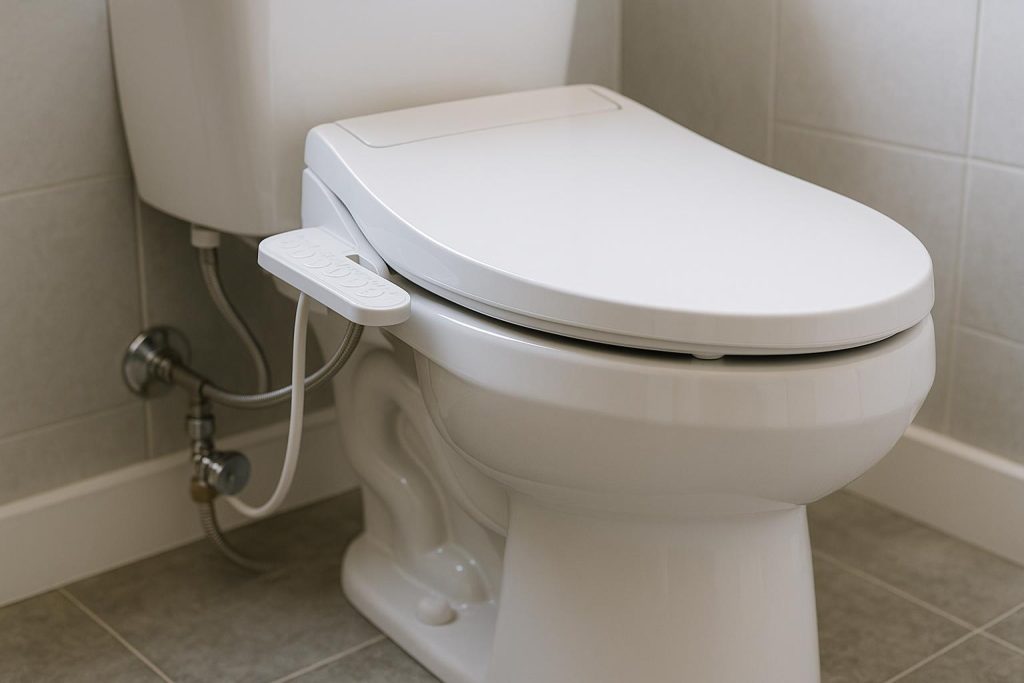
Types of bidets fall into five groups: the standalone ceramic fixture, the electric seat (washlet), the non-electric seat, the handheld sprayer, and the built-in bidet toilet, from about $30 to $4,000.
Key Takeaways
- The five main bidet types are the standalone ceramic fixture, the electric bidet seat (washlet), the non-electric seat or attachment, the handheld sprayer (shattaf), and the built-in bidet toilet.
- Most seats, attachments, and sprayers install with a T-valve that splices the toilet’s cold supply line, so they need no new plumbing; only a standalone fixture needs its own hot and cold supply plus a drain.
- An electric washlet needs a 120-volt GFCI outlet within about three feet of the toilet, and its instant heater can draw 1,200 to 1,400 watts, per TOTO.
- A bidet uses roughly one-eighth of a gallon of water per use, per Bio Bidet, versus about 37 gallons of water to manufacture a single roll of toilet paper, per Scientific American.
- Cost climbs with features: a non-electric attachment runs $30 to $100, an electric washlet $150 to $700 for the seat, and a built-in bidet toilet $1,000 to $4,000 or more, per 2026 cost guides.
- Warm water is a feature of electric and built-in models only; non-electric seats and handheld sprayers run cold unless teed into a hot line.
What are the main types of bidets?
There are five types of bidets, and they differ mainly in whether they are a separate fixture or attach to the toilet you already own, and whether they use electricity. The list runs from the traditional standalone ceramic basin to the modern all-in-one smart toilet. Four of the five bolt onto or beside your current toilet, so a bidet is one of the few bathroom upgrades that rarely needs a plumber.
The standalone fixture is a separate porcelain basin, like a low sink you straddle. The electric bidet seat, or washlet, replaces your toilet seat and adds warm water, a dryer, and a heated seat. The non-electric seat or attachment does the same washing job with no power. The handheld sprayer is a wand on a hose mounted beside the toilet. The built-in bidet toilet integrates the whole system into one unit. If you are choosing a toilet at the same time, see our guide to types of toilets.
How does a standalone bidet fixture differ from a bidet seat?
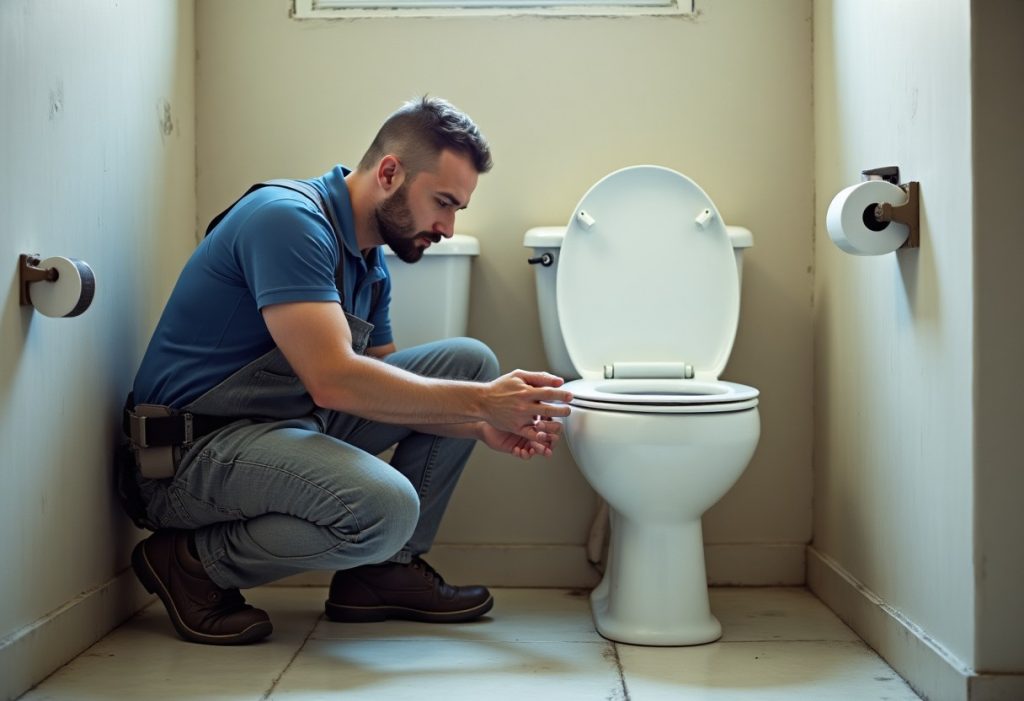
A standalone bidet fixture is a separate ceramic basin plumbed like a sink, with its own hot and cold taps and its own drain, mounted on the floor next to the toilet. A bidet seat instead replaces the seat on your existing toilet and shares the toilet’s water supply. The fixture needs floor space and real plumbing; the seat needs neither.
Because a standalone fixture requires supply lines and a drain roughed into the floor or wall, it is a job best folded into a bathroom remodel plumbing project rather than a weekend add-on. It also takes a second footprint of floor space, which many US bathrooms do not have, one reason seats and attachments now dominate the market here. A standalone fixture only washes; you still move from the toilet to the bidet.
Electric or non-electric: which bidet type should you pick?
The split between electric and non-electric is the biggest practical fork. An electric bidet seat (washlet) plugs into a 120-volt GFCI outlet and adds an instant water heater, warm-air dryer, heated seat, adjustable spray, and a remote. A non-electric seat or attachment uses no power at all: it runs on your home’s water pressure, so it is cheaper, simpler, and never breaks a circuit.
Choose electric if you want warm water and a dryer and have (or can add) an outlet by the toilet. Choose non-electric if you want the lowest cost, the fastest install, and no wiring. A non-electric attachment installs in 15 to 20 minutes; an electric seat takes 30 to 60 minutes because of the outlet step, per HomeGuide.
| Bidet type | Install need | Water temp | Features | Typical cost | Best for |
|---|---|---|---|---|---|
| Standalone fixture | Hot and cold supply lines plus its own drain; floor space | Hot and cold taps | Wash only; no seat, dryer, or controls | $250-$800 fixture, plus plumbing labor | Remodels and larger or traditional bathrooms |
| Electric seat (washlet) | T-valve on toilet supply plus a 120V GFCI outlet | Warm, on-demand heated | Heated seat, dryer, remote, adjustable spray, self-clean | $150-$700 seat; $250-$1,000 installed | Comfort seekers with an outlet nearby |
| Non-electric seat | T-valve on toilet supply; no power | Cold, or warm off a hot supply line | Dual-nozzle wash, pressure and position dials | $60-$150 | Low cost with a seat-style upgrade |
| Handheld sprayer (shattaf) | T-valve on toilet supply; wall or tank mount | Cold (warm if teed to hot) | Directional spray wand; doubles for cleaning | $30-$60 | Renters and DIY, tight budgets |
| Built-in bidet toilet | Replaces the toilet; supply plus GFCI outlet | Warm, on-demand heated | All washlet features integrated; tankless designs | $1,000-$4,000+ | New builds and full bathroom upgrades |
Warm water or cold: how do bidet types heat water?
Warm water is a feature of electric and built-in bidets only. Electric washlets and built-in bidet toilets carry an internal instant heater that warms water on demand, so they never run out the way a small reservoir tank would. Non-electric seats and handheld sprayers spray whatever comes down the line, which is cold in most homes unless you tap a hot supply.
Some non-electric seats offer a “warm water” model with a second hose you connect to the hot line under the sink or at the toilet, blending hot and cold at a dial. This gives lukewarm water without electricity but adds a second connection and depends on your water heater keeping the line warm. For true instant, thermostatic warm water at the seat, an electric unit is the reliable path.
What plumbing and electrical does a bidet need?
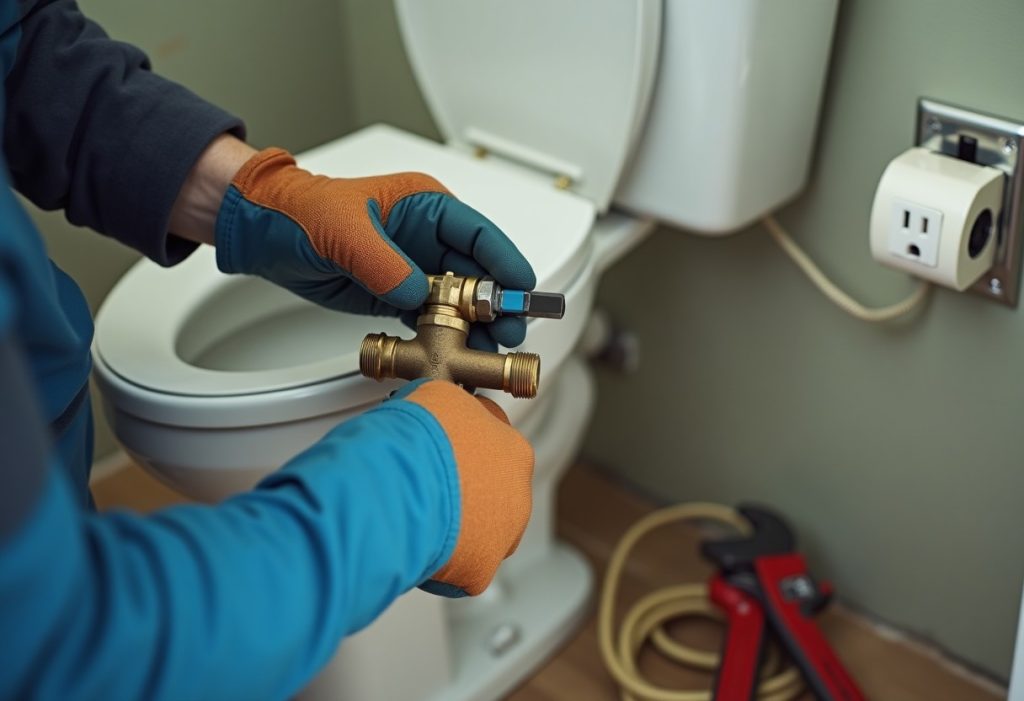
Most bidets tee into plumbing you already have. Seats, attachments, and handheld sprayers use a T-valve (T-adapter) that installs on the toilet’s cold water supply line, between the shutoff and the tank, so no pipe cutting is involved. Electric models add one requirement: a 120-volt GFCI outlet within about three feet of the toilet, per TOTO.
- Shut off the toilet’s supply valve and flush to drain the tank.
- Disconnect the supply hose from the tank and thread the T-valve onto the tank fitting.
- Reconnect the tank hose to one side of the T-valve and run the bidet’s hose from the other side.
- Mount the seat, attachment, or sprayer bracket, then turn the water back on and check for drips.
- For an electric model, plug into the GFCI outlet last.
A standalone ceramic fixture is the exception: it is plumbed like a sink, needing hot and cold supply stubs and a dedicated drain and trap, which usually means opening the floor or wall. If you are setting or resetting the toilet in the same project, our guide to how to install a toilet covers the wax ring and flange. An electric seat’s heater can pull 1,200 to 1,400 watts momentarily, so it needs a real outlet on a protected circuit, and adding a new GFCI outlet runs about $120 to $350 when the wall is accessible, per HomeGuide.
How much water does a bidet use versus toilet paper?
A bidet uses about one-eighth of a gallon of water per use directly, per Bio Bidet, a small amount next to the water hidden in toilet paper. Making a single roll takes roughly 37 gallons of water plus about 1.5 pounds of wood, and the average American’s 24 rolls a year carry an 888-gallon manufacturing footprint, per Scientific American. Bidets cut household paper use by 75 percent or more.
The direct water a bidet sprays is far outweighed by the water saved on paper production, which is why bidets score as a net water saver in life-cycle terms. Understanding your toilet’s supply cycle helps here; our explainer on how a toilet works shows the fill valve and supply line the T-valve taps into.
How much do the different bidet types cost?
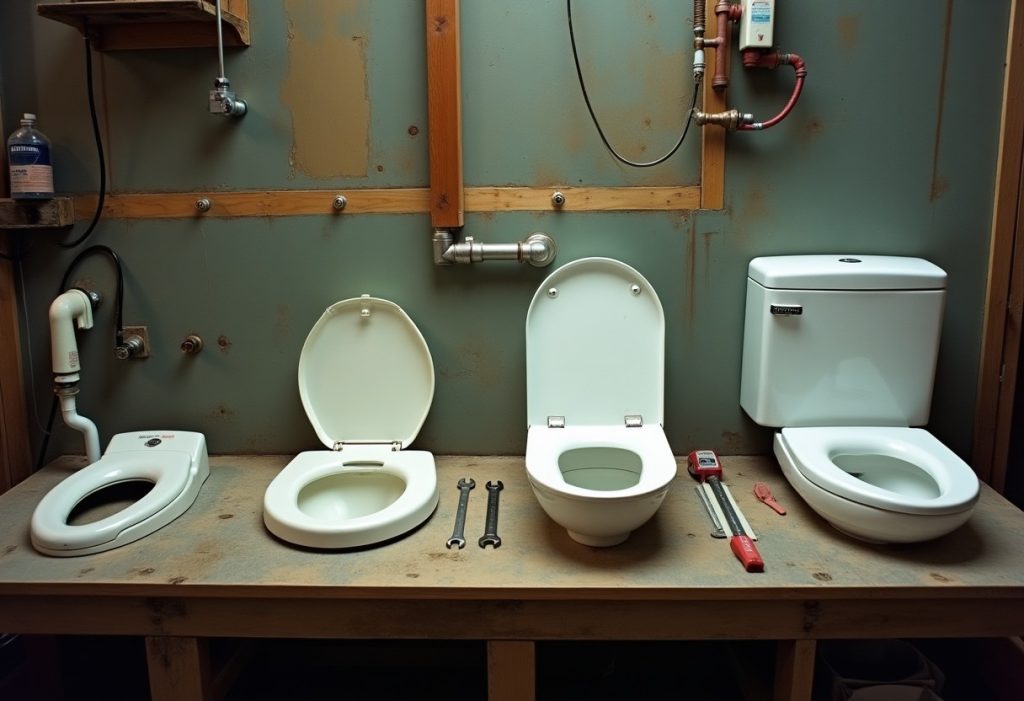
Price tracks features and plumbing. Handheld sprayers and non-electric attachments are the cheapest at $30 to $100, non-electric seats run $60 to $150, and electric washlet seats span $150 to $700 for the seat alone. Built-in bidet toilets are the top tier at $1,000 to $4,000 or more, per 2026 cost data from HomeGuide and Angi. The chart below shows the product-cost range for the four attach-to-your-toilet types.
Beyond the sticker price, budget for the extras. An electric seat may need a new GFCI outlet ($120 to $350) if none sits by the toilet, and a standalone fixture or built-in toilet adds plumbing and labor. Non-electric options carry almost no added cost because you reuse the toilet and the existing supply line.
Which bidet type should you choose?
Match the type to your budget, your outlet, and your bathroom. For the lowest cost and a renter-friendly install, pick a handheld sprayer or a non-electric attachment. For a seat-style upgrade without wiring, choose a non-electric seat. For warm water, a dryer, and a heated seat, buy an electric washlet, provided you have or can add a GFCI outlet nearby.
Go with a standalone fixture only if you have the floor space and are already opening the plumbing in a remodel, and choose a built-in bidet toilet when you want one integrated unit and are replacing the toilet anyway. For most US homeowners, an electric or non-electric seat delivers the most function for the least disruption, since it reuses the toilet and the supply line you already have.
How we sourced this
Water figures come from manufacturer and press sources: the roughly one-eighth-gallon-per-use direct water figure is from Bio Bidet; the 37-gallons-per-roll manufacturing figure, the 1.5 pounds of wood per roll, and the 888-gallon annual per-person footprint (based on about 24 rolls a year) are from Scientific American. Electrical requirements (a 120-volt GFCI outlet within about three feet of the toilet and the 1,200 to 1,400 watt momentary heater draw) come from TOTO’s washlet documentation, with GFCI protection also required for bathroom outlets under the National Electrical Code. Cost ranges ($30 to $60 handheld, $30 to $100 non-electric attachment, $60 to $150 non-electric seat, $150 to $700 electric seat or $250 to $1,000 installed, $1,000 to $4,000+ built-in, and $120 to $350 for a new GFCI outlet) and install times reflect 2026 cost guides from HomeGuide and Angi. The five type definitions and the T-valve install method are reported as standard product categories from those sources and retailer buying guides. Prices vary by brand and region and are given as ranges, not fixed quotes.
Frequently asked questions
What are the main types of bidets?
There are five: a standalone ceramic bidet fixture (a separate basin), an electric bidet seat or washlet (warm water, heated seat, dryer, remote), a non-electric bidet seat or attachment (cold or mixed water, no power), a handheld sprayer or shattaf (a spray wand on a hose), and a built-in bidet toilet (a smart toilet with the bidet integrated).
What is the difference between an electric and non-electric bidet?
An electric bidet seat (washlet) plugs into a 120-volt GFCI outlet and adds an instant water heater, warm-air dryer, heated seat, and remote or side controls. A non-electric bidet seat or attachment uses no power: it runs on line pressure and sprays cold water, or lukewarm water if you tee into the sink’s hot supply. Non-electric units cost far less and install in under 20 minutes.
Do bidets use warm water?
It depends on the type. Electric washlets and built-in bidet toilets heat their own water with a built-in heater, giving on-demand warm water. Non-electric seats and attachments spray cold water unless you connect them to a hot supply line, and handheld sprayers are typically cold-only off the toilet’s cold supply. Standalone fixtures can have both hot and cold taps.
What plumbing does a bidet need?
Most bidet seats, attachments, and handheld sprayers connect with a T-valve (also called a T-adapter) that splices into the toilet’s existing cold water supply line, so no new plumbing is needed. A standalone ceramic bidet fixture is the exception: it needs its own hot and cold supply lines and its own drain, like a sink.
Does an electric bidet need a GFCI outlet?
Yes. TOTO and other makers specify a standard 120-volt outlet within about three feet of the toilet, and code requires bathroom outlets to be GFCI (ground fault circuit interrupter) protected for shock safety near water. An electric seat’s instant heater can draw 1,200 to 1,400 watts momentarily, so it needs a real outlet, not an extension cord.
How much does a bidet cost?
A non-electric attachment runs about $30 to $100, a non-electric seat $60 to $150, and a handheld sprayer $30 to $60. An electric washlet seat costs $150 to $700 for the seat, or roughly $250 to $1,000 installed. A built-in bidet toilet (integrated smart toilet) typically runs $1,000 to $4,000 or more, per 2026 cost guides.
Do bidets save water compared with toilet paper?
A bidet uses about one-eighth of a gallon of water per use directly, per Bio Bidet. That is far less than the water embedded in toilet paper: producing a single roll takes roughly 37 gallons of water, and the average American’s 24 rolls a year carry about an 888-gallon manufacturing footprint, per Scientific American. Bidets cut paper use by 75 percent or more.