Hard Water: What It Is, Signs, and What to Do
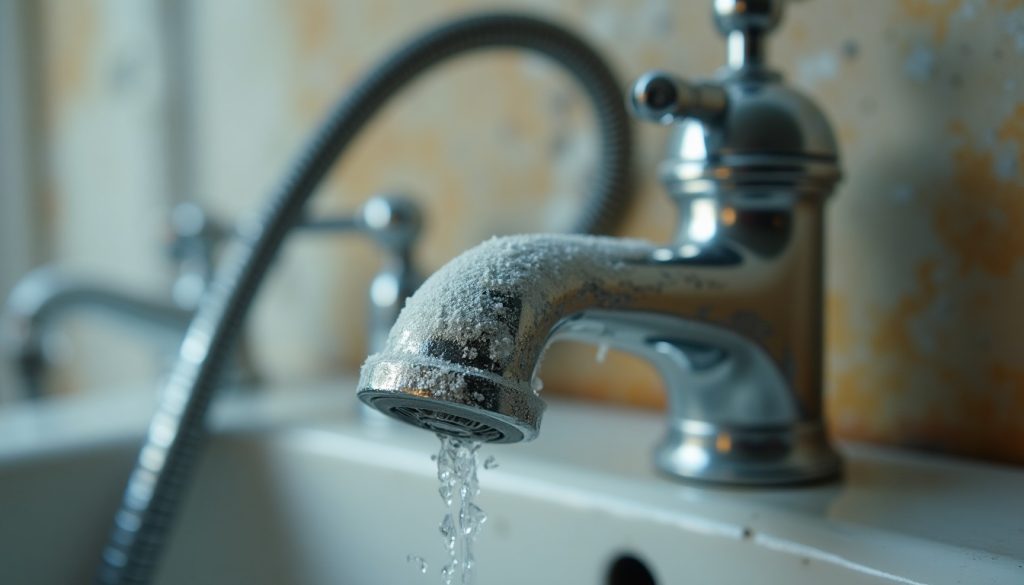
Hard water is tap water high in dissolved calcium and magnesium; the USGS calls anything above 7 grains per gallon hard, and by common estimate about 85% of US homes have some degree of it.
Key Takeaways
- Hard water is water with dissolved calcium and magnesium; the USGS measures it in milligrams per liter of calcium carbonate or grains per gallon (USGS Water Science School).
- On the USGS scale, water is hard at 121 to 180 mg/L (about 7 to 10.5 grains per gallon) and very hard above 180 mg/L (USGS).
- One grain per gallon equals about 17.1 mg/L of calcium carbonate (USGS).
- Hardness is a nuisance, not a health risk, so the EPA does not set a legal limit on it (US EPA Secondary Drinking Water Standards).
- Scale from hard water cut water-heater efficiency by up to 48%, and gas tankless units on untreated hard water clogged at about 1.6 years of simulated use (WQA-commissioned Battelle study).
- Roughly 85% of US homes have hard water, a widely cited figure based on USGS hardness mapping (Water Quality Association / USGS).
What is hard water?
Hard water is tap water carrying a high level of dissolved minerals, chiefly calcium and magnesium. Rain is naturally soft, but as groundwater seeps through limestone, chalk, and gypsum it dissolves those minerals and carries them to your tap. The more calcium and magnesium the water holds, the harder it is. Water hardness isn’t the only thing worth a glance at the faucet, so check what causes cloudy tap water before assuming your glass is just chalky.
Those minerals are not contaminants. The US EPA treats hardness as a nuisance issue rather than a health one, so there is no federal limit on it. Hard water is safe to drink. The trouble it causes is mechanical: scale on pipes and appliances, spots on glass, and soap that will not lather.
How is water hardness measured?
Water hardness is measured as the concentration of calcium and magnesium, expressed as calcium carbonate. The USGS Water Science School reports it in milligrams per liter (the same as parts per million), while the water-treatment trade usually uses grains per gallon. One grain per gallon equals about 17.1 mg/L, so you can convert between the two.
The USGS sorts water into four bands from soft to very hard. The chart below shows the same bands on the grains-per-gallon scale most test kits use, so you can place your own reading.
The table pairs each USGS band with its grains-per-gallon and mg/L range and what you tend to notice at that level. Use it to read a test strip or a line on your utility report.
| Classification | Grains per gallon | mg/L (ppm) as CaCO3 | What you notice |
|---|---|---|---|
| Soft | 0 to 3.5 gpg | 0 to 60 mg/L | No scale, soap lathers easily, water can feel slick |
| Moderately hard | 3.5 to 7 gpg | 61 to 120 mg/L | Light spotting on glass, a little soap scum |
| Hard | 7 to 10.5 gpg | 121 to 180 mg/L | Visible scale on fixtures, spots, dry skin, more soap needed |
| Very hard | Over 10.5 gpg | Over 180 mg/L | Heavy crusty scale, dingy laundry, faster appliance wear |
How common is hard water in US homes?
Hard water is the norm, not the exception. A widely repeated estimate holds that about 85% of US homes have some degree of hard water, and USGS hardness mapping shows large swaths of the country in the hard and very hard bands. The Midwest and Southwest run hardest, driven by limestone-rich groundwater.
City tap tends to be treated but not softened, so hardness varies a lot by source. Places like Las Vegas, Phoenix, and Indianapolis regularly test in the very hard range above 15 grains per gallon, while parts of the Pacific Northwest and Northeast sit in the soft band. Your exact number depends on your utility or your well, which is why testing beats assuming.
What are the signs of hard water?
The signs of hard water show up on surfaces, skin, and laundry before you ever run a test. Calcium and magnesium react with soap and drop out as scale, so the same clues appear in home after home. Spotting any cluster of these is a good reason to test. Before choosing a fix, it helps to know how a reverse osmosis setup differs from the softeners typically used to treat hard water. Our guide to whole house filter sizing and cost breaks down how point-of-entry systems compare on installation and upkeep. Choosing between the two often comes down to your test results, which our breakdown of softener versus filter basics can help you sort through.
- White, chalky scale on faucets, showerheads, and kettle elements.
- Spots and cloudy film on glasses and dishes straight out of the dishwasher.
- Soap and shampoo that will not lather, and a sticky soap scum ring in the tub.
- Dry, tight skin and dull, flat hair after washing.
- Laundry that comes out stiff, dingy, or gray despite detergent.
- Dropping water pressure at fixtures as scale narrows the pipe and clogs aerators.
None of these prove hardness on their own, but together they point to it strongly. Low flow, for example, can also come from a pressure problem, so confirm with a test before you buy any equipment.
How does hard water affect pipes, water heaters, and fixtures?
Hard water damages the plumbing that heats or moves water because heat and evaporation pull calcium and magnesium out of solution as hard scale. That scale narrows pipes, glues up valves and aerators, and coats the inside of water heaters, where it does the most expensive harm.
Inside a water heater, scale settles on the tank bottom and heating elements and acts like an insulating blanket, forcing the unit to burn more energy for the same hot water. A study by Battelle for the Water Quality Association found scale cut water-heater efficiency by up to 48%, and gas tankless units running on untreated hard water clogged and failed at about 1.6 years of simulated use, while units on softened water held near their original efficiency.
Fixtures and appliances take the same hit on a smaller scale. Dishwashers and washing machines that heat water lose efficiency and life, showerheads clog, and faucet cartridges seize. Baking these checks into a routine helps; our seasonal plumbing maintenance checklist covers flushing the water heater and clearing aerators before scale sets hard. Not every ring in a toilet bowl is scale, though, and a pink film at the waterline is a bacterium rather than a mineral, which our guide to pink mold in toilets explains.
How do you test your water for hardness?
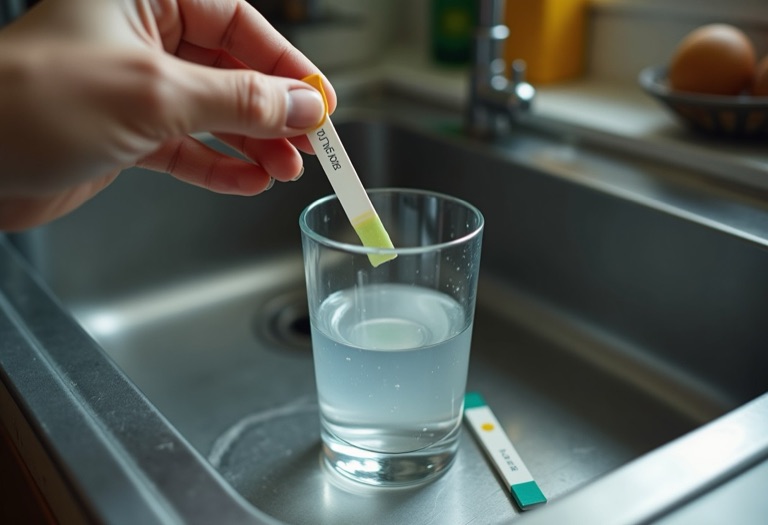
You can test hard water in minutes with a strip, or read it off paperwork you already have. The goal is a number in grains per gallon or mg/L that you can place on the USGS scale. Follow the steps in order, cheapest first.
- Buy a hardness test strip, dip it in a fresh cold-water sample, and match the color to the chart at the time the label specifies.
- Read the hardness figure on your utility’s annual water quality report (the Consumer Confidence Report), usually listed in mg/L or grains per gallon.
- For a private well, send a sample to a state-certified lab for a mineral panel, since well hardness is not reported for you.
- Try the DIY soap-shake test: add a few drops of pure liquid soap to a capped bottle of your water and shake; little lasting foam and cloudy water suggests hardness.
- Convert if needed by dividing mg/L by 17.1 to get grains per gallon, then compare against the USGS bands above.
What can you do about hard water?
Your options for hard water are a salt-based softener, a salt-free conditioner, or living with it. A softener removes the minerals and stops scale. A conditioner leaves them in but changes them so they stick less. Doing nothing is a fair choice in moderately hard water, but it gets costly in the very hard range. The table compares the three.
| Option | How it works | Removes hardness? | Notes |
|---|---|---|---|
| Ion-exchange softener | Resin swaps calcium and magnesium for sodium, then regenerates with salt | Yes | Needs salt and a drain; gives the slick softened feel; best in very hard water |
| Salt-free conditioner | Crystallizes the minerals so they stay suspended and do not bond as scale | No, hardness stays | No salt, no drain, no slick feel; cuts scale but does not soften |
| No treatment | Manage scale with regular flushing and cleaning | No | Fine in soft to moderate water; expect scale and shorter appliance life when very hard |
Which one fits comes down to your hardness number and budget. If you are weighing the trade-offs, our guide to water softener vs a conditioner breaks down the feel, upkeep, and scale results of each. For dollars, see what a water softener costs, and if you are handy, installing a water softener walks through the loop, bypass, and drain line.
How we sourced this
Classification bands, the mg/L and grains-per-gallon ranges, and the 17.1 mg/L conversion come from the USGS Water Science School. The point that hardness is a nuisance rather than a regulated health parameter comes from US EPA Secondary Drinking Water Standards guidance. The water-heater efficiency and tankless failure figures come from a Battelle study commissioned by the Water Quality Association. The roughly 85% prevalence figure is a widely cited estimate rooted in USGS hardness mapping; we flag it as an estimate because the exact share depends on the threshold used. Grain-per-gallon ranges are rounded to match common test kits. City examples are illustrative of the very hard band, not a ranking.
Frequently asked questions
What is hard water?
Hard water is tap water with a high level of dissolved minerals, mainly calcium and magnesium, picked up as groundwater moves through limestone and chalk. The USGS measures it as milligrams per liter of calcium carbonate, or grains per gallon. Calcium and magnesium are not health hazards, so the EPA does not regulate hardness. It is a nuisance issue, not a safety one.
How do I know if I have hard water?
The tells are scale on faucets and showerheads, white spots on glasses and dishes, soap that will not lather, a filmy soap scum in the tub, dry skin and dull hair after washing, and dingy laundry. Appliances that heat water, like the water heater and dishwasher, also wear out faster. A test strip or your utility water report confirms it.
What is considered hard water on the USGS scale?
The USGS calls water hard at 121 to 180 mg/L of calcium carbonate, which is about 7 to 10.5 grains per gallon. Below that, 61 to 120 mg/L is moderately hard and 0 to 60 mg/L is soft. Anything above 180 mg/L, or more than 10.5 grains per gallon, is very hard. One grain per gallon equals about 17.1 mg/L.
Is hard water bad for you?
No. The calcium and magnesium that make water hard are not health hazards, which is why the EPA does not set a legal limit on hardness. It is a nuisance problem, not a safety one. Hard water can dry out skin and hair and it damages pipes, fixtures, and water-heating appliances, but it is safe to drink.
How do I test my water for hardness?
Dip a hardness test strip in a fresh cold sample and match the color to the label, or read the hardness figure on your utility’s annual water quality report. For well water, send a sample to a state-certified lab. To convert, divide mg/L by 17.1 to get grains per gallon, then compare it to the USGS scale.
How does hard water damage a water heater?
When hard water is heated, calcium and magnesium drop out as scale that coats the tank bottom and heating elements. That layer insulates the element, so the heater burns more energy for the same hot water. A WQA-commissioned Battelle study found scale cut water-heater efficiency by up to 48%, and gas tankless units running on untreated hard water clogged at about 1.6 years of simulated use.
Should I get a water softener or a conditioner?
A salt-based ion-exchange softener actually removes calcium and magnesium, so it stops scale and gives that slick softened feel, but it needs salt and a drain. A salt-free conditioner leaves the minerals in but changes them so they stick less, with no salt or drain. In very hard water, a true softener protects appliances best. In moderate water, a conditioner or doing nothing may be fine.
Do I need to treat hard water at all?
Not always. Hard water is safe to drink, so many homes in moderately hard areas live with spotting and a little scale and never treat it. The case for treatment grows with hardness: above 10.5 grains per gallon, scale shortens the life of water heaters and appliances, so a softener or conditioner often pays back through longer appliance life and lower energy use.


