Cast Iron vs PVC Pipe: Which Drain Pipe Wins?
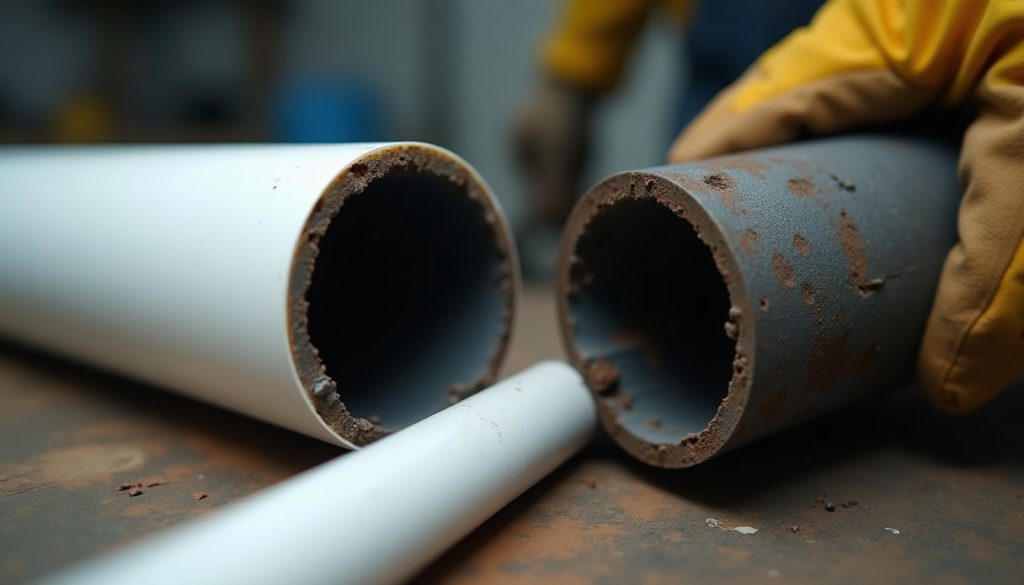
Cast iron pipe wins on quiet and fire safety; PVC wins on price, weight, and easy install. The right drain pipe depends on which of those matters most where it runs.
Key Takeaways
- Cast iron soil pipe carries a sound transmission class of about 45 to 55; PVC drain pipe sits near 25 to 30, so cast iron is markedly quieter (Cast Iron Soil Pipe Institute data).
- PVC drain pipe commonly lasts 50 to 100+ years and never rusts; cast iron typically lasts 50 to 75 years before corrosion thins horizontal runs.
- Cast iron is noncombustible per ASTM E136, so it needs no firestopping at penetrations; PVC is combustible and often needs firestop systems and is barred from many plenums.
- Hubless cast iron soil pipe is made to ASTM A888 and CISPI 301; PVC drain, waste, and vent pipe is made to ASTM D2665.
- You can join cast iron to PVC with a shielded no-hub coupling or a rubber transition coupling; never try to solvent-weld the two.
- PVC is far cheaper in both material and labor, which is why it replaced cast iron in most single-family homes.
Is cast iron or PVC pipe better for drains?
Neither is better in every case. Cast iron is quieter, noncombustible, and long-proven, which is why it persists in high-rises, multifamily buildings, and finished living space. PVC is much cheaper, lighter, faster to install, and immune to rust. For most single-family drain repairs PVC is the practical choice; where sound control or fire safety rules, cast iron still earns its keep.
Both are legitimate drain, waste, and vent (DWV) materials. If you are mapping which pipe goes where in a house, our overview of the types of plumbing pipes covers supply and drain together, and our guide to sewer pipe materials handles the buried line out to the main.
What is cast iron pipe?
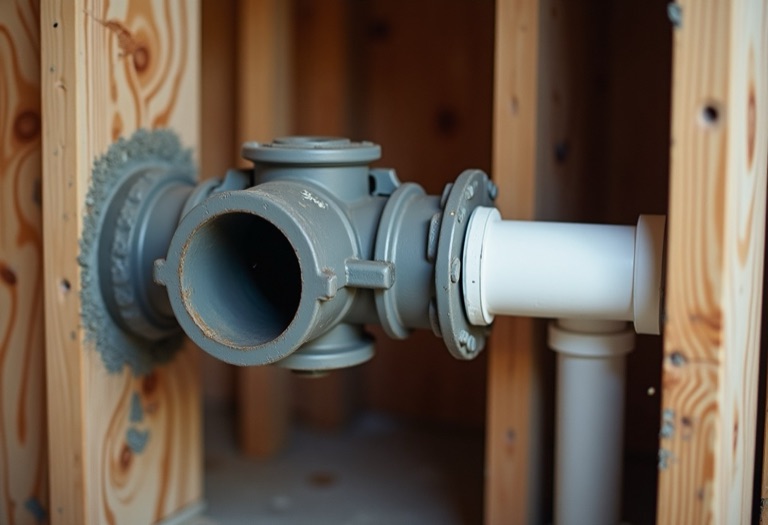
Cast iron pipe is a dense, thick-walled metal drain pipe used for soil, waste, and vent lines, especially in older homes and larger buildings. Modern hubless (no-hub) cast iron soil pipe is made to ASTM A888 and CISPI 301, while older hub-and-spigot pipe follows ASTM A74. It is prized for how well it deadens the sound of draining water and for being noncombustible.
Because it is heavy and joined with banded couplings rather than glue, cast iron takes more labor and more support hangers to install. That weight is also the source of its main advantage: mass that absorbs vibration.
What is PVC pipe?
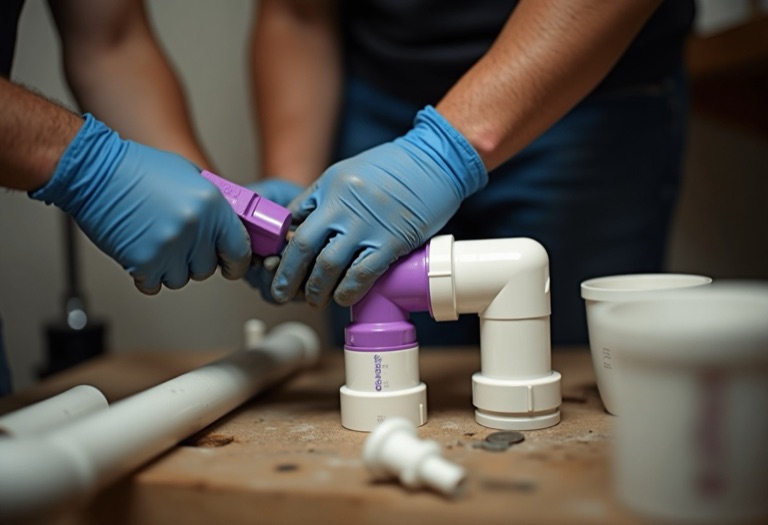
PVC (polyvinyl chloride) is a rigid white plastic pipe used widely for drain, waste, and vent lines. In DWV form it is made to ASTM D2665 and joined with a two-step solvent weld: purple primer, then PVC cement. It is light, cheap, corrosion-proof, and the most commonly stocked drain plastic across much of the United States.
PVC also comes in pressure grades for cold water and irrigation, which is a separate application from drain work. For the schedule and sizing breakdown, see our guide to PVC pipe schedules and sizes, and for how it stacks up against the other common drain plastic, our PVC vs ABS drain pipe comparison.
Cast iron vs PVC pipe: how do they compare head-to-head?
Cast iron leads on noise control and fire safety; PVC leads on cost, weight, install speed, and corrosion resistance. Lifespan is close, with PVC edging ahead because it does not rust. The table below lays out each factor side by side, and the stat cards pull the key figures.
| Factor | Cast iron | PVC |
|---|---|---|
| Material | Dense metal soil pipe | Rigid plastic (polyvinyl chloride) |
| Noise (sound transmission class) | STC 45 to 55, dampens sound | STC 25 to 30, transmits more noise |
| Typical lifespan | 50 to 75 years | 50 to 100+ years |
| Weight and install | Heavy, needs hangers and often two workers, banded couplings | Light, one-step solvent weld, DIY-friendly |
| Corrosion | Rusts and thins over decades, invert first | Does not rust; can crack if crushed or overheated |
| Fire rating | Noncombustible (ASTM E136), no firestop needed | Combustible; needs firestopping at penetrations |
| Code acceptance | ASTM A888, A74; required in some high-rise and commercial work | ASTM D2665; restricted in many plenums and some high-rises |
| Cost | Higher material and labor | Lower material and labor |
Is cast iron or PVC quieter?
Cast iron is clearly quieter. It carries a sound transmission class of roughly 45 to 55 versus about 25 to 30 for PVC, and each 10-point STC gain represents roughly a 50 percent drop in perceived noise. Because cast iron is dense and thick-walled, its mass absorbs the vibration of falling water instead of passing it into the walls of finished rooms.
Wrapping PVC stacks with sound insulation narrows the gap but does not close it; sources put insulated PVC at least 10 decibels louder than bare cast iron. This noise gap is the single biggest reason builders keep specifying cast iron for bedrooms, hotels, and stacked apartments. Before specifying cast iron for a multifamily project, budget planners may want to check cast iron pipe replacement costs by scope.
How long do cast iron vs PVC pipe last, and what about cost and weight?
PVC holds a slight lifespan edge and a large cost and weight edge. Cast iron drain pipe typically lasts 50 to 75 years before corrosion thins the invert of horizontal runs, while PVC commonly runs 50 to 100 years or more because it cannot rust. On price and labor, PVC wins decisively: it costs less per foot and a single worker can cut and glue it.
Weight drives much of the cost difference. Cast iron is several times heavier than the same size PVC, so it needs more hangers, more support, and often two people to set. That is why PVC replaced cast iron in most single-family homes after codes began accepting plastic DWV. Cast iron does resist crushing and physical damage better, which matters in exposed or high-traffic locations.
Which does the plumbing code allow, and how do fire ratings differ?
Both are code-recognized DWV materials, but fire behavior separates them. Cast iron is noncombustible under ASTM E136, so it will not burn or feed a fire and needs no firestopping at floor and wall penetrations. PVC is combustible, so penetrations usually require a firestop system, and standard PVC does not meet the flame-spread and smoke limits (25 and 50 under ASTM E84) that mechanical codes set for return-air plenums.
Adoption is local. Many high-rise, commercial, and multifamily specifications still call for cast iron for these fire and sound reasons, while most residential codes freely allow PVC DWV made to ASTM D2665. Confirm what your jurisdiction accepts before you buy, because using a disallowed material can fail inspection.
Can you connect cast iron pipe to PVC?
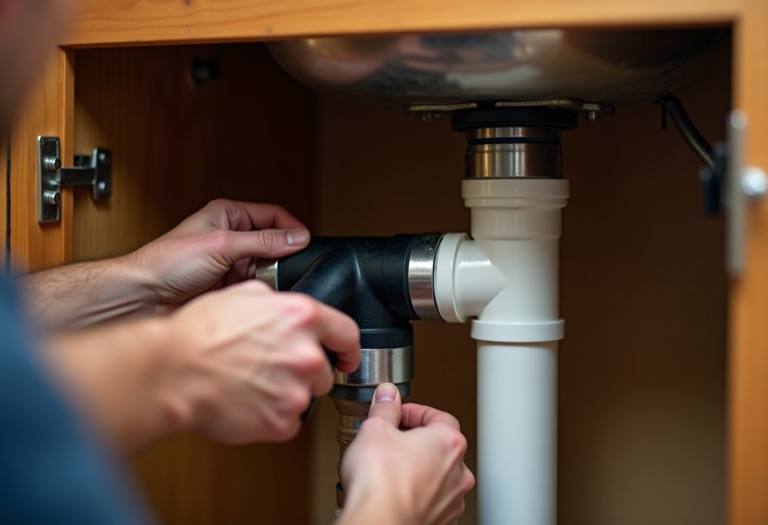
Yes, and it is one of the most common drain repairs. You cannot solvent-weld plastic to metal, so the joint is mechanical. The standard fix is a shielded no-hub coupling or a rubber transition coupling: a neoprene sleeve that slips over both pipe ends, tightened with stainless steel bands.
- Cut back the cast iron to sound metal with a snap cutter or reciprocating saw, and deburr both pipe ends.
- Slide the rubber coupling fully onto the cast iron, then onto the PVC, so both ends seat against the internal stop.
- Tighten the stainless bands to the coupling maker’s torque, and support both sides so the joint does not carry the pipe’s weight.
Shielded no-hub couplings follow CISPI 310 and ASTM C1277, and transition couplings for buried, mixed-material joints follow ASTM C1173. A plain unshielded rubber coupling (often called a Fernco) is fine for accessible above-ground or repair use where code allows; check local rules for concealed and underground joints.
When is cast iron still used instead of PVC?
Cast iron is still chosen where quiet and fire safety outrank cost. That means drain stacks in hotels, condos, and apartments where residents should not hear the unit above flushing, and high-rise or plenum runs where a noncombustible pipe saves the expense and risk of firestopping every penetration. Some commercial and institutional specs mandate it outright.
For a typical house repair or remodel, PVC is almost always the sensible pick: cheaper, lighter, and easier to work. A frequent middle path is patching an existing cast iron system with PVC and joining the two with a shielded coupling, which keeps the quiet cast iron stack while making the repair fast and affordable.
How we sourced this
Material standards (ASTM A888 and CISPI 301 for hubless cast iron, ASTM A74 for hub-and-spigot, ASTM D2665 for PVC DWV, CISPI 310 and ASTM C1277 for shielded couplings, and ASTM C1173 for transition couplings) come from ASTM specification listings and UpCodes. The noncombustible classification (ASTM E136) and the plenum flame and smoke limits (25 and 50 under ASTM E84) come from the Cast Iron Soil Pipe Institute and manufacturer fire-resistive documentation. Sound transmission class figures and the decibel comparison are drawn from cast iron industry acoustic data and manufacturer material; because published STC values vary by pipe size, fill, and test method, we report them as ranges rather than single numbers. Lifespan and cost are reported as general market tendencies, since both vary by water chemistry, soil, and region. Retailer and contractor blog posts were read for context but not cited as figures.
Frequently asked questions
Is cast iron or PVC pipe better for drains?
Neither wins outright. Cast iron is quieter, noncombustible, and long-proven, which is why it holds on in high-rises and finished living space. PVC is far cheaper, lighter, faster to install, and immune to rust. For most single-family repairs PVC is the practical pick; for sound control and fire safety in multifamily or commercial work, cast iron still earns its place.
Is cast iron pipe quieter than PVC?
Yes. Cast iron soil pipe carries a sound transmission class of roughly 45 to 55, while PVC drain pipe sits around 25 to 30. Cast iron is dense and thick-walled, so its mass absorbs the vibration of falling water instead of passing it into walls. Wrapping PVC with sound insulation narrows the gap but does not close it.
How long does cast iron pipe last compared to PVC?
Cast iron drain pipe typically lasts 50 to 75 years, sometimes longer, before corrosion thins the bottom of horizontal runs. PVC commonly delivers 50 to 100 years or more because it does not rust or corrode. Both figures depend on installation quality, water chemistry, and whether the pipe is protected from crushing or physical damage.
Can you connect cast iron pipe to PVC?
Yes, and it is a routine repair. Use a shielded no-hub coupling, a neoprene sleeve with a stainless steel band that clamps over both pipe ends, or a rubber transition coupling (often called a Fernco). For buried runs, use a transition coupling made to ASTM C1173. Do not try to solvent-weld PVC directly to cast iron.
Why do builders still use cast iron instead of PVC?
Sound and fire. Cast iron is much quieter, so it is favored for drain stacks in multifamily buildings, hotels, and finished rooms. It is also noncombustible per ASTM E136, so it can run through return-air plenums and needs no firestopping at floor penetrations, unlike combustible plastic. Some high-rise and commercial codes still require it.
Is PVC cheaper to install than cast iron?
Yes, usually by a wide margin. PVC costs less per foot, weighs a fraction as much, and joins with one-step solvent cement that a single worker can handle. Cast iron is heavy, often needs two people plus more hangers, and joints are made with banded couplings. Lower material and labor cost is the main reason PVC replaced cast iron in most homes.
Does cast iron pipe corrode or rust?
Yes. Cast iron corrodes slowly from the inside and outside over decades, and the bottom (invert) of horizontal drain runs thins first because waste and water sit there. Aggressive soil or water chemistry speeds it up. PVC does not rust or corrode at all, though it can crack if crushed, overheated, or exposed to long-term UV without protection.
What ASTM standards cover cast iron and PVC drain pipe?
Hubless (no-hub) cast iron soil pipe and fittings are made to ASTM A888 and CISPI 301, and hub-and-spigot cast iron to ASTM A74. PVC drain, waste, and vent pipe is made to ASTM D2665. Shielded no-hub couplings follow CISPI 310 and ASTM C1277, while transition couplings between different materials follow ASTM C1173.


