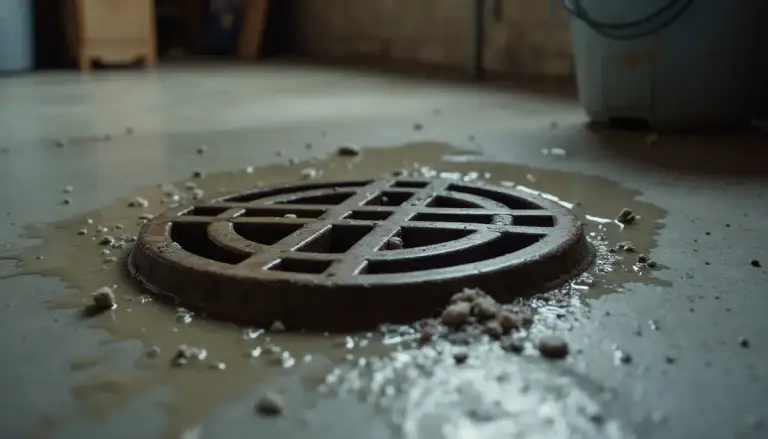
Washing Machine Smells Like Sewer: Find the Cause by When
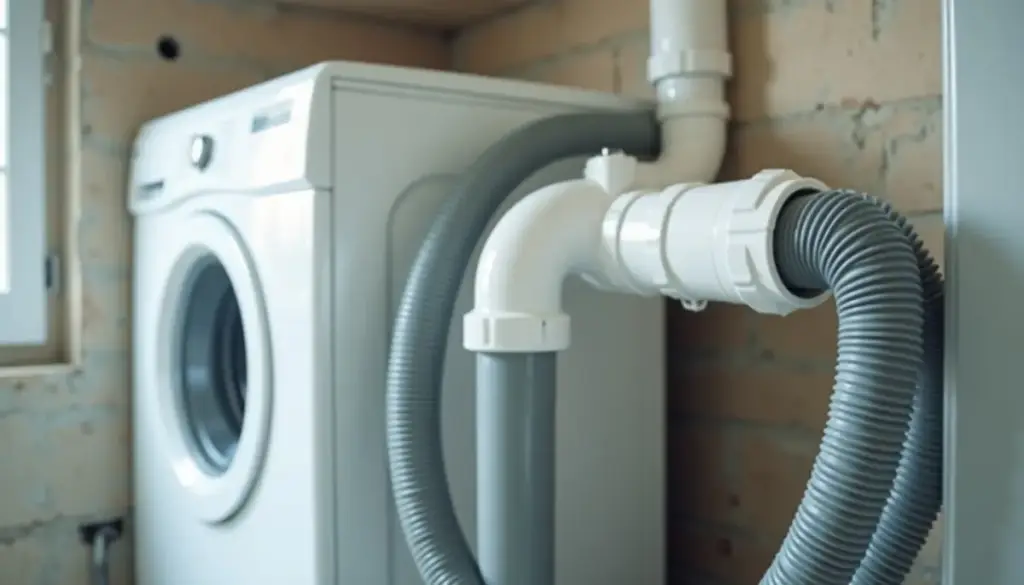
A washing machine that smells like sewer has either a plumbing fault (a siphoned or dry 2 in trap, a hose pushed past the maker’s limit, a blocked vent) or residue inside the machine. When the smell shows up tells you which one to test first.
When does your washer smell like sewer? Find your row
Timing narrows the cause to one or two parts, because each fault only shows itself at certain points in the cycle. Numbers come from maker documents and the 2024 International Plumbing Code (IPC); the tests are our own sort built on them.
| Smell shows up | Likely cause | 5-minute test | Fix, with dimensions |
|---|---|---|---|
| Only while draining | Hose too deep in the standpipe, so drained water siphons back. Samsung names this cause for any sulfur or sewage odor. | Pull the hose. Measure from the tip to the point that sat at the rim. | Reset to your maker’s limit (table below), clean the hose end, zip tie it. Never seal it. |
| At rest, washer idle | No water seal in the trap, a failed air admittance valve, or a dry floor drain close by. | Pour 1 quart into the standpipe and 1 quart into any floor drain. Wait 5 minutes. | A working trap holds 2 to 4 in of water. If the seal keeps vanishing, go to the gurgling row. |
| Only after the washer sits unused | Evaporated trap seal, or trapped moisture in the tub, gasket or pump filter. | Sniff the open drum, then the standpipe rim. Stronger at the rim points to the trap. | Trap: 1 quart before and after a trip. Machine: lid or door open between uses, pump filter monthly on front loaders. |
| In the wet laundry | Detergent and softener residue, mildew, or drain water siphoning into the tub. | Start a fill, pause it, and watch the water for 5 minutes. A falling level means siphoning. | Hose end at your maker’s minimum height (24 to 39 in, table below), then one cleaning cycle. |
| With gurgling | Blocked, missing or too-distant vent, so the discharge pulls the seal out of the trap. | Pour 2 gallons in 12 seconds, which matches GE’s 10 gpm front-load pump rate. Listen at the nearest sink or tub. | Vent within 8 ft of a 2 in trap at 1/4 in per ft. Where allowed, an AAV at least 4 in above the drain. |
If water climbs to the rim during the 2 gallon pour, the problem is a clog before it is a vent, and IPC 802.4.3 requires rodding access for exactly that job.
How do you tell the washer from the drain in 5 minutes?
Block the drain’s path into the room and see whether the smell stays. You need a bucket, a damp rag and a quart of water.
- Turn the washer off. Pull the hose from the standpipe and rest the tip in a bucket, since the hose still holds water.
- Sniff three spots in order: the drum and door gasket, the hose tip, the standpipe rim. Note the strongest.
- Pour 1 quart slowly into the standpipe to restore the seal.
- Stuff the damp rag into the rim, leave the washer door open and wait 5 minutes. Take the rag out afterward.
A room that clears with the pipe plugged points to plumbing: start with the trap and vent. A drum or hose tip that still smells points to the machine: start with the cleaning steps below. When both smell, fix the plumbing first, because Samsung’s odor guide says a too-deep hose siphons drained water back into the washer, and that would undo any cleaning cycle.
Why a quart: a 2 in pipe holds 3.14 cubic inches per inch of depth, so a 4 in seal on both legs of the trap is about 25 cubic inches, ignoring the bend. One quart is 57.75 cubic inches, and the excess drains away.
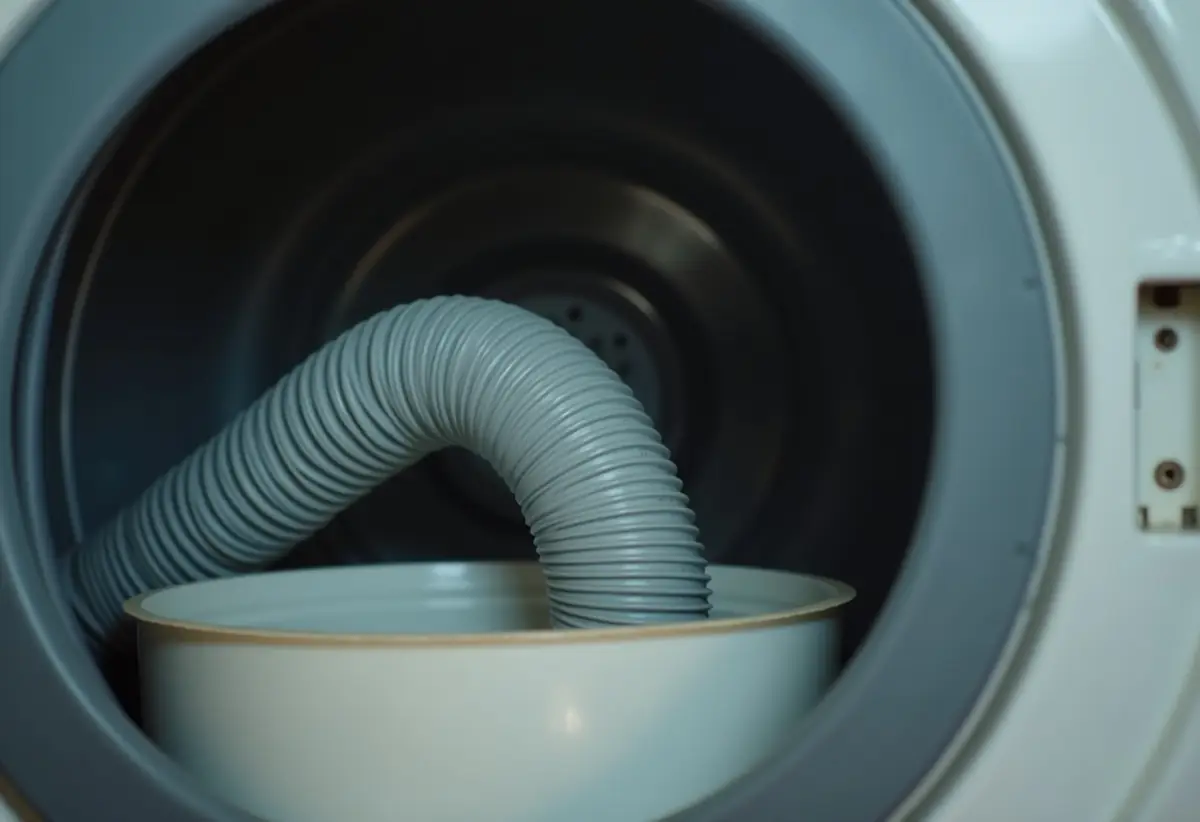
How deep can the drain hose go? Four makers, four limits
No single hose depth satisfies every maker, so use the number printed for your model. A 4.5 in depth meets Whirlpool’s limit but misses Samsung’s 6 in minimum, while 6 in breaks both Whirlpool’s and GE’s top-load limits.
| Maker and document | Hose inside the standpipe | Height of standpipe or hose end | Stated reason |
|---|---|---|---|
| Whirlpool guide W10240509C (WTW5700X family) | 4.5 in maximum | 39 in minimum, 96 in maximum | “To avoid siphoning” |
| GE Appliances drain height page | 5 in top load, 7 in front load | 30 in top load, 24 in front load, under 8 ft | Washer fills and drains at once |
| Samsung install guide | 6 in minimum, 8 in maximum | 39 in minimum, 96 in maximum | Siphoning below 39 in, shown as error 4C |
| LG WM3700H_A install sheet | 8 in maximum | 29 in minimum, 96 in maximum, 35 to 47 in normal | “Siphoning, odors, or improper draining” |
Samsung’s odor guide disagrees with itself: the sewage fix allows 8 in, and the prevention list on the same page caps depth at 6 in. Set a Samsung hose at 6 in, which meets every Samsung figure on hose depth. Its will-not-drain guide also lists an 18 in minimum height, so trust the 39 in install figure. On LG top loaders, the drain hose page sets the elbow bracket within 4 in of the hose end and warns that a longer tail could spread mold into the washer.
What does a washer trap need to keep its seal, in inches?
A washer trap needs 2 to 4 in of standing water, a 2 in trap and fixture drain, and a vent that protects both. IPC 1002.4 sets the seal depth, and IPC 406.2 sets the 2 in size and requires that drain to join a 3 in or larger branch or stack. Our washing machine standpipe height figures cover the 18 to 42 in rise above the weir under IPC 802.4.3.
Check for a 1-1/2 in drain on an older house. GE’s hose page still accepts that inside diameter with pumps rated at 10 gpm on front loaders and 15 to 17 gpm on top loaders, but Whirlpool asks for a 2 in standpipe and 17 gpm of carry-away, and code requires 2 in. Our washing machine drain explainer shows how the parts connect if you open the wall to upsize.
The vent decides whether a seal survives the discharge. IPC 901.2 limits the pressure swing on a trap to 1 in of water column, which is a thin margin on a 2 in seal. IPC Table 909.1 puts the vent within 8 ft of a 2 in trap at 1/4 in per foot of slope. A trap that drops straight into the floor with no vent may be an S-trap, which IPC 1002.3 prohibits.
An air admittance valve can stand in for a missing vent where your building department accepts one. IPC 918.4 places an individual or branch valve at least 4 in above the fixture drain it vents, 918.5 requires access and airflow, and 918.1 calls for ASSE 1051. At least one vent must still reach open air under 918.7. A valve that smells has failed, so replace it instead of sealing around it. Local amendments vary, and Uniform Plumbing Code areas can be stricter.
When you call a plumber, ask for a trap and vent check on the laundry branch, not only a drain cleaning. Ask for the trap-to-vent distance against Table 909.1, the trap size, and whether an AAV is legal locally. We found no primary-source price for this work, so compare written scopes.
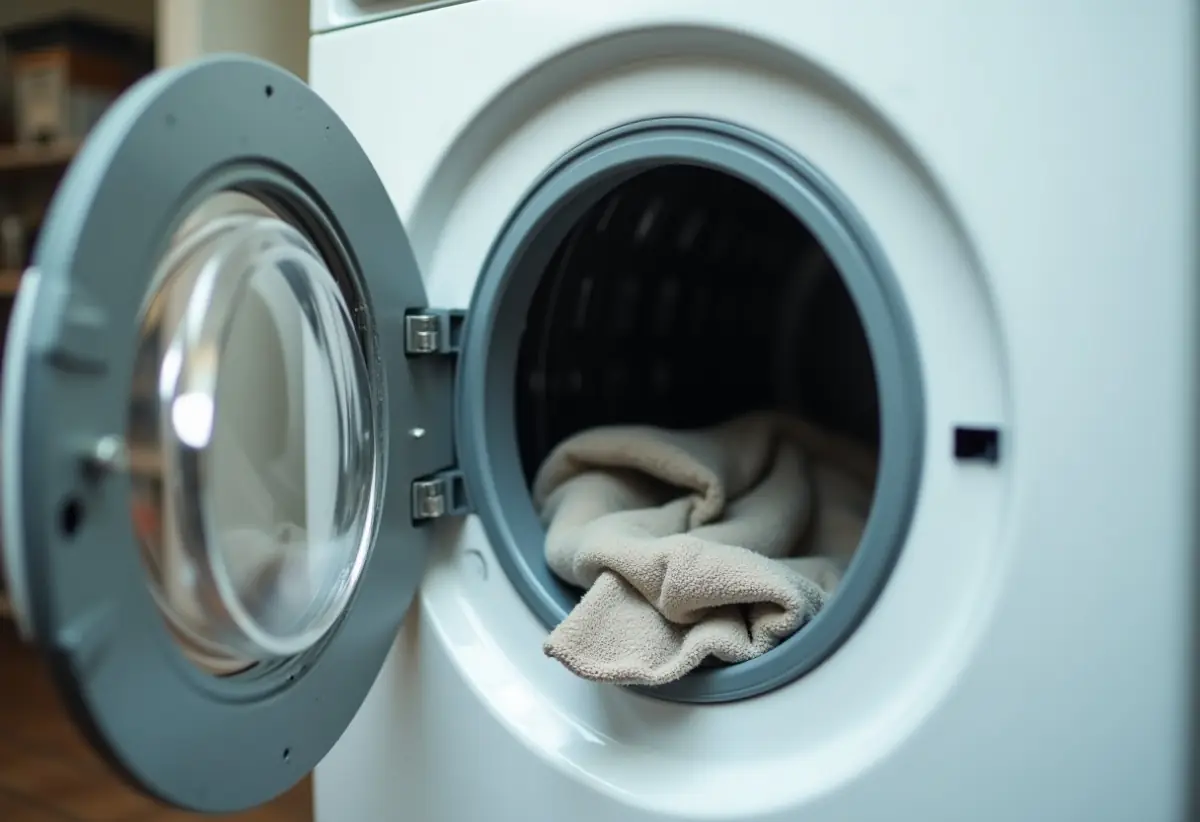
Which cleaning cycle clears a machine smell, by brand?
Run the cycle your maker names, with the cleaner it names, once the split test points at the machine.
- Whirlpool: its odor procedure runs Clean Washer monthly or every 30 cycles, whichever comes first. Put one affresh tablet in the bottom of the empty basket, never the dispenser, or use 1 cup (236 mL) of liquid chlorine bleach. If you interrupt the cycle, follow it with Rinse & Spin.
- LG: the odor page asks for Tub Clean once a month and says service is required if odor continues after multiple runs. The top-load page goes further: 3 cycles back to back with a commercial cleaner, then weekly until the odor fades, using 2 tablespoons of detergent per load, or 1 if concentrated.
- Samsung: for mildew, run Spin-only empty, fill the detergent compartment to the max line with liquid chlorine bleach (not the bleach compartment), start Self Clean at once, wipe the tub, then Rinse+Spin. Self Clean takes about 1 hour on top loaders and 4 hours on front loaders. A suds check is simple: run an empty cycle with no additives, and suds mean residue remains.
Front-load pump filters come next. Samsung’s cleaning guide says monthly or about every 40 washes. Wait 1 hour after any hot cycle, open the lower panel, set an oil drain pan under the small rubber hose, twist off its cap and drain. Turn the filter counter-clockwise to remove it, scrub it with a soft brush, check the impeller, and turn it clockwise until it locks vertical. LG warns that a clogged filter leaves standing water in the drum, which turns into odor.
When should a laundry room sewer smell send you outside?
Leave and ventilate if the odor is strong and steady, or if anyone has a headache or nausea. A faint whiff is a repair job: ATSDR puts the hydrogen sulfide odor threshold at about 0.0005 to 0.3 ppm, and OSHA’s table lists 0.01 to 1.5 ppm. Noses find this gas far below harmful levels.
A fading smell is not proof of safety. OSHA lists nausea and headaches with prolonged exposure at 2 to 5 ppm, and loss of smell after 2 to 15 minutes at 100 ppm. Our sewer gas guide covers symptoms and methane risk. Sewage rising at the standpipe rim or a floor drain means a blocked line, so stop running the washer and call a plumber that day.
Frequently asked questions
Can I tape the washer hose into the standpipe to block the smell?
No. LG’s WM3700H_A sheet says never to create an airtight seal, Samsung says the connection must not be airtight, and IPC 406.2 requires an air break. Without that gap, tub water can siphon out. Repair the trap or vent that is letting gas through instead.
Will bleach get rid of a sewer smell in my washer?
Only when the source sits inside the machine. Whirlpool allows 1 cup of liquid chlorine bleach in a Clean Washer cycle, and Samsung uses bleach in Self Clean for mildew. Neither step refills a siphoned trap or opens a blocked vent, so a drain smell returns.
Do top-load washers have a pump filter to clean?
Samsung states that its top-load washers have no pump filter, while its front loaders need cleaning monthly or about every 40 washes. Other brands differ, so check the manual for your model number before hunting for an access panel at the base of a top loader.
Can a washer standpipe trap dry out on its own?
Yes. IPC 1002.4.1 addresses trap seals subject to evaporation and lists protection methods such as trap primers. A standpipe that sits idle during a long absence can lose its seal, and 1 quart of water, about 18 in of 2 in pipe, refills it.
Is a rotten egg smell from a washer the same fault as a sewage smell?
Samsung treats them as one problem and blames a hose inserted too far down the standpipe. ATSDR says hydrogen sulfide smells like rotten eggs. A mildew or musty smell follows a separate Samsung procedure using bleach and Self Clean, so name the smell before choosing a fix.
How we sourced this
We read the Whirlpool W10240509C dimension guide, LG’s WM3700H_A install sheet and LG odor and drain hose pages, Samsung’s odor, install, cleaning and will-not-drain guides, GE’s drain height and hose pages, Whirlpool’s odor procedure, IPC 2024 Chapters 4, 8, 9 and 10 on UpCodes, ATSDR’s hydrogen sulfide ToxFAQs and OSHA’s hazards page. We computed the pour rate from GE’s pump figures and the quart from pipe geometry. The timing matrix and tests are our own reasoning from these documents, not a maker procedure, and The Plumbing Brief did not field-test them. UPC text and repair prices could not be confirmed from primary sources and were left out. Manuals vary by model, so your own manual outranks this table.