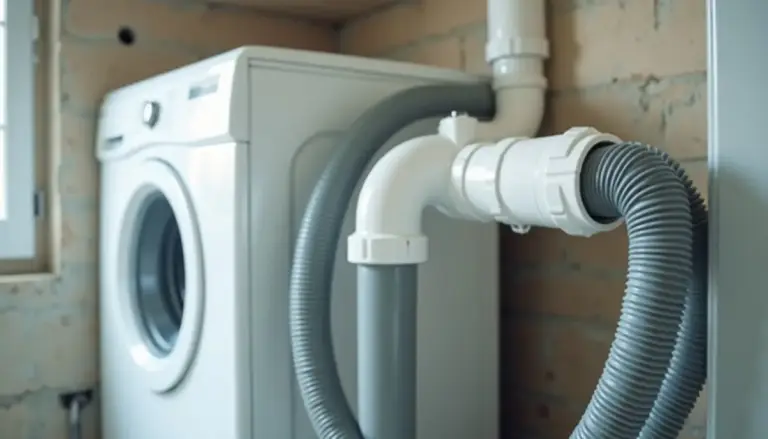
Basement Floor Drain Backing Up: First Steps and Causes
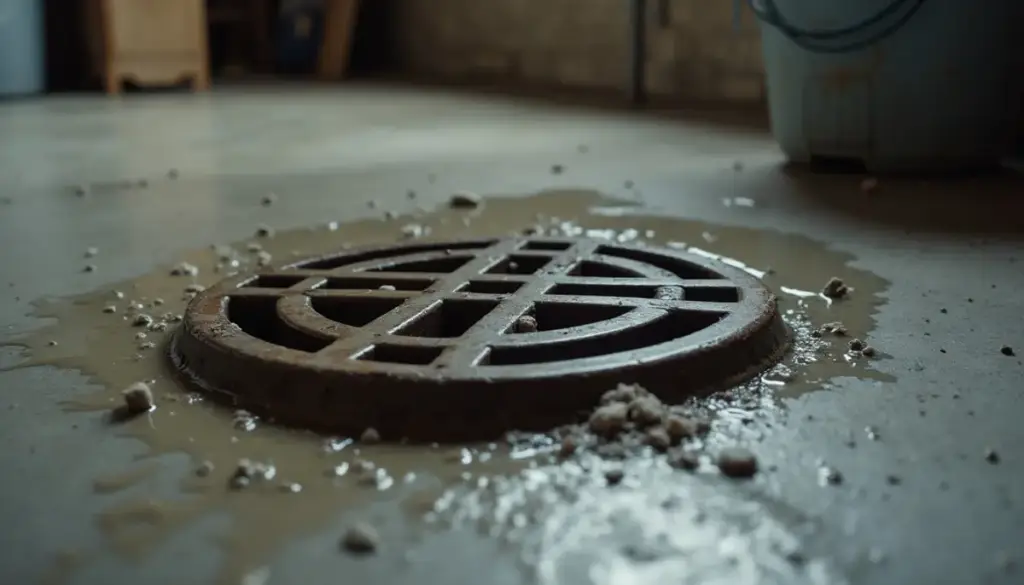
A basement floor drain backing up means water cannot leave through the sewer line, so it surfaces at the lowest opening in the house. Stop using water, do not flush, cut power if water is standing, then match when it rises to 1 of the 6 timing patterns below.
When does your floor drain back up? The timing points to the cause
The moment the water rises tells you where the restriction sits, because the floor drain is usually the lowest opening on the house drain and any blockage downstream shows there first. These 6 rows sort the patterns.
| When it backs up | Likely cause | 2-minute test | Who to call, who pays |
|---|---|---|---|
| Only when the washer drains | Partial clog in the house drain or lateral. The washer pump sends a burst the narrowed pipe cannot pass. | Stop the washer. Watch the grate for 2 minutes. Water that falls slowly means narrowed, not sealed. | Drain cleaner. You pay: insurers treat maintenance as the owner’s job. |
| When a toilet flushes upstairs | Main line clog beyond the point where the toilet stack joins the house drain. | Do not flush again. Check the main cleanout from a dry spot. Standing water there means the clog is at or past it. | City sewer department first, then a drain cleaner. The lateral is usually your bill. |
| Only in heavy rain | Public sewer surcharge, or downspouts and footing drains feeding the house drain. | Ask 2 neighbors whether their drains rose. Check where your downspouts end and whether the sump pump is running. | City sewer department. Clean-up usually stays with you unless the utility was negligent. |
| All the time, nothing running | Roots, a settled or broken pipe, or water feeding in from a leak or groundwater. | Tape the waterline. Check it after 2 minutes. Rising means a feed. Falling slowly means a partial block. | Drain cleaner with a camera. You pay, including any repair on the private line. |
| When the street floods | Surface flooding and sewer surcharge together. | From the stairs only: is water coming through walls and window wells, or only up the grate? | Electric utility if the panel is in the wet area. Flood policy, not the sewer backup rider. |
| Never, but it smells | Evaporated trap. This is not a backup at all. | Pour 1 bucket of water into the drain. The smell should fade. | Nobody yet. A plumber only if you want a trap primer fitted. |
What this means for you: the first 2 rows are private plumbing, so the job is clearing a line, and our guide to clearing a main sewer line clog covers the methods and pricing to ask about. Rows 3 and 5 start outside your pipes, so snaking your line will not fix them.
Four questions that decide who you call first
Ask these 4 questions in order, from a dry spot, because the flood and storm cases change who can help and whether the basement is safe to enter.
Question 3 is the one that saves money. In Meriden, Connecticut, the sewer division warns that calling a plumber before the utility can leave you paying the plumber’s fee even when the blockage turns out to be in the public main. Your city’s rule may differ, so ask on the phone who checks the main and where your side begins.
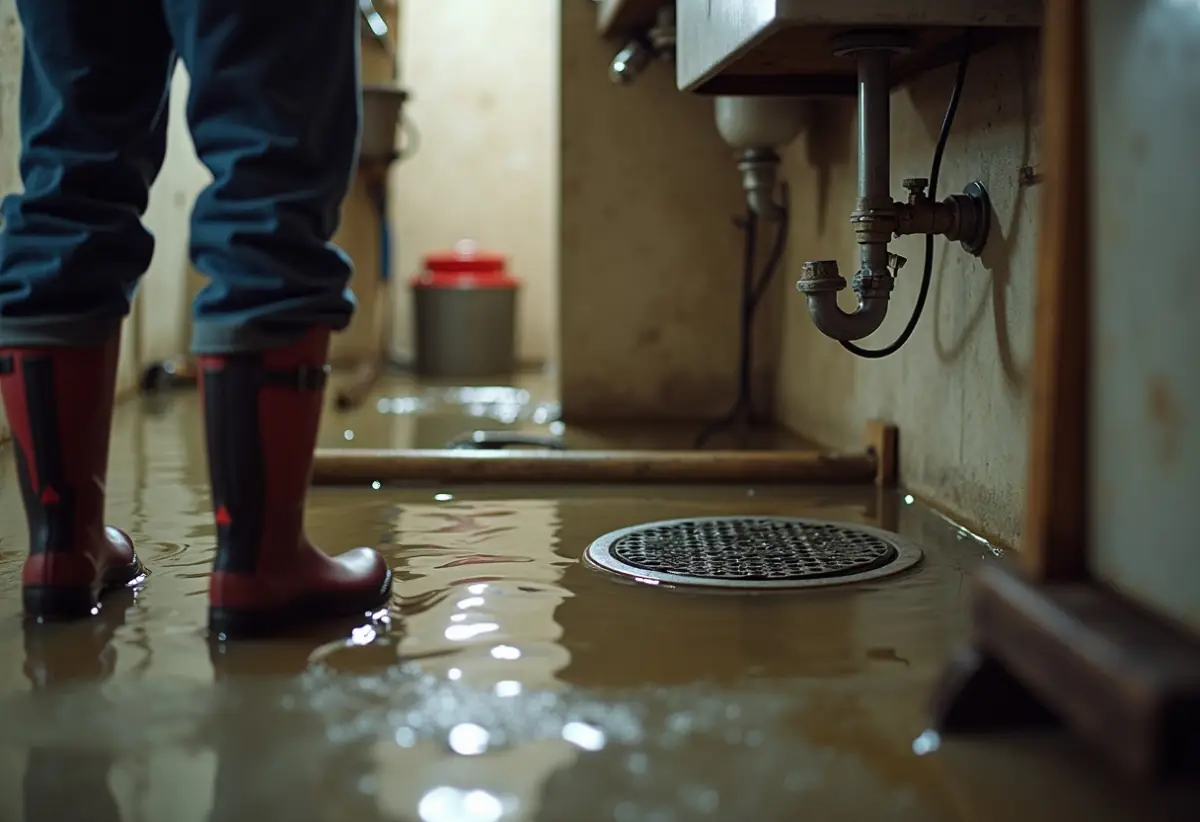
What to do in the first 15 minutes with water on the basement floor
Stop adding water and make the room safe before you diagnose anything. Most of this order comes from the Connecticut Department of Public Health fact sheet Sewage Back-Ups: Information for Residents (November 2008), a copy of which the Virginia Department of Health hosts.
- Stop the water. The sheet’s first instruction is not to flush toilets. Shut off the washer and dishwasher too, because every fixture drains toward the same pipe.
- Keep children and pets out. The sheet says never to touch raw sewage with bare hands.
- Deal with electricity before you step in. The instruction is to turn off the power if there is standing water, or if wires could touch water or soggy materials. If the panel is in the wet area, do not wade to it. Form DC-364, the Oakland County, Michigan flood guideline posted by Farmington Hills, says to have the utility service department shut off the electricity and gas line if possible.
- Photograph before moving anything. Take pictures and video of the waterline and belongings, and list what you throw away, for a claim.
- Call the sewer department. On public sewer, ring public works or the water pollution control authority. On septic, call the local health department instead.
- Check the cleanout from a dry spot, using the limits in the next section.
- Call your insurer as soon as it is safe. Connecticut’s sheet notes that insurers may have clean-up companies on contract.
Hold off on the furnace blower and whole-house air conditioning: the sheet allows them only if wastewater did not get into the ducts. Keep water off until a crew clears the line or the sewer department says the surge has passed, then test with 1 small sink before anything larger.
How a cleanout test tells house side from street side
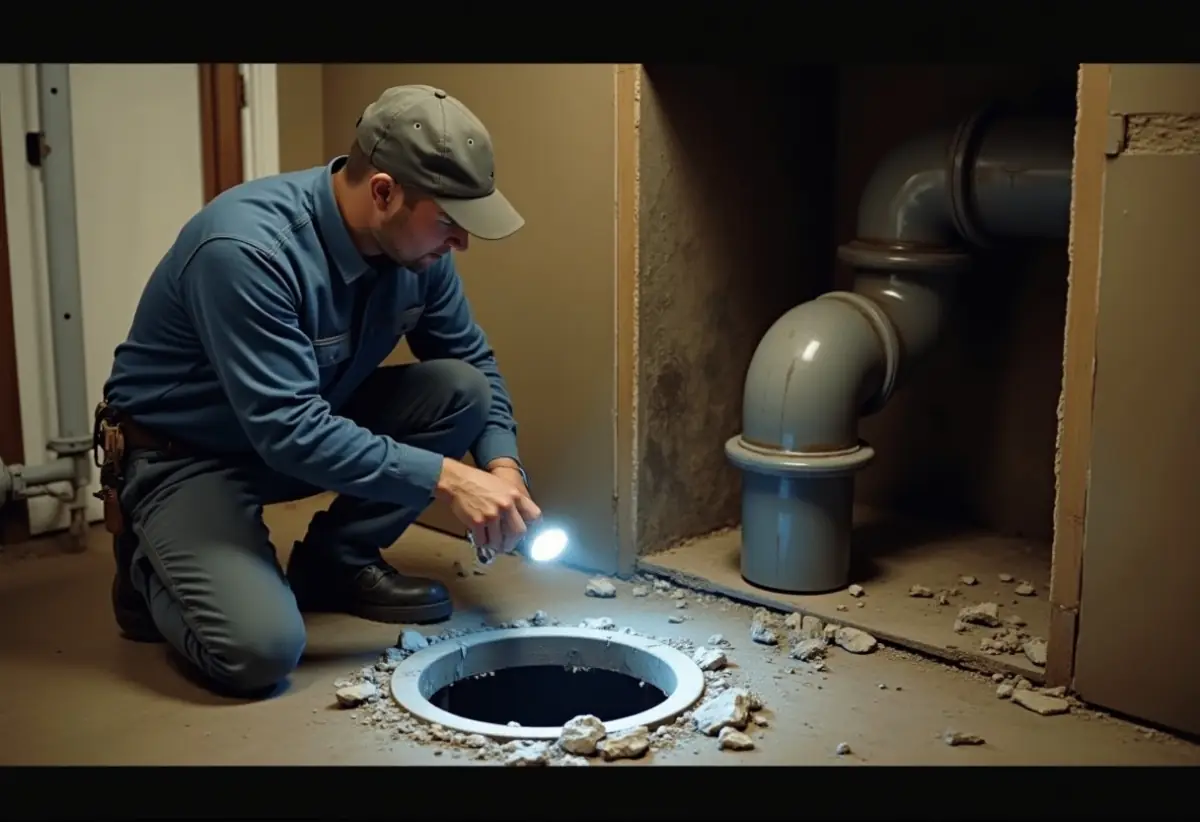
What you see inside the main cleanout locates the blockage relative to that fitting. Calgary’s utility says the cleanout is usually in the basement or on the lowest level, and our guide to finding a sewer line cleanout shows the 3 to 4 inch capped fitting to look for, indoors and out.
- Water standing in the cleanout: the line is full at that point, so the clog is there or farther toward the street, or the public main is surcharged.
- Cleanout empty, floor drain still rising: the blockage is upstream of the cleanout, in the house drain under the slab, or the water is not sewer water at all.
These 3 limits apply. Do not open a floor-level cap with water on the floor, because the opening sits at or below the level of the backup. Do not open any cap during a storm surge, when the line can hold sewage under pressure. Loosen a cap that sits above the water slowly, stop at the first seep, and leave a cap that will not move for the crew. If you cannot check safely, ask the crew to open it on arrival and show you the camera footage of where the line stopped.

Why heavy rain pushes water up a floor drain that works in dry weather
Storm flow fills the public sewer until wastewater has nowhere to go but the lowest connected openings. The Village of Palatine, Illinois, says on its basement flooding page that heavy rainfall can exceed the capacity of the sewer system. In a combined sewer system, EPA says one pipe collects rainwater runoff, domestic sewage and industrial wastewater, so rain reaches it directly.
Before blaming the city, rule out your own roof. Palatine warns that downspouts connected to the house drain or sewer can flood a basement, and that footing drains that stop working let ground water collect around the foundation.
Palatine lists 3 structural protections, with limits:
- Check valve: closes automatically when flow in the sewer line reverses. Our sewer backwater valve explainer covers valve types and upkeep. Utah’s Ashley Valley Water and Sewer Improvement District summarizes the code trigger as fixtures on a floor below the next upstream manhole. Philadelphia’s Basement Backup Protection Program leaves valve maintenance with the homeowner.
- Standpipe: holds water back only where the flooding would have been several inches deep.
- Overhead sewer: removes the direct basement connection, but its pump will not run in a power outage.
With a valve closed, your own wastewater has nowhere to go, so water use stays off until the storm passes.
A dry trap is not a backup: sewer smell with no water
A floor drain that smells but never rises has probably lost its trap seal to evaporation, and 1 bucket of water usually restores it. The trap is the bend under the grate that holds water as a gas barrier, so water sitting below the grate at a steady level is normal, while water climbing toward it is the warning sign.
If the smell keeps returning, ask a plumber to price a trap primer, a small device tied to a nearby water line that tops the trap up automatically. Model plumbing codes address traps that lose their seal this way, and local amendments vary, so ask which version your inspector enforces. If 1 bucket does not clear the smell at all, the source is somewhere else, so ask for a smoke test.
Who pays for a floor drain backup: you, the city or your insurer?
You usually pay, unless you hold the right endorsement or the utility was at fault. Meriden makes any lateral problem that keeps your flow from reaching the public main the owner’s responsibility, including the wye connection. The Cherry Hills sewer district goes further: even a backup from the main, absent utility negligence, leaves the homeowner with the clean-up.
Home insurance agency Openly says homeowners insurance typically does not cover sewer backup without a sewer backup endorsement, also called a rider. Three carve-outs matter on the day: gradual seepage is hard to claim, maintenance issues count as your job, and flood damage needs its own coverage, so row 5 of the table is a different claim from row 3. Check your declarations page for the rider’s dollar limit before a crew starts work.
Cleaning up: Connecticut’s rules for what to discard and disinfect
Treat anything porous that sewage touched as waste, then wash and disinfect what remains, in that order. Once the line is clear and water is out, the Connecticut sheet sets these steps:
- Wear eye protection, gloves and boots, cover cuts, and wash your hands after cleaning. Never mix bleach with ammonia, because the sheet warns it makes a deadly gas.
- Discard contaminated carpets and pads, mattresses, stuffed toys, cardboard, cosmetics, food and medicines.
- Cut wallboard or paneling out to several inches above any water line, then replace it.
- Wash with detergent first, or the disinfectant will not work. Then apply a product labeled bactericidal, or 1 part bleach to 9 parts water, for 15 to 20 minutes, and air-dry.
The same sheet favors a professional when ductwork was contaminated, or when sewage has sat over 24 hours in a finished living space. Connecticut does not certify these companies, so ask the contractor to follow IICRC S500, the water damage standard the sheet names. For prevention after the clean-up, our broader guide to a full sewer backup picks up where this page stops.
How we sourced this
Opened directly: the Connecticut Department of Public Health sheet (2008, the only health guidance we opened), the Village of Palatine, Cherry Hills, Calgary, Philadelphia, Ashley Valley and EPA pages, Oakland County Form DC-364 and the Openly article. Meriden’s page blocks automated readers, so we read a web archive copy from October 2025. The triage table’s tests and the cleanout logic are our own reasoning from how drain lines work, not quotes from a document. Left out: IICRC water category definitions and plumbing code section numbers, because we did not open the S500 standard or the code text for this page; repair prices; and sewer ownership rules for any city not named.
Frequently asked questions
Should I plug a backing up floor drain with a test plug?
Not as an emergency fix. The Village of Palatine, Illinois, says it is not a good idea to plug the floor drain when the sewer surcharges, and says a standpipe helps only against flooding several inches deep. Ask your city sewer department what it recommends for your street before trying either one.
Can I get sick from a floor drain backup?
Yes. The Connecticut Department of Public Health’s 2008 sheet names gastrointestinal illness from accidental ingestion and skin infections from handling contaminated materials as the main risks. Cover any cuts, wash hands right after cleaning, and contact a doctor if nausea, diarrhea or vomiting follow exposure to sewage.
Will a backwater valve stop a backup from my own clogged line?
No. The valve stops water arriving from the public sewer, but house wastewater still has to leave through the same pipe. With a clogged lateral, or with the flap closed during a storm, water from your own fixtures can surface at the floor drain, so cut water use until the line is clear.
Can I run the washing machine once the drain stops rising?
Not until the cause is known. A falling level can mean a clog is passing a trickle or a storm surge has eased, and neither proves the line is clear. Run 1 small sink for 2 minutes and watch the grate, then move to larger loads only if the level holds.