Rinnai Code 11: What It Means and How to Fix It
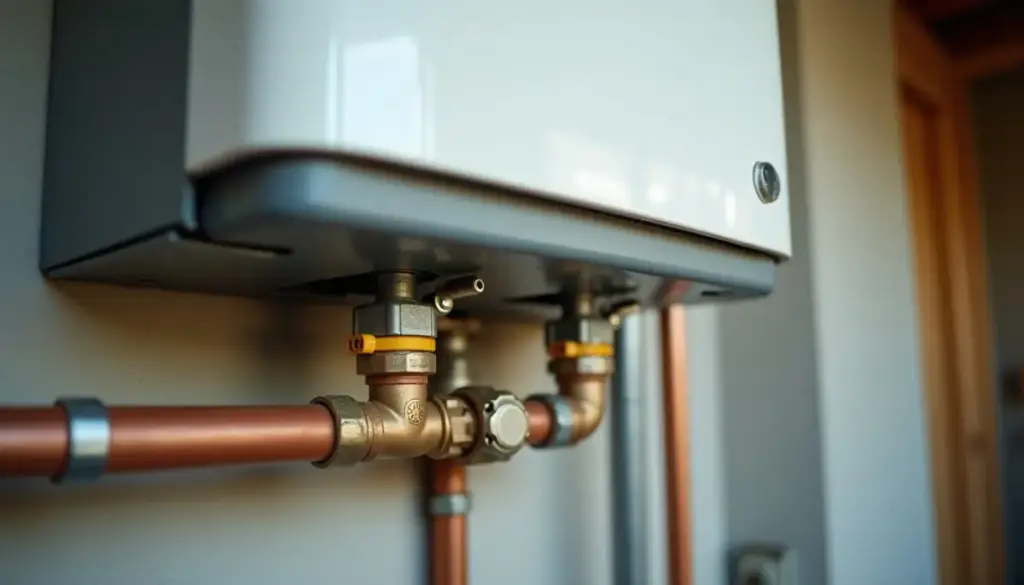
Rinnai code 11 means No Ignition: the heater tried to light its burner and failed. There is no reset button. Confirm the gas valves are open and a propane tank has gas, retry twice at most, then have a licensed gas pro read inlet pressure.
What does Rinnai code 11 mean on RU, RUR, RL and V series heaters?
Code 11 means “No Ignition” in every Rinnai document read for this page, and the RU, RUR and V series manuals add “Heater Not Turning On”. Rinnai’s diagnostic guide, form 100000652 applies it to all SENSEI, SENSEI RX/CX and non-SENSEI models. The meaning holds across families; the gas pressure limits do not. If the display shows 12 instead, the steps change, because Rinnai titles that code “Flame Failure”: see our Rinnai code 12 guide.
A flame does not rule the code out. Page 16 of the guide says a flame that shows in the view glass and then goes out points to the flame sensing circuit or the gas system. Technical Bulletin 166 (December 2019, listed in the documents on Rinnai’s product pages) says SENSEI heaters, the RU and RUR N-series line, once showed code 11 after 3 ignition attempts, and that updated software makes 18 to purge residual air from the gas line.
Is there a Rinnai code 11 reset button?
No. The controller drawn on page 72 of the RUR manual has four buttons, Up, Down, Priority and On/Off, and the 4 pages on code 11 in guide 100000652 give no reset step. The “press On/Off twice” advice copied around the web is Rinnai’s remedy for code 03, a power interruption during bath fill, on page 9 of that guide.
Cutting power is not Rinnai’s code 11 fix either. The RU manual prescribes resetting the main power supply for other codes, such as 15 and 54, and warns that the temperature controller does not control electrical power. A power cycle means the cord or the breaker, not On/Off.
The guide does describe starting a new ignition cycle by initiating hot water flow. So the owner retry is 3 moves: press On/Off to turn the heater off, press it again, then open a hot tap. Stop after 2 failed tries. That limit is this page’s rule, not a Rinnai figure, but an updated SENSEI has already made 18 attempts before it shows 11, so the 5 to 10 cycles some pages suggest add little.
Pull the history for the tech: turn the heater off, hold On/Off for 2 seconds, then press Up with it, and the last 9 codes flash in turn. Repeat the press to exit. If you smell gas, skip all of this and leave the building first. The RU manual says not to light any appliance or touch an electrical switch, so call the gas supplier from a neighbor’s phone, or 911 from outside if you cannot reach it. These heaters have no pilot, so never try to light the burner by hand.
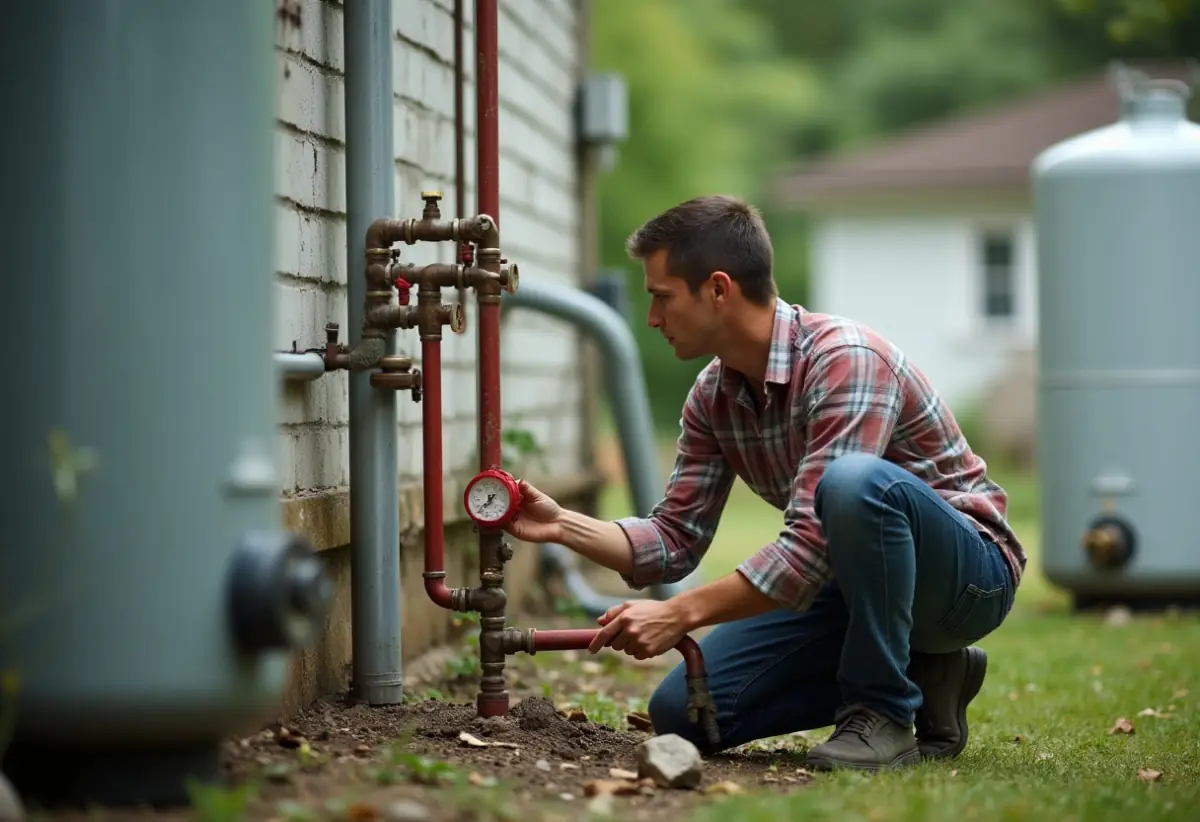
Which Rinnai code 11 checks can an owner do, and which need a licensed gas pro?
An owner can do 2 checks outright and look at 3 more; the rest belong to a licensed gas pro. The Value Series manual 100000258 draws that line on page 34: gas on, propane in the tank and proper grounding sit on the owner side, and 10 more lines are marked “licensed professional only”. The ladder follows guide 100000652, pages 16 to 19, with its SENSEI and non-SENSEI step numbers in brackets.
| Check (SENSEI / non-SENSEI step) | How | Tool | Who | Move on when |
|---|---|---|---|---|
| 1. Gas valves open (1 / 1) | Check the manual gas control valve, usually right below the heater, then the meter or tank valve | Hand only at the heater valve. If it will not turn by hand, call. A closed meter or tank valve goes to the gas utility or propane supplier | Owner at the heater; utility or supplier at the meter or tank | All open, 11 still returns |
| 2. Propane in the tank (2 / none) | Read the gauge. Ask the supplier if the tank suits the heater’s Btu/h rating | Tank gauge | Owner reads, pro sizes | Gauge shows gas |
| 3. Air purged (3 / 2) | Ask if lines were purged after the install or any gas work | Purge procedure | Licensed gas pro | Purge confirmed |
| 4. Inlet pressure under load (4 / 3) | Read at the test port with all gas water heaters on high fire | Manometer | Licensed gas pro | Inside the rating plate range |
| 5. Gas type (5, 6 / 4, 5) | Compare the plate on the heater’s side with your supply. Setting: Parameter 10 on SENSEI (A natural, B propane), DIP switch on non-SENSEI | Eyes for the plate | Owner reads plate, pro checks setting | Plate, supply and setting match |
| 6. Spark, electrode, flame rod (7, 8 / 6, 7, 9) | Gas off for the spark check. SENSEI gap 0.138 in. (3.5 mm). Neither part should move under a finger; a loose, or floating, rod gives code 11 | Insulated pliers, multimeter | Licensed gas pro | Spark seen, parts tight |
| 7. Flame in the view glass (9 / 10) | Flame that goes out points to the flame sensing side: rod, connection, PC board, gas valve or low pressure | View glass | Licensed gas pro | Flame holds |
| 8. Rod clean, line sized (10, 11 / 11, 13) | All supplies off. Look for carbon or white buildup. Drop on black iron: at most 0.3 in. natural gas, 0.5 in. propane | Manometer, new gasket | Licensed gas pro | Clean rod, drop in limit |
| 9. Vent (12 to 14 / 14, 15) | Joints, terminal clearances, equivalent length, approved materials | Vent instructions | Owner looks at terminal, pro measures | Meets the instructions |
| 10. Altitude (15 / 16) | SENSEI Parameter 02: A to 2,000 ft, B to 5,400 ft, C to 7,700 ft, D to 10,200 ft | PC board controls | Licensed gas pro | Matches the site |
| 11. Moisture (16 / 17, 18) | Liquid at the condensate drain with the heater idle points to a heat exchanger leak | Eyes, then a tech | Owner reports, pro repairs | No liquid |
| 12. Two-stage regulator (17 / 19) | At least 6 ft from the heater’s gas inlet; no pressure above the maximum with the heater off | Manometer | Licensed gas pro | No bleed-through |
| 13. Last items (18 to 20 / 20 to 22) | Wet harnesses, MSA or MSB staging isolated, SENSEI orifice (red propane, blue natural gas), then gas valve or PC board | Multimeter | Licensed gas pro | Heater lights |
For you, the ladder ends at row 2, plus a look at the plate in row 5, the outside terminal in row 9 and the drain in row 11. Once those 5 items are clear, a third retry only delays the manometer reading in row 4. If your display shows a different code or nothing at all, our tankless water heater not working diagnosis covers those branches.
What gas pressure limits apply to code 11 on each Rinnai family?
Natural gas minimums run from 3.5 to 5 in. w.c. by family, with a 10.5 in. maximum, while every family here lists 8 to 13.5 in. w.c. for propane.
| Family and platform | Rinnai document | Code 11 wording | Natural gas, in. w.c. | Propane, in. w.c. |
|---|---|---|---|---|
| RU199i, RU180i, RU160i, RU130i and e models (REU-N) | N Series manual 100000467 | No Ignition (Heater Not Turning On) | 3.5 to 10.5 | 8.0 to 13.5 |
| RUR199i, RUR160i and e models (REU-NP) | with-pump manual 100000508 | Same, plus a condensate line check | 3.5 to 10.5 | 8.0 to 13.5 |
| RUR98i (REU-KBP3237FFUD) | KBP sheet U306-1460 | No Ignition | 4 to 10.5 | 8 to 13.5 |
| V94i, V94Xi, V75i, V65i and e models (REU-VC) | Value Series manual 100000258 | No Ignition (heater not turning on) | 4.0 to 10.5 | 8.0 to 13.5 |
| RL94i, RLX94i, RL75i, current (REU-VC…FFUD) | VC sheet U307-0723 | No Ignition | 4 to 10.5 | 8 to 13.5 |
| RL94i, RL75i, older (REU-VB) | VB sheet U287-1817 | No Ignition | 5 to 10.5 | 8 to 13.5 |
The “3.5 in. minimum” quoted online fits only the RU and RUR N-series rows: a 4 in. reading passes on an RU199i and fails on an older REU-VB RL94i, which shares its name with the newer 4 in. model. The plate on the side of your heater settles it, and the number only counts under load, because the guide says the minimum must hold with all gas water heaters on high fire.
One conflict: guide step 17 says natural gas inlet pressure should never exceed 10 in. w.c., while the documents above list 10.5 in. Both agree on 13.5 in. for propane. Ask your tech for the actual reading against the plate.
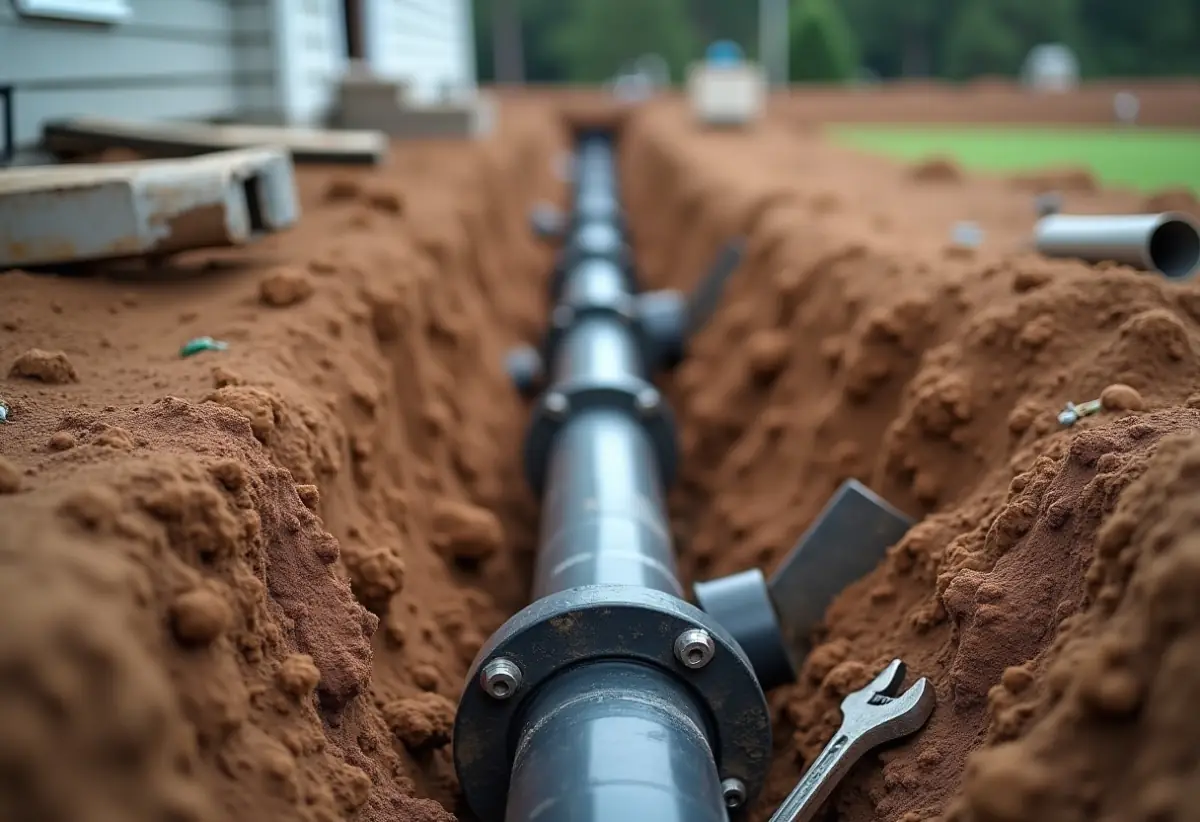
Can an undersized gas line cause Rinnai code 11 on a 199,000 Btu/h unit?
Yes. Guide step 11 names gas piping, regulator and tank sizing when pressure sags under load, and a 199,000 Btu/h unit needs 199 cubic feet per hour of natural gas at 1,000 Btu per cubic foot. Each cell below is the longest run in the RU manual’s example tables on pages 48 and 49 (NFPA 54 values, Schedule 40 metallic pipe, 0.5 in. w.c. drop) that still meets the load.
| Load on the line | Thousand Btu/h | Natural gas, 1/2 in. | Natural gas, 3/4 in. | Natural gas, 1 in. | Propane, 1/2 in. | Propane, 3/4 in. |
|---|---|---|---|---|---|---|
| RU160, RUR160 | 160 | 10 ft | 40 ft | 100 ft | 30 ft | 100 ft |
| RU199, RUR199 | 199 | None | 30 ft | 90 ft | 20 ft | 80 ft |
| RU199 plus a 65,000 Btu/h appliance | 264 | None | 10 ft | 50 ft | 10 ft | 40 ft |
The heater’s 3/4 in. MNPT connection says nothing about the pipe behind it. On natural gas, a 199,000 Btu/h unit runs out of 3/4 in. pipe at 30 ft, and adding a 65,000 Btu/h appliance cuts that to 10 ft. Moving up from a 130,000 Btu/h model raises the gas draw by 53%, so sizing a tankless water heater and sizing its gas line belong in the same conversation. Rinnai calls these tables examples, and non-SENSEI step 13 cites a tighter 0.3 in. drop, so have a pro run the numbers from the applicable code or our gas pipe sizing chart.
Can a blocked vent or condensate line throw Rinnai code 11?
Yes, though Rinnai’s code for a plain blockage is 10. Non-SENSEI step 14 explains the code 11 route: missed terminal clearances recirculate combustion gases, which leaves carbon on the flame rod. The RUR manual also lists “Ensure condensate line is not blocked” under code 11 on page 72, and non-SENSEI step 18 checks the drain trap on non-condensing models.
You can check the outside terminal for a nest or snow, and note any liquid at the drain while the heater sits idle. Vent length and materials go to a pro; our page on water heater venting requirements explains what they will measure.
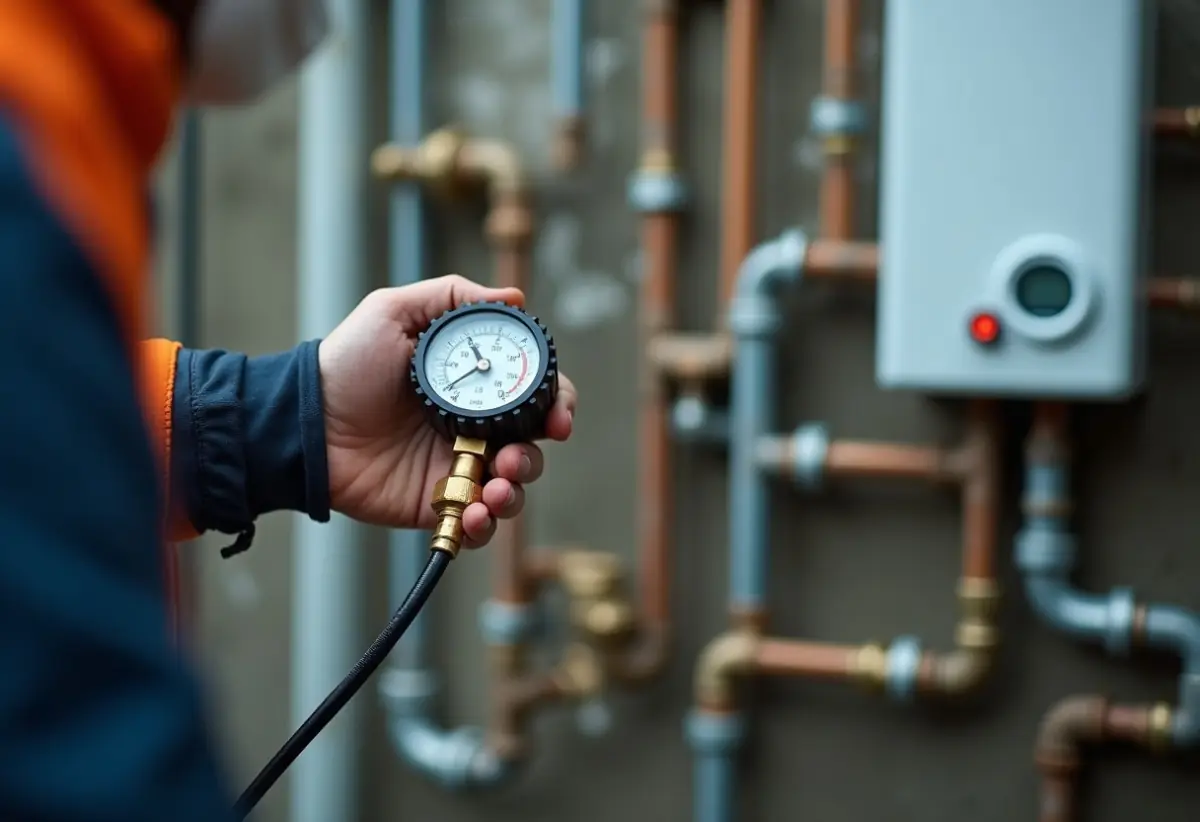
What should a gas tech check for code 11, and what should you ask?
A tech should start with a manometer at the test port, not with parts, because the first 5 SENSEI steps all concern the gas supply. Four questions keep the visit on Rinnai’s order:
- What was the inlet pressure with all gas appliances on high fire, and what does my rating plate allow?
- What does it read with the heater off? Guide step 17 uses this to catch a two-stage regulator bleeding through.
- Was there a spark, and did a new gasket go in if the electrode or flame rod came out?
- Which guide steps were finished before you recommended a PC board or gas valve?
No one should bypass a control to get the burner lit: the RU manual warns that any alteration to the appliance or its controls can be dangerous and voids the warranty. Rinnai’s owner FAQ lists Customer Care at 1-800-621-9419, Monday through Friday, 8 a.m. to 8 p.m. Eastern.
Rinnai code 11 questions owners also ask
What is the difference between Rinnai code 11 and code 12?
The RU manual calls code 11 No Ignition and code 12 No Flame, and guide 100000652 titles code 12 Flame Failure. Their first checks overlap, and Rinnai says a floating flame rod on non-SENSEI heaters can produce either code.
Can a dirty inlet water filter cause Rinnai code 11?
Rinnai does not list it. The RU manual puts the inlet water filter and minimum flow rate under No Code, where nothing happens when water flows. A displayed 11 means an ignition cycle already started, so gas and spark come first.
Why does a brand new Rinnai show code 11?
Rinnai’s first three SENSEI steps fit a new install, namely valves open, propane in the tank and air purged from the gas lines. Ask the installer to confirm the purge and report the inlet pressure reading against the rating plate.
Should a homeowner clean the flame rod on a Rinnai?
No. Guide 100000652 requires electrical, gas and water off first, and the gasket must be replaced if its seal is broken. Rinnai’s V series manual marks burner and igniter work licensed professional only.
Does code 11 mean the Rinnai gas valve or PC board failed?
Not on its own. Those parts appear at the end of Rinnai’s 20 step SENSEI list and 22 step non-SENSEI list, and the guide says to keep troubleshooting before replacing either one. Ask which earlier steps were finished.
How we sourced this
Read Rinnai’s guide 100000652, manuals 100000467 (RU), 100000508 (RUR) and 100000258 (V), data sheets U307-0723, U287-1817 and U306-1460, Technical Bulletin 166 and Rinnai’s FAQ. The pipe table is computed from the RU manual’s example values. Left out: service call prices and part numbers, with no primary source opened; which serial numbers carry the 18-attempt software, since the bulletin lists none; and RU80i and RU98i pressure limits, since their manuals were not opened. Local fuel gas code amendments vary.