Rinnai Code 12: Flame Failure vs Code 11, and the Fixes
Rinnai code 12 means flame failure: the heater needed a flame, then lost it or could not sense it, where code 11 means no ignition. Check gas supply and inlet pressure first, then vent joints and clearances, then the flame rod circuit.
Rinnai code 11 vs code 12: what does each one report?
Code 11 reports that ignition did not happen and code 12 reports a flame failure, and Rinnai’s troubleshooting steps for the two differ more than the names suggest. Rinnai’s service guide, form 100000652, titles them “No Ignition” and “Flame Failure”. It never puts a time on either code, so the “when” row below is our reading of those names and of the guide’s own tests. The step numbers are counted from its SENSEI lists.
| Code 11 | Code 12 | |
|---|---|---|
| Rinnai’s name | No Ignition (SENSEI manual adds “Heater Not Turning On”) | Flame Failure in the guide, No Flame in the SENSEI manual |
| What the unit sensed | The ignition attempt did not produce a proven flame | A flame was needed and was lost, or was present and not read |
| When in the cycle | During the ignition cycle | After the flame should be established. SENSEI exception: right after water flow begins with no flame visible, which the guide assigns to a DC short |
| Likeliest causes, manual order | Closed valve, empty or undersized propane tank, air in the gas line, wrong inlet pressure, wrong gas type or Parameter 10, no spark, loose electrode or rod | Low inlet pressure, closed valve, empty tank, loose electrode or rod, undersized gas system, vent joints and clearances, vent length and material, rod wiring and sleeve, grounding, blower debris, two stage regulator, wet harness, gas valve |
| First three checks | All gas valves open; gas in the propane tank and tank sized for the load; air purged from the lines | Gas on at heater, meter or tank; gas in the propane tank; electrode and rod tight. Inlet pressure is verified ahead of step 1 |
| Spark test in the list? | Yes, step 7 | No |
| Vent first appears at | Step 12 | Step 5 |
The last two rows change the repair call. Rinnai’s code 12 list has no spark test, moves the vent from step 12 up to step 5, and adds three items the guide’s SENSEI code 11 steps lack: the flame rod’s silicone sleeve, circuit grounding and the blower wheel. Running the code 11 routine on a code 12 unit can pass the igniter and still miss the fault. The overlap is real too: the guide says a loose “floating” flame rod can throw either code.
Where do codes 11 and 12 fall in the ignition sequence?
Code 11 sits around spark and first flame, and code 12 sits from flame sensing through the running burner, with one documented exception at the start of water flow. The diagram shows order only, because no Rinnai document we read gives seconds.
The bands overlap in practice. Step 9 of the guide’s code 11 section says a flame seen through the view glass that then goes out points to the flame rectification circuit or the gas system: carbon or a white substance on the rod, a bad rod connection, a bad PC board, a defective gas valve or low inlet pressure. So a visible flame rules out neither code. The exception box matters on an RU199i or RX199i: code 12 the moment water flows, with no flame in the burner box, is what the guide calls a short in a harness, water flow control, bypass valve or other DC component.
Which cause fits the moment your code 12 appears?
The timing narrows the cause to one or two checks. Rinnai publishes only the first row as a timing rule; the rest are our mapping of its listed causes, so treat them as a test order, not a diagnosis. Every test in the right column is a gas technician’s job, not an owner step, because Rinnai’s guide limits its service steps to trained and qualified professionals.
| When code 12 appears | Likeliest cause | What the gas tech tests |
|---|---|---|
| At start, no flame visible | DC short (SENSEI and RX/CX, per the guide) | Unplug one component at a time. If the heater then cycles 3 times, the short is in that device |
| At start, flame visible then gone | Flame rod circuit or gas supply | Rod tight, wiring at rod and PC board, rod current of 1 microamp or more |
| Mid shower | Another appliance pulled inlet pressure down, or moisture in a harness | Manometer at the test port with every gas appliance on high fire; inspect harness connectors for damp |
| Only in wind | Exhaust recirculating into the intake (inference, see below) | Terminal clearances, joints fully engaged, vent screen clear |
| Only at high demand | Undersized gas line, meter or regulator | Pressure drop at high fire: 0.3 in. maximum on natural gas, 0.5 in. on propane |
| After a propane refill | Air in the line, or a regulator problem | Bleed the line; check inlet pressure running and at shutoff against 8.0 and 13.5 in. wc |
Write down your row and whichever furnace, range or second heater was running. Rinnai’s SENSEI manual, form 100000467, requires supply pressure to stay in range with all gas appliances operating, so that list saves a return trip.
What can you check on a Rinnai code 12 before calling a gas tech?
You can do four checks with the front panel on and nothing disconnected. Rinnai’s guide says only trained and qualified professionals may follow its service steps, so everything past this list belongs to a gas technician.
- Read the code history. Turn the heater off at the controller, hold On/Off for 2 seconds, then press Up at the same time. The last nine codes flash in turn, and the same press exits. A 10 next to the 12 points at blockage (Air Supply or Exhaust Blockage) and a 19 at Electrical Grounding.
- Confirm the gas. The manual valve at the heater and the meter valve should both be open. On propane, read the tank gauge.
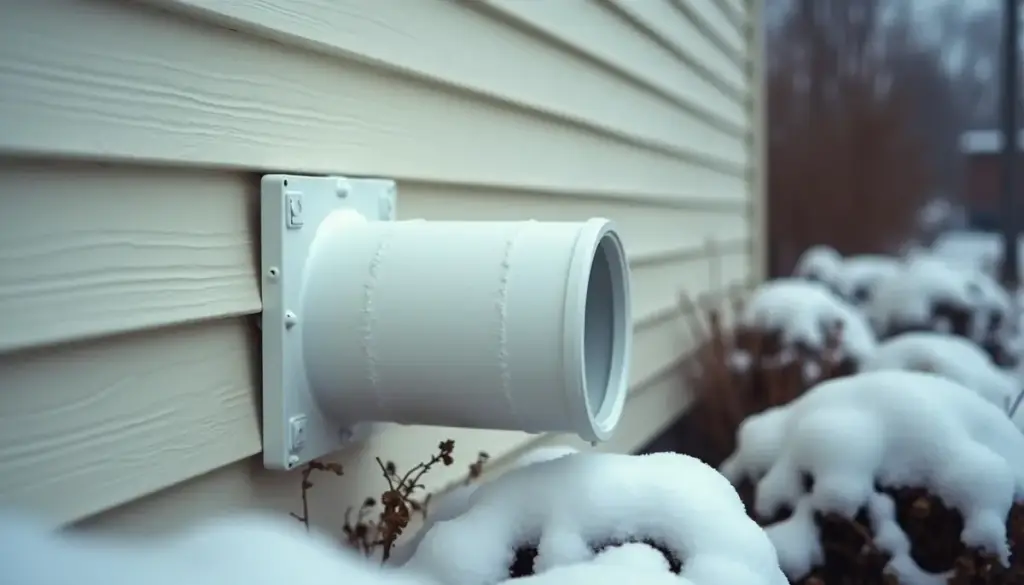
- Look at the vent terminal outside. The manual requires terminations at least 12 in. above grade or the anticipated snow level. Clear snow, leaves or nests from the opening and the vent screen on PVC terminations.
- Check the room on indoor units that draw room air. The manual says combustion air should not come from any area that may produce negative pressure, naming exhaust and powered ventilation fans.
Stop and leave the building if you smell gas. Rinnai’s instructions are to light nothing, touch no electrical switch and use no phone in the building, so call the gas supplier from a neighbor’s phone, or 911 from outside, and our water heater gas smell steps cover what follows. Never adjust the internal gas valve, which Rinnai says voids the warranty, and leave any gas work to a licensed gas pro. If the heater goes cold with no code at all, use the tankless water heater not working checklist.
Which readings should the gas tech take for a code 12?
Ask for these five measurements in writing, because each has a pass mark in a Rinnai document. The values are for SENSEI RU and CU models, and the rating plate on the side of the heater overrides them.
| Reading | Pass mark | Source |
|---|---|---|
| Inlet pressure at the test port, all gas appliances on high fire | Natural 3.5 to 10.5 in. wc; propane 8.0 to 13.5 in. wc | Manual, section 3.4 |
| Pressure drop at high fire, black iron, up to 14 in. W.C. | 0.3 in. or less natural; 0.5 in. or less propane | Guide, code 12 step 4 |
| Pressure with the heater shut off (regulator bleed-through) | Never over 10 in. natural or 13.5 in. propane; two stage regulator at least 6 ft from the heater | Guide, step 14 |
| Flame rod current, meter in line, unit running | 1 microamp or more; rod to ground 5 to 150 VAC | Tech sheet 100000505 |
| Electrode gap | 0.138 in. (3.5 mm) | Guide, step 9 |
Two numbers conflict at the edges. The guide caps natural gas at 10 in. and the SENSEI manual lists 10.5 in., so a reading between them needs the rating plate. The older V53De data sheet gives 5 VDC from rod to ground, not the SENSEI range, so match the sheet to the model.
The SENSEI parts list gives the electrode and flame rod assembly as 105000232, flame rod 105000234 and electrode packing 109000617. Rinnai says the gasket must be replaced whenever the rod comes out, so budget one into any rod inspection. The KBP outdoor sheet specifies sand paper for a carbon-coated rod under code 72, its separate flame sensing code, and the SENSEI documents we read name no cleaning material.
Does a blocked vent or wind trigger code 12?
A fully blocked vent has its own code on SENSEI units, code 10, and none of the Rinnai documents we read names wind as a code 12 cause. The manual’s only wind warning is about freeze protection on outdoor models, in section 4.3.5.
What the guide blames is recirculation. Step 5 says missed terminal clearances can recirculate combustion gases, which may cause incomplete combustion and a code 12, and step 8 says the same of concentric or common vent joints not fully engaged. The technician marks each joint with a marker, separates it and checks the depth. A gust pushing exhaust toward the intake would be the same mechanism, but that link is our inference, so a code that tracks wind direction is a reason to check clearances and joints, not proof. Older families differ: the V53De and KBP sheets list obstructions in the flue outlet under code 12. For vent types and lengths, read our water heater venting requirements alongside your model’s vent table.
Can a 3/4 in. gas line starve an RU199i at full fire?
Yes, on a run past 30 ft with the heater alone or past 10 ft with one more appliance. We computed these limits from Table 24 in the SENSEI manual (NFPA 54, Schedule 40 metallic pipe, 0.5 in. wc drop, inlet under 2 psi), at the worksheet’s 1,000 Btu per cubic foot.
| Load on the line | 1/2 in. | 3/4 in. | 1 in. | 1 1/4 in. |
|---|---|---|---|---|
| RU199i alone: 199,000 Btu/hr = 199 CFH | Fails at 10 ft (172) | 30 ft | 90 ft | 100 ft |
| Rinnai’s example, plus a 65,000 Btu/hr appliance = 264 CFH | Fails at 10 ft | 10 ft | 50 ft | 100 ft |
| Plus a 100,000 Btu/hr furnace = 299 CFH | Fails at 10 ft | 10 ft | 40 ft | 100 ft |
That pattern is how a code 12 can wait for a furnace to fire. Rinnai calls the table an example and tells installers to use the applicable code table, and the guide’s 0.3 in. natural gas limit is tighter than this table’s 0.5 in. basis, so a run that passes on paper can still fail on the manometer. To redo it with your own loads and longest run, use our gas pipe sizing chart.
Does the code 12 label change between Rinnai model families?
The fault stays the same across the Rinnai water heaters we checked, but the name and checklist change by document, and the last row is not a water heater.
| Document | Covers | Code 11 | Code 12 | What its code 12 list adds |
|---|---|---|---|---|
| Manual 100000467 | RU199, RU180, RU160, RU130, i and e | No Ignition (Heater Not Turning On) | No Flame | 5 checks, including bleeding air from gas lines, which the guide’s code 12 list omits |
| Guide 100000652 | SENSEI, RX/CX, Non-SENSEI | No Ignition | Flame Failure | 17 steps plus the immediate code 12 note |
| V53De sheet 100000564 | V53De | No Ignition | No Flame | Flue outlet obstructions, keypad, harness reseat |
| KBP outdoor sheet U306-1461 | RUR98e | No Ignition | No Flame | Condensation collar, DC shorts, condensation or debris on the burner surface |
| Australian Energysaver sheet | Gas space heaters | Ignition failure | Flame failure | “Check gas supply is turned on”, then a service call |
Other questions about Rinnai error code 12
How do I reset a Rinnai code 12?
The SENSEI manual prints no separate reset step for code 12. Codes 15 and 54 carry a note to reset the main power supply, and code 12 does not, so the listed fix is the gas, vent or flame rod cause. A code that returns on the next draw still has that cause in place.
Can a dirty flame rod cause Rinnai code 12?
Yes. The V53De and KBP data sheets both list checking the flame rod for carbon build-up under code 12. Rinnai’s SENSEI tech sheet says to pull the rod when the circuit reads under 1 microamp and to fit a new gasket after removal, which makes this a technician job.
Why does my Rinnai show code 11 and code 12 on different days?
The two codes share causes. Rinnai’s service guide says a loose flame rod, which it calls a floating flame rod, can produce either one, and low inlet gas pressure appears in both checklists. The last nine codes in the controller history show which one came first.
Does code 12 mean the PC board is bad?
Not as a first conclusion. Rinnai’s code 11 section says to finish the listed checks before replacing a PC board or gas valve, and the code 12 list reaches the gas valve only at step 17. On MSA or MSB systems, isolate the heater first because the staging board may be at fault.
How we sourced this
We read Rinnai’s diagnostic codes guide (100000652), SENSEI residential manual (100000467), SENSEI tech sheet (100000505), V53De and KBP outdoor data sheets, and an Australian Rinnai space heater code sheet. We computed pipe limits from the manual’s Table 24 and counted step positions from the guide. The symptom mapping and the wind link are our inferences and are labeled that way. Repair prices and timing in seconds are left out because no Rinnai document we read states them. We did not test any heater.