Water Heater Blanket: Is It Worth It in 2026?
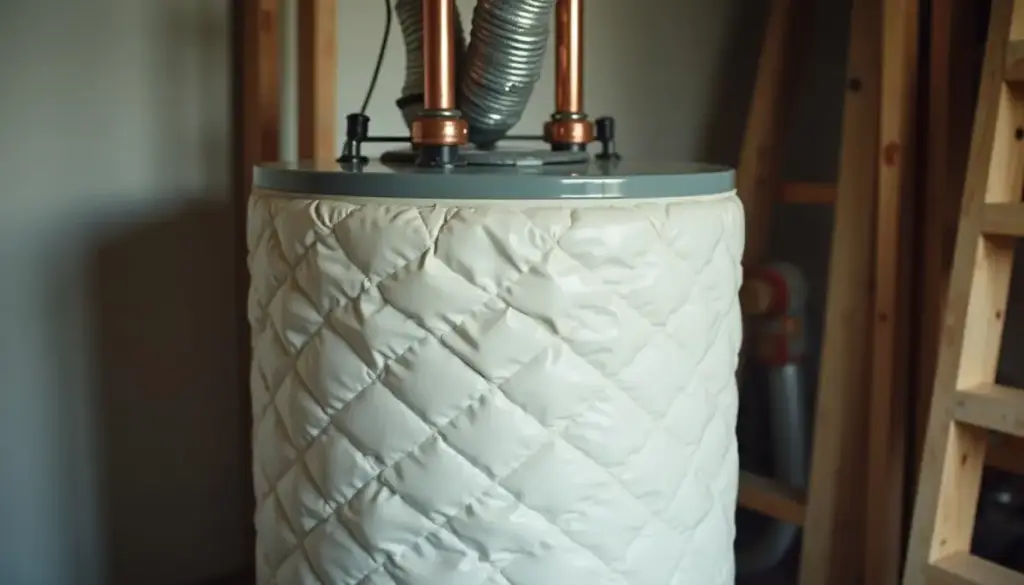
A water heater blanket is worth it on an older tank under R-24 (DOE estimates 7 to 16% lower water heating costs), but most newer tanks gain little, and some gas models forbid one outright.
Key Takeaways
- The U.S. Department of Energy says a blanket on a tank below R-24 cuts standby heat loss by 25 to 45% and water heating costs by about 7 to 16%, with payback in about a year.
- DOE’s quick test is touch: a tank shell that feels warm by hand is losing heat and is a blanket candidate.
- Some A.O. Smith gas manuals say off-the-shelf blankets are not approved for that heater, and others say the tank already meets NAECA insulation rules, so a blanket is unnecessary.
- Rheem manuals say not to cover the air inlet, flue outlet or any operating and warning labels; GE adds the burner door, gas control and relief valve.
- PNNL’s Building America guide caps an electric tank’s thermostat at 130°F under a blanket, since higher settings may overheat the wiring, and cites EPA’s 120°F recommendation.
- In seismic zones such as California and Alaska, the PNNL guide puts the two straps back on over the blanket, one in the top third of the tank and one in the bottom third.
Is a water heater blanket worth it in 2026?
A water heater blanket is worth it when the tank has less than R-24 of built-in insulation or feels warm to the touch. In that case DOE’s Energy Saver guidance puts standby loss savings at 25 to 45% and water heating savings at about 7 to 16%. On a cool-shelled tank built in the last decade, the gain is small.
Standby loss is heat that leaks out of the stored water while nobody runs a tap. A blanket slows that leak. It does not make the burner or element heat water faster, so it will not change how long a water heater takes to heat up after a long shower.
How much does a water heater blanket actually save?
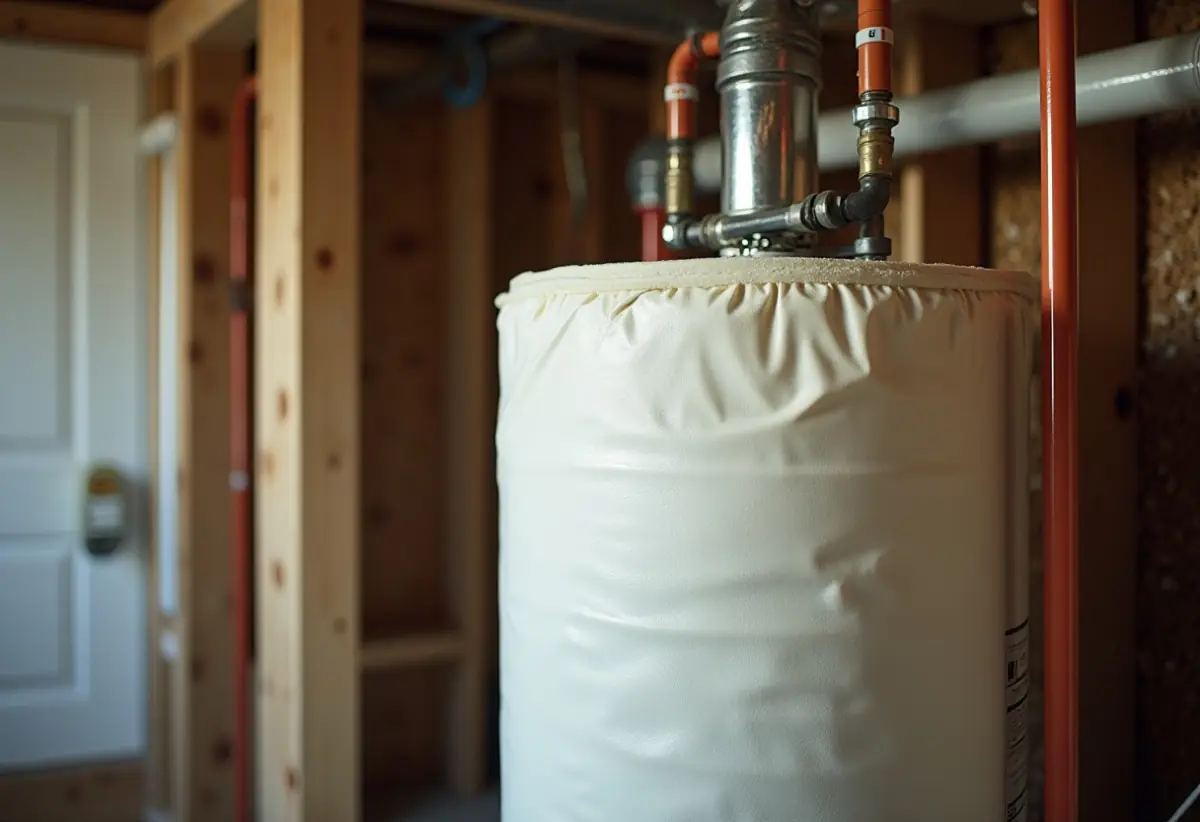
DOE’s range is 7 to 16% of what you spend heating water, and it applies only to tanks below R-24. The math is simple: multiply your annual water heating cost by 0.07 and by 0.16 to get your low and high savings, then divide the kit price by that figure for payback. DOE’s own estimate is payback in about a year.
Here is a worked example with round numbers you should swap for your own. If your water heater costs $400 a year to run, 7% is $28 and 16% is $64. A $25 kit would then pay back in about 5 to 11 months, which lines up with DOE’s estimate.
Electric tanks usually win the biggest dollar figure. The PNNL Building America Solution Center guide says electric water heaters account for about 18% of a home’s annual energy use, so a 7 to 16% cut on that load shows up on the bill. DOE also notes that on electric units, a rigid insulation board under the tank can trim another 4 to 9% by cutting heat loss into the floor.
Should I insulate my water heater if it is new?
Usually not. Many newer tanks already carry enough factory insulation, and A.O. Smith states in some manuals that its heater meets and exceeds the National Appliance Energy Conservation Act (NAECA) standards for insulation and standby loss, making a blanket unnecessary. Check the R-value in your manual before buying anything.
Use this three-step check, which takes about two minutes:
- Find the model number on the rating plate and look up the tank’s insulation R-value in the owner’s manual, as the PNNL guide directs.
- If the listed value is R-24 or higher, skip the blanket. DOE treats R-24 as the line above which added insulation is not needed.
- If you cannot find a value, put your palm flat on the side of the tank. DOE and PNNL both say a shell that feels warm is losing heat.
A tank in an unheated garage loses more heat than one in a heated room. If you are shopping for a replacement instead, DOE advises choosing a tank rated R-24 or higher, and the units on our list of ENERGY STAR water heaters are the place to start.
What do water heater manufacturers say about insulation blankets?
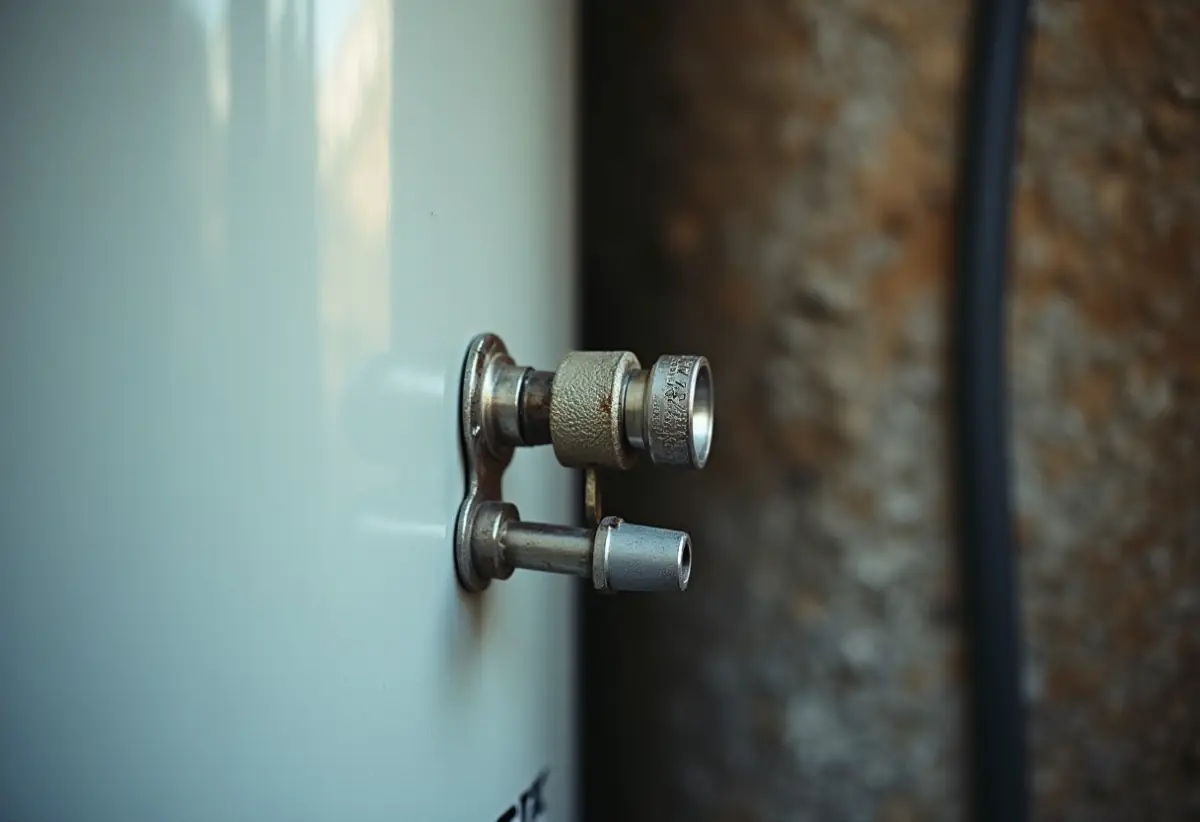
Manufacturers allow blankets on many electric tanks but restrict them on gas units, and the exact rules live in each model’s installation manual. Common to every manual we found: never cover labels, the relief valve, gas controls, burner access doors, air inlets or flue outlets. Some A.O. Smith gas manuals go further and disapprove consumer blankets entirely.
The specific language, by brand:
- Rheem: a Rheem gas water heater manual (AP13945-2) says not to cover the air inlet, flue outlet or the operating and warning labels attached to the heater, nor to relocate those labels onto the outside of the blanket. Where local codes require an external blanket, it says to follow the kit maker’s instructions carefully.
- A.O. Smith: gas manuals say to get new warning and instruction labels from A.O. Smith and place them on the blanket directly over the originals, not to cover the gas valve or the temperature and pressure relief valve, and to inspect the blanket frequently so it does not sag and obstruct combustion air.
- A.O. Smith (some models): other manuals state that insulation blankets available to the general public for external use on gas water heaters are not approved for that heater. On those models, adding one goes against the maker’s instructions.
- GE: GE gas manuals list the burner access door, jacket door, gas control (thermostat) and the pressure and temperature relief valve as areas a blanket must not cover.
- Kenmore: a Kenmore manual says not to obstruct the heater’s air intake with an insulating blanket.
Treat the manual, not the blanket box, as the rule.
What should you leave uncovered on each type of water heater?
On every tank, leave the temperature and pressure relief valve, its discharge pipe and all labels exposed. Electric tanks also need the upper and lower element access panels open. Gas tanks need the entire top, draft diverter, burner door, gas valve and air openings clear. Match your heater to the rows below, and see our guide to types of water heaters if you are unsure which you have.
| Tank type | Blanket? | Leave uncovered | Source |
|---|---|---|---|
| Older electric tank, warm to the touch or below R-24 | Yes, the best candidate | Element and thermostat access panels, T&P valve and discharge pipe, labels. Top may be covered with slits cut for pipes. | DOE Energy Saver; PNNL guide |
| Newer electric tank, R-24 or higher, cool shell | Usually no | Not applicable; put the money into pipe insulation | DOE Energy Saver |
| Atmospheric-vent gas tank, manual allows blankets | Only per the manual | Entire top and draft diverter, thermostat and gas valve, burner access door, T&P valve, labels, air openings | DOE Energy Saver; A.O. Smith; GE |
| Power-vent or direct-vent gas tank | Only per the manual | Air inlet, flue outlet, operating and warning labels | Rheem AP13945-2 manual |
| A.O. Smith gas models whose manual disapproves blankets | No | Do not install one | A.O. Smith manuals |
| Tankless (on-demand) heater | No | No storage tank, so no standby tank loss to stop | No tank to wrap |
How do you install a water heater blanket on an electric tank?
Installing a blanket on an electric tank takes nine steps in the PNNL Building America guide: kill the power, measure, cut, mark the panels, cut X-shaped openings, cover the top, tape it on, refit the seismic straps and restore power. You need the kit, a tape measure, scissors, a marker, gloves and a dust mask.
- Switch off the heater at its disconnect or breaker. Put on gloves and a dust mask for the fiberglass, and remove any seismic straps.
- Measure the tank’s height and its circumference. A string wrapped around the tank and then laid against the tape measure works for the circumference.
- Cut the blanket so the ends overlap a few inches around the tank. Do not cut off any tape that comes pre-applied. Save the leftover piece for the top.
- Wrap the blanket around the tank with the overlap seam lined up on the relief valve and its pipe, and hold it with electrical tape. Mark the outline of every control panel, access panel and valve.
- Cut an X over each marked panel, running the cuts out to the corners, and fold the flaps inward so the panels stay exposed.
- Mark the pipe locations on the leftover piece, slit it to fit around the pipes, lay it on top, tape the slits closed and tape the corners down to the sides with heat-resistant tape.
- Fasten the blanket with the kit’s tape or belts. Keep belts off the access panels and do not cinch them tight enough to compress the insulation. Tape the seam horizontally first, then vertically.
- Refit the seismic straps over the blanket, one within the top third of the tank and one within the bottom third. California, Alaska and parts of other western states require them.
- Restore power and keep the thermostat at or below 130°F. PNNL warns higher settings may overheat the wiring, and cites EPA’s 120°F recommendation.
Can you put a water heater blanket on a gas water heater?
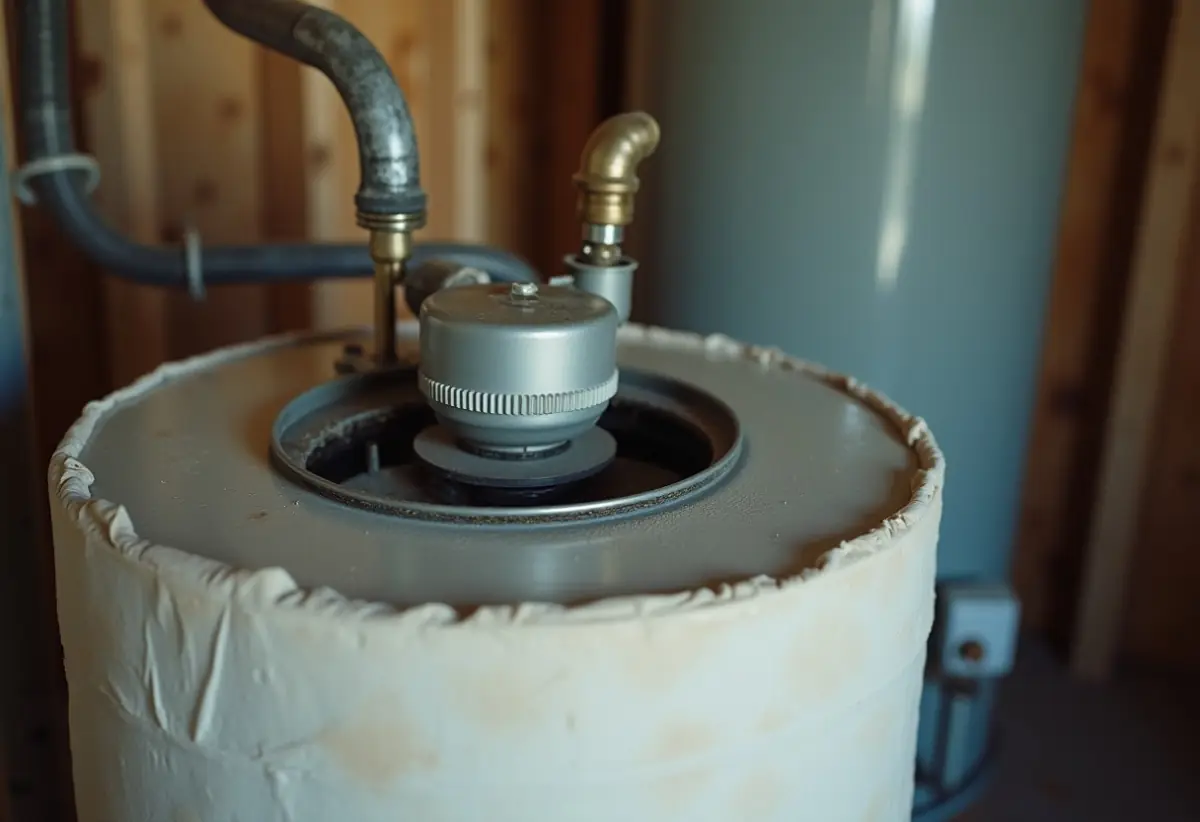
Sometimes, but only when the installation manual allows it and never over the top. DOE warns that blanket material is combustible and can interfere with the draft diverter on a gas tank. Keep it clear of the thermostat, gas valve and burner compartment, and inspect it regularly so it never sags across the combustion air openings.
The rules differ from electric because a gas tank burns at the bottom, draws combustion air from around its base and vents exhaust up a center flue into the draft hood on top.
If you install one, A.O. Smith tells owners to obtain replacement warning and instruction labels from the company and stick them on the blanket directly over the originals. Check the blanket every few months for sag. If you smell exhaust near the draft hood or see soot, turn the heater off at the gas valve and call a licensed plumber or your gas utility.
Should you insulate the water heater pipes too?
Yes, on most tanks pipe insulation is the cheaper win, and it is the best move on a new tank that already has enough jacket insulation. Wrap the accessible hot outlet pipe and the cold inlet pipe where they leave the tank, since that is where heat escapes before the water reaches a fixture.
On a gas tank, keep foam pipe sleeves well away from the flue and draft hood, the same combustible-material concern DOE raises for blankets on top of gas tanks. Our guide to insulating the pipes at the tank covers sleeve sizes, wall thickness and how to seal the joints.
Leave the T&P discharge pipe bare and unobstructed. Its job is to carry scalding water to the floor or drain if the relief valve opens, so nothing should wrap or block its outlet.
How we sourced this
We ran two searches in October 2026 for “water heater blanket” and “should I insulate my water heater”. Savings, the R-24 threshold, payback and gas cautions come from the U.S. Department of Energy’s Energy Saver guidance. Installation steps, the 130°F limit and the strap placement come from PNNL’s Building America Solution Center guide. Manufacturer language comes from Rheem, A.O. Smith, GE and Kenmore installation manuals as archived by manual libraries. We left out retail blanket R-values because we could not confirm them on product spec sheets, and the $400 bill and $25 kit in the payback example are illustrative inputs, not survey data.
Frequently asked questions
Are water heater blankets worth it?
On an older tank with less than R-24 of built-in insulation, usually yes. The U.S. Department of Energy says a blanket cuts standby heat loss by 25 to 45 percent and trims water heating costs by about 7 to 16 percent, paying for itself in about a year. On a newer tank that feels cool to the touch, the payoff shrinks to very little.
Does a water heater blanket void the warranty?
It can on some gas models. Certain A.O. Smith gas manuals state that insulation blankets sold to the general public for external use on gas water heaters are not approved for that heater. Rheem and GE manuals allow blankets only if you keep labels, air inlets, flue outlets, gas controls and the relief valve uncovered. Read your own manual before wrapping anything.
Can you put a blanket on a gas water heater?
Only if the manual allows it, and never over the top. DOE warns that the material is combustible and can interfere with the draft diverter on top of a gas tank. Keep it off the thermostat, gas valve, burner access door and relief valve, and check it often so it does not sag and block combustion air, as A.O. Smith manuals require.
Should I insulate a new water heater?
Usually not. A.O. Smith states that some of its heaters meet and exceed the federal NAECA standards for insulation and standby loss, making a blanket unnecessary. Check the R-value in your manual or on the rating label. If it is R-24 or higher, or the shell feels cool by hand, spend the money on pipe insulation instead.
How much does a water heater blanket save per year?
DOE puts the savings at about 7 to 16 percent of your water heating cost on a tank below R-24. On an annual water heating cost of $400, that works out to roughly $28 to $64 a year. Electric tanks gain the most, since PNNL’s Building America Solution Center says they account for about 18 percent of annual home energy use.
Can a water heater blanket cause a fire?
On a gas tank it can add risk if installed wrong. DOE notes that blanket material is combustible, which is why it must never cover the top of a gas heater near the draft diverter. A blanket that sags over the burner door or air openings can starve the flame of combustion air, so A.O. Smith tells owners to inspect it frequently.
Should you insulate the top of a water heater?
On an electric tank, yes if you have leftover material. The PNNL Building America guide has you cut slits around the pipes, lay the piece on top and tape it down with heat-resistant tape. On a gas tank, no. DOE says to keep insulation off the top because it is combustible and can block the draft diverter.