Composting Toilet: How It Works, Rules and Cost
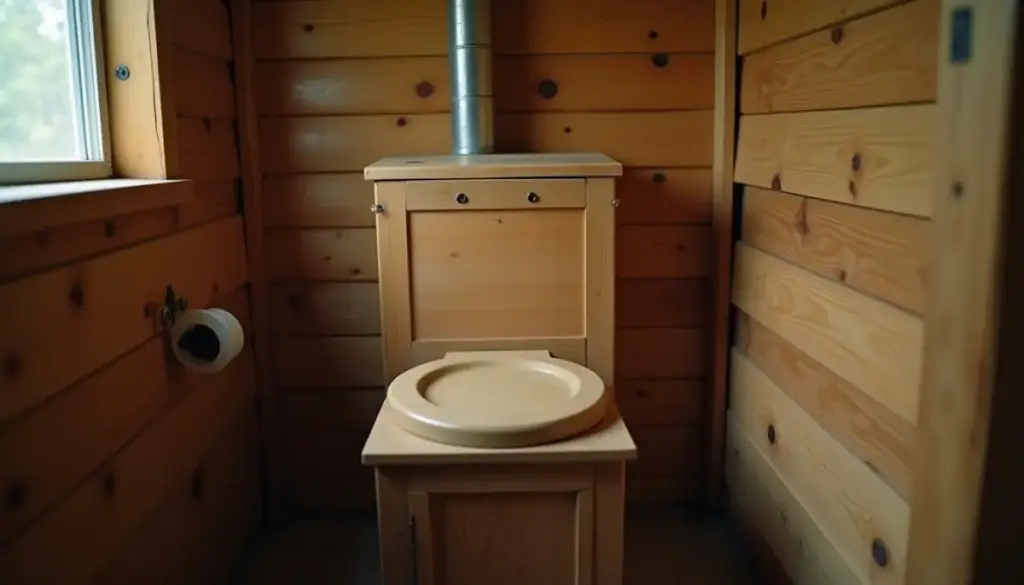
A composting toilet is a waterless toilet that dries and breaks down waste with air and carbon bedding; many states allow NSF/ANSI 41 tested models but still require a permit and an approved system for sink and shower water.
Key Takeaways
- Toilets are the largest indoor water use in US homes, at 24% or 32.6 gallons per household per day, according to the Water Research Foundation’s Residential End Uses of Water study (REU2016).
- Washington’s Department of Health requires proprietary composting toilets to pass NSF/ANSI 41 testing and be listed with the state before a local permit.
- NSF’s test protocol says the finished material must not exceed 65% moisture or 200 MPN of fecal coliform per gram, as summarized in Washington DOH guidance 337-016.
- Massachusetts Title 5 (310 CMR 15.289) requires storage for at least two years and burial under at least six inches of clean compacted earth, or removal by a licensed septage hauler.
- Oregon (OAR 340-071-0320) lets greywater from a home with a compost toilet go to a new drainfield cut to two-thirds of normal size under set conditions.
- Maker list prices run from $639 for a Sun-Mar GTG to $2,620 for a Sun-Mar Centrex 3000, with the Nature’s Head at $965.
How does a composting toilet work?
A composting toilet works by keeping waste moist but not soaked, so oxygen-loving bacteria and fungi can break it down the way a yard compost pile does. You add a scoop of carbon bedding after each use, a fan pulls air through the chamber and out a vent, and the pile shrinks to a soil-like material called humus.
The National Small Flows Clearinghouse at West Virginia University, in a 1998 fact sheet funded by the EPA, says a properly sized and maintained unit cuts waste to 10 to 30% of its original volume.
Washington’s DOH 337-016 guidance (August 2025) lists the parts every unit shares.
- A composting chamber connected to one or more dry toilets.
- An exhaust system, often fan-forced, that carries off odor, carbon dioxide and water vapor.
- A screened air inlet that feeds oxygen to the pile.
- A way to drain or manage excess liquid.
- Mixers, cranks or access doors for turning the pile and pulling out finished material.
Urine diversion vs mixed
Urine-diverting toilets have a split bowl that sends urine to a bottle or drain and solids to a dry bin. Mixed toilets take everything into one drum and rely on airflow, and often heat, to evaporate extra liquid, sometimes with a drain for the excess. Diversion keeps the pile drier, which is the main reason it tends to smell less.
Self-contained vs central systems
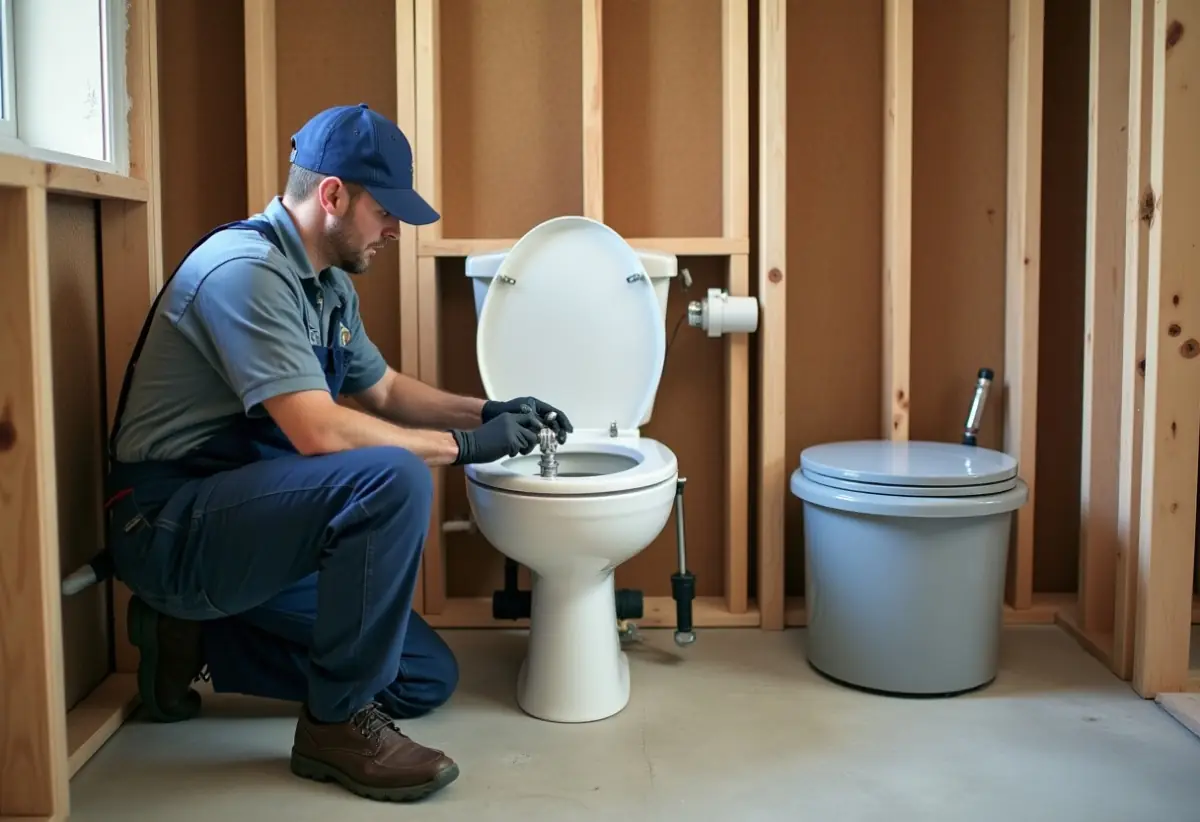
A self-contained unit puts the seat and the composting chamber in one box on the bathroom floor. A central or remote system puts a toilet upstairs and a larger composter in a basement or crawlspace below.
What types of composting toilet can you buy?
Most homes choose between a self-contained urine-diverting unit, a self-contained mixed unit, a central system with a composter below the floor, or a site-built batch toilet. Each trades price against capacity and hands-on work. The table uses maker list prices we checked in October 2026, before vent, power or permit costs.
If you are still comparing flush designs as well, our guide to the main types of toilets covers gravity, pressure-assist and dual-flush models.
| Type | How it works | Best for | Cost (list price) |
|---|---|---|---|
| Self-contained, urine-diverting (Nature’s Head) | Split bowl sends urine to a 2.2-gallon bottle; solids go to a crank-agitated bin; 12V fan vents outside | Tiny homes, cabins, boats, RVs, 1 to 2 people | $965 (Nature’s Head) |
| Self-contained, mixed (Sun-Mar Excel) | Urine and solids share a rotating drum; airflow and heat dry the pile; Sun-Mar says the Excel serves 3 adults in residential use | Year-round cabins with power | $1,825 to $2,070 (Sun-Mar Excel NE and Excel) |
| Urine-diverting dry toilet (Sun-Mar GTG) | Separates urine and solids into containers for removal, with a smaller footprint than a drum unit | Vans, sheds, occasional use | $639 (Sun-Mar GTG) |
| Central or remote (Sun-Mar Centrex, Clivus Multrum) | Toilet sits on the floor above; waste drops to a large composter below; finished material removed as rarely as every 2 years | Full-time homes with a basement or crawlspace | $1,875 to $2,620 (Sun-Mar Centrex); Clivus Multrum quotes per project |
| Site-built batch (public domain designs) | Two or more chambers fill and cure in turns; no patent, so no maker listing | Rural owners willing to manage curing by hand | Materials and permit only; varies by build |
Sun-Mar’s webstore does not state a currency, so confirm its prices at checkout.
Are composting toilets legal?
Composting toilets are legal in many US states, but no single national rule covers them. State and county health or environmental agencies decide whether a unit can serve a home, which models qualify, and what happens to greywater and the finished material. Approval often hinges on NSF/ANSI 41 testing, so check that before you buy.
What NSF/ANSI 41 covers
NSF/ANSI 41 is the American National Standard for non-liquid saturated treatment systems, which is the formal name for composting and other waterless toilets. It sets design and performance rules for units that treat solids alone or solids plus liquid, but not for handling the end product.
Three state rules side by side
- Washington. A proprietary composting toilet must appear on the DOH List of Registered On-site Treatment and Distribution Products, under WAC 246-272A-0110(1), before a local health jurisdiction can issue a permit. Testing must follow ANSI/NSF 41 at an independent lab. The vent must run continuously to the outdoors and may not tie into room vents or chimneys.
- Massachusetts. Title 5 at 310 CMR 15.289 certifies composting toilets for general use with conditions. The system must store compostable and composted solids for at least two years unless the state approves otherwise, and residuals must be buried under six inches of clean compacted earth or hauled by a licensed septage hauler.
- Oregon. Under the split waste method in OAR 340-071-0320, black waste may go to compost toilets approved by the State Building Codes Division. A separate rule, OAR 340-071-0330, bars installing a nonwater-carried system without a permit or letter of authorization.
County rules can add to the state’s. Greywater Action, a nonprofit that tracks these codes, notes that rules vary widely from state to state and that many states have no specific composting toilet code at all, so ask your county which permit path applies.
Does a home with a composting toilet still need a septic system?
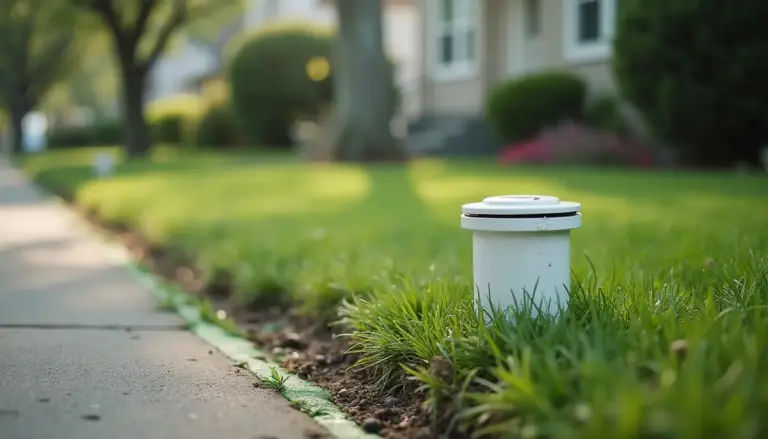
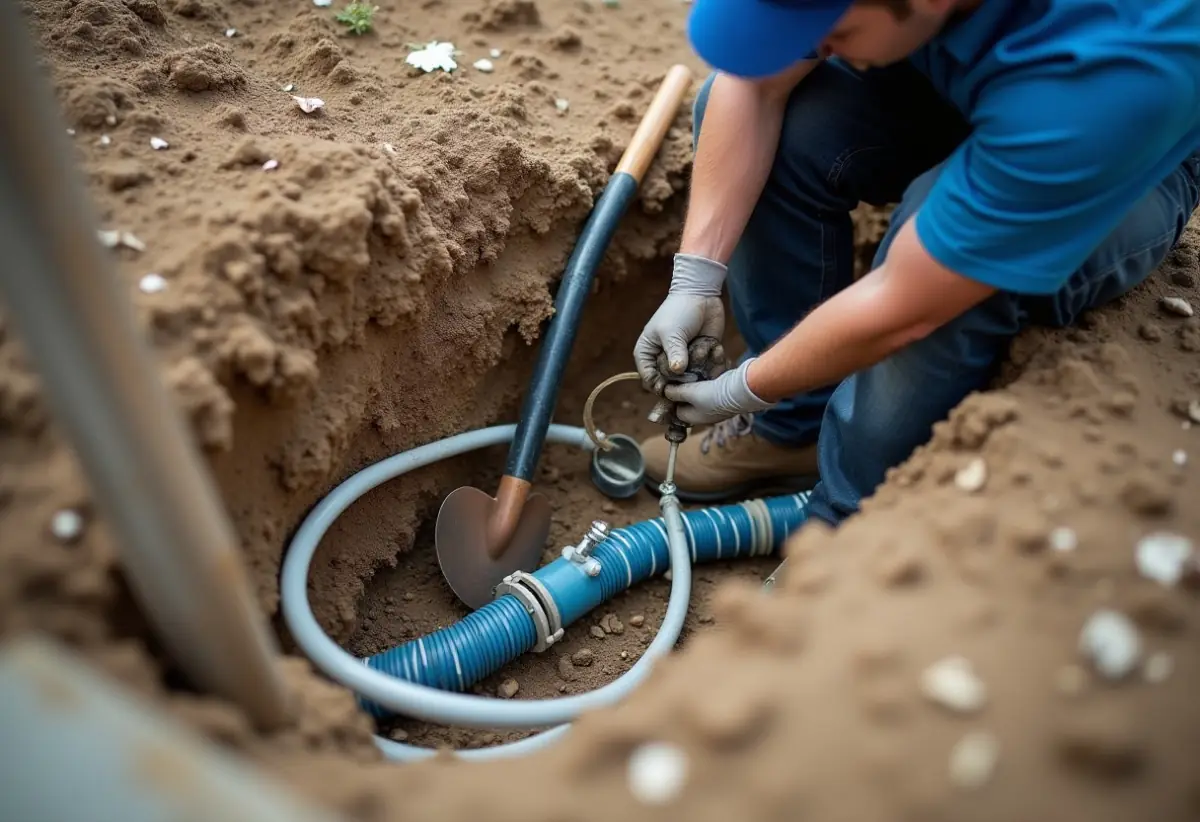
In most cases, yes. A composting toilet handles only toilet waste, so the water from sinks, showers, tubs, dishwashers and laundry still needs an approved place to go. Depending on your state, that may be a septic system, a permitted greywater system or a public sewer connection, though some states reward a waterless toilet with a smaller drainfield.
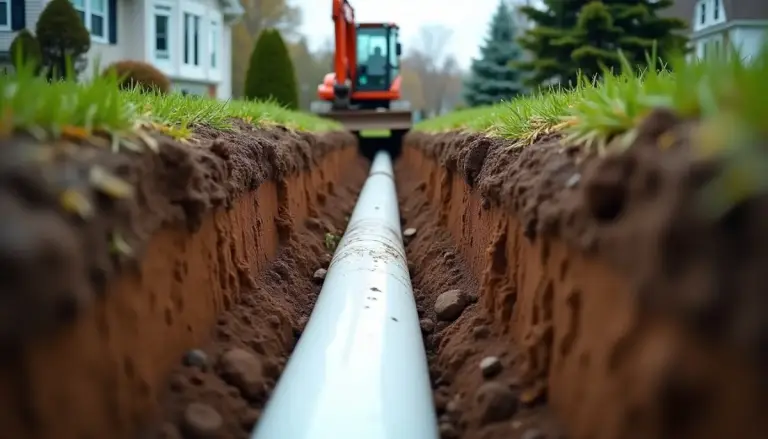
The first question is whether your home is on septic or sewer. A sewered home keeps sending greywater to the main. A rural home needs a permitted system on the lot, and it helps to know how a septic tank and drainfield work, because that drainfield is the expensive part a composting toilet may let you shrink.
- Massachusetts sends greywater to a septic tank and soil absorption system. A Department-approved filter may replace the tank, but only when no garbage grinder waste or toilet liquid goes to the greywater system.
- Oregon allows greywater to an existing onsite system that is not failing, a public sewer, or a new system whose absorption area is two-thirds of normal size, under the conditions in OAR 340-071-0320.
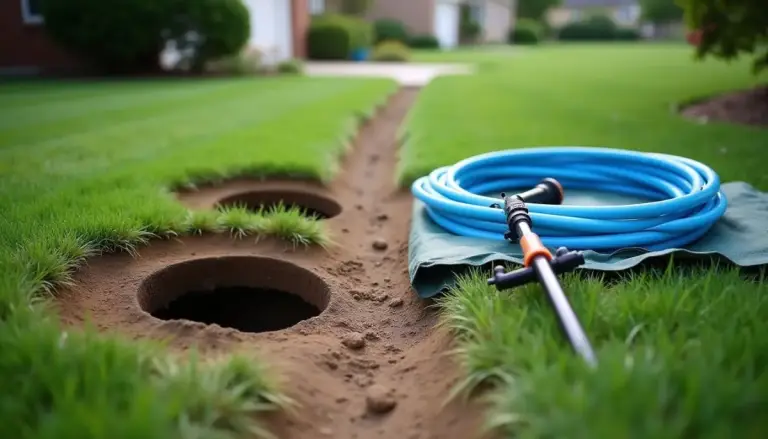
- Washington says in WAC 246-274-005 that a greywater irrigation system does not replace an approved on-site sewage system or sewer connection, including in buildings with waterless toilets.
Reusing that water outdoors is a separate permit in most states. Our guide to how a greywater system handles sink and shower water covers laundry-to-garden setups, branched drains and the codes that govern them.
How much does a composting toilet cost?
A composting toilet costs about $639 to $2,620 at maker list prices, based on the Nature’s Head and Sun-Mar models we checked in October 2026. Central systems from Clivus Multrum are priced per project after a site questionnaire. Venting, a power supply, permit fees and any greywater or drainfield work come on top of the unit price.
- Nature’s Head lists its standard, urine-diverter and Weekender models at $965 each, with blemished units at $845. The fan runs on 12V DC and draws about 0.07 amps, and the 110V adapter costs extra.
- Sun-Mar lists the self-contained Excel at $2,070, the Excel NE at $1,825, the Compact at $2,050 and the Spacesaver at $1,995. Its central Centrex line runs from $1,875 (Centrex 1000 NE) to $2,620 (Centrex 3000).
- Clivus Multrum New England sends a budgetary estimate for the composter, toilet fixtures and parts after you complete a project questionnaire.
The 1998 Clearinghouse fact sheet put a year-round system for two adults and two children at $1,200 to $6,000, and seasonal cottage systems at $700 to $1,500. Those are 1998 dollars, so treat them as a floor.
The bigger savings often sit in the wastewater system: a smaller drainfield where your state allows one, or no long sewer tie-in on a remote lot.
How much water does a composting toilet save?
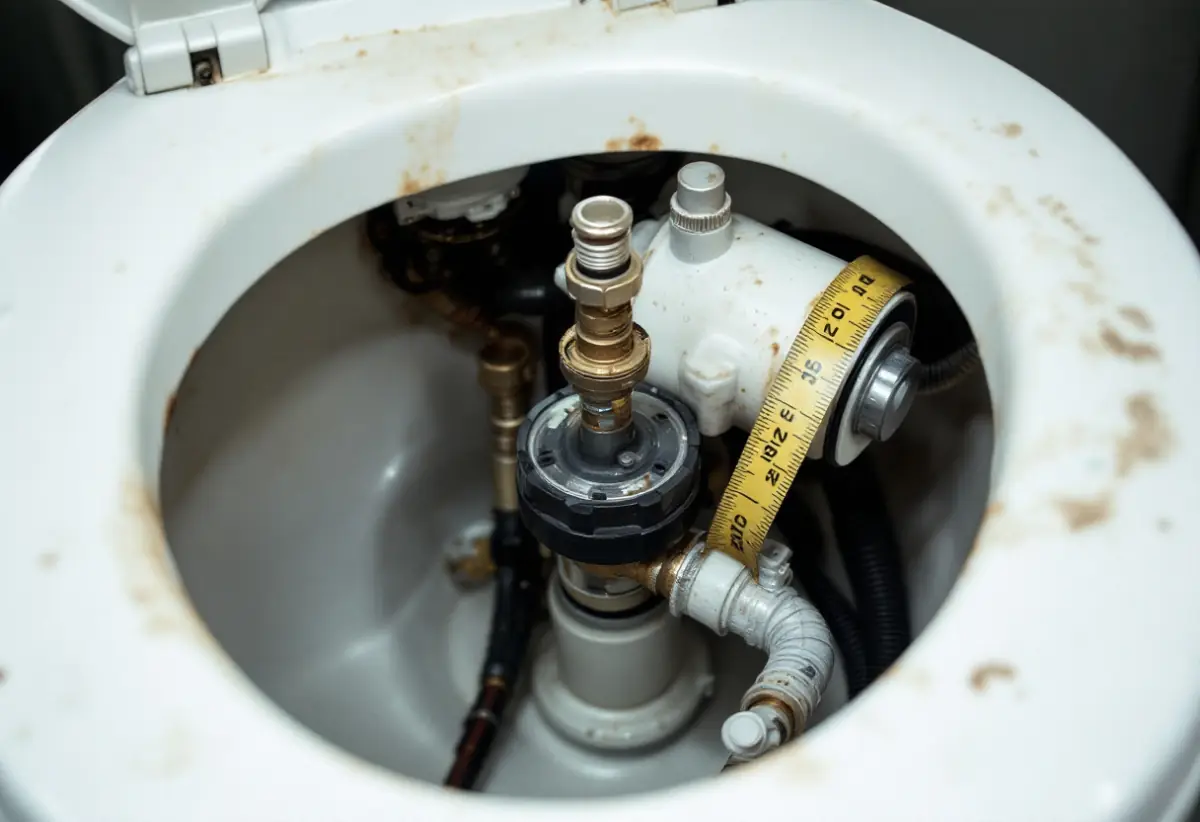
A composting toilet removes the single largest indoor water use in a typical home. The Water Research Foundation’s REU2016 study measured toilets at 32.6 gallons per household per day, or 24% of indoor use. By our arithmetic, that comes to roughly 11,900 gallons a year for an average household, before counting any leaks from a running flapper.
REU2016 found the average flush at 2.6 gallons, about five flushes per person per day. The EPA WaterSense program puts toilets at nearly 30% of indoor use and notes that older toilets can use as much as 6 gallons per flush.
If you only want to cut water use, a WaterSense toilet at 1.28 gallons per flush or less is cheaper. A composting toilet earns its keep where there is no sewer, poor drainfield soil, or scarce water.
Do composting toilets smell, and how do you maintain one?
A working composting toilet should smell like damp soil or nothing at all, because the fan keeps the bowl under slight suction and sends air out a dedicated vent. Odor almost always means a problem you can fix: a pile that is too wet, a fan that stopped, a blocked or poorly routed vent, or too little carbon bedding.
NSF’s test protocol, as summarized in the Washington guidance, requires that the solid end product not give off an objectionable odor right after removal, stay at or under 65% moisture, and carry no more than 200 MPN of fecal coliform per gram.
Routine upkeep
- Add a scoop of carbon bedding, such as coconut coir, peat moss or sawdust, after each solid use.
- Turn the agitator or crank every few uses to mix in air.
- Empty the urine bottle on a diverting unit every few days; the Nature’s Head bottle holds 2.2 gallons.
- Empty the solids bin when it reaches capacity, which Nature’s Head puts at 60 to 80 uses.
- Check that the fan runs nonstop and the vent cap is clear of insects, leaves and frost.
Emptying and the finished material
The 1998 Clearinghouse fact sheet says finished material must come out anywhere from every 3 months for a cottage system to every 2 years for a large central system. It adds that the humus legally must be buried or removed by a licensed septage hauler under state and local rules.
How we sourced this
We consulted 18 sources on 18 October 2026 and cite 13. Water figures come from REU2016 and EPA WaterSense. Rules come from the ANSI listing for NSF/ANSI 41, Washington DOH 337-016 and WAC 246-274-005, Massachusetts 310 CMR 15.289, and Oregon OAR 340-071-0320 and 0330. Prices come from Nature’s Head and Sun-Mar product pages as listed in October 2026; Sun-Mar’s page does not state a currency. Historic costs come from the 1998 Clearinghouse fact sheet. We excluded cost-guide sites that did not show a method, and we did not read the paid text of NSF/ANSI 41 itself. State rules change, so confirm with your county before you buy. Sun-Mar’s site lists prices without naming a currency, so treat those figures as approximate list prices.
Frequently asked questions
Are composting toilets legal in the US?
In many states, yes, but the rules sit with state and county health or environmental agencies. Washington lets local health officers permit models on its registered product list, Massachusetts certifies them under Title 5 with conditions, and Oregon routes approval through its State Building Codes Division. Call your county health department before you buy one.
How often do you empty a composting toilet?
It depends on the size and the number of users. Nature’s Head says its solids bin holds 60 to 80 uses, about a month for two people, and its urine bottle needs emptying every few days. Large central systems may need finished material removed only every two years.
Do composting toilets smell?
A working unit should smell like damp soil or nothing at all, because a fan pulls air out through a vent to the outdoors. Odor usually means the pile is too wet, the fan stopped, the vent is blocked, or the bin needs more carbon bedding such as coir, peat or sawdust.
Do you still need a septic system if you have a composting toilet?
Usually yes. A composting toilet handles only toilet waste, so water from sinks, showers and laundry still needs an approved home for it. In most states that means a septic system, a permitted greywater system or a sewer connection, though some states allow a smaller drainfield when the toilet is waterless.
How much does a composting toilet cost?
Self-contained units start near $965 for a Nature’s Head and run about $1,825 to $2,070 for Sun-Mar’s self-contained models at list price. Sun-Mar’s central Centrex systems list at $1,875 to $2,620 before installation. Venting, power, permits and any greywater work add to the total.
Can you pee in a composting toilet?
Yes. Urine-diverting models send urine to a separate bottle or drain so the solids stay dry, which speeds drying and cuts odor. Mixed models take urine and solids together and rely on airflow, sometimes heat, and on many units a drain to manage the extra liquid.
What are the disadvantages of a composting toilet?
They need more hands-on care than a flush toilet. You add bedding, empty bins, keep the fan running and handle the finished material by the rules your state sets. A 1998 EPA-funded fact sheet also lists limited peak capacity on small units and odor problems when maintenance slips.