Comfort Height Toilet: Is a Taller Toilet Right for You?
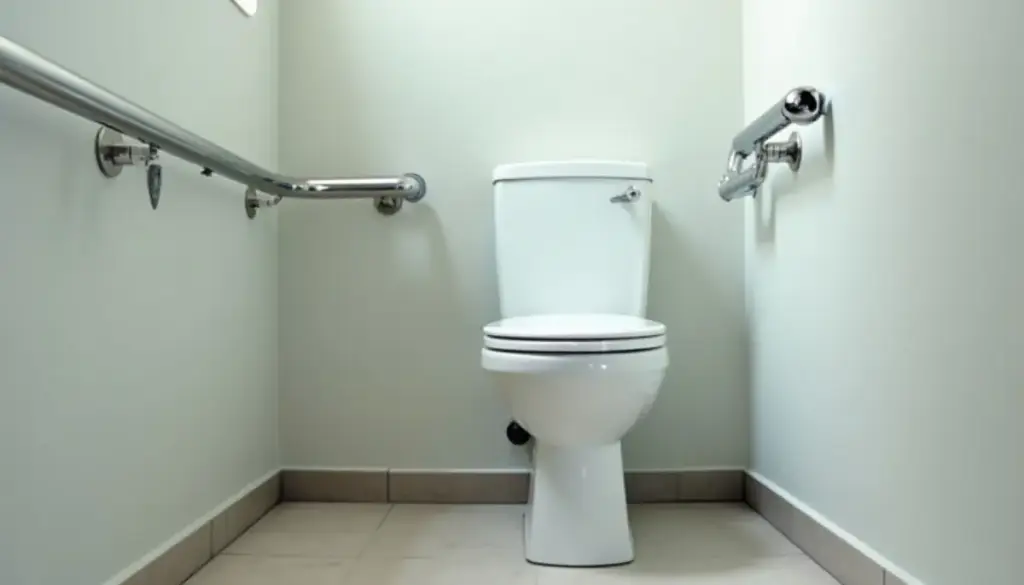
A comfort height toilet puts the seat about 17 to 19 inches off the floor, roughly 1.5 to 3 inches above a standard bowl, which helps tall adults and sore knees but can leave shorter people with dangling feet.
Key Takeaways
- The 2010 ADA Standards, Section 604.4, set an accessible toilet seat at 17 to 19 inches from the floor to the top of the seat.
- Inside private homes covered by the ADA, Exception 2 to 604.4 allows a wider 15 to 19 inch seat height, per the US Access Board text.
- American Standard lists its Champion 4 one-piece at a 15 inch rim in standard height and a 16-1/2 inch rim in chair height, with 18-7/16 inches to the seat top.
- The same Champion 4 cost $592.15 in chair height and $545.35 in standard height on americanstandard-us.com in October 2026, a $46.80 premium.
- Kohler calls the taller bowl Comfort Height, American Standard uses Right Height or Chair Height, and TOTO uses Universal Height. All describe roughly the same chair-like seat.
- A 2019 Ohio State study of 52 adults in the Journal of Clinical Gastroenterology found a footstool cut straining (odds ratio 0.23), which matters if a taller bowl leaves your feet off the floor.
What is a comfort height toilet?
A comfort height toilet is a bowl built taller than the old residential norm so the seat lands near the height of a dining chair, roughly 17 to 19 inches from the floor once a seat is on. The goal is less squatting on the way down and less push on the way up. The name is a brand term, but the idea is industry-wide. Choosing a comfort height model still means checking toilet clearance requirements before installation, since bowl height can affect surrounding fit. toilet clearance requirements. Before swapping fixtures, matching the new bowl to a properly sized seat matters, as covered in toilet seat sizing and replacement.
Kohler trademarked Comfort Height and labels those models as chair height toilets. American Standard sells the same concept as Right Height and, on its current store, Chair Height. TOTO calls its taller bowls Universal Height.
Height is only one spec on a toilet. It sits alongside bowl shape, one-piece or two-piece build, flush type and rough-in, which we break down in our guide to the main toilet types. You can mix a taller bowl with almost any of those options.
How tall is a comfort height toilet vs a standard height toilet?
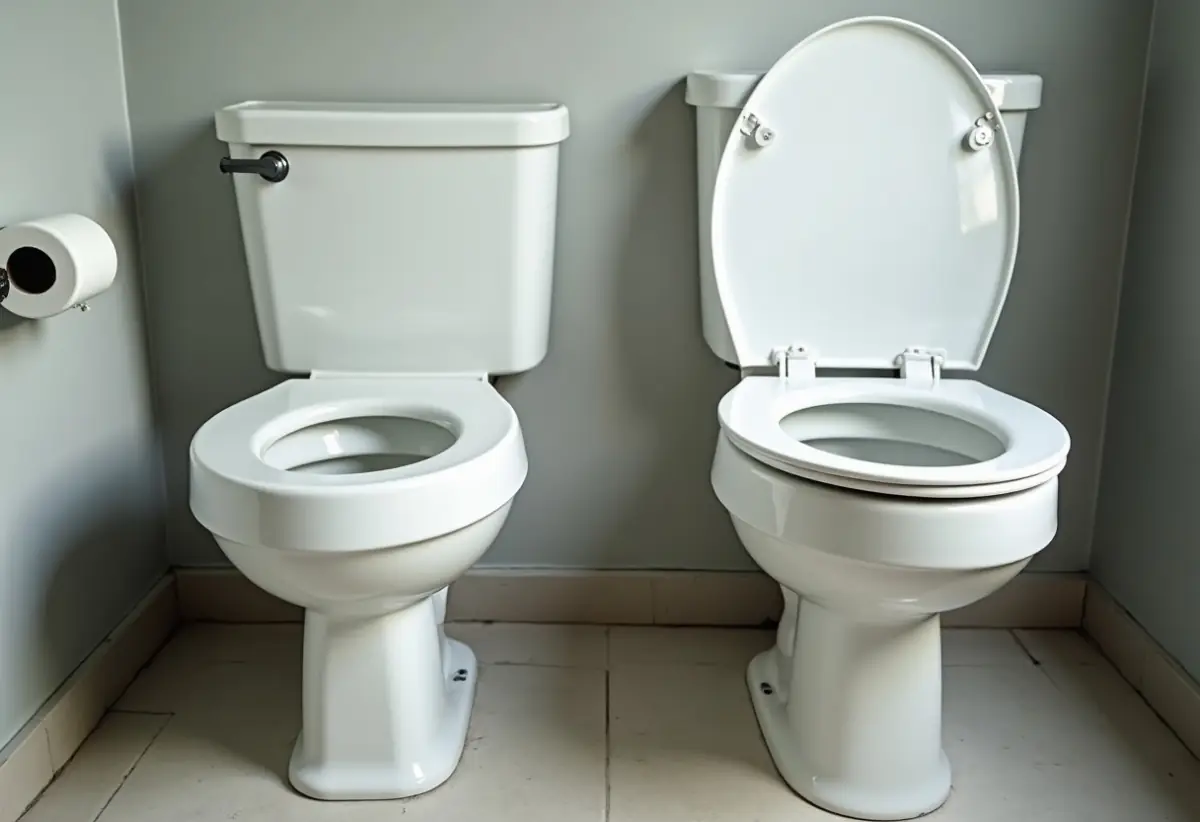
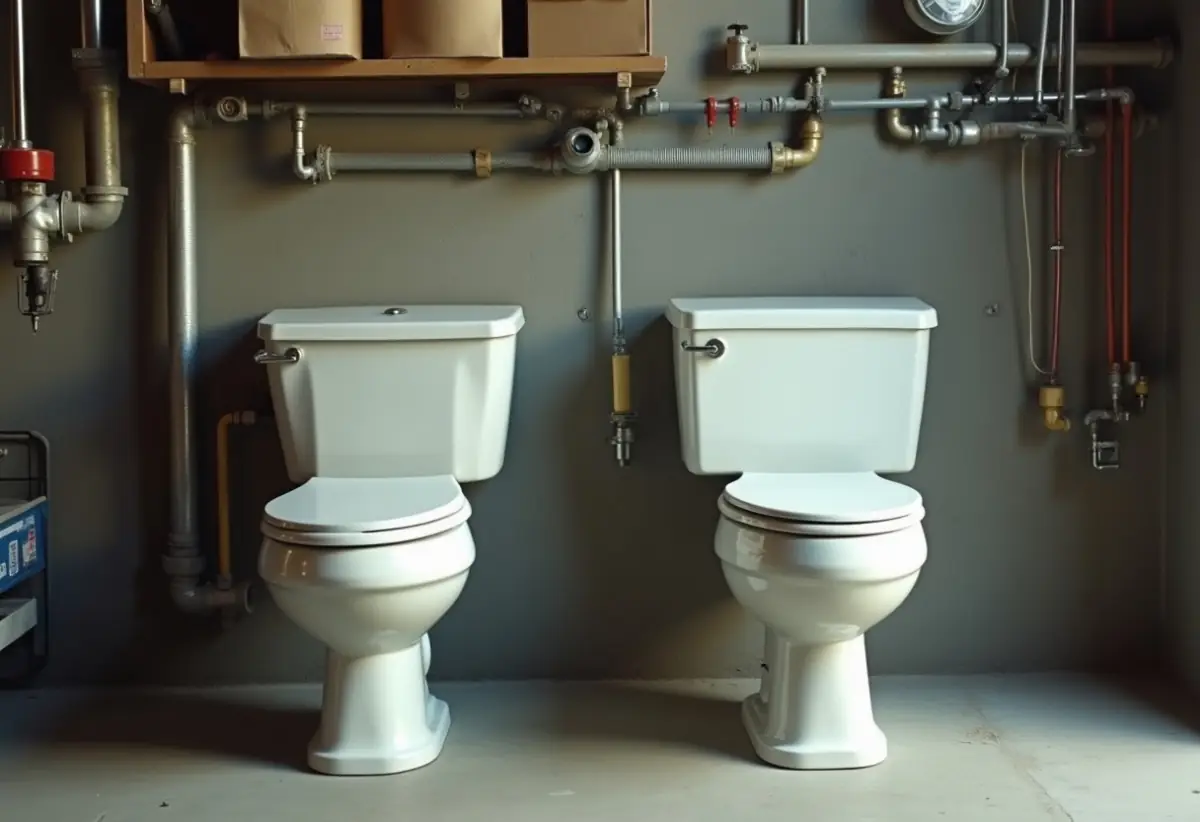
A standard height bowl usually measures about 15 inches from the floor to the rim, and a comfort height bowl about 16-1/2 to 18 inches. American Standard’s spec pages show the Champion 4 one-piece at a 15 inch rim in standard height and a 16-1/2 inch rim in chair height. The seat then adds height on top of the rim.
How much the seat adds varies. American Standard lists 17 inches to the seat top for its Champion PRO chair height elongated toilet and 18-7/16 inches for the chair height Champion 4 one-piece. That spread inside one brand is why you should read the seat-top figure, not just the marketing label.
Kohler product copy carried by the retailer Ferguson describes Comfort Height bowls at 16-1/2 to 18 inches, about the height of a standard chair. Distributor listings for TOTO’s Drake Universal Height bowl give a 16-1/8 inch rim height.
| Height type | Bowl rim height | Seat height (floor to seat top) | Best for |
|---|---|---|---|
| Children’s toilet (ADA 604.9) | Varies by model | 11 to 17 in, by age group | Schools, daycare, kids’ baths |
| Standard height (American Standard Champion 4 standard) | 15 in | Rim plus seat; check the spec sheet | Shorter adults, children, footstool users |
| TOTO Universal Height (Drake bowl) | 16-1/8 in (distributor listing) | Rim plus seat | Mixed-height households |
| American Standard Right Height or Chair Height | 16-1/2 in | 17 in (Champion PRO) to 18-7/16 in (Champion 4) | Tall adults, knee or hip trouble |
| Kohler Comfort Height | 16-1/2 to 18 in (Kohler copy via Ferguson) | Rim plus seat | Tall adults, older adults |
| ADA accessible water closet (604.4) | Not specified | 17 to 19 in | Public and commercial restrooms, wheelchair transfer |
| ADA residential exception (604.4, Exc. 2) | Not specified | 15 to 19 in | Accessible dwelling units |
What does the ADA say about toilet height?
The ADA sets the seat of an accessible toilet at 17 inches minimum and 19 inches maximum above the finish floor, measured to the top of the seat. That rule lives in Section 604.4 of the 2010 ADA Standards, published by the US Access Board. It also bans seats sprung to flip up on their own.
Two exceptions matter for homes. A single-user toilet reached only through a private office does not have to meet 604.4. And in residential dwelling units, Exception 2 allows a seat height of 15 to 19 inches, so a standard bowl can still count in an accessible apartment.
The ADA also covers children. Section 604.9.3 allows children’s toilets at 11 to 17 inches to the seat top, and the advisory table suggests 11 to 12 inches for ages 3 and 4, 12 to 15 inches for ages 5 through 8, and 15 to 17 inches for ages 9 through 12. Single-family homes generally fall outside the ADA.
Who benefits from a comfort height toilet?
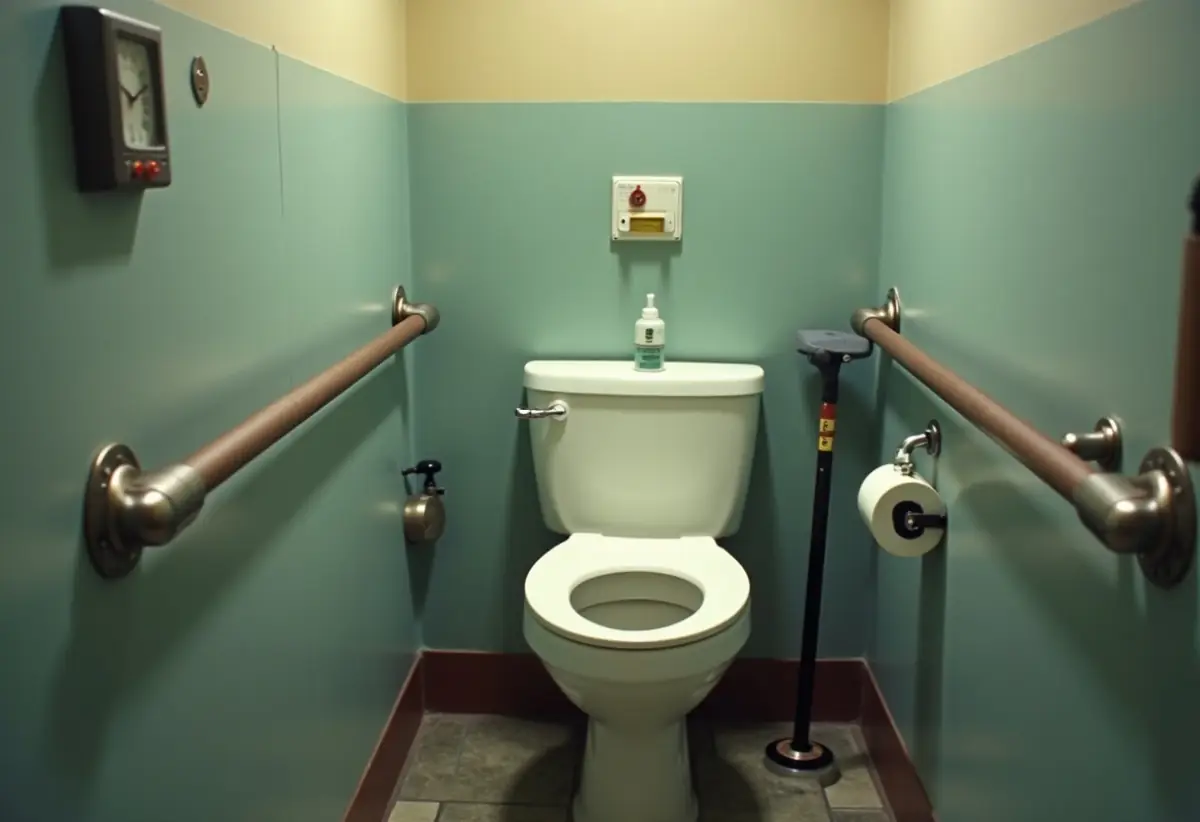
A comfort height toilet helps people who struggle to lower themselves onto a low seat or push back up from it. That group includes many older adults, people with arthritis or weak knees, anyone recovering from hip or knee surgery, wheelchair users who transfer sideways, and taller adults whose knees end up above their hips on a 15 inch bowl.
The safety case is real. A CDC analysis of 2008 emergency room data estimated 234,094 nonfatal bathroom injuries among people 15 and older, with 81.1 percent caused by falls and injury rates climbing with age. A seat closer to chair height shortens the riskiest part of the motion.
- Tall adults. A seat near 17 to 19 inches keeps the thighs closer to level.
- Older adults and aging-in-place remodels. Less deep bending, especially when paired with a grab bar at the side wall.
- Knee, hip or back limits. Less load on the joints while sitting and standing.
- Wheelchair transfers. The 17 to 19 inch ADA band is the height accessible public restrooms use for side transfers.
Who should skip a taller toilet?
Shorter adults and small children are the main people a comfort height toilet can shortchange. If your feet do not rest flat on the floor, the front edge of the seat presses into the back of the thighs and you lose a stable base. Many retail guides draw the line near 5 feet 4 inches, though fit depends on leg length, not height alone.
The other debate is posture. Some clinicians argue a lower seat, with knees above hips, makes bowel movements easier. The best-known data point is a 2019 Ohio State study in the Journal of Clinical Gastroenterology. Among 52 healthy volunteers, a footstool under the feet raised the odds of complete emptying (odds ratio 3.64) and cut straining (odds ratio 0.23).
Read that study with care. It was small, the participants averaged 29 years old, and it tested a footstool, not toilet height. Still, a footstool in front of a comfort height toilet gives a shorter user the knee lift without lowering the seat for everyone else.
How do you measure toilet height before you buy?
Measure from the finished floor straight up to the top of the seat, since that is the figure the ADA uses and the one your body feels. Then measure the rim with the seat lifted, because spec sheets list rim height and the seat adds more on top. Test at home by sitting on chairs of known heights to find your sweet spot.
- Measure your current toilet from the floor to the rim and from the floor to the top of the closed seat.
- Sit on a kitchen chair or bench, measure its seat, and note where your feet land and how easy it is to stand.
- Pick a target seat height and look up the new model’s rim and seat height on the manufacturer’s spec page.
- Account for the seat you plan to use. Slow-close and bidet seats can sit taller than a basic seat.
- If you are adding new tile or a thicker floor, subtract that thickness from the final height.
Height is separate from the toilet rough-in measurement, the distance from the finished wall to the center of the floor bolts. American Standard sells its standard and chair height Champion models on the same 12 inch rough-in, so a taller bowl normally bolts to the existing flange.
How much more does a comfort height toilet cost?
A comfort height toilet usually costs a little more than the same model in standard height. On American Standard’s own store in October 2026, the Champion 4 one-piece elongated with seat sold for $592.15 in chair height and $545.35 in standard height. That is a $46.80 gap, about 9 percent, on otherwise matching toilets.
Labor does not change with height. Swapping a standard bowl for a taller one is the same job as any replacement, covered step by step in our guide on how to install a toilet. Compare the same series in both heights, since prices shift by retailer and color.
Shape is the other common upgrade. Many comfort height models pair the taller bowl with an elongated shape, as most of American Standard’s chair height Champion listings do, and the two features often suit the same buyers. Our comparison of elongated vs round toilet bowls covers the size tradeoff and whether a longer bowl fits a tight powder room.
Are raised seats or toilet risers a better fix than a new comfort height toilet?
Raised seats and toilet risers are often the quicker, cheaper fix when only one person needs extra height or the need is temporary. A raised seat clips or bolts onto the bowl, while a riser lifts the whole toilet off the floor. A new comfort height toilet is the cleaner answer when the whole household will use the taller seat.
| Option | How it adds height | Best fit | Watch for |
|---|---|---|---|
| Raised toilet seat | Thick seat or add-on ring clamps to the existing bowl | Hip or knee surgery recovery, renters | Some models shift if not locked down; harder to clean |
| Toilet riser (base plate) | Plate under the toilet lifts the whole fixture | Keeping a toilet you like | Needs a pull and reset with a new seal; may need a flange extension |
| Comfort height toilet | Taller bowl casting | Remodels, aging in place, tall households | Shorter users may need a footstool |
| Wall-hung toilet | Bowl mounts on an in-wall carrier at a chosen height | Custom heights in a gut remodel | Carrier and wall framing add cost |
Whatever you choose, add a grab bar. The ADA places grab bars 33 to 36 inches above the floor at accessible toilets under Section 609.4, and that height works as a starting point at home too.
How we sourced this
Accessibility figures come from the 2010 ADA Standards as published by the US Access Board (Sections 604.2, 604.4, 604.9 and 609.4), read in full text in October 2026. Rim heights, seat-top heights, rough-in and prices for American Standard Champion 4 and Champion PRO toilets come from americanstandard-us.com product pages viewed in October 2026; prices change often. Kohler Comfort Height and TOTO Universal Height dimensions come from retailer and distributor listings, because the manufacturer pages blocked automated access, so confirm them on the spec sheet for your exact model. Injury data comes from CDC’s 2011 MMWR report on 2008 emergency room visits. The footstool findings come from the PubMed abstract of Modi et al., 2019. Retailer guides such as Fixr were read for context only; the 5 foot 4 inch rule of thumb is retail guidance, not a standard.
Frequently asked questions
What is the difference between comfort height and standard height toilets?
The difference is about 1.5 to 3 inches at the bowl rim. American Standard lists its standard-height Champion 4 at a 15 inch rim and the chair-height version at 16-1/2 inches, while Kohler product copy puts Comfort Height bowls at 16-1/2 to 18 inches. With a seat on, comfort height lands near the 17 to 19 inch ADA range.
What is the ADA height for a toilet?
Section 604.4 of the 2010 ADA Standards sets the seat height of an accessible water closet at 17 inches minimum and 19 inches maximum, measured from the finish floor to the top of the seat. Inside residential dwelling units, an exception allows 15 to 19 inches. Children’s toilets built under 604.9 use 11 to 17 inches.
Is a comfort height toilet good for seniors?
Often, yes. A higher seat shortens the distance an older adult has to lower and lift their body, which many people with stiff knees or hips find easier. The CDC counted about 234,094 emergency room visits for bathroom injuries in 2008, most of them falls, with rates rising by age. Pair the taller bowl with a grab bar.
Are comfort height toilets bad for short people?
They can be uncomfortable. If your feet do not rest flat on the floor, the seat edge presses into the back of the thighs and you lose a stable base for pushing. Many adults under roughly 5 feet 4 inches find a standard bowl easier. A small footstool in front of a taller bowl is a cheap middle ground.
Does a comfort height toilet need a different rough-in?
No. Bowl height and rough-in are separate measurements. American Standard sells its standard-height and chair-height Champion models on the same 12 inch rough-in, so a taller bowl normally bolts to the existing flange. Measure from the finished wall to the center of the floor bolts before ordering any replacement, since 10 and 14 inch rough-ins also exist.
How much more does a comfort height toilet cost?
Usually a little. On American Standard’s own store in October 2026, the Champion 4 one-piece elongated sold for $592.15 in chair height versus $545.35 in standard height, a $46.80 gap of about 9 percent. Installation labor is the same for either height, so the premium is mostly the fixture itself.
Can I just add a raised toilet seat instead?
Yes, for many people that is the faster fix. A raised seat or a toilet riser lifts the seat without replacing the bowl, which suits renters, short-term recovery after hip or knee surgery, or a single family member who needs the extra height. A new comfort height bowl is the cleaner long-term answer when everyone in the home will use it.
Is a 19 inch toilet too high?
Nineteen inches is the top of the range the article cites, matching the ADA maximum seat height under Section 604.4 and the residential exception that allows 15 to 19 inches. At that height shorter adults may have feet that do not rest flat on the floor, pressing the seat edge into the thighs. Retail guides put the comfort cutoff near 5 feet 4 inches, and a footstool can help.