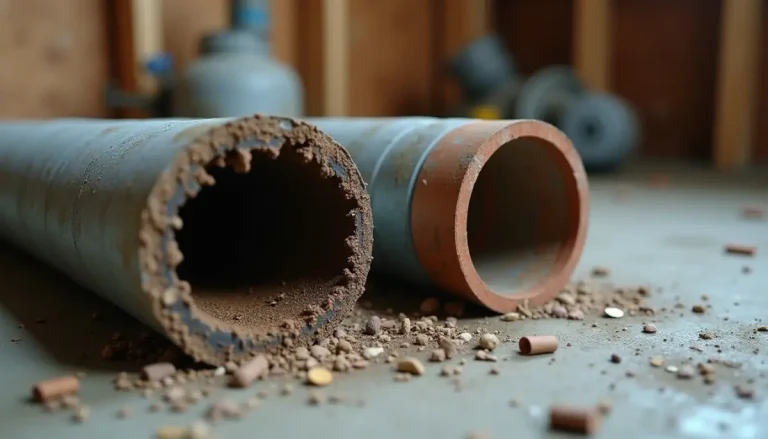
How to Identify Lead Pipes in Your Home
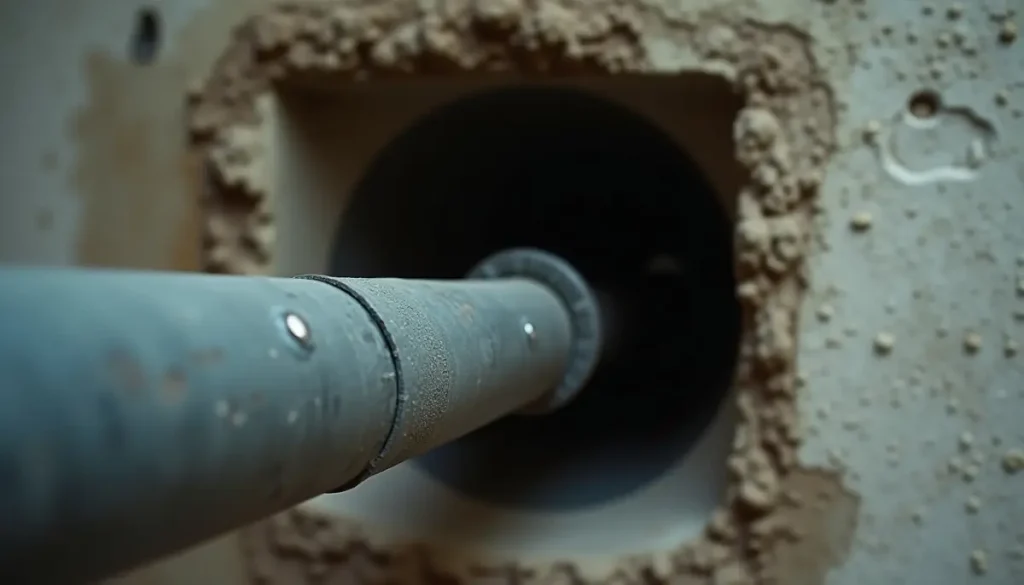
How to identify lead pipes: find the water line where it enters your home at the main shutoff, scratch it with a key, and if it shines silver and a magnet will not stick, it is probably lead.
Key Takeaways
- The EPA’s 7th Drinking Water Infrastructure Needs Survey estimated about 9.2 million lead service lines still carry water in the US.
- Lead scratches to bright silver and does not attract a magnet, copper scratches to a penny color, and galvanized steel stays gray and grabs a magnet, per EPA and utility guides.
- The EPA says lead pipes are most likely in homes built before 1986, the year the federal government banned new lead pipe installation.
- Water systems had to publish a service line inventory by October 16, 2024 under the EPA Lead and Copper Rule Revisions, so many offer a lead service line lookup by address.
- The EPA Lead and Copper Rule Improvements require most systems to replace lead service lines within 10 years and cut the lead action level from 15 to 10 micrograms per liter.
- The EPA puts a certified lab water test at $15 to $100, and the only sure way to know your lead level is to test.
Where do you look to identify lead pipes in your home?
Look at the water service line, the pipe that runs from the street to your house, at the spot where it comes through the wall or floor. In most homes that is in the basement, crawl space, garage or a utility closet, right before the main shutoff valve and the water meter. Test the short stretch of pipe between where it enters and that first valve.
That exposed run is the only part of the service line you can reach without digging, so it is your best sample. Do not open an outdoor meter pit without the utility’s permission.
Some homes give you nothing to see. On a slab foundation the line may come up through concrete inside a closet or under a water heater. If the pipe is boxed in, painted or wrapped in insulation, clear a spot an inch or two long so you can reach bare metal.
How do you do the scratch test for a lead pipe?
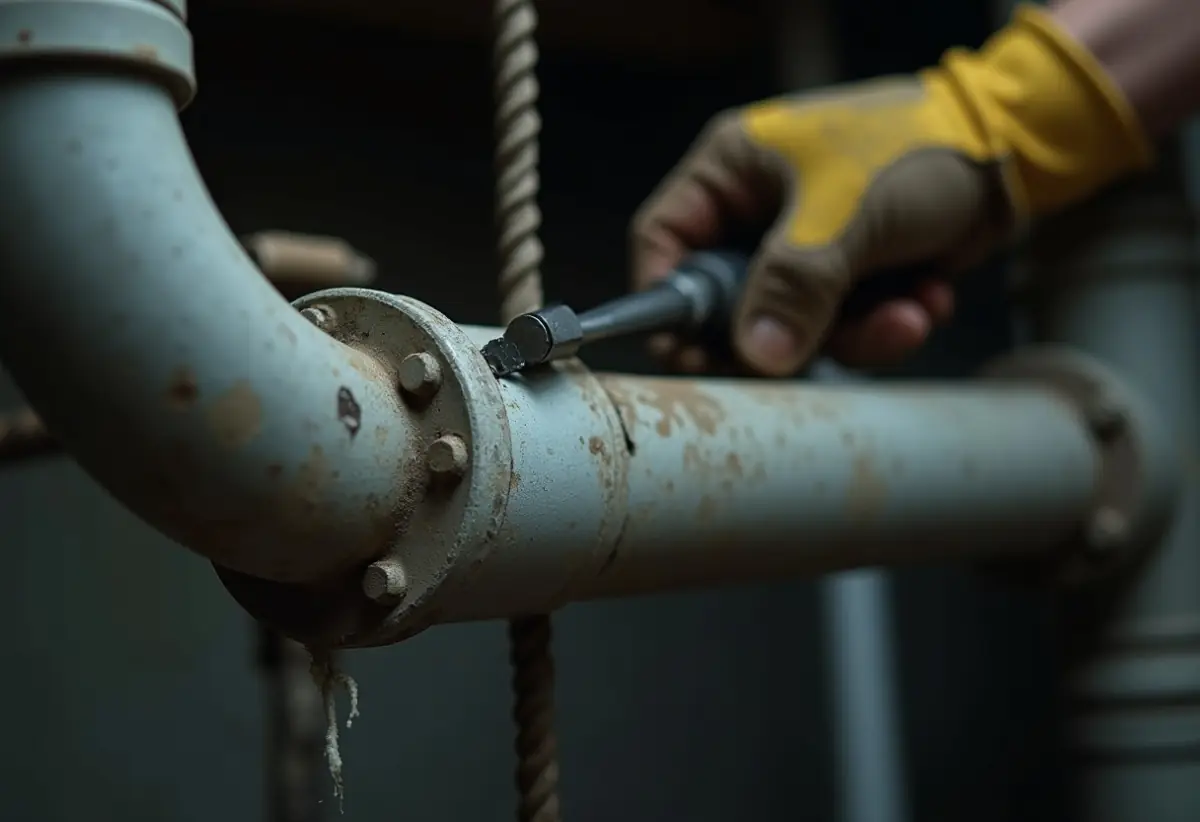
The scratch test takes about two minutes and three items: a coin or key, a strong magnet and a flat screwdriver or sandpaper for paint. Gently scrape a small spot on the service line, look at the color of the fresh metal, then hold the magnet to it. The EPA’s Protect Your Tap guide walks through the same steps with photos.
- Find the service line between the wall and the main shutoff valve.
- If it is painted or crusted, lightly sand a spot about the size of a thumbnail.
- Scratch the bare spot with the edge of a key or coin. Do not cut a groove into the pipe.
- Read the color of the scratch: shiny silver, penny copper or dull gray.
- Hold a strong magnet against the pipe. Note whether it pulls toward the metal.
- Tap the pipe with the coin. Lead gives a dull thud, per Lake County, Illinois guidance.
- Wash your hands and wipe the area with a damp paper towel, since you just scraped lead dust loose.
Scratch, do not gouge. Lead is soft, and a hard scrape can damage an old line that is already thin.
How can you tell lead pipes from copper, galvanized and plastic?
Each common service line material gives a different answer to the scratch and magnet tests. Lead scratches to shiny silver and is not magnetic. Copper scratches to the color of a new penny and is not magnetic. Galvanized steel stays dull gray when scratched and a magnet sticks. Plastic is not metal at all, so you will see no shine and feel no pull.
| Pipe material | Scratch color | Magnet sticks? | Other clues |
|---|---|---|---|
| Lead | Bright, shiny silver | No | Dull gray outside, soft enough to dent, bulb-shaped wiped joints, often slightly wavy or bowed |
| Copper | Penny copper or orange | No | Brown or green patina, soldered or flared brass fittings, rigid tubing |
| Galvanized steel | Stays dull gray | Yes | Threaded joints, rust stains at fittings, may sit downstream of a lead connector |
| Plastic (PEX, PVC, polyethylene) | No metal, color shows through | No | Blue, black, white or red, flexible or glued fittings, clamps at joints |
| Painted or wrapped pipe | Unknown until sanded | Test after sanding | Treat as unknown until you expose bare metal |
The magnet is the tiebreaker between lead and galvanized steel, since both look gray before you scratch them. Galvanized lines matter too. Under EPA rules a galvanized line that is or ever was downstream of lead counts as “galvanized requiring replacement,” because it can absorb lead and release it later.
What other clues tell you if you have lead pipes?
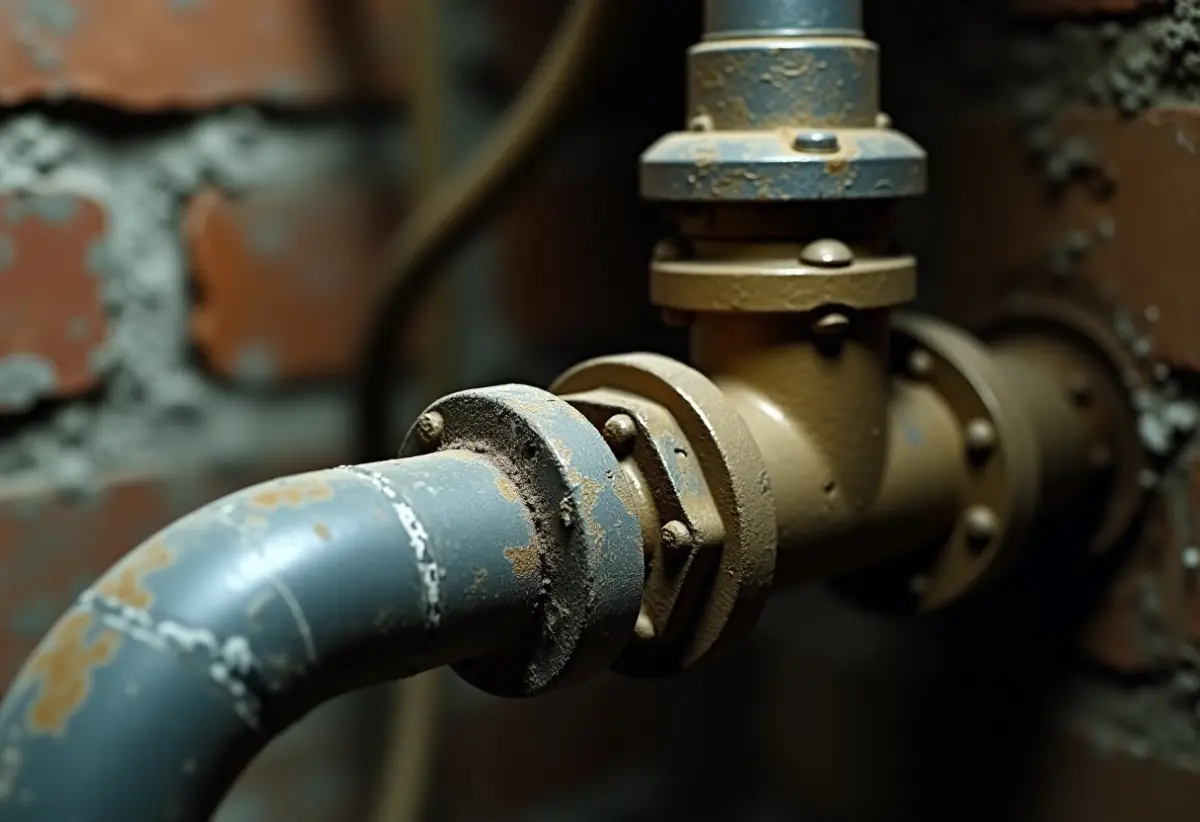
Your home’s age is the first clue. The EPA says lead pipes are more likely in older cities and in homes built before 1986, the year the federal government banned new lead pipe installation. Bulb-shaped joints, a short flexible connector near the meter and old brass fixtures are the other giveaways.
Lead lines were often joined with a “wiped” joint, a smooth, swollen bulge of solder where two sections meet. Many utilities also used a short lead connector, often called a gooseneck or pigtail, between the main and the service line. That piece can be lead even when the rest of the line is copper or galvanized.
Inside the house, lead can come from places other than pipe. The EPA notes that federal rules now cap solder and flux at 0.2 percent lead and pipes and fittings at a weighted average of 0.25 percent, but solder, faucets and valves made before those limits can hold far more.
- Lead solder: dull gray beads at copper joints in homes plumbed before the ban took hold in your state.
- Brass fixtures: older faucets, valves and meters can leach lead into standing water.
How does a lead service line lookup work?
A lead service line lookup is your water utility’s public record of what each service line is made of. The EPA Lead and Copper Rule Revisions required water systems to prepare a service line inventory by October 16, 2024, and to notify customers whose lines are lead, galvanized requiring replacement or unknown. Many post it as a map or address search.
Search your utility’s website for “service line inventory” or “lead service line map,” or call the number on your water bill. If your address shows unknown, your own scratch test result can help. Many utilities accept homeowner photos to reclassify a line, which our lead service line report covers in more detail.
The inventories feed the next rule. The EPA’s Lead and Copper Rule Improvements, issued October 8, 2024, require most systems to identify and replace lead pipes within 10 years and to keep updating their inventories. The EPA estimates about 26,000 water systems will have to replace lead or galvanized requiring replacement lines. Our Lead and Copper Rule Improvements explainer walks through the deadlines.
Where you live changes the odds. The EPA’s 7th survey put five states above 640,000 lead service lines each, led by Florida and Illinois, as reported by USAFacts.
Those figures are state projections from April 2023 survey data, and EPA has since refined state-level numbers as utility inventories came in. For every state, see our state-by-state breakdown of lead pipes.
How do you test your water for lead?
Send a first-draw sample to a certified lab. The EPA says you cannot see, taste or smell lead in water, so testing is the only sure way to know, and its Protect Your Tap guide puts a certified lab test at $15 to $100. Many utilities offer free kits to homes with lead or unknown lines.
- Call your utility first and ask whether it provides a free lead test kit.
- If not, ask your state drinking water program for a list of certified labs.
- Let water sit unused in the pipes for at least six hours, usually overnight.
- Fill the lab bottle from the cold kitchen tap first thing, before anyone runs water.
- Return the sample within the lab’s holding window and keep the chain of custody form.
A first-draw sample shows lead picked up by water sitting in your faucet and nearby plumbing. Lead from the service line can show up later in the flow, which is why the EPA’s new rule has utilities collect both the first and fifth liter at lead line homes and use the higher result. One clean test does not prove the line is not lead, so pair the test with the scratch test. For the bigger picture, see our guide on whether your tap water is safe to drink.
What should you do now if you have lead pipes?
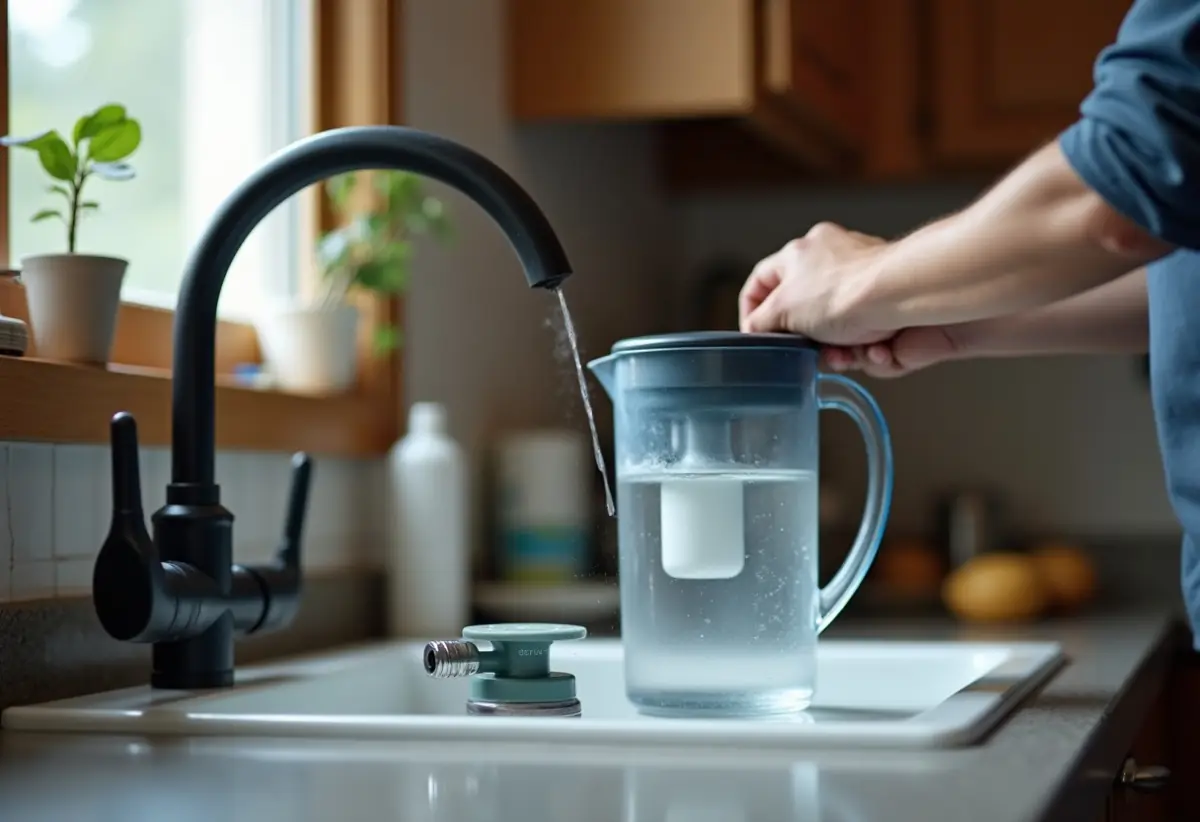
Cut your exposure today while you wait for testing or replacement. The EPA advises using only cold water for drinking, cooking and baby formula, flushing your pipes before drinking, cleaning faucet aerators and using a filter certified to remove lead. The EPA and CDC agree there is no known safe level of lead in a child’s blood.
- Flush: after water sits for hours, run the cold tap, shower or do a load of laundry before you drink.
- Use cold water only: hot water pulls more lead from pipes and fittings. Never boil water to remove lead, since boiling does not remove it.
- Filter: the EPA’s filter guide says to look for NSF/ANSI 53 for lead reduction plus NSF/ANSI 42 for Class I particulate reduction on the package.
- Clean aerators: unscrew the faucet screen every few months and rinse out trapped particles.
- Bathe normally: the EPA says showering and bathing should be safe because skin does not absorb lead in water.
Who pays to replace a lead service line, and what does it cost?
Costs vary by line length, depth and pavement. An EPA estimate cited by engineering firm Fehr Graham puts full replacement at about $4,700 per line on average, with a range of $1,200 to $12,300. Who pays depends on who owns each side of the line and whether your utility has grant or loan money.
Many service lines are split. The utility owns the part from the main to the curb stop or meter, and the homeowner owns the rest. Under the new federal rule the water system must replace the full line, but it may bill you for the private side if no grant covers it. Federal infrastructure money funds no-cost replacement in many cities.
Avoid replacing only your half if you can, since cutting the pipe can knock loose lead scale and raise lead levels for a time. Ask your utility to schedule both sides together, and get a written quote that names the pipe material and the permit.
How we sourced this
We reviewed top-ranking guides for “how to identify lead pipes,” mostly city utility pages, and People Also Ask questions in October 2026. We cited primary EPA material for testing, rules and health guidance: the Protect Your Tap guide, the Basic Information About Lead in Drinking Water page, the Lead and Copper Rule Revisions and Improvements pages and fact sheets, and the June 2024 filter guide. State counts come from EPA’s 7th Drinking Water Infrastructure Needs Survey as tabulated by USAFacts, and are projections, not utility inventories. The per-line cost is an EPA estimate as reported by Fehr Graham. We excluded vendor claims and any figure we could not tie to a named source.
Frequently asked questions
Can you tell if pipes are lead just by looking at them?
Not reliably. Unpainted lead often looks dull gray, the same as galvanized steel, so a look alone can fool you. Scratch a small spot with a key or coin and hold a strong magnet to it. Shiny silver under the scratch with no magnetic pull points to lead. Paint, wrap or heavy corrosion can hide the metal, so confirm with your utility or a licensed plumber.
What year did they stop using lead pipes?
The EPA says the federal government banned the installation of new lead pipes in 1986, and it lists homes built before 1986 as the most likely to have them. States needed time to adopt and enforce the ban, so a house finished in the late 1980s can still have lead solder or an older lead service line. The build year narrows the odds but does not settle the question.
Does a magnet stick to a lead pipe?
No. Lead is not magnetic, so a strong refrigerator magnet will slide right off. That is the quickest way to tell lead from galvanized steel, since both look gray on the outside. A magnet will grab galvanized steel. Copper is not magnetic either, but a scratch on copper turns the color of a new penny, while lead scratches to a bright silver.
Is it safe to shower if I have lead pipes?
Yes, according to the EPA. The agency says bathing and showering should be safe for adults and children even when water is above the lead action level, because human skin does not absorb lead in water. The risk comes from swallowing it, so focus on the water you drink, cook with and use for baby formula, and keep that water filtered or flushed.
How do I find out if my house has a lead service line?
Start with your water utility. Under the EPA Lead and Copper Rule Revisions, community water systems had to finish a service line inventory by October 16, 2024, and many publish a searchable map or address lookup. Lines marked lead, galvanized requiring replacement or unknown deserve a closer look, so check the pipe at your shutoff valve and ask the utility how to report what you find.
Do water filters remove lead?
Only filters certified for it. The EPA tells consumers to look for a filter that claims lead reduction and lists NSF/ANSI 53 for lead, plus NSF/ANSI 42 for Class I particulate reduction. Many pitchers and faucet mounts qualify, but plenty do not. Read the packaging for the certification mark, replace the cartridge on schedule and run only cold water through it.
How much does it cost to replace a lead service line?
The EPA estimate cited by engineering firm Fehr Graham puts a full lead service line replacement at about $4,700 on average, with a range of $1,200 to $12,300 per line. Length, depth, pavement and local labor drive the price. Many utilities now fund part or all of the work with state and federal money, so ask about a replacement program before you hire a plumber.