Shower Diverter Not Working? Causes and Fixes
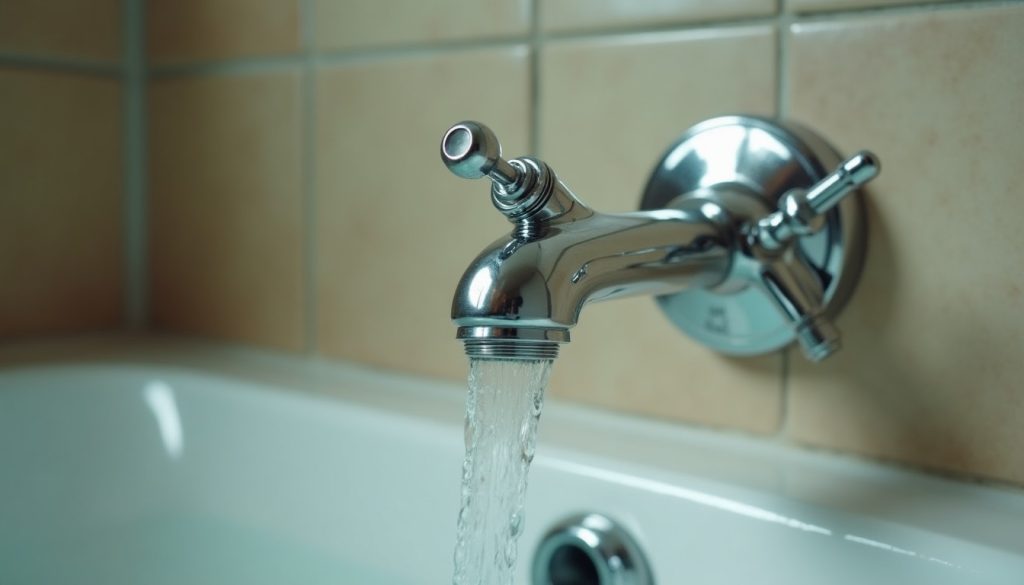
A shower diverter not working almost always comes down to a worn seal, mineral scale, or a tub spout installed on the wrong pipe stub, and Delta lists replacement diverter spouts for under $130.
Key Takeaways
- The ASME A112.18.1/CSA B125.1 standard lets a new bath and shower diverter leak up to 0.1 gallon per minute from the spout, according to EPA WaterSense at Work.
- In a field study cited by EPA, 34% of diverters leaked more than 0.1 gpm, with an average leak of 0.8 gpm and some as high as 3.0 gpm.
- Fixr puts shower diverter valve repair at $75 to $200 and a plumber-installed tub spout replacement at $150 to $275.
- Kohler says only 1/2 inch copper (Type L or M) should run between its valves and the tub spout, because PEX or PVC can push water to the showerhead and spout at once.
- Delta’s slip-on spouts need a copper stub of 1-1/2 to 2-3/4 inches (RP64721) or 2-3/4 to 4-1/4 inches (RP48718) past the finished wall, so the stub must match the spout.
- EPA recommends cleaning scale off a leaking diverter with white vinegar first and replacing it only if cleaning does not cut the leak.
Why is my shower diverter not working?
A shower diverter stops working when the part that blocks the tub path no longer seals. On a tub spout that part is a rubber-faced gate, and on an in-wall valve it is a stem washer or a cartridge. Wear, hard-water scale, and corrosion are the common causes, and a spout fitted to the wrong pipe stub can cause the same symptoms on a brand-new part.
EPA’s WaterSense program notes that diverters past their useful life, or hit by corrosion and scaling, leak more over time, and because that water is usually hot, they waste energy too.
Symptoms point to the cause:
- Heavy flow from the spout during a shower: worn gate washer, scale on the gate, or a cracked spout body.
- Pull-up knob falls down mid-shower: worn gate seal, scale, or low household water pressure.
- Knob or handle will not move at all: scale or corrosion has locked the gate or stem.
- Water splits evenly even with a new spout: shower-rise from the piping, covered below.
- Middle handle on a three-handle faucet spins freely: stripped diverter stem.
Which type of shower diverter do you have?
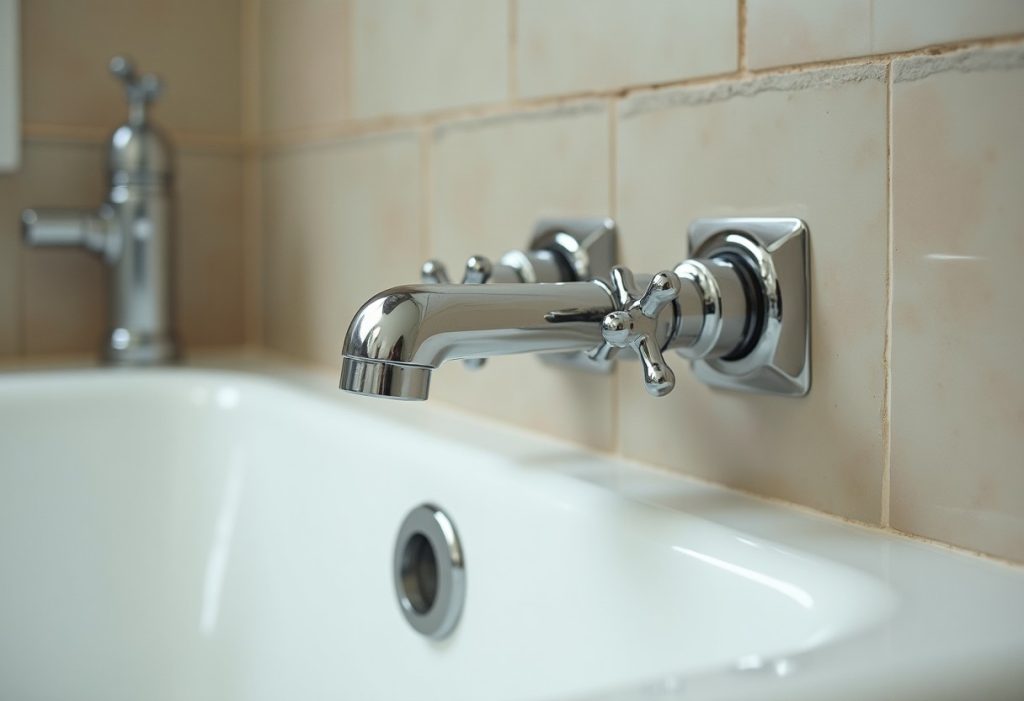
There are three diverter types, and the fix depends entirely on which one you have. A knob on top of the tub spout is a lift-gate spout diverter. A middle handle between hot and cold handles is a three-valve (tee) diverter. A separate knob or a setting on a single-handle trim is an in-wall diverter or transfer valve, often a cartridge.
If you are not sure what sits behind your trim plate, our guide to shower valve types shows how each body is built and how to tell them apart without opening the wall.
| Diverter type | How to tell | Common failure | Fix |
|---|---|---|---|
| Tub spout lift gate (pull-up diverter) | Knob or tab on top of the spout; pull up to start the shower | Worn gate washer, scale, cracked spout, wrong stub length | Clean with vinegar or replace the whole spout (slip-on or threaded) |
| Three-valve tee diverter | Three handles; the middle one sends water up or down | Worn washer and seat, stripped stem | Replace the diverter stem washer or the full stem |
| Separate in-wall diverter or transfer valve (for example Kohler K-305) | Its own knob, separate from the temperature handle | Worn cartridge, scale, wrong outlet piping | Replace the diverter cartridge; check piping |
| Diverter built into a single-handle valve | One handle or trim with a built-in selector for showerhead, spout, or handshower | Worn cartridge or seals | Replace the cartridge with the brand part |
| Shower arm diverter for a handheld | Small lever or dial on the shower arm, above the valve | Scale, worn O-rings | Soak in vinegar or replace the diverter fitting |
A shower arm diverter for a handshower is a fitting, not a valve, so swapping it is closer to changing a showerhead. Our rundown of types of shower heads covers the handheld combos that use one.
Why does water come out of the tub spout and shower head at the same time?
Water comes out of both outlets when the diverter is leaking or when the pipe between the valve and the spout restricts flow so much that water backs up into the shower riser. Manufacturers call the second problem shower-rise. A leaking diverter gets worse over time, while shower-rise usually starts on day one after a remodel or new spout.
Kohler’s support pages are direct about the piping cause. For its K-304, K-305 and related valves, Kohler says only 1/2 inch copper pipe, Type L or M, should run between the valve and the bath spout, and that PEX or PVC can cause back pressure because of its narrower inside diameter.
The HammerHead support team at The Shower Head Store lists the other common causes of water from the shower head and spout at once:
- The valve was installed upside down.
- The valve-to-spout distance falls outside the recommended 8 to 18 inches.
- The spout line has more than one 90-degree elbow.
- Solder, debris, or another obstruction is lodged in the pipe to the spout.
For debris, the same page suggests running a plumber’s snake up the tub drop with the spout off. Piping errors behind tile usually mean opening the wall, which is plumber work.
How much can a tub spout diverter leak before it counts as broken?
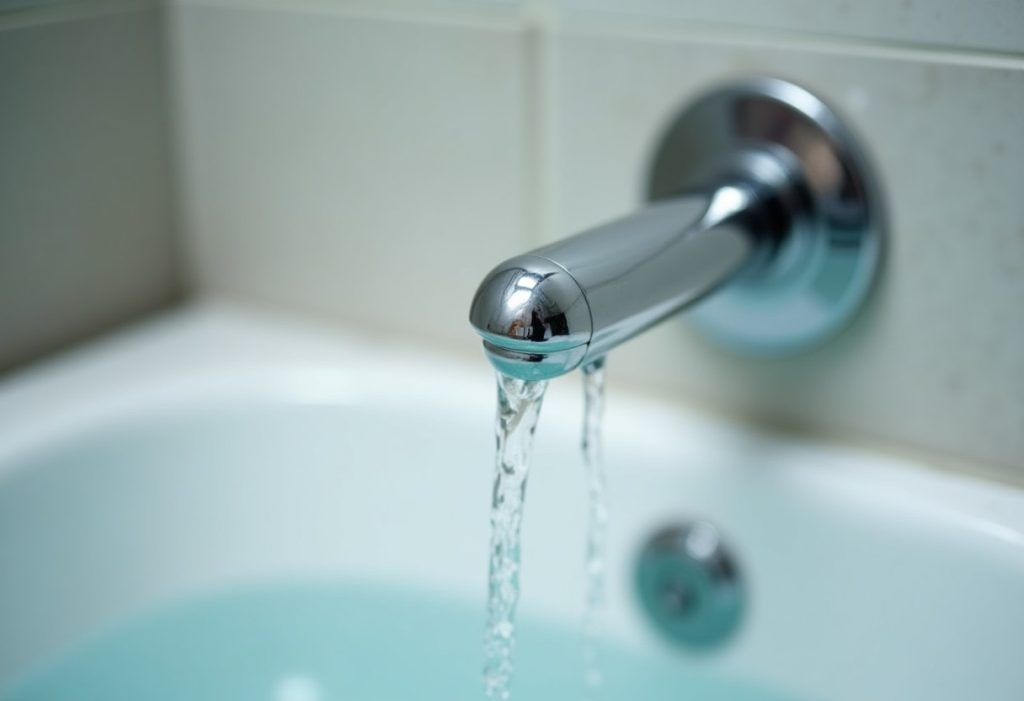
Some leakage is allowed. The ASME A112.18.1/CSA B125.1 standard lets a new bath and shower diverter leak up to 0.1 gallon per minute from the tub spout while the shower runs, according to EPA WaterSense. EPA treats leaks above about 0.2 gpm as the point to clean or replace the diverter, so a thin trickle is normal and a steady stream is not.
To measure your leak, hold a measuring cup under the spout for 15 seconds with the shower running. A gallon is 16 cups, so 0.2 gpm is about 0.8 cup in 15 seconds (our arithmetic).
At the study’s 0.8 gpm average, a 10-minute shower sends roughly 8 gallons of mostly hot water down the drain (our arithmetic).
One thing a diverter does not cause is a drip with the water fully off. A spout or showerhead that drips after you shut the handle points to a worn valve cartridge or washer, which our leaky shower faucet repair guide walks through by valve type.
How do you fix a tub spout diverter?
Most tub spout diverter problems are fixed by replacing the whole spout, because the gate is sealed inside and rarely sold as a part. Start by soaking the spout in white vinegar if scale is the issue, as EPA suggests. If the gate still leaks or drops, buy a spout that matches your pipe stub, slip-on for smooth copper or threaded for an iron-pipe nipple, and swap it.
Look under the spout for a small set screw. A screw means a slip-on spout on copper. No screw usually means a threaded spout on a 1/2 inch IPS nipple.
- Remove the old spout. For slip-on, loosen the set screw with a hex key and pull straight off. For threaded, turn counterclockwise, using a screwdriver handle in the spout opening for grip.
- Check the stub. Smooth copper takes a slip-on spout. Threads take a threaded spout. Putting a slip-on spout over threads, or the reverse, leaves a path for water to escape.
- Measure from the finished wall to the end of the pipe. Compare it with the new spout’s instruction sheet. Delta’s RP64721 wants copper cut 1-1/2 to 2-3/4 inches from the finished wall, or a threaded nipple of 3-7/8 to 4 inches. Delta’s RP48718 wants copper 2-3/4 to 4-1/4 inches long.
- Correct the stub if needed. Cut long copper with a tubing cutter. Short copper or a wrong-length nipple needs a new piece, which can mean soldering or a new nipple.
- Prep the pipe. Delta says the copper end must be chamfered and free of burrs so it does not cut the O-ring in the adapter.
- Install the new spout. Slide the slip-on adapter over the copper and snug the set screw without overtightening, or thread the spout on until it sits firm against the wall.
- Test it. Run the tub, pull the diverter, and do the 15-second cup test.
Stub length is where DIY swaps go wrong. Too short, and the adapter O-ring may not seal on the copper. Too long, and the pipe can interfere with the gate or hold the spout off the wall. Ranges vary by model, so trust the sheet for the spout you bought.
How do you fix a shower diverter valve inside the wall?
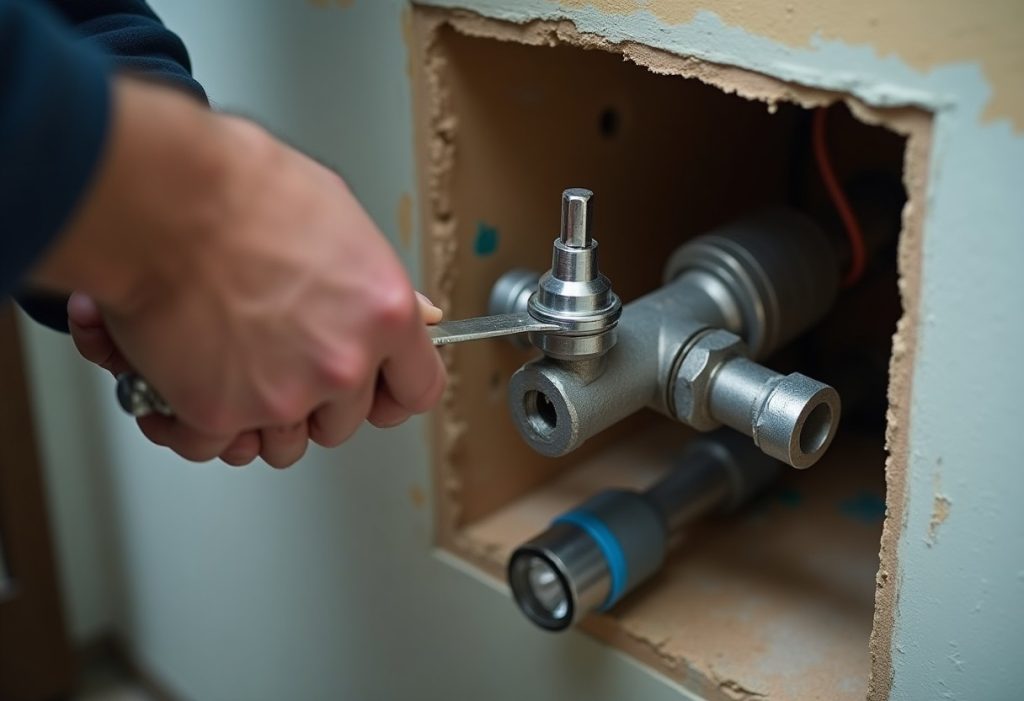
An in-wall shower diverter valve is fixed by replacing its stem washer or its cartridge. On a three-handle faucet, the middle stem is a compression valve that usually needs a new washer and seat. On a separate diverter or a single-handle valve with a built-in selector, the fix is a brand-matched cartridge. Either way, shut off the water first.
Three-valve tee diverter (middle handle)
- Shut off the water at the fixture stops or the house main and open the tub to drain pressure.
- Pull the handle and escutcheon, then remove the stem with a deep tub-and-shower socket.
- Replace the washer and brass screw on the stem tip. Inspect the seat inside the valve body and replace it with a seat wrench if it is pitted.
- If the stem threads are stripped or the handle spins freely, take the old stem to a supply house and buy an exact match.
- Reinstall and test both outlets.
Separate diverter or integrated diverter cartridge
- Shut off the water and remove the handle and trim.
- Pull the retaining clip or bonnet nut and extract the diverter cartridge.
- Soak a scaled cartridge in white vinegar, rinse, and reinstall. If seals are worn, replace the cartridge with the part number listed for your valve.
- Flush the valve body briefly before reassembly to clear grit.
The steps mirror a temperature cartridge swap, and our shower cartridge replacement walkthrough covers stuck cartridges, pullers, and brand part lookup in detail. Kohler also says the K-305 transfer valve’s bottom port should feed only a tub spout, not body sprays, handshowers, or another diverter, since a restricted outlet there can cause water to come out of two places at once.
How much does it cost to fix a shower diverter not working?
A plumber typically charges $75 to $200 to repair a shower diverter valve and $150 to $275 to replace a tub spout, according to Fixr’s shower repair cost guide. A diverter that must be fully replaced can reach $500. DIY costs only the part, and Delta lists its pull-up diverter spouts from about $81 to $128.
Bars show the top of each Fixr range. Fixr also puts shower repair labor at $50 to $200 per hour, plus call-out fees of about $50 to $100.
Call a plumber when the fix means opening the wall, such as shower-rise from PEX, a corroded valve body, a stub too short to reach, or water behind the tile. A spout swap or vinegar soak is a fair DIY first step.
How we sourced this
We reviewed the top-ranking pages for this query in October 2026, then went to primary sources. Leak limits and field-study figures come from EPA’s WaterSense at Work section on showerheads and diverters (May 2023), which cites a 2011 Taitem Engineering study. Piping guidance comes from Kohler support pages and The Shower Head Store’s HammerHead support page. Stub-out dimensions and list prices come from Delta product pages. Costs come from Fixr. We excluded unattributed cost-aggregator pages. Figures labeled our arithmetic are unit conversions, not measured data.
Frequently asked questions
Why is water coming out of my tub spout and shower head at the same time?
Either the diverter is not sealing or the spout line is too restrictive. A worn gate washer, scale, or a cracked spout lets water slip past the diverter. If the diverter is new and water still splits, the cause is often shower-rise, where PEX, a long run, extra elbows, or debris between the valve and spout backs water up to the showerhead.
How do I know if my shower diverter is bad?
Run the shower and watch the tub spout. A steady stream instead of a light trickle, a pull-up knob that drops on its own, a handle that spins without changing the flow, or a showerhead that barely sprays all point to a failing diverter. Catch the spout flow in a measuring cup for 15 seconds to put a number on it.
Is it normal for a little water to come out of the tub spout when the shower is on?
A small trickle is normal. The ASME A112.18.1 and CSA B125.1 standard lets a new bath and shower diverter leak up to 0.1 gallon per minute, according to EPA WaterSense. EPA suggests repair or replacement once leakage passes about 0.2 gallon per minute, which is roughly 0.8 cup in 15 seconds.
Can you fix a shower diverter without replacing it?
Sometimes. EPA WaterSense advises removing a leaking diverter and dissolving scale with white vinegar or a descaling cleaner, which may reduce or stop the leak. On a three-handle faucet, a new washer and seat on the diverter stem often fixes it. A tub spout diverter with a worn internal gate is usually cheaper to replace as a whole spout.
How much does it cost to replace a shower diverter?
Fixr puts shower diverter valve repair at $75 to $200 and a tub spout replacement at $150 to $275 with a plumber. A diverter that needs full replacement can reach $500. Doing it yourself costs only the part, and Delta lists its pull-up diverter tub spouts at roughly $81 to $128.
Can I replace a tub spout diverter myself?
Yes, on most tubs it is a short job with a hex key or a screwdriver handle. The key step is matching the new spout to your pipe stub, slip-on for smooth copper and threaded for a 1/2 inch IPS nipple, and confirming the stub length matches the spout instructions. In-wall valves are a bigger job.
Why won’t my shower diverter stay up?
A lift-gate diverter stays up only because water pressure pushes against the gate. If the gate washer is worn, scale stops the gate from seating, or household pressure is low, the knob drops back down mid-shower. Cleaning the spout can help, but a gate that keeps falling usually means the spout needs replacing.
Do you need a plumber to fix a shower diverter?
Not always. A spout swap or a vinegar soak to clear scale counts as a fair DIY first step, and Fixr puts plumber repair at $75 to $200 and spout replacement at $150 to $275. Call a plumber when the fix means opening the wall, such as shower-rise from PEX, a corroded valve body, a stub too short to reach, or water behind tile.


