How to Fix a Leaky Shower Faucet
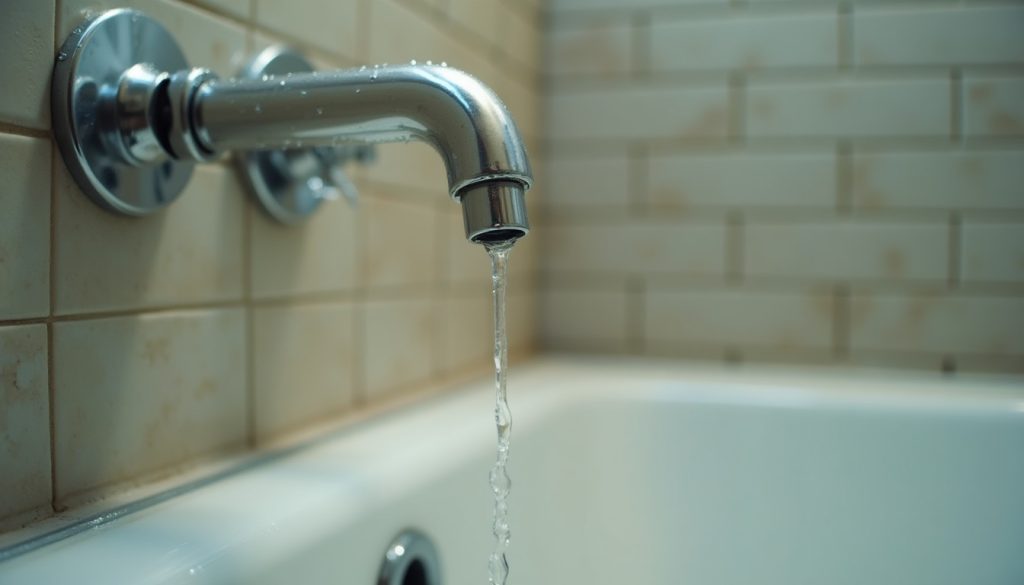
A leaky shower faucet nearly always means one worn part inside the valve, a cartridge on single-handle models or a washer and seat on two- and three-handle models, and swapping that part stops the drip.
Key Takeaways
- A shower faucet dripping at one drip per second can waste more than 3,000 gallons a year, according to EPA WaterSense.
- EPA WaterSense puts a showerhead leaking 10 drips per minute at more than 500 gallons a year.
- The USGS Water Science School counts 15,140 drips in a gallon, based on a quarter milliliter per drip.
- Moen’s 104421 puller removes its 1200, 1225 and 1222 cartridges, per Moen’s own support library.
- Delta lists the RP19804 cartridge for its Monitor 1300 and 1400 series tub and shower valves.
- Fixr prices a plumber’s cartridge replacement at $100 to $300 and a washer fix at $50 to $80.
What causes a leaky shower faucet?
A leaky shower faucet is caused by a worn seal inside the valve that no longer blocks water when the handle is off. On single-handle valves that seal lives in a replaceable cartridge. On two- and three-handle valves it is a rubber washer pressing against a brass seat. Hard water, grit and years of use wear both down, so the fix is replacing the part, not tightening the handle. Before replacing any seals, check whether a sluggish tub-to-shower switch points to diverter problems instead.
Shower stems sit deeper in the wall than sink stems. If your drip is at a lavatory or kitchen sink instead, our sink faucet repair guide covers those valves.
Where is the drip coming from, and what does it tell you?
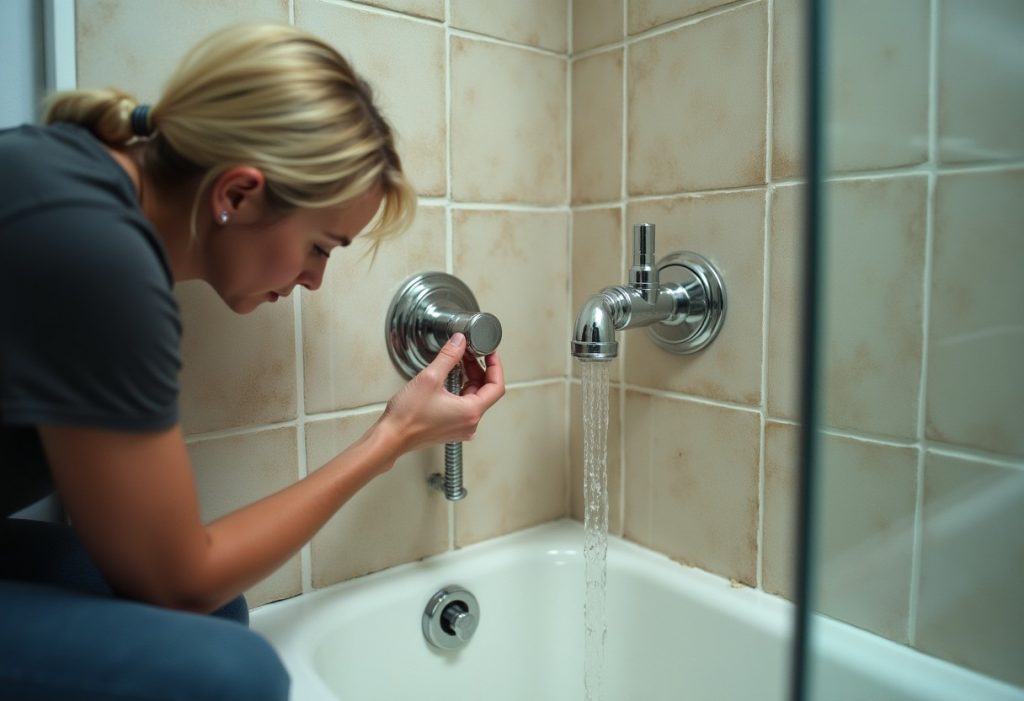
Where the water comes out tells you what failed. A steady drip from the showerhead or tub spout with everything off means the valve is passing water. Water around the handle or trim plate while the shower runs points to O-rings or stem packing. A tub spout that runs during showers is a diverter problem. A short drip right after shutoff is usually normal drain-down.
The normal after-drip
When the valve closes, water is still sitting in the pipe that runs up to the shower arm and inside the showerhead itself. Gravity pulls it out through the nozzles, so the head drips for a bit and then stops. Large rain-style heads hold more water and drip longer, which UK maker Mira Showers describes as residual water rather than a fault. If the drip slows and stops within a few minutes, leave it alone.
The drip that does not stop
If the drip keeps a steady rhythm for an hour, or the head starts dripping again later with nobody using the shower, water is getting past the closed valve. On a tub and shower combo that leak usually shows up at the tub spout, because it is the lowest open outlet. On a shower-only valve it shows up at the head.
| Drip location and valve type | Likely failed part | Fix |
|---|---|---|
| Head or spout drips, single-handle Moen (1225 or 1222 Posi-Temp) | Worn cartridge seals | Replace with the matching genuine Moen cartridge, use the 104421 puller if stuck |
| Tub spout drips, single-handle Delta Monitor 1300 or 1400 | Worn seats and springs or cartridge | Replace seats and springs, or the RP19804 cartridge |
| Head or spout drips, single-handle ceramic disc valve | Worn or chipped disc seals | Replace the whole cartridge with the brand’s part |
| Spout drips hot or cold, two-handle compression | Stem washer or pitted seat on that side | New washer and screw, replace or dress the seat |
| Spout runs during showers, three-handle valve | Diverter stem washer (middle handle) | Rebuild or replace the diverter stem |
| Spout runs during showers, single or two-handle | Diverter gate inside the tub spout | Replace the tub spout |
| Water at handle or trim while running | Cartridge O-rings or stem packing | New O-rings, or snug the packing nut a small amount |
| Showerhead drips briefly after shutoff | Nothing, water draining from arm and head | No repair needed |
Which shower valve type do you have?
Count the handles first. One handle that controls flow and temperature is a cartridge valve, either a pressure-balance cartridge or a ceramic disc. Two handles, one hot and one cold, is usually a compression valve with washers. Three handles adds a middle diverter stem. The brand name on the handle or trim plate tells you which exact part to buy.
- Look for a logo on the handle, trim plate or tub spout. Moen, Delta, Kohler, Pfister and American Standard are the common names.
- Note how the handle moves. A Moen 1225 turns on when you pull the handle out, then rotates for temperature, per Moen part descriptions. Most Delta Monitor handles rotate from off through cold to hot.
- Check for a temperature limit stop under the handle, a sign of a pressure-balance valve such as the Moen Posi-Temp 1222 or Delta Monitor. Many building codes based on the International Plumbing Code call for pressure-balance or thermostatic valves in showers, so most homes built in recent decades have one.
Our guide to shower valve types shows each valve body in detail and how to tell a pressure-balance cartridge from a thermostatic one.
How do you fix a leaky single-handle shower faucet?
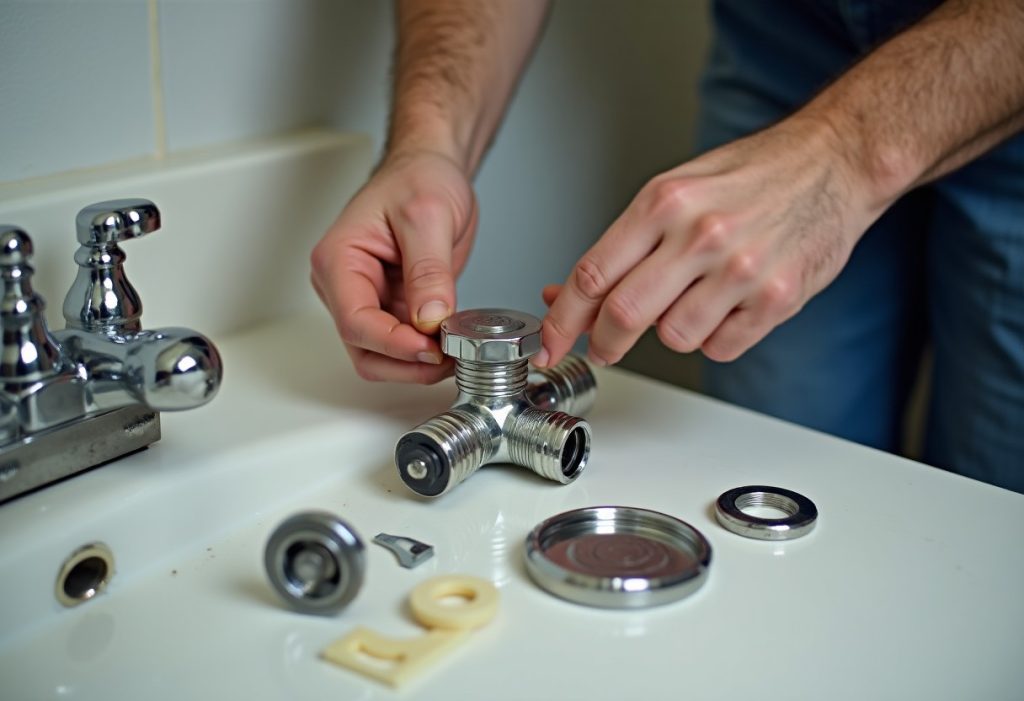
To fix a leaky single-handle shower faucet, shut off the water, remove the handle and trim plate, pull the retaining clip or nut, extract the old cartridge, and install the brand’s exact replacement in the same orientation. Most single-handle drips are fixed with a new cartridge, which on common Moen and Delta valves costs far less than a service call. Plan on an hour if nothing sticks.
- Shut off the water. Some valves have built-in stops behind the trim plate that close with a flat screwdriver. If yours does not, close the main. Our walkthrough on how to shut off the water to your house shows where to find it.
- Drain the line. Open the shower valve and a lower faucet to bleed pressure, and cover the drain with a rag.
- Remove the handle and trim. Pop the cap, remove the screw, pull the handle, then unscrew the trim plate and any sleeve over the valve.
- Release the cartridge. Moen valves use a U-shaped retaining clip. Delta Monitor valves use a bonnet nut over the cartridge. Note which way the old cartridge faces before you pull it.
- Pull the cartridge. Grip the stem with pliers and pull straight out with a gentle twist. If it will not move, use the brand’s puller (see below).
- Clean and flush. Moen tells installers to clean and flush the valve body before installing a new cartridge.
- Install the new part. Use silicone grease (not petroleum jelly) on the O-rings, match the old orientation, and reinstall the clip or nut.
- Test before trim. Turn the water back on, check for drips and confirm hot and cold are on the correct sides, then reinstall the trim and handle.
Moen 1222 and 1225
The Moen 1225 is a single-handle cartridge with a clear plastic shell and a brass piston, the updated version of the original all-brass 1200. The 1222 is the Posi-Temp pressure-balance cartridge with a balancing spool inside. They are not interchangeable, so match the part to the valve. Moen’s own 104421 puller instructions say to pull a 1200 or 1225 stem to the full open position before removal, and to rotate a 1222 stem with a wrench so its notch faces up.
Delta Monitor 1300 and 1400
Delta lists the RP19804 cartridge for its Monitor 1300 and 1400 series tub and shower valves. The cartridge seals against rubber seats backed by springs, and parts listings recommend replacing those and checking the O-rings first. If that fails, replace the cartridge.
Kohler and ceramic disc valves
Kohler pressure-balance valves, sold under names such as Rite-Temp, use Kohler-specific cartridges. Match the model on Kohler’s service parts pages. Ceramic disc cartridges from any brand are replaced as a unit.
For a deeper look at matching part numbers, pulling the stem and setting the limit stop afterward, see our full shower cartridge replacement walkthrough.
What if the cartridge is stuck?
Mineral scale can bond a cartridge to the valve. Do not hammer or pry it, because a cracked cartridge is much harder to remove. Moen’s 104421 puller threads into the stem and seats on the valve so you can twist the cartridge loose. Moen’s steps say to hold the tee handle still while tightening the hex nut with a wrench if the cartridge resists. Universal pullers exist for other brands. If the cartridge still will not budge, stop and call a plumber before you damage the valve body.
How do you fix a leaky two- or three-handle shower faucet?
A two- or three-handle shower faucet usually leaks because a rubber washer on the end of one stem has worn flat or a brass seat has pitted. Find which side leaks, shut off the water, remove that handle and stem with a deep shower socket, then replace the washer and screw and either replace or smooth the seat. The fix costs a few dollars in parts.
- Find the leaking side. A warm drip means the hot stem, a cold drip the cold stem. If unsure, do both.
- Shut off the water at stops if your valve has them, or at the main.
- Remove the handle and unscrew the stem. Shower stems sit deep in the wall, so you need a shower valve socket set (a set of thin-wall deep sockets) to reach the bonnet nut without crushing it.
- Replace the washer and screw. Match the washer size and shape, beveled or flat, and use a new brass screw since old ones often snap.
- Check the seat. Look into the valve with a flashlight. A seat with grooves or pits will chew a new washer in weeks. Remove it with a seat wrench and install a matching seat, or dress it smooth with a seat dressing tool if it is not removable.
- Replace packing or O-rings on the stem if water leaked at the handle, then reinstall, turn the water on, and test.
On a three-handle valve the middle handle is the diverter. If the tub spout runs while you shower, rebuild that stem the same way.
How much water does a leaky shower faucet waste?
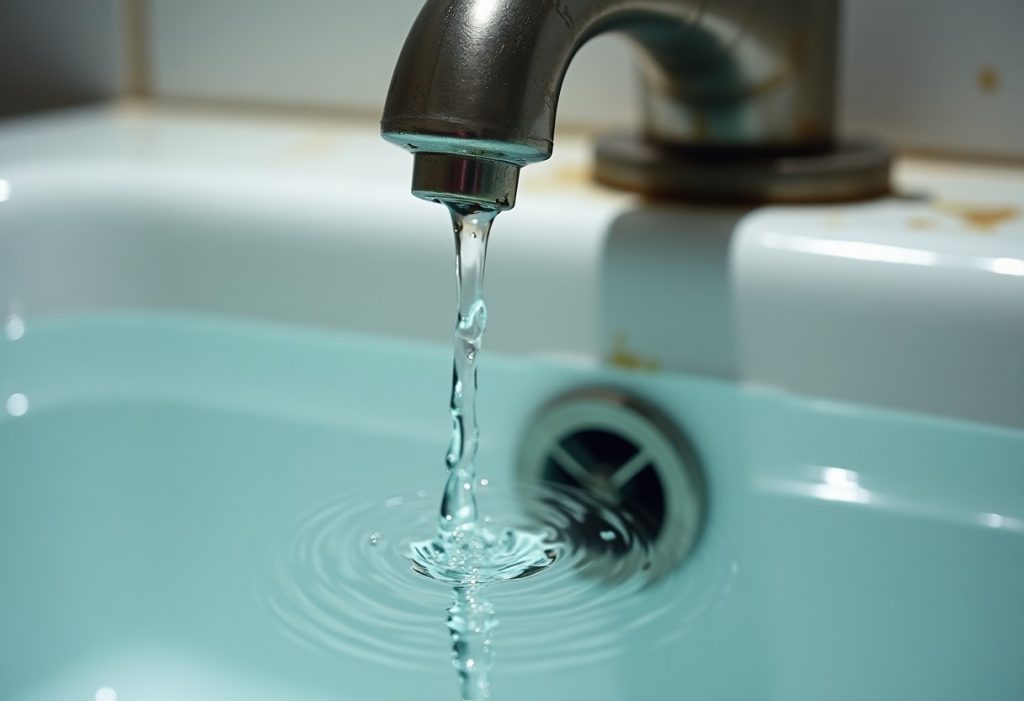
A leaky shower faucet dripping once per second wastes about 2,083 gallons a year by the USGS drip math, or more than 3,000 gallons by EPA WaterSense’s estimate. The gap comes from drop size. USGS assumes a quarter milliliter per drip, while EPA’s figure implies a larger drop of roughly 0.36 milliliters by our arithmetic, which fits the bigger drops a showerhead or tub spout produces.
The chart below applies the USGS figure of 15,140 drips per gallon to six drip rates over a 365-day year. Two drips per second wastes over 4,000 gallons a year.
Count your own drips for one minute to find your row. A warm drip also wastes the energy used to heat it.
When should you call a plumber, and what does it cost?
Call a plumber when the cartridge or stem will not come out, when a new genuine part does not stop the drip, when water shows up behind the wall or on a ceiling below, or when you cannot shut the water off. Fixr puts cartridge replacement at $100 to $300 and full valve replacement at $200 to $650, with most shower repairs falling between $100 and $700.
| Repair | Typical plumber cost | Source |
|---|---|---|
| Washer or gasket replacement | $50-$80 | Fixr |
| Shower cartridge replacement | $100-$300 | Fixr |
| Shower cartridge replacement | About $300, typically $200-$400 | This Old House (Angi and Home Depot data) |
| Shower valve replacement | $200-$650 | Fixr |
| Plumber hourly labor | $25-$200 per hour | This Old House |
DIY usually costs only the part. This Old House lists single-handle cartridges from $28, with designer and thermostatic cartridges far higher.
- DIY makes sense for a common Moen, Delta or Kohler cartridge, a compression washer, or a tub spout swap.
- Call a pro for a seized or broken cartridge, a corroded valve body, galvanized piping that crumbles when you touch it, or any leak inside the wall.
How we sourced this
We reviewed the top-ranking guides and People Also Ask questions for “leaky shower faucet” and related searches in October 2026, then went to primary sources. Water figures come from EPA WaterSense Fix a Leak Week materials and the USGS Water Science School; the chart applies the USGS 15,140 drips per gallon figure to each drip rate over 365 days (our arithmetic). Part and removal details come from Moen’s support library and Delta parts listings. Costs come from Fixr and This Old House, which cites Angi and Home Depot data. We excluded forum anecdotes and unsourced prices, and list no Kohler part numbers we could not confirm.
Frequently asked questions
Why is my shower head dripping after turning off the water?
A short drip is normal. Water left in the pipe above the valve and inside the showerhead drains out by gravity once the valve closes, and big rain heads hold more of it. If the drip tapers off and stops within a few minutes, nothing is wrong. A drip that keeps going for an hour or starts again later means the valve is passing water and needs a cartridge or washer.
Why is my tub spout dripping when the shower is off?
On a tub and shower combo, the tub spout is the lowest open outlet, so a worn valve usually leaks there first. With the shower off, a steady tub spout drip almost always points to a worn cartridge on a single-handle valve or a worn washer and seat on a two- or three-handle valve. It is not a diverter problem unless the spout also runs during showers.
How do I fix a leaky single-handle shower faucet?
Shut off the water, pull the handle and trim plate, remove the retaining clip or nut, and pull the old cartridge out, using a cartridge puller if it sticks. Take it to the store or match the brand part number, such as a Moen 1222 or 1225 or a Delta RP19804, then install the new one in the same orientation and test for leaks.
Can I fix a leaky shower faucet without turning off the water?
No. Pulling a cartridge or stem with the water on sends full line pressure out of the wall. Some valves have built-in stops behind the trim plate that you can close with a flat screwdriver. If yours has none, shut off the main valve for the house and open a lower faucet to drain pressure before you start.
How much does it cost to fix a leaky shower faucet?
Fixr puts most shower repairs between $100 and $700, with cartridge replacement at $100 to $300 and a washer or gasket fix at $50 to $80. This Old House, using Angi and Home Depot data, puts a plumber’s cartridge swap around $300. A DIY fix usually costs only the part, often well under $100 for a common cartridge.
Why is my shower still dripping after I replaced the cartridge?
The usual causes are a non-matching aftermarket part, a torn O-ring from installation, debris left in the valve body, or a pitted seat on a compression valve. Moen tells installers to clean and flush the valve body before the new cartridge goes in. If the drip persists after a correct genuine part, the valve body itself may be worn and need a plumber.
Is a dripping shower faucet an emergency?
No, but it is not free to ignore. EPA WaterSense estimates a showerhead leaking 10 drips per minute wastes more than 500 gallons a year, and a drip that grows to a steady stream wastes far more. Water running behind the wall or staining a ceiling below is different and calls for shutting the water off and calling a plumber that day.
What is the most common cause of a dripping faucet?
A dripping shower faucet almost always comes from one worn part inside the valve. On single-handle models that part is the cartridge, and on two- and three-handle models it is a washer and seat. Hard water, grit and years of use wear these parts down, so the drip stops once the worn part is replaced, not by tightening the handle.


