Water Heater Reset Button: Where It Is and Why It Trips
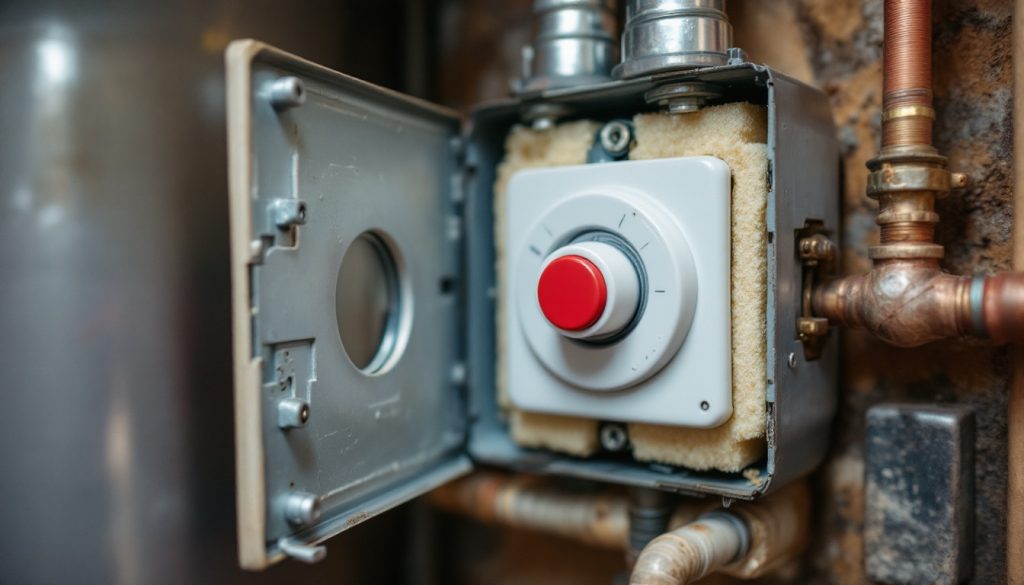
The water heater reset button is the red high-limit (ECO) switch behind an electric tank’s upper access panel; it cuts power when water overheats, and repeat trips mean a part has failed.
Key Takeaways
- The Reliance WH10-A upper thermostat, sold as original equipment for A.O. Smith and State heaters, has an ECO that cuts all power at 190°F.
- That same Reliance thermostat ships at 120°F and adjusts from 110°F to 160°F, so a normal setting sits 30°F or more below the cutoff.
- The U.S. Consumer Product Safety Commission (CPSC) urges a 120°F setting and says 150°F water causes third-degree burns in about two seconds.
- HomeAdvisor puts thermostat replacement at $150 to $200 and heating element replacement at $200 to $300, the two most common fixes for repeat trips.
- Most gas tank heaters have no reset button. The red button on many gas valves is the pilot igniter, as InspectApedia points out.
- HomeAdvisor’s national average for any water heater repair is $616, with a typical range of $228 to $1,017.
Where is the reset button on a water heater?
On an electric tank, the reset button sits behind the upper access panel on the side of the heater, on top of or just above the upper thermostat. It is usually a small red square button, often labeled RESET or ECO. You need a screwdriver to remove the panel and push back the insulation to see it.
Most electric tanks have two elements and two thermostats. The high-limit (ECO) is built into the upper thermostat, so the lower panel has no reset. Single-element heaters carry it on their only thermostat.
| Heater type | Reset button? | Where to look | What “reset” means |
|---|---|---|---|
| Electric tank (two elements) | Yes, one | Upper access panel, on the upper thermostat | Press the red ECO button after cutting power |
| Electric tank (single element) | Yes, one | The only access panel, on the thermostat | Press the red ECO button after cutting power |
| Gas tank, standing pilot | Usually no | Gas control valve near the bottom; burner door | Relight the pilot per the heater’s label |
| Gas tank, FVIR design | Sometimes | Thermal switch near the burner door | Reset or replace the thermal switch per the manual |
| Power vent gas | No button | Control board status light, blower housing | Power-cycle the unit after clearing the fault |
| Tankless (gas or electric) | No button on most | Front controller display | Clear the error code, then power-cycle |
What does the water heater reset button do, and at what temperature does it trip?
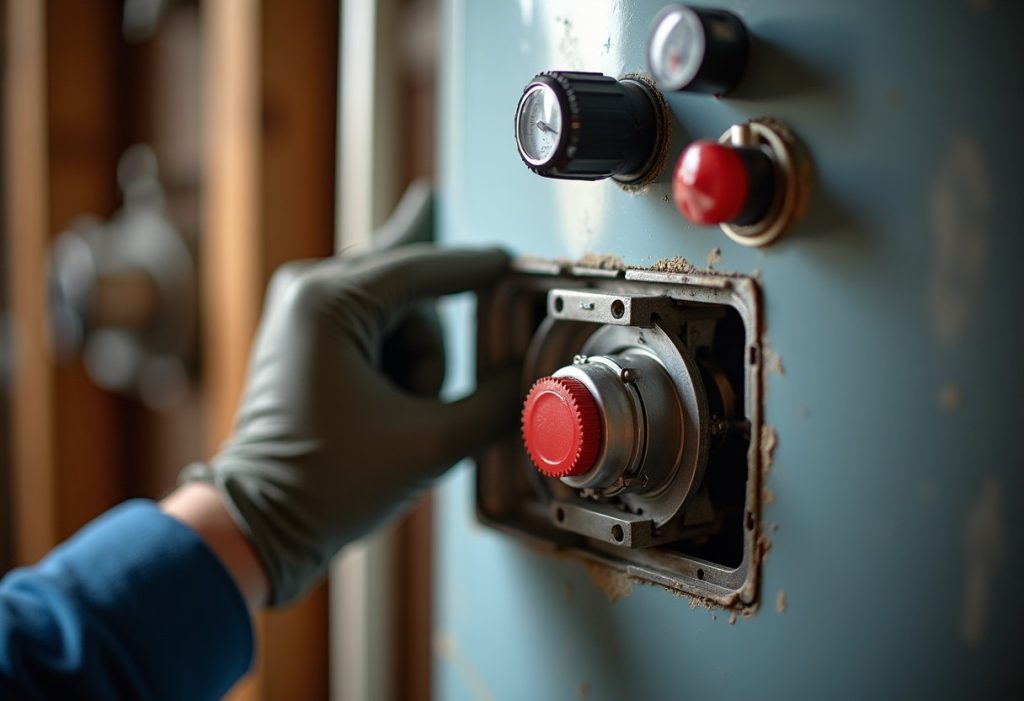
The reset button is the visible part of a temperature-limiting switch. When water near the top of the tank gets dangerously hot, the switch opens and cuts power to both heating elements. On the Reliance WH10-A upper thermostat, which is original equipment on A.O. Smith and State tanks, that cutoff is 190°F. Pressing the button closes the switch again.
The Reliance WH10-A product listing describes the part as a thermostat with “a Safety Energy Cut Off (ECO), that cuts off all power” if the tank reaches 190°F, with a 120°F factory setting and a 110°F to 160°F adjustment range. Rheem’s own replacement high-limit, the SP8293, is listed as a 2-pole, 190°F, manual reset control.
Some contractor guides quote a lower 170°F to 180°F trip point. Ratings vary by part number, so read the label on your own thermostat.
A trip is a warning, not a nuisance: by the time the ECO opens, the water is far past the temperatures CPSC says burn skin in seconds. Our guide to the right water heater temperature covers where your dial should sit.
How do you know if the water heater reset button has tripped?
The first sign is no hot water from an electric heater while the breaker is still on. Open the upper panel with the power off and look at the red button: a tripped ECO often sits slightly raised, and pressing it gives a firm click. If it does not click and does not move, it has not tripped, and the problem lies elsewhere.
Lukewarm water that runs out fast is different. It usually means one failed element, because a tripped ECO shuts off both elements at once.
If the button never clicks and you still have no heat, work through our no hot water troubleshooting checklist.
How do you reset an electric water heater safely?
Turn off the water heater’s breaker, confirm the power is dead, remove the upper access panel, fold back the insulation, press the red button until it clicks, then put everything back and restore power. The whole job takes about ten minutes. The only real danger is the 240-volt wiring around the thermostat, so never skip the power-off step.
- Kill the power. Flip the water heater’s double-pole breaker to OFF, plus any disconnect next to the heater.
- Verify it is off. Check the wires with a non-contact voltage tester. No beep, then proceed.
- Remove the upper access panel. Usually two screws.
- Move the insulation. Fold the pad aside without pulling any wire. Leave any plastic guard in place; the button reaches through it.
- Do not touch the wiring. Keep fingers and metal tools away from the screw terminals even with the breaker off.
- Press the red button. Push it firmly with a finger or the plastic handle of a screwdriver until you feel a click. If the button will not latch, the water may still be too hot; wait and try again once the tank cools.
- Close it up. Refit insulation and panel. Never run the heater with the panel off.
- Restore power. Switch the breaker back on and give the tank time to reheat. Mr. Rooter tells customers to expect hot water again within about an hour.
Log every reset. One trip after a storm is not a red flag. Two in a week are.
Why does my water heater reset button keep tripping?
A water heater reset button that keeps tripping almost always means something is heating the water past the thermostat’s control. The common causes are a thermostat stuck closed, a heating element shorted to the tank, a loose or burned wire, a dial set too high, or a worn-out ECO. Pressing reset again does not fix any of them.
A thermostat stuck closed
If a thermostat’s contacts weld shut, its element heats until the ECO catches it. Scalding tap water right before a trip is the classic clue. HomeAdvisor prices a replacement at $150 to $200.
A grounded or shorted element
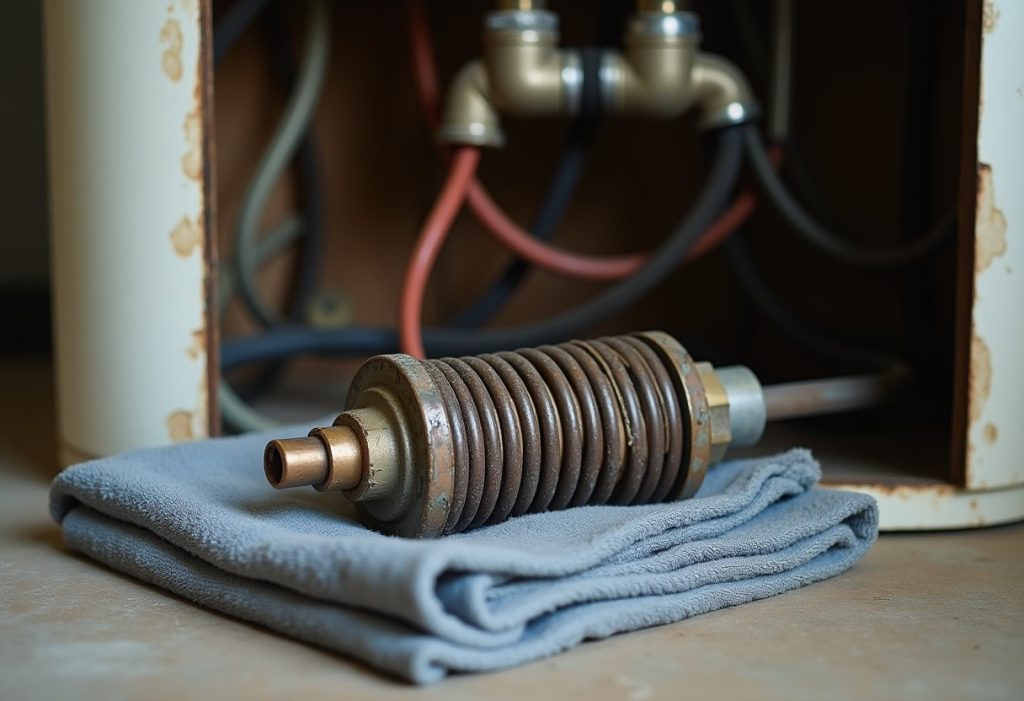
A cracked element sheath can leak current to the tank and keep heating after the thermostat opens. A multimeter test from each terminal to the tank should read open. Our water heater element guide shows the test.
Loose or damaged wiring
A loose terminal creates resistance and heat right at the thermostat, which can open the ECO even when the water is fine. Brown or melted insulation means stop and call a pro; burned 240-volt wiring is a fire risk.
A setpoint that is too high
A dial cranked to the top of a 110°F to 160°F range leaves little margin. CPSC notes both thermostats should share one setting. Drop both to 120°F.
A worn high-limit switch
Repeated trips wear the ECO out. If the water is not hot and the wiring, thermostats, and elements test good, replace the upper thermostat and ECO assembly.
What should you check for each symptom, and is it DIY or a pro job?
Match the symptom to a row before you buy parts. Popping or rumbling from sediment over the lower element is a flushing job, and HomeAdvisor puts a pro flush at about $200. Anything involving burned wiring, gas, or a leak belongs with a licensed pro.
| Symptom | Likely cause | Fix | DIY or pro |
|---|---|---|---|
| Tripped once after a storm or outage, then holds | One-off surge or overheat | Reset and log the date | DIY |
| Trips within hours or days; tap water scalding before it trips | Upper or lower thermostat stuck closed | Test and replace the thermostat ($150 to $200, HomeAdvisor) | Skilled DIY or pro |
| Trips, and the breaker also trips | Element shorted to the tank | Test element to ground; replace ($200 to $300, HomeAdvisor) | Skilled DIY or pro |
| Brown, melted, or scorched wire; burning smell | Loose terminal or damaged wiring | Replace wire and terminals; inspect thermostat | Pro |
| Trips only after the dial was turned up | Setpoint too close to the cutoff | Set both thermostats to 120°F | DIY |
| Will not latch even with a cool tank | Failed ECO switch | Replace upper thermostat and ECO assembly | Pro |
| Popping or rumbling, then trips | Sediment over the lower element | Flush the tank; test the lower element | DIY |
| Gas heater, pilot out, no button to press | Pilot, thermocouple, or thermal cutoff | Relight per the label; replace thermocouple (about $150, HomeAdvisor) | DIY relight; pro for parts |
How do you reset a gas water heater without a reset button?
Most gas tank heaters have no reset button. To reset a gas water heater, you relight the pilot by following the lighting label on the tank: turn the control knob to OFF, wait for gas to clear, set it to PILOT, hold it down while pressing the igniter, then turn it to ON once the pilot stays lit. If it will not stay lit, stop there.
InspectApedia points out that on a Rheem gas control, the red button under the pilot knob is the igniter, not a reset.
Newer flammable vapor ignition resistant (FVIR) gas tanks carry a thermal switch near the burner that shuts off gas on fumes or excess heat. Depending on the brand, it resets or must be replaced; the manual says which.
- Pilot will not stay lit: usually a worn thermocouple or flame sensor. HomeAdvisor puts thermocouple replacement at about $150.
- Thermal switch tripped: treat it as a sign of a combustion problem such as a blocked flue, poor air supply, or fumes near the heater. Find the cause before you reset it.
- Gas smell at any point: leave the house, do not touch a switch or the igniter, and call the gas utility from outside.
Power vent models report faults with a flashing status light; fix the fault, then cut power for a minute.
How do you reset a tankless water heater?
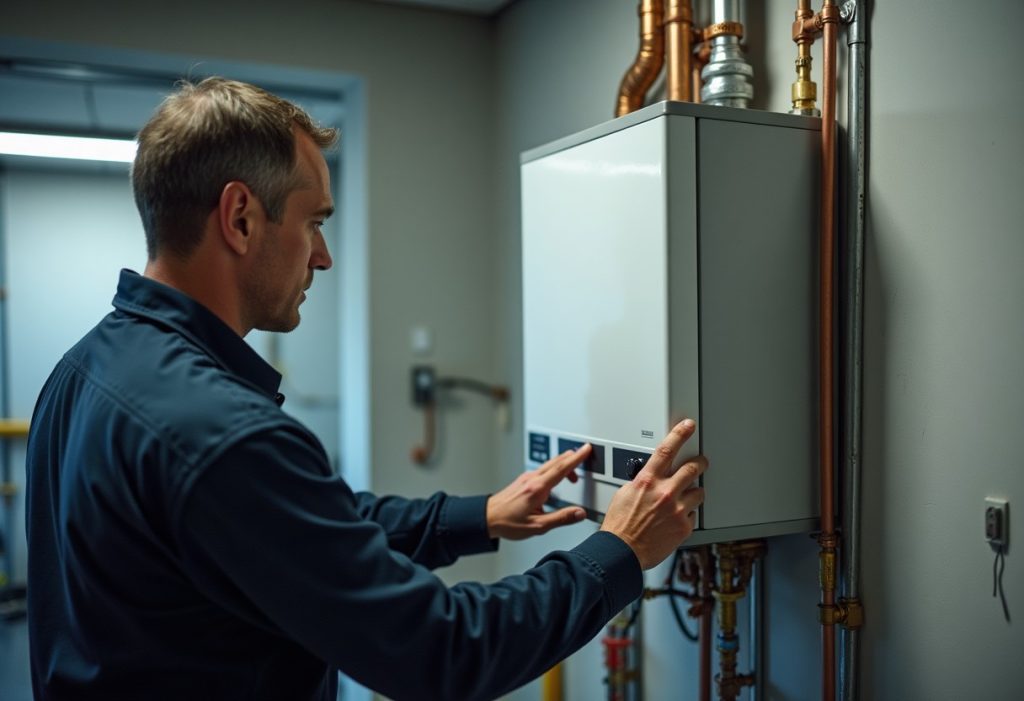
Tankless heaters do not have a red ECO button on the outside. They show a numeric error code on the front controller, and resetting usually means turning the unit off at the controller or unplugging it, waiting a minute, and powering back on. The code itself tells you why it shut down, so write it down before you clear it.
The manual’s code table covers ignition, flame loss, overheating, and venting faults. A code that returns right after clearing is a part problem, not a reset problem. In hard-water areas, scale in the heat exchanger often drives overheat codes, so descale on the schedule the manual sets.
When should you stop resetting and call a pro, and what does the repair cost?
Call a plumber or electrician if the ECO trips more than once in a week, if you see scorched wiring or smell burning, if the breaker trips too, if a gas pilot will not stay lit, or if you smell gas. HomeAdvisor puts the national average water heater repair at $616, with most jobs between $228 and $1,017.
The parts behind a tripping ECO cost far less than the average repair. For the full breakdown, see our water heater repair cost guide.
On an old, rusting, or leaking tank, HomeAdvisor’s $875 to $1,800 replacement range may be the better spend.
How we sourced this
We reviewed the pages ranking for “water heater reset button” in October 2026 (Lennox, Hunker, Benjamin Franklin Plumbing, Casteel, Mr. Rooter, InspectApedia) to map reader questions. Every number on this page comes from a named source: cutoff and dial ranges from the Reliance WH10-A thermostat listing (original equipment for A.O. Smith and State) and Rheem’s SP8293 high-limit listing; burn times and the 120°F recommendation from CPSC Publication 5098; costs from HomeAdvisor’s water heater repair cost guide. We could not obtain a full use and care manual from A.O. Smith or Rheem during research, so cutoff figures come from replacement-part specifications, and we note where contractor guides cite a lower range. We excluded undated cost pages and sites that did not name a data source.
Frequently asked questions
Where is the reset button on a water heater?
On an electric tank it is behind the upper access panel, on or just above the upper thermostat. It is usually a small red button marked RESET or ECO. Turn off the breaker, remove the two panel screws, and fold back the insulation to reach it. Most gas tank heaters have no reset button at all and are restarted by relighting the pilot.
Why does my water heater reset button keep tripping?
Repeat trips mean something is overheating the water or the switch. The usual causes are a thermostat stuck closed, a heating element shorted to the tank, a loose or burned wire, a dial set too high, or a worn high-limit switch. Sediment over the lower element can add to it. Find and fix the cause rather than pressing reset again.
Is it safe to press the reset button on a water heater?
Yes, if the power is off first. Turn off the double-pole breaker, confirm with a non-contact voltage tester, and press the button without touching the screw terminals around it. Put the insulation and panel back before restoring power. Pressing it with the breaker on puts your hand inches from 240-volt terminals, which is the real risk.
Do gas water heaters have a reset button?
Most do not. A standard gas tank is restarted by relighting the pilot with the control knob and igniter, following the label on the tank. The red button on many gas valves is the igniter, not a reset. Some newer FVIR models have a thermal switch near the burner that can be reset or must be replaced, depending on the brand.
At what temperature does a water heater reset button trip?
It depends on the part. The Reliance WH10-A upper thermostat, original equipment on A.O. Smith and State heaters, cuts power at 190°F, and Rheem lists its SP8293 high-limit at 190°F. Some contractor guides cite 170°F to 180°F. Check the label printed on your own thermostat for the exact rating.
How long after resetting will I have hot water?
An electric tank has to reheat its full volume, which takes a while. Mr. Rooter tells customers to expect hot water within about an hour after a reset. If the tank is still cold after several hours with the breaker on, one element or thermostat has likely failed, or the ECO has tripped again.
Can a bad heating element trip the reset button?
Yes. An element with a cracked sheath can short to the tank and keep heating even when the thermostat opens, which drives the water up to the cutoff. A grounded element often trips the breaker as well. Test each element terminal to the tank with a multimeter; any reading other than open means the element needs replacing.
Why won’t my water heater reset button click or stay in?
If it does not click, it probably has not tripped, and the no-heat problem is elsewhere, such as the breaker, an element, or a thermostat. If it clicks but pops right back, the water may still be too hot, so let the tank cool and try again. If it still will not latch, the high-limit switch has likely failed.
How long does it take for a water heater to heat up after reset?
After an electric tank reset, the heater must reheat its full volume of water, which takes some time. Mr. Rooter tells customers to expect hot water again within about an hour of restoring power. If the tank stays cold for several hours with the breaker on, an element or thermostat has likely failed, or the ECO has tripped again.


