Well Water vs City Water: Safety, Cost, and the Real Pros and Cons
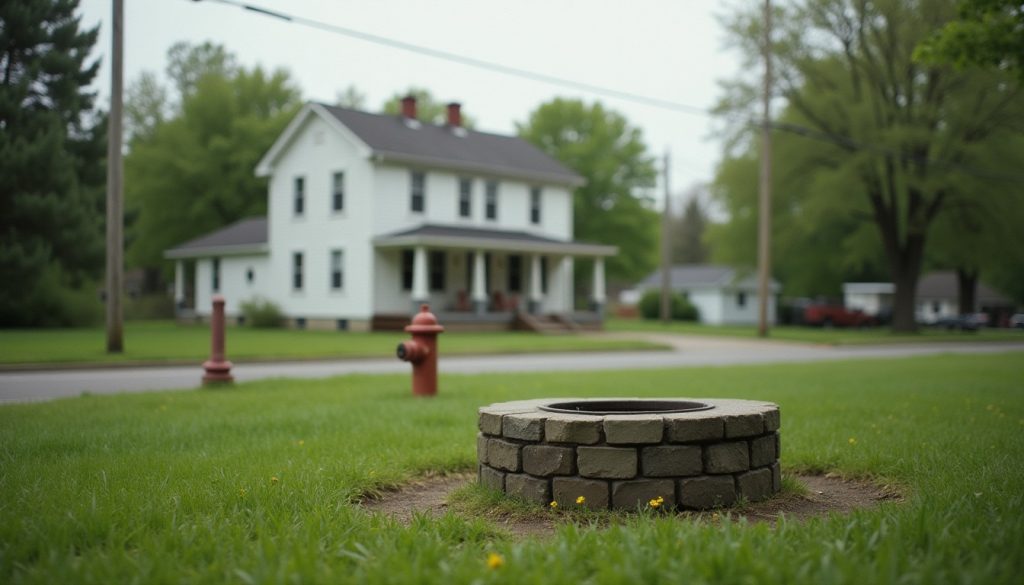
Well water vs city water comes down to who carries the risk: a public utility tests your water under federal law and bills you monthly, while a private well costs thousands upfront and makes you the water department.
Key Takeaways
- Public water systems regulated under the Safe Drinking Water Act supply drinking water to about 90 percent of Americans, according to the EPA.
- Around 15 percent of the US population, over 43 million people in more than 23 million households, rely on private wells, per EPA estimates.
- Private wells are not regulated under the Safe Drinking Water Act, and the EPA states that well owners are responsible for the safety of their own water.
- In a USGS study of about 2,100 domestic wells, roughly 1 in 5 had at least one contaminant above a human-health benchmark.
- Drilling a well averages about $5,500 nationally, within a typical $1,500 to $12,000 range, based on Angi and HomeAdvisor data reported by Bob Vila.
- The EPA WaterSense program says the average family spends more than $1,000 a year on water, and Bluefield Research found combined water and sewer bills rose 24.2 percent from 2020 to 2025.
What is the difference between well water and city water?
City water comes from a public system that draws from rivers, lakes, reservoirs, or utility wells, treats it, and pipes it under pressure to your meter. Well water is groundwater pumped from an aquifer under your own land by equipment you own. The EPA counts over 148,000 public water systems in the US, while a private well usually serves one household. Since that single-household setup starts with a borehole, it helps to understand well drilling costs before deciding between the two systems.
The real difference is who tests it, who pays to fix it, and what happens when something breaks at 2 a.m.
This side-by-side adds lending, outages, and wastewater, three factors most comparisons skip.
| Factor | Well water | City water |
|---|---|---|
| Who is responsible for safety | The homeowner. Not regulated under the Safe Drinking Water Act or by most states (EPA) | The utility, under EPA and state rules set by the Safe Drinking Water Act |
| Testing | Only when you pay for it; CDC and EPA guidance says at least once a year | Routine required testing, published in an annual Consumer Confidence Report |
| Upfront cost | About $5,500 average to drill, $1,500 to $12,000 typical, plus pump and tank | Usually none in an existing home; connection or tap fees if switching |
| Ongoing cost | Pump electricity, lab tests, treatment media, eventual pump and tank replacement | Monthly water bill, often paired with a sewer charge; more than $1,000 a year per family (EPA) |
| Maintenance | Yours: cap, casing, pump, pressure tank, treatment equipment | Utility maintains mains and treatment; you own the plumbing on your side of the meter |
| Pressure | Set by a pressure switch, commonly 30/50 or 40/60 psi | Set by the utility; codes require a reducing valve when static pressure tops 80 psi |
| Power outage | Pump stops; you get only what is stored in the pressure tank | Usually keeps flowing; utilities use water towers and backup power |
| Taste and treatment | Untreated minerals: hardness, iron, sulfur; treatment is your call | Disinfected with chlorine or chloramine; fluoride added in many communities |
| Wastewater | Usually paired with a septic system | Usually paired with public sewer, which runs about 59% of the combined bill (Bluefield) |
| Mortgage and resale | FHA and many lenders add well distance rules and water tests | No extra water conditions in most loans |
Who is responsible for safety with well water vs city water?
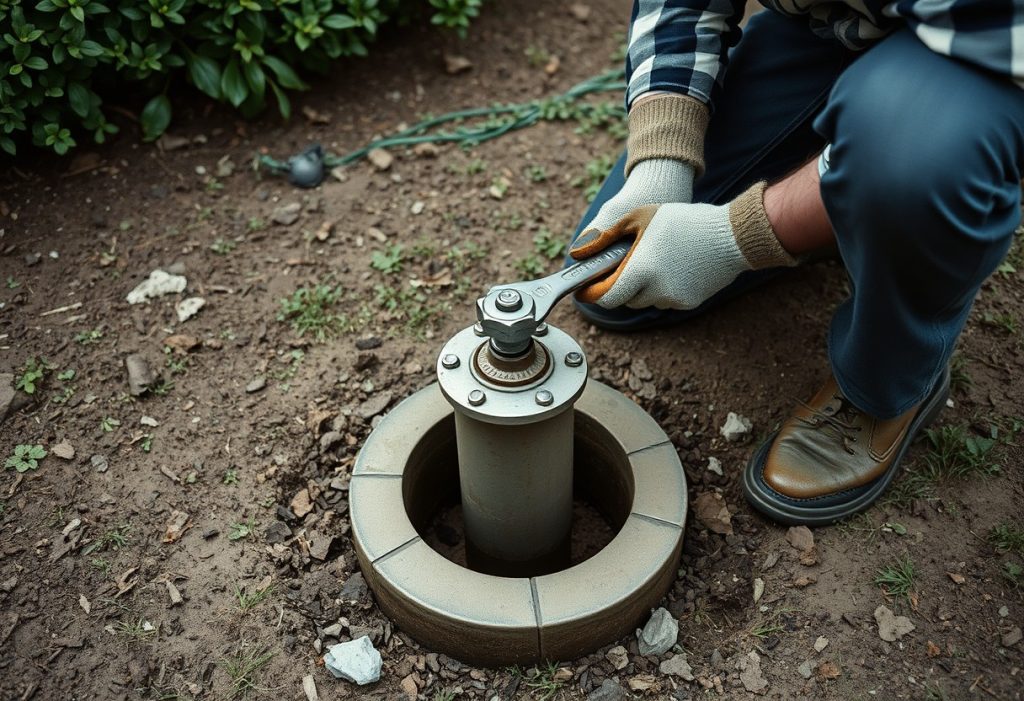
With city water, the utility is legally responsible: the Safe Drinking Water Act lets the EPA set enforceable limits for contaminants, and public systems must monitor for them and report violations. With a well, you are. The EPA states plainly that private well owners are responsible for delivering safe drinking water to their households, and that federal law and most state laws do not regulate private well water quality.
That gap is the biggest difference between the two. A utility has certified operators and a regulator that can fine it. A well owner has whatever testing they choose to buy.
Public systems also have to tell you what is in your water. Community water systems mail or post a Consumer Confidence Report every year listing detected contaminants and any violations. No one sends a report for a private well.
A few states fill part of the gap. New Jersey’s Private Well Testing Act, for example, requires testing when a home with a well is sold. Rules vary widely, so check with your county health department.
Which has better water quality, well water or city water?
Neither wins by default. City water is treated and tested on a federal schedule, so its quality is predictable and documented. Well water can be excellent, but it is unmonitored: in a USGS study of about 2,100 domestic wells, roughly 1 in 5 had at least one contaminant above a human-health benchmark. A well is only as good as its last lab report.
What shows up in well water
The ground adds natural arsenic, radon, uranium, iron, and manganese. The surface adds bacteria and nitrate from septic systems, fertilizer, and floodwater that gets past a damaged cap or cracked casing.
What shows up in city water
The main risks come after the plant. Disinfection byproducts form when chlorine meets organic matter, and lead can leach from old service lines and fixtures on your side of the meter.
How often to test each
For a well, CDC and EPA guidance calls for testing at least once a year for total coliform bacteria, nitrate, pH, and total dissolved solids, plus testing after floods, repairs, or a change in taste or smell. Our guide to well water testing covers which panels to order. Public lab packages for bacteria and nitrate often run about $40 to $61, based on Maine CDC and Marathon County, Wisconsin fee schedules. For city water, read the annual report first and test only for what it cannot tell you, usually lead at your own tap.
How much does well water cost vs city water?
Well water costs more upfront and less per month. Drilling averages about $5,500 nationally, with a typical range of $1,500 to $12,000 and roughly $15 to $30 per foot, based on Angi and HomeAdvisor data reported by Bob Vila. City water has little or no upfront cost in an existing home, but EPA WaterSense data says the average family spends more than $1,000 a year on water.
Depth drives the drilling bill more than anything else.
Source: Angi and HomeAdvisor data via Bob Vila. Drilling only; pump and tank are extra.
What city water costs each month
Bluefield Research’s survey of 50 US cities found combined water and sewer bills rose 5.1 percent in 2025 and 24.2 percent over five years. Regional averages reached about $147 a month in the Northeast and $143 in the West. Sewer service made up about 59 percent of the combined bill in Bluefield’s 2024 data, a cost most well homes avoid because they use septic instead.
Rough math: an average $5,500 drilling job equals about five and a half years of a $1,000 annual water bill, before the pump, tank, and treatment. On a home that already has a working well, the savings start on day one.
What maintenance does a well need compared with city water?
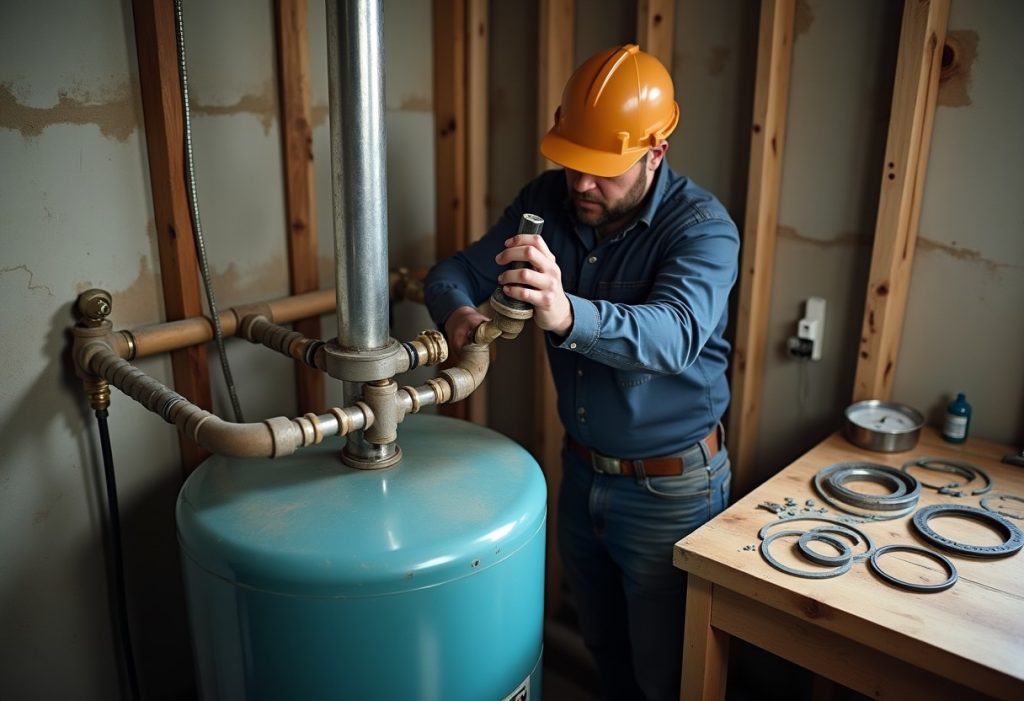
A well needs an owner who pays attention. Plan on a yearly lab test, a look at the well cap and casing, and eventual replacement of the pump, pressure switch, and pressure tank. City water customers maintain only the plumbing on their side of the meter, and usually part of the service line, while the utility handles the mains, pumps, and treatment plant.
The pump is the part that fails, and the bill depends on whether it is a deep submersible or a shallow jet pump. Learn the types of well pumps before one quits.
Each year on a well:
- Send a sample to a state-certified lab for coliform, nitrate, pH, and total dissolved solids.
- Check that the well cap is intact, bolted down, and sits above grade with soil sloping away.
- Watch the gauge through one cycle; rapid cycling points to a waterlogged pressure tank.
- Replace sediment cartridges and service any softener or UV lamp on schedule.
City customers are not fully off the hook. In many areas the homeowner owns the service line from the curb stop to the house, so a leak under the yard is their bill.
How do pressure, outages, and power failures differ for well water vs city water?
A well delivers pressure from a pressure switch and tank, so it stops when the power does. City water arrives already pressurized by water towers and utility pumps, so it usually keeps flowing through a home power outage. Well pressure switches commonly ship set at 30/50 or 40/60 psi, while city pressure can run high enough that plumbing codes require a pressure-reducing valve above 80 psi.
A pressure tank holds only a few gallons of usable water between pump cycles. In a blackout you flush a toilet or two, then the taps go dry. A generator sized for the pump’s starting load is the fix.
City customers trade that risk for another. When a main breaks, the utility can cut service or issue a boil-water advisory, and homeowners can only wait.
Leaks behave differently too. A city water customer gets a meter and a bill, and a sudden jump on that bill is one of the clearest signs of a hidden water leak. A well owner gets no bill, so the tell is a pump that kicks on when nobody is using water.
Which tastes better, and what treatment does each need?
Taste is the most common reason people prefer well water: it carries no chlorine and often has a crisp mineral flavor. It can also taste of iron or smell of rotten eggs from hydrogen sulfide. City water is disinfected with chlorine or chloramine, which some people can taste, and many communities add fluoride. Both can be fixed with the right treatment.
Match the treatment to a lab result, not a sales pitch.
- Hardness on a well: a water softener.
- Iron, manganese, or sulfur smell: an oxidizing iron filter or air injection system.
- Bacteria: fix the cap or casing, shock the well, then consider UV disinfection.
- Arsenic or nitrate: point-of-use reverse osmosis at the kitchen tap, sized to the lab number.
- Chlorine taste on city water: a carbon filter.
A whole house water filter treats every tap at once: carbon for chlorine on city water, or sediment and iron stages on a well, where the filter is your treatment plant.

How does well water vs city water affect property value and mortgages?
A well rarely kills a sale, but it adds steps. FHA-insured loans follow HUD Handbook 4000.1, which as summarized by lenders sets minimum distances of 50 feet from a septic tank and 100 feet from a drain field, and requires water quality to meet local health standards or, absent those, EPA drinking water standards. Many lenders order a water test before closing.
Value depends on what is normal nearby. Rural buyers judge a well’s flow, depth, age, and lab results. In suburbs on public water, some buyers treat a well as a chore and price it in.
Sellers with a well should have a lab report under a year old, the well log showing depth and yield, and install dates for the pump and tank.
Switching to city water is possible when a main runs nearby. Expect a connection fee, a new service line, and often a rule to seal or fully disconnect the old well.
Is well water or city water better for your home?
City water is the better fit if you want documented safety, steady pressure through a power outage, and no equipment to manage. Well water is the better fit if you want no monthly water bill and freedom from municipal rules, and you will test it every year and budget for a pump. For many rural buyers there is no choice, so the real question is how well the well is maintained.
- Lean toward a well if mains do not reach you, you will test yearly, and you can run a generator in outages.
- Lean toward city water if you want a regulator handling testing, have an infant or a pregnancy in the home, or prefer a predictable bill over a surprise $2,000 pump.
How we sourced this
We reviewed the top-ranking pages and People Also Ask questions, then sourced every figure: EPA pages on private wells, public water systems, and Consumer Confidence Reports; EPA WaterSense statistics; the USGS study of about 2,100 domestic wells; Bluefield Research’s 2024 and 2025 rate surveys of 50 cities; and Angi and HomeAdvisor drilling data as reported by Bob Vila (2023). Lab prices come from Maine CDC and Marathon County, Wisconsin fee schedules. FHA well distances come from lender summaries of HUD Handbook 4000.1, so confirm current rules with your lender. We excluded vendor calculators and untraceable figures.
Frequently asked questions
Is well water healthier than city water?
Not automatically. City water is tested on a federal schedule under the Safe Drinking Water Act, while a private well is only as safe as the owner’s last lab test. A USGS study of about 2,100 domestic wells found roughly 1 in 5 had at least one contaminant above a human-health benchmark. A tested, treated well can be excellent, and an untested one is a gamble.
Is well water cheaper than city water?
Over many years it often is, because a well has no monthly water bill. The upfront cost is steep, though. Angi and HomeAdvisor data put average drilling near $5,500, and the pump, pressure tank, treatment, and electricity come on top. The EPA says the average family spends more than $1,000 a year on water, so payback usually takes several years.
Do you pay a water bill if you have a well?
No utility bills you for the water itself. You still pay to run the pump through your electric bill, to test the water at a certified lab, and to replace parts such as the pump, pressure tank, and filters over time. Many well homes also use a septic system, so there is often no sewer bill either, but septic pumping and repairs cost money.
What are the disadvantages of well water?
The owner carries every risk. Nobody tests the water unless you pay for it, the pump stops when the power goes out, and drilling or replacing a well costs thousands of dollars. Groundwater can carry hardness, iron, sulfur, arsenic, radon, nitrate, or bacteria. Some lenders also add well inspections and water tests before they approve a mortgage.
Can you switch from well water to city water?
Often yes, if a public main runs near your property. The utility usually charges a connection or tap fee, a plumber runs a service line to the house, and many local codes require the old well to be properly sealed or isolated so it cannot backflow into the public supply. Costs vary widely by town, distance to the main, and permit rules.
Does well water lower a home’s value?
It depends on the market. In rural areas where wells are the norm, buyers expect them and value hinges on water quality and the well’s condition. In suburbs where most homes have public water, some buyers see a well as extra work. A recent clean lab report and a documented pump and tank help a listing in either setting.
Does well water work when the power goes out?
Usually not for long. An electric well pump stops when the power fails, so you only get the few gallons stored in the pressure tank before the taps run dry. A standby or portable generator sized for the pump keeps water flowing. City water normally keeps running during a home outage because the utility pressurizes the mains with towers and backup power.
What are the downsides of using well water?
The owner carries every risk. Nobody tests the water unless paid for, and drilling or replacing a well costs thousands of dollars. The pump stops when the power goes out, leaving only what the pressure tank holds. Groundwater can carry hardness, iron, sulfur, arsenic, radon, nitrate, or bacteria. Some lenders also add well distance rules and water tests before approving a mortgage.


