Water Softener Not Working? How to Test It and Fix It in Order
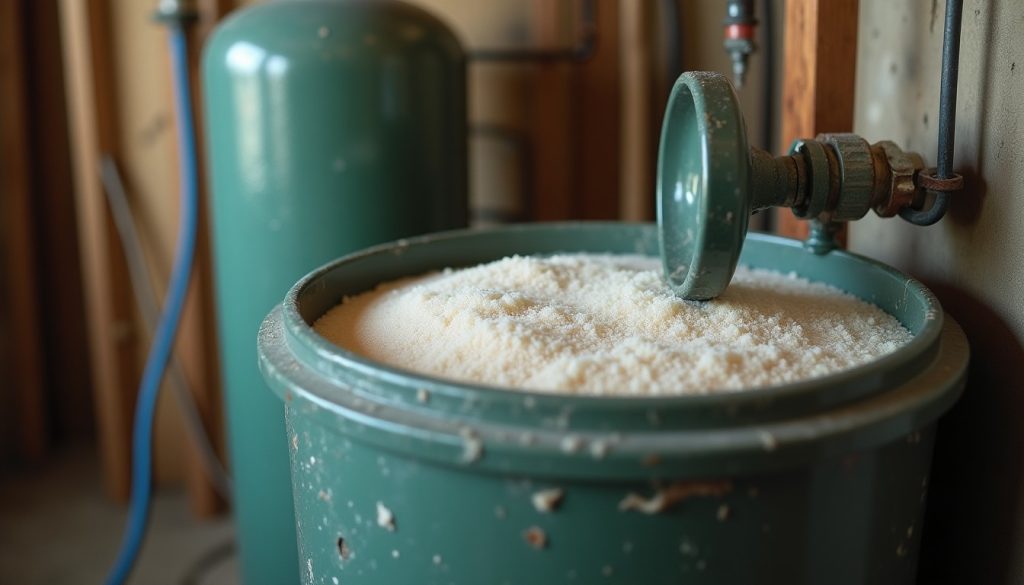
A water softener not working is usually a five-minute fix: confirm hard water with a test strip, then check the bypass valve, the salt, the injector and the settings before you blame the resin or the motor.
Key Takeaways
- A healthy softener should bring treated water down to about 0 to 1 grain per gallon, according to SoftPro Water Systems’ troubleshooting guidance. Test raw and treated water side by side before you touch anything.
- SoftPro Water Systems and the top-ranking guides we reviewed point to the same cheap-to-expensive order: bypass left on, salt bridge or mush, clogged injector or brine line, wrong settings or a clock lost in a power outage, then resin or valve failure.
- Resin manufacturers rate standard 8% gel softening resin for 10 to 15 years, but 2 ppm of residual chlorine can cut that in half, per WaterWorld.
- Iron fouling can cut resin exchange capacity to as little as 10% of new, according to WaterWorld, which is why well-water softeners die early.
- HomeAdvisor’s June 2026 data puts the average softener repair at $559, with most bills between $162 and $985.
How do you tell if a water softener is not working?
You tell with a hardness test, not a hunch. Dip a test strip in water from a softened tap, then in raw water from an outdoor spigot, which is often plumbed ahead of the softener. If both read the same, or the treated sample reads above roughly 1 grain per gallon (gpg), the softener is not softening. White spots and scale back that up, but they lag behind.
Strips read in gpg or in ppm (the same as mg/L). The USGS scale calls anything above 180 mg/L very hard, and one grain per gallon equals 17.1 mg/L, so 171 ppm is 10 gpg. For background, see our guide to how hard water is measured.
The physical tells:
- Soap stops lathering and the shower feels squeaky.
- Spots and film return on glasses and shower doors.
- Salt level stays flat for weeks, so the unit is not drawing brine.
- Standing water sits high in the brine tank.
Two traps fool people. The water heater holds a tank of old water, so hot taps stay hard for a while after a repair. And some installers leave the kitchen cold tap unsoftened on purpose, so test a bathroom tap.
Symptom, cause and fix at a glance
Match what you see to the likely cause, then work the fixes from the top down. The first four rows cost nothing but your time, so rule them all out before you book a service call or price a new unit.
| Symptom | Likely cause | Fix |
|---|---|---|
| Hard water everywhere, salt and display look normal | Bypass valve in bypass position | Return the valve to service, run water 5 minutes, retest |
| Salt level never drops, hard crust on top | Salt bridge | Break the crust with a broom handle, dissolve chunks with warm water |
| Sludge at the bottom of the brine tank | Salt mushing | Drain, scoop out the mush, rinse the tank, refill with clean salt |
| Brine tank full of water, salt not used | Clogged injector, venturi or brine line | Remove and clean the injector and screen, check the brine line for kinks and cracks |
| Soft some days, hard others | Hardness set too low or capacity too small | Set hardness to your tested gpg plus an iron allowance |
| Clock blinking or wrong time | Power outage reset the timer | Set the time of day, confirm settings, run a manual regeneration |
| Uses salt but still hard, unit 10+ years old | Exhausted or iron-fouled resin | Resin cleaner first, then a resin rebed or new unit |
| No motor sound, dial does not move during regeneration | Failed motor, timer or control valve | Replace the motor or control head, or replace the softener |
Is the bypass valve left on or the power off?
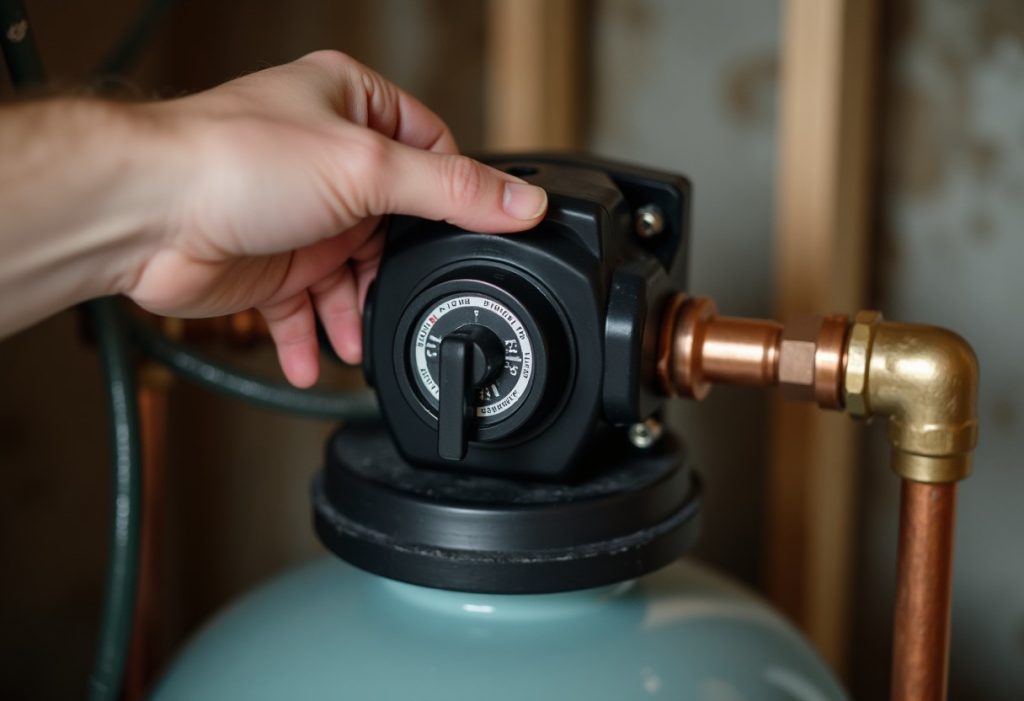
Check the bypass first because it is the most common overnight failure. The bypass valve sits where the plumbing meets the control head and routes water around the softener during repairs. If someone turned it during a plumbing job or bumped it while adding salt, hard water flows straight to the house while the softener looks perfectly normal. Then confirm the unit has power.
Most bypasses are either a push-pull stem marked “service” and “bypass” or a knob that turns a quarter turn. Older homes may use three separate valves instead, where the inlet and outlet should be open and the middle one closed. If you need a refresher on how a softener is plumbed in, our install guide walks through the loop.
Next, look at the display. A blank screen points to a tripped breaker, a dead GFCI outlet or a failed plug-in transformer. If the outlet works and the screen stays dark, suspect the transformer or circuit board.
Is a salt bridge or salt mush starving the brine tank?
Salt problems are the second most common cause and the easiest to fix yourself. A salt bridge is a hard crust that forms over an empty pocket, so the salt never touches the water and the brine never gets strong enough to recharge the resin. Salt mushing is the opposite failure, a thick sludge at the bottom that clogs the brine well and intake.
To find a bridge, push a broom handle straight down through the salt. If it hits a hard layer and then drops into air, you have a bridge. Tap it apart gently, working around the tank, and pour warm water over large chunks to dissolve them. Do not stab hard at the tank walls, because a cracked brine tank is a $125 to $700 replacement per HomeAdvisor.
Mush takes more work:
- Put the softener in bypass and unplug it.
- Scoop out the salt and sludge into a bucket.
- Drain or wet-vac the remaining water.
- Rinse the tank and check the float moves freely.
- Add water to the level your manual specifies, refill with clean salt, return to service and run a manual regeneration.
Humidity, overfilling and impure salt make bridges and mush more likely. Our guide to which salt to buy and how much to keep in the tank covers grades and fill levels.
Why is the water softener brine tank full of water or not using salt?
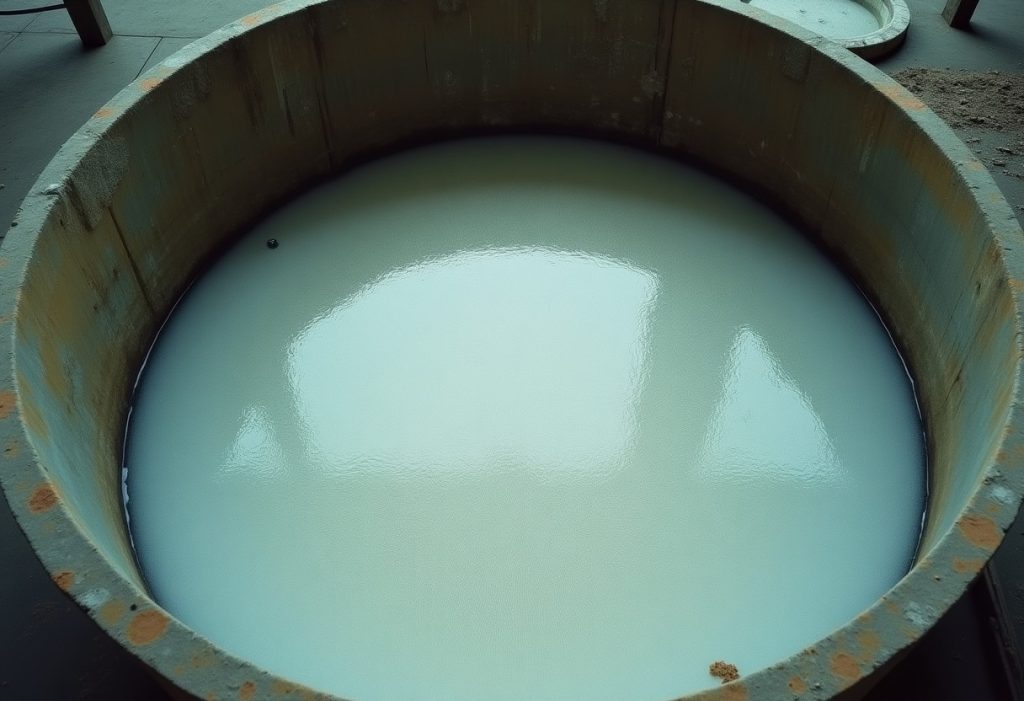
A tank full of water and salt that never drops both point to the brine draw. During regeneration, the control pushes water through a small injector (also called a venturi or nozzle) that creates suction and pulls brine out of the tank. When that injector, its screen or the brine line clogs, the softener refills the tank but cannot empty it, and the resin never recharges.
The injector usually sits behind a small cap on the side or front of the control head. Clean it like this:
- Bypass the softener and unplug it.
- Remove the injector cap and pull out the injector and its fine mesh screen.
- Soak them in warm water and clear the orifice with a toothpick. Never use wire, which enlarges the hole.
- Reassemble with the O-rings greased, restore service and run a manual regeneration while watching the brine level fall.
Then trace the brine line for kinks, cracks or loose fittings, because a small air leak kills the suction. Check the drain line too, since a kinked or frozen drain also stops the brine draw.
Are the hardness and regeneration settings wrong?
Wrong settings make a softener run out of capacity between regenerations, so the water is soft some days and hard others. The hardness setting must match your measured raw water, the regeneration time must be correct, and the clock must be right. A power outage, a utility switching water sources, or a new household member can all throw settings out of line.
Enter the raw-water hardness you measured in gpg. On a well with iron, dealers add an allowance because iron loads the resin like hardness does. A common sizing rule adds about 4 to 5 gpg for every 1 ppm of iron, but check your manual, since brands use different factors.
Next, check the clock. Many controls blink or drift after a power outage, so the softener regenerates mid-afternoon, or not at all. Set the current time, confirm the regeneration time (most units default to the middle of the night when nobody uses water), then start a manual regeneration.
Finally, ask what changed. A bigger household or a utility switching water sources can push demand past what the unit was sized for. If it regenerates daily and still runs hard, it may be too small, a case for checking what a new water softener costs.
Is the resin exhausted or fouled with iron?
If the salt draws down, the settings are right and the water is still hard, the resin is the prime suspect. Resin beads hold the sodium that swaps for calcium and magnesium. Over time, chlorine breaks the beads down and iron coats them, so each regeneration restores less capacity. Older units on city or iron-rich well water are the likeliest cases.
Lifespan depends heavily on what is in the water. In WaterWorld, Justin Ramsey writes that some resin manufacturers rate gel-type 8% softening resin for 10 to 15 years, and that 2 ppm of residual chlorine can cut that life expectancy in half. The same piece notes iron fouling makes beads stick together and channel, cutting exchange capacity to as low as 10%.
Sources: HomeAdvisor (softener life), WaterWorld (resin life, chlorine). Bars show range midpoints.
Try a resin cleaner before replacing anything. WaterWorld reports a high-iron resin cleaner can greatly extend resin life. Dose the brine well per the label, run a manual regeneration and retest the next day. If hardness stays high after two cleanings, the beads are worn out.
When is the motor or control valve the problem?
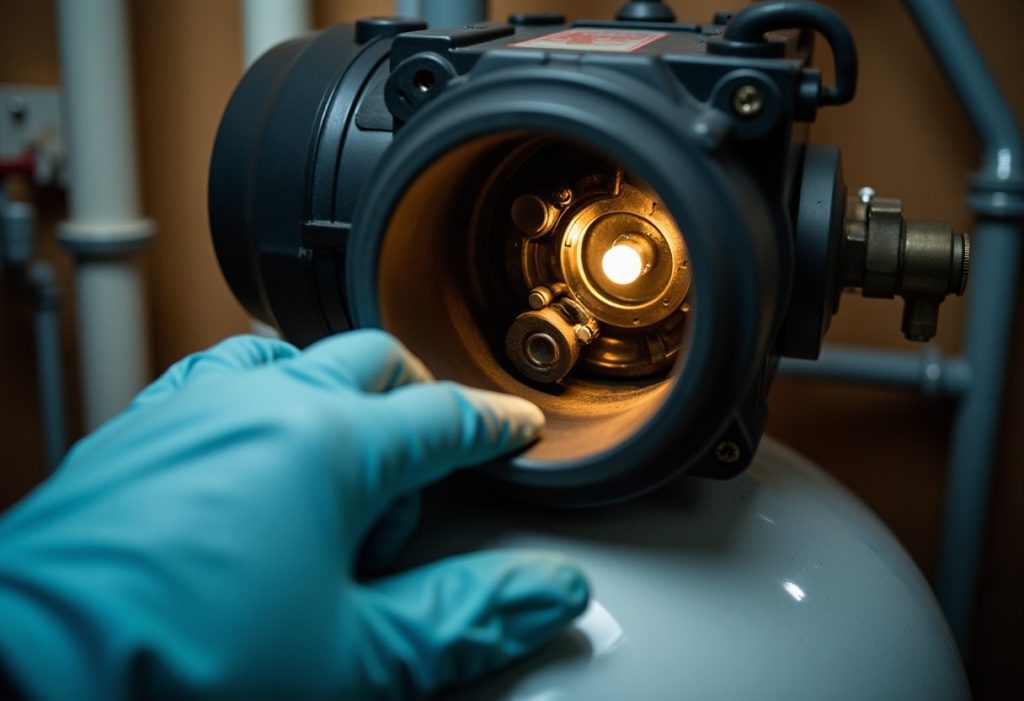
Suspect the motor or control valve when the power is on, the settings are right and a manual regeneration does nothing. On a healthy unit you hear the motor drive the valve through backwash, brine draw, rinse and refill. Silence, a stuck dial, or water running to the drain nonstop point to the control.
Run this test to narrow it down:
- Start a manual regeneration from the control and listen for the motor within a minute.
- Watch the drain line. Water should flow during backwash and rinse and stop when the cycle ends.
- Check the brine level partway through. It should be falling during brine draw.
- Confirm the cycle finishes and the display returns to service.
A motor that hums but does not turn, or a dial that jams partway, usually needs a new drive motor or a seal kit. Constant flow to the drain often means worn seals or a stuck piston. Fleck and Clack valves, sold under many brand names, use common parts that most dealers stock. Proprietary dealer units may only get parts through that dealer, which raises the price.
Should you repair or replace a water softener that is not working?
Repair it when the fix is cheap and the unit is under about 10 years old. Replace it when the softener is past 10 to 15 years, when the resin and the control both need work, or when a repair quote approaches the price of a new mid-range unit. HomeAdvisor’s June 2026 data puts the average repair at $559 against $1,000 to $6,000 for full replacement.
Sources: HomeAdvisor (brine tank, average repair), SoftPro Water Systems (resin and new unit). Bars show range midpoints.
| Repair or replacement | Typical cost | Source | Our take |
|---|---|---|---|
| Break salt bridge, clean injector, new brine line | Little or no parts cost DIY; a paid call usually lands in HomeAdvisor’s $162 to $985 typical band | HomeAdvisor | Always try first |
| Brine tank replacement | $125 to $700 | HomeAdvisor | Worth it if the softener is under 10 years old |
| DIY resin kit | $50 to $200 | SoftPro Water Systems | Cheap, but SoftPro reports many generic kits fail within 1 to 2 years |
| Professional resin replacement | $400 to $500 | SoftPro Water Systems | Sensible on a sound tank and control under 10 years |
| New mid-range single-tank softener | $700 to $1,200 | SoftPro Water Systems | Better value once the unit is 10 to 15 years old |
| Full system replacement, installed | $1,000 to $6,000 | HomeAdvisor | Range covers premium and dual-tank systems |
Plumber labor runs $45 to $150 an hour, with most softener repairs taking 1 to 3 hours, per HomeAdvisor. Prices vary by region and brand. SoftPro also notes that units 10 to 15 years old can waste $100 to $300 a year in extra salt and water, which tilts the math toward replacement.
How we sourced this
We reviewed the top-ranking pages for “water softener not working” and “water softener not softening” in October 2026, plus their People Also Ask questions, then traced every number to a named source. We consulted about a dozen sources and cited four: the USGS hardness scale, WaterWorld’s resin life article (Justin Ramsey, updated 2021), HomeAdvisor’s softener repair cost data (updated June 2026) and SoftPro Water Systems’ resin and troubleshooting guidance. SoftPro sells softeners, so we name it every time we use its ranges. We excluded scraped cost pages with no stated method. Exact steps vary by brand, so your owner’s manual overrides general guidance.
Frequently asked questions
How do I know if my water softener is working?
Test the water with a hardness strip at a tap the softener feeds, then test raw water from an outdoor spigot that usually bypasses it. A working unit should drop treated water to roughly 0 to 1 grain per gallon. Slick-feeling water, rich lather and no new white spots on glasses are good signs, but only a test confirms it.
Why is my water softener not using salt?
A softener that stops using salt is usually not drawing brine. The common causes are a salt bridge (a hard crust with an air gap under it), a clogged injector or venturi, a kinked or cracked brine line, or a control that has stopped regenerating because of a power outage or a failed motor. Check the salt bridge first since it costs nothing.
Why is there so much water in my brine tank?
Standing water well above the normal level means brine is going in but not being pulled out during regeneration. The usual causes are a clogged injector or injector screen, a blocked or kinked drain line, a stuck brine valve float, or a control valve that is not cycling. Cleaning the injector and checking the drain line fixes most cases.
How long does a water softener last?
HomeAdvisor puts typical water softener life at 10 to 15 years, and resin makers rate standard 8% crosslink gel resin for about 10 to 15 years too, per WaterWorld. Chlorinated city water shortens that, since 2 ppm of residual chlorine can cut standard resin life roughly in half. Iron-rich well water also wears resin faster.
Can I reset my water softener?
Yes. Most digital softeners reset by restoring power, setting the current time of day, confirming the hardness and regeneration time settings, then starting a manual regeneration from the control. Many older units lose the clock after an outage and regenerate at the wrong hour. The exact button sequence varies by brand, so follow the owner’s manual for your model.
Is it worth repairing a water softener?
Often yes for cheap fixes like a salt bridge, injector cleaning or a new brine line. HomeAdvisor reports an average repair of $559 with a typical range of $162 to $985. Past 10 to 15 years, or when the resin and control valve both need work, replacement tends to make more sense than another big repair.
What happens if a water softener runs out of salt?
The softener keeps cycling, but regeneration rinses the resin with plain water instead of brine, so the beads never recharge. Hard water passes straight through within a few days, depending on capacity and water use. Refill the tank and run a manual regeneration, and the unit usually recovers. Long stretches without salt can leave scale on fixtures in the meantime.
What is the average lifespan of a water softener?
HomeAdvisor puts typical water softener life at 10 to 15 years. Resin makers rate standard 8% crosslink gel resin for about the same span, per WaterWorld. Chlorinated city water shortens that life, since 2 ppm of residual chlorine can cut standard resin life roughly in half, and iron rich well water also wears resin faster.


