Water Smells Like Rotten Eggs? Find the Source by Tap, Then Fix It
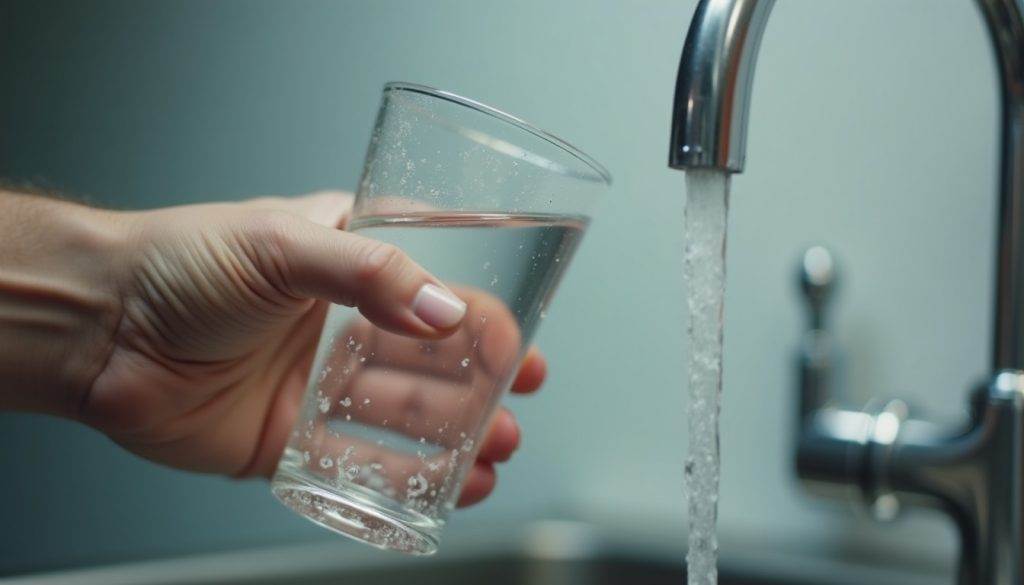
Water smells like rotten eggs because of hydrogen sulfide gas, and which taps smell tells you the source: hot only means the water heater, every tap means the well or supply, one drain means sewer gas.
Key Takeaways
- Hydrogen sulfide (H2S) causes the odor. Water above 0.5 ppm has an unpleasant smell and can stain fixtures yellow or black, per University of Georgia Extension, and Penn State Extension says most people notice it well below that.
- Smell hot and cold separately after a few hours of no use, as the Minnesota Department of Health recommends. Hot only points to the water heater; both point to the well or supply.
- A magnesium anode rod helps bacteria in the tank make H2S. Swapping it for aluminum or aluminum-zinc is the standard hot-side fix, per the Minnesota Department of Health and UGA Extension.
- Sulfur bacteria in a well call for shock chlorination at about 200 ppm chlorine held 8 to 48 hours, per Alberta Agriculture and Forestry.
- Pick treatment by concentration: activated carbon under 1 mg/L, aeration up to about 2 mg/L (Penn State), oxidizing media up to about 6 mg/L (Minnesota Department of Health), chlorine injection plus filtration above that.
- CDC’s ATSDR says people smell H2S in air at 0.0005 to 0.3 ppm. A smell from one drain only is sewer gas, not a water problem.
Why does my water smell like rotten eggs?
Your water smells like rotten eggs because it carries hydrogen sulfide (H2S). The Minnesota Department of Health lists three places it forms: naturally in groundwater from decay and reactions with soil and rock, from sulfur bacteria living in the well or plumbing, and from bacteria and chemical reactions inside the water heater. Each source has a different fix. Well owners can check for other problems at the same time with our guide to well water testing. Since sulfur bacteria in the well is a common culprit, it helps to pair that testing with well disinfection steps.
Most cases trace to sulfate-reducing bacteria, which live where oxygen is scarce: deep aquifers, well casings, and warm tanks that sit still overnight. They feed on sulfate, which is common in groundwater (the U.S. EPA sets a non-enforced taste guideline of 250 mg/L for it), and give off H2S.
Your nose catches very small amounts. University of Georgia Extension says water above 0.5 ppm of H2S has an unpleasant odor, and Penn State Extension says most people detect it well below that. (In water, 1 ppm equals 1 mg/L.)
Which taps smell, and what does that tell you?
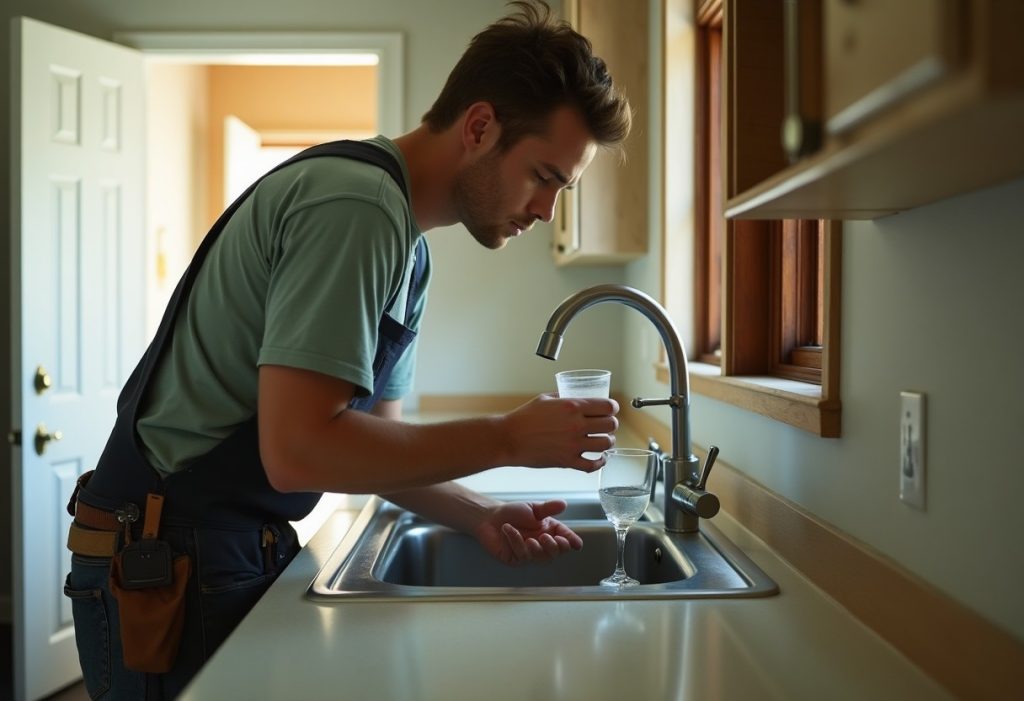
Which taps smell points to the source in about five minutes. Leave the water off for a few hours, then smell hot and cold separately, as the Minnesota Department of Health advises. Hot only means the water heater. Hot and cold together means the well or the supply. One sink or floor drain, with clean-smelling water in a glass, means sewer gas.
- Wait until nobody has run water for a few hours, such as first thing in the morning.
- Run cold only into a clean glass, step away from the sink, and smell the glass, not the drain.
- Repeat with hot only at the same faucet.
- Repeat at another floor and at an outdoor spigot, which often skips the softener or filter.
- With the tap off, smell the drain itself.
| Where it smells | What it usually means | How to confirm | First fix |
|---|---|---|---|
| Hot taps only | Water heater: magnesium anode plus sulfate-reducing bacteria in the tank | Cold water from the same faucet smells clean | Chlorine flush, 160°F heat cycle, aluminum or aluminum-zinc anode |
| Hot and cold, private well | H2S in the aquifer, or sulfur bacteria in the well and pipes | Outdoor spigot smells too; lab test for H2S, coliform and nitrate | Shock chlorination; continuous treatment if it returns |
| Hot and cold, city water | Utility supply or distribution issue | Neighbors notice it; smell matches at every tap | Call the water utility before buying equipment |
| Treated taps only, outdoor spigot clean | Bacteria growing in a softener or filter housing | Compare a tap upstream of the equipment | Sanitize the equipment per the maker’s manual |
| One drain only, water in a glass is clean | Sewer gas from a dry trap, blocked vent, or failed seal | Smell is at the drain opening, not in the glass | Refill the trap; check vent and seals |
Why does only my hot water smell like rotten eggs?
Only hot water smells like rotten eggs when the water heater is making the gas. Most tanks carry a magnesium anode rod to protect the steel, and the Minnesota Department of Health says magnesium supplies electrons that help bacteria turn sulfate into hydrogen sulfide. Warm, still water lets those bacteria multiply, which is why the smell is worst in the morning or after a trip.
The Minnesota Department of Health lists three fixes. Use them alone or together:
- Change the anode. A rod made of a different metal, such as aluminum, can protect the tank without feeding the reaction. UGA Extension says aluminum or zinc both work and favors aluminum where the tank is kept above 150°F. Supply houses stock an aluminum-zinc blend for odor problems.
- Disinfect the tank. Flush the heater with a chlorine bleach solution, then flush until the chlorine smell is gone.
- Run a heat cycle. Raise the thermostat to 160°F (71°C) for several hours to kill the bacteria, then set it back to normal.
Do not just pull the rod and leave the port empty. The Minnesota Department of Health warns that removing the anode may significantly shorten the life of the water heater, and many makers tie the tank warranty to an installed anode. Our guide to the water heater anode rod covers rod types, removal, and powered rods that never dissolve.
A 160°F tank scalds in seconds, so turn it back down after the cycle.
What if every tap smells like rotten eggs?
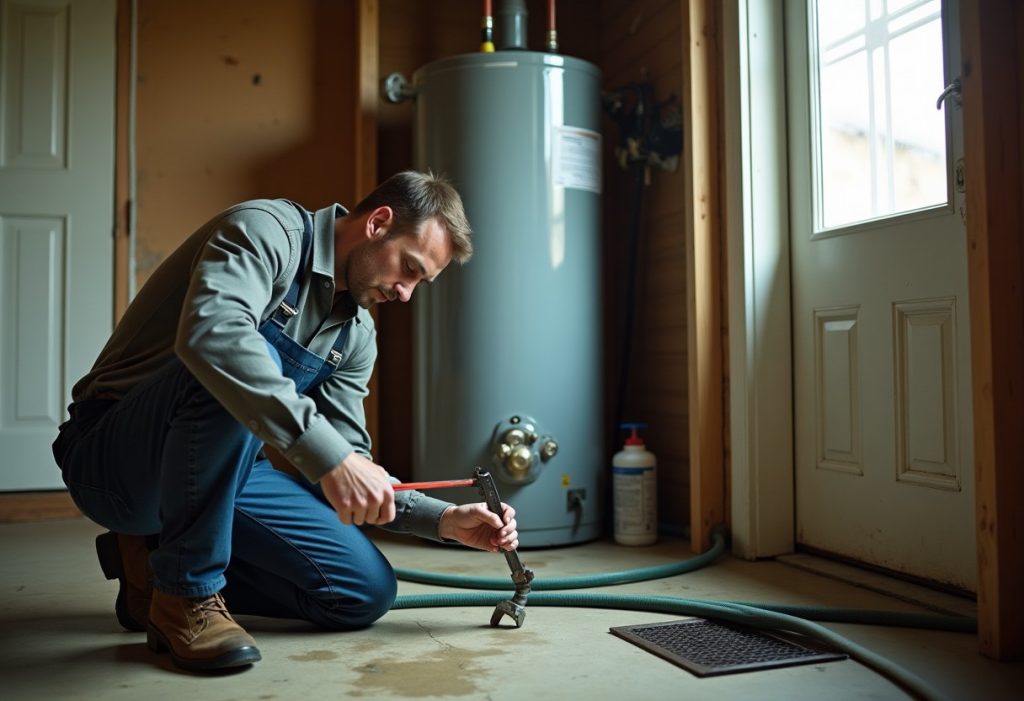
When hot and cold taps all smell like rotten eggs, the gas is in the water before it reaches the heater. On a private well that means H2S dissolved in the aquifer or sulfur bacteria living in the well and pipes. On city water it points to the supply, so call the utility first. A well shock chlorination usually tells you which well problem you have.
Alberta Agriculture and Forestry puts the standard shock dose at about 200 ppm chlorine, left in the well and pipes for 8 to 48 hours. Its guide says longer contact works better, more chlorine is not better, and one shock does not fully clear iron bacteria, so it is often repeated seasonally.
- Check equipment manuals; some softeners and filters must be bypassed during a shock.
- Mix chlorine to roughly 200 ppm using a dosing table for your well’s depth and diameter.
- Run every tap, hot and cold, until each one smells of chlorine.
- Leave it 8 to 48 hours without using water.
- Flush through an outdoor hose, away from gardens, until the chlorine smell is gone.
If the smell stays gone, bacteria were the cause. If it comes right back, the gas is likely in the aquifer and needs continuous treatment.
Know what is in the well before you open it. Submersible and jet pump setups put the pump, the pressure tank, and the access cap in different places, and our breakdown of well pump types shows where each one sits.
Test as well as treat. The Minnesota Department of Health says the gas comes from sewage or other pollution in rare cases, and recommends testing private well water for coliform bacteria and nitrate.
What if only one drain smells like rotten eggs?
If one sink, tub, or floor drain smells like rotten eggs while a glass of water from that faucet smells clean, the problem is sewer gas, not your water. Sewer gas carries hydrogen sulfide too, which is why people mix the two up. The usual causes are a dry P-trap, a blocked vent, or a failed seal, and no water filter will touch any of them. Chasing a dry P-trap often leads plumbers to check other faucet symptoms, including brown water from faucet issues, before ruling out the plumbing itself.
Check for a dry trap first. Floor drains, guest showers, and basement sinks that sit unused lose their water seal. Pour water in and see if the smell fades within a day.
If that fails, check the vent and seals. Our guide to sewer gas explains what the gas is made of, when it becomes dangerous, and which detectors pick it up.
Do not ignore a strong drain smell. The Washington State Department of Health says airborne H2S irritates the eyes, nose, and throat at low levels and can cause headache and nausea at moderate levels. At very high levels people stop smelling it, so a fading odor is no proof of safety.
Is water that smells like rotten eggs safe to drink or shower in?
In most homes, water that smells like rotten eggs is unpleasant rather than dangerous. Penn State Extension says hydrogen sulfide has no drinking water standard because it makes water undrinkable long before it reaches harmful levels, and the Minnesota Department of Health says the odor usually has nothing to do with sanitary quality. The exceptions are sewage contamination and gas building up in enclosed air.
The airborne numbers show how sensitive the nose is. CDC’s Agency for Toxic Substances and Disease Registry says people smell H2S in air at 0.0005 to 0.3 ppm. The same profile lists an OSHA ceiling of 20 ppm and a NIOSH immediately-dangerous level of 100 ppm, limits written for workplaces like refineries and sewers. Run the bath fan anyway during showers.
The bigger cost is often the plumbing. UGA Extension says H2S above 0.5 ppm corrodes iron, steel, copper, and brass, tarnishes silver, and stains laundry and fixtures yellow or black.
Use bottled water and test a well if the smell follows flooding or arrives with a color change or stomach illness.
How much hydrogen sulfide can each water treatment remove?
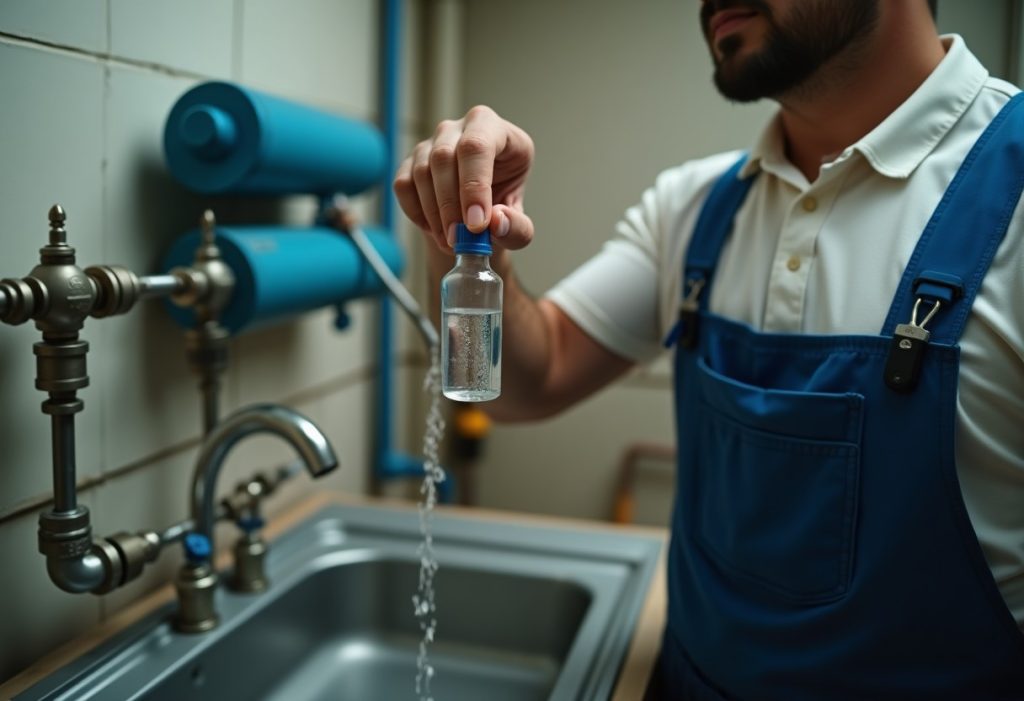
Treatment capacity is set by the hydrogen sulfide concentration, so get a lab number before you buy. Activated carbon handles under 1 mg/L, aeration tops out around 2 mg/L, oxidizing media filters reach roughly 6 mg/L, and chlorine injection with filtration covers the high end, according to the Minnesota Department of Health, Penn State Extension, and UGA Extension.
| Treatment | H2S it handles | Best fit | Source |
|---|---|---|---|
| Aluminum or aluminum-zinc anode | Hot side only | Odor from hot taps only | Minnesota Dept. of Health; UGA Extension |
| Shock chlorination | Kills bacteria; not a continuous treatment | Sulfur bacteria in the well and pipes | Alberta Agriculture and Forestry |
| Activated carbon filter | Under 1 mg/L (MDH); under 0.3 ppm (UGA) | Faint odor, low levels | Minnesota Dept. of Health; UGA Extension |
| Catalytic carbon | Higher than standard carbon; needs 4.0 mg/L dissolved oxygen | Moderate levels with oxygen in the water | Penn State Extension; UGA Extension |
| Aeration | Up to about 2 mg/L | Low to moderate levels | Penn State Extension; UGA Extension |
| Oxidizing media (manganese greensand) | 2 to 3 mg/L (Penn State); about 6 mg/L (MDH); up to 10 ppm (UGA) | Moderate levels, often with iron | Penn State; MDH; UGA Extension |
| Chlorine or permanganate injection plus filtration | Above 6 mg/L, up to about 75 ppm (UGA) | High levels | Penn State Extension; UGA Extension |
The sources disagree on oxidizing filters. Penn State puts manganese greensand at 2 to 3 mg/L, the Minnesota Department of Health gives about 6 mg/L for oxidizing media, and UGA says up to 10 ppm. Size to the low figure and get the unit’s rated H2S capacity in writing.
Odor at every tap calls for treatment at the point of entry, where the line comes into the house. Our whole-house water filter comparison explains sizing and plumbing. Ask the lab how to collect an H2S sample, since the gas escapes from a bottle quickly.
How do you get rid of the rotten egg smell in water for good?
Match the fix to the source and work from the cheapest step up. Hot-only odor gets an anode swap and a chlorine flush. Well bacteria get shock chlorination. Gas in the aquifer gets continuous treatment sized to a measured H2S level. Retest after each change so you know which step worked.
- Run the tap test: hot and cold separately, at two faucets and an outdoor spigot, after a few hours of no use.
- Hot only: disinfect and flush the tank, run a 160°F cycle, and install an aluminum or aluminum-zinc anode.
- All taps on a well: test for coliform, nitrate, and H2S, then shock chlorinate at about 200 ppm for 8 to 48 hours.
- Smell returns after the shock: choose continuous treatment from the table above based on the lab number.
- Iron bacteria present: plan to repeat the shock seasonally, as Alberta Agriculture and Forestry recommends.
- One drain only: refill the trap, then check the vent and seals.
Call a plumber for a seized anode, and a licensed well contractor for a sealed well cap or any system with a chemical feed pump.
How we sourced this
We reviewed top-ranking pages and People Also Ask questions for “water smells like rotten eggs” in October 2026, then took every figure from primary sources: the Minnesota Department of Health, Penn State Extension, University of Georgia Extension, CDC’s Agency for Toxic Substances and Disease Registry, the Washington State Department of Health, Alberta Agriculture and Forestry, and the U.S. EPA. Where sources disagree (oxidizing filter capacity), we show each figure with its source. We excluded manufacturer claims and vendor pricing. Treatment limits are general guidance, not equipment ratings.
Frequently asked questions
Is it safe to drink water that smells like rotten eggs?
Usually yes, but test a well to be sure. Penn State Extension says hydrogen sulfide has no drinking water standard because the taste and smell make water undrinkable long before it reaches harmful levels. Because the gas rarely comes from sewage, the Minnesota Department of Health still advises well owners to test for coliform and nitrate.
Why does my hot water smell like rotten eggs but not my cold water?
The water heater is making the gas. A magnesium anode rod helps bacteria in the warm tank turn sulfate into hydrogen sulfide. The Minnesota Department of Health recommends replacing the rod with aluminum, disinfecting the tank with chlorine bleach, or running the heater at 160 degrees F for several hours to kill the bacteria.
How do I get rid of the rotten egg smell in my well water?
Start with shock chlorination, which kills the sulfur bacteria that often cause it. Alberta Agriculture and Forestry targets about 200 ppm chlorine held in the well and pipes for 8 to 48 hours. If the smell returns, the gas is likely in the aquifer and needs continuous treatment.
Will a whole-house filter remove the rotten egg smell?
It can, if the filter type matches the concentration. The Minnesota Department of Health says activated carbon works below 1 mg/L and oxidizing media filters up to about 6 mg/L. A whole-house filter will not fix a hot-only smell, because that gas forms after the filter, inside the water heater.
Can I shower in water that smells like sulfur?
In most homes, yes. The odor is a nuisance at typical household levels, and the Minnesota Department of Health says it usually does not reflect the sanitary quality of the water. Run the bathroom fan, since the gas escapes as water sprays, and find the source if the smell causes headaches or nausea.
Why did my water suddenly start smelling like rotten eggs?
A sudden smell usually means bacteria got a foothold. Common triggers are a water heater left idle or turned down during a trip, a new magnesium anode, or a well opened for pump work. If the smell arrived after flooding or came with a color change, test a private well for coliform bacteria and nitrate before drinking it.
Does city water ever smell like rotten eggs?
It can, but on municipal water a smell at every tap is the utility’s problem to diagnose, not yours. Call the utility before buying equipment. If only the hot side smells, the cause is your own water heater, and the anode and flush fixes apply exactly as they would on well water.


