Septic Tank Risers: Why Add Them and What They Cost
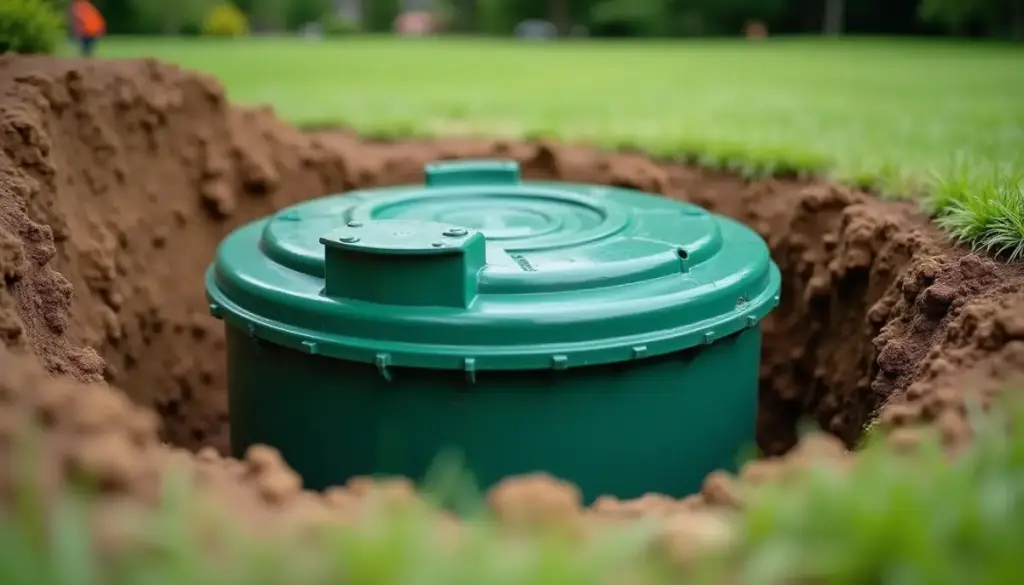
Septic tank risers bring a buried tank lid up to ground level, typically cost $200 to $400 installed according to Angi, and end the $50 to $200 digging charge a buried lid adds to every pump-out.
Key Takeaways
- Angi puts professional riser installation at $200 to $400, and FreshWater Systems prices DIY parts at $70 to $200.
- This Old House says buried access points add $50 to $200 to each septic pumping visit, which a riser removes for good.
- EPA advises an inspection at least every three years and pumping every three to five years, so a buried lid gets dug up again and again.
- Texas requires risers at least 2 inches above grade on systems permitted on or after September 1, 2023 (30 TAC 285.38).
- Utah requires watertight risers to within 6 inches of the surface, at least 20 inches across, with child-proof covers (R317-4-6).
- An unscrewed lid kills. A 3-year-old drowned in a Jacksonville park tank in 2017 where only one of six lid screws was in place, Pumper reported.
What is a septic tank riser?
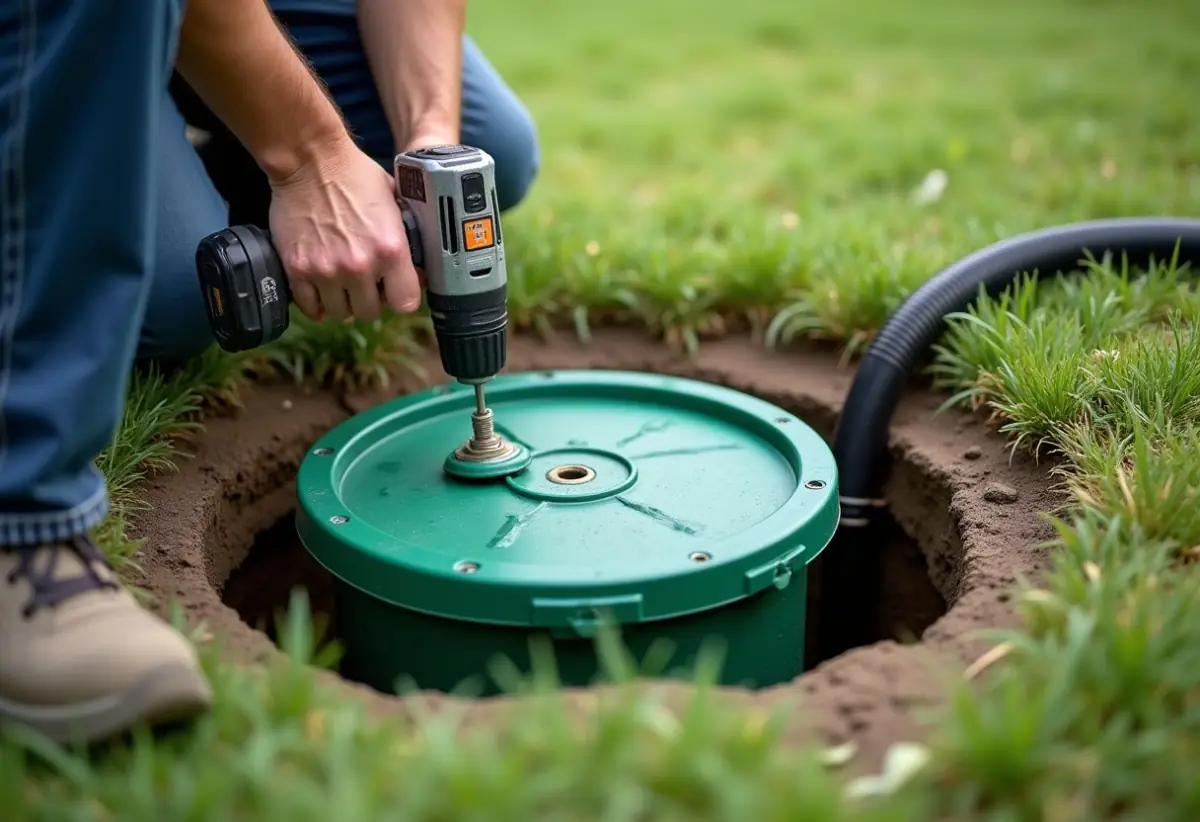
A septic tank riser is a watertight pipe section that extends a tank’s access opening from the tank top up to the yard surface, capped with a lid you can open without a shovel. Most new risers are ribbed plastic or PVC with a bolted lid. Older and commercial installs often use precast concrete rings. Fiberglass shows up mostly as the lid.
Most tanks have two or more openings: one over the inlet baffle, one over the outlet baffle and effluent filter, and sometimes a center manhole. Each opening that needs service gets its own riser. Your septic tank size and compartment layout decide how many openings you have.
A riser kit usually has three parts: an adapter ring that seals to the tank, one or more riser sections stacked to the needed height, and a lid. Some kits add a secondary safety barrier that sits inside the riser below the lid.
Are septic tank risers worth it?
Septic tank risers are worth it for most owners because every pump-out and inspection starts with reaching the lid. This Old House reports buried access adds $50 to $200 to a pumping bill, and EPA recommends an inspection at least every three years. A one-time riser of $200 to $400 often pays for itself within a few service visits and saves the lawn.
Run the math with your own numbers. If your pumper charges $100 to dig and the riser cost $400, the riser covers itself on the fourth visit. At EPA’s three to five year pumping interval, plus inspections in between, that is a long but certain payback. If your company charges $200 to dig, the first visit nearly covers it.
Speed matters too. Home buyers often order a septic inspection on a tight contract deadline, and a tank with risers can be opened the same morning. The University of Rhode Island Cooperative Extension says risers help owners and inspectors locate the tank and “avoid the need to repeatedly dig up the lawn for routine inspections.”
Risers also make the effluent filter reachable. URI notes that outlet screens usually need cleaning more often than routine inspections happen, especially with a garbage disposal. If the outlet opening sits 2 feet down, nobody cleans that screen. With a riser, it is a lift, a rinse over the inlet side and a reinstall.
How much do septic tank risers cost?
Septic tank risers usually cost $200 to $400 per opening installed, according to Angi, with HomeGuide listing the same $200 to $400 band. This Old House cites a wider $300 to $1,000 for riser work. DIY parts run $70 to $200 for common plastic kits, per FreshWater Systems. Deep tanks, extra openings and lid replacement raise the bill.
The buried lid surcharge is the line that repeats. A riser is paid once. The digging fee shows up on every pumping and every inspection for as long as the lid stays underground. For the full price picture on service visits, see what septic tank pumping costs by tank size.
What moves the riser price:
- Burial depth. A lid 8 inches down needs one short section. A lid 30 inches down needs stacked sections and more digging.
- Number of openings. Two-compartment tanks and tanks with a separate filter opening need two or three risers.
- Lid condition. HomeGuide lists lid replacement at $150 to $600 when the old cover is cracked or missing.
- Locating the tank. If nobody knows where it is, you pay for probing first. Our guide on how to find the septic tank covers records, pipe tracing and probing.
- Permits. Some counties require a permit or a licensed installer for any work on the tank.
Which septic tank riser material should you choose?
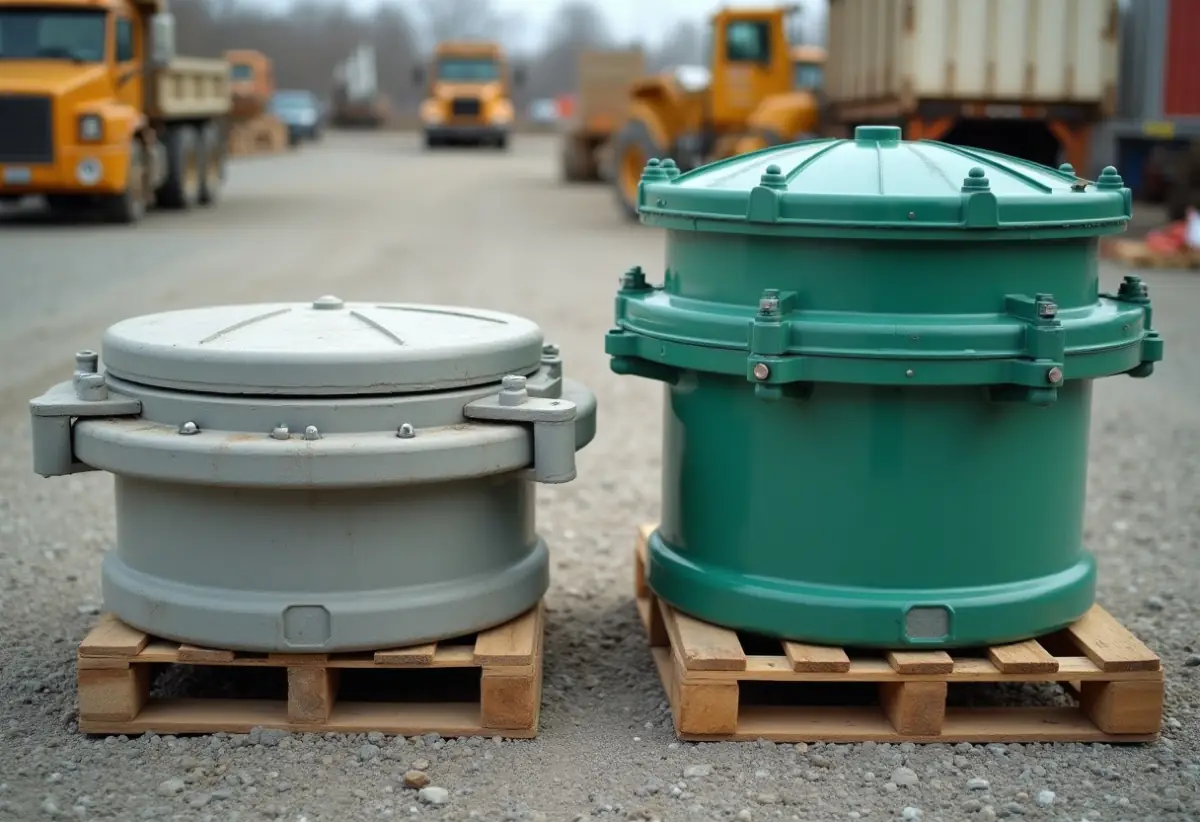
Plastic or PVC risers fit most homes because they are light, cut to grade and take screwed-down lids. URI’s extension program recommends PVC for that reason. Concrete costs less in some markets and handles vehicle loads, but its heavy lids are hard to open and often leak water. Fiberglass appears mostly as lightweight lids on PVC risers.
| Riser material | Pros | Cons | Typical cost |
|---|---|---|---|
| Ribbed polyethylene kits (Tuf-Tite, Polylok style) | Light enough for one or two people, kits include adapter ring and lid, stack to height, non-corrosive | Can shift if not fastened, weaker than concrete under vehicle loads | $70 to $200 in parts (FreshWater Systems); 24 x 14 inch kit listed at $190 (Wholesale Septic Supply) |
| PVC riser pipe | Watertight, cuts to grade, takes bolted lids that need tools to open (URI) | Needs a proper seal at the tank and at every joint | Usually inside Angi’s $200 to $400 installed range; no reliable parts-only figure published |
| Precast concrete rings | Strong, stable, can sit under light traffic, lid unlikely to shift | Heavy lids make access hard, lids not waterproof, often cannot be cut to grade (URI); may corrode from septic gases over time | URI says sometimes cheaper than PVC; Wholesale Septic Supply says pricier once heavy installation is counted |
| Fiberglass (mainly lids) | Light but strong, bolts down on PVC risers (URI) | Less common as a full riser, fewer retail kits | Quote locally; no reliable published range |
Size matters as much as material. FreshWater Systems advises buying the next size above the tank opening, so a 22 inch port takes a 24 inch kit. Check your state minimum before you buy, since Utah requires 20 inches inside diameter.
Do building codes require septic tank risers?
Many states require septic tank risers on new or permitted systems, though the height rule varies. Texas requires risers at least 2 inches above grade on systems permitted on or after September 1, 2023. Utah requires risers to within 6 inches of the surface when soil cover exceeds 6 inches. Ohio requires risers to grade or above. Older tanks are often grandfathered.
- Texas. 30 TAC 285.38 requires risers over inspection and cleanout ports extending at least two inches above grade, permanently fastened to the tank, with ports at least 12 inches in their smallest dimension.
- Utah. R317-4-6 requires watertight risers to within 6 inches of the ground surface, a 20 inch minimum inside diameter, and covers that are child-proof when closed.
- Ohio. OAC 3701-29-12 says risers shall extend to grade or above grade, with a 12 inch minimum clear opening.
- Rhode Island. URI Cooperative Extension says risers are required on new tanks statewide, and some towns require them on older tanks too.
County health departments often add their own rules, and a home sale can trigger an upgrade order. Call your local health or environmental department before you buy parts, since a riser that falls short of local height rules may fail inspection.
How do you keep a septic tank riser lid safe?
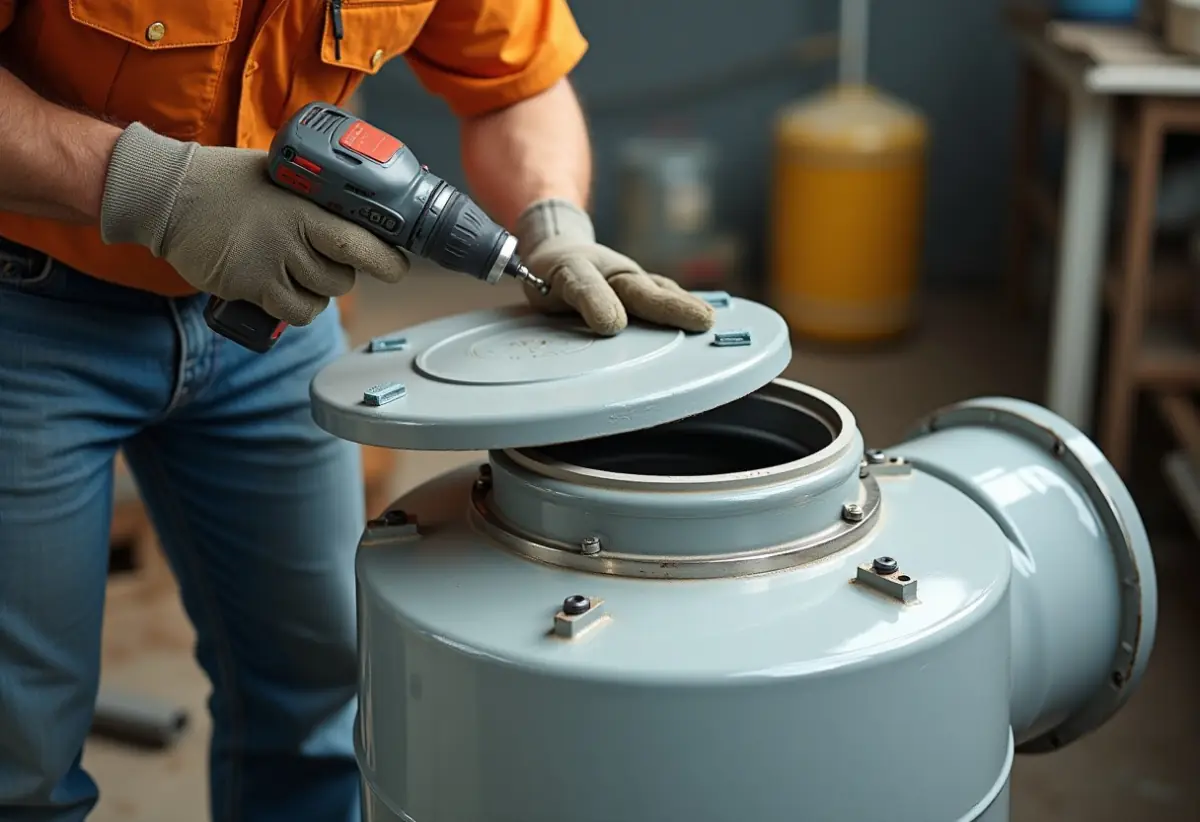
Keep a septic tank riser lid safe by screwing it down every time, adding a secondary safety barrier inside the riser and replacing any cracked lid at once. Texas requires lids protected by a padlock, a tool-removable cover or a cover of at least 65 pounds. Ohio requires a lid of at least 50 pounds or mechanical fastening.
The risk is real. In Jacksonville, Florida, 3-year-old Amari Harley drowned in a park septic tank in October 2017. Pumper reported that the lid had holes for six screws but only one screw was present. In Evergreen, Montana, a 3-year-old drowned in a 750-gallon tank in January 2015 after a vehicle cracked the riser so the lid screws no longer held, Fox News reported.
- Use every lid screw the kit provides, and check them after each pumping.
- Install the secondary safety barrier if your kit includes one. One maker’s instruction sheet says it must stay fastened at all times.
- Replace a cracked or mower-chipped lid right away. A lid that only rests on the riser is not secure.
- Keep risers out of vehicle paths, or choose a traffic-rated cover.
- Texas rule 285.38(g) requires anyone who opens a secured lid to secure it again when done. Hold your service company to the same standard.
How does septic tank riser installation work?
Septic tank riser installation means exposing the tank opening, sealing an adapter ring to the tank top with butyl rope, stacking riser sections to the right height, screwing every joint and lid down, then backfilling. One manufacturer’s instruction sheet calls for about 77 inches of butyl rope per flange and six screws per joint on a common kit.
- Locate the tank and each opening. Use records, the sewer line exit and a probe rod. Call 811 before digging.
- Dig and clean. Expose the tank top around the opening. The instruction sheet calls for a clean 32 by 32 inch area centered on the cleanout opening.
- Measure. Measure from the tank top to finished grade, then add the height your code needs (2 inches above grade in Texas).
- Seal the adapter ring. Lay butyl rope in the groove under the adapter, knead the ends together, center it on the opening and press it down. FreshWater Systems says butyl sealant works best for Tuf-Tite kits.
- Anchor the adapter. Drill and screw the base to the tank lid. The sheet specifies a carbide masonry bit for concrete tanks.
- Stack the riser. Seal each section with butyl rope and drive all six screws. Cut the top section to height if needed.
- Install the safety barrier and lid. Seat the inner barrier, then screw the lid down with every security screw.
- Backfill. The instruction sheet says to backfill with sand or washed stone to prevent frost movement where that applies. In cold climates, ask whether your installer adds foam insulation under the lid.
- Watch for leaks. FreshWater Systems advises monitoring the riser for leaks over the next couple of weeks.
The job is light work but not safe work. Septic tanks hold gases that can overcome a person quickly. Never lean into an open tank, never work alone and never leave an opening uncovered, even for a minute.
How we sourced this
We reviewed 14 sources and cited 11: state rules in Texas (30 TAC 285.38), Utah (R317-4-6) and Ohio (OAC 3701-29-12) via Cornell LII; EPA’s septic care guidance; the University of Rhode Island Cooperative Extension fact sheet on tank upgrades; a manufacturer riser-kit instruction sheet; cost figures from Angi, HomeGuide, This Old House (updated May 2026) and FreshWater Systems; and news reporting from Pumper and Fox News. HomeGuide and Angi figures come from their published summaries. We excluded user forum prices and low-quality cost aggregators. The payback example is our own arithmetic. Costs vary by region, depth and soil.
Frequently asked questions
How much does it cost to put a riser on a septic tank?
Angi puts professional riser installation at $200 to $400, and HomeGuide lists the same $200 to $400 range for installing a riser. This Old House cites a wider $300 to $1,000 band for riser work. Deep tanks, concrete lids, rocky soil and a second opening push the price up, so get a written quote per opening.
Are septic risers worth it?
For most owners, yes. This Old House says buried lids add $50 to $200 to the pumping bill, and EPA advises an inspection at least every three years. A riser removes that digging step for good. If your pumper charges $100 to dig and the riser cost $400, it pays for itself by the fourth service visit.
Does a septic tank riser replace a concrete lid?
Usually not. The riser mounts on the tank around the access opening, often on an adapter ring sealed with butyl rope, and a new lid caps the top of the riser at grade. The old concrete lid comes off and is set aside. A secondary safety barrier inside the riser is a common extra layer.
Can I install a septic tank riser myself?
Many homeowners do, since plastic kits are light and FreshWater Systems prices the parts at $70 to $200. Check your county first, because some health departments require a permit or a licensed installer for tank work. Never lean into an open tank, never work alone, and screw the lid down before you leave the site.
Can I bury my septic tank lid?
You can, but it defeats the purpose of a riser. Ohio requires risers to reach grade or above, Utah requires them to within 6 inches of the surface when soil cover exceeds 6 inches, and Texas requires 2 inches above grade on systems permitted since September 1, 2023. A buried lid also brings back the digging charge.
Are concrete or plastic septic tank risers better?
Plastic suits most homes. The University of Rhode Island recommends PVC risers because they are watertight, cut to grade and take bolted lids, while concrete lids are heavy and not waterproof. Concrete holds up better under vehicle loads and shifts less, so it can make sense near a driveway or parking area.
What size septic riser do I need?
Measure the tank opening and the depth from the lid to the surface. FreshWater Systems says to buy the next size above the opening, so a 22 inch port takes a 24 inch kit. Utah sets a 20 inch minimum inside diameter for risers, and Ohio requires at least a 12 inch clear opening.