Instant Hot Water Dispenser: Cost, Install and Safety

An instant hot water dispenser is a small under-sink tank, usually 2/3 gallon, that holds water near 200°F for its own tap, and most systems cost about $250 to $600 plus $200 to $400 to install.
Key Takeaways
- InSinkErator’s standard HWT-00 tank holds 2/3 gallon, draws 750 watts and serves up to 60 cups per hour, per its spec page.
- These taps run near 200°F. The CPSC says 150°F water burns adults in two seconds.
- InSinkErator requires a 1 3/8 inch mounting hole and an outlet under the sink.
- Standby power costs about $33 to $64 a year at the EIA’s July 2026 rate of 18.31 cents per kWh (our arithmetic).
- InSinkErator systems listed at $247 to $598 at Lowe’s and Home Depot on October 18, 2026.
- Mr. Rooter Plumbing puts installation at $200 to $400.
What is an instant hot water dispenser and how does it work?
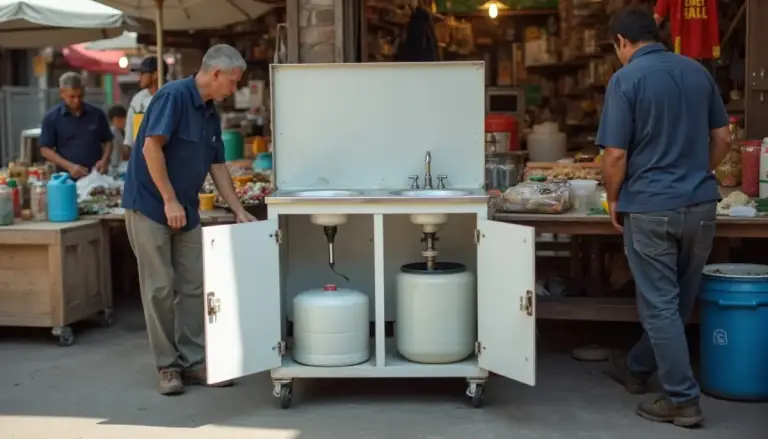
An instant hot water dispenser is a mini electric water heater that lives in the sink cabinet and feeds a dedicated faucet. A cold-water line fills a small insulated tank, a thermostat holds the water near boiling, and pulling the lever sends hot water out of the spout while fresh cold water refills the tank behind it.
The tank is small. InSinkErator, which says it has made dispensers for more than 50 years, builds its standard HWT-00 around a 2/3 gallon stainless tank with a 750 watt element. Retailers list Franke’s Little Butler tanks at 5/8 gallon. Hot and cold models add a lever for filtered cold water through the same spout.
InSinkErator’s list of uses includes tea, French press coffee, warming baby bottles (cool the water first), giving a pot a head start toward a boil and cleaning stuck-on food.
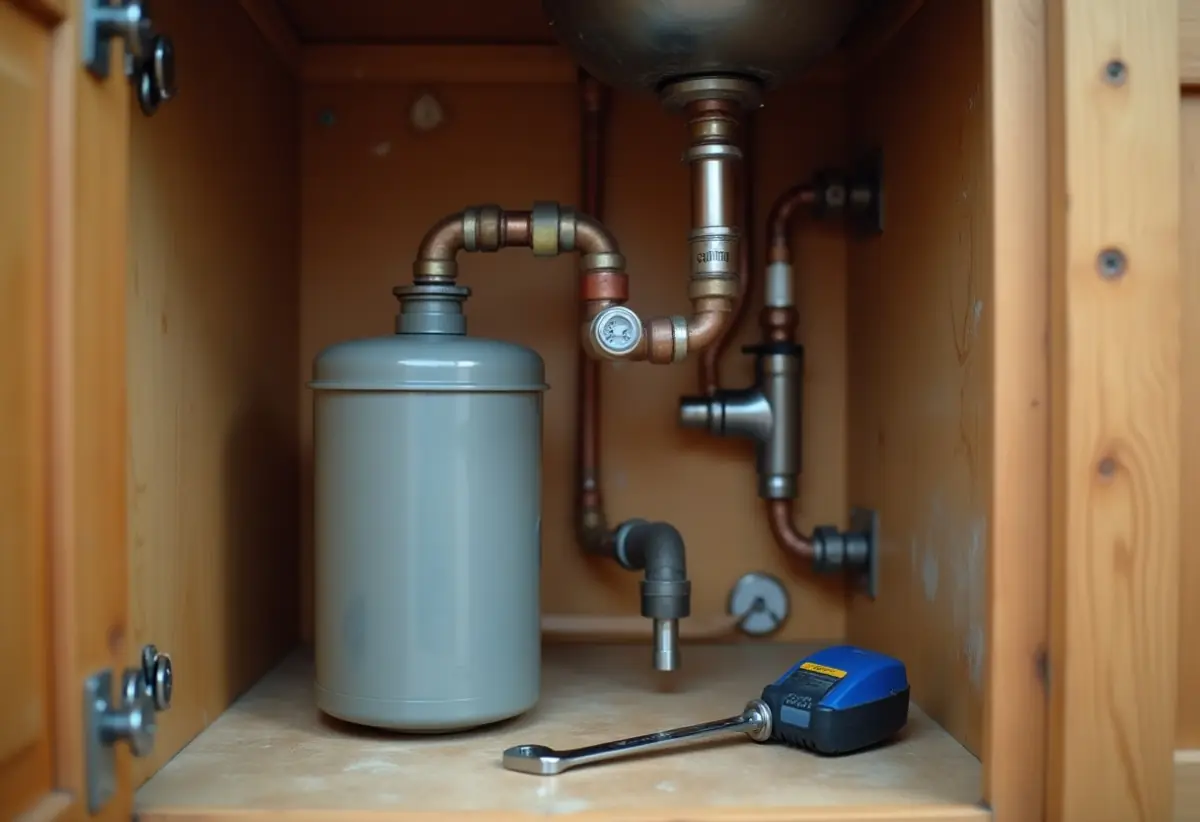
It is not a whole-house fix. A 2/3 gallon tank cannot fill a tub or cut the wait at a shower, and it sits apart from how the plumbing under a kitchen sink fits together for the main faucet, drain and disposal.

How hot is the water, and is an instant hot water dispenser safe?
Expect water between about 190°F and 210°F, which is hot enough to cause a serious burn almost instantly. The CPSC’s tap water scald guidance says most adults suffer third-degree burns after two seconds at 150°F, so a dispenser at 200°F calls for the same respect as a kettle that just clicked off. Built-in safety features cut the risk but do not remove it.
InSinkErator’s HWT-00 thermostat adjusts from 160°F to 210°F, and its digital tank from 190°F to 210°F with a 205°F preset. HomeTips compares dispenser water at about 190°F with roughly 120°F at a normal hot tap.
Those times come from the CPSC’s tap water scald publication, which stops at 150°F. A dispenser sits about 50 degrees past the top of that scale, and the CPSC notes most scald victims are older adults and children under five.
InSinkErator says its hot lever springs back the moment you let go and that the stream is a fine flow meant to stop spitting. Still, mount the spout away from small hands and fill mugs on the counter, not in your hand. For the 120°F target on the rest of the house, see our guide to safe water heater temperature settings.
Altitude is a gap most guides skip. Water boils at a lower temperature as elevation rises, so a tank set at 205°F or 210°F may sputter and spit steam in a mountain town. Turn the thermostat down until the spout runs smoothly.
What do you need for instant hot water tap installation?
An instant hot water tap installation needs four things under and on the sink: a deck hole for the spout, an electrical receptacle in the cabinet, a cold-water connection and wall space for the tank. InSinkErator lists a standard 1 3/8 inch mounting hole and an under-sink outlet as the required components, and rates its standard tank for 30 to 125 psi supply pressure.
- Faucet hole. InSinkErator’s HOT150 fits holes from 1.25 to 1.5 inches. Reuse a sprayer hole, knock out a punch-out or drill the counter.
- Power. The standard tank draws 750 watts and 6.5 amps; the digital tank draws 1,300 watts and 11.3 amps. Recent National Electrical Code editions call for GFCI protection on kitchen and near-sink receptacles, and your locally adopted code controls.
- Cold supply. HomeTips describes a clamp-on saddle valve, but many plumbers prefer a tee with its own quarter-turn stop over a valve that pierces the pipe.
- Space. The tank and any filter housing compete with the disposal and trash pullout for cabinet room.
- Shut off the cold supply and open the main faucet to drop pressure.
- Mount the spout through the hole and tighten it from below.
- Hang the tank on the cabinet wall near the outlet.
- Install a tee and stop on the cold line and run the supply tube to the tank or filter.
- Connect the spout tubes and fill the tank by running the hot lever until water flows steadily.
- Only then plug in the tank.
A stone sink that needs drilling or a cabinet with no receptacle turns a one-hour swap into a plumber-plus-electrician visit.
How much does an instant hot water dispenser cost?
Complete instant hot water dispenser systems from InSinkErator listed between $247 and $598 at Lowe’s and Home Depot when we checked Google Shopping on October 18, 2026. Tank-only replacements ran from $176 for a standard HWT-00 at one parts dealer to $589 for the digital HWT300. Add $200 to $400 for professional installation, the range Mr. Rooter Plumbing quotes, plus any electrical or countertop work your kitchen needs.
| Model type | Tank | Temperature | Listed price (Oct 2026) |
|---|---|---|---|
| InSinkErator Invite HOT150, hot-only system | 2/3 gal, 750 W standard tank | 160°F to 210°F adjustable | $247 (Lowe’s) to $339 with filter (Home Depot) |
| InSinkErator HOT250, hot and cold system | 2/3 gal (0.66), 750 W standard tank | About 200°F | $399 (Lowe’s) to $598, two-handle (Home Depot) |
| InSinkErator Involve Wave, with filtration | 2/3 gal stainless | Near boiling (maker gives no figure on its overview) | $464 to $568 (Home Depot) |
| InSinkErator HWT-00 standard tank only | 2/3 gal, 750 W | 160°F to 210°F adjustable | $176 (Carroll Parts) to $419 (Plesser’s) |
| InSinkErator HWT300 digital tank only | 2/3 gal, 1,300 W | 190°F to 210°F, preset 205°F | $589 (QualityBath) |
| Franke Little Butler HT-400 tank only | 5/8 gal (retailer listing) | Close to boiling | $408 (PlumbersStock) |
Prices move with finish and filter bundles, so treat the table as a snapshot, not a quote.
Installation is the other half of the bill. Mr. Rooter Plumbing says installs typically run $200 to $400, depending on the dispenser type, the distance to a suitable water line and any sink modification. A new cabinet receptacle is often a separate electrician charge.
How much electricity does an instant hot water dispenser use?
A tank that holds water near 200°F around the clock uses roughly 0.5 to 1 kWh a day. At the EIA’s July 2026 average residential price of 18.31 cents per kWh, that works out to about $33 to $64 a year.
Here is the arithmetic behind those figures, using the EIA Table 5.6.A rate:
- Low estimate. HomeTips puts standby use at a little more than 0.5 kWh per 24 hours. That is 182.5 kWh a year, or about $33.
- High estimate. InSinkErator says its HWT-00 uses less energy than a 40-watt light bulb. Forty watts for 24 hours is 0.96 kWh a day, 350 kWh a year, or about $64.
- Heavy use hour. A 750 watt element running flat out for a full hour uses 0.75 kWh, about 14 cents. The 1,300 watt digital tank uses 1.3 kWh in the same hour, about 24 cents.
The 1,300 watt tank recovers faster after a big draw. Real standby use depends on the thermostat setting and cabinet temperature, so treat the range as an estimate, not a meter reading.
How does an instant hot water dispenser compare with a recirculation pump or point-of-use heater?
An instant hot water dispenser makes small amounts of near-boiling water at one tap. A recirculation pump cuts the wait for normal hot water at every fixture on a loop. A point-of-use water heater supplies normal-temperature hot water to one sink or shower that sits far from the main heater. They solve three different problems, and some kitchens use two of them.
| Device | What it solves | Water temperature | Power and plumbing |
|---|---|---|---|
| Instant hot water dispenser | Near-boiling water for drinks and cooking at one spout | About 160°F to 210°F (InSinkErator range) | 120 V receptacle, cold-line tee, deck hole |
| Hot water recirculation pump | Long waits for hot water at distant fixtures | Same as the main water heater setting | Pump at the heater or under a sink, plus a return line or crossover valve |
| Point-of-use water heater | Hot water at one remote fixture without a long pipe run | Normal hot-tap range, set by its thermostat | Electric circuit sized to the unit, hot and cold connections |
If the complaint is a cold first minute at the kitchen faucet, a hot water recirculation pump is the better fit. If a bar sink or garage sink sits a long way from the tank, look at a point-of-use water heater. Buy the dispenser only if the goal is water for tea and cooking.
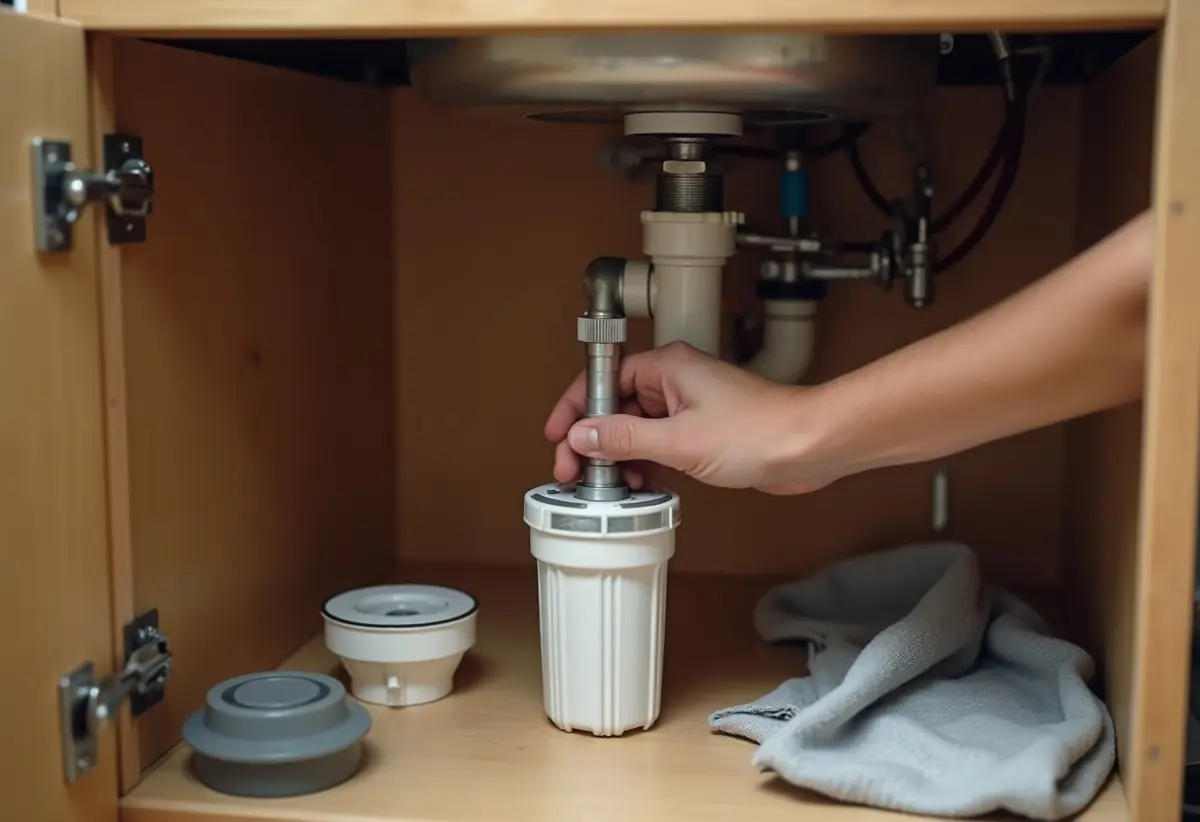
How long does an instant hot water dispenser last, and what upkeep does it need?
InSinkErator backs its HWT-00 and HWT200 tanks with a 3-year limited warranty and its digital tank with a 4-year in-home warranty. We found no manufacturer-published service life, so the warranty is the only maker-backed number. Upkeep mostly comes down to filters and scale.
- Filters. InSinkErator says to change the filter at least every 6 to 8 months, and suggests 6 months for its F-1000S.
- Scale. HomeTips notes that dispensers collect scale in hard-water areas, and some tanks have a drain plug for a flush once or twice a year.
- Softened water. InSinkErator says its tanks work with softened well water.
A tank that spits constantly, a dripping lever or water around the fittings calls for service. Because the spout and tank are separate parts, a failed tank can often be swapped without changing the faucet.
Is an instant hot water dispenser worth it?
An instant hot water dispenser is worth it if you heat water several times a day, have someone at home who struggles to lift and pour a kettle, or want a filtered drinking spout as part of the deal. It is a poor buy for a household that boils water a few times a week, because standby power and filters keep costing money every month.
Australian consumer group CHOICE notes the drink tastes the same as kettle water, so the case rests on need, such as a large household, arthritis that makes pouring hard or frequent baby formula prep.
Run your own numbers. A $400 system plus $300 installed is $700 up front, then about $33 to $64 a year in power and two filters. In return you get near-boiling water at the pull of a lever and no kettle on the counter.
How we sourced this
We consulted 15 sources in October 2026 and cited 8. Tank, wattage, temperature, mounting hole, warranty and filter figures come from InSinkErator’s U.S. product pages. Scald times come from CPSC Publication 5098. Electricity cost uses the EIA’s July 2026 U.S. average residential price, multiplied by standby figures from HomeTips and InSinkErator; that arithmetic is ours. Prices are Google Shopping listings from Lowe’s, Home Depot, QualityBath and PlumbersStock checked October 18, 2026. Franke tank size is from retailer listings, not a Franke spec sheet. We excluded unsourced marketing pages and non-U.S. running-cost estimates.
Frequently asked questions
How much does it cost to run an instant hot water dispenser?
Roughly $33 to $64 a year at the July 2026 U.S. average residential rate of 18.31 cents per kWh from the EIA. The low end uses the HomeTips estimate of a little over 0.5 kWh per day, and the high end uses InSinkErator’s claim that its tank draws less than a 40-watt bulb, or 0.96 kWh per day.
Can I install an instant hot water dispenser myself?
Many handy owners can. InSinkErator says its dispensers are designed for do-it-yourself installation and lists two requirements, a standard 1 3/8 inch mounting hole and an outlet under the sink. If you need a new receptacle, a drilled stone or porcelain sink, or a new cold-water tee, hiring a plumber or electrician is the safer call.
Does an instant hot water dispenser need its own outlet?
It needs a receptacle in the sink cabinet. InSinkErator rates its standard tank at 115 volts, 750 watts and 6.5 amps, and its digital tank at 1,300 watts and 11.3 amps. Whether that receptacle can share a circuit with a disposal or dishwasher depends on the load and your local electrical code, so ask a licensed electrician before you plug in.
How hot does an instant hot water dispenser get?
Most run near 200 degrees Fahrenheit. InSinkErator’s standard HWT-00 tank adjusts from 160 to 210 degrees, and its digital tank adjusts from 190 to 210 degrees with a factory setting of 205. That is far hotter than the 120 degree water heater setting the CPSC recommends for normal taps, so treat the spout like a kettle.
Is water from an instant hot water dispenser safe to drink?
Certified units are built for drinking water. InSinkErator lists NSF/ANSI/CAN 61 and NSF 372 lead-free certifications for its dispensers, and its optional filters carry NSF 42 and 53 listings. Change the filter on schedule, every 6 to 8 months per InSinkErator, so the cartridge does not become the weak point in the system.
Can you add an instant hot water dispenser without an extra sink hole?
Often yes. HomeTips suggests removing a side sprayer or a separate filtered-water spout and reusing that hole, or knocking out an unused punch-out on the sink deck. A plumber can drill stainless steel, though HomeTips warns that drilling porcelain risks cracking it. A countertop hole is another route if the counter material allows it.
Should you unplug an instant hot water dispenser on vacation?
HomeTips advises turning the dial down or unplugging the unit when you travel. A tank that holds water near 200 degrees uses power around the clock, so a week away at the InSinkErator ceiling of 40 watts wastes about 6.7 kWh. Unplug it, and let the tank reheat for a few minutes when you return.