How to Check Expansion Tank Pressure (and Tell if the Tank Is Bad)
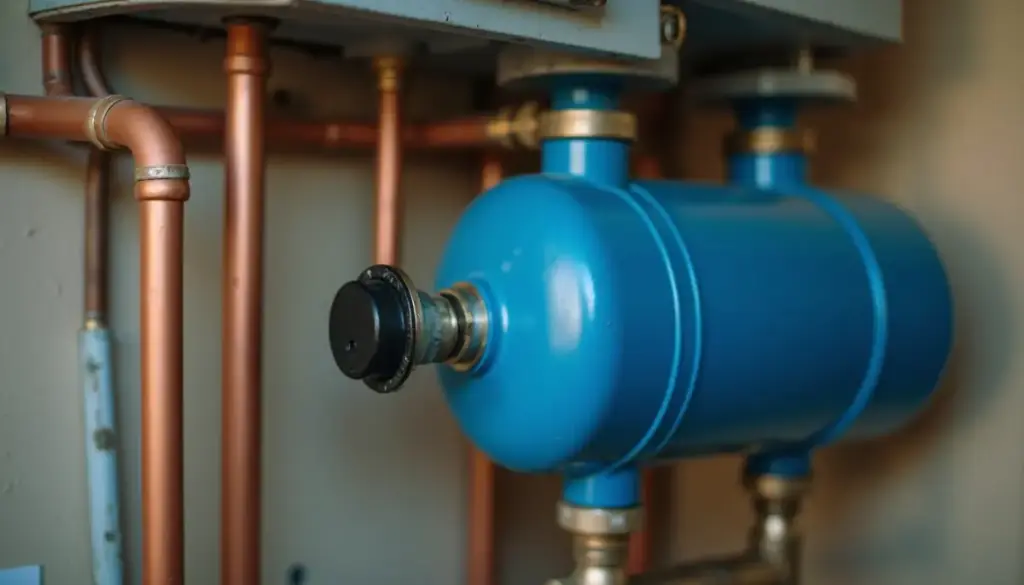
How to check expansion tank pressure in one pass: shut off the water, drain the line to 0 psi, read the tank’s air valve with a tire gauge, and pump it to match your static house pressure.
Key Takeaways
- Watts and Amtrol both say to set the air pre-charge equal to static cold water pressure, with the tank empty of water.
- Factory charges vary by brand. Watts ships PLT tanks at 20 psi, and Amtrol’s 2022 literature lists 50 psig for the ST-5 and ST-12 and 40 psig for the ST-25V and up.
- Watts caps the PLT air charge at 80 psi and says houses above 80 psi need a pressure reducing valve or a lower-pressure tank location.
- Water from the air valve means a torn diaphragm. Neither maker lists a replacement diaphragm, so the fix is a new tank.
- A Watts PLT-5 accepts 1.48 gallons at a 20 psi pre-charge but 0.80 gallons at 80 psi (Watts ES-PLT).
- Amtrol’s sizing chart puts a 40 or 50 gallon heater on an ST-5 at 40 to 80 psig when the thermostat tops out at 140°F.
What should expansion tank pressure be set to?
Expansion tank pressure should equal your home’s static water pressure, read at a hose bib with no water running. The Watts PLT installation sheet (IS-PLT) says the pre-charge “must be set to the system pressure,” and Amtrol’s residential instructions say to adjust the air charge “to match cold water supply pressure” with the tank empty of water.
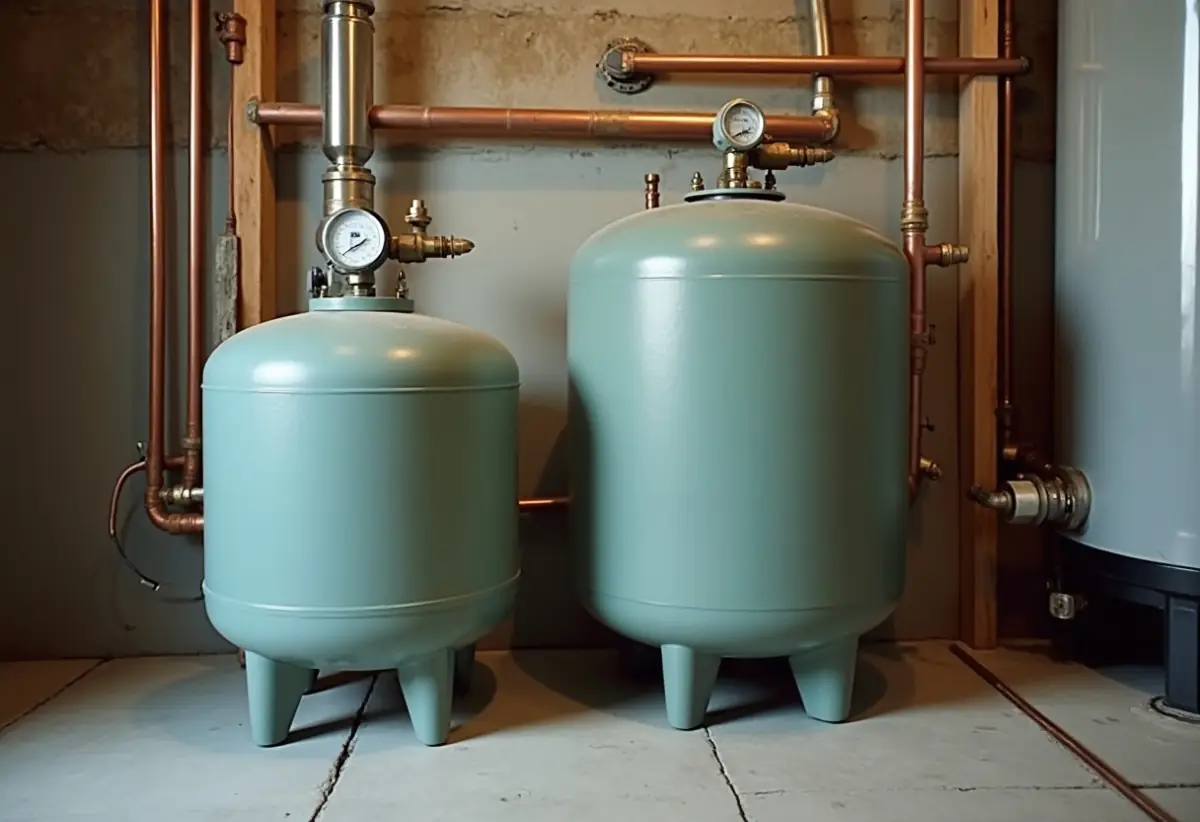
A thermal expansion tank is a steel shell split by a butyl diaphragm, air on one side and water on the other. Amtrol’s operating notes explain that the air charge keeps water out of the tank “until the system pressure exceeds the pre-charge pressure.” Matched to static pressure, it starts absorbing water the moment the heater fires.
Out of the box, almost no tank matches your house. Watts lists a 20 psi factory air charge for every PLT model in its ES-PLT specification sheet. Amtrol’s Therm-X-Trol sizing chart (MC8520, 04/22) lists 50 psig for the ST-5 and ST-12 and 40 psig for the ST-25V through ST-210V. Read the label on older or store-brand tanks.
How do you check expansion tank pressure, step by step?
To check expansion tank pressure, take two readings: static house pressure with the water on, then the tank’s air charge with the line drained to 0 psi. You need a hose-thread pressure gauge, a tire gauge and the “manual bicycle tire pump” named in the Watts IS-PLT steps. The job takes 9 steps.
- Read static pressure. Thread the gauge onto the hose bib nearest the main. Per Watts, open a faucet so pressure equalizes, close it, then read.
- Turn the heater down. Set a gas heater to pilot or vacation, or switch off the breaker on an electric unit.
- Shut the main valve. Closing only the heater’s cold inlet can trap pressure between the tank and the valve, depending on where the tank tees in.
- Drain the line to 0 psi. Open the lowest cold faucet in the house and one hot faucet. The hose bib gauge should fall to 0.
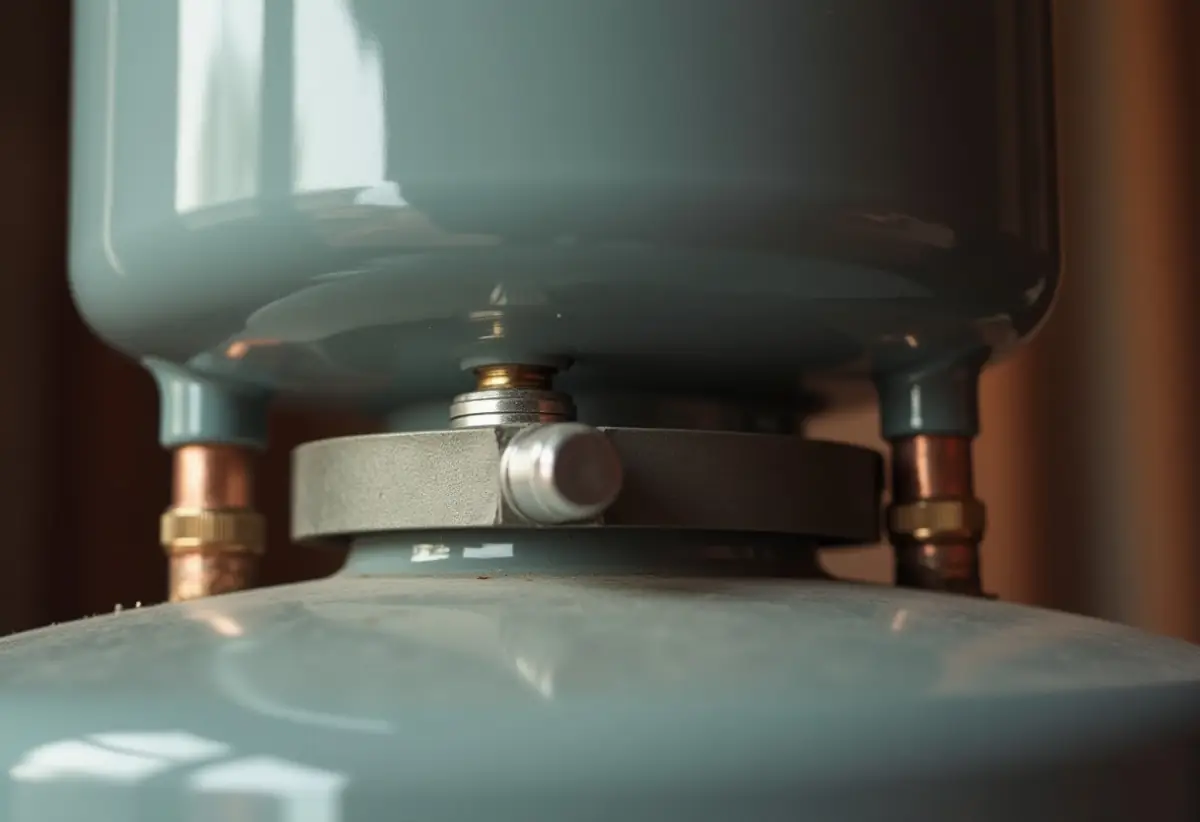
- Uncap the air valve. It sits opposite the pipe connection. Amtrol in-line tanks hang pointing down, so it usually faces the floor.
- Read the charge. Press the tire gauge on squarely and pull it off quickly. Amtrol warns that every check lets a little air escape.
- Adjust. Pump air in short strokes until the gauge matches step 1. If it reads high, press the valve core to bleed it down. Never go past 80 psi on a Watts PLT.
- Cap it. Thread the plastic cap back on until it sits flush. Amtrol says a poorly sealed cap “will result in loss of precharge.”
- Refill and purge. Close the faucets, open the main slowly, run hot fixtures until air stops sputtering, then restore the heater.
Amtrol also says to adjust the pre-charge at ambient temperature only.
How do I know if my expansion tank is bad?
You know an expansion tank is bad when water comes out of its air valve, when it reads 0 psi with the line drained, or when it sounds solid from end to end. All three point to a waterlogged tank. Neither the Watts PLT nor the Amtrol ST literature lists a replacement diaphragm, so a failed diaphragm means a new tank.
The water-at-the-valve test is the most decisive. Press the valve core for one second with the line pressurized. A healthy tank lets out dry air. Water or a wet sputter means water has crossed the diaphragm.
The knock test is quicker but less certain. Rap the shell with a knuckle from the pipe end to the air end. A working tank sounds hollow on the air side; a waterlogged one thuds dully end to end. Confirm with the valve test before buying parts.
Amtrol ST-5, ST-8 and ST-12 in-line tanks also carry an InSight indicator cap. A discolored tip means “tank replacement is required,” though Amtrol says not to rely on the cap alone.
| Test | Result | What it means |
|---|---|---|
| Tire gauge, line drained to 0 psi | Matches your static pressure | Charge is set correctly, no action |
| Tire gauge, line drained to 0 psi | Reads below static pressure | Air has leaked out. Recharge it and recheck at the yearly service Amtrol recommends |
| Tire gauge, line drained to 0 psi | Reads 0 psi or will not hold air | Valve core or diaphragm leak, replace the tank |
| Press valve core, line pressurized | Dry air only | Diaphragm is intact |
| Press valve core, line pressurized | Water or wet sputter | Diaphragm torn, replace the tank |
| Knock test | Hollow near air end, dull near pipe end | Normal split between air and water |
| Knock test | Dull thud end to end | Waterlogged, confirm with the valve test |
| Amtrol InSight cap | Tip discolored | Amtrol says replace the tank |
| Max-needle gauge overnight | Climbs past static plus 50% | Tank undersized, undercharged or failed |
The last row needs a gauge with a red maximum-reading needle, left on a hose bib overnight after showers. The Watts ETP sizing calculator designs for a final pressure equal to “Initial Pressure plus 50%,” so a 60 psi house should peak near 90 psi. A needle sweeping toward 150 psi means the tank is not doing its job.
What size expansion tank do you need for your water heater?
Most 40 and 50 gallon heaters need a 2 gallon tank, and 60 to 80 gallon heaters need 3.2 to 4.4 gallons, according to Amtrol’s residential sizing chart at a 140°F setting. Static pressure and thermostat setting move the answer. Amtrol bases its chart on 40°F incoming water, a 150 psi T&P relief valve and a pre-charge equal to static supply pressure.
Chart source: Amtrol residential instructions, part 9015-942 (01/19), Figure 1. At a 140°F maximum the same chart drops a 50 gallon heater to 2.0 gallons, and at 180°F it rises to 3.2 gallons at 40 psig.
| Heater size | 40 psig | 60 psig | 80 psig |
|---|---|---|---|
| 40 gal | ST-5 | ST-5 | ST-5 |
| 50 gal | ST-5 | ST-5 | ST-5 |
| 60 gal | ST-12 | ST-12 | ST-12 |
| 80 gal | ST-12 | ST-12 | ST-12 |
| 120 gal | ST-12 | ST-12 | ST-25V |
That is Amtrol’s 140°F quick-sizing chart from MC8520. The ST-5 holds 2.0 gallons and the ST-12 holds 4.4 gallons, both with 3/4-inch NPT male connections.
Pressure eats capacity. The Watts ES-PLT table shows how much water each tank accepts before reaching 150 psi.
| Air pre-charge | PLT-5 (2.1 gal) | PLT-12 (4.5 gal) | PLT-20 (8.5 gal) | PLT-35 (14 gal) |
|---|---|---|---|---|
| 20 psi | 1.48 gal | 3.42 gal | 7.102 gal | 10.69 gal |
| 40 psi | 1.26 gal | 2.88 gal | 5.882 gal | 9.17 gal |
| 60 psi | 1.0 gal | 2.49 gal | 4.705 gal | 7.59 gal |
| 80 psi | 0.8 gal | 1.85 gal | 4.009 gal | 6.07 gal |
At an 80 psi charge, a PLT-5 takes 0.8 gallons, about 54 percent of the 1.48 gallons it takes at 20 psi. For borderline cases, use the Watts ETP sizing calculator. Watts says to enter 90°F as the cold start temperature unless the heater is fully drained on every use.
How do the PRV and house water pressure affect the expansion tank?
The pressure reducing valve sets the number your tank must match, and it is often the reason the tank exists. Watts explains that a hot water system becomes closed when a PRV, backflow preventer or check valve isolates it from the public supply, leaving heated water nowhere to go but the tank.
Compare your static reading with normal water pressure first. The Watts calculator notes that building cold water pressure “typically does not exceed 80 PSI as per UPC plumbing code.” Above 80 psi, the Watts IS-PLT sheet says to add a PRV or move the tank to a riser below 80 psi.
A failing pressure reducing valve throws the tank off in a quieter way. If the PRV creeps from 55 to 75 psi, a tank charged to 55 psi is now 20 psi undercharged and takes on water before the heater fires. Watts tells installers to adjust the PRV to the tank’s pre-charge “if necessary,” so recheck the tank any time you reset or replace the PRV.
Why is the T&P valve dripping if the expansion tank seems fine?
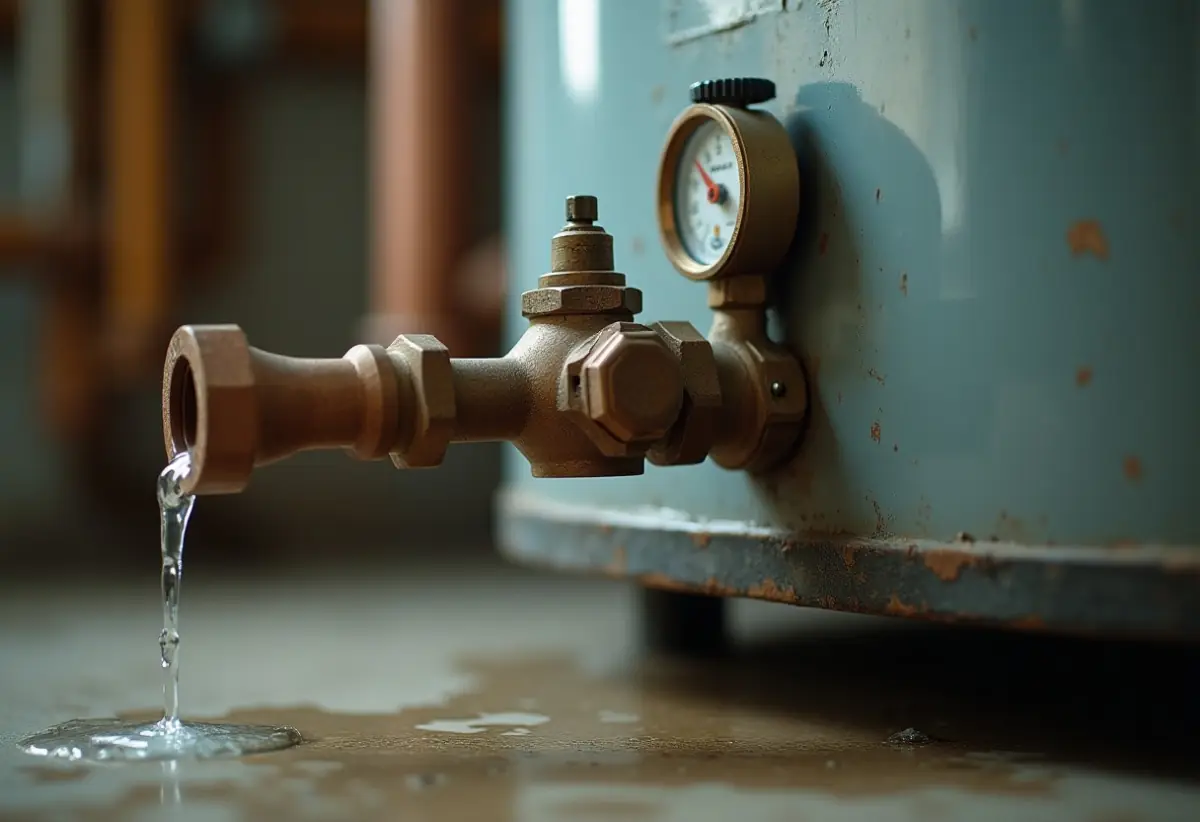
A dripping T&P valve after the heater runs usually means pressure is spiking past what the tank can absorb. The usual causes are a charge that no longer matches static pressure, a tank too small for the heater and thermostat setting, or house pressure creeping up from a failed PRV. Amtrol says a correctly sized tank holds thermal expansion “well below” the relief valve setting, and it builds its sizing charts around a 150 psi valve.
Run the overnight max-needle test, then check the tank charge with the line drained, then compare tank volume against the Amtrol chart for your actual thermostat setting. A 50 gallon heater set to 160°F at 60 psig calls for 3.2 gallons on that chart, more than an ST-5 provides.
If pressure stays under control and the valve still drips, the valve itself may be worn. Our water heater pressure relief valve guide covers testing and replacement. Amtrol’s warnings call for a licensed contractor to inspect the T&P valve at least once every 3 years, or any time discharge is present. Never cap or plug a dripping relief valve, a step Watts prohibits outright.
How much does it cost to replace an expansion tank?
A replacement 2 gallon residential tank runs close to $100 for the part. WebstaurantStore listed the Watts PLT-5 (order no. 0067370) at $97.03 in October 2026. Labor is billed at your local plumber’s service-call rate for one threaded 3/4-inch connection plus a recharge.
Amtrol gives the ST-5 through ST-12 a seven-year limited warranty and the ST-25V through ST-210V one year. Watts gives the PLT series one year from the date of shipment.
If you swap it yourself, follow the maker’s order of operations:
- Set the new tank’s pre-charge to your static pressure before installing it, as both makers require.
- On Amtrol ST-5, ST-8 and ST-12 models, press the Turbulator insert fully into the connector before threading the tank on.
- Brace the piping. Watts notes the piping carries the water-filled tank, and a PLT-20 weighs 15 pounds empty.
- Check for leaks, purge air at a hot fixture and recheck pressure (Watts step 10).
How we sourced this
We reviewed the top-ranking pages and forum threads for this query, then pulled every figure from manufacturer documents: Watts IS-PLT installation instructions (EDP 2915054), the Watts ES-PLT specification sheet (2020), the Watts ETP online sizing calculator, Amtrol residential instructions part 9015-942 (01/19), Amtrol sizing chart MC8520 (04/22), the Amtrol Therm-X-Trol brochure MC4090 (04/22) and Amtrol instructions 9017-091 (04/24). The price is a WebstaurantStore listing checked October 2026. We left out installed-cost ranges because aggregator figures conflicted or could not be verified. The knock test has no maker spec behind it, so we treat it as a screen, not a verdict.
Frequently asked questions
What should the pressure be in a water heater expansion tank?
Set the air charge equal to your static house water pressure, measured at a hose bib with every fixture off. Watts and Amtrol both give that instruction. If your gauge reads 62 psi, pump the empty tank to 62 psi. Factory settings rarely match, since Watts ships PLT tanks at 20 psi and Amtrol ships ST-5 and ST-12 tanks at 50 psig.
Can you check expansion tank pressure with water in it?
No. With the line pressurized, the gauge on the air valve reads the water pressure pushing on the diaphragm, not the air charge. Watts says to adjust the pre-charge only under zero system pressure, and Amtrol says to check it while the tank is isolated and empty of water. Shut the main, open a low faucet, and wait for 0 psi first.
How do I know if my expansion tank is bad?
Press the core of the air valve for one second. Water or a wet hiss means the diaphragm has torn and the tank needs replacing, since neither Watts nor Amtrol lists a replacement diaphragm. A dull knock along the whole shell, a reading near 0 psi with the line drained, or a discolored Amtrol InSight cap also point to a failed tank.
What happens if expansion tank pressure is too high?
Water cannot enter the tank until line pressure rises past the air charge, so the tank sits idle while pressure climbs during each heating cycle. Watts also caps the PLT air charge at 80 psi and calls anything above that hazardous and warranty-voiding. Bleed the charge down to your static pressure with the line drained.
What happens if expansion tank pressure is too low?
House pressure pushes water into the tank before the heater even fires, stretching the diaphragm and using up the room meant for expansion. Amtrol warns that a pre-charge that does not match supply pressure can damage the bladder or diaphragm and void the warranty. Pump the empty tank back up to your static reading with a bicycle pump.
How often should you check expansion tank pressure?
Amtrol says a licensed professional should check the whole system, including the expansion tank, every year and more often as it ages. Each check lets a little air out through the valve, so press the gauge on quickly and top the charge back up. Amtrol also calls for a T&P valve inspection at least once every 3 years.