Hot Water Temperature Code: Limits at the Tap, Shower and Tub
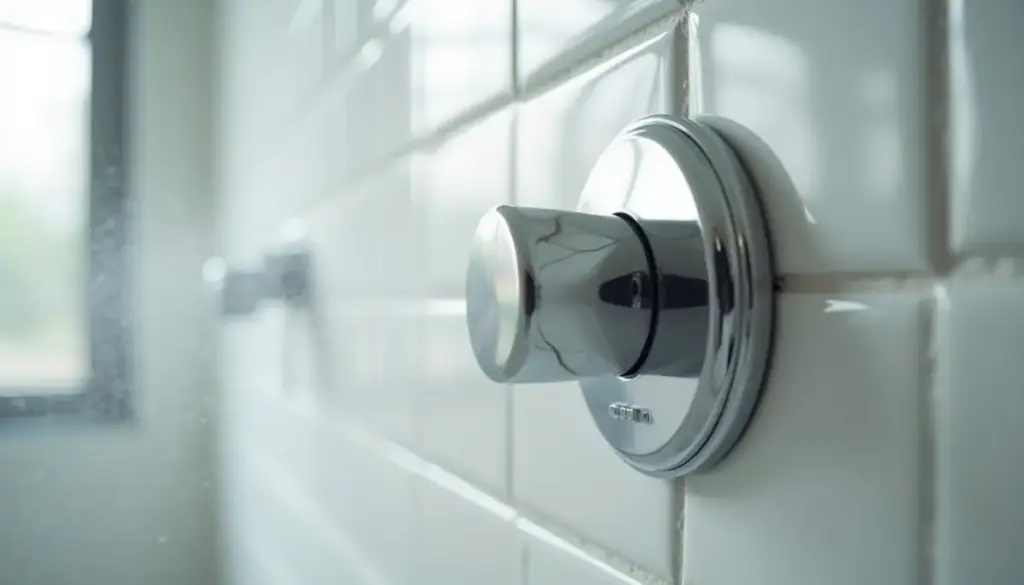
The hot water temperature code limits what comes out of the fixture, not the tank. Under the 2021 IPC, showers, tub fillers and head-shampoo sinks max out at 120°F (49°C); bidets and public hand-washing lavatories at 110°F (43°C). The UPC caps public lavatories at 120°F. Kitchen sinks and dishwashers have no outlet cap.
Maximum hot water temperature by fixture: the IPC and UPC matrix
Five fixture types carry a hard cap at the outlet, each enforced by a named device an inspector can check; two carry none, and commercial kitchens follow Food Code minimums instead. The IPC column uses 2021 IPC Chapter 4 numbering, which the 2024 text adopted by New York keeps. The UPC column uses the numbering printed in the 2025 California Plumbing Code, which is built on UPC 2024.
| Fixture | Max delivered | Device that enforces it | IPC 2021 | UPC (2025 CPC) |
|---|---|---|---|---|
| Shower or tub-shower combination | 120°F (49°C) | ASSE 1016 pressure-balance, thermostatic or combination valve (or ASME A112.18.1/CSA B125.1) at the point of use, limit stop field-set | 412.3 (IRC P2708.4) | 408.4, 408.4.2 |
| Gang showers on one tempered pipe | 120°F (49°C) | ASSE 1069 or CSA B125.3 mixing valve, or an ASSE 1016 valve at each head | 412.4 | 408.4.1, 408.4.2 |
| Bathtub or whirlpool filler without a shower | 120°F (49°C) | ASSE 1070 limiting device, or a water heater listed to ASSE 1082 or 1084 | 412.5 (IRC P2713.3) | 409.4 (ASSE 1070, CSA B125.3, or ASSE 1084 heater) |
| Bidet | 110°F (43°C) | ASSE 1070 limiting device | 408.3 (IRC P2721.2) | 410.3 (adds CSA B125.3 or ASSE 1084 heater) |
| Public lavatory or group wash fixture | IPC 110°F (43°C); UPC 120°F (49°C) | ASSE 1070 device, set to 110°F maximum under IPC 607.1.2; the UPC also allows an ASSE 1084 heater | 419.5 with 607.1.2 | 407.3 |
| Residential kitchen sink | No outlet cap | None required; hot water must be supplied | 607.1 | n/a |
| Dishwasher | No outlet cap | Approval only: NSF 184 residential, ASSE 1004 plus NSF 3 commercial | 409.1 | n/a |
| Commercial food service | Minimums: hand sink 85°F; sanitizing 171°F manual, 165°F or 180°F machine rinse, 194°F ceiling | FDA Food Code 2022, sections 5-202.12, 4-501.111 and 4-501.112, as adopted locally | 607.1 (hot water required) | n/a |
In the UPC column, n/a means the UPC sections read for this page (407.3, 408.4, 409.4, 410.3) set no cap for that fixture. The IPC adds three narrower 120°F outlets: head-shampoo sink faucets under 412.10 (ASSE 1070, an ASSE 1082 heater, or an ASSE 1062 device), pedicure chairs and footbaths under 423.3, and any faucet held to 120°F by an ASSE 1062 flow-reduction device under 412.7.
Read it as three jobs. Bathing outlets get a device that stops water above the limit. Public hand washing gets tempered water, which IPC Chapter 2 defines as 85°F to 110°F (29°C to 43°C). Kitchen sinks and dishwashers get full supply temperature, because IPC 607.1 requires hot water for culinary use with no delivered maximum.
Older guides cite IPC 424.3 for the shower rule, the 2012 IPC number. The 2021 edition moved faucets and fittings to Section 412, so a reviewer using the current book looks for 412.3, 412.5 and 419.5. State amendments can change numbers and temperatures, so confirm the edition your county adopted.
Why the 120°F code limit is not a water heater setting
The IPC does not cap the tank: Section 607.1.1 lets a water heater thermostat count as the limiting means only when the heater itself is listed to ASSE 1082 or ASSE 1085. A standard tank thermostat dialed to 120°F therefore does not satisfy 412.3 or 412.5.
The reverse also holds. Under the IPC, a heater set to 140°F does not break the fixture rules as long as each regulated outlet has its own listed device. For the dial itself, and the energy and Legionella tradeoffs of 120°F versus 140°F, see our guide on what to set the water heater thermostat to. The one place the IRC sets a distribution ceiling is P2803.2: when a combination water heater and space-heating system needs water above 140°F (60°C), an ASSE 1017 valve must temper the domestic side to 140°F or less.
Installing an ASSE 1017 thermostatic mixing valve at the heater is good practice, but it is not the shower or tub device. The ASSE Scald Awareness Task Group white paper says a 1017 valve used alone provides neither thermal shock protection nor adequate scald protection, and that a valve dual-listed to 1017, 1069 and 1070 counts only as a 1017 device when it sits at the heater. Venting, relief valve and pan rules are separate again; they are covered in the rest of the water heater installation code. For a closer look at who actually ends up in the emergency room, see scald burn statistics from hospital data.
Seconds to a third-degree burn at 120, 130, 140 and 150°F
The time to a full-thickness burn falls from 5 minutes at 120°F to 2 seconds at 150°F, according to CPSC Publication 5098, Avoiding Tap Water Scalds. Those are adult figures; CPSC says most tap water scald victims are elderly or children under 5.
| Water temperature | Exposure to a third-degree burn (adult) | Times longer than at 150°F | Cut from the 10°F cooler step |
|---|---|---|---|
| 120°F (49°C) | 5 minutes (300 seconds) | 150x | Baseline |
| 130°F (54°C) | 30 seconds | 15x | 10x faster than 120°F |
| 140°F (60°C) | 6 seconds | 3x | 5x faster than 130°F |
| 150°F (66°C) | 2 seconds | 1x | 3x faster than 140°F |
Drawn to scale, the 140°F and 150°F bars almost vanish, which is the case for the 120°F outlet limit: a child who cannot climb out of a tub has about 300 seconds at 120°F and 6 seconds at 140°F. The ASSE white paper adds that tap water causes more than 25 percent of scald burns in children.
Which device enforces each limit, and what each one does not do
Only two of these six ASSE devices give both scald and thermal shock protection, and neither is the valve at the water heater, per the ASSE white paper’s own matrix.
| Standard | Where it goes | Scald | Thermal shock | Code job |
|---|---|---|---|---|
| ASSE 1016 | Point of use, in the shower wall | Yes | Yes | Individual shower and tub-shower valves, IPC 412.3 |
| ASSE 1069 | Where bathers cannot reach the adjustment | Yes | Yes | Single-pipe gang showers and sitz baths, IPC 412.4 |
| ASSE 1070 | Near or built into the fixture fitting | Yes | No | Tubs, bidets, public lavatories; user maximum 120°F |
| ASSE 1062 | On the outlet or in the fitting | Yes | No | Retrofit; cuts flow to a trickle within 5 seconds above a set point no higher than 120°F |
| ASSE 1017 | At or near the water heater only | No | No | Distribution temperature, IPC 613.1; downstream devices still required |
| ASSE 1071 | At emergency eyewash or drench shower | Yes | No | Tepid water for ANSI Z358.1 equipment, IPC 411.3 |
Two details catch homeowners. An ASSE 1062 device on a tub spout still passes up to 0.25 gpm after it trips, so a plugged tub can slowly fill with very hot water, and IPC 412.7 bars using one alone in place of the 412.3 shower valve or 412.5 tub device. And IPC 412.3 forbids in-line thermostatic valves as the shower device.
A two-handle shower with separate hot and cold valves is none of the three valve types 412.3 allows, and it has no limit stop to set. When the valve body is replaced, current code generally applies to the new work; see what a shower valve replacement costs before deciding between a cartridge swap and a full pressure-balance upgrade.
Legionella versus scalds: store at 140°F, deliver at 120°F
The CDC answers the conflict by splitting storage from delivery: its Legionella control toolkit for potable water systems says to store hot water above 140°F (60°C) and keep circulating hot water from falling below 120°F (49°C). It places the growth range most favorable to Legionella at 77°F to 113°F (25°C to 45°C) and warns the bacteria may grow as low as 68°F (20°C).
A public lavatory held to 110°F delivers water inside that band, so protection has to come from hot storage and a short run behind the device. The CDC toolkit says to install thermostatic mixing valves as close as possible to fixtures, and IPC 607.2 caps the developed length from the hot water source to such a fixture at 50 feet (15,240 mm), with recirculation loops counting as the source.
How to check a fixture against the code limit
Measure at the outlet, not the heater dial. CPSC Publication 5098 says to hold a candy or meat thermometer under the faucet first thing in the morning, or at least 2 hours after water use.
- Run the shower or tub at full hot until the thermometer stops rising, then read the stream. The limit is 120°F at a shower head or tub filler, 110°F at a bidet.
- If a shower reads above 120°F, the ASSE 1016 limit stop needs adjusting. The ASSE white paper says the stop is set at installation and may need periodic resetting as incoming water temperatures change with the seasons.
- If a tub-only filler reads above 120°F and no ASSE 1070 device exists, ask a plumber to quote an ASSE 1070 limiting valve on the hot supply, with access left to it per IPC 412.5.
- If a 1016 valve will not hold below 120°F after the stop is reset, or jumps when a toilet flushes, it is failing its listed scald and thermal shock job. Ask for the cartridge to be checked or the valve replaced; the heater dial will not fix it.
Hot water temperature code questions
Does a salon shampoo sink have a hot water limit?
Yes. IPC 412.10 limits head-shampoo sink faucets to 120°F (49°C) and requires integral check valves to stop hot and cold crossover. The limit can be met with an ASSE 1070 device, a water heater listed to ASSE 1082, or an ASSE 1062 flow-reduction device on the faucet.
Does a kitchen faucet need an anti-scald device?
Not under the 2021 IPC. Section 607.1 requires hot water at a residential kitchen sink but sets no delivered maximum for it. An ASSE 1070 limiting device can still be added under the sink, and IPC 412.7 names an ASSE 1062 flow-reduction device as an approved way to hold any faucet outlet to 120°F.
How hot must the water be at a restaurant hand sink?
The 2022 FDA Food Code, section 5-202.12, requires a hand sink to deliver at least 85°F (29.4°C) through a mixing valve or combination faucet, and a metering faucet must run for at least 15 seconds. That is a minimum. Your county or state health department enforces its adopted Food Code edition, which may set a different minimum.
Why do bidets get a lower limit than showers?
Both model codes cap bidet discharge at 110°F (43°C), 10 degrees under the shower limit and the same figure the IPC uses as the top of its tempered water range. IPC 408.3 and UPC 410.3 require an ASSE 1070 limiting device for it, and the UPC also accepts a CSA B125.3 device or an ASSE 1084 water heater.
How we sourced this
Read: 2021 IPC Chapters 2, 4 and 6 and IRC Chapters 27 and 28 on UpCodes, with numbers checked against the 2024 IPC as adopted in New York; 2025 California Plumbing Code sections 407.3, 408.4, 409.4 and 410.3 for the UPC; the ASSE International white paper on temperature control devices; CPSC Publication 5098; the CDC Legionella toolkit; FDA Food Code 2022. The burn-table multiples are our arithmetic on CPSC figures. State and city amendment temperatures were left out because the ordinances were not read.