Cost to Move a Toilet: Inches, Feet, Slab or a New Room
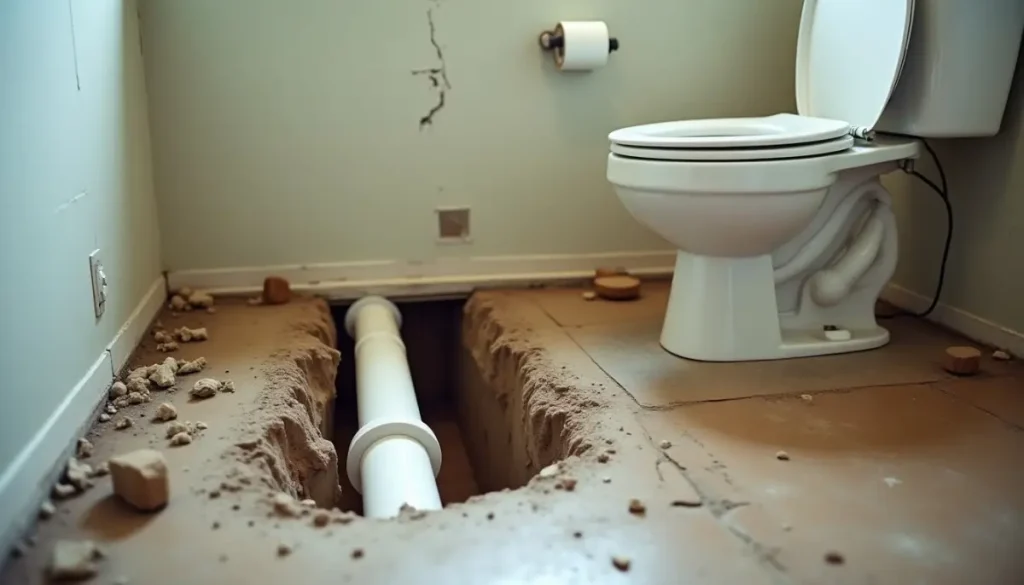
The cost to move a toilet runs about $200 to $400 in labor for a few inches with an offset flange, $500 to $1,500 for a few feet toward the stack, and $2,500 to $5,000 for a new spot.
Key Takeaways
- Angi (updated May 2026) says moving a toilet to a new location costs about $3,000; Bob Vila reports $2,500 to $3,500, with many owners paying $3,000.
- Block Renovation puts a move of a few feet toward the stack at $500 to $1,500 and a move across the room at $2,500 to $5,000.
- HomeGuide says breaking a slab or digging a trench to reach pipe adds $500 to $3,000, and a plumbing permit runs $30 to $500.
- Oatey’s Level-Fit offset closet flange shifts the outlet 2 inches over a 3 or 4 inch drain, which covers small moves with no drain work.
- The UPC caps toilet-to-vent developed length at 6 feet; the 2021 IPC exempts water closets from its Table 909.1 trap-to-vent limit.
- IPC Section 405.3.1 requires 15 inches from toilet centerline to a side wall and 21 inches of clear space in front.
- Saniflo’s Saniaccess 2 macerating pump lifts waste up to 15 feet vertically, an alternative when gravity drainage is impractical.
How much does it cost to move a toilet?
The cost to move a toilet depends mostly on distance and floor type. Fixr puts the labor for the move itself at $200 to $400, Block Renovation says a few feet toward the stack runs $500 to $1,500, and Bob Vila and Angi both land near $3,000 for a true relocation. Slab floors and long runs push the total to $5,000 or more.
Read those as bands, not quotes. Fixr’s figure for a new toilet in a new location, fixture included, is $550 to $3,900, while Angi puts a standard swap at $224 to $533.
| Scenario | Typical cost | What’s involved |
|---|---|---|
| A few inches, offset flange | $200 to $400 labor (Fixr) | Pull the toilet, swap the flange for an Oatey or similar offset model, new wax ring, reset the bowl |
| A few feet toward the stack, wood subfloor | $500 to $1,500 (Block Renovation) | Open the subfloor, cut the branch, run new 3 or 4 inch pipe at proper pitch, patch the floor |
| New spot in the same bathroom | $2,500 to $3,500 (Bob Vila); about $3,000 (Angi) | New drain and supply, vent tie-in, inspection, flooring repair |
| Across the room or into a new room | $2,500 to $5,000 (Block Renovation) | Long run, possible new vent, joist work, drywall and tile |
| Any move on a concrete slab | Add $500 to $3,000 for slab work (HomeGuide) | Saw cut, jackhammer, trench, new pipe, inspection, concrete patch |
What drives the cost to move a toilet?
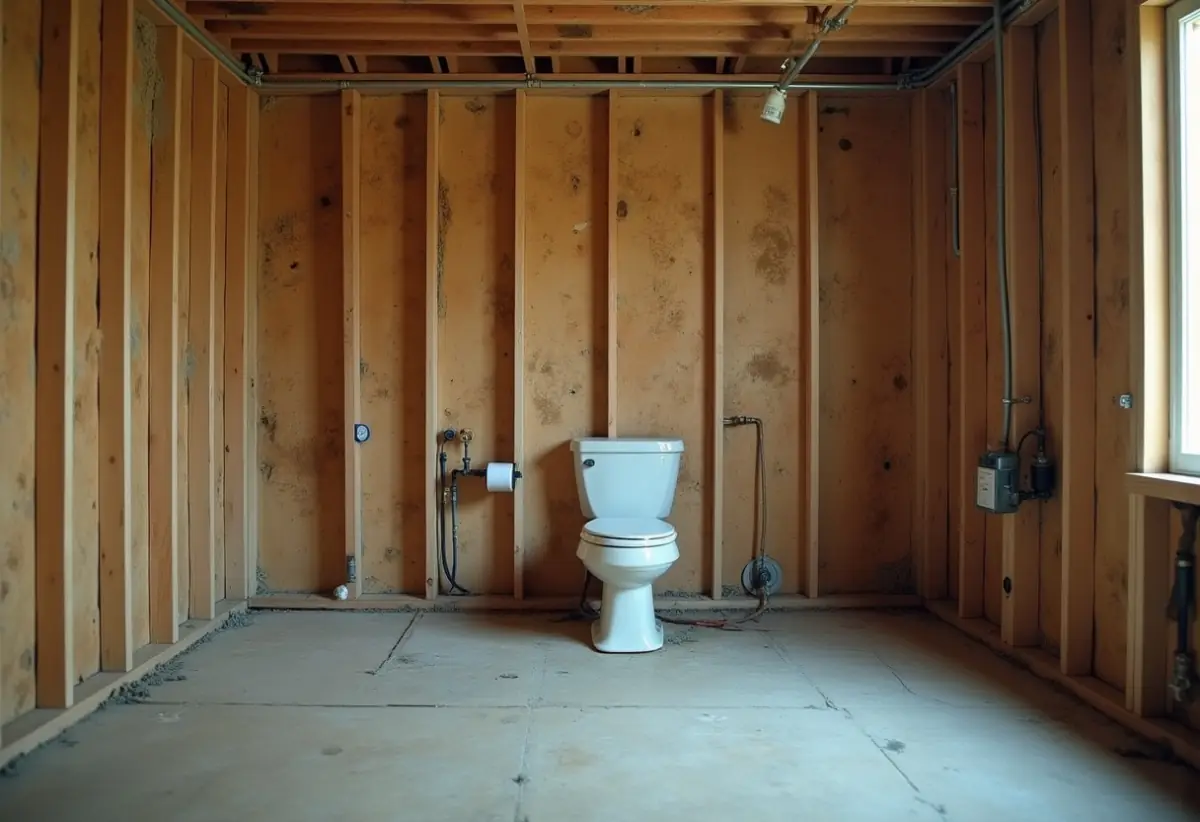
Six things set the price: floor type, joist direction, distance to the stack, venting, permits and the floor finish you have to rebuild. A wood subfloor with joists running the right way is the cheap case. A slab, a run that crosses joists, or a move that needs a new vent can triple the bill before any tile goes down.
- Floor type. Plywood over joists gets cut with a saw. Concrete gets saw-cut and broken out, which HomeGuide prices at $500 to $3,000 on its own.
- Joist direction. A drain that runs parallel to the joists slides between them. One that crosses them needs drilling, notching within code limits, or a dropped soffit in the ceiling below.
- Distance to the stack. Every foot of 3 inch pipe has to fall. Block Renovation cites about 1/4 inch per foot, so a 10 foot run drops about 2.5 inches, which a shallow floor cavity may not allow.
- Venting. If the new spot sits beyond the vent limit, a new vent pipe goes up through the wall, which adds drywall and sometimes roof work.
- Pipe and lines. Angi lists new drainpipe at $0.75 to $30 per linear foot before labor, and Fixr says moving a plumbing line runs $80 to $200 per line. A toilet needs two, the drain and the supply.
- Permit and inspection. HomeGuide puts plumbing permits at $30 to $500.
- Floor and tile repair. Bob Vila and Angi both put bathroom flooring replacement at $8 to $24 per square foot, and patched tile rarely matches, so many owners redo the whole floor.
Labor is the biggest swing. HomeGuide says plumbers charge $75 to $150 per hour to relocate a toilet; Bob Vila reports $65 to $125.
How much does it cost to move a toilet a few inches?
Moving a toilet a few inches usually costs the price of a flange swap, not a drain job. Fixr puts the labor for moving a toilet at $200 to $400, and an offset closet flange does the actual shifting. Oatey’s Level-Fit offset flanges (models 43500 in ABS and 43501 in PVC) give 2 inches of offset over 3 or 4 inch pipe.
Oatey’s 43804 PVC model offers a smaller 1.42 inch offset, per its distributor listing at SupplyHouse. Both styles solvent weld inside 4 inch or over 3 inch Schedule 40 DWV pipe, so the existing drain stays put. You can see the spec on Oatey’s Level-Fit 43500 listing.
The catch is space. An offset flange moves the bowl along one axis, and it can push the tank closer to a wall than your toilet rough-in measurement allows. Measure from the finished wall to the flange bolts before buying, and check the swap against our toilet flange guide for height and fastening.
- Shut off the supply, flush and sponge the tank and bowl dry.
- Pull the toilet and scrape off the old wax ring.
- Cut out the old flange from inside the pipe, or cut the pipe below the floor if the flange is glued over it.
- Dry fit the offset flange, rotate it to the new position and solvent weld it.
- Screw the flange to the subfloor, set a new wax ring and reset the bowl.

What does moving a toilet on a slab cost?
Moving a toilet on a slab costs the relocation itself plus the concrete work. HomeGuide puts breaking the slab or digging a trench to reach pipe at $500 to $3,000. Stacked on Bob Vila’s $2,500 to $3,500 for a relocation, a slab move lands near $3,000 to $6,500 by our math, before new tile.
The crew saw-cuts a trench from the old drain to the new spot, breaks out the concrete, digs to the buried line and ties in with the right fall. After inspection, the trench is backfilled and patched.
Two risks raise slab quotes: old cast iron that cracks when cut, or a line too shallow for the new run’s pitch. If damage spreads, HomeGuide prices slab replacement at $6 to $12 per square foot, and it flags debris haul-off as a common extra.
How far can you move a toilet from the stack and the vent?
The real limit is the vent, not the stack. The Uniform Plumbing Code caps the developed length from a toilet to its vent at 6 feet, measured from the top of the closet flange. The 2021 International Plumbing Code exempts water closets from its trap-to-vent table. Past that, distance to the stack is limited by pitch and floor depth.
Much online advice gets this wrong. The common figures, 6 feet for 3 inch pipe and 10 feet for 4 inch, come from UPC Table 1002.2, whose heading excludes water closets. The toilet rule is the 6 foot limit in its footnote.
On the IPC side, IPC Section 909.1 and Table 909.1 list 12 feet for a 3 inch trap at 1/8 inch per foot. The exception right below it says the developed length “for self-siphoning fixtures, such as water closets, shall not be limited.” The toilet still needs a vent; the code just does not cap that distance.
| Rule | Source | What it means for a toilet move |
|---|---|---|
| Toilet to vent, 6 ft max | UPC Table 1002.2, note 2 | Measured from the top of the flange to the vent |
| Trap to vent, 12 ft for 3 in | IPC Table 909.1 | Water closets exempt from the length cap under the 909.1 exception |
| 15 in to side wall | IPC 405.3.1 | Centerline of the bowl to any wall, partition or vanity |
| 21 in clear in front | IPC 405.3.1 | Clear space from the bowl to any wall, fixture or door |
| 2 in offset | Oatey Level-Fit flange | The largest shift you get without moving the drain |
| 15 ft vertical lift | Saniflo Saniaccess 2 manual | How high a macerating pump can push waste to a drain |
Clearances matter as much as pipe length. IPC Section 405.3.1 bars setting a toilet closer than 15 inches from its center to a side wall, partition or vanity, and it requires at least 21 inches of clearance in front. A new spot that fails either test fails inspection, however good the plumbing. Your state may adopt either code with amendments, so confirm with the local building department.
Is an upflush toilet cheaper than moving the drain?
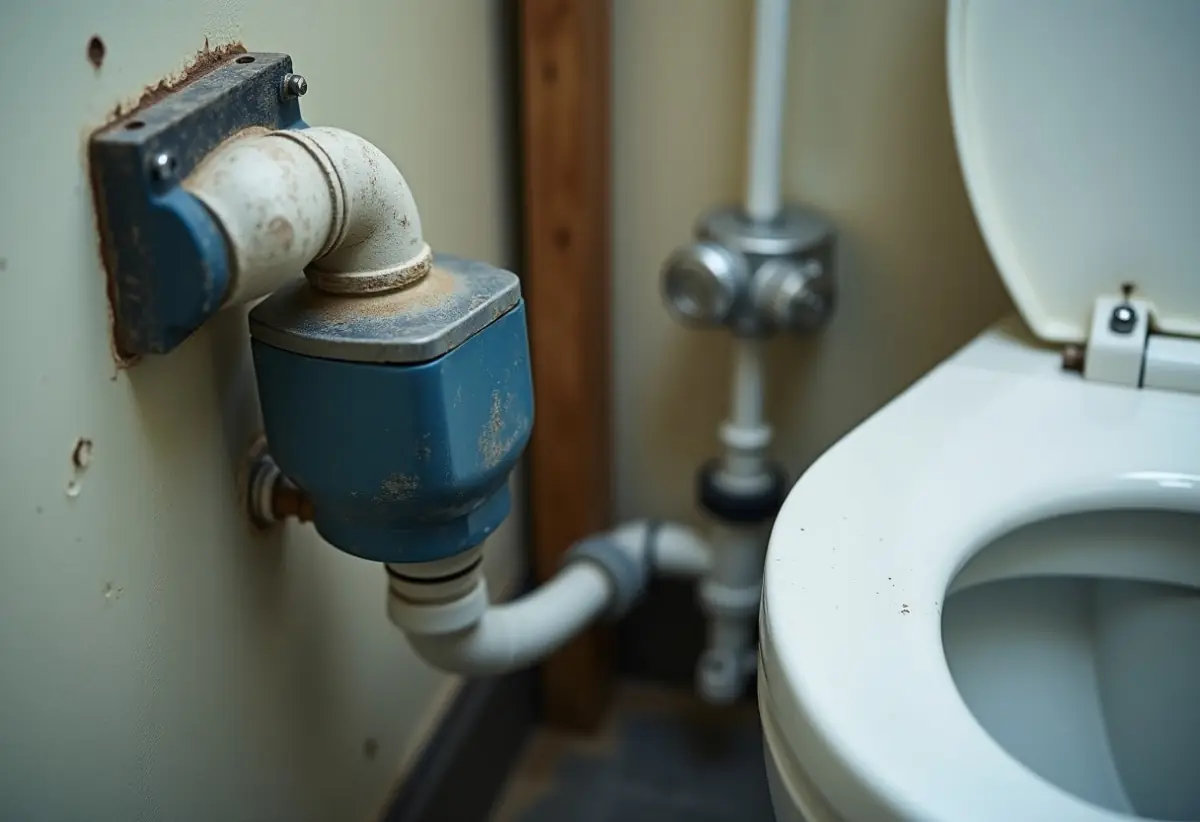
An upflush, or macerating, toilet can beat a drain move when the new spot sits far from the stack, below the sewer line, or on a slab you would rather not break. The unit grinds waste and pumps it through a small pipe. Saniflo’s Saniaccess 2 manual rates it for up to 15 feet of vertical lift.
Read the install rules before you count the savings. The Saniaccess 2 manual calls for a 3/4 or 1 inch discharge pipe, a minimum 1/4 inch per foot fall on any horizontal discharge run, and a connection to an approved soil stack fitting. The unit must also be vented, and Saniflo warns against using an air admittance valve.
A macerator adds a motor, an outlet and some noise, and it serves one toilet per unit. We found no verifiable national cost figure for upflush installs, so price one locally against a conventional quote.
How long does it take to move a toilet, and can you do it yourself?
A flange swap is a few hours of work and a reasonable DIY job. A true relocation runs on the plumber’s schedule plus the inspector’s, and a slab adds concrete curing before tile. Most owners should hire a licensed plumber for anything beyond an offset flange, because pitch, venting and permits decide whether the job passes.
The sequence on a relocation looks like this, and each step can stall the next:
- Confirm clearances and vent distance against your local code.
- Pull a permit, where required.
- Remove the toilet and open the floor, or saw-cut the slab.
- Run the new drain at pitch, tie in the vent and move the supply line.
- Rough-in inspection before the floor closes.
- Patch the subfloor or concrete, then tile.
- Set the toilet and test.
If the move is part of a gut job, fold it into a full bathroom remodel plumbing plan so the drain, vent and shower work share one permit and one open floor. If you are buying a new bowl anyway, our toilet installation cost breakdown covers the fixture and setting labor on top of the move.
Before you sign a quote, get these in writing:
- Whether the price includes the permit, inspection and debris removal.
- Who patches the subfloor or concrete, and who handles tile.
- How the plumber will vent the new location.
- What happens if they find cracked cast iron or a shallow line once the floor is open.
How we sourced this
We consulted 13 cost guides, code texts and product documents in October 2026 and cited 12: Angi (updated May 2026), HomeGuide (2026 toilet installation and slab leak repair guides), Fixr (updated August 2025), Bob Vila (updated February 2023), Block Renovation, and the code text of the 2021 IPC (Sections 909.1 and 405.3.1) and UPC Table 1002.2. Product specs come from Oatey distributor listings and the Saniflo Saniaccess 2 manual. Cost guides report national ranges from contractor and customer data; your local price may differ. The $3,000 to $6,500 slab range is our sum of two published ranges, not a published figure. We excluded low-quality aggregator pages that did not name a method.
Frequently asked questions
How much does it cost to move a toilet a few inches?
A shift of an inch or two usually means pulling the toilet and swapping in an offset closet flange, not moving the drain. Fixr puts the labor for moving a toilet at $200 to $400. Oatey’s Level-Fit offset flange gives 2 inches of offset, so anything beyond that needs real drain work.
How far can you move a toilet from the stack?
Distance to the stack is rarely the hard limit. Distance to the vent is. Under the UPC, a toilet may sit no more than 6 feet of developed length from its vent, measured from the top of the closet flange. The IPC does not cap that length for water closets. Your local code governs.
How much does it cost to move a toilet on a concrete slab?
Expect the plumbing cost plus the concrete work. HomeGuide puts breaking a slab or digging a trench to reach pipe at $500 to $3,000. Added to Bob Vila’s $2,500 to $3,500 for relocating a toilet, a slab move lands near $3,000 to $6,500 by our math, before tile.
Can you move a toilet without moving the drain?
Only by an inch or two. An offset closet flange shifts the outlet over the existing pipe, and Oatey sells versions with a 2 inch offset and a 1.42 inch offset. For anything larger, the drain must move, or you can install an upflush macerating toilet that pumps waste to an existing line.
Do you need a permit to move a toilet?
In many areas, yes. Moving a toilet changes the drain, waste and vent system, which most local codes treat as permitted plumbing work with an inspection before the floor closes. HomeGuide puts plumbing permits at $30 to $500, and many contractors fold the fee into the quote. Check with your local building department.
Can I move a toilet myself?
Swapping in an offset flange is a reasonable DIY job for a handy owner. Rerouting a drain is not, because pitch, venting and the tie-in to a 3 or 4 inch line decide whether the toilet flushes and passes inspection. HomeGuide says plumbers charge $75 to $150 per hour for relocation work.
How far can a toilet be from a vent?
Under the Uniform Plumbing Code, the developed length from the top of the closet flange to the vent may not exceed 6 feet. The International Plumbing Code’s Table 909.1 lists 12 feet for a 3 inch trap, but an exception removes the limit for self-siphoning fixtures such as water closets.
Is it expensive to move the location of a toilet?
Cost depends on distance and floor type. Fixr puts labor for the move alone at $200 to $400, Block Renovation lists $500 to $1,500 for a few feet toward the stack, and Bob Vila and Angi land near $3,000 for a true relocation. Slab floors and long runs push totals to $5,000 or more, with HomeGuide adding $500 to $3,000 for slab work.


