Does Baking Soda and Vinegar Unclog Drains?
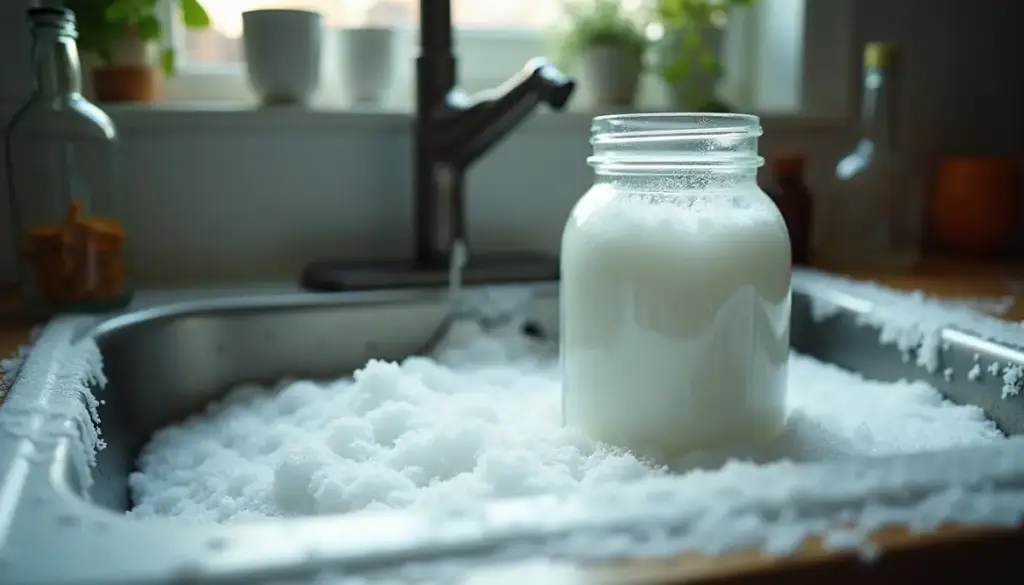
A baking soda and vinegar drain treatment freshens a slow drain but rarely clears a real clog, because the fizz is mostly carbon dioxide and the two ingredients neutralize each other within minutes.
Key Takeaways
- FDA Compliance Policy Guide Sec. 525.825 sets 4 grams of acetic acid per 100 mL as the floor for vinegar; supermarket white vinegar is usually sold at 5 percent, the strength the USDA canning guide specifies.
- Using USDA FoodData Central’s 4.6 grams per teaspoon of baking soda, a half cup weighs about 110 grams, but half a cup of 5 percent vinegar can react with only about 8 grams of it.
- That half-cup dose releases roughly 4.3 grams of carbon dioxide, about 2.4 liters of gas at room temperature, and most of it vents up the open drain.
- Charlotte Pipe rates its PVC drain, waste and vent pipe for systems that do not exceed 140°F, so the boiling-water step many guides recommend can soften PVC.
- Hong Kong’s Consumer Council, after surveying 17 drain unblockers in 2023, warned never to mix drain products and to try a plunger first, which rules out vinegar on top of a chemical opener.
- The fixes that work, in order, are a plunger, pulling and cleaning the trap, a hand auger, then a plumber for main line clogs.
Does baking soda and vinegar unclog drains?
Baking soda and vinegar do not unclog most drains. The mixture can lift a thin film of soap scum and kill an odor near the drain opening, but it cannot break down hair, dissolve a grease plug, or move a solid object. The reaction neutralizes both ingredients in minutes, and the gas it makes escapes upward instead of pushing on the clog. For a method that actually targets stubborn clogs without guesswork, see boiling water safety for drains.
On a sink that drains a little slow, a fizz and a hot water flush is cheap and harmless. On a sink holding standing water, it wastes 30 minutes you could spend with a plunger.
What actually happens when baking soda and vinegar hit a drain?
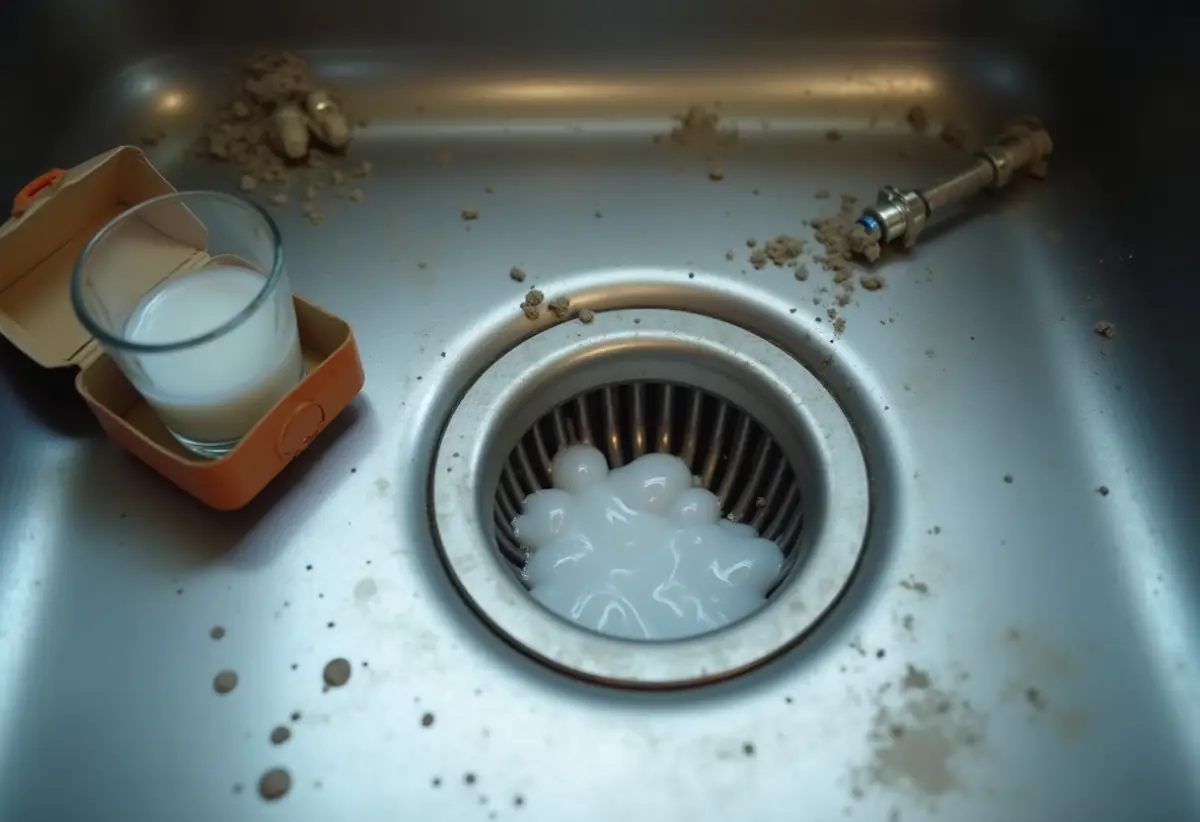
Baking soda is sodium bicarbonate, a weak base, and vinegar is dilute acetic acid. When they meet, they form carbonic acid, which splits at once into carbon dioxide gas and water, leaving sodium acetate behind. The foam you see is that gas. Once the acid is used up the reaction stops, and what is left is salty water and a pile of unreacted baking soda.
The balanced reaction is NaHCO3 + CH3COOH, giving CO2 + H2O + CH3COONa. One molecule of acid reacts with one molecule of baking soda, so the amounts of each that actually react are set by molar mass: 60 grams of acetic acid for every 84 grams of sodium bicarbonate.
Here is the catch. Vinegar is mostly water. Under FDA Compliance Policy Guide Sec. 525.825, vinegar must carry at least 4 grams of acetic acid per 100 mL, and the National Center for Home Food Preservation tells canners to use vinegar of 5 percent acidity, the strength printed on most supermarket white vinegar. A half cup of that holds only about 6 grams of acid.
Baking soda is dense by comparison. USDA FoodData Central lists a teaspoon at 4.6 grams, which puts a half cup at about 110 grams. Pour the usual half cup of each and only about 7.5 percent of the baking soda ever reacts.
Our calculation uses a 118 mL half cup of 5 percent vinegar, the USDA weight for baking soda, and standard molar masses (acetic acid 60.05, sodium bicarbonate 84.01, carbon dioxide 44.01). To react all 110 grams of baking soda, you would need about 6.7 cups of vinegar, which nobody pours down a sink.
Strength matters too. Acetic acid has a pKa of 4.76 in the CRC Handbook, which makes it a weak acid that only partly ionizes in water. Baking soda is a weak base. Neither is in the class of the sodium hydroxide or sulfuric acid that Poison Control lists as the active ingredients in chemical drain openers, which is why the kitchen version is safer and does so little.
What can a baking soda and vinegar drain treatment actually do?
A baking soda and vinegar drain treatment works best as light maintenance. The foam scrubs a little at the strainer and the first few inches of pipe, the mild acid loosens some soap film and hard-water spotting, and baking soda absorbs some odor. Followed by a flush of hot tap water, it can speed up a drain that is only slightly sluggish from surface film.
If you want to try it, do it the way that gives the reaction its best shot:
- Bail out any standing water so the baking soda reaches the drain opening instead of dissolving in the basin.
- Pour a half cup of baking soda straight into the drain and push it down with a spoon handle.
- Pour in a half cup to a cup of white vinegar and cover the drain with a stopper or a wet rag so more of the foam stays in the pipe.
- Wait 15 to 30 minutes.
- Flush with a kettle of hot tap water or water heated until it steams but does not boil, then run the tap for a minute.
If the drain is no faster after one round, a second round will not change the chemistry. Move to a mechanical method. Our step-by-step guide to unclogging a drain walks through each one by fixture.
Which clogs will baking soda and vinegar not clear?
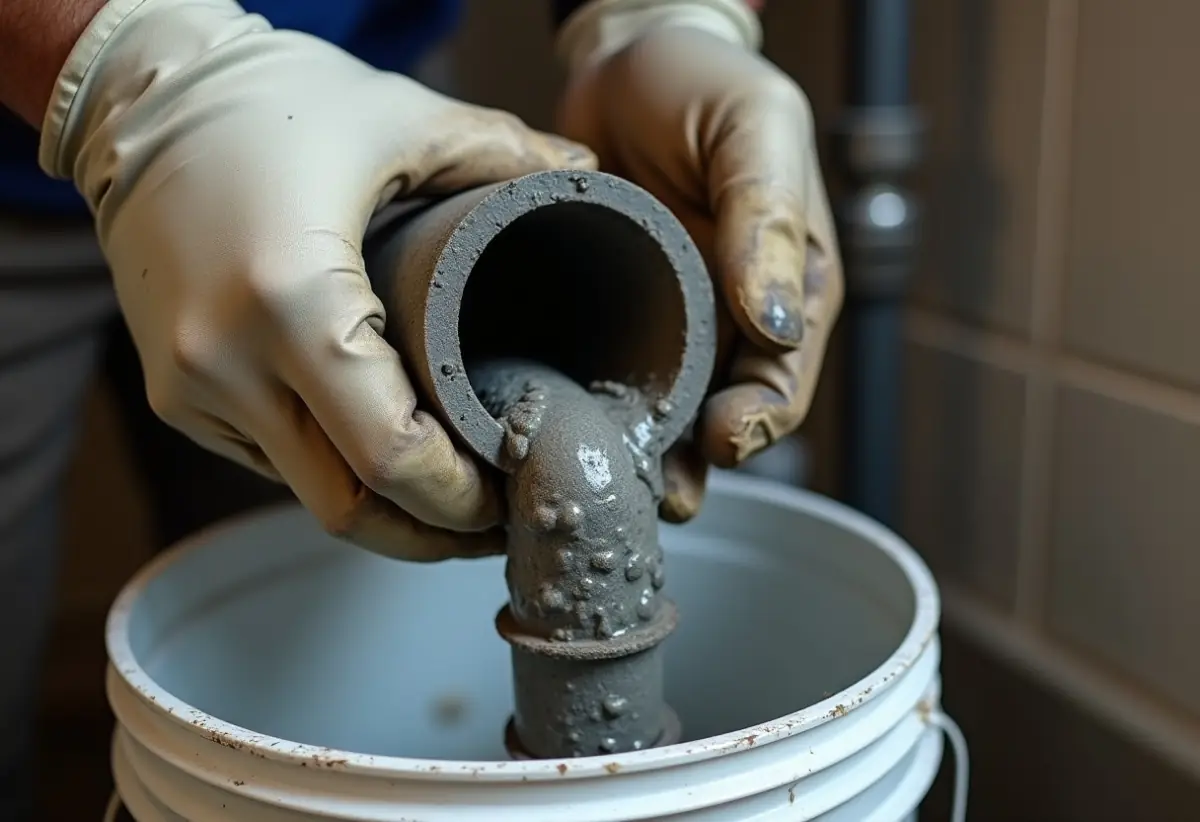
Baking soda and vinegar will not clear hair mats, congealed grease, food solids, wipes, toys, or anything in the main sewer line. Each of those needs a tool that grabs, cuts, or pushes. The mixture also cannot reach a clog that sits past the trap, because the foam dies in the first few inches of pipe. Match the clog to the fix with the table below.
| Clog type | Will baking soda and vinegar work? | Better fix |
|---|---|---|
| Soap film or odor at the drain opening | Partly. It can freshen and loosen a light film. | Clean the stopper and strainer, then flush with hot tap water |
| Bathroom sink hair and toothpaste | No. Hair is keratin and the fizz does not break it down. | Pull the pop-up stopper, use a barbed drain stick, or clean the P-trap |
| Shower or tub hair mat | No | Remove the strainer and pull the hair out, then run a hand auger |
| Kitchen grease and food scraps | No. Turning fat into soap takes a strong base like lye, not baking soda. | Plunge, then clean the trap and auger the branch line |
| Hard-water scale at the strainer | Somewhat. Vinegar alone, left to soak, softens light scale. | Soak the strainer in vinegar, or replace it |
| Toilet clogged with paper or waste | Rarely. Bowl water dilutes the vinegar. | Flange plunger, then a closet auger |
| Toilet with a wipe, toy, or other object | No | Closet auger, or pull the toilet to remove the object |
| Main sewer line clog or tree roots | No | Licensed plumber with a cable machine and a camera inspection |
Does baking soda and vinegar work on a toilet clog?
Baking soda and vinegar rarely clear a toilet clog. A toilet bowl already holds water, so a cup of vinegar is diluted before it ever meets the baking soda, and the fizz happens in the bowl rather than down in the trapway where the clog sits. It may help a slow-flushing toilet with a soft paper clog, but a flange plunger is faster and more reliable.
If you try it, use a cup of baking soda and two cups of vinegar, wait 20 to 30 minutes, then add a bucket of hot tap water from waist height to give the water some push. Skip the boiling kettle. Vitreous china can crack when one side heats much faster than the other, and a cracked bowl is a replacement job.
Chemical openers are a separate question with their own risks for porcelain and wax seals. Read our breakdown of whether drain cleaner is safe in a toilet before you pour one into the bowl.
When is a baking soda and vinegar drain treatment unsafe?
A baking soda and vinegar drain treatment is unsafe in two situations. The first is when a chemical drain opener is already in the pipe, because adding an acid to a lye product or a base to an acid product can generate heat and splash corrosive liquid. The second is when the recipe calls for boiling water in a home with PVC drains or a porcelain fixture.
After a chemical drain opener
If you poured a store-bought opener and it did not work, do not follow it with vinegar, baking soda, or a plunger. Hong Kong’s Consumer Council surveyed 17 drain unblockers in 2023 and warned that the products can generate enough heat to boil the solution and splash it out of the drain, and that mixing drain products or cleaning agents can produce toxic gases. Flush with plenty of water if it will drain, and tell a plumber what is in the pipe.
Boiling water and PVC
Many online recipes end with a kettle of boiling water. Charlotte Pipe, one of the largest US makers of plastic drain pipe, specifies its PVC drain, waste and vent pipe and fittings for systems where temperatures will not exceed 140°F. Water boils at 212°F at sea level. A single kettle may not deform a pipe, but repeated boiling flushes can soften joints and fittings, so use hot tap water instead.
Porcelain fixtures
The same caution applies to toilets and porcelain sinks, where a sudden temperature change can crack the china. Hot tap water does the flushing job without the risk.
What works better than baking soda and vinegar?
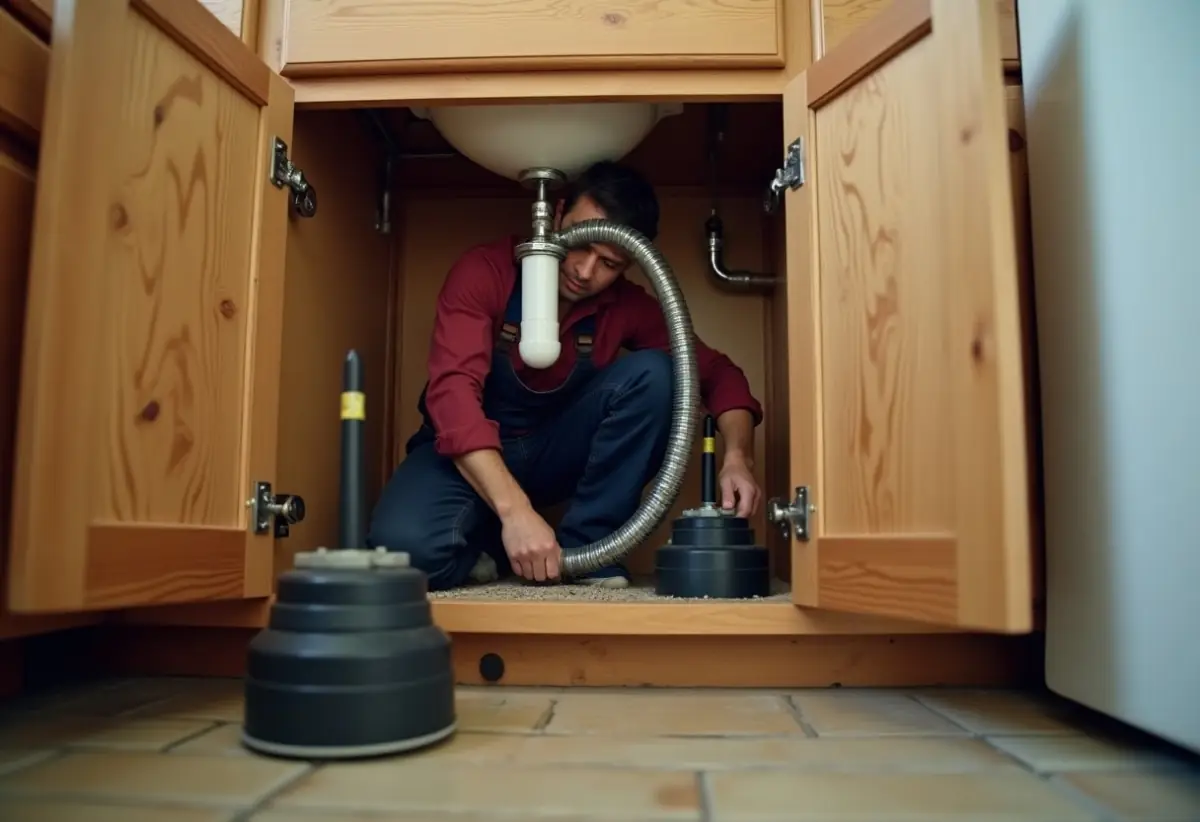
Mechanical tools beat baking soda and vinegar on every real clog. Work up in this order: a plunger, then pulling and cleaning the P-trap, then a hand auger fed past the trap into the branch line. Enzyme or bacteria cleaners are for maintenance on drains that keep slowing down, not for a drain that is stopped today.
- Plunger. Use a cup plunger on sinks and tubs and a flange plunger on toilets. Block the overflow hole with a wet rag so the force goes down the drain, and give it 15 to 20 firm strokes.
- Pull and clean the trap. Set a bucket under the sink, loosen the two slip nuts on the P-trap by hand, and empty it. On a bathroom sink this alone often removes the whole clog.
- Hand auger. A 25-foot drum auger reaches past the trap into the wall pipe, where most kitchen grease clogs sit. Our guide on how to use a plumbing snake covers feeding the cable and backing it out without kinking it.
- Enzyme or bacteria cleaner for upkeep. These products digest organic film slowly and usually need to sit for hours, often overnight. They suit slow drains and septic homes, not complete stoppages.
A chemical opener sits outside that ladder because of the burn and splash risks above. If you do use one, read the label for pipe and septic compatibility first, and compare products in our list of drain cleaners we rate for each clog type.
When should you call a plumber instead?
Call a plumber when more than one drain is slow or backing up at the same time, when water rises in a tub or floor drain as you flush a toilet, or when a hand auger stops at the same spot twice. Those signs point to a branch or main sewer line clog that household methods cannot reach, and no baking soda and vinegar drain treatment will fix it.
Also call if a chemical opener is sitting in a stopped drain, and tell the plumber the product name. Repeated clogs in one fixture are worth a camera inspection, since a sag, a broken pipe, or roots keep catching debris no matter what you pour in.
How we sourced this
We reviewed the pages that rank for “baking soda and vinegar drain” and “does baking soda and vinegar unclog drains” in October 2026, then built every figure from primary sources: the FDA vinegar compliance guide for acid strength, USDA FoodData Central for the weight of baking soda, the National Center for Home Food Preservation for the 5 percent retail strength, Charlotte Pipe product specifications for PVC temperature limits, Poison Control for drain opener ingredients, and the Hong Kong Consumer Council’s 2023 drain unblocker survey for mixing warnings. The reaction figures are our own stoichiometry calculations using standard molar masses, a 118 mL half cup, and 24.5 liters per mole of gas at about 25°C.
Frequently asked questions
How long do you leave baking soda and vinegar in a drain?
The fizz is over within a few minutes, because the vinegar runs out of acid almost as soon as it lands. Most guides say to wait 15 to 30 minutes and then flush with hot tap water, and that is plenty. Leaving it overnight adds nothing, since the reaction has already stopped and the leftover baking soda just sits in the trap.
Can baking soda and vinegar damage pipes?
The mixture itself is mild and will not hurt PVC, ABS, copper, or cast iron in normal household amounts. The damage risk comes from what people pour after it. Boiling water can soften PVC drain pipe, which Charlotte Pipe rates for 140 degrees Fahrenheit, and adding vinegar to a drain that already holds a chemical opener can cause heat and splashing.
Does baking soda and vinegar work on hair clogs?
No. Hair is keratin, a tough protein that neither weak vinegar nor baking soda breaks down at room temperature. The fizz may lift some loose soap film, but the hair mat stays put. Pull the stopper and clean it, use a plastic barbed drain stick, or run a hand auger through the trap to pull the hair out.
Can I use baking soda and vinegar in a toilet?
You can, and it is safe for the porcelain and the wax seal if you follow it with hot tap water rather than boiling water. It is unlikely to clear a real toilet clog, because the bowl water dilutes the vinegar and the fizz cannot push a wad of paper through the trapway. A flange plunger or a closet auger works far better.
Why did baking soda and vinegar not unclog my drain?
Because the reaction mostly cancels itself out. Half a cup of 5 percent vinegar holds about 6 grams of acetic acid, enough to react with roughly 8 grams of the 110 grams of baking soda in a half cup. The rest of the soda sits unused, and the carbon dioxide escapes up the drain instead of pushing on the clog.
Is it safe to pour boiling water down the drain?
Not into most modern homes. PVC drain pipe and fittings are commonly rated for 140 degrees Fahrenheit, while water boils at 212 degrees at sea level. Boiling water can also crack a porcelain toilet bowl or sink through sudden heat. Hot tap water, which many water heaters deliver at about 120 degrees, is the safer flush.
What works better than baking soda and vinegar for a clogged drain?
Work up in this order. Use a cup plunger on sinks and tubs, then pull and clean the P-trap, then run a hand auger past the trap into the branch line. For slow drains that keep coming back, a bacteria and enzyme cleaner used as directed can help keep organic film down. Call a plumber when several drains back up together.