Is It Normal for a Sump Pump to Make Noise? Sounds That Are Fine and Sounds That Mean Trouble
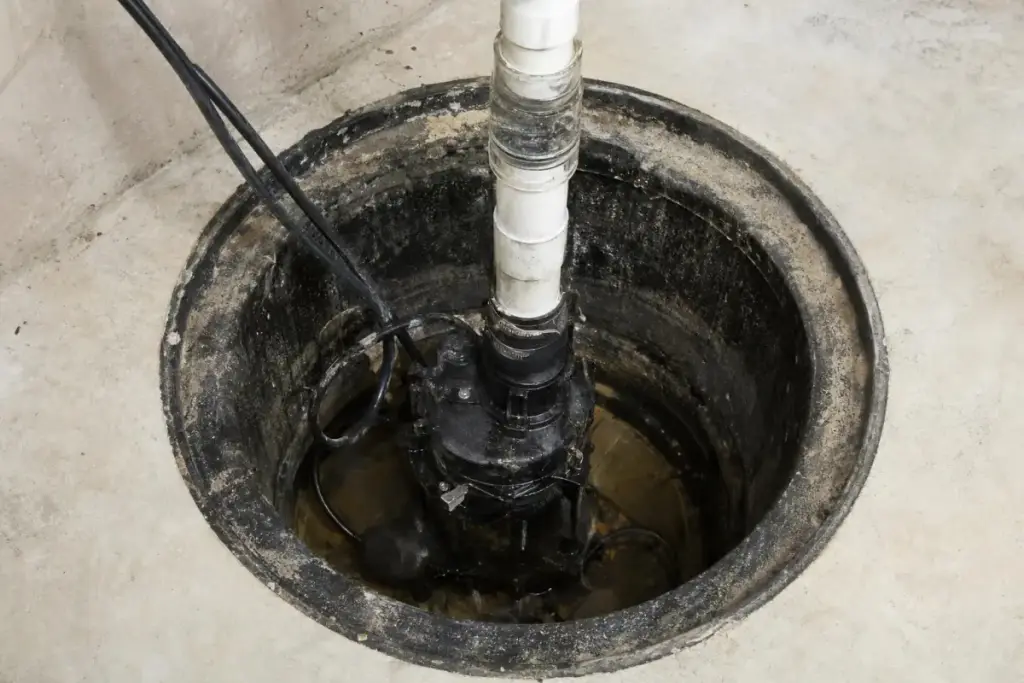
Yes, it is normal for a sump pump to make noise: a steady motor hum while it runs and a short gurgle at the end of a cycle are expected. Of the 7 sounds below, the other 5 (a bang at shutoff, rattling, grinding, slurping, or a hum with no water leaving the pipe) each point to a fixable cause.
Which sump pump sounds are normal, and which mean trouble?
Sort the sound by timing first: during the run, at the end of the run, or right after the motor stops. The 7-row table pairs each sound with the cause the maker or city document gives, the fix, and the part with a dated price where a retailer lists one.
| Sound | When | Cause | Fix | Part and price (25 Nov 2026) |
|---|---|---|---|---|
| Steady hum, water flowing | Whole run | Motor and impeller working; air being pushed out of the riser | None, this is normal | None |
| Slurp, like a straw in an empty cup | Last seconds of the run | Float lets the pump run until it pulls air | Set the float per the owner’s manual so the pump stops before it sucks air; keep 3 in of cord between float ball and bracket on tethered floats (Pentair) | No part |
| Gurgle down the pipe | Just after shutoff | Water in the discharge line flowing back after the cycle | Normal; to quiet it, swap a gravity swing check for a spring loaded one (Ann Arbor) | Zoeller 30-0040 Quiet Check, 1-1/2 in, $27.49 at WebstaurantStore |
| Single loud bang or thud | Just after shutoff | Check valve slamming as the water column reverses; Pentair adds that a pump with more horsepower than needed makes it worse | Spring loaded check valve, or a flexible rubber hose section between pump and pipe | Zoeller 30-0040, $27.49; gravity Zoeller 30-0181 Unicheck, $19.49 (both WebstaurantStore) |
| Rattle or clang | Whole run | Discharge pipe hitting the basin, wall or floor joists | Foam between pipe and wall or joist, an exhaust hanger, rubber grommets in the lid opening | No maker part number |
| Grinding or heavy vibration | Whole run | Broken or missing impeller blades, or debris in the pit | Unplug, clear the pit, inspect the impeller; replace the impeller or the pump | Pump model specific |
| Hum, no water leaving | Motor on, pit not dropping | Air lock under a closed check valve, or debris blocking the intake | Clear or drill the vent hole below the check valve; clear the intake | Drill bit only |
Sources for each row: the Pentair sump pump troubleshooting FAQ (Pentair also makes Flotec pumps), the Ann Arbor sheet and Zoeller instruction sheet FM2676. Prices are WebstaurantStore listings checked on 25 November 2026 and move often.
Why does a sump pump thud when it shuts off?
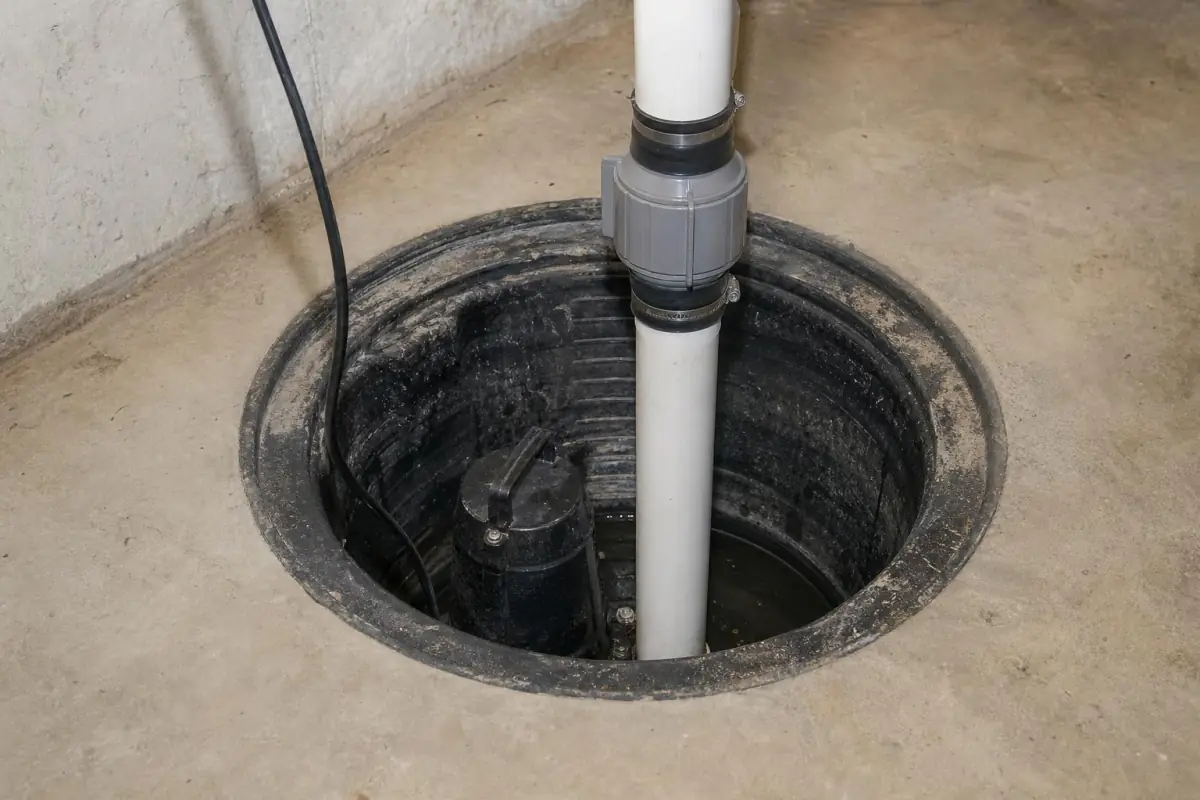
The thud is the check valve flapper being slammed onto its seat by the water standing in the vertical riser, which starts falling back toward the pit the instant the impeller stops. A gravity flapper waits for that reversal to close; a spring loaded flapper is already closing as flow slows. Zoeller’s product listing for the 1-1/2 in Quiet Check Valve (30-0040) credits a 1/2 lb spring with stopping water hammer and rates the valve at 50 psi and 130 F. The gravity Zoeller 30-0181 Unicheck is listed at 25 psi and 130 F.
Pentair offers two other fixes: a length of flexible rubber hose, “like radiator hose,” between the pump outlet and the hard pipe to isolate vibration, and a correctly sized pump, since an oversized motor keeps the column moving harder before it drops. Choosing the valve body, orientation and union style is covered in our guide to picking and installing a sump pump check valve.
How much water falls back down the riser without a check valve?
Between 0.62 and 1.27 gallons, for an 8 to 12 ft riser in 1-1/4 or 1-1/2 in Schedule 40 PVC. That is the water a working check valve holds up and a missing or stuck-open one drops back into the pit at every shutoff, where the pump has to lift it again on the next cycle.
| Riser height | Pipe (Sch 40 ID) | Water in riser | Weight | Rise in an 18 in pit | Static head on a closed valve |
|---|---|---|---|---|---|
| 8 ft | 1-1/4 in (1.380 in) | 0.62 gal | 5.2 lb | 0.56 in | 3.5 psi |
| 10 ft | 1-1/4 in (1.380 in) | 0.78 gal | 6.5 lb | 0.71 in | 4.3 psi |
| 12 ft | 1-1/4 in (1.380 in) | 0.93 gal | 7.8 lb | 0.85 in | 5.2 psi |
| 8 ft | 1-1/2 in (1.610 in) | 0.85 gal | 7.1 lb | 0.77 in | 3.5 psi |
| 10 ft | 1-1/2 in (1.610 in) | 1.06 gal | 8.8 lb | 0.96 in | 4.3 psi |
| 12 ft | 1-1/2 in (1.610 in) | 1.27 gal | 10.6 lb | 1.15 in | 5.2 psi |
Inputs: riser volume = pi/4 x inside diameter squared x height in inches, divided by 231 cubic inches per gallon; water at 8.34 lb per gallon; pit rise = riser volume divided by the 254.5 sq in floor of an 18 in round pit, the minimum diameter Zoeller recommends in FM2676; static head = 0.433 psi per foot of water. These are calculations, not measurements, and the slam spike when a moving column stops is higher than the static figure.
What it means: the 5.2 lb to 10.6 lb of water sitting on the flapper is what a gravity valve catches with a bang, and even the 12 ft case holds only 5.2 psi at rest, well inside the 25 psi and 50 psi listings above, so the fix for the noise is closing speed, not a stronger valve. With no valve, an inch of water returning to an 18 in pit can push the level back over the float’s on point, which is one cause behind a sump pump that runs constantly or short cycles.
Where does the weep hole go, and why does a missing one cause a hum with no flow?
The weep hole, which Zoeller calls a vent hole, is drilled in the discharge pipe between the pump and the check valve, below both the valve and the pit cover. Zoeller FM2676 says a hole of about 3/16 in (5 mm) “must be drilled” whenever a check valve is installed, to purge air trapped by agitation or a dry basin, and that a water stream “will be visible from this hole during pump run periods.” Pentair gives a smaller size, a 1/16 to 1/8 in anti-airlock hole just above the pump discharge and below the check valve, so drill the size your pump’s own manual names.
Zoeller’s own troubleshooting chart in FM2676 lists “if check valve is used vent hole must be clear” under a pump that “operates but delivers little or no water,” which is the hum with no flow. The sheet also warns that on a high head job the hole may cause too much turbulence. Pentair’s FAQ adds the other cause of a hum with no motor running: debris blocking the intake. Unplug the pump before reaching into the pit; Pentair’s FAQ says to disconnect power before any service.
How do you stop a sump pipe rattling against the pit or joists?
Isolate the pipe at every point it can touch something solid: Pentair recommends insulating foam between the pipe and the wall or joists, or hanging the pipe from an exhaust hanger. Page 1 of the City of Ann Arbor sheet Tips to Quiet a Noisy Pump adds two steps: wrap insulation where the pipe meets the basin or wall, and line the lid opening with rubber grommets so a vibrating pipe cannot strike the cover. It also notes that extra angles and joints in the discharge line create clanging, while straight runs flow more quietly.
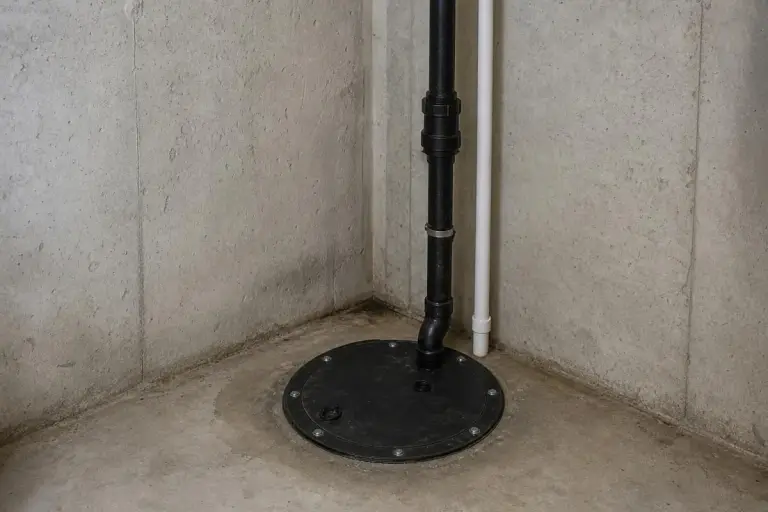
A cover cuts both rattle and running noise: the Ann Arbor sheet recommends a lid or fitted foam over the basin, or plywood sealed to the floor with a rubber gasket on an older open pit. Whether to go further and seal the pit airtight, which also matters for radon and humidity, is answered in our piece on whether a sump pit should be sealed.
When does a noisy sump pump mean it is time to replace it?
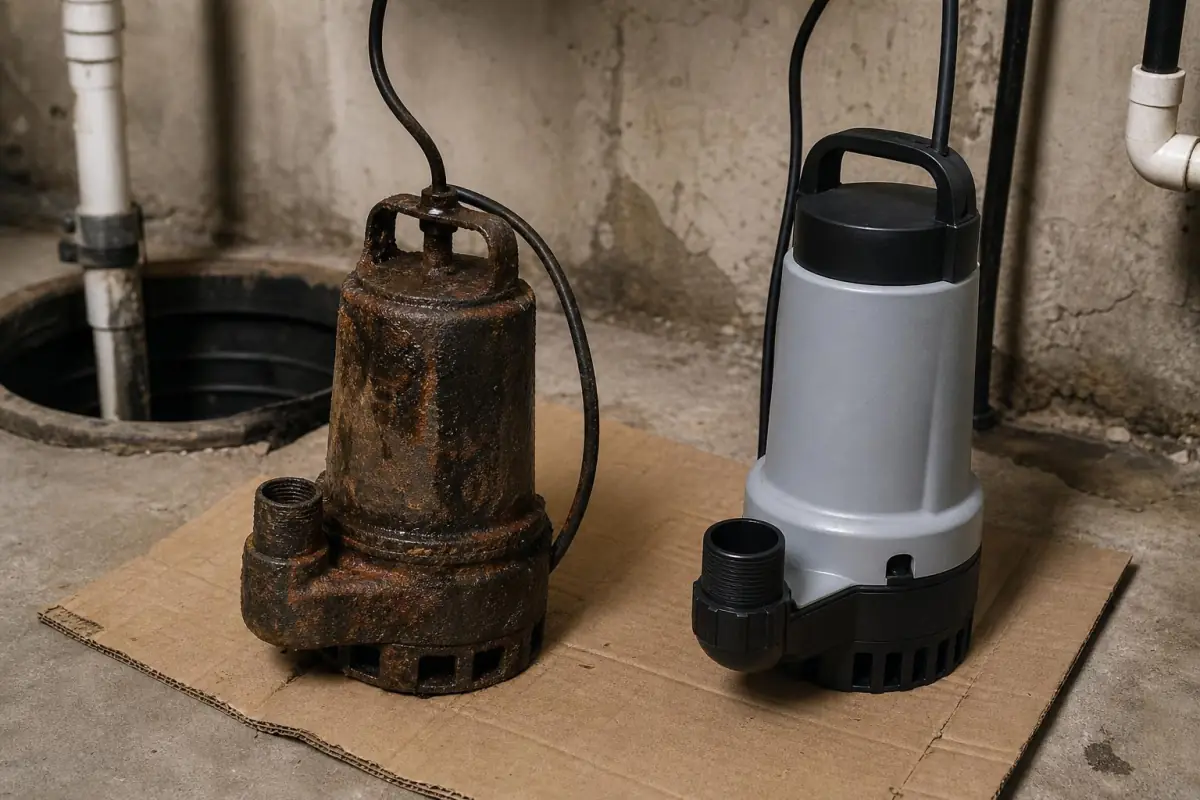
Grinding that continues after the pit is cleared, or a loud motor on an old pump after the pipe is isolated, points to replacement. Pentair’s FAQ traces a vibrating pump to broken or missing impeller blades and says to replace the impeller or the pump. Page 2 of the Ann Arbor sheet says plastic pumps run louder than cast iron ones, and that a very noisy motor on an old system, after rubber stoppers have been tried, means it may be time to replace it.
Age sets the threshold: Wayne’s manual ties about 3 years of expected life to its 1 and 2 year warranty pumps and about 6 years to its 3 and 5 year models, set out with InterNACHI’s 7 year figure in our breakdown of how long sump pumps last. Zoeller FM2676 items 17 and 18 tell owners to consider a two pump system with an alarm, or a DC backup system, where a failure could flood the space, so a noisy pump past those ages is the time to add an alarm, not to wait.
How we sourced this
We read Zoeller installation sheet FM2676 (53 Series and related, 3 year warranty), the Pentair sump pump troubleshooting FAQ, the City of Ann Arbor sheet Tips to Quiet a Noisy Pump, Zoeller’s 30-0040 product listing, and WebstaurantStore listings for the Zoeller 30-0040 and 30-0181, checked 25 November 2026. The riser volume, weight, pit rise and static head figures were computed from Schedule 40 PVC inside diameters with the inputs shown; we did not estimate a slam pressure because that needs a closing speed no maker publishes. We left out a Flotec spring check valve because we could not confirm a current Flotec part number for one, and we left out motor bearing noise because no maker document we read names it.
Sump pump noise questions
Should I hear my sump pump running?
Yes. The 2-page City of Ann Arbor sheet says sump pumps make noise when they run and that air pushed out of the pipe causes a minimal sound. A steady hum while the pit level drops is normal, while a hum with the pit level unchanged is not.
How loud should a sump pump be?
No maker in the 4 documents we read publishes a decibel rating for its sump pumps. Judge by change instead. A pump that grows louder than it was when new, or adds grinding or rattling, has a cause listed in the sound table above, matched by the point in the cycle where it happens.
Is a sump pump check valve supposed to make a noise?
A gravity flapper closes only when the water column reverses, so some sound at shutoff comes with that design. A bang that shakes the pipe is water hammer, and Zoeller credits the 1/2 lb spring in its 30-0040 Quiet Check, listed at $27.49 on 25 November 2026, with stopping it.
Why does my sump pump sound like it is sucking air?
The float is letting the pump run after the water drops below the intake. Pentair says to adjust the float per the owner’s manual so the pump shuts off first, and to keep at least 3 inches of cord between a tethered float ball and its bracket.