How Long Do Sump Pumps Last? Lifespan, Warranties and Cycle Math
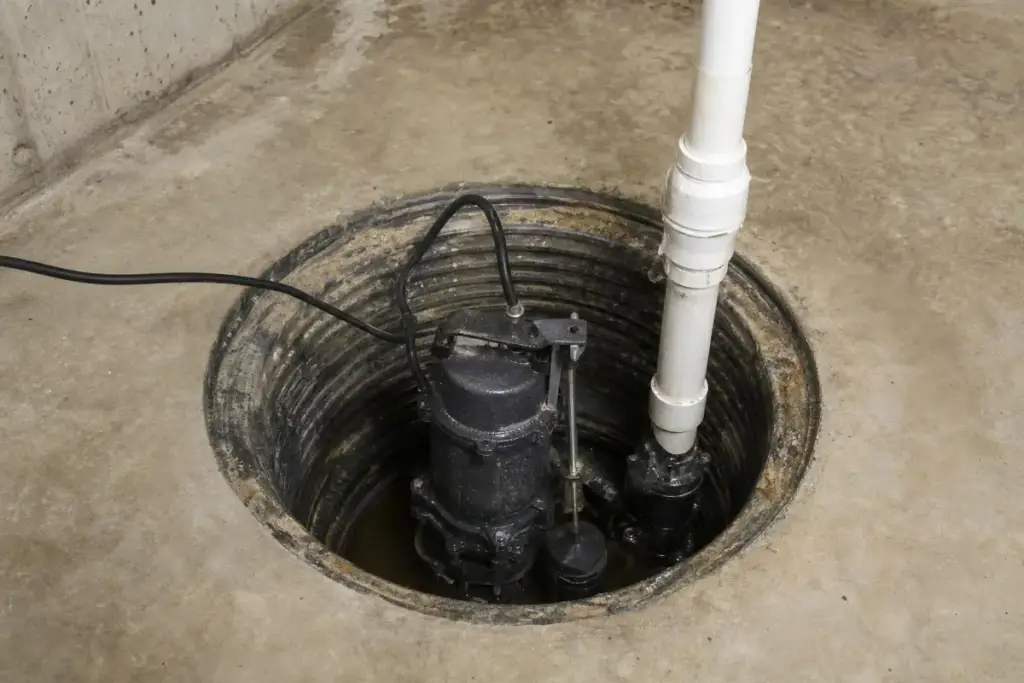
How long do sump pumps last? InterNACHI’s life expectancy chart puts a sump pump at 7 years. Wayne’s own manual is stricter: about 3 years for pumps sold with a 1 or 2 year warranty and about 6 years for 3 or 5 year models.
Where do the 7, 3 and 6 year sump pump figures come from?
The 7 comes from home inspectors, and the 3 and 6 come from a pump maker. InterNACHI’s Standard Estimated Life Expectancy Chart for Homes lists “Sump Pump” at 7 years in its Plumbing, Fixtures and Faucets table, against 15 for a well pump, and calls its figures guidelines that assume recommended maintenance, not guarantees.
The maker figure is in Wayne manual 600002W-001, covering the CDU790, CDU800, CDU980E, CDU1000, SPF33, SPF50, CDT50 and WST33. Its Expected Life table reads: 1 year warranty, 3 years; 2 year warranty, 3 years; 3 year warranty, 6 years; 5 year warranty, 6 years. The condition: installation and upkeep per the manual.
The “7 to 10 years” answer on contractor blogs cites no source in the 6 pages we read. Zoeller, Liberty, Little Giant and Superior Pump publish no life figure, so their warranty term is the only number they stand behind.
Six sump pumps compared: housing, switch, warranty and price
Five of the six pumps below carry a 3 to 5 year warranty; the one thermoplastic pump carries 1 year. Specs are from each maker’s data sheet or product page; prices are the posted price on the named listing on November 16, 2026.
| Pump | Housing | HP | Switch, on / off | Warranty | Listed price |
|---|---|---|---|---|---|
| Zoeller M53 (53-0001) | Cast iron; plastic impeller and base | 3/10 | Integral float, 7-1/4 in / 3 in | 3 yr | $224.25, Cooney Brothers |
| Zoeller M63 (63-0001) | All cast iron, cast iron impeller | 3/10 | Integral float, 7-1/4 in / 3 in | 5 yr | $315.75, Cooney Brothers |
| Wayne CDU800 | Epoxy coated steel, cast iron volute | 1/2 | Vertical float, 9 in / 4 in | 3 yr | $209.99, North 40 Outfitters |
| Liberty 257 | Class 25 cast iron, one piece | 1/3 | Vertical magnetic float, 7 in / 4 in | 3 yr | $303.00, F.W. Webb |
| Little Giant 6-CIA-RS (506267) | Cast iron body, plastic base | 1/3 | Piggyback diaphragm, 7 to 10 in / 1 to 4 in | 36 mo | No posted price; PexUniverse lists it as discontinued |
| Superior Pump 92330 | Thermoplastic motor casing and body | 1/3 | Piggyback tether, 10 in / 5 in | 1 yr | $109.99, Hills Flat Lumber |
Under Wayne’s table, the 1 to 5 year warranty spread is the difference between a 3 and a 6 year expected life. Superior’s cast iron 92341 gets 3 years against the 92330’s 1 year, the cleanest cast iron versus thermoplastic comparison any one maker publishes. Zoeller’s M63 adds no flow over the M53; sales sheet FM2959 pairs its 5 year term with all cast iron construction and “advanced switch technology allowing longer switch life”. Our full Zoeller model comparison has the flow curves.
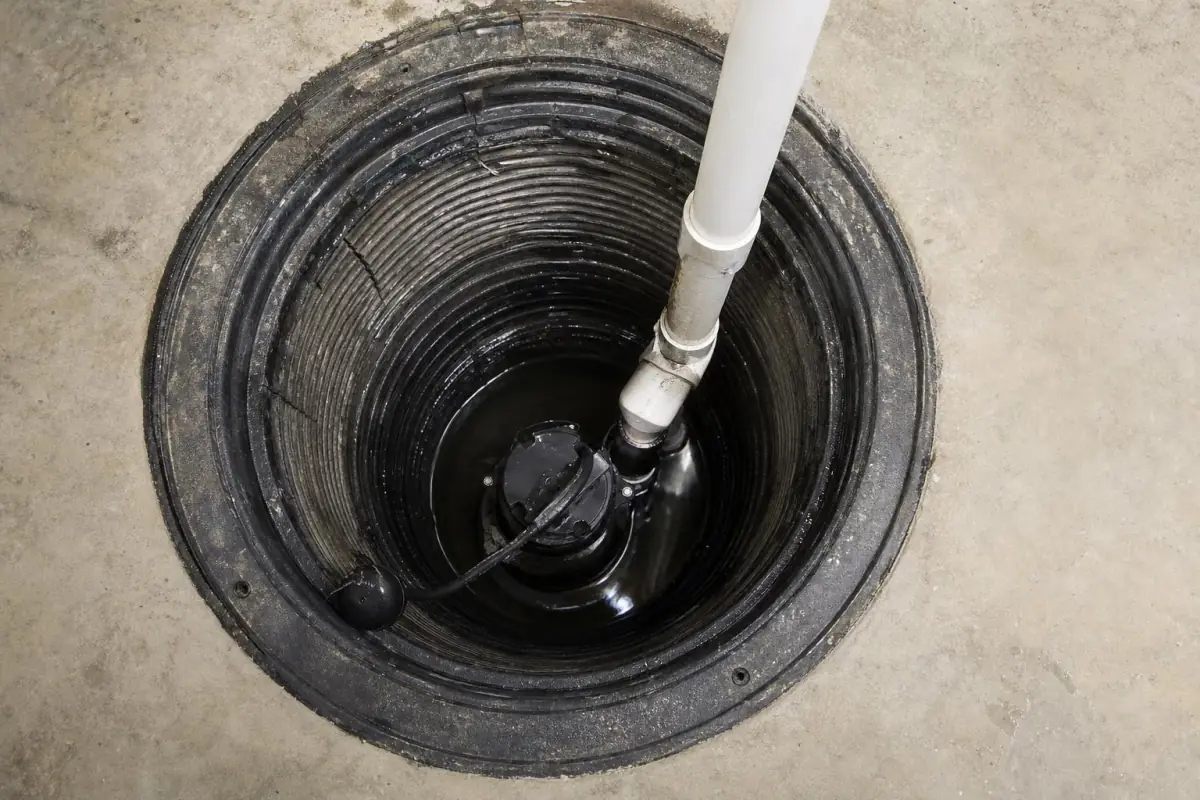
How many cycles a day does an 18 x 24 in pit ask of a sump pump?
Between 294 and 4,357 cycles a day in the cases below, which is why switch life usually decides how long a sump pump lasts. Each cycle moves basin area times drawdown (on height minus off height). An 18 in round basin holds 254.5 sq in, or 1.10 gallons per inch of depth (231 cubic inches per gallon). Cycles per day equal inflow in gpm times 1,440 minutes, divided by gallons per cycle.
| Basin and switch | Drawdown | Gal per cycle | 2 gpm | 5 gpm | 10 gpm |
|---|---|---|---|---|---|
| 18 x 24 in, Liberty 257 (7 in / 4 in) | 3 in | 3.30 | 871 | 2,179 | 4,357 |
| 18 x 24 in, Zoeller M53 or M63 (7-1/4 in / 3 in) | 4.25 in | 4.68 | 615 | 1,538 | 3,076 |
| 18 x 24 in, Wayne CDU800 (9 in / 4 in) | 5 in | 5.51 | 523 | 1,307 | 2,614 |
| 18 x 30 in, Wayne CDU800 (9 in / 4 in) | 5 in | 5.51 | 523 | 1,307 | 2,614 |
| 18 x 30 in, Wayne tether switch (13 in / 7 in) | 6 in | 6.61 | 436 | 1,089 | 2,179 |
| 24 x 24 in, Wayne CDU800 (9 in / 4 in) | 5 in | 9.79 | 294 | 735 | 1,471 |
The 18 x 30 row shows what most pit advice misses: 6 extra inches of depth change nothing while switch levels stay fixed. A deeper pit pays off only with a tether, which Wayne draws at 13 in on in a basin at least 22 in tall. Diameter is the lever: going from 18 in to 24 in cuts cycles by 44% at every inflow. Liberty’s manual says the same in words: for its VMF models a larger diameter basin “allows for a longer pump cycle and reduced float switch cycling”. The counts ignore run time and pump displacement, two errors that partly offset.
Wayne is the only maker here that puts a number on cycles. The CDU800 page says the pump is tested to 1 million cycles and “exceeds an average life of 1 million cycles”, and the CDU790 and CDU800 sell sheet says the switch is tested 1,000,000 times. In the 18 x 24 in pit, that count lasts 1,912 days of steady 2 gpm inflow (5.2 years), 765 days at 5 gpm and 382 days at 10 gpm. Run backward, Wayne’s 6 year expected life equals 457 cycles a day, an average inflow of only 1.75 gpm. Our guide to a sump pump that runs constantly covers a pit that cycles every few minutes.
What wears out a sump pump early: switch, dry running, check valve, heat
The switch fails first on most pumps, and Wayne’s manual treats it as a wear part: “Replace the tether switch every two (2) years”, using switch 56835-WYN1 for tether models. The same manual calls its vertical float switch not replaceable, though the CDU800 page links float top kits. In Wayne’s troubleshooting chart, “Switch” is a listed cause in 4 of its 7 symptom rows.
Running dry is the second killer. Liberty manual 7035000 warns “Submersible Pump: do not run dry” and calls the factory off level (4 in on the 257) the minimum water depth for proper cooling. A pump idle over a month in a dry basin should run 30 seconds monthly to lubricate the seals. Zoeller’s FM2676 instructions call for a 3/16 in vent hole in the discharge pipe below the check valve, to purge trapped air, which the sheet says comes from agitation or a dry basin.
A missing or leaking check valve multiplies cycles; Wayne requires one and lists backflow as the first cause of a pump that “starts and stops too often”. The math: 10 ft of 1-1/2 in Schedule 40 pipe (1.610 in bore) holds 1.06 gallons. In the Liberty 257 pit above, that water falls back after every run and refills 1.06 of the 3.30 gallons, so cycles at 2 gpm jump from 871 to 1,282 a day, a 47% increase.
Heat comes last: Wayne says not to pump water above 77°F, while Zoeller rates the M53 to 130°F and Liberty the 250 Series to 104°F continuous.
How often should you test a sump pump? Every 3 months, not once a year
All three makers that publish a schedule ask for more than the yearly test most blogs repeat. Zoeller FM2676 says to “inspect and test system for proper operations at least every three months”. Wayne asks for 3 to 4 inspections a year and says skipped maintenance voids the warranty. Liberty lists quarterly float switch and check valve checks.
- Confirm the plug is in a working GFCI outlet; Wayne notes GFCIs in damp areas can trip and silently shut the pump off.
- Pour a bucket of water into the pit. Wayne’s test: the pump should start automatically and drain the water quickly; if it does not start, have it serviced or replaced.
- Watch it shut off at the off level (3 in on an M53, 4 in on a CDU800 or 257) instead of running on.
- Check the pump is upright and the float clears the wall; Wayne says vibration can tip the pump and jam the float.
Replace at 6 or 7 years, or run the pump to failure?
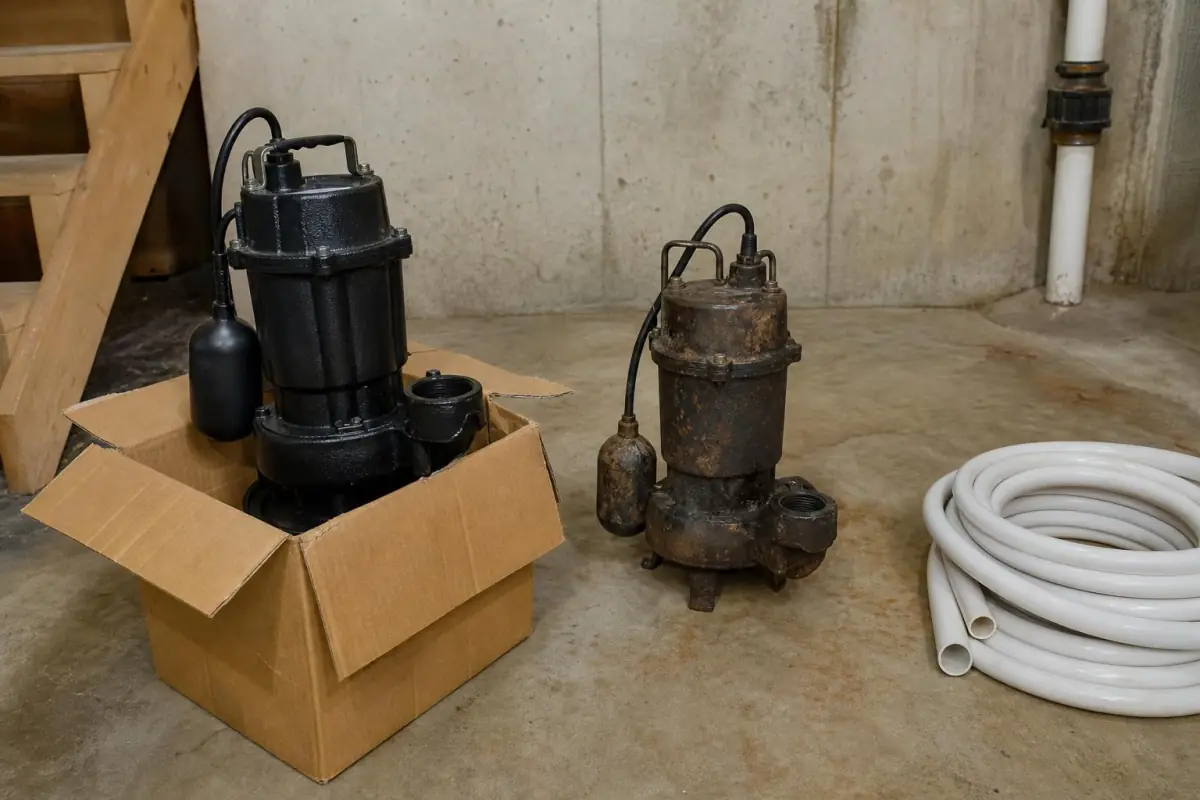
Replace on age when a failure would reach finished space; run to failure only when it would not. Wayne’s chart makes the call for 4 symptoms: worn bearings, a broken impeller, a bad motor and a pump that trips a GFCI all read “Replace pump”. Age adds a third trigger: past 6 years on a Wayne with a 3 or 5 year warranty, past 3 years on a 1 year pump, or past InterNACHI’s 7 years on any brand.
The pumps in the table list at $109.99 to $315.75 before labor, and our sump pump replacement costs breakdown covers installed pricing.
Either way, add a second line of defense. Wayne’s manual says an independent high water alarm or backup pump should be used when high water could damage property, and Zoeller FM2676 recommends a two pump system with an alarm or a DC backup system. A battery backup sump pump covers switch failures and power cuts.
Sump pump lifespan questions
How long do Zoeller sump pumps last?
Zoeller publishes no life figure in years for the M53 or M63. Its warranty is 3 years on the M53 under FM2676 and 5 years on the all cast iron M63 under FM2959. Plan on InterNACHI’s 7 years and treat the warranty as the only guaranteed span.
How long do Wayne sump pumps last?
Wayne is the one maker that prints a number. Its sump pump manual 600002W says about 3 years of service for models with a 1 or 2 year warranty and about 6 years for 3 or 5 year models such as the CDU800, if installed and maintained per the manual.
Should I replace a 10 year old sump pump that still works?
If a failure would flood finished space, yes. Ten years is 3 years past InterNACHI’s 7 year guideline and 4 years past Wayne’s 6 year estimate for its best warranted pumps. Over bare concrete, a pump that passes a bucket test every 3 months can keep running.
Do cast iron sump pumps last longer than plastic ones?
No maker publishes life data by housing material, but warranties lean that way. Superior Pump backs its thermoplastic 92330 for 1 year and its cast iron 92341 for 3 years, and Wayne’s manual ties 3 years of expected life to 1 year warranties and 6 years to 3 year warranties.
Can a sump pump run dry without damage?
Liberty’s 250 Series manual says plainly not to run a submersible pump dry, and its factory turn off level of 4 inches on the 257 is the minimum water depth that keeps the motor cooled. A float stuck in the up position is the usual way a pump ends up running dry.
How we sourced this
Documents: Wayne manual 600002W-001 F, CDU800 page and sell sheet; Zoeller FM2778, FM2899, FM2959 and FM2676; Liberty 250 Series sheet and manual 7035000; Little Giant 506267 and Superior Pump 92330 and 92341 pages; InterNACHI’s chart. Prices were posted retail prices on November 16, 2026. Cycle counts are our arithmetic from published switch levels. Left out: any failure rate by brand or housing material, because no maker or agency publishes one, and posted prices for the Little Giant 6-CIA-RS.