Dishwasher Not Draining? Fixes From Easiest to Hardest
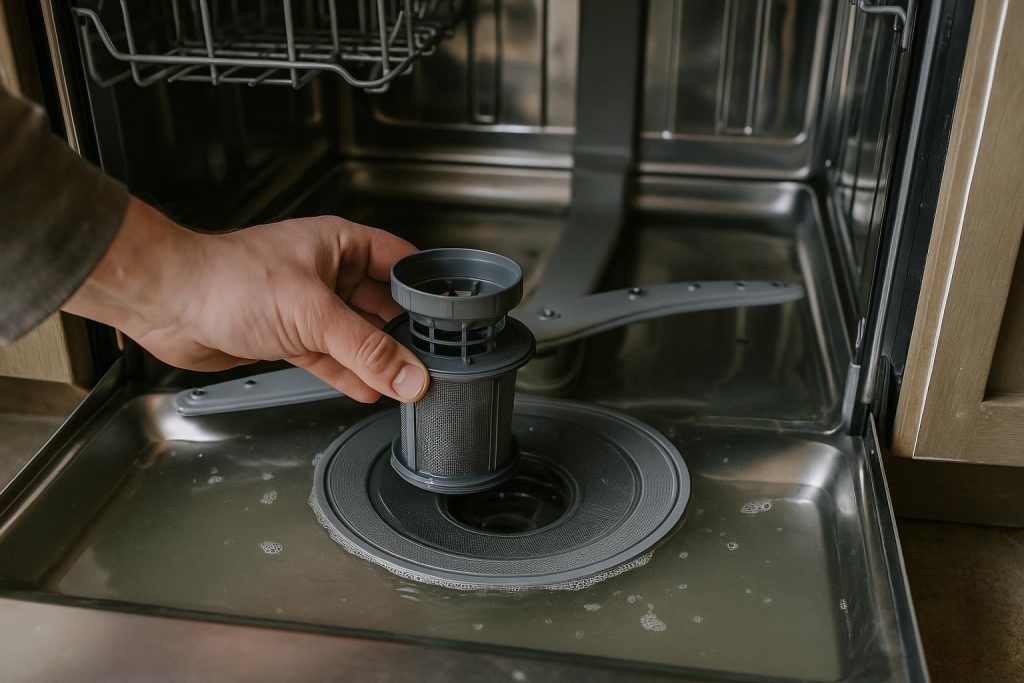
A dishwasher not draining almost always points to one of six causes, and you fix them cheapest first: clean the filter, run the disposal, then work down to the drain hose, air gap, pump, and check valve.
Key Takeaways
- A clogged filter is the most common ongoing cause of standing water, and appliance repair guides tie a large share of drain failures to it (iFixit). The clean is free and takes 20 to 40 minutes.
- After a new disposal install, the number one cause is a forgotten garbage disposal knockout plug sealing the drain inlet. Tapping it out is a two-minute fix.
- Roughly an inch of water in the sump below the filter is normal: it keeps the pump seal from drying out, so do not mistake it for a fault (iFixit, Whirlpool).
- A kinked or grease-clogged drain hose and a clogged air gap both back water up into the tub; both are do-it-yourself fixes in most cases.
- A jammed drain pump is the costly cause, roughly $150 to $400 in parts and labor, per Angi and HomeGuide 2026 data.
- Angi puts the average dishwasher repair near $225, with most jobs between $175 and $325.
Why won’t my dishwasher drain?
A dishwasher not draining leaves dirty water pooled in the tub at the end of a cycle, and the cause is almost always one of six things. In rough order from most common and easiest to hardest, they are: a clogged filter, a garbage disposal knockout plug left in, a kinked or clogged drain hose, a clogged air gap, a jammed drain pump, and a stuck check valve. Work them in that order and you solve most cases without a service call.
The logic is simple. The water has to travel from the tub, through the filter and pump, out the drain hose, and into your sink drain or disposal. A blockage anywhere on that path stops it. The cheap, no-tool checks at the start catch the majority of failures, so there is no reason to open the machine until you have ruled them out.
| Cause | Symptom / tell | DIY fixable? | Typical fix | Best action |
|---|---|---|---|---|
| Clogged filter | Dirty standing water, gritty film, food bits in the sump | Yes | Twist out and rinse the filter and screen | Clean it first; do it monthly to prevent repeat |
| Disposal knockout plug | Brand-new disposal, dishwasher never drains since install | Yes | Tap out the plug inside the disposal inlet | Check this on any new disposal before anything else |
| Kinked or clogged drain hose | Humming but no drain; hose crimped behind the unit | Often | Straighten the kink or flush the hose | Inspect the hose run and the high loop |
| Clogged air gap | Water spits from the counter fitting during drain | Yes | Pull the cap, brush it, flush the outlet hose | Clear the air gap and the line to the disposal |
| Jammed drain pump | Humming or grinding, impeller will not spin, no flow | Sometimes | Clear debris or replace the pump | Clear glass or food; call a pro to replace it |
| Stuck check valve | Drains then refills; dirty water siphons back | Sometimes | Clear or replace the valve flapper | Call a pro if it is internal to the pump |
What quick checks should I try first?
Before you grab a screwdriver, run two free checks that solve a large share of cases. First, run the garbage disposal for ten seconds with the tap on, since a full or stalled disposal blocks the dishwasher drain. Second, cancel the dishwasher cycle, which forces a drain, and listen for the pump. These two steps cost nothing and take under a minute.
While you are there, bail out the standing water with a cup and a sponge so you can work, and confirm the problem is real. Remember that roughly an inch of water in the sump under the filter is designed to stay there to protect the pump seal. If the water is above the filter, covers the floor of the tub, or looks dirty after a full cycle, you have a genuine drain fault. If the disposal was the culprit, our guide to reset a garbage disposal that will not run covers the hum-versus-dead diagnosis.
How do I clean a clogged dishwasher filter?
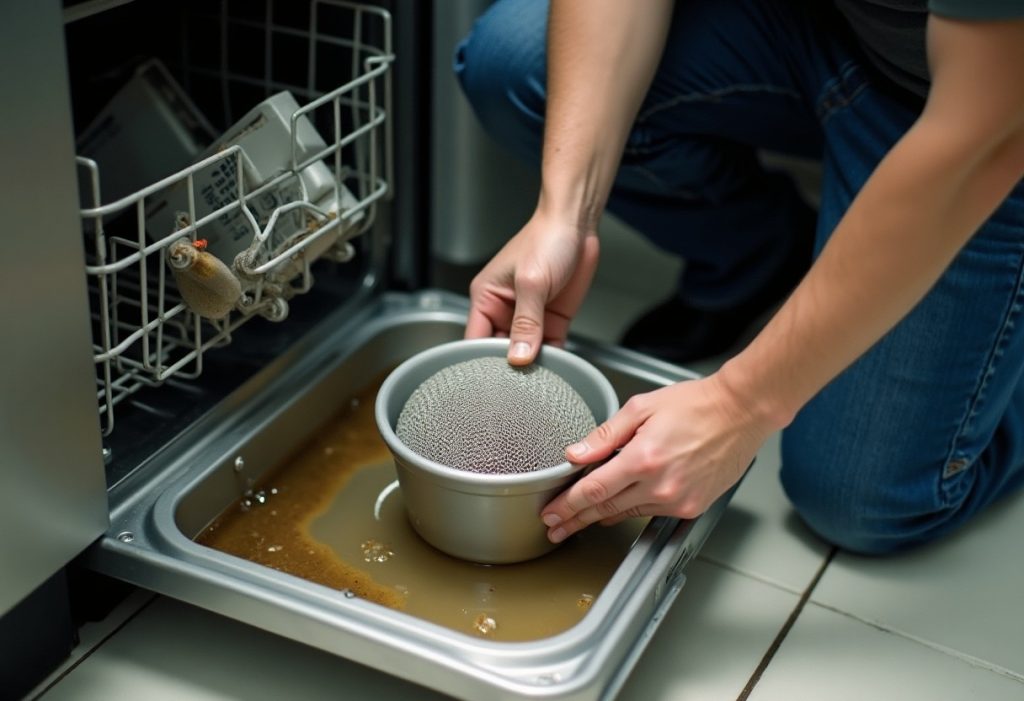
Cleaning the filter is the single most effective fix because a grease-and-food-packed filter is the most common ongoing cause of poor draining. The filter sits at the base of the tub, usually a cylinder you twist counterclockwise, with a flat mesh screen underneath. The whole job is free and takes 20 to 40 minutes with no special tools.
- Pull out the bottom rack and bail any standing water so you can reach the sump.
- Twist the cylindrical filter counterclockwise and lift it out, then remove the flat screen beneath it.
- Rinse both parts under warm water and scrub gently with a soft brush to lift grease and stuck food.
- Wipe the sump and check the pump opening for glass, seeds, or a chunk of debris, and remove anything you find.
- Seat the screen, drop the filter back in, and twist clockwise until it locks, then run a rinse to confirm it drains.
Clean the filter about once a month and scrape plates before loading, and you will prevent most repeat clogs. If the water drains slowly from the sink too, the blockage may be in the house plumbing rather than the appliance, so you may need to clear the sink drain itself.
Did you forget the garbage disposal knockout plug?
If the dishwasher has never drained since a new garbage disposal went in, the cause is almost certainly the knockout plug. Every disposal ships with a solid plug sealing its dishwasher drain inlet, meant for homes with no dishwasher. When a dishwasher hose connects to that inlet, the plug has to be knocked out first, or drain water hits a sealed wall and backs up into the tub.
The fix takes two minutes. Reach the disposal inlet nipple under the sink, set a screwdriver against the plug inside it, and give one firm tap to pop it free. Then fish the loose plug out of the disposal body so it does not jam the impeller, and run the dishwasher to confirm it drains. This single oversight is the top drain complaint after any new disposal install, so check it before you suspect anything else. For how the hose, disposal, and air gap tie together, see our overview of dishwasher water supply and drain hookup.
Is the drain hose kinked or clogged?
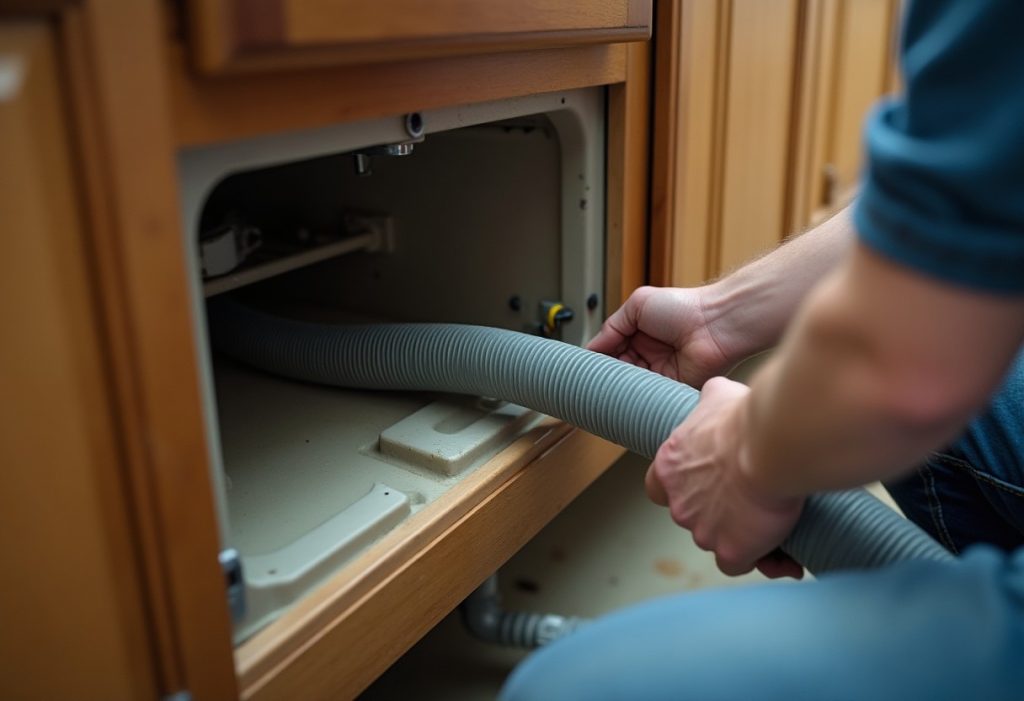
A drain hose that is kinked, crushed, or packed with grease is a frequent cause, especially if the dishwasher was recently moved or reinstalled. The hose runs from the pump up to a high loop or air gap, then down to the disposal or sink drain. A crimp behind the cabinet or a grease plug where it meets the disposal stops the water cold, and you will often hear the pump hum with nothing moving.
Pull the dishwasher out gently or open the sink cabinet and trace the hose. Straighten any sharp bend, and confirm the hose rises to a high loop fastened under the counter so dirty water cannot siphon back. If it feels stiff or you suspect a clog, disconnect the ends over a bucket and flush it with water or push a flexible brush through. A replacement hose runs roughly $50 to $130 installed if the old one is damaged.
Could the air gap be clogged?
If your sink has an air gap, that small chrome fitting on the counter behind the faucet, a clog there will back water up into the dishwasher and often spit water onto the counter during the drain cycle. The line between the air gap and the garbage disposal collects grease and food, and when it blocks, the water has nowhere to go but backward.
Twist off the chrome cap and the inner cover, then clear the body with a stiff bottle brush. Pull the larger outlet hose that runs down to the disposal and flush it, since that leg is the usual blockage. Reassemble and run a cycle. If it still spits, the disposal inlet or the drain branch below is blocked. Our full guide to how a dishwasher air gap works covers the fitting, the high loop alternative, and where code requires each.
What if the drain pump or check valve is the problem?
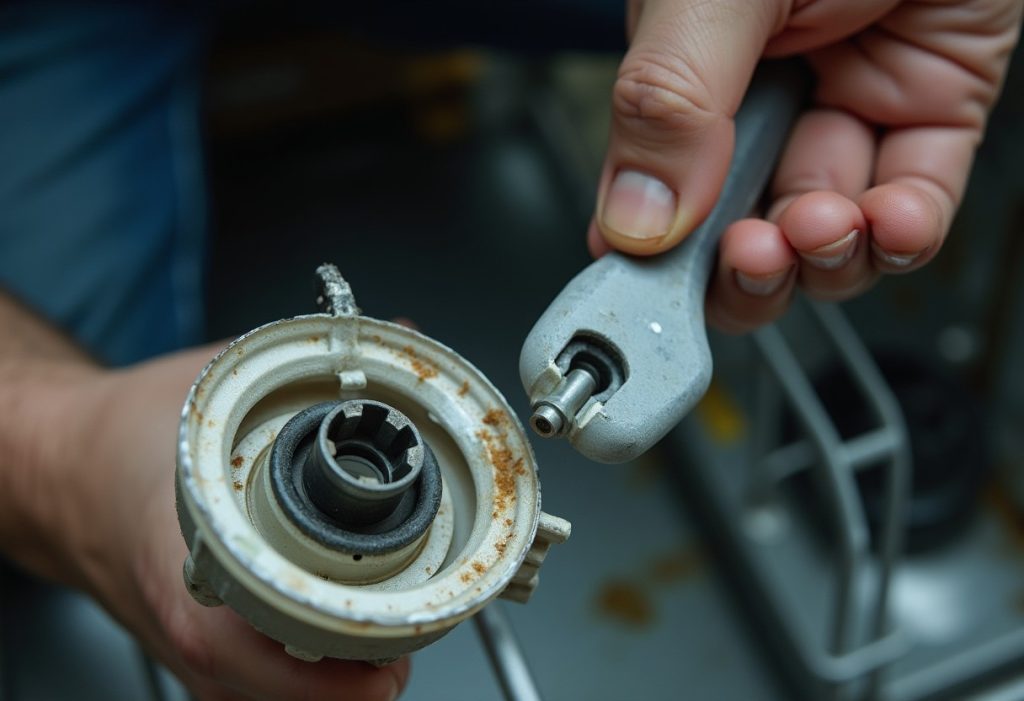
If the filter, disposal, hose, and air gap are all clear and water still stands, the fault is inside the machine: a jammed or failed drain pump, or a stuck check valve. The drain pump pushes water out through the hose, and its impeller can seize on a shard of glass, a fruit pit, or a twist tie. A loud hum or grinding with no flow is the classic tell of a blocked or dying pump.
The check valve is a one-way flap that stops drained water from siphoning back in. If it sticks open, the tub drains and then partly refills with dirty water; if it sticks shut, nothing drains. Clearing debris from the pump is sometimes a do-it-yourself job on accessible models, but testing the pump motor and replacing either part involves electrical work and teardown. Expect roughly $150 to $400 for a drain pump and $100 to $200 for a check valve in parts and labor, per Angi and HomeGuide 2026 figures. This is the point to call an appliance tech.
When should you call a plumber or appliance tech?
Call a pro once the free and low-cost checks are exhausted and water still stands, because the remaining suspects, the drain pump and check valve, sit inside the machine and involve electricity. Also call right away if you hear a pump humming with no water moving, smell anything burning, or see water pooling under the cabinet, which signals a leak as well as a drain fault.
A technician can test the pump motor, inspect the impeller and check valve, and replace parts safely, work that usually runs $50 to $125 an hour plus a service fee of $70 to $130. Weigh that against the machine: if a dishwasher is more than eight to ten years old and the repair approaches half the price of a new unit, replacement is often the better call. For anything involving the sink drain, disposal wiring, or the house plumbing behind the appliance, a licensed plumber is the right trade.
How we sourced this
The cause list and the order of likelihood follow appliance troubleshooting guides (iFixit) and manufacturer guidance (Whirlpool, GE, Bosch), cross-checked against several 2026 repair articles. The note that roughly an inch of water in the sump is normal, and that it protects the pump seal, comes from iFixit answers and Whirlpool guidance. Cost ranges are drawn from Angi and HomeGuide 2026 dishwasher repair data: drain hose about $50 to $130, check valve about $100 to $200, drain pump about $150 to $400, with an average repair near $225 and a typical band of $175 to $325; labor runs $50 to $125 per hour plus a $70 to $130 service fee. These are national ranges that vary by brand, region, and part availability. The claim that a clogged filter is the most common ongoing cause, and that a forgotten knockout plug leads after a new disposal install, reflects the weight of repair-guide and manufacturer sources rather than a single measured statistic, so we describe it in those terms. Confirm any part, cost, or warranty detail against your model and a local quote.
Frequently asked questions
Why is my dishwasher not draining?
Standing water at the end of a cycle usually traces to one of six causes, in rough order of likelihood: a clogged filter, a garbage disposal knockout plug left in after a new disposal install, a kinked or clogged drain hose, a clogged air gap, a jammed drain pump, or a stuck check valve. Start with the filter and the disposal, since those are free and take minutes.
Is standing water in the bottom of my dishwasher normal?
A small amount is normal. Most dishwashers keep roughly an inch of water in the sump below the filter so the pump seal stays wet and does not dry out and crack. If the water sits above the filter, covers the tub floor, or is dirty after a full cycle, that is a drain fault worth chasing down, not the normal sump water.
Can a garbage disposal stop a dishwasher from draining?
Yes, in two ways. If the disposal is new, the knockout plug inside its dishwasher inlet may still be in place, which seals the drain path completely. A disposal packed with food waste or one that will not run can also block the dishwasher drain. Run the disposal with water first, and on a new install confirm the knockout plug was tapped out.
How do I clean a clogged dishwasher filter?
Pull the bottom rack, twist out the cylindrical filter at the base of the tub, and lift out the flat mesh screen under it. Rinse both under warm water and scrub gently with a soft brush to clear grease and food. Wipe the sump and check for glass or debris near the pump opening, then twist the filter back in until it locks. This is a free fix that takes 20 to 40 minutes.
How much does it cost to fix a dishwasher that will not drain?
Many causes cost nothing: cleaning the filter, running the disposal, or straightening a kinked hose are do-it-yourself fixes. A new drain hose runs roughly $50 to $130 installed, a check valve $100 to $200, and a drain pump $150 to $400 in parts and labor, per Angi and HomeGuide 2026 data. Angi puts the average dishwasher repair near $225.
When should I call a plumber or appliance tech?
Call a pro if the filter, disposal, hose, and air gap are all clear and water still stands, which points to the drain pump or check valve inside the machine. Also call if you hear a humming pump that will not move water, smell burning, or see water under the cabinet. A tech can test the pump motor and valve safely, which involves electrical and teardown work.


