Dishwasher Air Gap: What It Is, Code, and How to Fix It
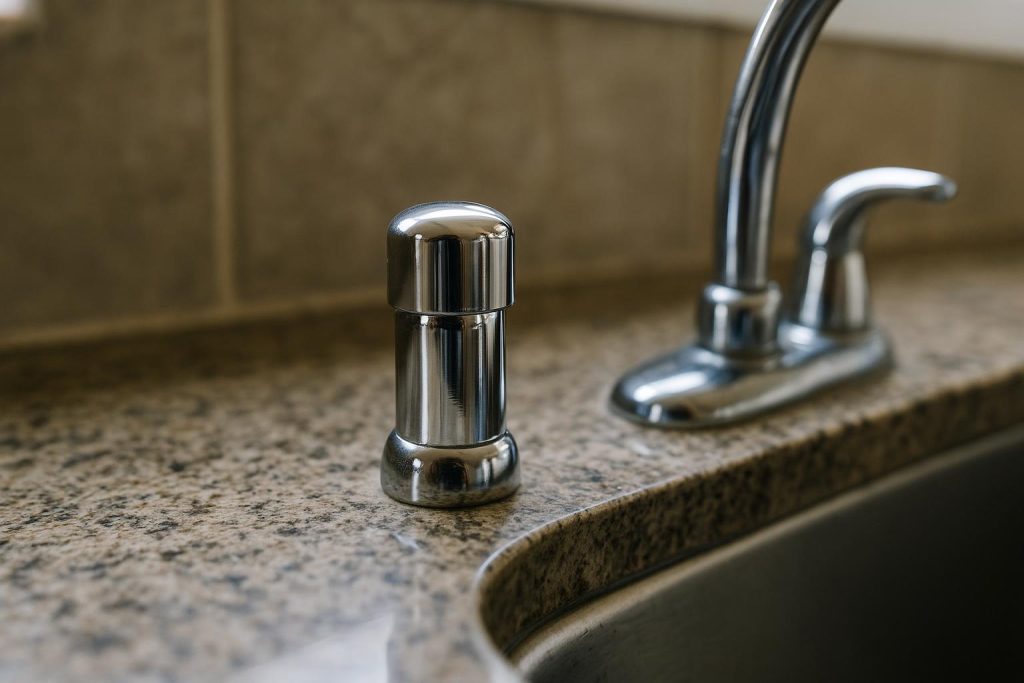
A dishwasher air gap is a chrome fitting on your countertop that breaks the drain line open to the air, so dirty sink and disposal water can never siphon back into the dishwasher.
Key Takeaways
- The air gap prevents a cross-connection: it stops used water from siphoning back into clean dishes, and the EPA Cross-Connection Control Manual calls the air gap the most reliable backflow method because it has no moving parts.
- Several UPC states, notably California, Washington, Minnesota, and Hawaii, require a listed air gap fitting on the dishwasher discharge under CPC/UPC Section 807.3.
- A high loop is the common alternative: the drain hose rises and fastens to the underside of the countertop before dropping to the disposal, accepted under the IRC and most manufacturer instructions where local code allows.
- Most air gap fittings need a 1-3/8 inch counter hole (some fit 1-1/4 inch), and the body should be listed to ASME A112.1.3.
- A spitting or leaking air gap almost always means the hose to the garbage disposal is clogged with food and grease (Family Handyman).
- The fitting itself is cheap, roughly $5 to $15 at retail, but code requirements vary, so confirm with your local AHJ before you choose a method.
What is a dishwasher air gap, and why does it exist?
A dishwasher air gap is a listed fitting, usually a small chrome dome on the counter behind the faucet, that creates a physical break in the dishwasher drain line. Water from the dishwasher rises into the fitting, drops across an open gap, then flows down to the garbage disposal or drain branch. That open gap is the whole point.
The gap exists to prevent backflow. If the sink or disposal ever backs up, dirty water and food waste cannot climb the drain hose and siphon into the dishwasher, where it would sit against clean dishes. This is the same cross-connection principle the EPA applies across plumbing: a physical air separation is the most dependable barrier because there is nothing mechanical to wear out or stick open. For how the drain hose ties into the rest of the appliance, see our guide to dishwasher water supply and drain hookup.
Air gap vs high loop: which backflow method should you use?
Both methods stop the same problem, but they do it differently. An air gap is a visible fitting that breaks the line open to the air, so backflow is physically impossible. A high loop uses height instead: the drain hose is looped up and strapped to the underside of the counter, so water would have to climb that rise to reach the dishwasher. The table compares them, plus the two things that make an air gap spit water.
| Method / issue | How it prevents backflow | Code acceptance | Look and counter hole | Best for |
|---|---|---|---|---|
| Countertop air gap | Physical open break in the line; backflow cannot cross the gap | Required in CA, WA, MN, HI and other UPC areas (807.3) | Visible chrome dome; needs a 1-3/8 in counter hole | UPC jurisdictions and anyone wanting the surest protection |
| High loop | Drain hose rises to the counter underside; height resists siphoning | Accepted under the IRC and most manufacturers where local code allows | Hidden under the sink; no counter hole | Areas that permit it and remodels with no spare counter hole |
| Cause: clogged disposal hose | Grease and food block the outlet leg, so water backs up and out the cap | n/a (troubleshooting) | Water spits from the dome during drain | Clear the larger outlet hose to the disposal |
| Cause: knockout plug left in | New disposal inlet is still sealed, so drain water has nowhere to go | n/a (troubleshooting) | New install leaks on first run | Knock out the disposal plug before connecting |
The high loop is cheaper and invisible, but it relies on installation care and is not accepted everywhere. The air gap costs a few dollars more and puts a fitting on the counter, but it is the method code writers trust most. For how these hoses meet the trap and disposal below the basin, see the under-sink drain assembly.

Where does code require a dishwasher air gap?
Whether an air gap is mandatory depends entirely on your local code. States and cities that follow the Uniform Plumbing Code (UPC) tend to require one: California, Washington, Minnesota, and Hawaii are the jurisdictions most often cited as mandating a listed air gap fitting. California Plumbing Code Section 807.3 states that no domestic dishwasher shall connect directly to the drainage system or a food waste disposer without an approved air gap fitting on the discharge side.
Areas under the International Residential Code (IRC) are generally more flexible and accept a properly installed high loop as an alternative. Because adoption is set city by city and county by county, the only safe move is to confirm the rule with your local authority having jurisdiction (AHJ) or building department before you install. A fitting that satisfies one town may fail inspection in the next, so treat any blanket claim online as a starting point, not the final answer for your address.
How do you install a dishwasher air gap?
Installing an air gap means mounting the fitting through the counter, then connecting two hoses of different sizes underneath. The smaller inlet leg takes the dishwasher drain hose; the larger outlet leg runs down to the garbage disposal or drain branch. Cut the power to the disposal first, and always follow the fitting and appliance instructions, since sizes and clip styles vary.
- Mount the fitting: drop the air gap through the 1-3/8 inch counter hole (or a pre-drilled sink accessory hole) from above, then tighten the retainer nut against the underside of the counter.
- Connect the inlet: attach the dishwasher drain hose, usually 5/8 inch, to the smaller inlet leg of the air gap and secure it with a hose clamp.
- Connect the outlet: run a larger hose, usually 7/8 inch, from the outlet leg down to the disposal inlet nipple or a drain wye, and clamp it.
- Knock out the plug: if the disposal is new, tap out the dishwasher knockout plug inside the disposal inlet before connecting, or drain water will have nowhere to go.
- Test: run a short cycle, watch every connection for drips, and confirm no water spits from the cap.
Route the hoses with smooth downhill runs and no kinks so water drains freely. If you are setting the basin and faucet at the same time, our walkthrough on installing a kitchen sink covers the surrounding hookups. Manufacturers such as Whirlpool publish the exact hose sizes and clip specs for their machines. Before calling the job done, check drainage troubleshooting for what to do if the dishwasher later backs up, and review backflow preventer options to understand how this setup fits the wider anti-siphon picture.
Why is my dishwasher air gap spitting or leaking water?
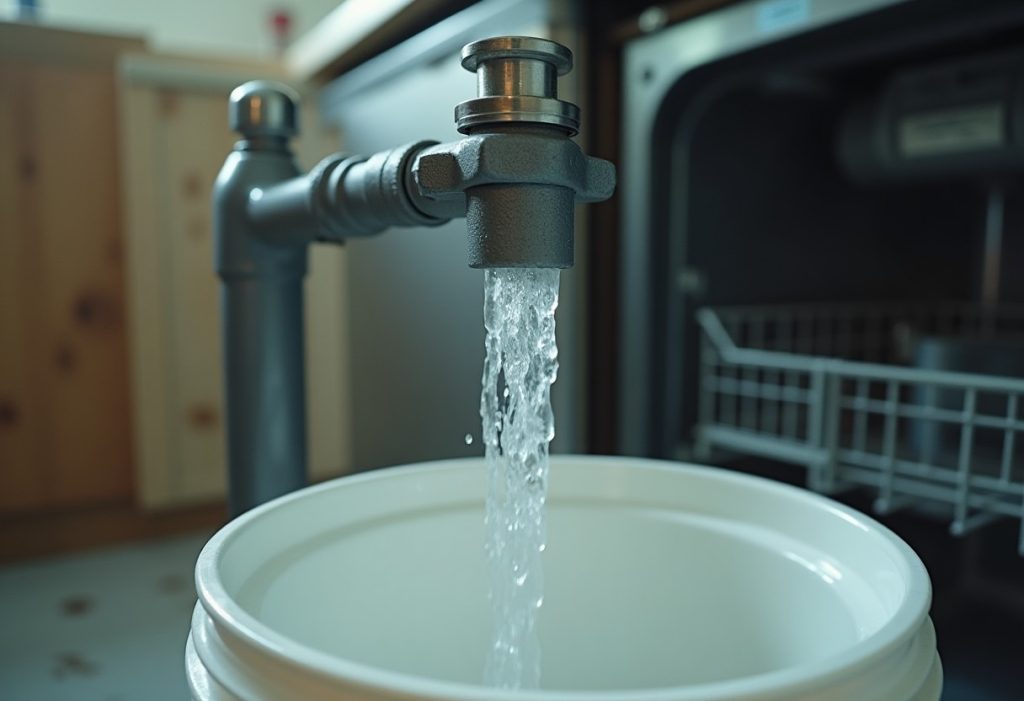
A dishwasher air gap that spits or leaks during the drain cycle almost always has a clog downstream of the fitting, not a fault in the air gap itself. When the outlet hose to the garbage disposal or the disposal inlet is blocked with grease and food, drain water has nowhere to go, so it backs up inside the fitting and sprays out the cap. That is the gap doing its job and warning you.
On a brand-new dishwasher or disposal install, a leak usually means the disposal knockout plug was never removed, sealing off the path. Less often, the outlet hose is kinked or sags, or the drain branch itself is partly blocked. The fix is to clear the blockage, and the spitting stops on the next run. A working sink drain and a healthy P-trap below help water leave fast enough to keep the air gap quiet.
How do you fix a clogged air gap?
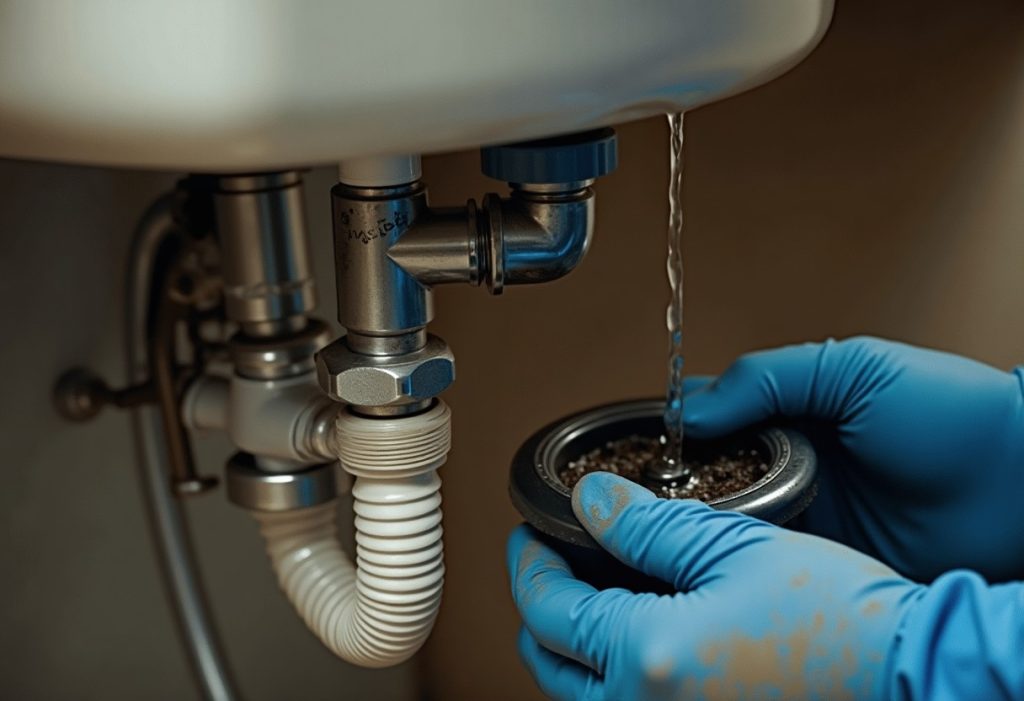
Fixing a spitting air gap is a ten-minute job in most cases: clear the fitting, then clear the hose that runs to the disposal, since that hose collects the grease. Turn off the disposal at the wall or breaker before you disconnect anything. Work from the visible cap down to the disposal, testing after each step so you stop as soon as the water runs clean.
- Remove the cap: lift off the outer chrome cover and the inner plastic cover to expose the air gap body.
- Brush the body: run a stiff bottle brush through the fitting to clear food packed inside, and wipe the opening.
- Clear the outlet hose: pull the larger hose off the outlet leg, then flush or rod it out, since this line to the disposal is the usual blockage.
- Check the disposal inlet: confirm the knockout plug is out and the disposal inlet is not caked; run the disposal with water to clear it.
- Reassemble and test: reconnect the hose, replace the covers, and run a rinse cycle to confirm no more spitting.
If the air gap still spits after all of that, the clog is deeper in the drain branch or the disposal is failing to drain, and that is the point to call a plumber. Avoid pouring chemical drain cleaner into the air gap, since it can splash back and does little against a grease-packed hose you can simply pull and flush.
Can you use a high loop instead of an air gap?
In many parts of the country, yes. The IRC and most dishwasher makers accept a high loop as backflow protection, provided the drain hose rises up to the underside of the countertop and is fastened there before it drops to the disposal or drain. That rise is what resists siphoning. It costs nothing extra, hides under the sink, and needs no hole drilled in the counter.
The catch is code. In California and the other UPC air-gap states, a high loop alone does not meet Section 807.3; those jurisdictions want the physical fitting. Even where a high loop is legal, it only works if it is actually installed high and strapped, not left drooping under the sink, which is a common defect inspectors flag. Confirm which method your area requires with your local AHJ before you commit.
How we sourced this
The backflow and cross-connection principle, including the air gap being the most reliable method, comes from the EPA Cross-Connection Control Manual. The code requirement is drawn from California Plumbing Code / Uniform Plumbing Code Section 807.3 as published via code references; the list of UPC air-gap states (California, Washington, Minnesota, Hawaii) reflects commonly cited adoption and is described as jurisdiction-dependent rather than exhaustive. High loop acceptance reflects IRC practice and manufacturer instructions (Whirlpool, GE). Fitting dimensions (1-3/8 inch counter hole, 5/8 inch inlet, 7/8 inch outlet) and the ASME A112.1.3 listing come from manufacturer and installation specifications, reported as typical values that vary by model. Troubleshooting for a spitting air gap follows manufacturer and trade guidance (Whirlpool, Family Handyman). Retail cost is a 2026 range. Retailer and forum posts were read for context but not cited for figures. Anything code or cost specific should be confirmed with your local AHJ.
Frequently asked questions
What is a dishwasher air gap and what does it do?
A dishwasher air gap is a small chrome fitting on the countertop that creates a physical break in the drain line. That gap means dirty water from the sink or garbage disposal cannot siphon backward into the dishwasher and contaminate clean dishes. It is a backflow preventer with no moving parts, which is why the EPA calls the air gap the most reliable method of protection.
Is a dishwasher air gap required by code?
It depends on where you live. Several states that follow the Uniform Plumbing Code, notably California, Washington, Minnesota, and Hawaii, require a listed air gap fitting on the dishwasher discharge under UPC and CPC Section 807.3. Many other areas under the IRC accept a high loop instead. Always confirm the exact rule with your local authority having jurisdiction (AHJ) before you install.
What is the difference between an air gap and a high loop?
An air gap is a physical fitting mounted through the countertop that breaks the drain line open to the air, so backflow is impossible. A high loop simply routes the dishwasher drain hose up to the underside of the counter before it drops to the disposal, using height to resist siphoning. The air gap is more reliable and is required in some jurisdictions; the high loop is cheaper and needs no counter hole.
Why is water coming out of my dishwasher air gap?
Water spitting from the air gap almost always means the line between the air gap and the garbage disposal is clogged with food and grease, so drain water backs up and out the cap instead of flowing down. A brand-new install that leaks usually means the disposal knockout plug was never removed. Clear the hose or knock out the plug and the spitting stops.
How do I clean a clogged dishwasher air gap?
Pull off the visible cap and the inner cover, then use a stiff bottle brush to clear food from the body. Disconnect the larger outlet hose that runs to the disposal and flush or rod it out, since that hose is where grease collects. Reconnect everything and run the dishwasher. If it still spits, the disposal inlet or drain branch is blocked.
What size hole does a dishwasher air gap need in the countertop?
Most standard air gap fittings need a 1-3/8 inch hole, though some fit a 1-1/4 inch hole, so check the product spec first. Many sinks come with a pre-drilled accessory hole you can use. The fitting drops through from above and a retainer nut tightens against the underside of the counter to hold it.
Can I use a high loop instead of a dishwasher air gap?
In many areas, yes. The IRC and most dishwasher manufacturers accept a high loop where local code allows it, as long as the drain hose rises and is fastened to the underside of the countertop before dropping to the disposal or drain. But if you are in California or another UPC air-gap state, a high loop alone does not satisfy code. Verify with your local AHJ.


