Thermal Expansion Tank: What It Is, Code, Sizing, and Cost
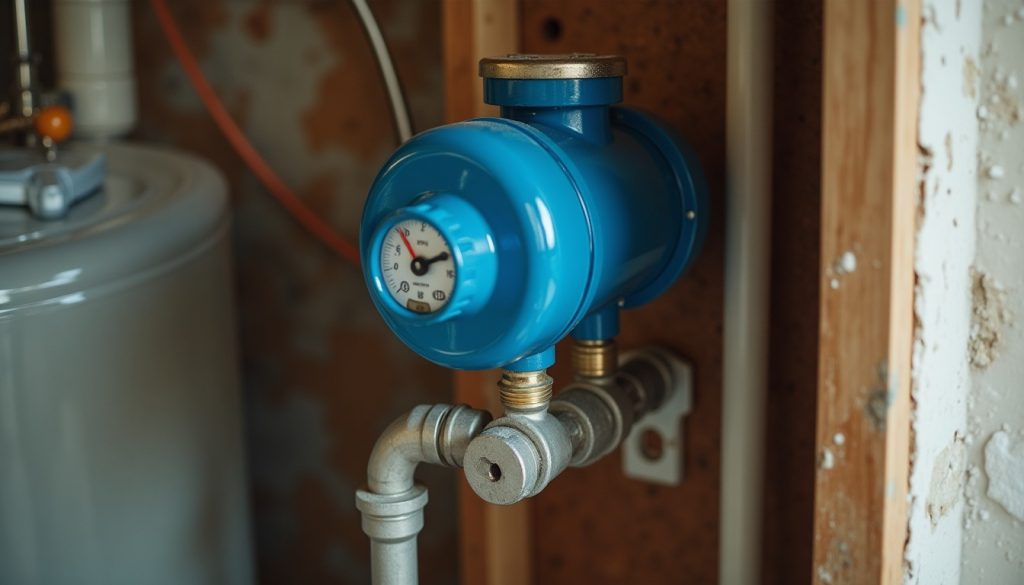
A thermal expansion tank gives heated water room to expand in a closed plumbing system, and code (IPC 607.3) requires one on many water heaters fed through a check valve, PRV, or backflow preventer.
Key Takeaways
- Water expands about 2 percent when heated from roughly 50°F to 120°F; in a sealed loop that volume has nowhere to go, so pressure spikes (ICC IPC 607.3).
- A check valve, pressure reducing valve, or backflow preventer turns your plumbing into a closed system and triggers the tank requirement.
- IPC Section 607.3 requires the expansion tank on the cold supply, downstream of those one-way devices; the UPC has a parallel rule (ICC).
- A 40 or 50 gallon heater at 40 to 60 psi commonly pairs with a 2 gallon tank; size 80 gallon heaters and higher pressure up per the maker’s chart (Amtrol).
- Set the tank air pre-charge to equal your home’s static pressure; tanks ship at 40 psi, so most installs need adjustment (Amtrol).
- The tank part runs $40 to $200; installed cost averages about $325, with most jobs $150 to $450 (Angi 2026).
- Code adoption and amendments vary; confirm what applies with your local AHJ.
What is a thermal expansion tank?
A thermal expansion tank is a small steel tank, split by a rubber diaphragm, that gives heated water somewhere to go. One side holds water tied to your cold supply; the other holds compressed air. When the water heater fires and the water expands, it pushes into the tank and compresses that air cushion instead of driving system pressure up. That same air cushion principle applies to boiler systems, where a failing component can turn a minor fix into a costly boiler repair.
Most residential units are 2 to 4.4 gallons and mount on the cold water line above or near the water heater. The air charge behind the diaphragm is what does the work, which is why the pre-charge setting matters as much as the tank size.
Why does thermal expansion happen in a closed system?
Thermal expansion happens because water grows in volume as it heats, expanding roughly 2 percent from about 50°F to 120°F. In an open system that extra water simply pushes back toward the street main. A closed system blocks that path, so the volume converts into a sharp pressure rise inside the tank, pipes, and fixtures.
Amtrol’s data puts the expansion factor at 1.5 percent at 140°F and 1.8 percent at 150°F, measured from a 40°F start. A 50 gallon heater set to 140°F therefore tries to shed close to three quarters of a gallon of expanded water on every full heating cycle, and that water has to go somewhere.
What turns your plumbing into a closed system?
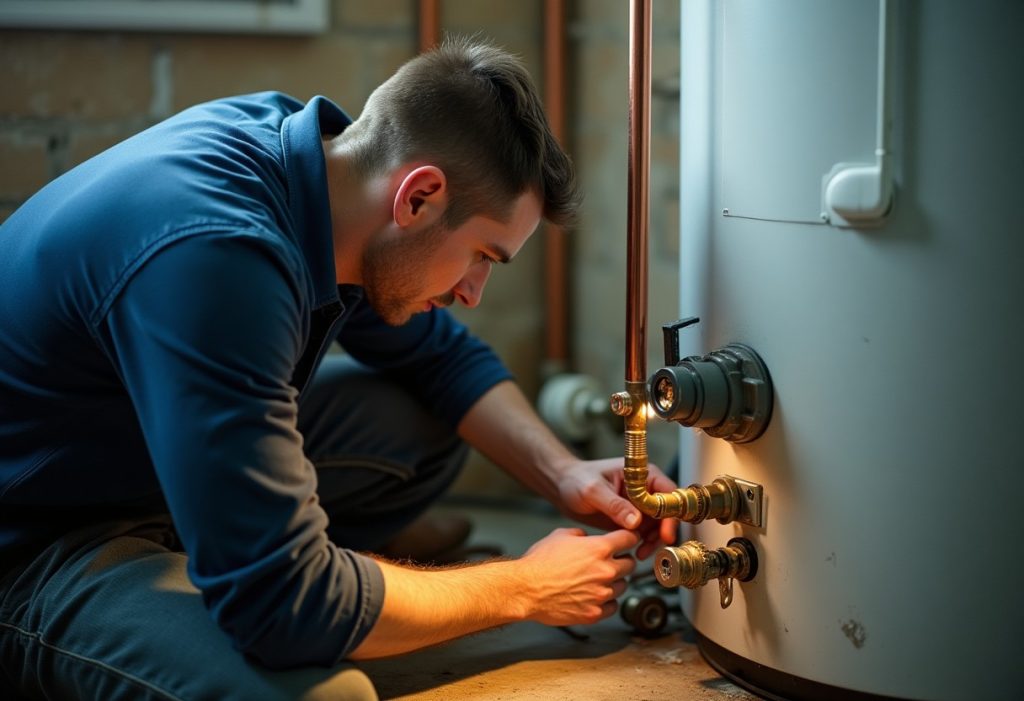
A closed system forms when any one-way device sits between your water heater and the street: a check valve, a pressure reducing valve, or a backflow preventer. Each lets water in but not back out, so expanded hot water cannot relieve toward the main. Many homes became closed systems without the owner knowing.
The most common culprit is a PRV. IPC Section 604.8 caps static supply pressure at 80 psi, and where the street runs higher a pressure reducing valve is required. That valve, plus any check valve or backflow preventer the water utility adds at the meter, seals the loop. To see how the different one-way devices behave, our guide to plumbing valve types breaks them down.
When does code require a thermal expansion tank?
Code requires an expansion tank when a storage water heater is supplied with cold water that passes through a check valve, pressure reducing valve, or backflow preventer. IPC Section 607.3 calls this thermal expansion control and orders the tank connected to the cold water supply pipe downstream of all those devices. The UPC carries an equivalent requirement.
The rule is not new, but it now gets enforced on most permitted water heater swaps. If your local inspector finds a PRV or check valve and no expansion tank, the install can fail. Our overview of water heater code requirements covers where this fits with T&P valves, pans, and venting. Code adoption and local amendments differ by state and city, so verify with your AHJ before you buy.
How do you size a thermal expansion tank?
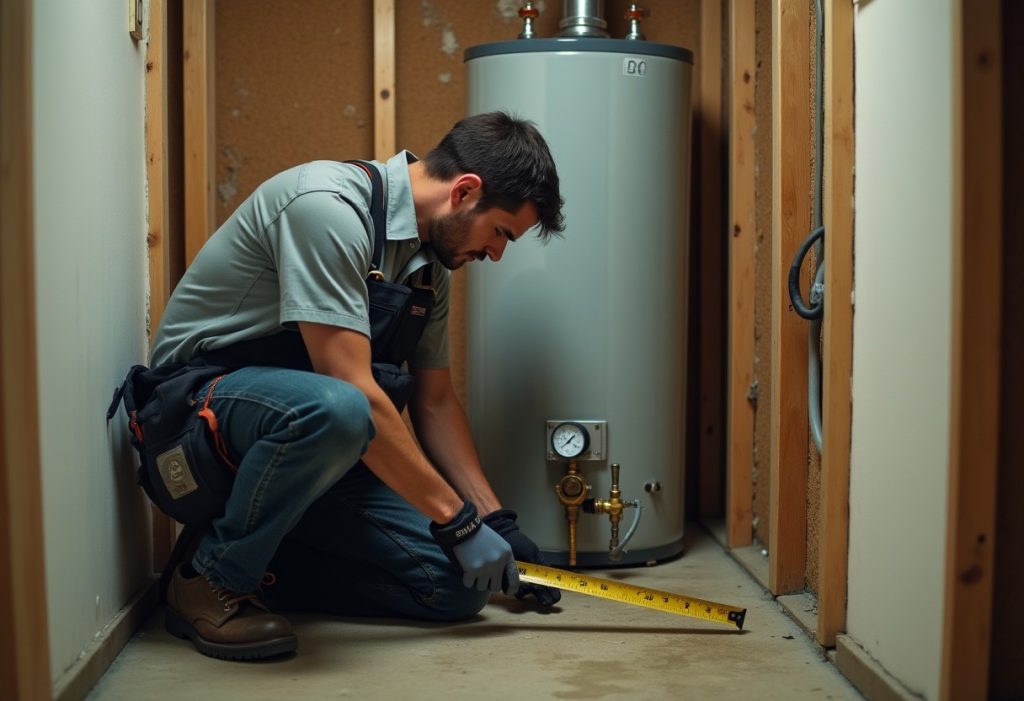
Size a thermal expansion tank from three inputs: the water heater’s gallon capacity, its temperature setting, and your incoming static pressure. Bigger tanks and higher pressures both push you toward more tank volume. IPC 607.3 says to size per the manufacturer’s instructions so the system never exceeds the 80 psi limit in Section 604.8. When high static pressure also triggers backflow concerns, check which backflow preventer type matches your hazard level and pressure conditions.
The chart below is a starting point drawn from Amtrol and Watts residential guidance. Always confirm the exact model against the maker’s sizing chart or online calculator, because the numbers shift with temperature and maximum allowable pressure.
| Heater size | Supply pressure | Suggested tank | Note |
|---|---|---|---|
| 40 gallon | 40 to 60 psi | ~2 gal (Amtrol ST-5 / Watts PLT-5) | Covers most standard residential installs |
| 50 gallon | 40 to 60 psi | ~2 gal (Amtrol ST-5) | The common factory pairing at typical pressure |
| 50 gallon | 70 to 80 psi | ~4.4 gal (Amtrol ST-8) | Higher pressure needs more absorbing volume |
| 80 gallon | 40 to 60 psi | ~4.4 gal (Amtrol ST-12) | Larger stored volume expands more per cycle |
| 80 gallon | 70 to 80 psi | 4.4 gal or larger | Verify against the manufacturer chart |
Amtrol’s own math shows why pressure matters so much. Its design pressure factor, the multiplier applied to the expanded water volume, climbs steeply as supply pressure rises. The higher your static pressure, the more tank you need to keep the system under the ceiling.
How do you set and check the pre-charge?
The pre-charge is the air pressure behind the diaphragm, and it should equal your home’s static water pressure measured with the water off. Amtrol ships tanks at 40 psi, so if your street pressure reads 65 psi the tank is wrong out of the box and needs air added before it goes on the line.
Follow these steps to check and set it:
- Read your static pressure by threading a $12 gauge onto a hose bib with no water running.
- Isolate the new tank from water pressure, or check it before install while it is empty.
- Put a tire gauge on the Schrader air valve at the top of the tank and read the pressure.
- Add air with a bike or hand pump if it reads low; bleed a little out if it reads high.
- Match the tank pre-charge to the static number, then install the tank on the cold line.
A pre-charge that does not match supply pressure is the most common install error. Too low and incoming water pushes into the tank before heating even starts, wasting the cushion; too high and the tank cannot accept expanded water at all. Check it once a year, since tanks slowly lose air.
What happens without a correctly sized tank?
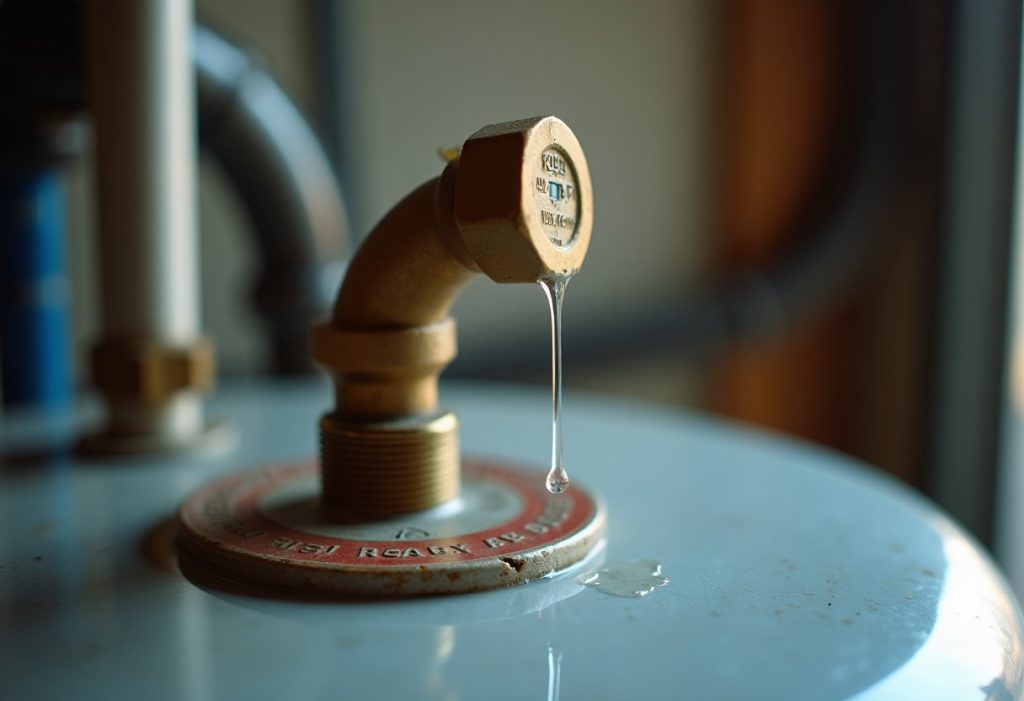
Without a working expansion tank, every heating cycle drives pressure up until something gives. The temperature and pressure relief valve on the water heater is set to open at 150 psi, and a closed system with no tank routinely reaches that, so the T&P valve weeps right after the burner runs. That drip is a symptom, not the disease.
Repeated pressure spikes also stress the tank seams, faucet cartridges, supply hoses, and toilet fill valves, shortening their life. If you are already budgeting a water heater replacement cost, adding a tank at the same time is the cheap insurance that protects the new unit.
| Symptom | Closed system, no tank | Correctly sized tank |
|---|---|---|
| T&P relief valve | Drips after each heating cycle | Stays dry, pressure absorbed |
| System pressure | Spikes past 150 psi at cycle end | Held near static pressure |
| Faucets and fill valves | Wear early from pressure shock | Normal service life |
| Water heater tank | Extra stress on seams and glass lining | Rated life supported |
| Code inspection | Fails on a permitted install | Passes IPC 607.3 check |
How much does a thermal expansion tank cost?
The tank itself commonly costs $40 to $200. A 2 gallon residential unit runs about $40 to $60, and a 4 gallon around $60 to $140, per Angi and HomeGuide 2026 pricing. The part is cheap; the labor and piping drive the rest of the bill.
Installed, most homeowners pay roughly $150 to $450, averaging about $325 with labor, according to Angi. The low end applies when a plumber ties into an existing cold-line tee during another job; the high end covers new piping, a support bracket, or a tight mechanical closet. Bundling it with a water heater swap keeps the added labor small.
How we sourced this
Code requirements are quoted from the ICC International Plumbing Code, Sections 607.3 (thermal expansion control) and 604.8 (maximum pressure), 2018 through 2024 editions. Expansion factors, design pressure factors, and pre-charge guidance come from Amtrol’s Therm-X-Trol sizing document; the T&P relief setting is from Watts. Cost ranges are 2026 figures from Angi and HomeGuide. We did not rely on contractor blogs for any code or sizing figure. Because states adopt and amend codes differently, every code claim here should be verified with your local authority having jurisdiction before work.
Frequently asked questions
What does a thermal expansion tank do?
A thermal expansion tank gives heated water somewhere to go. When water in a closed system heats up it expands about 2 percent, and in a sealed loop that extra volume has nowhere to escape, so pressure climbs fast. The tank holds a cushion of compressed air behind a diaphragm that absorbs the expanded water and keeps system pressure in a safe band.
When does code require a thermal expansion tank?
IPC Section 607.3 requires thermal expansion control where a storage water heater is fed through a check valve, pressure reducing valve, or backflow preventer, which creates a closed system. The tank must connect to the cold water supply downstream of those devices. The UPC has a parallel rule. Adoption and amendments vary, so confirm with your local AHJ.
How do I size a thermal expansion tank?
Sizing depends on water heater volume, the operating temperature, and your incoming static pressure. A 40 or 50 gallon heater at 40 to 60 psi is commonly matched with a 2 gallon tank, while an 80 gallon heater or higher pressure needs a larger unit. Manufacturers publish charts and calculators (Amtrol, Watts); IPC 607.3 says to size per those instructions.
What should the pre-charge on an expansion tank be?
The air pre-charge should equal your home’s static water pressure, measured with the water off. Amtrol ships tanks at 40 psi, so if your street pressure reads 65 psi you set the tank to 65 psi at the Schrader valve before installing. A pre-charge that does not match supply pressure wastes tank volume and can shorten tank life.
How do I check my expansion tank pre-charge?
Turn off the water and drain a little pressure at a faucet, then put a tire gauge on the air valve at the top of the tank. Compare it to your static house pressure from a hose-bib gauge. If it reads low, add air with a bike pump; if high, bleed a little out. Do this with the tank isolated from water pressure so the reading is the air charge only.
How much does a thermal expansion tank cost?
The tank itself commonly runs $40 to $200 depending on size, with a 2 gallon residential unit around $40 to $60 and a 4 gallon around $60 to $140 (Angi, HomeGuide 2026). Installed, most homeowners pay roughly $150 to $450, averaging about $325 with labor. Cost rises if a plumber must add piping or a tee to the cold line.
Why is my T&P valve dripping after the water heater runs?
Dripping right after a heating cycle usually points to thermal expansion, not a bad valve. In a closed system, pressure peaks as the water reaches its hottest, and if it passes the 150 psi relief setting the T&P valve weeps to protect the tank. A correctly sized and pre-charged expansion tank absorbs that rise and stops the dripping.
What static water pressure is too high?
IPC Section 604.8 caps static water supply pressure at 80 psi at fixtures; above that, a pressure reducing valve is required. That PRV is a one-way device, which is what turns the plumbing into a closed system and creates the need for an expansion tank. Aim to keep static pressure under 80 psi and set the tank pre-charge to match.