Water Heater Temperature: The 120 vs 140 F Setting Explained
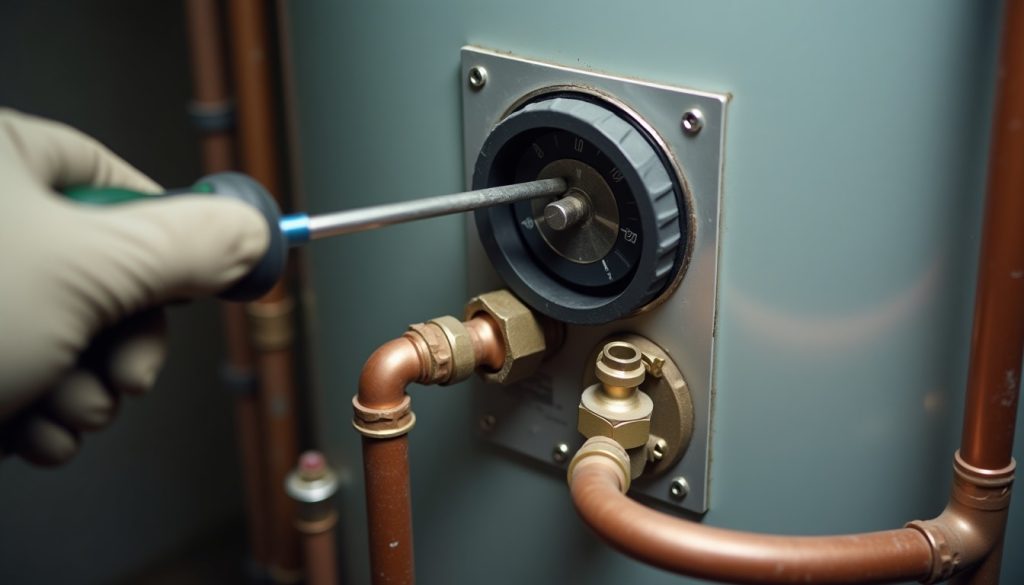
Set a water heater temperature to 120 F: the U.S. Department of Energy default balances scald safety with energy savings, while homes with vulnerable residents may go to 140 F to control Legionella.
Key Takeaways
- The U.S. Department of Energy recommends 120 F for most households as the balance of safety, comfort, and efficiency (U.S. Department of Energy).
- Water at 140 F can cause a third-degree burn on adult skin in about 5 seconds; at 120 F it takes roughly 5 minutes, per burn-safety data cited by the ASSE (ASSE International).
- The U.S. Consumer Product Safety Commission urges homeowners to lower heaters to 120 F to reduce tap-water scald injuries (CPSC).
- Legionella bacteria multiply fastest between about 77 F and 113 F and are killed at 140 F, which is why some health guidance favors hotter storage plus a tempering valve (CDC).
- Water heating is about 18% of a typical home’s energy use, so a lower setting trims the bill (U.S. Department of Energy).
- Going hotter than 120 F is safest only with a thermostatic mixing valve that tempers water back down before it reaches the tap.
What temperature should you set your water heater?
Set it to 120 F. That is the U.S. Department of Energy recommendation for most homes: hot enough for showers, dishwashing, and laundry, cool enough to give a person time to pull away before a burn, and efficient because the tank loses less standby heat. The Consumer Product Safety Commission gives the same 120 F guidance to cut scald injuries.
Manufacturers often ship a tank preset near 140 F, so many homes run hotter than they need to. The exceptions that may justify 140 F are covered further down, and any setting above 120 F should be paired with an anti-scald mixing valve at the fixtures. Installing an anti-scald valve won’t help if the tank’s high-limit switch keeps tripping, so see why the reset button trips.
Why is a higher water heater temperature a scald risk?
Because burn time drops off a cliff as water gets hotter. At 120 F, adult skin can take about 5 minutes of contact before a third-degree burn; at 140 F that falls to roughly 5 seconds; at 150 F it is under 2 seconds. Children, older adults, and anyone with thin or slow-reacting skin burn even faster.
The chart below shows how little margin you have at high settings. The bar length is the time you would have before a full-thickness burn, so a longer bar means more time to react and pull away.
This is why the CPSC and most plumbing codes treat point-of-use water above 120 F as a hazard. It also raises tank pressure and speeds up scale, so a hot setting can shorten equipment life on top of the burn risk.
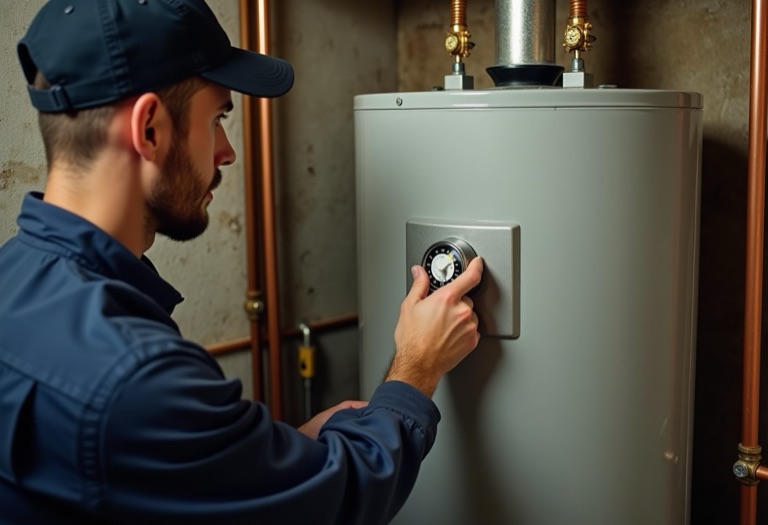
What is the Legionella risk at a lower water heater temperature?
Legionella is the trade-off that pushes some homes hotter. The bacteria that cause Legionnaires’ disease multiply fastest between about 77 F and 113 F, so lukewarm water is where they grow. At 120 F they survive but do not multiply well, and at 140 F they die within roughly 30 minutes.
For a healthy household, 120 F is the widely accepted balance. The CDC guidance for at-risk buildings leans toward storing water above 140 F and delivering it above 120 F at the tap. Water that sits stagnant in a rarely used line, a tank set below 120 F, or a home with immune-compromised residents raises the concern. Legionella risk in those stagnant lines ties directly into insulating hot water pipes, which keeps delivered temperature steadier along the run.
Who should set their water heater temperature higher or lower?
Most homes should stay at 120 F. Consider 140 F only if someone in the home has a weakened immune system, a chronic lung condition, or is elderly and at higher Legionella risk, and always with a mixing valve. Households with young children or older adults with fragile skin have the strongest reason to hold at 120 F for scald safety.
| Setting | Scald time (adult) | Legionella risk | Energy and notes |
|---|---|---|---|
| 120 F | ~5 minutes | Bacteria survive but do not multiply well | DOE and CPSC default; lowest scald risk, best efficiency |
| 130 F | ~30 seconds | Growth suppressed, not fully killed | Middle ground; more standby loss and scald risk than 120 F |
| 140 F | ~5 seconds | Killed within about 30 minutes | OSHA storage guidance for Legionella; needs a mixing valve at taps |
| 150 F | ~1.5 seconds | Killed quickly | Not recommended; severe scald hazard, higher energy use |
If you keep a hotter tank, the safe pattern is store hot, deliver cool: a thermostatic mixing valve blends the stored water down to about 120 F before it reaches faucets and tubs.
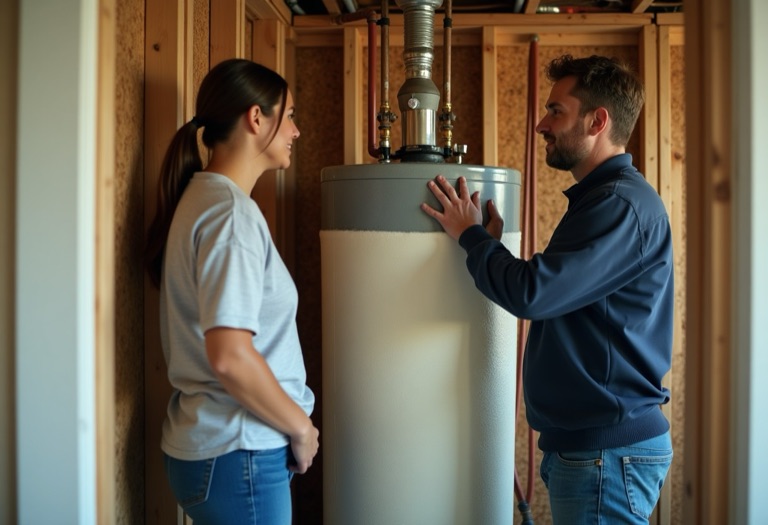
How much energy does lowering the water heater temperature save?
Enough to notice over a year. Water heating is about 18% of a typical home’s energy use, per the Department of Energy, and a lower thermostat cuts the standby heat the tank loses around the clock. Common estimates put the savings near 3% to 5% for every 10 F you lower the setting, so moving from 140 F to 120 F often trims water-heating costs by several percent.
A cooler setting also slows mineral scale on gas burners and electric elements. Less scale means better heat transfer and less of the sediment that makes a tank rumble, which is one reason it helps to flush the sediment yourself once a year alongside a sensible temperature.
How do you adjust a gas vs electric water heater?
The safest way to dial in a setting is to measure the water at the tap, not trust the dial marks. Run the nearest hot faucet for a couple of minutes, catch the stream in a cup, and read it with a cooking thermometer. Then adjust in small steps toward 120 F and recheck. The steps differ by fuel type.
- Measure first. Run the closest hot tap two to three minutes, then check the temperature with a thermometer so you know your starting point.
- Gas unit. Find the gas control valve near the base and turn its dial toward the “warm” or lower-number range. Many dials use marks instead of numbers, so change one increment, wait a few hours, and measure again.
- Electric unit. Turn off the breaker to the heater first. Remove the upper and lower access panels, fold back the insulation, and set both thermostats to the same value with a screwdriver. Set the two identically so they cycle together.
- Wait and recheck. Give the tank a few hours to stabilize, then measure at the tap again and fine-tune until it reads near 120 F.
- Add a mixing valve if you run hot. If you keep the tank at 140 F for Legionella control, have a thermostatic mixing valve installed so the delivered water is tempered to about 120 F.
If the water stays cold after you adjust, the problem is the equipment, not the dial. Work through our guide to troubleshoot no hot water, and if a thermostat or element has failed, see when it is time for water heater repair. Because a hot setting raises pressure, also watch for a leaking water heater or a dripping temperature and pressure relief valve.
How we sourced this
Temperature recommendations come from U.S. Department of Energy Energy Saver guidance (120 F default; water heating about 18% of home energy) and the U.S. Consumer Product Safety Commission (120 F to cut scald injuries). Third-degree burn times by temperature reflect burn-safety data cited in the ASSE International water heater scald white paper and CPSC materials; exact seconds vary by source, skin type, and age, so figures are given as approximate. Legionella growth and kill temperatures reflect CDC and OSHA guidance. Energy-savings percentages are widely cited estimates and vary by home, usage, and fuel; we present them as ranges rather than fixed numbers. We consulted federal and standards-body sources and excluded vendor marketing claims.
Frequently asked questions
What temperature should a water heater be set to?
The U.S. Department of Energy recommends 120 F for most homes. It is hot enough for showers, dishes, and laundry, cuts the scald risk to a wide margin, and lowers energy use. Some households raise it toward 140 F to control Legionella bacteria, but that setting needs an anti-scald mixing valve to stay safe at the tap.
Is 140 degrees too hot for a water heater?
140 F is a known scald hazard. Water at 140 F can cause a third-degree burn on adult skin in about 5 seconds, and faster on a child or older adult. Some homes set the tank to 140 F to kill Legionella, but if you do, a thermostatic mixing valve should temper the water down to about 120 F before it reaches faucets and tubs.
Can 120 degree water cause Legionnaires’ disease?
The risk is low but not zero. Legionella bacteria multiply fastest between about 77 F and 113 F, so at 120 F they survive but do not thrive. Health guidance from the CDC leans toward storing water above 140 F where vulnerable people live, then tempering it at the tap. For most healthy households, 120 F is the accepted balance.
Does lowering my water heater temperature save money?
Yes. Water heating is about 18% of a typical home’s energy use, per the U.S. Department of Energy, and a lower setting cuts standby heat loss and scale buildup. Common estimates put savings near 3% to 5% for every 10 F you lower the thermostat. Moving from 140 F to 120 F is a small change most people never notice at the shower.
What temperature kills Legionella bacteria?
Legionella starts to die off above about 120 F and is killed reliably at 140 F, where the bacteria die within roughly 30 minutes. Higher temperatures kill it faster. That is why some codes and health agencies favor storing water hot and then mixing it down to a safe 120 F at the point of use with a tempering valve.
How do I know what temperature my water heater is set to?
On a gas unit, read the dial on the gas control valve at the base; on an electric unit, the thermostats sit behind access panels. Many dials show marks rather than numbers, so the surest check is to run the nearest hot tap for a couple of minutes and measure with a cooking thermometer. Aim for about 120 F at the tap.
Should I set my water heater to 120 or 140?
Set it to 120 F if your household is healthy and you want the safest, most efficient option, which is the DOE and CPSC recommendation. Consider 140 F if someone in the home has a weakened immune system or lung condition, but pair it with a thermostatic mixing valve so faucets still deliver water near 120 F and the scald risk stays controlled.


