Normal Water Pressure for a House: What’s Ideal?
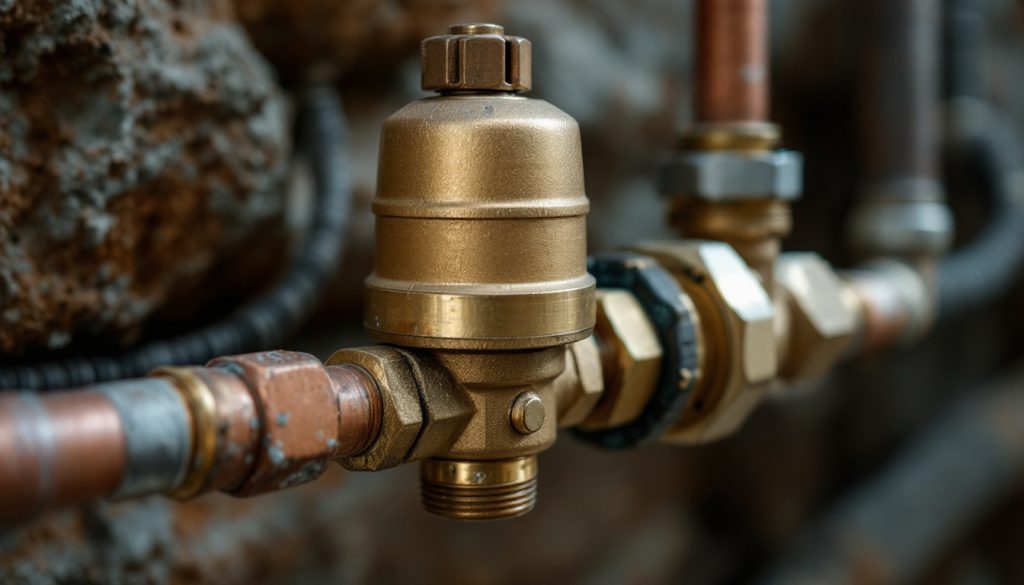
Normal home water pressure is 40 to 60 psi, with about 50 psi a good target; plumbing code caps a house at 80 psi before a pressure-reducing valve is required.
Key Takeaways
- Normal house water pressure sits at 40 to 60 psi, and most plumbers aim for around 50 psi as the sweet spot between weak flow and pipe strain.
- Section 604.8 of the International Plumbing Code requires a pressure-reducing valve wherever static pressure exceeds 80 psi, and the valve must cut it to 80 psi or less.
- Below 40 psi reads as low; see the common causes of low water pressure and how to trace them.
- Most fixtures need only 8 psi of flow pressure to work; a flushometer (tankless) toilet valve needs about 45 psi, per IPC Table 604.3.
- You can test your own pressure with a 10 to 15 dollar gauge screwed onto the hose bib nearest the meter, with all other water off.
- Pressure above 80 psi strains pipes, fixtures, and the water heater, and it wastes water at every tap (EPA WaterSense). A pressure-reducing valve brings it back down.
What is normal water pressure for a house?
Normal water pressure for a house is 40 to 60 psi (pounds per square inch), with roughly 50 psi a common target. That range gives strong showers and quick-filling appliances without stressing the plumbing. Readings below 40 psi feel weak, and readings above 80 psi cross the line the plumbing code draws for safety.
Two numbers frame the whole topic. The floor is comfort: under 40 psi, taps and appliances start to disappoint. The ceiling is code: 80 psi is the hard maximum a home is allowed before a pressure-reducing valve becomes mandatory. Everything else is fine-tuning inside that band.
| Pressure reading | What it means | What to do |
|---|---|---|
| Below 40 psi | Low pressure: weak showers, slow-filling tubs and appliances | Check the aerators, the pressure-reducing valve setting, shutoff valves, and for a hidden leak |
| 40 to 60 psi | Ideal range for most homes | No action needed; retest once a year |
| 60 to 80 psi | Usable but on the high side | Fine for most fixtures; watch appliances and consider a PRV as you near 80 |
| Above 80 psi | Exceeds the IPC maximum; strains pipes and fixtures | Install or adjust a pressure-reducing valve to bring it to 80 psi or less (IPC 604.8) |
What water pressure is too low?
Anything under 40 psi is low, and below about 30 psi nearly every home feels it: thin showers, tubs that crawl to fill, and washing machines or dishwashers that take too long. Low pressure is a symptom, not a cause, so the fix depends on what is dragging it down.
Common culprits are a clogged faucet aerator, a pressure-reducing valve that has failed closed, a main or fixture shutoff left partly turned, corroded galvanized pipe narrowing the flow, or a leak bleeding pressure before it reaches the tap. A weak municipal supply or an undersized service line can also cap the whole house. Our guide to the causes of low water pressure walks through tracing each one.
What water pressure is too high?
Water pressure is too high once static pressure passes 80 psi, which is the maximum the International Plumbing Code allows in a home. Section 604.8 requires a pressure-reducing valve wherever pressure exceeds that figure, and the valve must reduce it to 80 psi or less. The cap exists because most fixture components are built and tested to hold up at or below 80 psi.
Homes near a municipal main, at the bottom of a hill, or on a high-pressure zone can see 90 to 120 psi. That extra force strains pipe joints, faucet cartridges, toilet fill valves, and flexible supply hoses, and it is a frequent cause of water hammer and pinhole leaks. It also wastes water: every open tap flows harder than it needs to, which is why the EPA WaterSense program treats excess pressure as a source of waste.
What is the minimum pressure fixtures actually need?
Most fixtures need surprisingly little pressure to function. IPC Table 604.3 sets the minimum flow pressure at just 8 psi for a standard faucet, shower, or flush-tank toilet. A thermostatic tub or shower valve wants about 20 psi, and a flushometer (tankless) toilet valve, the kind common in commercial restrooms, needs around 45 psi to flush properly.
The gap between those minimums and the 40 to 60 psi in a normal home is your buffer. That headroom is what lets two showers and a dishwasher run at once without any single fixture starving, which is why the comfortable range sits well above the bare fixture minimums. If a well supplies your home, sizing and pre-charging the well pressure tank keeps that buffer steady, and installing a water hammer arrestor protects pipes when fixtures sharing that pressure shut off fast. Sudden shutoffs also stress the water heater’s pressure relief valve, so it helps to know how to test and replace it. Whistling pipes often point to similar restriction issues, so it’s worth learning what causes whistling pipes before blaming the pressure relief valve alone.
How do you test your home water pressure with a gauge?
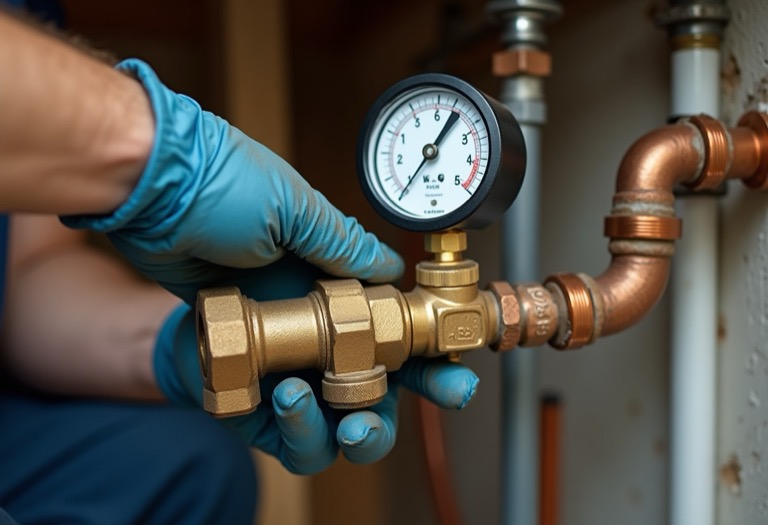
Testing takes five minutes and a 10 to 15 dollar gauge with female hose threads, sold at any hardware store. You are measuring static pressure, the pressure in the line with nothing running, so the reading has to be taken with every fixture off.
- Turn off every water fixture and appliance inside: faucets, showers, the dishwasher, the washing machine, the ice maker, and any irrigation.
- Find the outdoor hose bib closest to the water meter (on a well, use the bib nearest the pressure tank).
- Remove any hose and screw the gauge onto the bib hand-tight; add a wrap of thread tape if it weeps.
- Open that valve all the way and let the needle settle.
- Read the number. A healthy result lands in the 40 to 60 psi band; below 40 or above 80 flags a problem to chase down.
If the reading swings a lot or you suspect pressure is masking another issue, a leak can drain pressure quietly between the meter and the tap. Our plumbing leak detection guide covers how to confirm one before you start swapping parts.
What affects your home’s water pressure?
Water pressure is set by a chain of factors between the utility main and your fixture, and any weak link caps the rest. The main drivers are the municipal supply pressure, elevation, the size and condition of your service and interior pipes, the pressure-reducing valve, and how many fixtures draw at once.
Elevation matters more than people expect: pressure drops about 0.43 psi for every foot a fixture sits above the source, so upstairs taps run softer than the basement. Old galvanized pipe narrows with scale and chokes flow. And a home relying on a well swaps the municipal main for a pump and pressure tank, usually cycling on a 40/60 psi switch, which sets the range directly rather than the street.
How do you fix high or low water pressure?
The fix follows the diagnosis. High pressure has one main answer: a pressure-reducing valve on the main line, set to hold the house at 50 to 60 psi. If a PRV is already installed but pressure reads high or low, it has likely failed and needs adjusting or replacing. Low pressure has more possible causes, so you work from cheapest to most involved.
- Confirm the number with a gauge test, so you are fixing a real reading rather than a guess.
- For high pressure, install a pressure-reducing valve or adjust the existing one down toward 50 to 60 psi.
- For low pressure, clean or replace clogged aerators and showerheads first, then verify the main and meter shutoffs are fully open.
- Check the PRV: a stuck valve can force pressure either too high or too low.
- Rule out a leak, which steals pressure before it reaches fixtures, and inspect for corroded galvanized pipe that may need repiping.
Before any repair that opens a line, know where and how to shut off the water to your house. If the whole house reads high or low after these steps, or the PRV needs replacing, that is the point to bring in a licensed plumber.
How we sourced this
The 80 psi maximum and the pressure-reducing-valve requirement come from Section 604.8 of the 2021 International Plumbing Code. Fixture minimum flow-pressure figures (8 psi for standard faucets and showers, 20 psi for thermostatic valves, 45 psi for flushometer toilets) come from IPC Table 604.3. The 40 to 60 psi normal band and the 50 psi target are the consensus range used across the plumbing trade rather than a single code figure; the code sets only the 80 psi cap. Water-waste context comes from the U.S. EPA WaterSense program. Well-system 40/60 switch settings and the 0.43 psi-per-foot elevation figure are standard plumbing references. Contractor and retailer blogs were read for context but not cited as figures.
Frequently asked questions
What is normal water pressure for a house?
Normal home water pressure runs 40 to 60 psi, with roughly 50 psi a common target. Below 40 psi you get weak flow at showers and slow-filling appliances. Above 60 psi is still usable, but the International Plumbing Code caps a home at 80 psi before a pressure-reducing valve is required to protect pipes and fixtures.
Is 80 psi too high for a house?
80 psi is the ceiling, not the target. Section 604.8 of the International Plumbing Code requires a pressure-reducing valve wherever static pressure exceeds 80 psi, and the valve must bring it to 80 psi or less. Most plumbers aim for 50 to 60 psi, because sitting near 80 psi shortens the life of supply lines, fill valves, and the water heater.
What water pressure is too low for a house?
Anything under 40 psi reads as low, and below about 30 psi most homes notice it: thin showers, long waits to fill a tub, and appliances that struggle. Low pressure can come from a clogged aerator, a failing pressure-reducing valve, a partly closed shutoff, corroded galvanized pipe, a hidden leak, or a weak municipal supply.
How do I test my home’s water pressure?
Buy a water pressure gauge with female hose threads for about 10 to 15 dollars. Turn off every fixture and appliance inside, then screw the gauge onto the hose bib closest to the water meter (or nearest the pressure tank on a well). Open that valve fully and read the needle once it settles. That is your static pressure.
Why is my water pressure suddenly low?
A sudden drop usually points to one thing rather than slow buildup: a stuck pressure-reducing valve, a main shutoff that was left partly closed, a burst or leaking supply line, or utility work on the street. Test the pressure at the hose bib first, then check whether the drop affects the whole house or just one fixture to narrow it down.
Can high water pressure damage plumbing?
Yes. Pressure above 80 psi strains pipe joints, faucet cartridges, toilet fill valves, flexible supply lines, and the water heater, and it is a common cause of water hammer and pinhole leaks. It also wastes water at every tap. The International Plumbing Code caps a home at 80 psi for this reason, and a pressure-reducing valve brings it down.
What pressure should a well pump be set to?
Most residential well systems ship with a pressure switch set to a 40/60 range, meaning the pump kicks on at 40 psi and shuts off at 60 psi. Some use 30/50. That keeps household pressure inside the normal band. The switch and the pressure tank’s air charge can be adjusted, but that work is usually best left to a well or pump professional.
Do I need a pressure-reducing valve?
You need one if your tested static pressure exceeds 80 psi, which the plumbing code treats as the trigger. Homes near a municipal main or at the bottom of a hill often see 90 to 120 psi and require one. If your reading sits comfortably in the 40 to 60 psi range, a pressure-reducing valve is optional and mainly useful for fine-tuning.


