Copper Sulfate Root Killer: Does It Work in Sewer Lines?
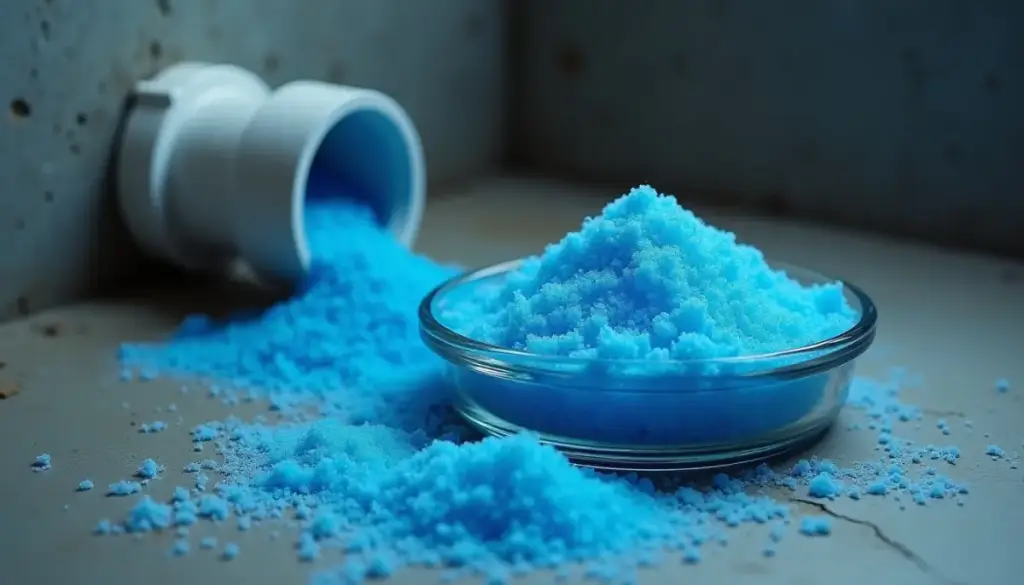
Copper sulfate root killer works only on roots it touches. The Roebic K-77 label says it kills existing roots in pipes, but it will not open a stopped sewer line or seal the joint the roots came through.
Key Takeaways
- Roebic K-77 is 99% copper sulfate pentahydrate (25.1% metallic copper), sold under EPA Reg. No. 7792-1 with a label EPA accepted on August 14, 2020.
- The K-77 dose is one-third of the 2 lb bottle (0.67 lb) per toilet flush, repeated until the bottle is empty, applied at night before bed.
- The same label allows retreatment at 6 to 12 month intervals and caps use at two applications per calendar year.
- K-77’s label forbids tub and sink drains, lists nine San Francisco Bay Area counties where it is not for sale or use, and says Connecticut law bars it from sewage systems.
- Palo Alto’s municipal code bars any substance over 5% copper by weight from its sanitary sewer, which rules out a product that is 25.1% copper.
- Fixr puts professional sewer snaking at $150 to $375 (average $250), the step that actually opens a root-choked line.
Does copper sulfate root killer actually work in sewer lines?
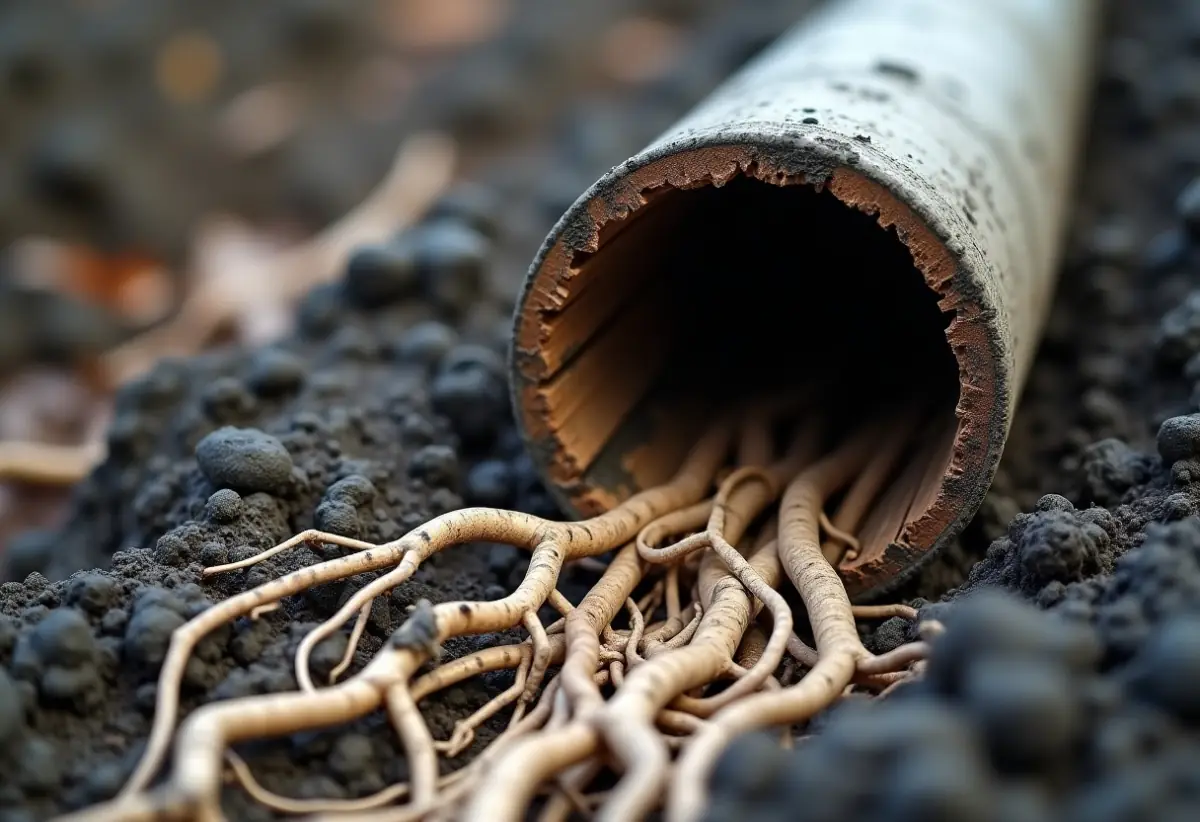
Yes, on contact. Roebic’s EPA-accepted K-77 label says the crystals kill existing roots in pipes, and the product is registered for that use under EPA Reg. No. 7792-1. What it cannot do is pull the dead root mass out, open a line that has stopped flowing, or close the cracked hub or loose gasket the roots grew through. Roots that never touch dissolved copper keep growing.
The bottle is close to pure chemical. The label lists copper sulfate pentahydrate (CAS No. 7758-99-8) at 99%, other ingredients at 1%, and a metallic copper equivalent of 25.1%. The standard container holds 32 oz (2 lb, 908 grams).
It carries the signal word DANGER: corrosive, causes irreversible eye damage, may be fatal if swallowed. Wear safety glasses, and rinse eyes for 15 to 20 minutes if crystals splash.
Why won’t copper sulfate clear a clogged sewer line?
Because it kills roots without removing them. A root mat that already stops flow stays in the pipe as dead fiber that keeps snagging toilet paper and wipes until a cutter or a water jet takes it out. The K-77 directions also depend on flush water carrying the crystals into the sewer pipe, and a backed-up line gives that water nowhere to go.
If the lowest drain in the house or the cleanout is holding water, cut first. Fixr’s sewer cleaning cost guide puts professional snaking at $150 to $375, with a $250 national average for a main line through an accessible cleanout, and cleaning with a video inspection at $300 to $600. Fixr prices hydro jetting at $250 to $1,000.
So open the line mechanically, confirm on camera what is left at each joint, then treat to kill the stubs the cutter left behind.
Copper sulfate is not a drain opener in the usual sense either. The caustic and enzyme products in our drain cleaner guide are sold to break down grease, hair and soap, not to kill live roots in a sewer lateral.
How much copper sulfate do you put in the toilet, and how often?
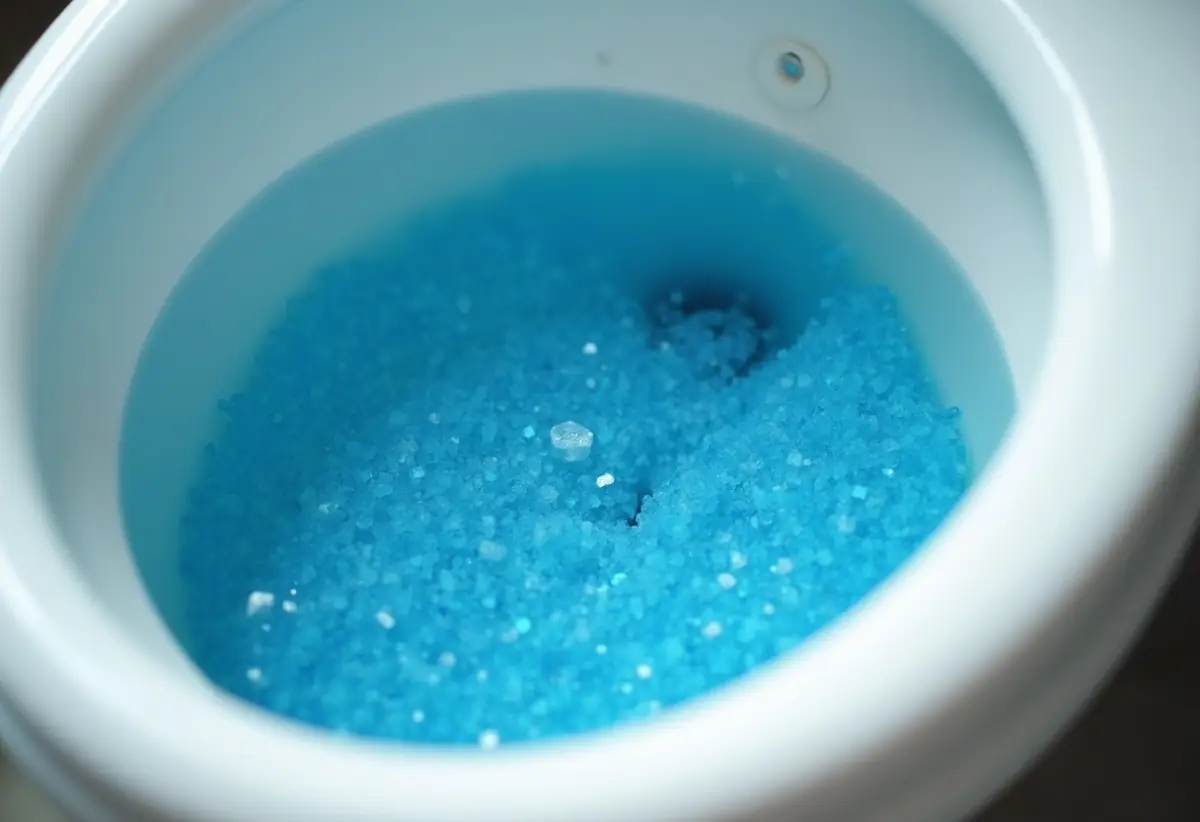
Follow the label on the product you bought. For Roebic K-77, the label says to pour one-third of the 2 lb bottle (0.67 lb of product, or 0.17 lb of metallic copper) into the toilet bowl and flush, then repeat until all of it is in the sewer pipe. Retreat at 6 to 12 month intervals only if roots return, no more than twice per calendar year.
The K-77 directions, in label order:
- Wait until night. The label’s first instruction is to use the product at night before retiring, when few fixtures run and the crystals sit in the line.
- Put on safety glasses and keep children and pets out of the bathroom. The label says not to apply it in a way that contacts adults, children or pets.
- Pour one-third of the 2 lb bottle (0.67 lb) into the toilet bowl and flush.
- Repeat step 3 twice more until the whole 2 lb bottle is gone. On a low-flow toilet, the label says extra flushes may be needed to move every crystal out of the bowl.
- Do not run water-heavy appliances such as the washer or dishwasher until morning.
- Write down the date. The label’s retreatment window is 6 to 12 months, with a hard cap of two applications per calendar year.
Step 5 is our practical addition, not label text. It keeps the house quiet overnight, which is the point of the label’s night-time instruction.
What is the yearly copper limit?
The K-77 label caps use at 1 lb of metallic copper (4 lb of product) per linear foot of pipe per year. At 25.1% copper, one 2 lb bottle carries about 0.5 lb of metallic copper, so two treatments a year send roughly 1 lb of copper toward your treatment plant or septic system. For a house lateral, the twice-a-year rule is the limit that binds.
Why the toilet and never the sink or tub?
The label says plainly: do not apply Root Killer through tub or sink drains. It gives no reason, and the same label calls the product safe for all plumbing and plastic pipes, so pipe corrosion is not the stated cause. Treat the rule as absolute anyway, because using a product in a way its label forbids is a violation of federal law, which the label also states.
Where is copper sulfate root killer banned or restricted?
Restrictions are local, and some print right on the bottle. The EPA-accepted K-77 label says it is not for sale or use in the California counties of Alameda, Contra Costa, Marin, Napa, San Francisco, San Mateo, Santa Clara, Solano and Sonoma. It says Connecticut law does not allow it in sewage systems, and it bars septic use in Florida and Massachusetts.
The label notes those restrictions may not print on bottles sold outside Connecticut, California and Florida, so check where you live, not what the box says.
Cities go further. Palo Alto’s municipal code requires a root control permit before anyone adds root or pest control chemicals to the sanitary sewer, with the application filed at least 60 days before discharge. The same section bars any substance containing more than 5 percent copper by weight. K-77, at 25.1% copper, is five times that threshold.
The reason is in the label’s own fish advisory: copper is toxic to fish and aquatic organisms, and because it is an element it will not break down and accumulates in sediment with repeated applications. Treatment plants must hit copper limits in their discharge permits, and California’s regional water boards write those limits plant by plant.
The label also bars use in any public storm sewer under an MS4 permit and says leftover product must never go down any drain; call your solid waste agency instead.
Is copper sulfate safe for a septic system?
The K-77 label says yes in most states. It claims the product works without harming the natural bacteria in septic tanks and cesspools, and it allows adding the crystals directly to the septic drain field through the distribution box with 2 to 3 gallons of water to carry them to root growth in the pipes. The same label bars septic use in Florida and Massachusetts.
Two limits apply even where it is legal. Copper kills roots inside the perforated laterals, but it does nothing for soil that has stopped absorbing effluent, which is the usual reason a field fails. And the label’s fish advisory says copper does not break down, so every dose adds copper that stays in the system.
How does copper sulfate compare with other root killers for sewer lines?
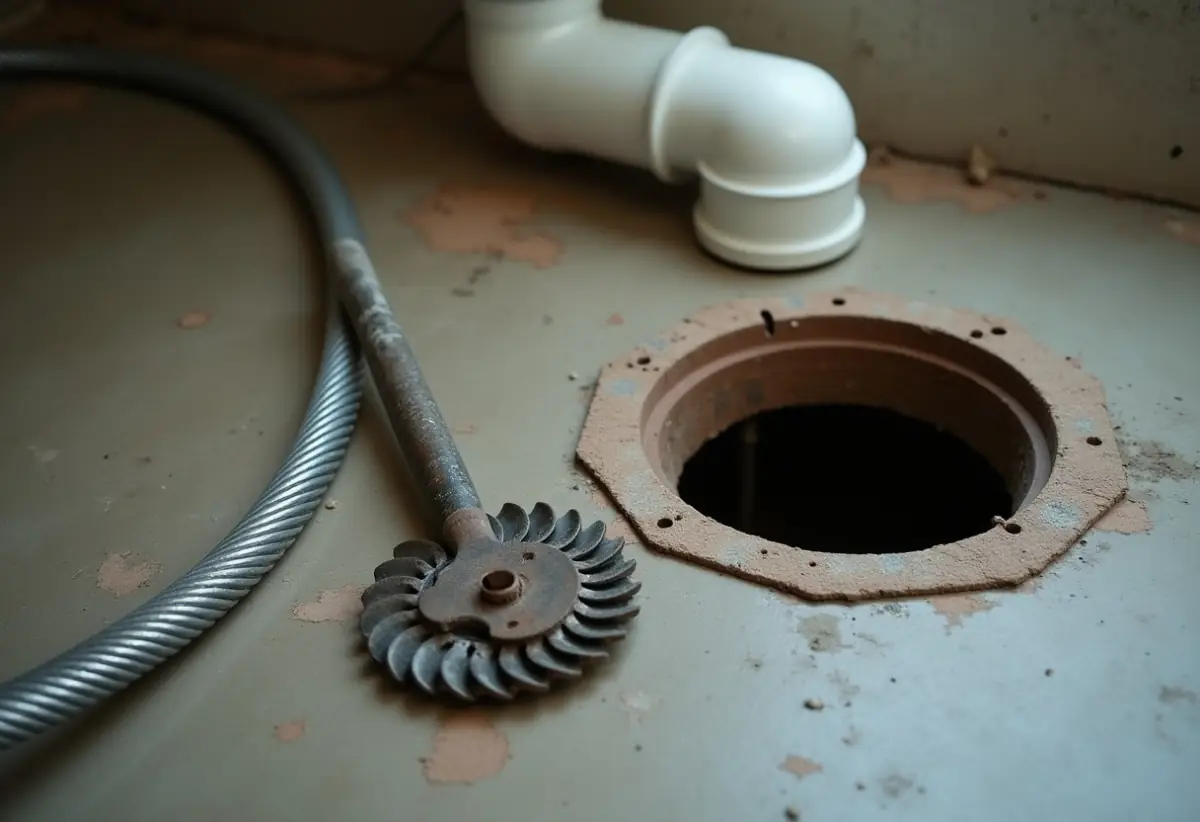
Copper sulfate crystals, foaming herbicides and mechanical cutting solve different parts of the problem. Crystals and foams kill roots; only a cutter or jetter opens the pipe; only lining or replacement keeps roots out of the joint. Fixr puts snaking at $150 to $375 and hydro jetting at $250 to $1,000, while Mr. Rooter prices cured-in-place lining at $80 to $250 per foot.
Foaming root killers such as RootX use dichlobenil, an herbicide that kills roots without the copper load, and some professional root-control foams use metam-sodium. Foam is designed to fill the pipe cross-section, so it can reach roots at the crown that crystals riding the flow along the bottom miss. Read each product’s own retreat interval, because those are set label by label.
| Method | How it works | Cost | Lasts | Drawbacks |
|---|---|---|---|---|
| Copper sulfate crystals (Roebic K-77) | Crystals flushed down a toilet dissolve and kill roots they touch | One 2 lb bottle per treatment, two a year maximum | Label allows retreatment every 6 to 12 months | Leaves dead roots in place; banned in 9 Bay Area counties and Connecticut sewers; toxic to fish |
| Foaming root killer (dichlobenil, such as RootX) | Foam fills the pipe and kills roots on contact, top and bottom | One kit per label dose | Retreat interval set by each product label | Does not open a stopped line; still a pesticide, so label rules apply |
| Cable snaking with a root cutter | Rotating blade cuts a path through the root mass | $150 to $375, $250 average (Fixr) | Until stubs regrow at the same joint | Cuts a channel, leaves roots at the pipe wall; joint still open |
| Hydro jetting | High-pressure water scours roots and debris from the full pipe wall | $250 to $1,000 (Fixr) | Until roots regrow through the same joint | Can worsen a cracked or broken pipe; needs a camera check first |
| Cured-in-place pipe lining | Resin liner cured inside the old pipe closes the joints roots used | $80 to $250 per foot (Mr. Rooter) | Ends root entry through lined joints | Highest cost; line must be cleared and scoped first |
Bars show the top of each published range: Fixr for snaking, video cleaning and jetting; Mr. Rooter for a small lining job ($3,000 to $4,000).
Should you scope the sewer line before using copper sulfate?
Yes. A sewer camera inspection shows whether you have a fine fringe of roots at one joint, a mat filling the pipe, or roots growing through a crushed or offset section. Only the first is a chemical job. Fixr prices cleaning plus a video inspection at $300 to $600.
Use what the camera shows to pick the fix:
- Water backing up at the lowest drain or cleanout: call a drain-cleaning plumber to cut the line before any chemical.
- Fine roots at an intact joint after cutting: copper sulfate (where legal) or a foaming root killer, retreated at the label interval.
- The same joint choked again within a year of cutting and treating: get a lining quote, priced by the footage the camera recorded.
- A broken, offset or sagging section: a spot repair or replacement, since no chemical restores a pipe that has lost its shape.
- A permit question, or roots in the shared main: call the sewer utility, which in cities like Palo Alto must approve root control chemicals 60 days in advance.
For the full menu of signs, causes and repair options, see our guide to tree roots in a sewer line, which covers what to do when roots are a symptom of a bigger pipe failure.
How we sourced this
We consulted 14 sources and cited 4. Dosing, retreatment, the copper cap, area restrictions and hazard language come from the Roebic K-77 label EPA accepted on August 14, 2020 (Reg. No. 7792-1). The Palo Alto rule comes from the city’s municipal code. Snaking, video cleaning and jetting costs are Fixr’s; lining costs are Mr. Rooter’s per-foot range. We excluded retailer listings, forum posts, an extension report we could not read in full and cost guides that blocked access. We found no verified retail price for copper sulfate, so the chart covers professional fixes only. Research completed October 2026.
Frequently asked questions
Can I put copper sulfate in my toilet?
Yes, if the product label allows it and your sewer district does not ban it. The Roebic K-77 label says to pour one-third of the 2 lb bottle into the toilet bowl and flush, then repeat until the bottle is empty, at night before bed. The same label forbids pouring it through tub or sink drains.
How long does copper sulfate take to kill roots in a sewer line?
The Roebic K-77 label gives no kill time. It says to apply at night so the crystals sit in the line while few fixtures run. Dead roots stay in the pipe until a cutter or water removes them, so judge the result by camera or by flow over the following weeks, not by the next morning.
Will copper sulfate damage PVC or cast iron sewer pipes?
The EPA-accepted Roebic K-77 label calls the product safe for all plumbing and plastic pipes. Its only route restriction is no tub or sink drains, and it gives no corrosion reason for that rule. Pipe damage from roots is the bigger risk, since roots that keep growing widen cracked joints in clay and cast iron.
How often should I use copper sulfate root killer?
Only when roots return. The Roebic K-77 label says retreatments at 6 to 12 month intervals may be needed and caps use at two applications per calendar year. It also caps total copper at 4 lb of product per linear foot per year, a limit a homeowner hits only by ignoring the twice-a-year rule.
Is copper sulfate root killer illegal in California?
Not statewide, but the K-77 label says it is not for sale or use in Alameda, Contra Costa, Marin, Napa, San Francisco, San Mateo, Santa Clara, Solano and Sonoma counties. Palo Alto separately bars any substance over 5 percent copper by weight from its sanitary sewer. Call your sewer district before buying.
Is copper sulfate safe for a septic system?
The Roebic K-77 label claims it does not harm septic tank bacteria and allows dosing into the drainfield through the distribution box with 2 to 3 gallons of water. That same label bars septic use in Florida and Massachusetts. Copper does not break down, so repeated doses keep adding copper to the soil.
Is a root killer better than snaking a sewer line?
They do different jobs. Snaking with a cutter head opens a blocked line, and Fixr puts that at 150 to 375 dollars, with a 250 dollar average. Copper sulfate only kills roots it touches and leaves the dead mass in place. Cut first if water is backing up, then treat to slow regrowth.