Hose Bib Vacuum Breaker: Why Code Requires It and How to Install One
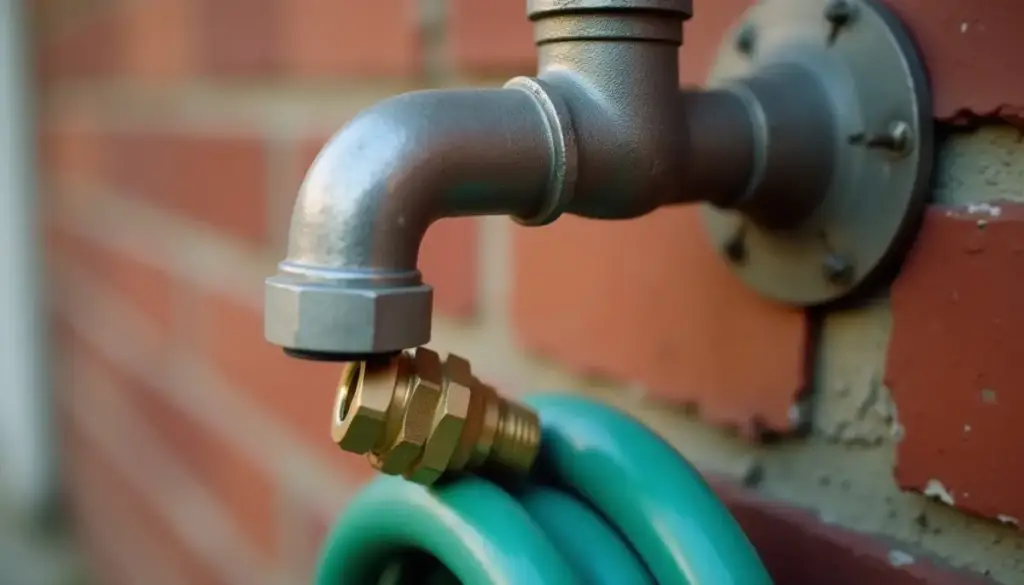
A hose bib vacuum breaker is the screw-on anti-siphon valve that code requires on outdoor faucets; it threads on by hand, locks with a break-off set screw, and costs $23 to $124 at Woodford’s 2026 list prices.
Key Takeaways
- IRC Section P2902.4.3 requires a vacuum breaker on every sillcock, hose bibb and wall hydrant, exempting only drain valves and washing machine valves.
- The EPA Cross-Connection Control Manual records a 1980 Pennsylvania case where one garden hose in a pesticide tank contaminated 75 apartments for 27 days.
- ASSE 1011 covers screw-on breakers, ASSE 1052 testable double-check units, and ASSE 1019 breakers built into faucets like the Woodford Model 17.
- Woodford’s field test treats vent leakage of up to about 6 seconds after shutoff as normal; longer leakage means the outlet check is faulty.
- Woodford’s February 2026 list prices run $23.20 (34H) to $123.55 (37HD2), with replacement advised every 3 to 5 years.
- The Woodford 34H suits non-freezing areas only; the 34HD drains after about 3 counterclockwise turns, and the 50H drains itself when the hose comes off.
What does a hose bib vacuum breaker actually do?
A hose bib vacuum breaker lets water flow out to the hose but opens an air vent the instant supply pressure drops, so the hose cannot act like a straw back into your pipes. The EPA Cross-Connection Control Manual describes a spring-loaded check valve that seals against an atmospheric outlet while the water is on, then vents to atmosphere when it shuts off.
The EPA manual notes siphon action can raise water almost 34 feet. A hose lying in a fertilizer bucket, a pool, or a sprayer tank is a submerged inlet waiting for a pressure drop.
Pressure drops are routine. The LSU AgCenter lists main breaks, fire trucks pumping from hydrants and pump failures as common triggers.
What happened when hoses had no protection?
The EPA manual’s case histories each started with an ordinary garden hose and an unplanned pressure drop.
- Pennsylvania, December 1980: a hose sat in a pesticide tank while a crew cut a 6-inch main. Chlordane reached 75 apartments, which went 27 days without normal water.
- Eastern city, October 1979: about 3 gallons of chlordane siphoned through a hose left in a barrel at an outside hose bibb.
- South Carolina, August 1978: hoses left in chlordane buckets during a shutoff sickened about a dozen children and three adults at a church.
A hose bib vacuum breaker handles backsiphonage only; the EPA manual says not to use it for backpressure, which is why pumps and boiler feeds need the larger backflow assemblies used for irrigation and pools.
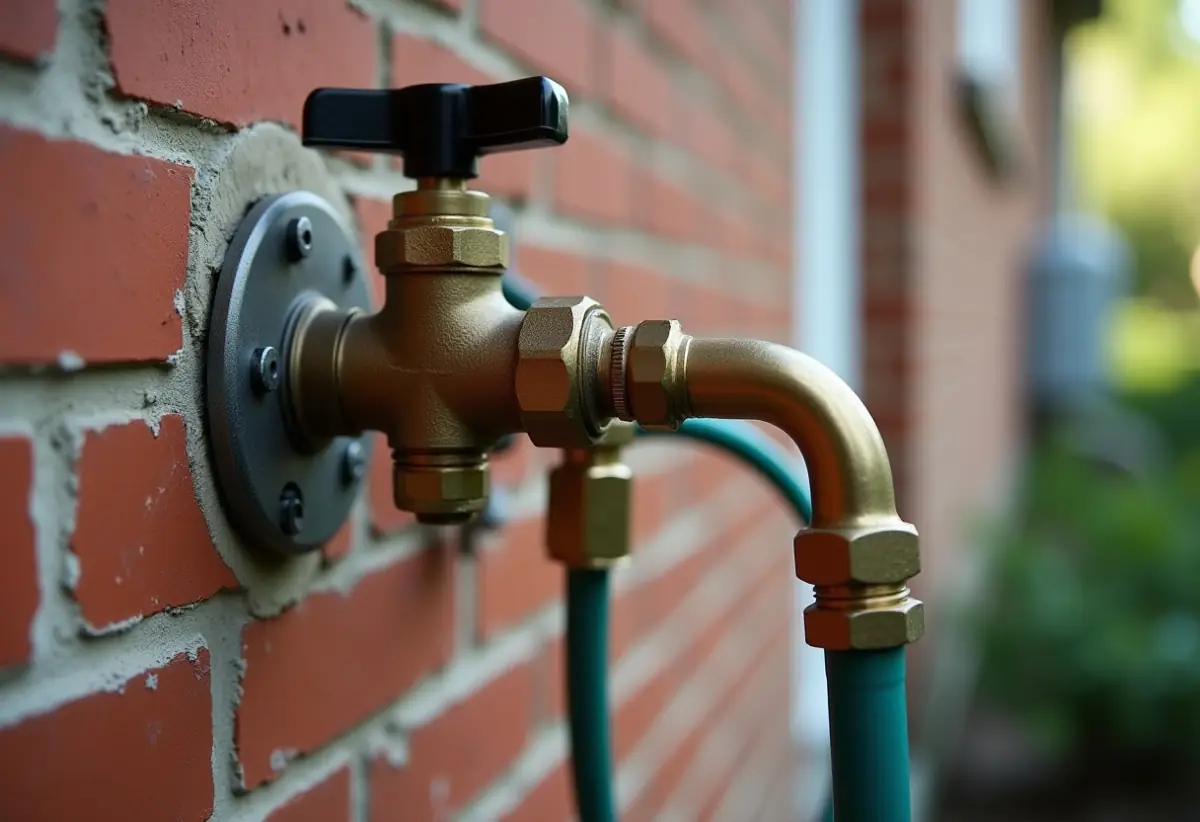
Why does code require a vacuum breaker on every hose bib?
Both model codes treat any hose thread as a cross-connection, because nobody controls where the other end of the hose lands. The IRC and the IPC require a vacuum breaker on every sillcock, hose bibb and wall hydrant, whether it waters roses or fills a pesticide sprayer, exempting only certain drain and washing machine valves.
The residential text, as adopted in the Texas 2018 residential code and shown on UpCodes, reads that sillcocks, hose bibbs, wall hydrants and other openings with a hose connection “shall be protected by an atmospheric-type or pressure-type vacuum breaker, a pressure vacuum-breaker assembly or a permanently attached hose connection vacuum breaker.”
The IPC carries the rule as Section 608.15.4.2 in its 2018 edition. Maryland’s 2024 plumbing code, viewable on UpCodes, numbers it 608.16.4.2 and lists three options: an atmospheric-type vacuum breaker, a pressure-type vacuum breaker, or a permanently attached hose connection vacuum breaker. Numbers shift between editions and local amendments vary.
Both versions share two exceptions, quoted from the code text:
- Water heater and boiler drain valves that have hose threads and are “intended only for tank or vessel draining.”
- Washing machine supply valves “where backflow prevention is otherwise provided or is integral with the machine.”
The word “permanently” is why screw-on units use a snap-off set screw. If you are installing a new outdoor faucet, buying one with an integral breaker satisfies the rule without an add-on.
Which hose bib vacuum breaker standard do you need: ASSE 1011, 1052 or 1019?
Buy ASSE 1011 for a plain screw-on breaker on an ordinary hose bib, ASSE 1052 if your water utility or inspector wants a field-testable double-check unit, and look for ASSE 1019 when the protection is built into a frost-free wall faucet. All three are rated for intermittent use, not continuous pressure, per Watts and Woodford literature.
| Device | Standard | Where it is used | Drains for winter? |
|---|---|---|---|
| Woodford 34H | ASSE 1011, one check | Laundry tubs, utility sinks, outdoor bibbs in warm climates | No. Woodford rates it for non-freezing areas only |
| Woodford 34HD | ASSE 1011, one check | Outdoor bibbs in freezing climates | Yes, manually, about 3 counterclockwise turns |
| Watts 8A | ASSE 1011 | Sill cocks with four or more full threads; non-removable | Yes, equipped to let the sill cock drain |
| Watts 8B | ASSE 1011 | Sill cocks; tamper-resistant break-away set screw | Yes, equipped to let the sill cock drain |
| Watts NF8 | ASSE 1011 | Wall and yard hydrants | Yes, manual draining for freezing conditions |
| Woodford 50H | ASSE 1052, two checks, field testable | Outdoor bibbs, wash racks, pool areas | Yes, automatically when the hose is removed |
| Woodford 37HD1 / 37HD2 | ASSE 1052, two checks, field testable | Outdoor bibbs; 37HD2 adds a theft-resistant stop collar | Yes, manually, about 3 counterclockwise turns |
| Woodford Model 17 faucet | ASSE 1019 Type C, integral | Frost-free wall faucet, breaker built in | Yes, when the hose is removed and the faucet pitches downward |
The Woodford sheet and Watts Series 8 literature agree on a 3/4 inch hose thread inlet and outlet and a 125 psi limit. Temperature differs: Watts lists 180°F, Woodford 120°F, which matters on a hot-water laundry connection.
ASSE 1052 units cost more because they are testable: Woodford’s test raises the hose 10 feet and watches the vents for five minutes.
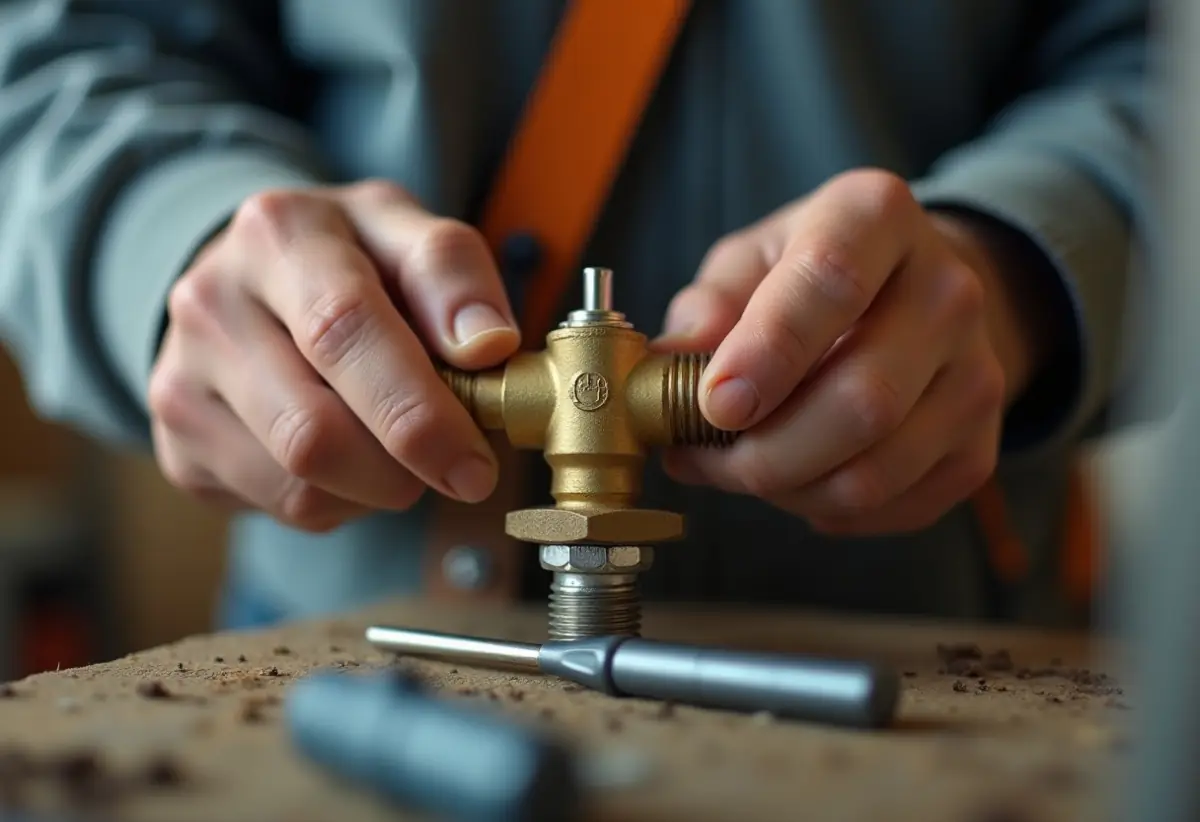
How do you install a hose bib vacuum breaker?
Installing a hose bib vacuum breaker needs no plumbing changes and well under an hour. Clean the faucet threads, spin the breaker on clockwise until it seats hand tight, then tighten the set screw until its head snaps off. Family Handyman rates the full replacement job as beginner level, under an hour including removal of an old unit.
- Clear the spout. Remove the hose, timer, splitter or quick-connect; a breaker threaded over another fitting will not seal.
- Check the threads. Watts says its 8A belongs only on sill cocks with at least four full threads. Brush off grit and old tape so the device seats fully.
- Thread it on clockwise. Turn it hand tight to a seated position, as Woodford’s operating instructions specify. Vents should stay clear of siding and trim.
- Snap the set screw. On break-off designs such as the Watts 8B and Woodford 50H, tighten the screw until the head breaks away. That locks the device on and makes it tamper resistant.
- Check the height. The LSU AgCenter advises keeping the breaker at least 6 inches above the ground so it never sits in a puddle.
- Test it. Attach a hose with a closed nozzle, open the faucet, then close it. The LSU AgCenter test expects a small vent spray within a few seconds.
Why is my hose bib vacuum breaker leaking or spitting?
A hose bib vacuum breaker that spits a burst of water when you shut the faucet off is usually working, because it is venting trapped hose pressure. Woodford counts vent leakage of up to about 6 seconds as proper operation. Leakage past 6 seconds, or a spray while the water runs, points to a failed diaphragm or check.
- Short burst at shutoff, then dry: normal, and exactly what the LSU AgCenter test expects.
- Vents keep leaking past about 6 seconds with the hose pressurized: Woodford says the outlet check valve is faulty. Replace the device.
- Spraying from the cap while water flows: Family Handyman blames a failed rubber gasket; gaskets are nearly impossible to find, so swap the whole breaker.
- Weeping with a closed nozzle for hours: Watts says ASSE 1011 devices are not for continuous pressure. Shut the faucet, not the nozzle.
- Stuck open or sluggish: the LSU AgCenter says hard water can bind the mechanism.
If the leak comes from the handle or behind the wall, work through our outdoor faucet repair guide instead. On a frost-free faucet with a built-in breaker, Woodford sells a float kit, part RK-17VB for the Model 17, at a $2.85 list price.
How do you winterize a faucet with a vacuum breaker?
Water trapped behind a vacuum breaker can freeze and split the faucet, so every breaker in a cold climate needs a way to drain. Woodford’s 34HD and 37HD sheet says to open the drain vents after use “or faucet may freeze and burst.” The method depends on your model, and some models cannot drain at all.
- Manual drain (Woodford 34HD, 37HD1, 37HD2): shut the water, turn the device counterclockwise about 3 turns until it drains through the slots, then turn it clockwise hand tight again.
- Automatic drain (Woodford 50H): remove the hose before freezing weather; the unit drains on its own.
- Watts 8A, 8B, 8P: standard drain feature. The NF8 suits wall and yard hydrants; the 8FR adds freeze relief.
- No drain feature (Woodford 34H, plain Watts 8): fine indoors or in warm climates only.
A frost-free faucet also needs the hose off. The Woodford Model 17 sheet requires a downward pitch and hose removal in freezing weather. For stem details, see how a frost-free faucet drains itself.
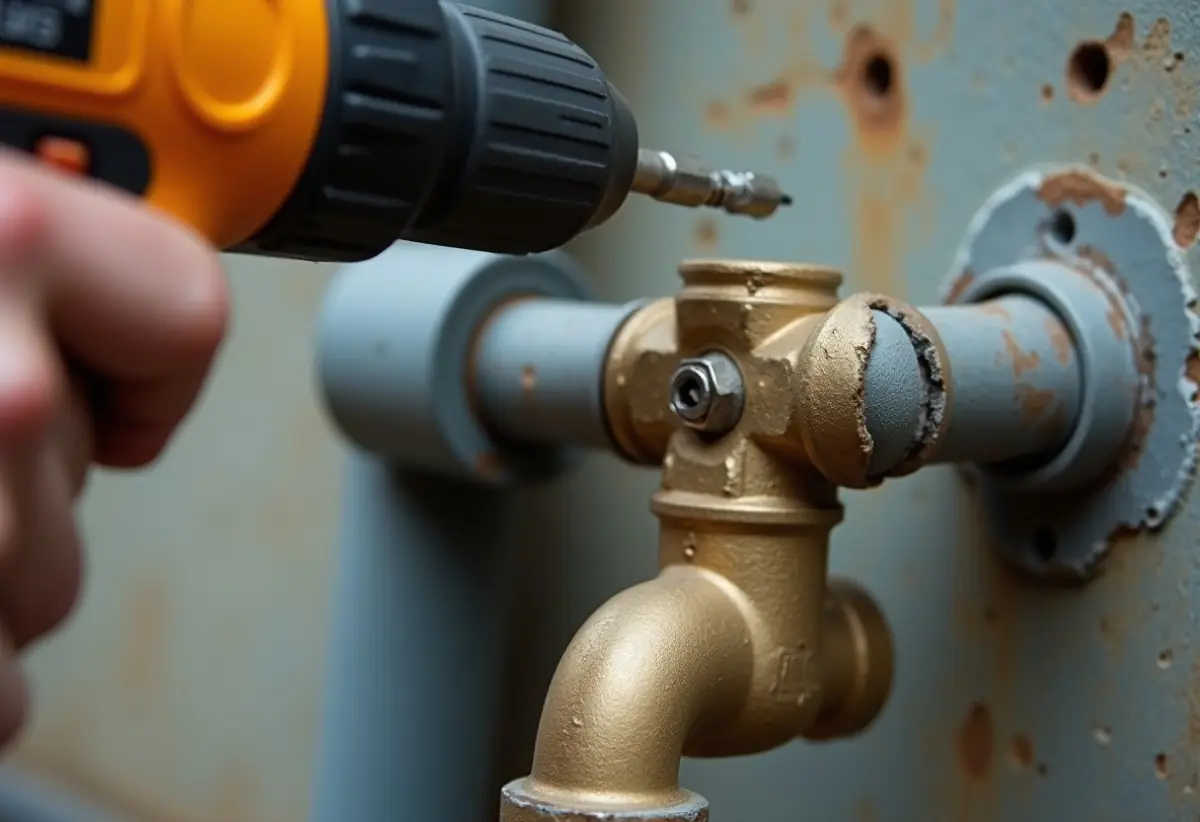
How do you remove a hose bib vacuum breaker with a breakaway set screw?
To remove a hose bib vacuum breaker locked by a broken-off set screw, drill the screw out, then unscrew the body. Family Handyman drills a small starter hole beside the set screw, switches to a larger bit angled toward it, and works slowly because brass is soft. The real danger is drilling into the faucet threads you need for the replacement.
- Drill a starter hole right beside the screw stub with a small bit.
- Step up to a larger bit angled toward the screw until the stub is cut away.
- Brace and unscrew. Hold the faucet with a pipe wrench so the supply pipe does not twist, then turn the breaker counterclockwise with pliers.
- Inspect the threads and install the new breaker.
Watts calls its 8A non-removable once installed, and the LSU AgCenter warns a stuck breaker may mean replacing the hose bibb too.
How much does a hose bib vacuum breaker cost?
A basic ASSE 1011 hose bib vacuum breaker lists at $23.20 in brass from Woodford, and a testable ASSE 1052 unit runs $36.35 to $123.55 at the same February 2026 list prices. Chrome adds roughly $7 to $13, and store prices may differ from manufacturer list, so treat these figures as a comparison ceiling.
Source: Woodford pricing file based on its February 2, 2026 price guide.
Older retail figures run lower: the LSU AgCenter guide put a typical unit at $5 to $10, and Family Handyman budgets $20 to $50 for a DIY replacement. A Woodford 17C-8-MH frost-free faucet with the breaker built in lists at $71.65, the better buy if the old faucet also leaks.
Call a plumber when the spout threads are damaged or a non-removable unit is seized, because the fix becomes a new sillcock soldered or crimped inside the wall.
How we sourced this
We read the code text for IRC P2902.4.3 (Texas 2018 residential adoption) and the IPC-based Maryland 2024 plumbing code Section 608.16.4.2 on UpCodes, and quote only that wording. Device specs, drain steps, test criteria and list prices come from Woodford spec sheets, tech notes, catalog sheets and its February 2026 pricing file, plus the Watts ES-8 specification. Contamination cases come from the EPA Cross-Connection Control Manual (EPA 816-R-03-002). Install, test and removal steps draw on the LSU AgCenter and Family Handyman. Forum threads and store prices were excluded.
Frequently asked questions
Do I need a vacuum breaker on my hose bib?
In most of the US, yes. IRC Section P2902.4.3 says sillcocks, hose bibbs, wall hydrants and other hose connections shall be protected by a vacuum breaker, and the IPC carries matching language. The only exceptions in that text are water heater and boiler drain valves and washing machine supply valves. Local amendments can differ, so check with your building department before a permitted job.
Why is my hose bib vacuum breaker leaking?
A short spit from the vents when you shut the faucet off is normal. Woodford’s field test treats vent leakage lasting up to about 6 seconds as proper operation. A leak that keeps going past that, or a spray while the water runs, means the rubber diaphragm or outlet check has failed. Replacement seals are hard to find, so most people replace the whole device.
How do you remove a hose bib vacuum breaker?
Most add-on units lock with a set screw whose head snaps off at install. Family Handyman drills a small starter hole beside the screw, then a larger bit angled toward it, going slowly so the bit stays out of the faucet threads. Brace the faucet with a pipe wrench and unscrew the body. Some models, such as the Watts 8A, are sold as non-removable.
Do frost-free hose bibs need a vacuum breaker?
They need backflow protection, which many frost-free models build in. The Woodford Model 17 carries an ASSE 1019 Type C integral breaker and needs no add-on, while the Woodford Model 14 has no backflow protection at all. Read the catalog sheet or the stamp on the faucet head before you buy a screw-on unit you may not need.
How long does a hose bib vacuum breaker last?
Woodford recommends replacing its ASSE 1011, 1019, 1052 and 1053 listed devices every 3 to 5 years. Hard water shortens that, because the LSU AgCenter notes mineral buildup can make the mechanism stick or bind. Test yours each spring by pressurizing a hose with the nozzle closed, then shutting the faucet and watching for a brief spray from the vents.
Is a hose bib vacuum breaker the same as a backflow preventer?
It is one type of backflow preventer, the simplest one. The EPA Cross-Connection Control Manual describes it as a small atmospheric vacuum breaker that protects against backsiphonage only and should not be used as a backpressure device. Irrigation systems and boiler feeds call for testable assemblies such as a pressure vacuum breaker, double check or reduced pressure zone device.